
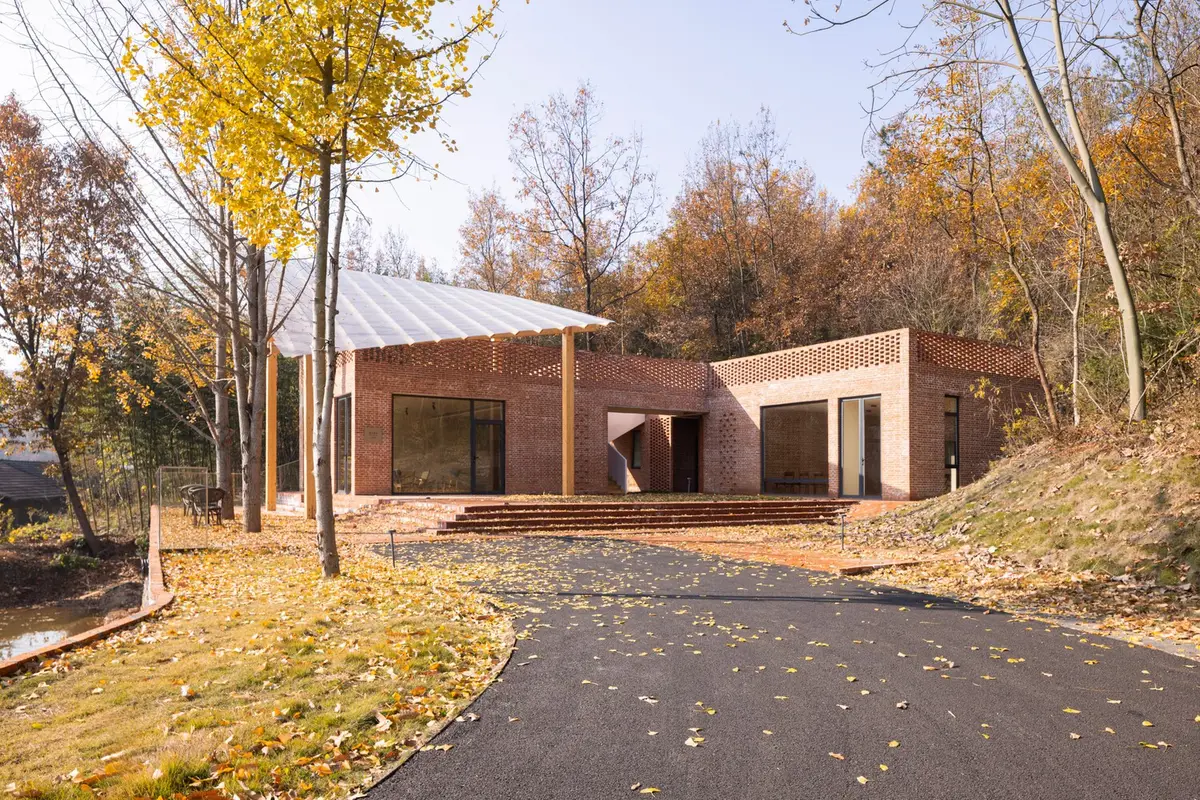
Sui County Hemei Center: A Model of Rural Revitalization by UP Architecture
Sui County Hemei Center revitalizes rural villages through adaptive reuse, greenways, cultural preservation, and community-driven tourism, fostering sustainable development and social engagement.


Located in Suizhou, Hubei, the Sui County Hemei Center is a groundbreaking rural revitalization project designed by UP Architecture. Spanning 338 m² and completed in 2024, this project demonstrates how architectural innovation can drive community development, cultural preservation, and sustainable tourism. Photographed by Archi-Translator, the project was led by architect Zhou Chao and developed in collaboration with the China Foundation for Rural Development and five villages across three towns in Suixian County.
Revitalizing Rural Resources
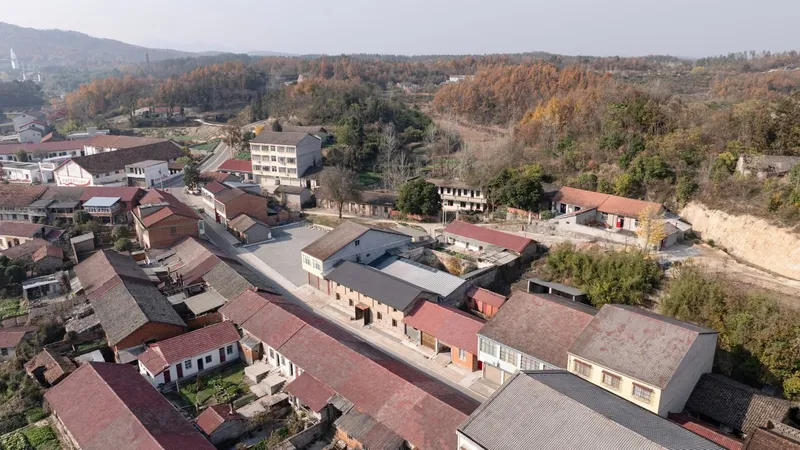
The core philosophy of the Hemei Center is “Harmonious and Beautiful Villages,” focusing on transforming idle rural assets into vibrant, multi-functional spaces. Abandoned houses, assembly halls, and historical sites were repurposed into cycling stations, leisure courtyards, rural museums, cafés, and art restaurants, creating an interconnected rural cluster. This network not only boosts regional tourism around the Dahongshan Scenic Area but also stimulates local economic growth, agricultural sales, and employment opportunities.
Key transformations include:
- Yujiawan Old House → Cycling station, offering rest stops along the greenway.
- Zhenzhuquan Village Assembly Hall → Intangible cultural heritage museum, preserving rural history.
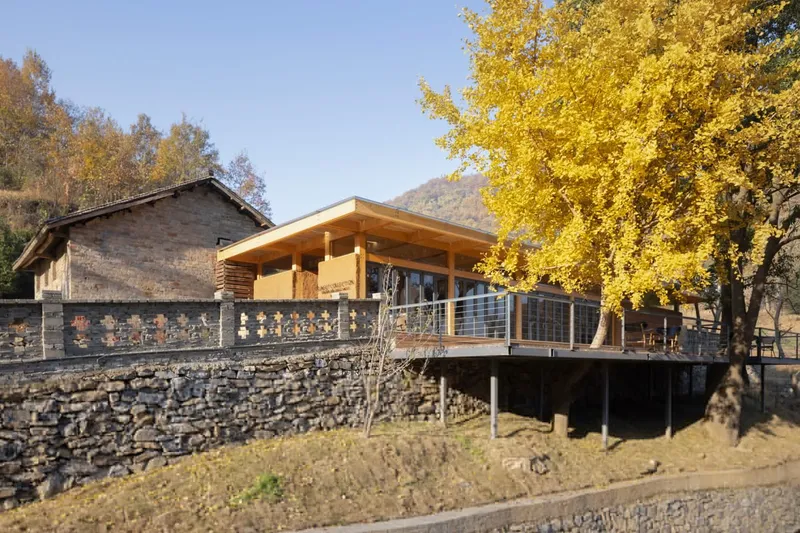
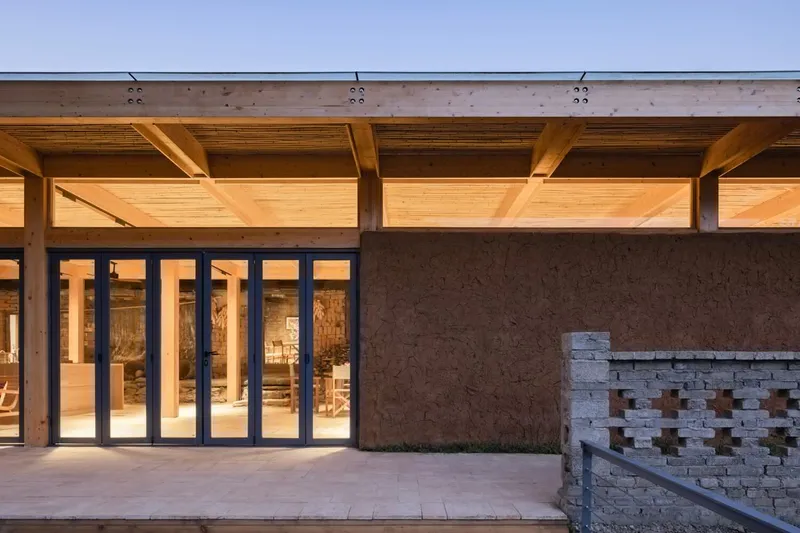
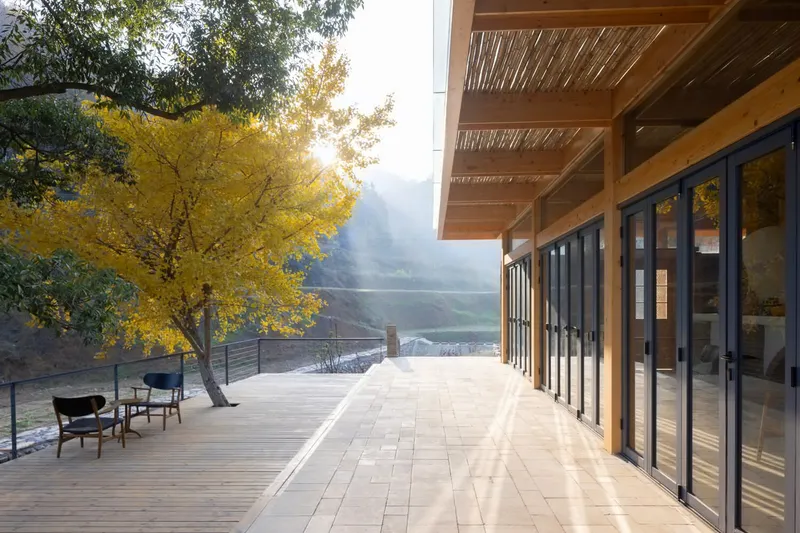
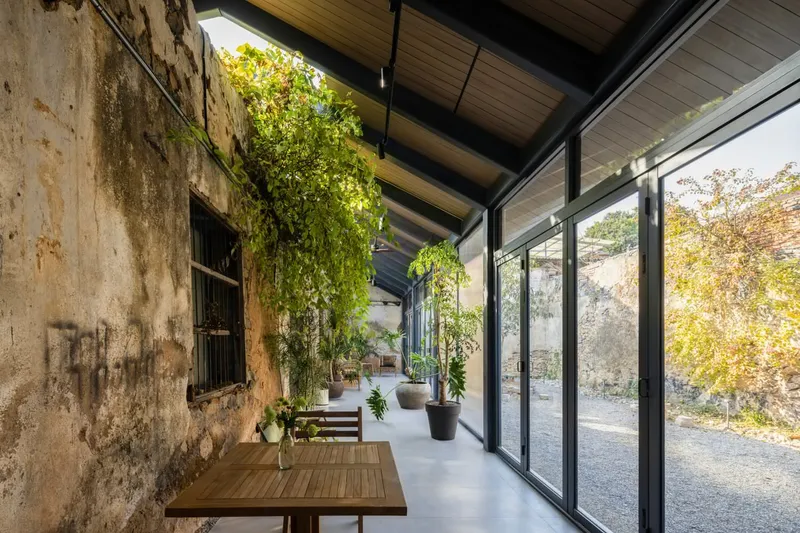
- Chang'andian Qing Dynasty Temple Site → Café, blending rammed-earth walls with modern timber construction.
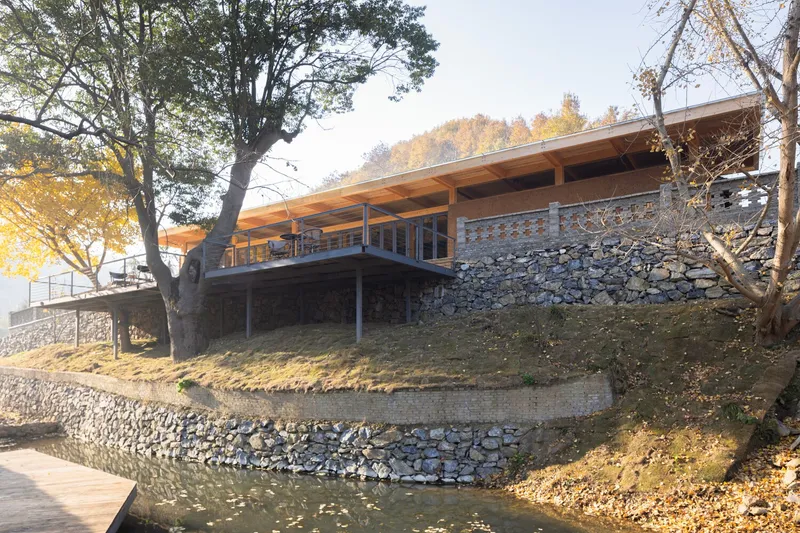
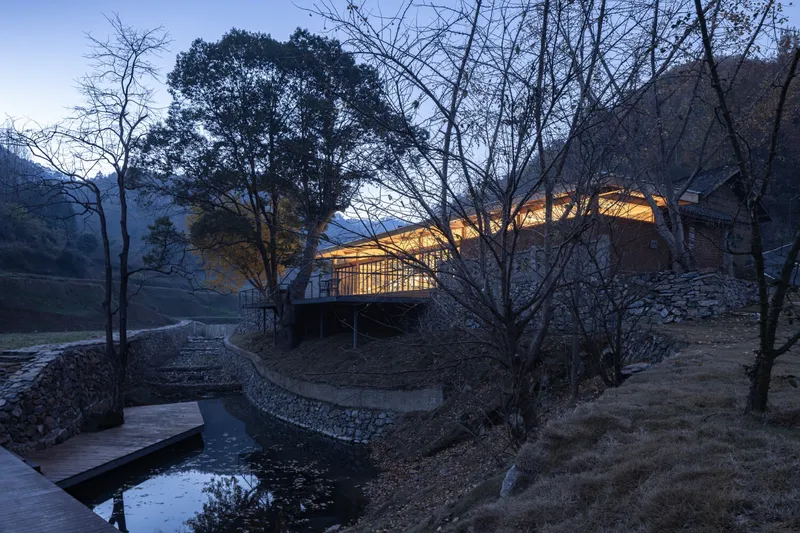
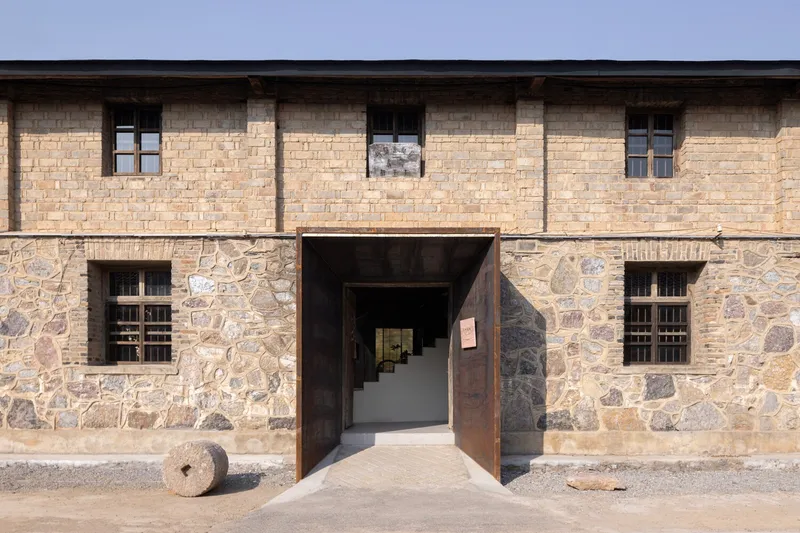
- Collapsed Residence → Art restaurant, integrating steel structures with native greenery.
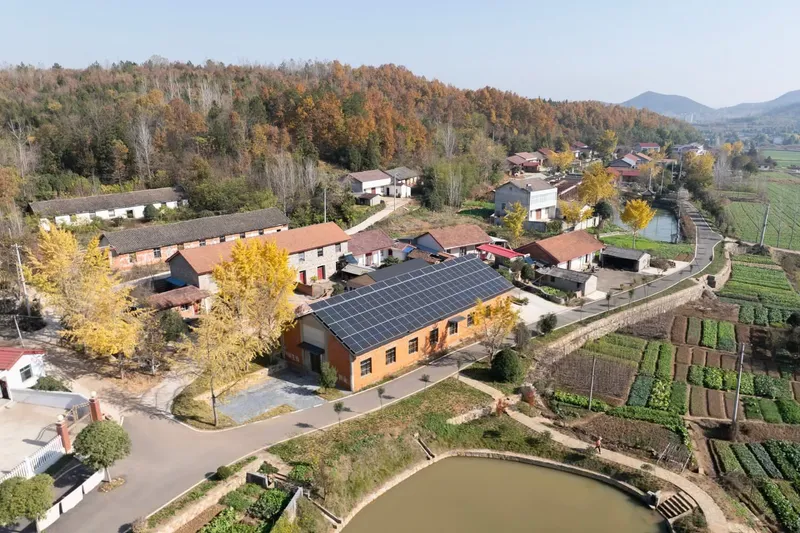
These five renovated buildings are connected via a greenway loop, creating urban-rural interaction hubs that encourage cultural exchange and economic circulation.
Design Approach: Spatial Catalyst & Local Construction
The project adopts an anthropological and participatory design approach, using three main strategies to activate rural spaces:
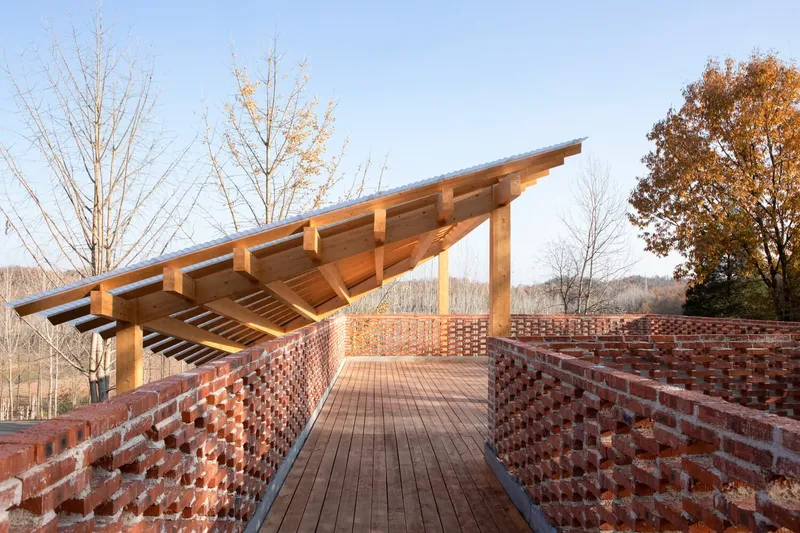
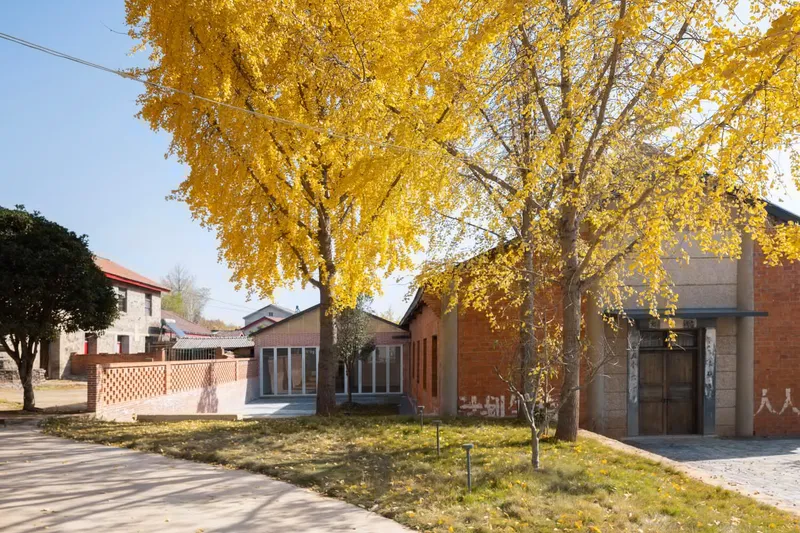
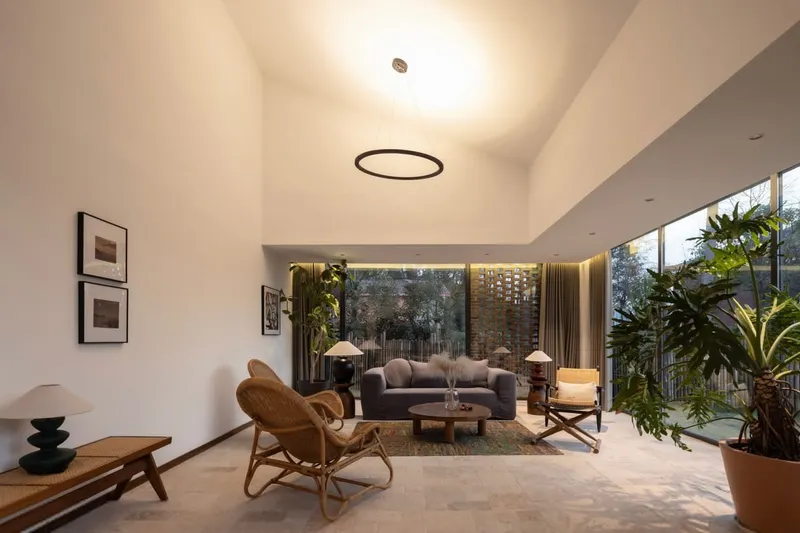
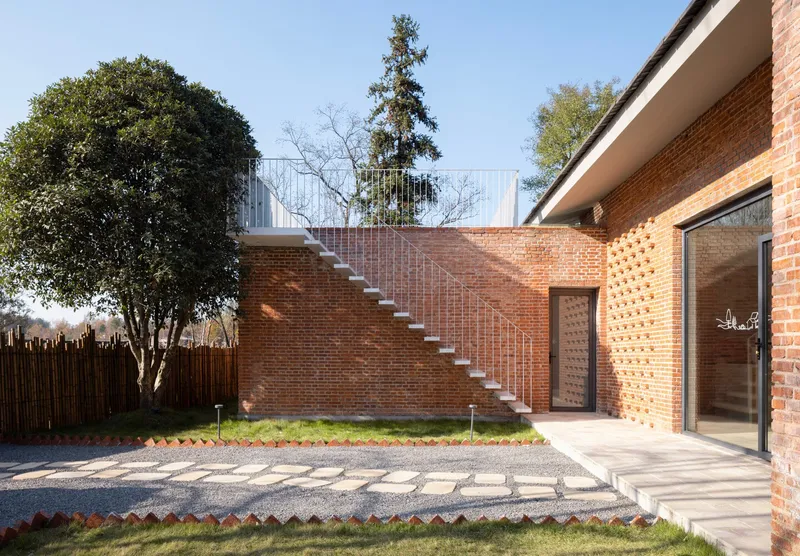
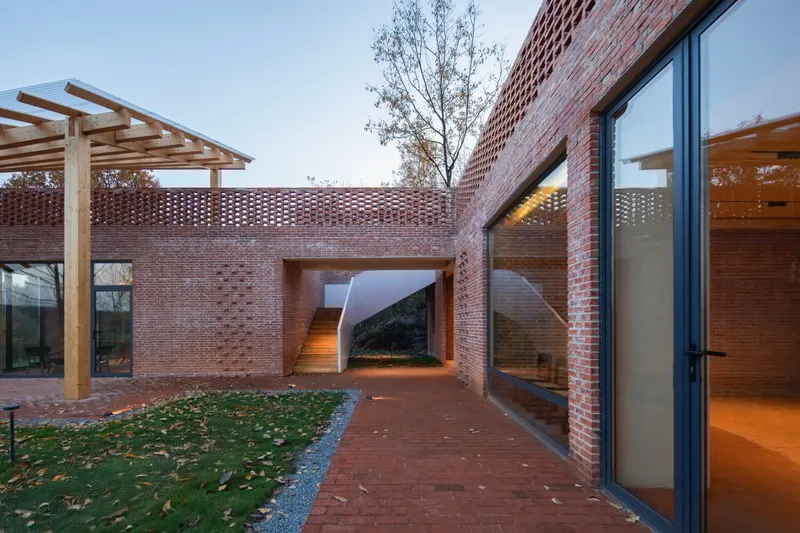
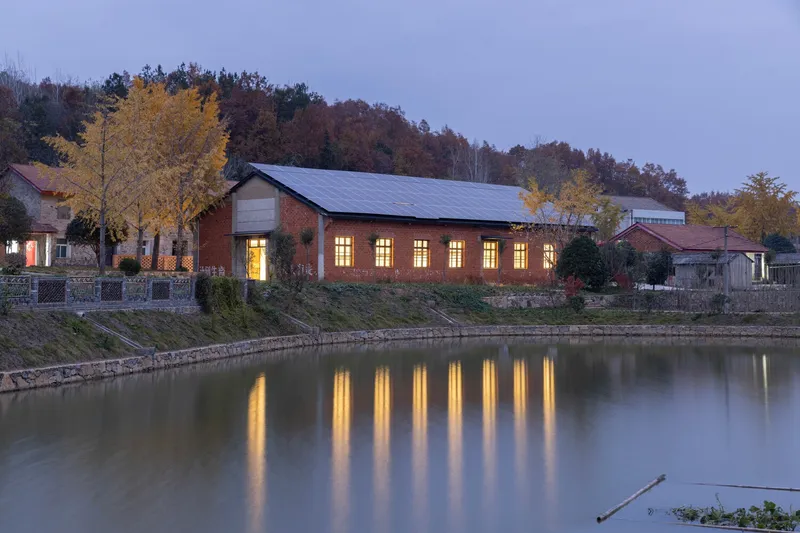
- Spatial Reconfiguration – Maintaining the memory of the original sites while adding functional value. The cycling station preserves the L-shaped house layout around a ginkgo courtyard. Leisure courtyards retain traditional arrangements, enhanced with rooftop terraces and private guest areas for tourism and public events.
- The cycling station preserves the L-shaped house layout around a ginkgo courtyard.
- Leisure courtyards retain traditional arrangements, enhanced with rooftop terraces and private guest areas for tourism and public events.
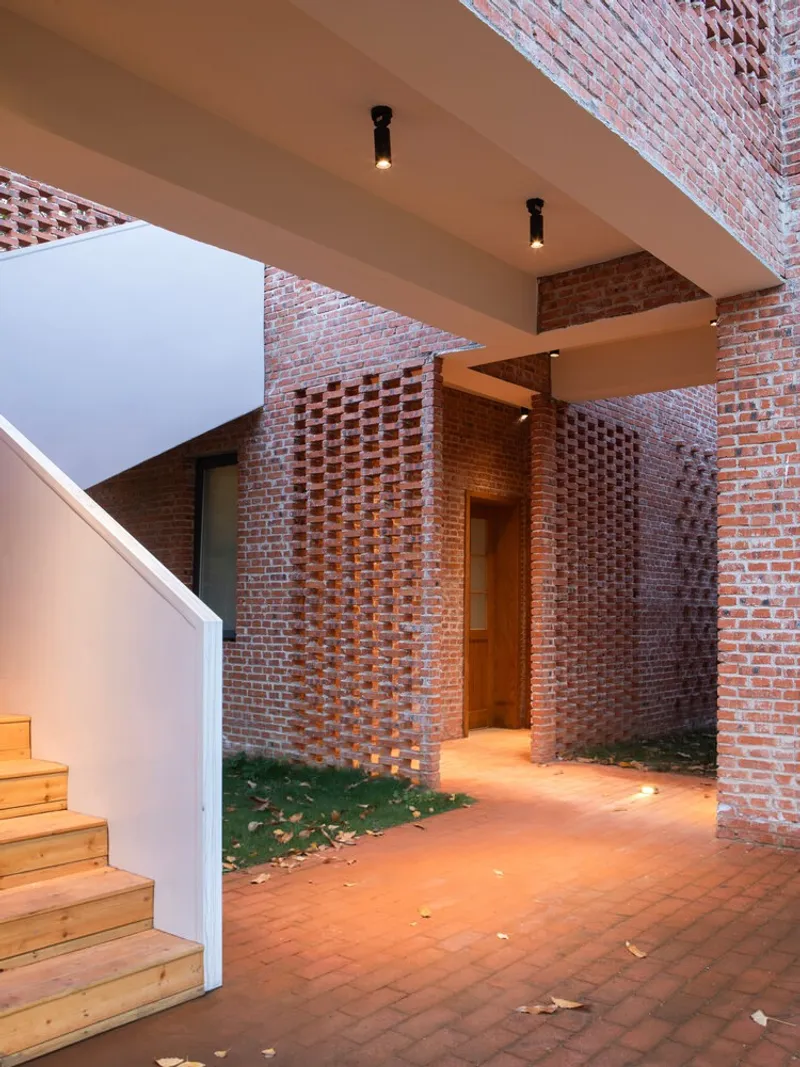
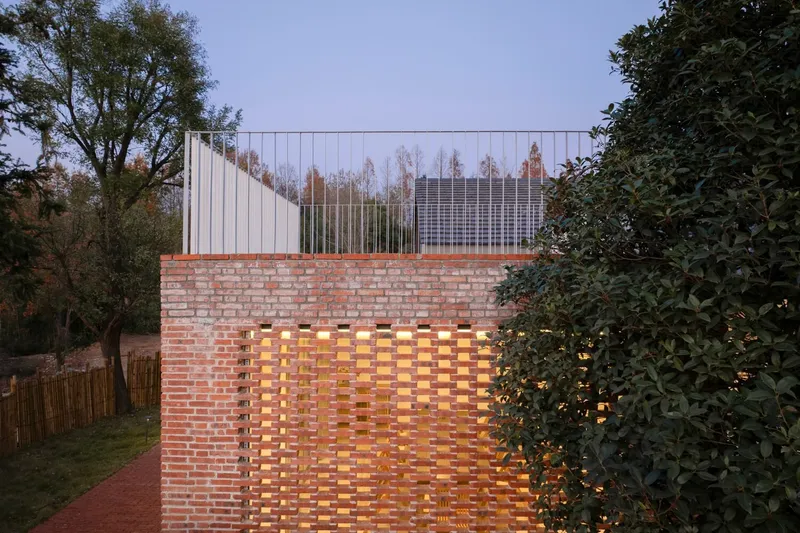
- Appropriate Construction – Combining local materials with low-tech building methods. Leisure courtyards utilize 300mm composite red-brick walls for improved insulation. Cafés merge glued-laminated timber frames with rammed-earth walls, balancing heritage and modern functionality.
- Leisure courtyards utilize 300mm composite red-brick walls for improved insulation.
- Cafés merge glued-laminated timber frames with rammed-earth walls, balancing heritage and modern functionality.
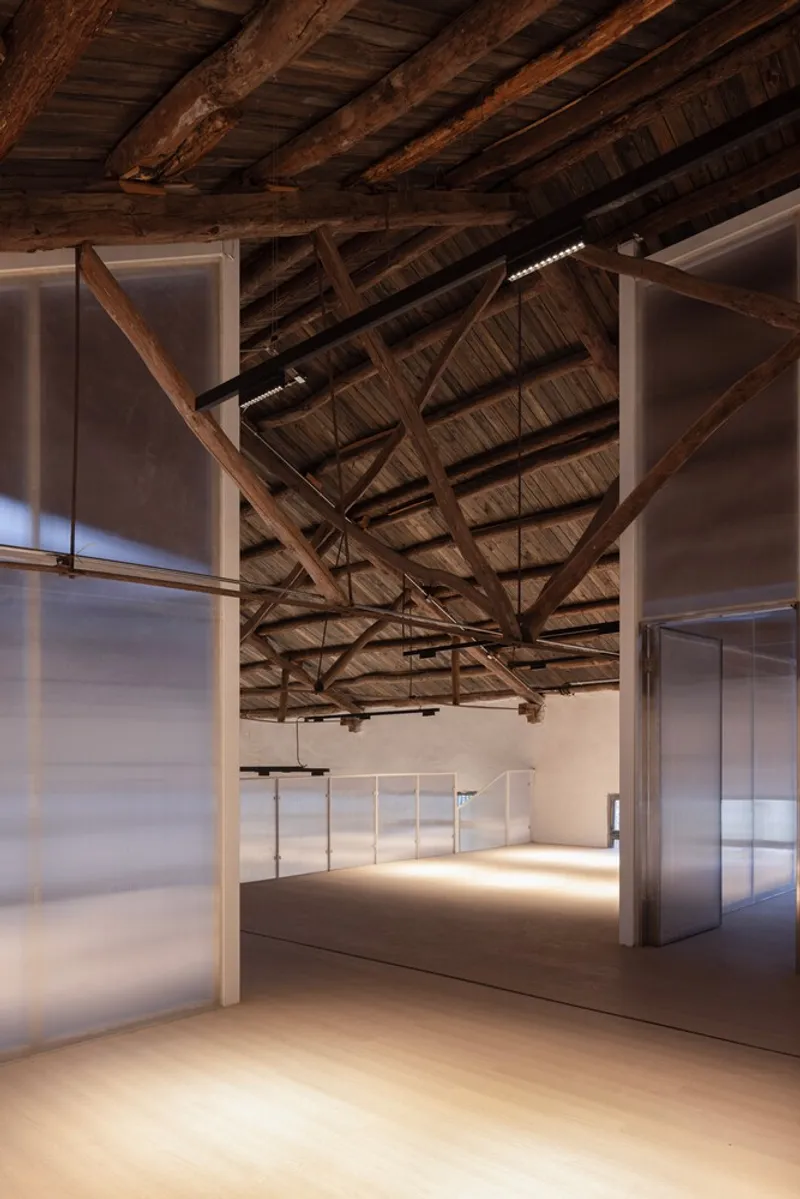
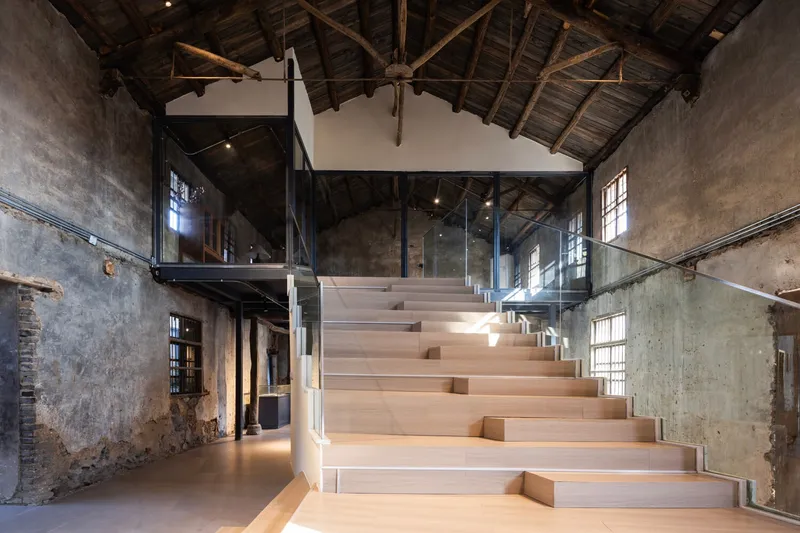
- Light Intervention – Minimal interference to allow flexible future growth. Art restaurants bridge collapsed stone walls with steel, preserving natural vegetation. Museums feature steel volumes with polycarbonate paneling, engaging in dialogue with historic wooden trusses.
- Art restaurants bridge collapsed stone walls with steel, preserving natural vegetation.
- Museums feature steel volumes with polycarbonate paneling, engaging in dialogue with historic wooden trusses.
Community Co-Creation
A hallmark of the Hemei Center is active village participation. The project uses a partnership model in the leisure courtyards to encourage youth entrepreneurship, creating a complete loop of design–construction–operation. These architectural nodes act as catalysts for greenway economies, cultural preservation, and urban-rural connectivity, strengthening community identity.
Sustainable Practices and Future Expansion
The Hemei Center emphasizes sustainability and urban-rural integration.
- The museum hosts intangible cultural heritage exhibitions and promotes creative industries.
- The café serves as a community interaction hub.
- The art restaurant explores cultural-tourism integration.
This model of “idle resource revitalization + community co-creation” has become a replicable prototype for rural revitalization in Suixian County, with plans to expand across multiple villages in the Dahongshan region.
Architectural Significance
The Sui County Hemei Center showcases architecture as a medium for social equity, cultural empowerment, and regional development. By combining heritage conservation, sustainable design, and participatory planning, UP Architecture demonstrates how thoughtful design can transform rural landscapes into vibrant, economically and culturally active communities.
All photographs are works of
Archi-Translator


Popular Articles
Popular articles from the community


The Musturak Paradise: Senior Living Architecture for a Connected Future in Temara, Morocco
The Musturak Paradise reimagines senior living architecture in Temara via private homes, social spaces, culture, community, and shared care.

Little Red Riding Hood: Architectural Design as a Journey Through Fear, Light, and Storytelling
Little Red Riding Hood reimagines the fairy tale through architectural design shaped by fear, light, scale, memory, uncertainty, and choice.

Conexión: Biophilic Design Reimagines High-Rise Living in Hong Kong
Conexión reimagines high-rise living in Hong Kong through biophilic design, green facades, shared spaces, daylight, water and nature within.

Lunar Spiral: Space Architecture Shaped by the Mathematics of the Universe
Lunar Spiral reimagines space architecture through Fibonacci geometry, lunar regolith, levitating habitats, and self-sustaining Moon living.

Similar Reads
You might also enjoy these articles


Hodi-Mandai Geram
Project Function: Preservation and revitalization of the Intangible heritage and socio-spatial identity of the Hodi by Housing, Cultural Memory Center, Sacred Grove, landscape, local tourism economy


Olio Towers: A Mid-Rise for Performers That Fuses Housing, Rehearsal, and Stage
Located blocks from Houston's Theater District, this modular tower stacks living units around a central performance atrium.

Oasis: Modular Green Housing Carved into Dhaka's Urban Fabric
A shortlisted Plugin Housing entry reclaims unauthorized settlements in Dhaka with stepped concrete volumes, green roofs, and ventilation-driven design.

Black Hole: A Floating Megastructure for the Post-Physical Era
Emiliano Mazzarotto envisions a spherical, self-scaling arena where e-sports, digital hotels, and holographic stadiums replace traditional public space.

Explore Hospitality Building Competitions
Discover active competitions in this discipline

Challenge to reimagine the Iron Throne

Photograph architecture without architects

Illustrate the lost glory of Angkor Wat - Render Challenge

Design challenge to reuse E-waste
Comments (0)
Please login or sign up to add comments
No comments yet. Be the first to comment!