
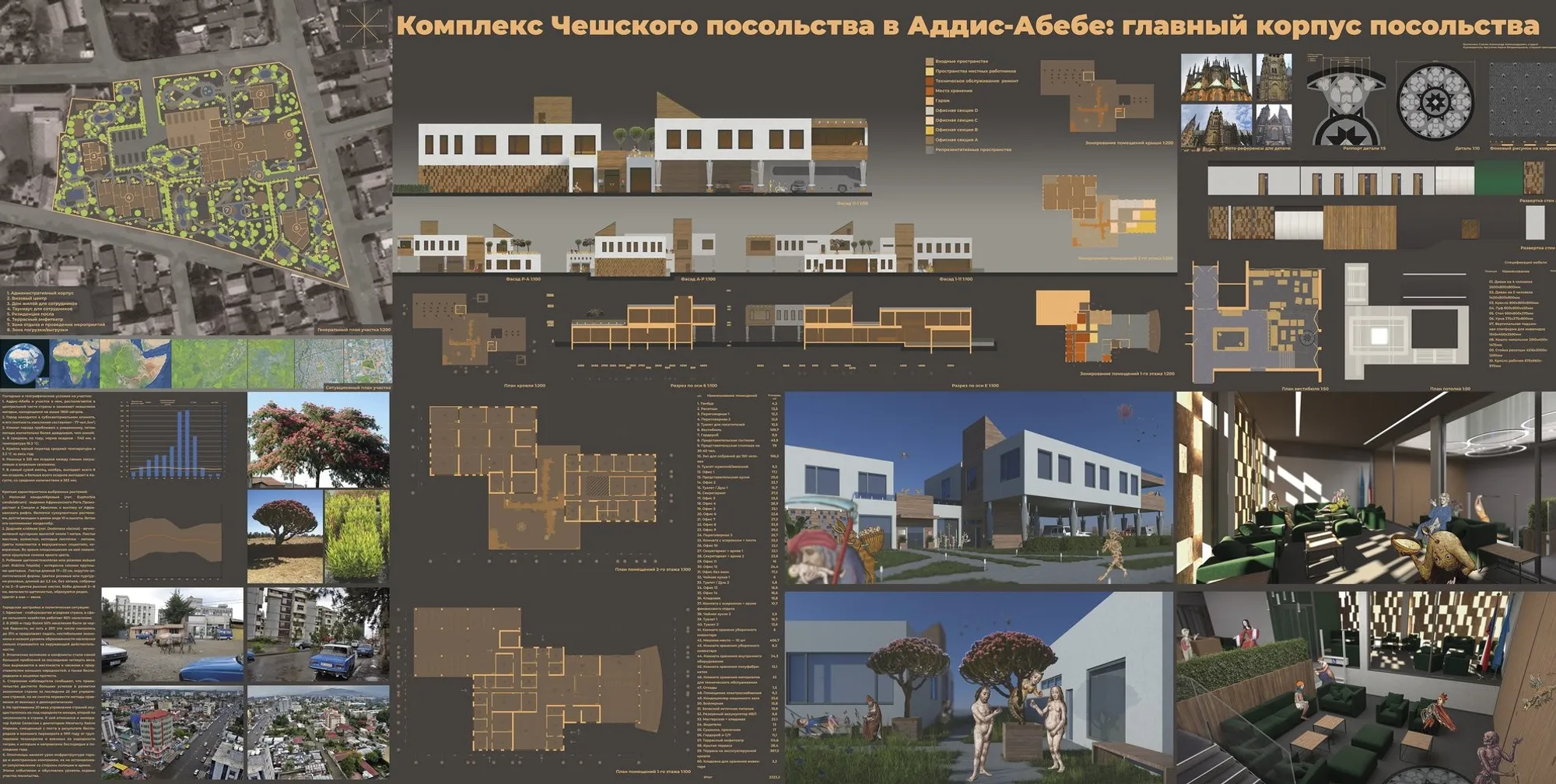
Sustainable Architecture in Diplomacy: Czech Embassy Addis Ababa Administration Building
A sustainable embassy architecture uniting Czech and Ethiopian cultures through landscape, diplomacy, and shared identity in Addis Ababa.


The Czech Embassy in Addis Ababa: administration building , designed as an administration building within a diplomatic complex, is a powerful example of sustainable architecture integrated with cultural identity and geopolitical sensitivity. Located in a prominent tourist and diplomatic district near other embassies, the project responds to climate, landscape, and cross-cultural exchange while reinforcing interethnic relationships.
Designed by Alexander Stanin, the project reflects a careful study of Czech and Ethiopian cultural foundations, transforming architectural form into a medium of diplomacy.
Site Context and Urban Strategy
Situated in Addis Ababa’s embassy zone, the site required a balance between representation, security, and openness. The master plan demonstrates how sustainable architecture operates beyond energy efficiency: it extends to spatial hierarchy, climate adaptation, and landscape integration.
The general layout includes:
- Administrative корпус (administration building)
- Visa center
- Residential units for staff
- Townhouses for employees
- Ambassador’s residence
- Terrace amphitheater
- Event and recreation zone
- Service and loading areas
This zoning strategy ensures functional clarity while allowing fluid pedestrian movement through landscaped courtyards and shaded pathways.
Cultural Synthesis: Czech and Ethiopian Identity
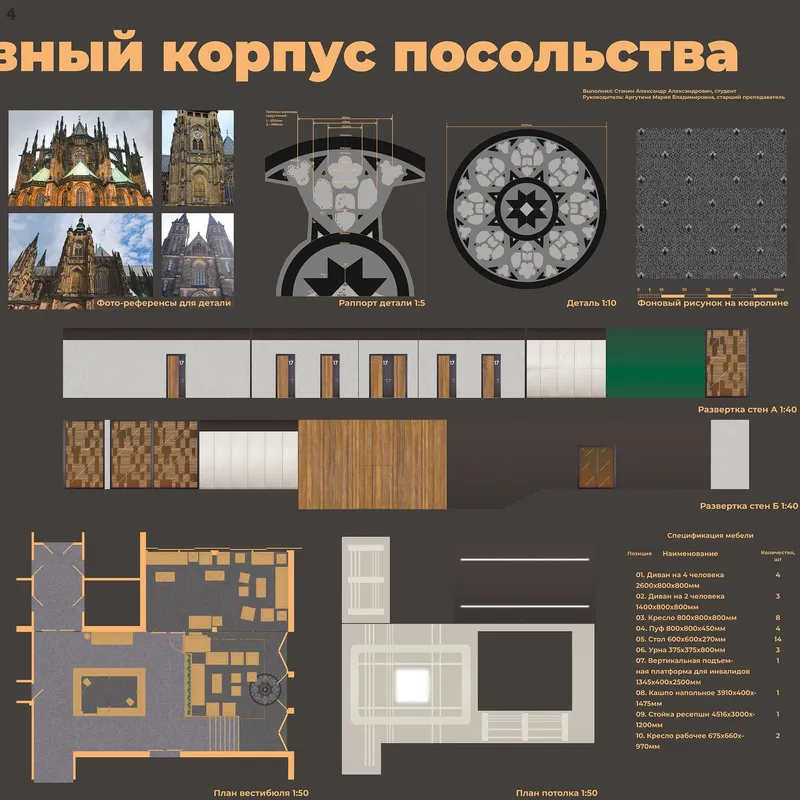
A key conceptual driver of the project was the fusion of Czech and Ethiopian cultural symbolism. Rather than literal historic replication, the design abstracts architectural motifs.
From Czech culture, Gothic inspirations and ornamental references are reinterpreted in patterns, façade articulation, and interior detailing. Ethiopian contextual sensitivity appears in:
- Landscape adaptation
- Material warmth
- Courtyard typologies
- Climate-conscious spatial planning
The project becomes a diplomatic gesture, an architectural compromise built on mutual respect.
Architectural Form and Sustainable Design Principles
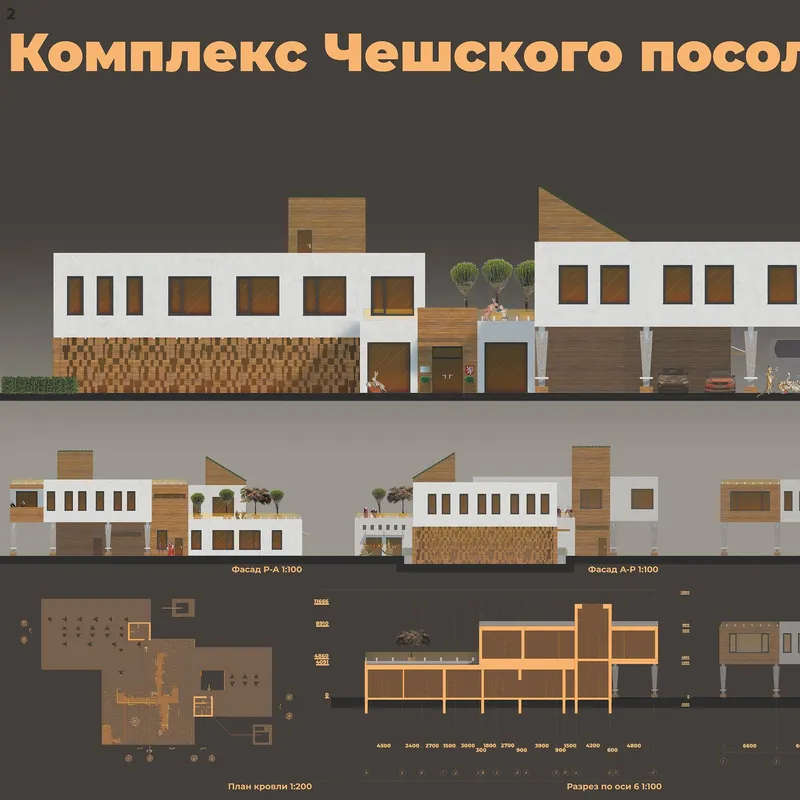
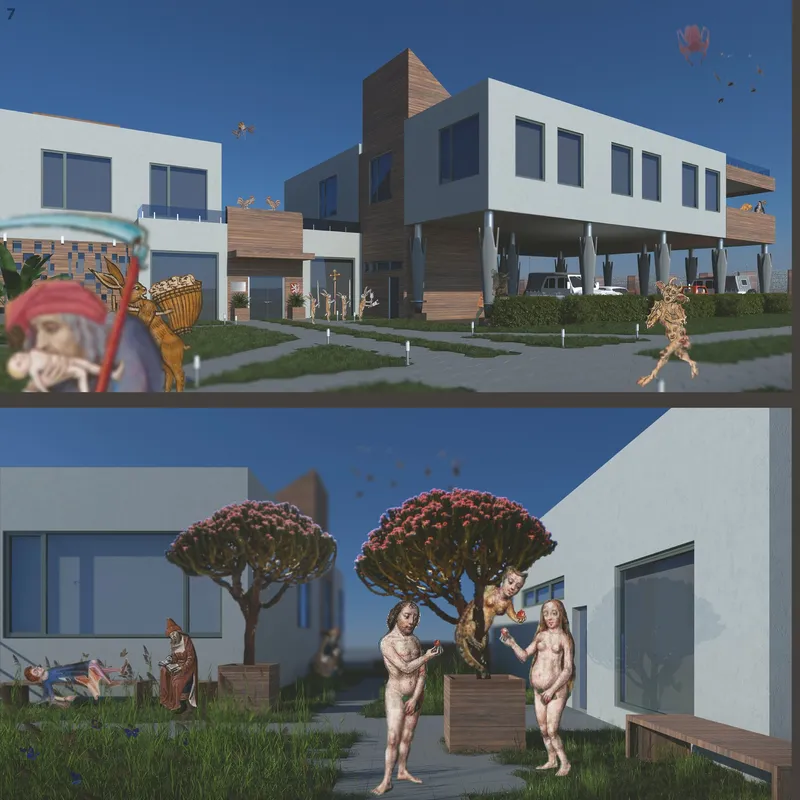
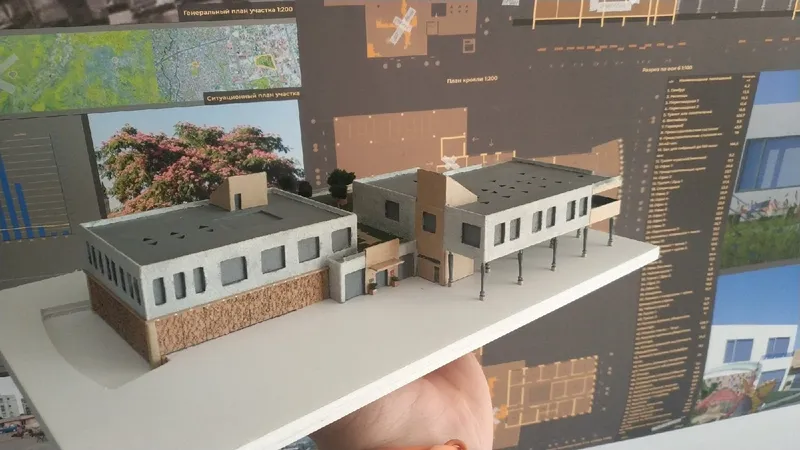
The embassy’s architectural language is contemporary yet grounded. Clean horizontal volumes are lifted on structural supports, enhancing ventilation and shading, critical strategies in sustainable architecture for tropical climates.
Passive Environmental Strategies
- Elevated volumes for airflow
- Deep overhangs and shading systems
- Courtyard cooling effects
- Landscape buffers for microclimate control
- Material selection balancing thermal mass and light reflection
The combination of white rendered surfaces and textured wooden cladding reflects solar radiation while introducing warmth and regional character.
Landscape Integration and Outdoor Spaces
The landscape design is integral to the architectural identity. Rather than treating greenery as decorative, it becomes functional infrastructure.
- Courtyards encourage natural cooling
- Tree placement creates shaded pedestrian routes
- Amphitheater terraces promote cultural events
- Recreational zones support diplomatic gatherings
This approach strengthens social interaction between guests, diplomats, and civil servants, reinforcing the embassy’s role as a cultural bridge.
Interior Spaces: Representation and Functionality
The interior design continues the sustainable architecture narrative. Reception areas, meeting rooms, representative halls, and administrative offices are organized around natural light penetration and spatial transparency.
Wood finishes and modular furniture create warmth, while controlled glazing ensures daylight without excessive heat gain. The representative hall and meeting zones are designed for diplomatic dialogue, reflecting clarity, openness, and institutional identity.
Spatial Organization and Efficiency
The building’s floor plans demonstrate precise functional zoning:
- Public and semi-public zones on the ground level
- Administrative offices on upper floors
- Service and technical rooms discretely integrated
- Roof zoning optimized for mechanical systems and potential green surfaces
This clear hierarchy enhances security, circulation, and operational efficiency, core requirements in modern embassy architecture.
Architecture as Interethnic Diplomacy
Beyond function, the Czech Embassy in Addis Ababa symbolizes the establishment of interethnic relations. Architecture becomes a physical manifestation of dialogue between nations.
By studying both cultures deeply and searching for compromise, the project avoids dominance of one identity over the other. Instead, it presents a shared architectural language: modern, respectful, and climate-responsive.
The Czech Embassy Administration Building in Addis Ababa stands as a refined example of sustainable architecture in diplomatic design. Through contextual integration, cultural abstraction, and environmental responsiveness, Alexander Stanin’s project demonstrates how architecture can embody international cooperation.
More than an administrative building, the embassy becomes:
- A cultural mediator
- A climatic adaptation model
- A landscape-integrated diplomatic campus
- A symbol of Czech–Ethiopian partnership
In an era where global relationships demand sensitivity and sustainability, this project proves that architecture remains one of the most powerful diplomatic tools.




Popular Articles
Popular articles from the community


Lunar Spiral: Space Architecture Shaped by the Mathematics of the Universe
Lunar Spiral reimagines space architecture through Fibonacci geometry, lunar regolith, levitating habitats, and self-sustaining Moon living.

Hill & Cross Opera: Sculptural Opera House Architecture Shaped by Tallinn’s Landscape and Identity
Hill & Cross Opera reimagines opera house architecture in Tallinn through its sculptural hill, civic plaza, glass wave and a luminous cross.

Riyadh For All: Intergenerational Urban Design for Active Aging in Rabat
Riyadh For All reimagines urban design in Rabat with intergenerational co-living, adaptive courtyards, and Moroccan cultural exchange today.

The Musturak Paradise: Senior Living Architecture for a Connected Future in Temara, Morocco
The Musturak Paradise reimagines senior living architecture in Temara via private homes, social spaces, culture, community, and shared care.
Similar Reads
You might also enjoy these articles

Eco Chapel: A Green Architecture Pavilion Designed in Symbiosis with the Forest
Eco Chapel uses green architecture to weave prayer, learning and reuse into a forest pavilion shaped by modular hexagonal canopies for life.
Kaffeebühnen: Coffee Shop Architecture Designed as a Civic Stage Between Vienna’s City and Park
Kaffeebühnen turns coffee shop architecture into a civic stage, linking Vienna’s park edge, urban life, warm timber yards, and coffee craft.
Healing Façade: Sustainable Architecture for Reforestation, Community, and Sacred Ecology in Ethiopia
Healing Façade reimagines sustainable architecture as a living wall that restores soil, catches water and renews Ethiopia's forest churches.


Urban Forest: A Vertical Ecosystem for 5,000 Workers in Singapore's Changi Business Park
Radially stacked pods and layered green decks turn a 7-acre plot into 47 acres of ecological workspace projected for 2040.

Explore Interior Design Competitions
Discover active competitions in this discipline


Challenge to design luxury tourism on rails


VR headsets Storefront design competition

Designing a staircase for a client
Comments (0)
Please login or sign up to add comments
No comments yet. Be the first to comment!