
Sustainable Coliving Architecture: The Fusion of Community and Nature in Reforest.comm
Explore Reforest.comm, an architectural project merging sustainable coliving and nature, inspired by Brazilian habitats in the Amazon region.


In the heart of the Amazon region, a bold architectural endeavor named Reforest.comm is redefining the essence of living spaces. Spearheaded by visionary Z S, this residential complex stands as a testament to the harmonious interpenetration of human habitats and the natural environment, pioneering a new chapter in sustainable coliving architecture.

The Genesis of a Revolutionary Idea
The narrative of Reforest.comm begins with an unsettling reality: the invasion and destruction of the wild by humankind, leading to a disrupted harmony between the urban spaces of Manaus and the lush Amazonian tapestry. Amidst the uncontrolled deforestation stemmed from a shortage of residential areas, Z S embarked on a mission to mend the fragmented relationship between humans and nature.
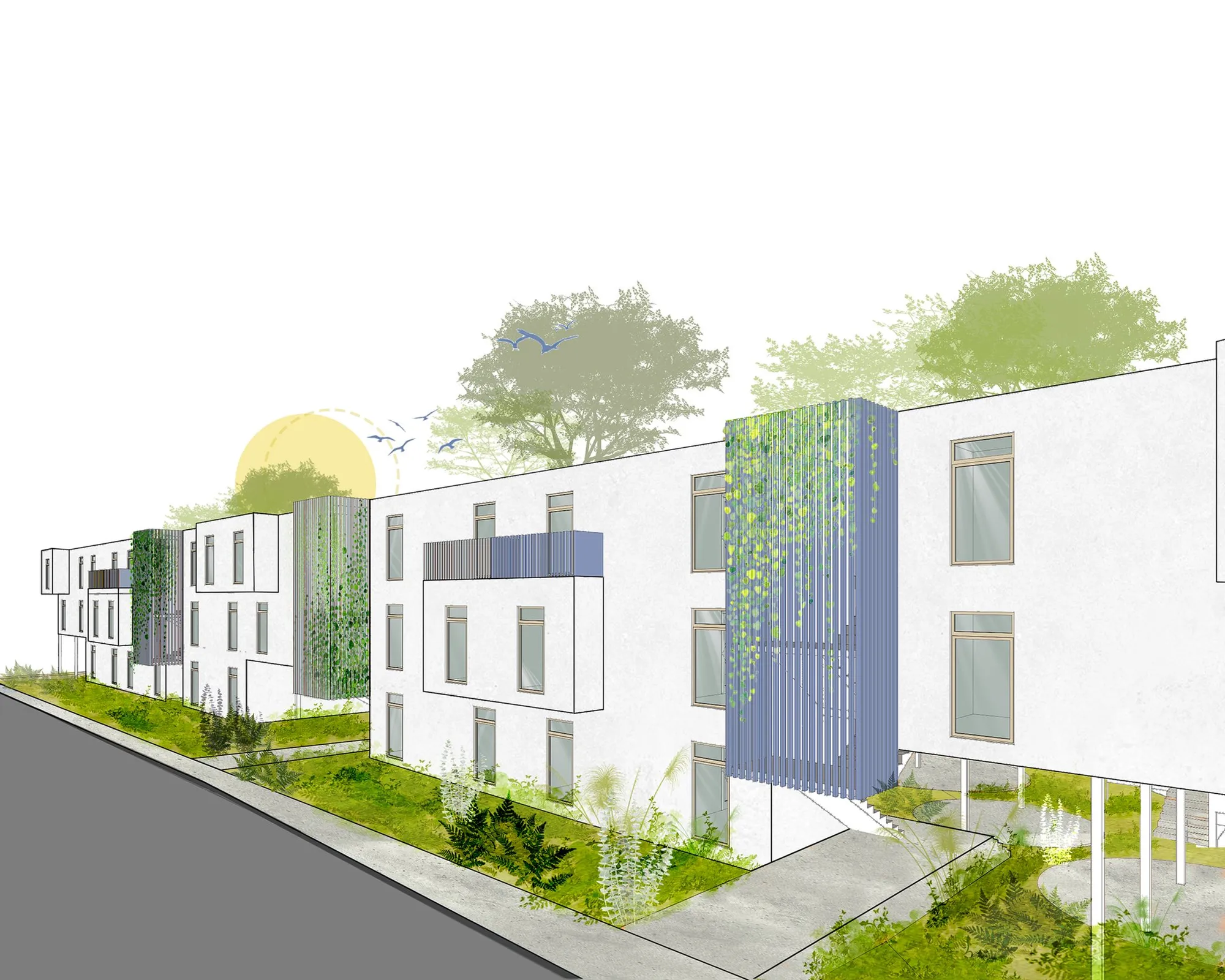
The cornerstone of Reforest.comm's philosophy is coexistence. By integrating living spaces within the folds of the forest, the initiative breathes life into the concept where the home is an extension of nature, and the wilderness becomes a part of the home. This integration fosters an ecosystem that supports the growth of local flora and fauna, establishing a foundation for the regeneration of vegetation.
Drawing from the architectural archetypes of maloca, stilt houses, and favelas, the project encapsulates the essence of Brazilian heritage. Maloca reflects communal living, stilt houses represent adaptation to the land's heartbeat, and favelas embody the dynamic spirit of growing communities.

A Blueprint for Community and Sustainability
The structural design of Reforest.comm is a homage to coliving, a response to limited land availability, and a celebration of shared spaces. The concept envisions a compact residential complex, where each unit - or 'nest' - is interwoven with common areas such as kitchens and dining rooms, fostering a sense of community. These nests, comprised of compact terraced houses with three residential floors, cater to families big and small, allowing for a flexible arrangement of living modules.

In this complex, the private and semi-private spaces are meticulously designed around communal areas, facilitating interaction and support among residents. This layout not only maximizes spatial efficiency for greener areas but also kindles close-knit communities within the complex.
The social fabric of Reforest.comm is woven with threads of mutual support, where families band together in the nurturing of children, caring for the elderly, and engaging in neighborhood activities. The ground plan incorporates cultivated gardens, community event areas, and shaded outdoor relaxation spots, promoting resident interactions and a thriving community life.

An Ode to the Environment: Responsive Design
Reforest.comm doesn't merely rest on the laurels of community building; it stands as a paragon of environmental responsiveness. Tall canopy trees lace the skyline, their leafy branches casting cooling shadows over the structures, mitigating the tropical heat. The orientation of the buildings - mindful of the west-east axis - leverages natural winds for cross-ventilation, fostering a comfortable microclimate.
Vegetation creeps up the façades and sprawls under the buildings, which are strategically elevated on poles, minimizing the need for artificial lighting and paving the way for agricultural endeavors by the residents. Moreover, specific sections of the complex are designed with removable modules, which can be adjusted to improve natural ventilation, create open spaces, and expand the biologically active zones.

Reforest.comm by Z S is not just an architectural project; it's a movement towards sustainable coliving architecture, where humanity and nature coalesce in an intimate embrace. It stands as a beacon of hope and a model for future developments, where living sustainably is not an afterthought but the core principle.




Popular Articles
Popular articles from the community


The Ocean Hive: Sustainable Architecture for a Self-Sufficient Civilization at Sea
The Ocean Hive imagines sustainable architecture at sea, where modular habitats, algae, wave power and ocean waste sustain a growing colony.

Co-life: Sustainable Architecture for Age-Friendly Community Living
Co-life reimagines sustainable architecture for seniors through courtyards, rammed earth, shared gardens, and spaces designed for belonging.

Conexión: Biophilic Design Reimagines High-Rise Living in Hong Kong
Conexión reimagines high-rise living in Hong Kong through biophilic design, green facades, shared spaces, daylight, water and nature within.

Riyadh For All: Intergenerational Urban Design for Active Aging in Rabat
Riyadh For All reimagines urban design in Rabat with intergenerational co-living, adaptive courtyards, and Moroccan cultural exchange today.


Similar Reads
You might also enjoy these articles

Day and Night Park: A Time-Based Urban Newsstand in Beijing
A temporary urban newsstand in Beijing blending travel, light, and reading through poetic colors, compact form, and community-focused design.

Modernist Patio Renovation in El Masnou, Barcelona by Oliver Segura Arquitectura + Cebrià Arquitectura
Modernist patio renovation blending tradition and innovation with a movable pool, leveled floors, and Catalan materials in El Masnou.

Alto Residencial Coop: Cooperative Housing Development in Santiago de Compostela by Carbajo Barrios Arquitectos
A linear cooperative housing complex blending white volumes and perforated metal façades, enhancing community living, natural light, privacy, and urban integration.
Vil Genis School by BPA ARCHITECTURE – Massy, France
Vil Genis School in Massy, France, features sustainable design, south-facing classrooms, community integration, accessible spaces, and modern educational architecture.

Explore Living with Nature Competitions
Discover active competitions in this discipline



Challenge to reimagine the Iron Throne


Photograph architecture without architects


Illustrate the lost glory of Angkor Wat - Render Challenge


Design challenge to reuse E-waste
Comments (0)
Please login or sign up to add comments
No comments yet. Be the first to comment!