
Sustainable Commercial Architecture: A Deep Dive into BMW Center by Atelier FCJZ
Exploring the BMW Center by Atelier FCJZ: A pioneering example of sustainable commercial architecture merging tradition with modern eco-friendly practices.


In the realm of modern urban development, sustainable commercial architecture stands out as a critical movement, blending environmental responsibility with aesthetic appeal and functional design. An exemplary model of this innovative approach is the BMW Center in Wu Xi Shi, China, designed by the renowned Atelier FCJZ. Completed in 2023, this architectural marvel not only serves as a 4S car dealership but also sets a new benchmark for green construction in commercial spaces.

Unveiling the BMW Center: A Testament to Eco-Friendly Design
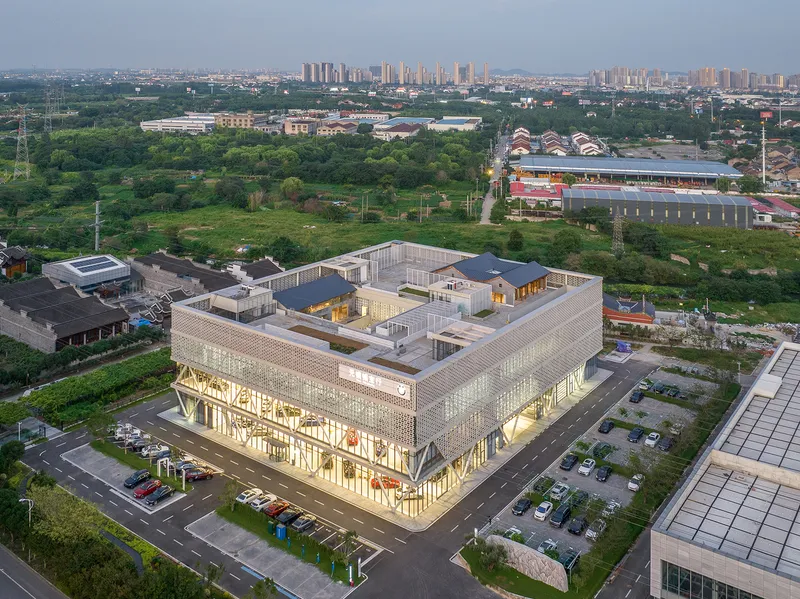
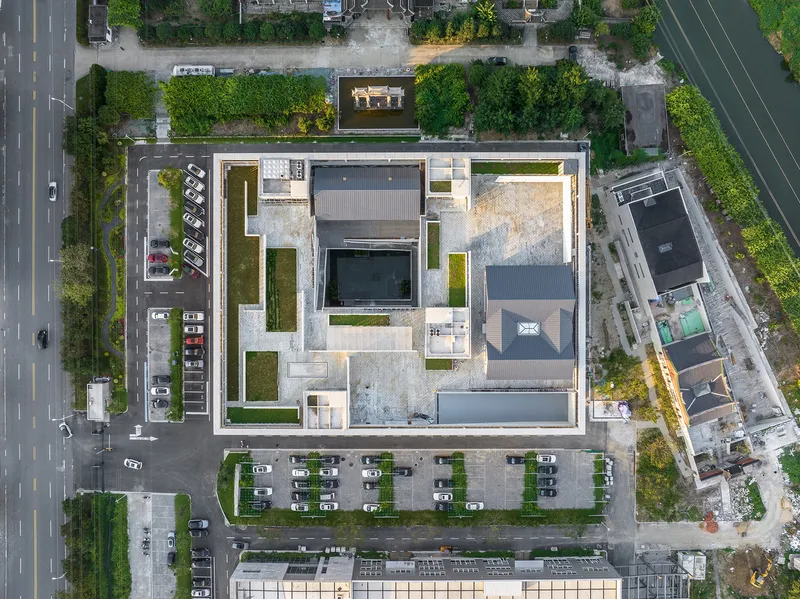
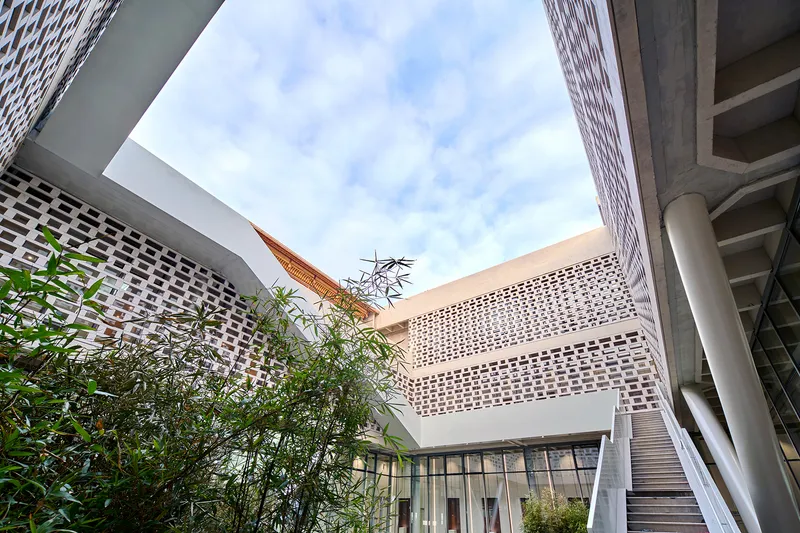
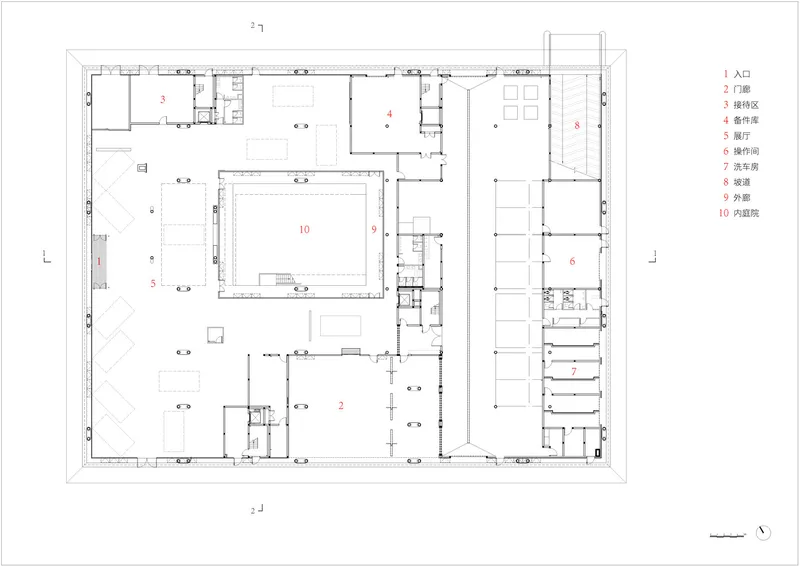
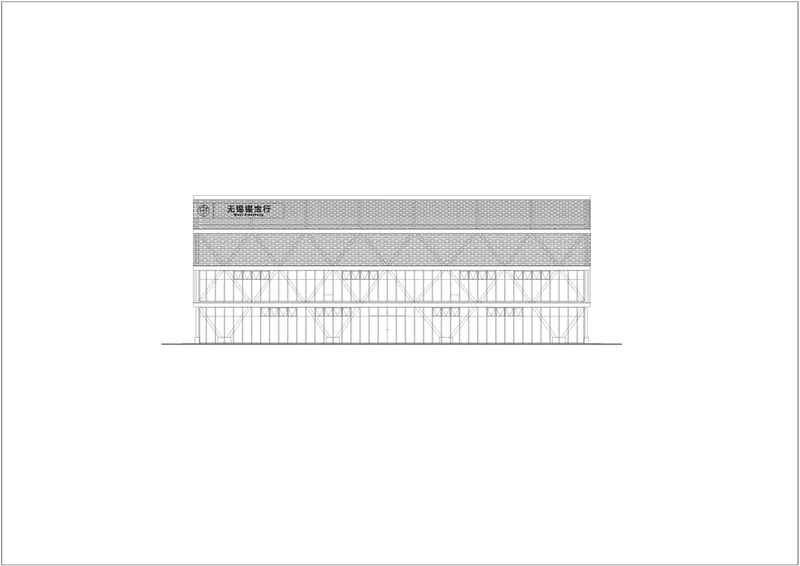
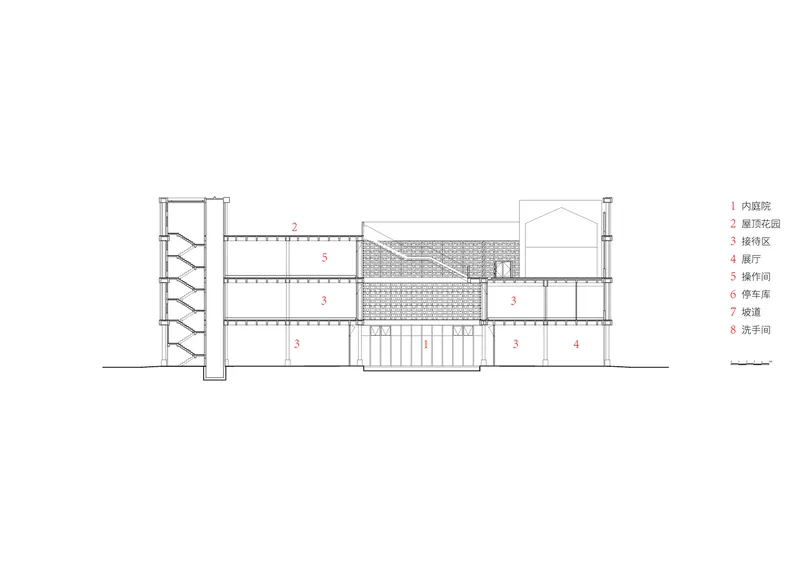
The BMW Center, with its sprawling area of 23,929 m², is a pioneering example of how traditional and modern elements can fuse to create a sustainable architectural masterpiece. This building is a homage to Jiangnan's architectural heritage, featuring an inner courtyard reminiscent of vernacular houses in the region, allowing for a harmonious blend of natural and built environments.

The Innovative Layout
Functionality meets sustainability in the BMW Center's layout, divided into distinct eastern and western zones across its three levels. The design cleverly accommodates a car showroom, sales center, and after-sales services, alongside maintenance workshops and office spaces. This clear division ensures operational efficiency while maintaining an environmentally friendly footprint.

The Structural System: A Nod to Tradition and Innovation
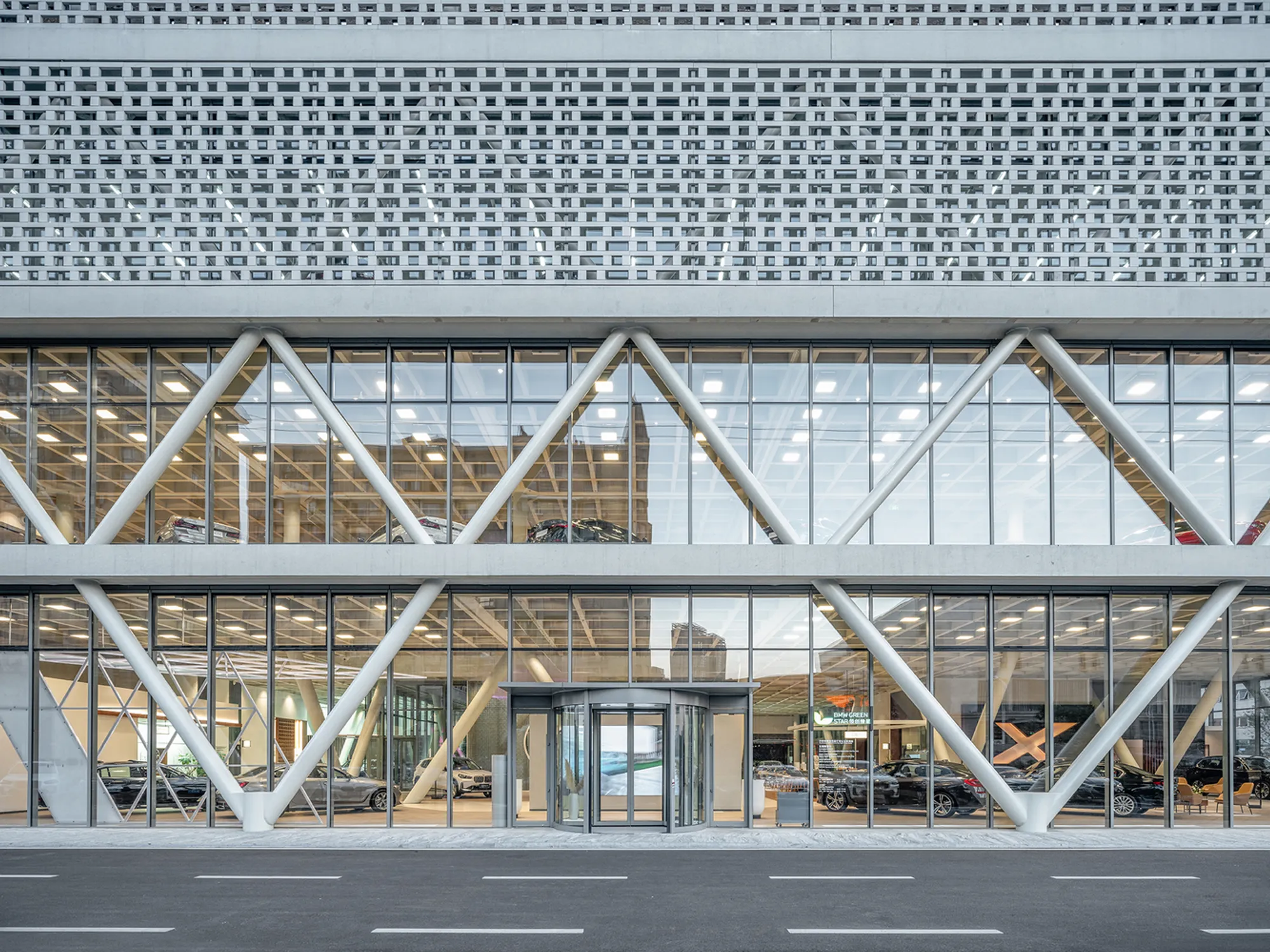
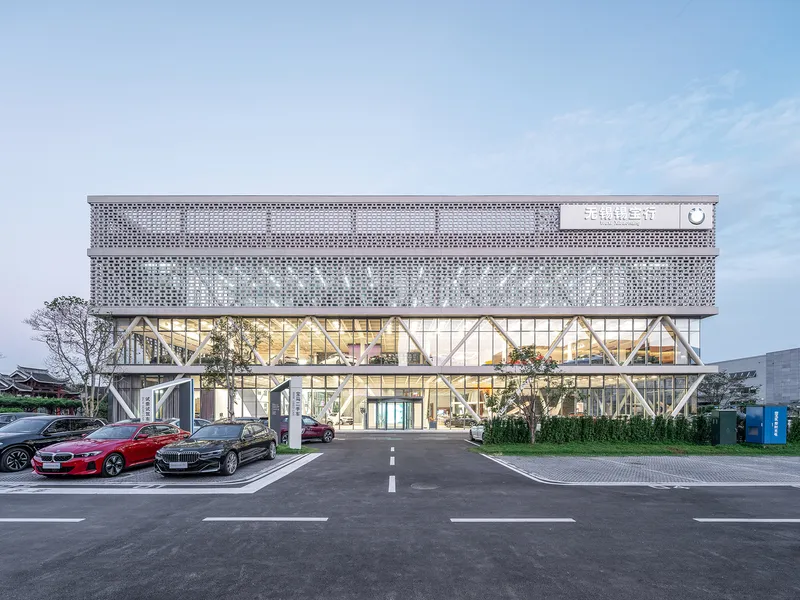
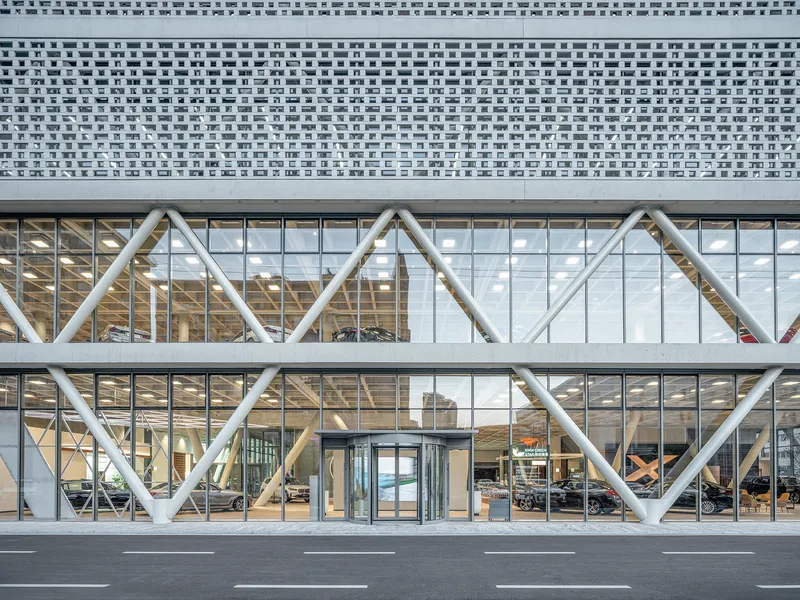
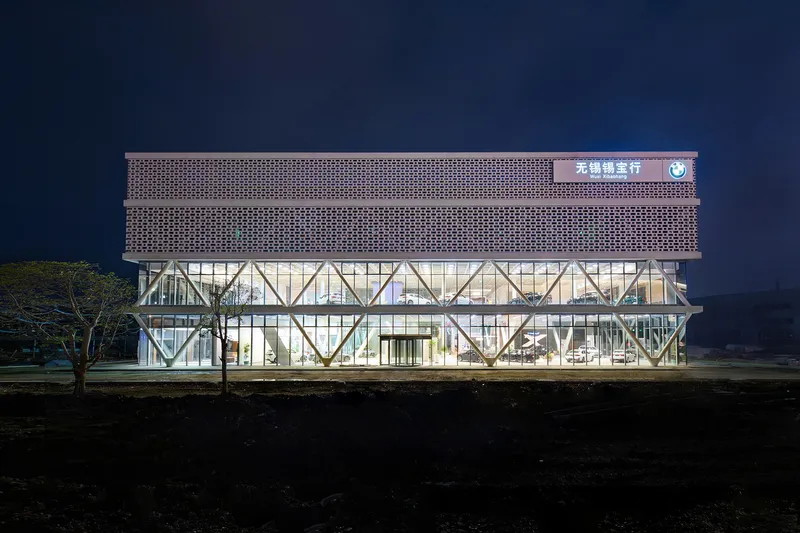
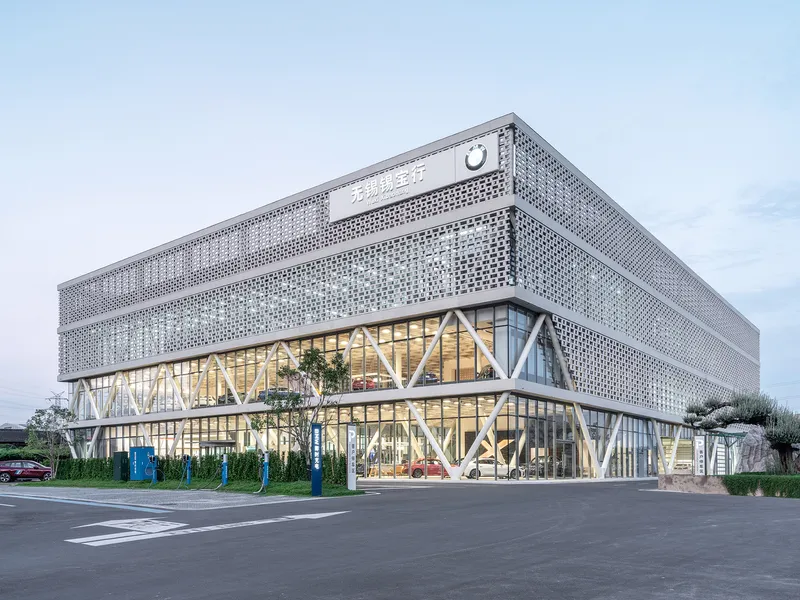
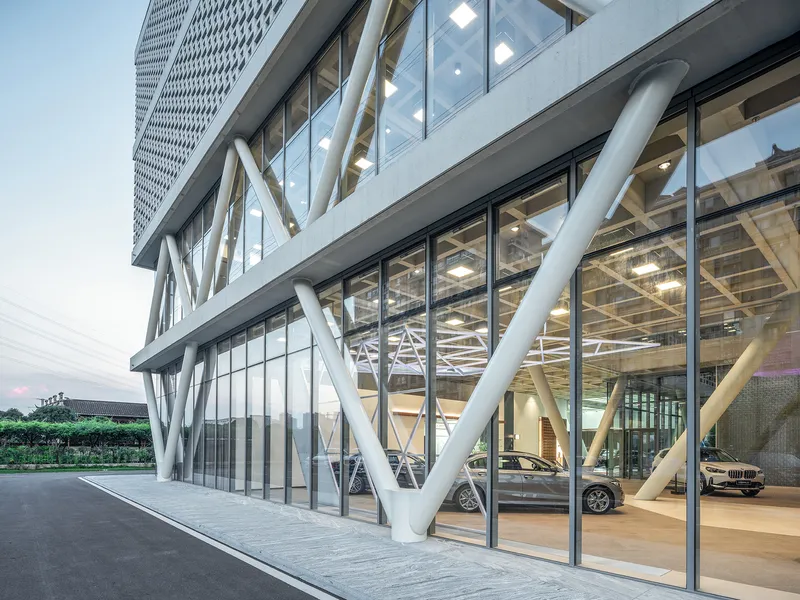
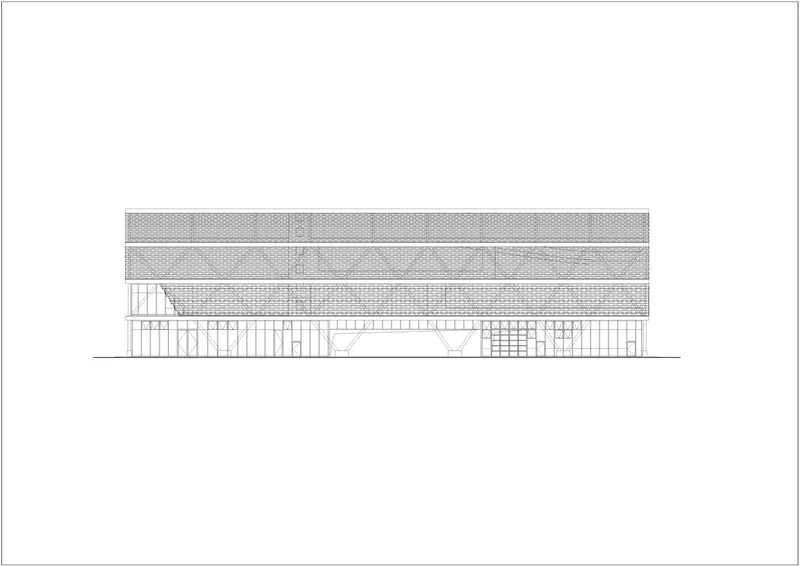
The BMW Center's structural integrity is underpinned by an exposed concrete waffle slab, inspired by traditional Chinese waffle ceilings. This not only pays respect to cultural aesthetics but also contributes to the building's eco-friendliness. The use of V-shaped steel columns and a thoughtful column grid design further enhances the spatial experience without compromising environmental standards..



Façade Design: Merging Tradition with Modernity
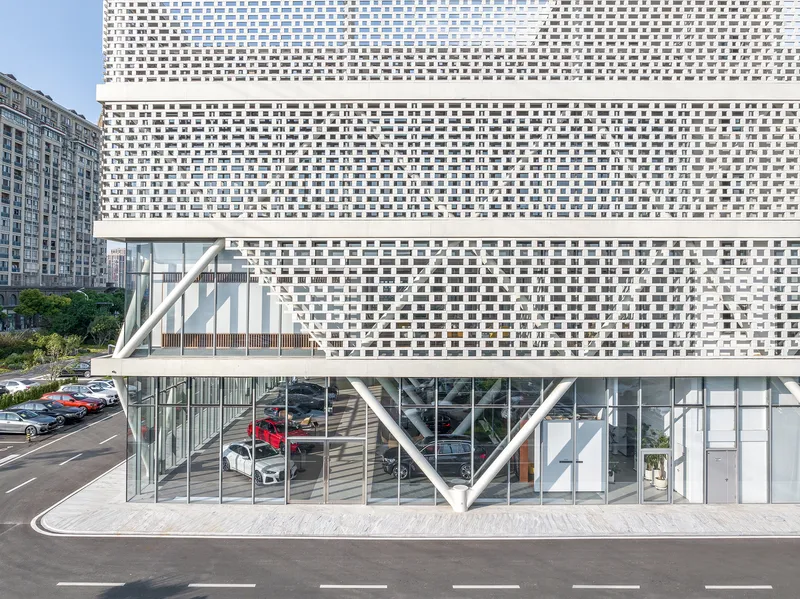
The double-layer skin facade of the BMW Center is a standout feature, combining white terracotta bricks with a transparent glass curtain wall. This design not only reflects traditional Jiangnan construction techniques but also meets modern energy-efficiency needs. The varying porosity across different floors optimizes indoor light and air flow, contributing to the building's overall sustainability.

Landscape Design: An Eco-friendly Oasis
The landscape of the BMW Center is intricately designed to reflect the serenity and aesthetic of a Chinese courtyard house. From the ground floor's water court to the rooftop terrace, each element is orchestrated to provide a tranquil, green space that enhances the overall sustainability of the structure.

Commitment to Energy Efficiency
The BMW Center embodies the principles of sustainable architecture through its comprehensive energy-efficient strategies. From ground source heat pumps to photovoltaic panels and LED lighting, every aspect of the building is designed with energy conservation in mind. The incorporation of rainwater harvesting systems and light pollution control measures further underscores the commitment to environmental sustainability.

Setting a New Standard in Sustainable Commercial Architecture
The BMW Center by Atelier FCJZ is not just a building; it's a bold statement in the movement towards sustainable commercial architecture. It successfully merges traditional Chinese architectural elements with modern sustainability standards, setting a new benchmark for eco-friendly commercial spaces worldwide. As we move forward, the BMW Center stands as a beacon of innovation, demonstrating that commercial architecture can indeed be both beautiful and beneficial to the environment.


All photographs are work of Zhong Zhang, Fangfang Tian



Popular Articles
Popular articles from the community


Co-life: Sustainable Architecture for Age-Friendly Community Living
Co-life reimagines sustainable architecture for seniors through courtyards, rammed earth, shared gardens, and spaces designed for belonging.

Hill & Cross Opera: Sculptural Opera House Architecture Shaped by Tallinn’s Landscape and Identity
Hill & Cross Opera reimagines opera house architecture in Tallinn through its sculptural hill, civic plaza, glass wave and a luminous cross.

Riyadh For All: Intergenerational Urban Design for Active Aging in Rabat
Riyadh For All reimagines urban design in Rabat with intergenerational co-living, adaptive courtyards, and Moroccan cultural exchange today.

Co-Life: Senior Housing Design That Reconnects Older Adults With the City
Co-Life reimagines senior housing design through healing gardens, shared streets, workshops, and a sustainable community across generations.

Similar Reads
You might also enjoy these articles


Hodi-Mandai Geram
Project Function: Preservation and revitalization of the Intangible heritage and socio-spatial identity of the Hodi by Housing, Cultural Memory Center, Sacred Grove, landscape, local tourism economy


Olio Towers: A Mid-Rise for Performers That Fuses Housing, Rehearsal, and Stage
Located blocks from Houston's Theater District, this modular tower stacks living units around a central performance atrium.

Oasis: Modular Green Housing Carved into Dhaka's Urban Fabric
A shortlisted Plugin Housing entry reclaims unauthorized settlements in Dhaka with stepped concrete volumes, green roofs, and ventilation-driven design.

Black Hole: A Floating Megastructure for the Post-Physical Era
Emiliano Mazzarotto envisions a spherical, self-scaling arena where e-sports, digital hotels, and holographic stadiums replace traditional public space.


Explore Architecture Competitions
Discover active competitions in this discipline



Challenge to reimagine the Iron Throne


Photograph architecture without architects


Illustrate the lost glory of Angkor Wat - Render Challenge


Design challenge to reuse E-waste
Comments (0)
Please login or sign up to add comments
No comments yet. Be the first to comment!