
Sustainable Industrial Architecture: Rethinking the Tannery Industry
Transforming industrial landscapes into sustainable hubs for communities, balancing innovation with environmental responsibility.


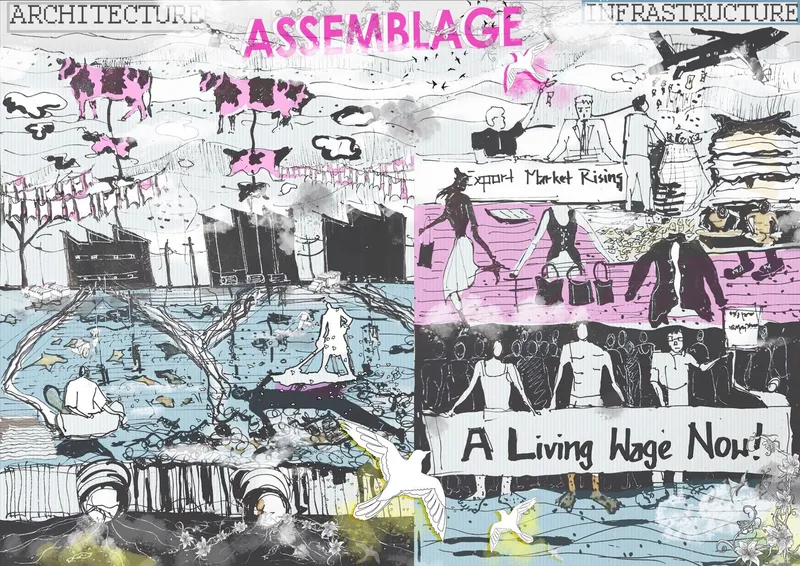
This project, titled "Architecture Infrastructure Assemblage," employs the concept of "Assemblage" — an ontological framework pioneered by Giles Deleuze and Felix Guattari. This theory provides a bottom-up approach to analyzing social complexity, emphasizing fluidity, exchangeability, and multifunctionality within entities and their connections.
Project Overview
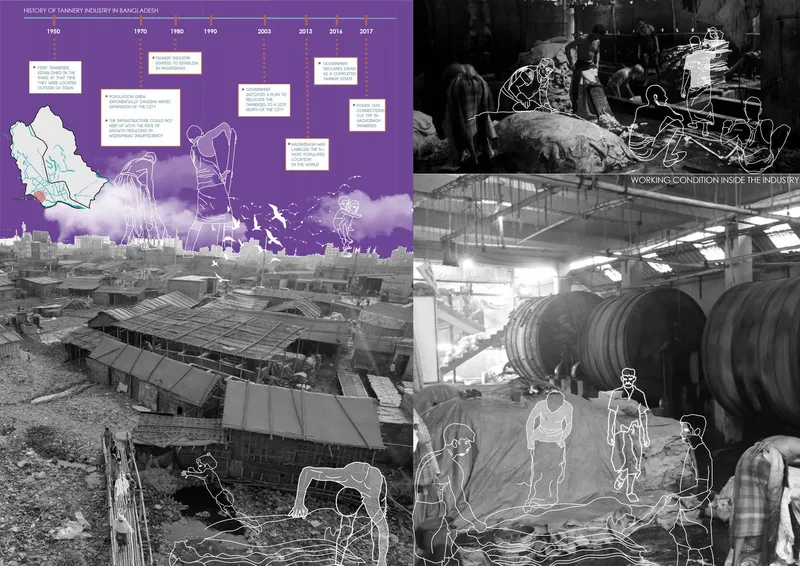
The tannery industry is the second-largest export-based industry in Bangladesh, but it faces severe challenges due to environmental disruption and unsustainable practices. This project adopts Assemblage theory to propose a framework that redefines the tannery industry's spatial and operational dynamics. By integrating advanced technologies, social infrastructure, and sustainable industrial principles, this initiative aims to transform the tannery industry into a model of resilience and adaptability.
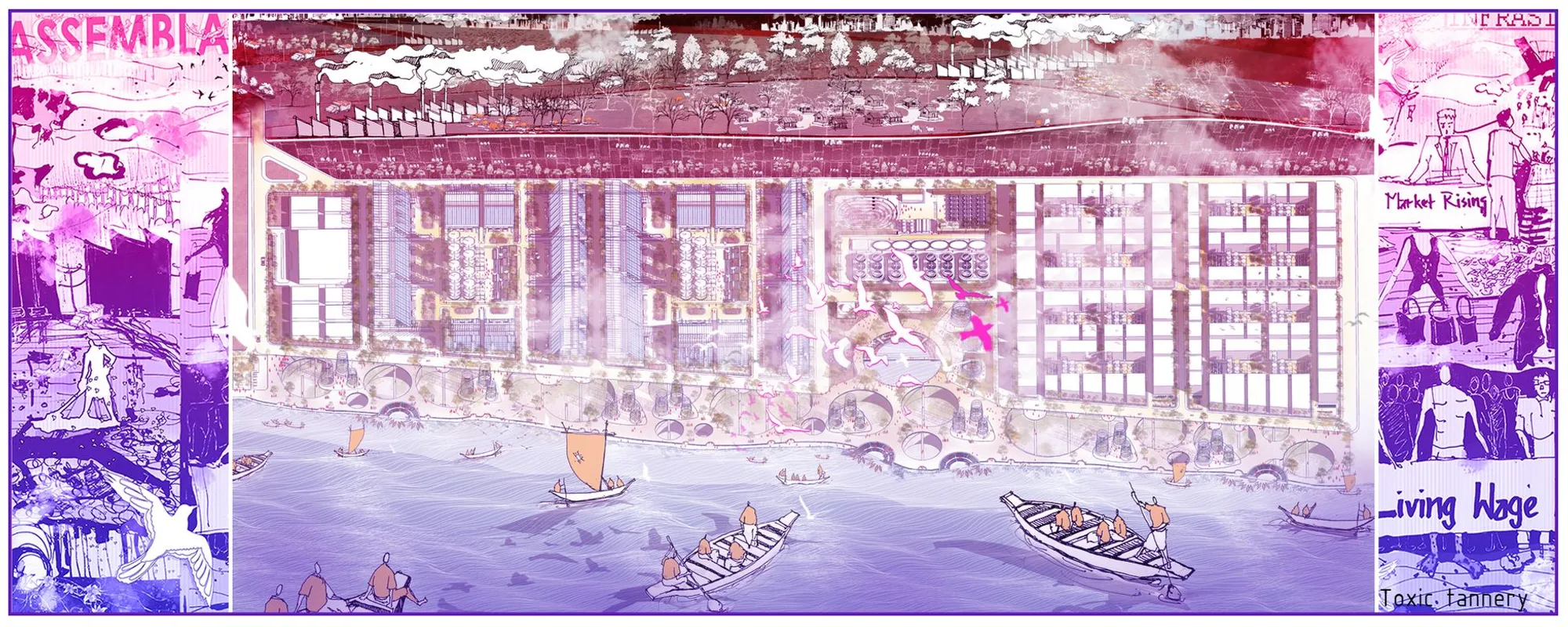
The project’s focus is on the relocation and redevelopment of the Hazaribagh tannery estate to the Savar Tannery Estate, addressing issues of environmental degradation, lack of proper infrastructure, and social inequities.
Key Objectives:
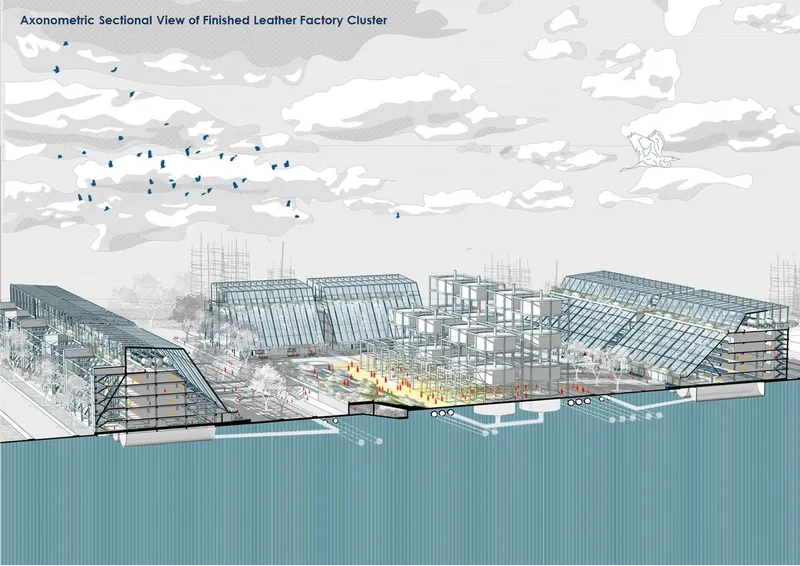
- Environmental Sustainability: Incorporating waste management systems and solar aquatic treatment zones to reduce pollution.
- Social Infrastructure: Creating spaces that ensure a living wage and improved working conditions for tannery workers.
- Integrated Urban Design: Blending architecture and infrastructure to establish a cohesive industrial ecosystem that benefits local communities.
Assemblage Theory in Action
Assemblage theory provides a lens to scrutinize urban challenges at multiple levels, emphasizing:
- Sociality: Building strong community networks through enhanced social infrastructure.
- Spatiality: Designing modular and adaptive industrial spaces to optimize resources and productivity.
Proposed Solutions
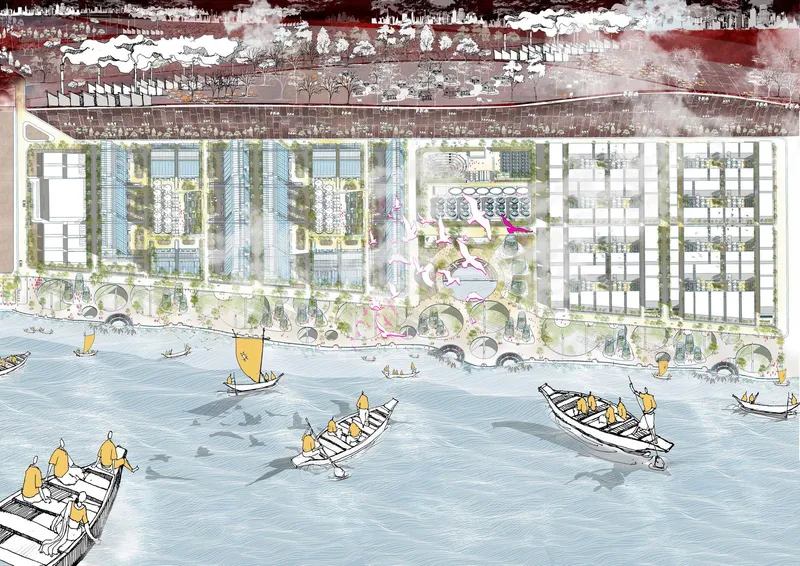
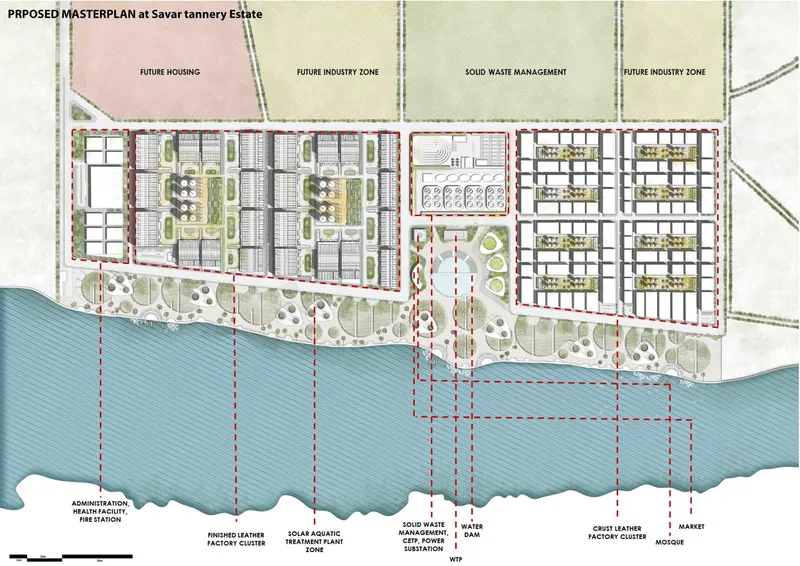
The proposed master plan integrates:
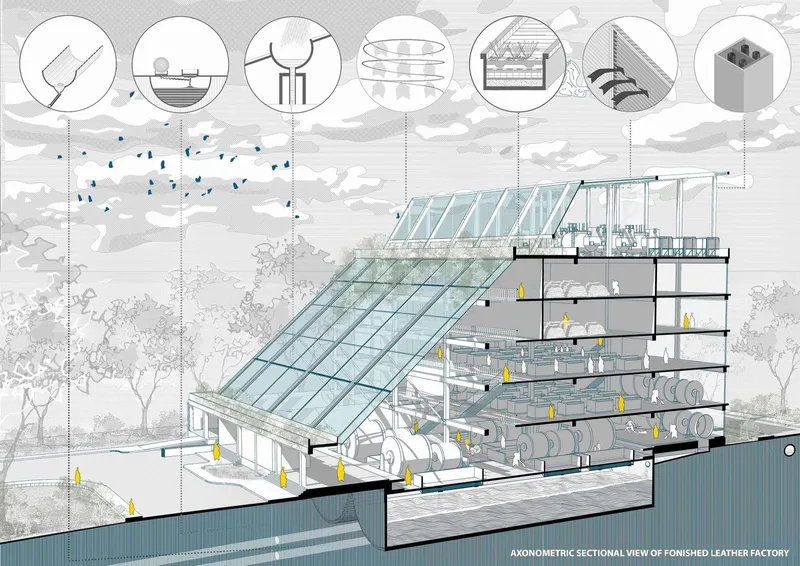
- Finished Leather Factory Clusters: Featuring green roofing systems, natural vegetation, and modular layouts to enhance ecological balance.
- Water Treatment Plants: Ensuring compliance with international environmental standards.
- Worker-Centric Design: Incorporating ergonomic facilities and social spaces to improve overall well-being.
Project by Pankaj
Shortlisted Entry for UnIATA '19




Popular Articles
Popular articles from the community


The Musturak Paradise: Senior Living Architecture for a Connected Future in Temara, Morocco
The Musturak Paradise reimagines senior living architecture in Temara via private homes, social spaces, culture, community, and shared care.

AL-JANNAH: Sustainable Architecture and Permaculture for Afghan Widows
AL-JANNAH uses sustainable architecture and permaculture to create resilient oasis of housing, learning, work and renewal for Afghan widows.

Riyadh For All: Intergenerational Urban Design for Active Aging in Rabat
Riyadh For All reimagines urban design in Rabat with intergenerational co-living, adaptive courtyards, and Moroccan cultural exchange today.

The Earth Pod: 3D Printed Homes for Resilient Refugee Communities
The Earth Pod reimagines refugee housing through 3D printed homes made from clay, combining resilience, self-sufficiency, and rapid shelter.


Similar Reads
You might also enjoy these articles


Hodi-Mandai Geram
Project Function: Preservation and revitalization of the Intangible heritage and socio-spatial identity of the Hodi by Housing, Cultural Memory Center, Sacred Grove, landscape, local tourism economy


Olio Towers: A Mid-Rise for Performers That Fuses Housing, Rehearsal, and Stage
Located blocks from Houston's Theater District, this modular tower stacks living units around a central performance atrium.

Oasis: Modular Green Housing Carved into Dhaka's Urban Fabric
A shortlisted Plugin Housing entry reclaims unauthorized settlements in Dhaka with stepped concrete volumes, green roofs, and ventilation-driven design.

Black Hole: A Floating Megastructure for the Post-Physical Era
Emiliano Mazzarotto envisions a spherical, self-scaling arena where e-sports, digital hotels, and holographic stadiums replace traditional public space.


Explore Architectural Assemblage Competitions
Discover active competitions in this discipline



Challenge to reimagine the Iron Throne


Photograph architecture without architects


Illustrate the lost glory of Angkor Wat - Render Challenge


Design challenge to reuse E-waste
Comments (0)
Please login or sign up to add comments
No comments yet. Be the first to comment!