
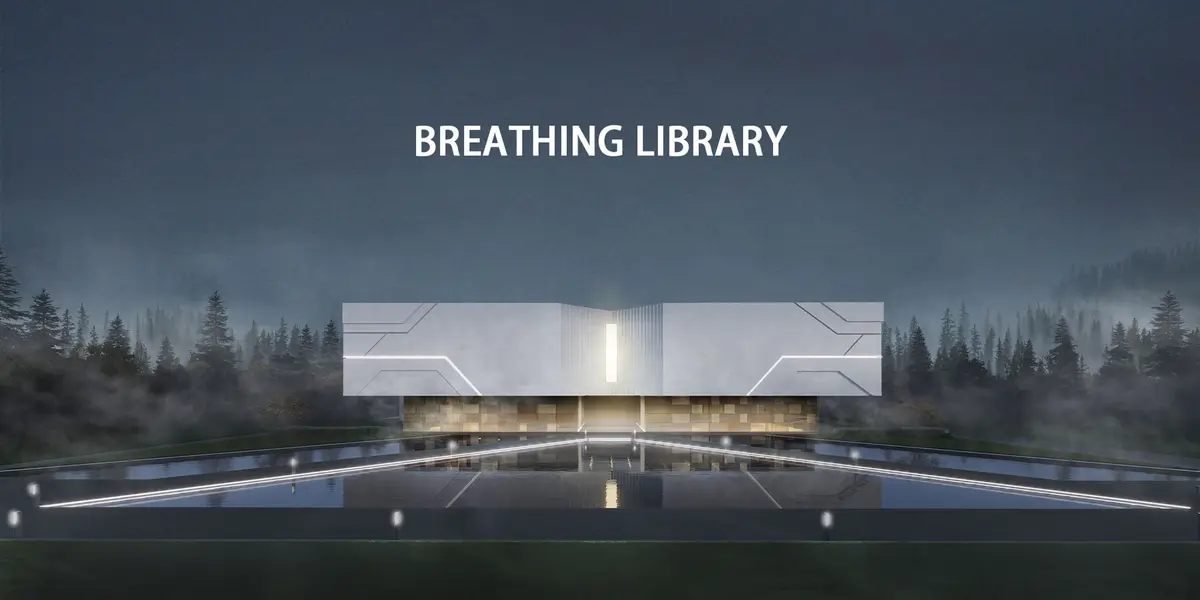
Sustainable Library Architecture: Breathing Life into Public Spaces
A deep dive into the 'Breathing Library': a visionary union of eco-conscious design and cutting-edge architectural spaces.


Created by Heng Xu, Feng Shirley, Junwei Wen, Rujun Li — Winner Entry of the Libgen Competition
In the heart of an urban green oasis, a revolution in sustainable library architecture is taking root. The 'Breathing Library' stands as a testament to the future of environmentally conscious design, embodying a symbiosis between knowledge and nature. This marvel is not merely a building; it's a living, breathing entity that interacts with its surroundings.
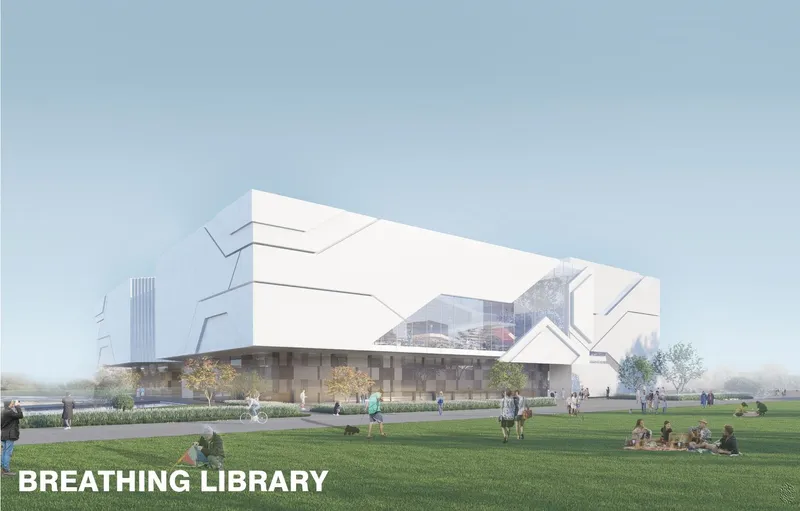
Harmonious Design in Sustainable Library Architecture
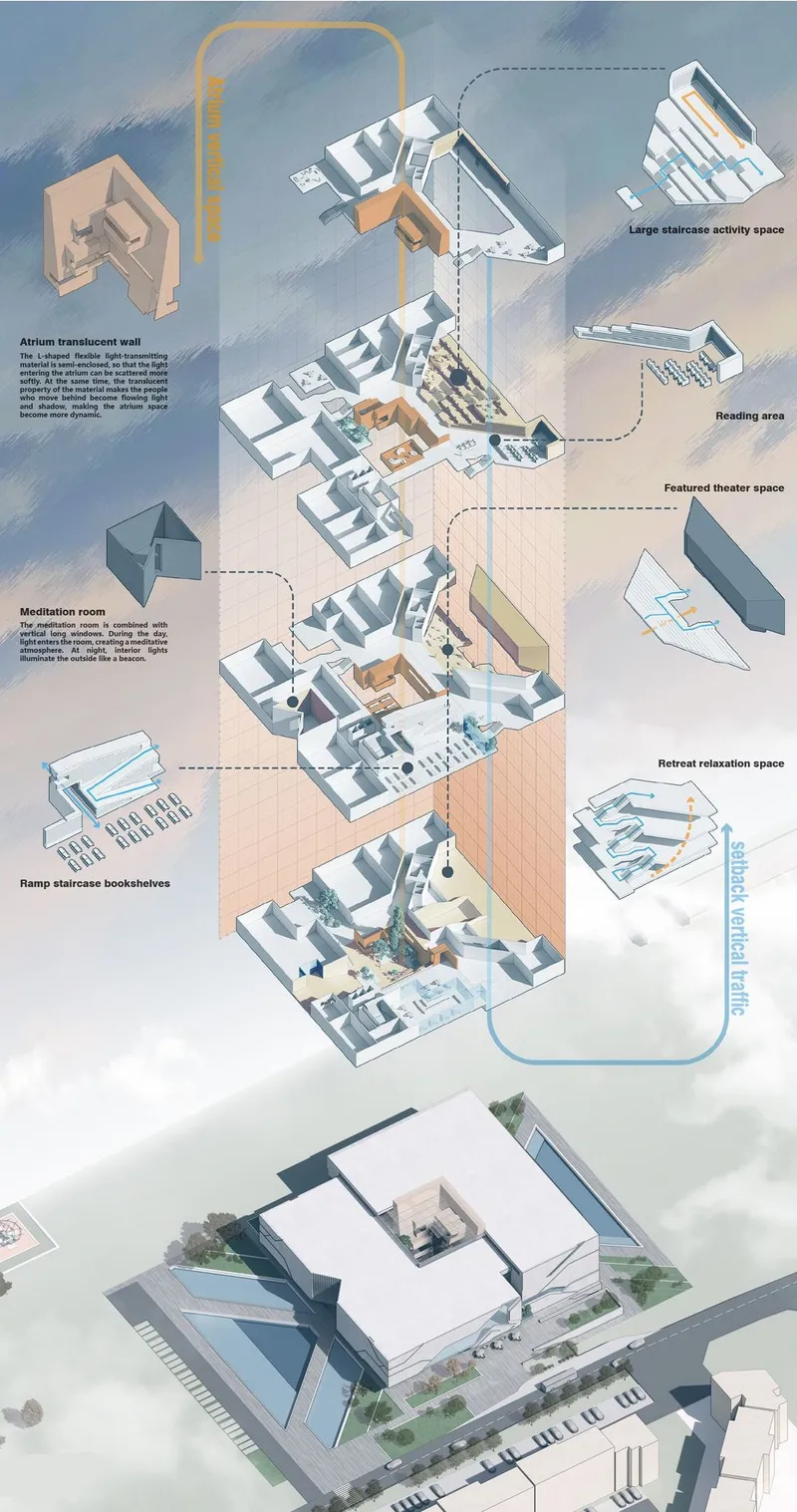
The Breathing Library is a pioneering force in sustainable library architecture. Nestled in the lush verdancy of the city's green space, it represents the pinnacle of design philosophy that seeks harmony with the environment. The structure’s heart is an expansive atrium, ingeniously crafted to usher in natural light and fresh air, symbolizing the atrium's role as a lung within the building's larger organism.
As with any living system, diversity is key. The library divides into two interlocking L-shaped blocks, echoing the topography's natural undulations and creating a rich tapestry of architectural forms. Semi-translucent materials and staggered stacks allow for a delicate play of light and shadows, making the building a canvas on which the sun paints ever-changing pictures.
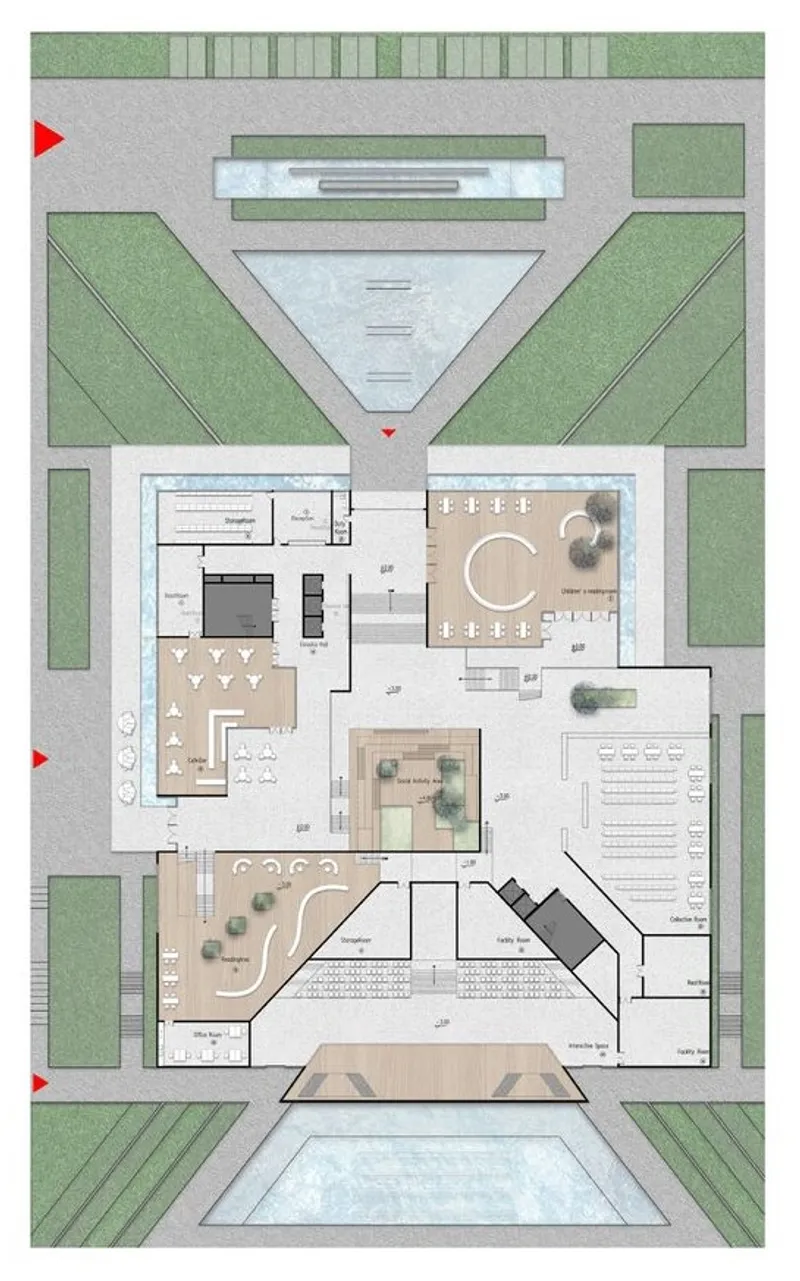
The Atrium: A Nexus of Knowledge and Sustainability
Within the atrium of the Breathing Library, the exchange of knowledge mirrors the unimpeded flow of air. It is a grand stage set for interaction, thought, and intellectual growth. A partial aerial view reveals a network of platforms fostering community dialogue, underpinned by the principles of sustainable library architecture.
Adjacent, a multifunctional theater space morphs to fit the needs of the community, a shape-shifter accommodating screen, stage, and open-air performances. Each transformation is an homage to flexibility and multifunctionality, core tenets of sustainable library architecture.
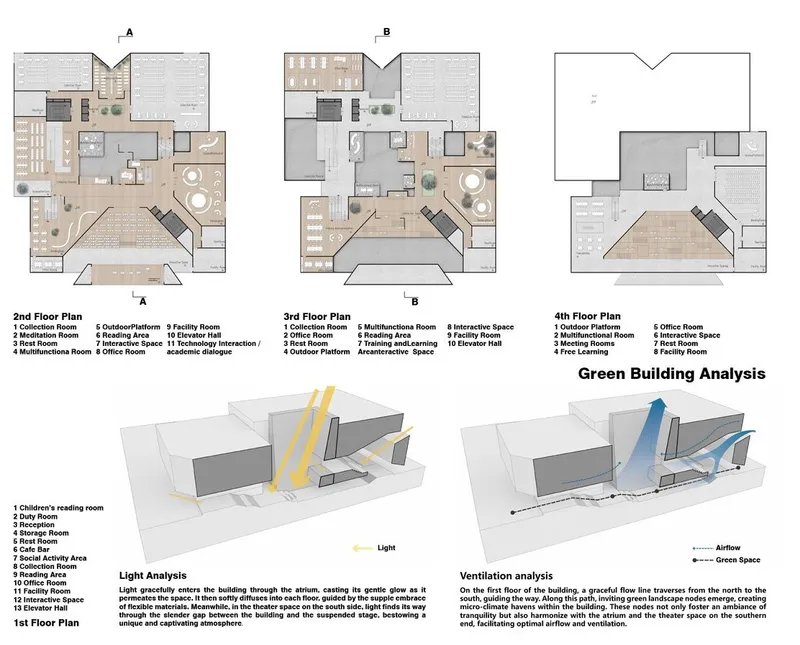
Integrating Green Building Principles
The Breathing Library doesn't just mimic nature aesthetically; it embodies green building principles. From the ground level, it guides visitors along a flow line adorned with green nodes, crafting micro-climates that offer both beauty and a sustainable interaction with the elements.
A detailed green building analysis reveals how the structure itself contributes to an internal ecosystem. Ventilation strategies invite natural breezes, reducing the need for artificial climate control. Light analyses show how daylight permeates the space, minimizing electrical consumption and enhancing the well-being of its patrons.
Future-Proofing Through Sustainable Library Architecture
The future is bright for the Breathing Library, which carries within its DNA the ability to evolve with the technological landscape. Every reading nook, interactive space, and learning area is a node in a larger network of sustainable library architecture.
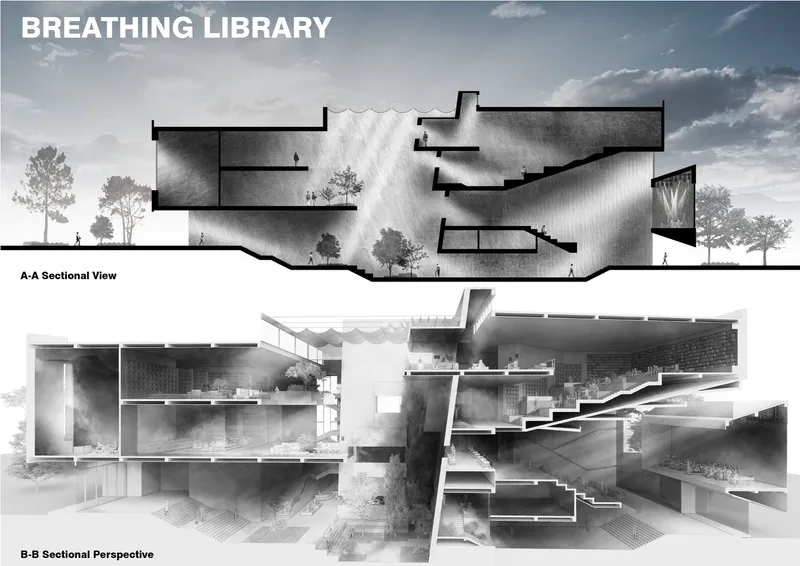
The Breathing Library is more than a structure; it's a manifesto of sustainable library architecture, promising a future where buildings breathe in concert with the earth. This library is a beacon, illuminating the path toward a world where architecture exists in a state of harmony with the environment — a true living library.


Popular Articles
Popular articles from the community


Opera on the Sea: Driftwood Logic Shapes a Timber Opera House on Estonia's Coast
Trevor Orgill's opera house translates the entangled drift of floating timber into a civic building where wood, water, and music converge.
Extended Shell: Retrofitting Kolkata's Balconies as Living Urban Thresholds
A modular retrofit system recovers the social and environmental intelligence of Kolkata's historic verandas for contemporary Park Street residents.

Cloaked Colonization: A Mobile Underwater Habitat That Moves Like a Fish
Micah Abaya's shortlisted EHC Pacific entry reimagines ocean settlement as a dispersed network of self-sustaining architectural organisms.

Singing Woman: An Opera House That Performs Before the Curtain Rises
Ovidiu Cristian Pavel's conceptual opera house translates Estonia's choral identity into a sculpted waterfront landmark facing the Baltic Sea.

Similar Reads
You might also enjoy these articles

Shakur's House: Exposed Brick as an Interior Organiser in a 168 m² Mashhad Residence
Brick moves indoors in this Mashhad residence, where masonry walls, glass partitions and teal planes sequence a compact home without closing it off.

Day and Night Park: A Time-Based Urban Newsstand in Beijing
A temporary urban newsstand in Beijing blending travel, light, and reading through poetic colors, compact form, and community-focused design.

Modernist Patio Renovation in El Masnou, Barcelona by Oliver Segura Arquitectura + Cebrià Arquitectura
Modernist patio renovation blending tradition and innovation with a movable pool, leveled floors, and Catalan materials in El Masnou.

Alto Residencial Coop: Cooperative Housing Development in Santiago de Compostela by Carbajo Barrios Arquitectos
A linear cooperative housing complex blending white volumes and perforated metal façades, enhancing community living, natural light, privacy, and urban integration.

Explore Library Architecture Competitions
Discover active competitions in this discipline

Challenge to design public laboratory

Challenge to reimagine the Iron Throne

Photograph architecture without architects

Illustrate the lost glory of Angkor Wat - Render Challenge
Comments (0)
Please login or sign up to add comments
No comments yet. Be the first to comment!