
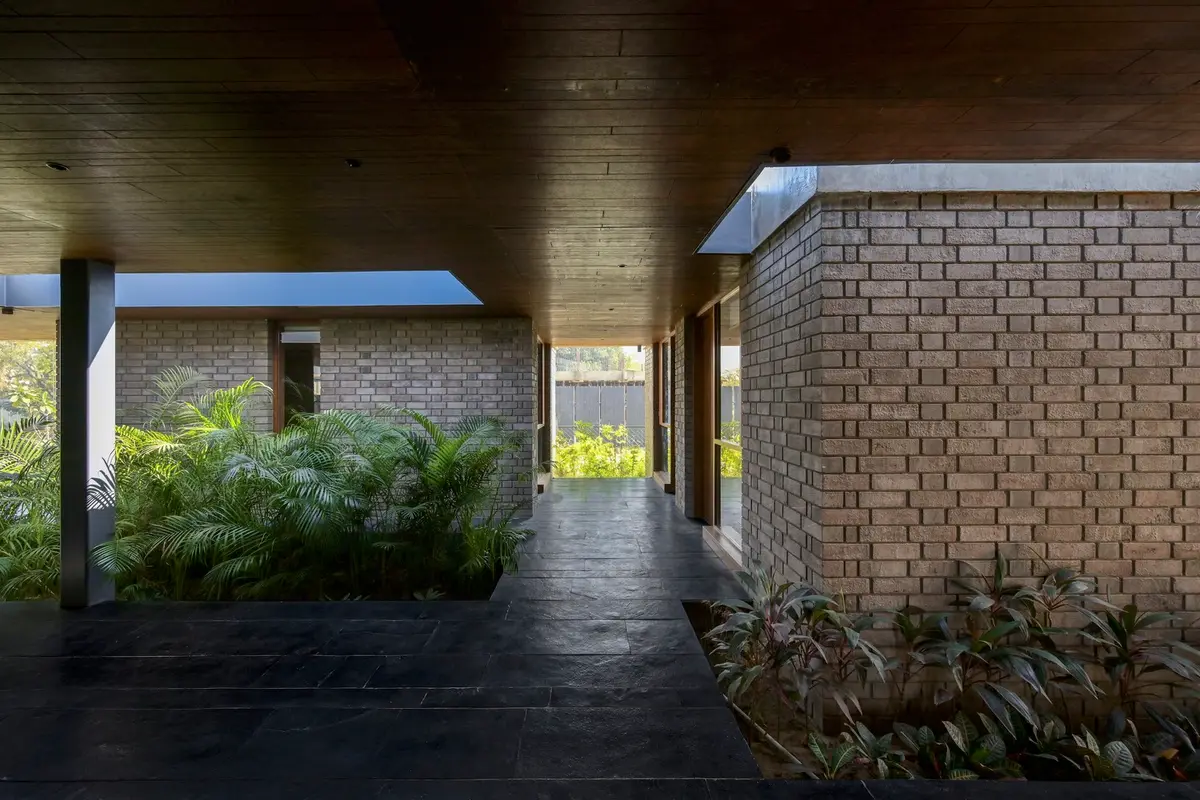
Sustainable Office Design: A Model for the Future
Exploring "Few Walls and a Roof Office" by inpractice: innovative, sustainable office design in Ahmedabad.


In the evolving landscape of architectural design, the concept of sustainability has taken center stage, reshaping how we think about and construct our working environments. The "Few Walls and a Roof Office" project by inpractice in Ahmedabad, India, exemplifies this shift towards sustainable office design. This article delves into the project's unique approach, showcasing how sustainability can be integrated into office spaces in innovative and functional ways.
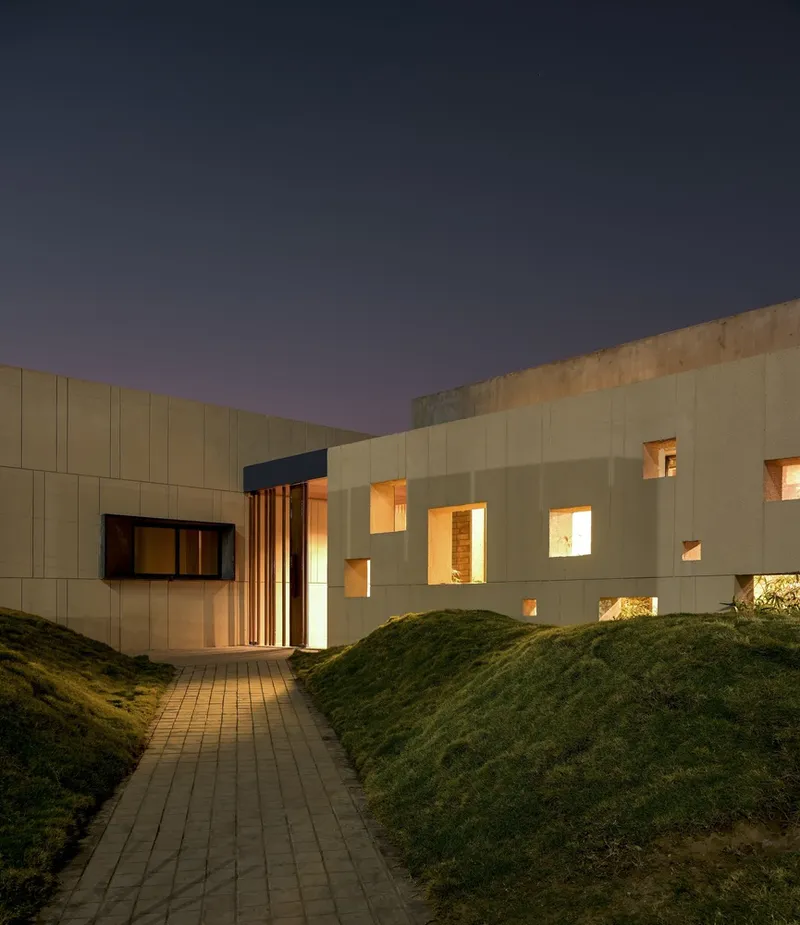
The Concept of Sustainable Office Design
The Philosophy Behind Few Walls and a Roof
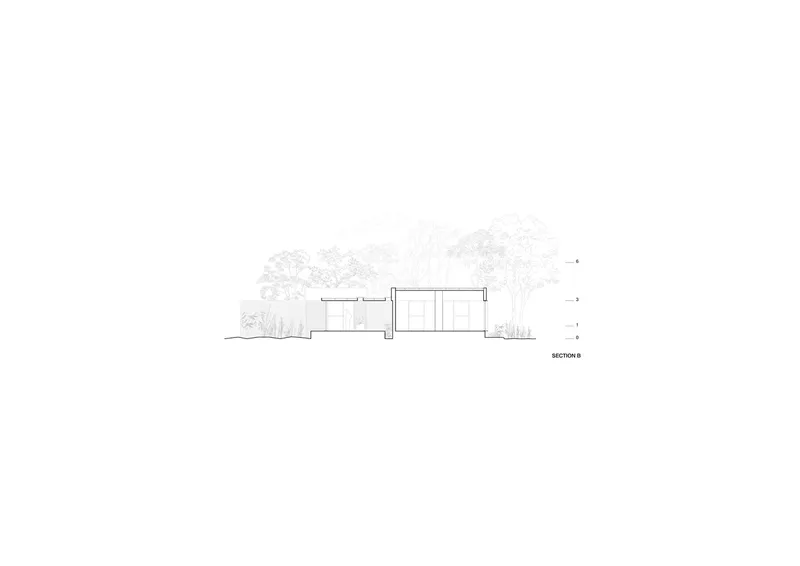
The "Few Walls and a Roof Office" project challenges traditional office layouts by promoting a design that is both adaptable and transient. Unlike conventional offices with their open workstations and one-size-fits-all approach, this project emphasizes individuality within a collective space. Each element of the office, from the scattered cubes providing intimate workspaces to the communal areas like the central courtyard, is designed with adaptability and sustainability in mind.
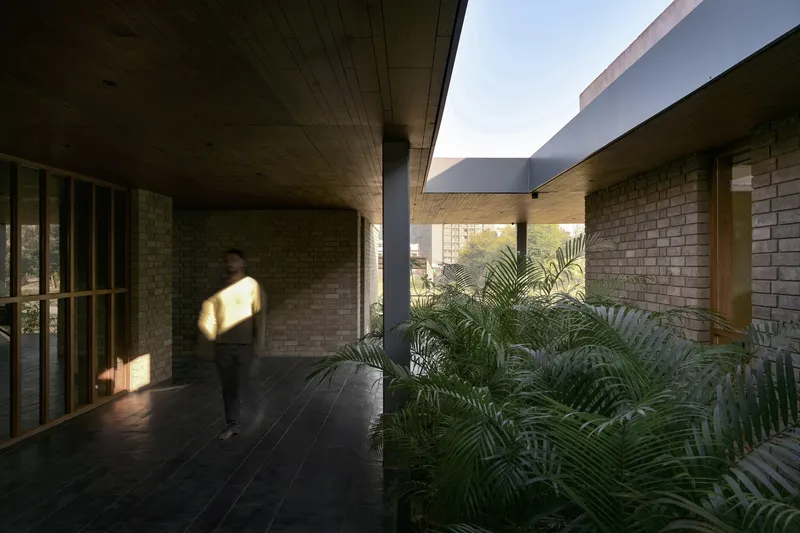
Sustainable Materials and Construction
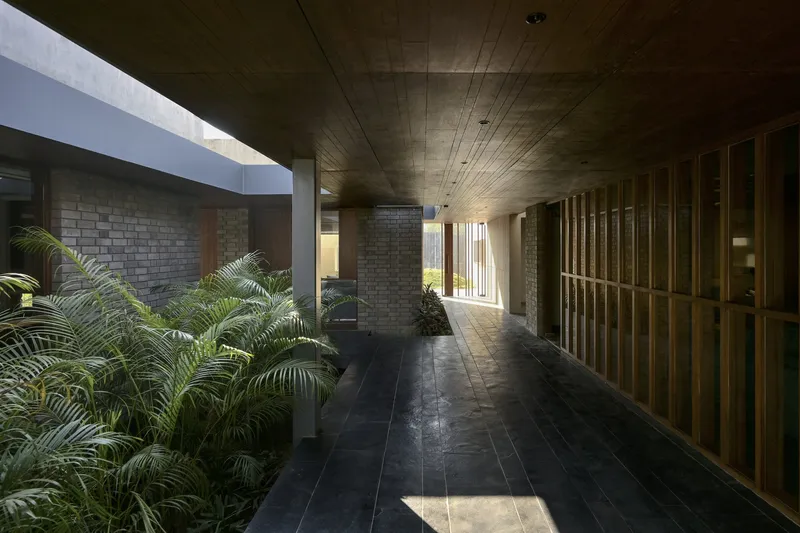
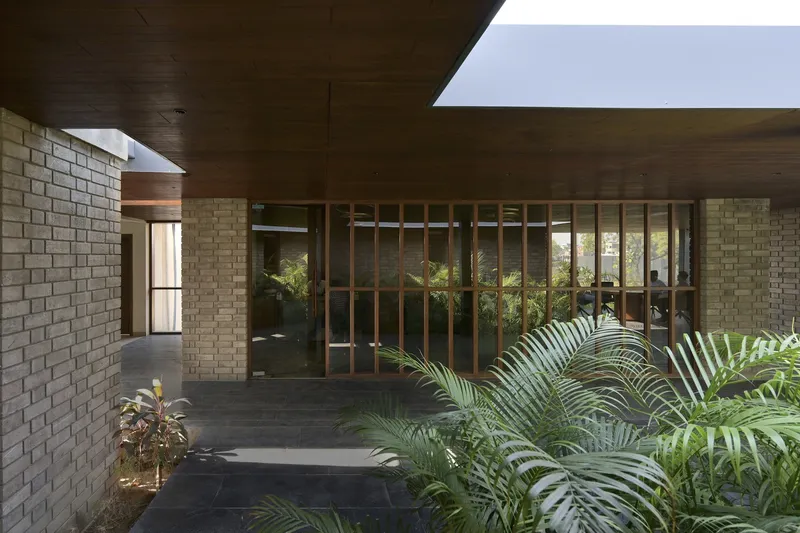
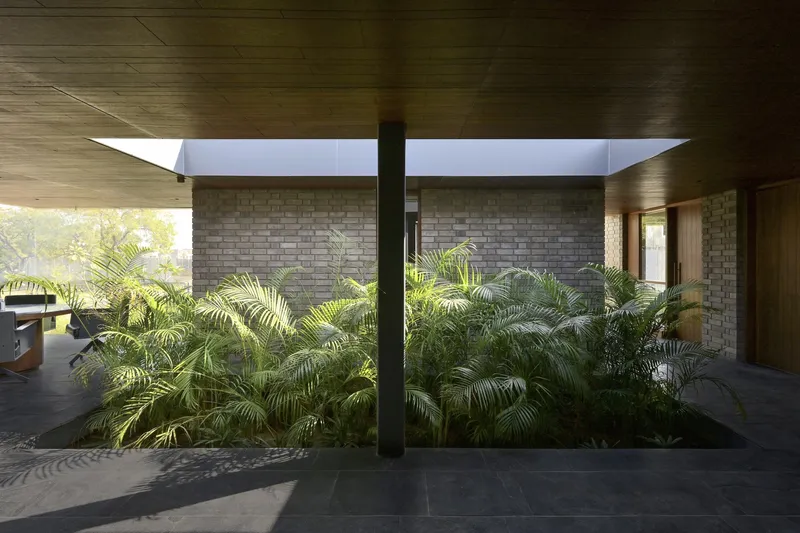
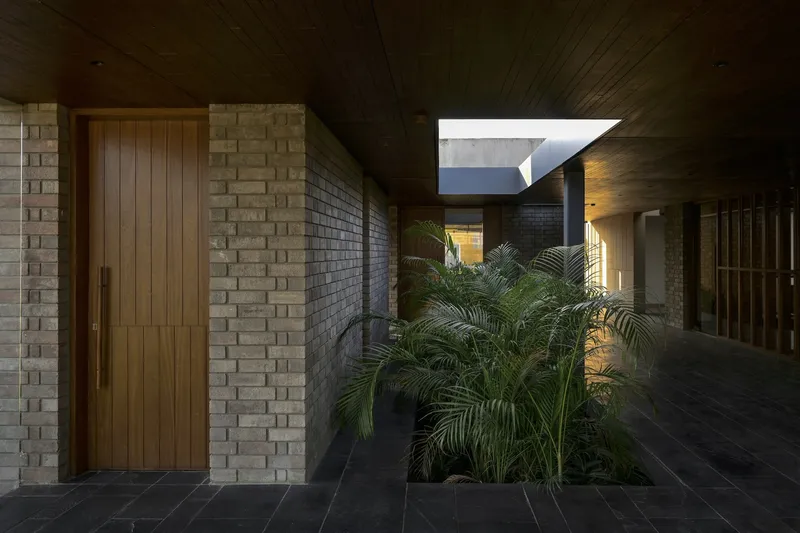
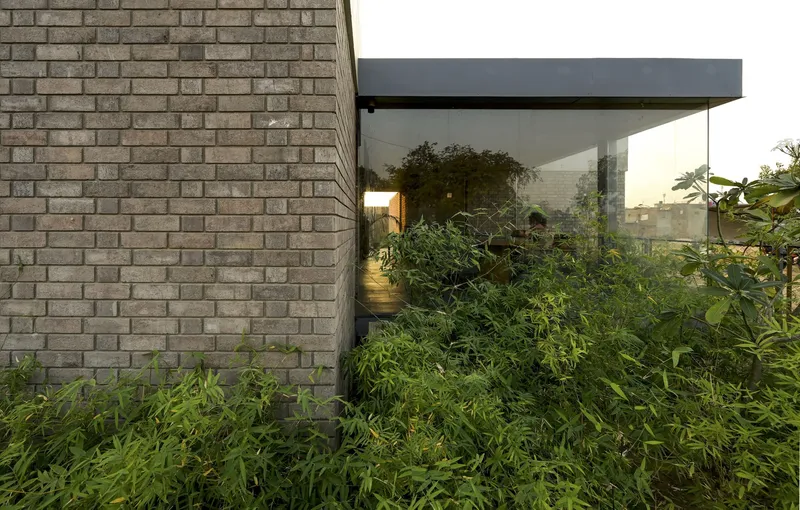
A key feature of the Few Walls and a Roof Office is its use of sustainable materials. The walls, constructed from debris-crushed bricks, and the steel roof, designed to be removable, underscore the project's commitment to sustainability. These choices not only minimize environmental impact but also reflect a broader philosophy of temporary and adaptable architecture, where buildings can be dismantled and repurposed with minimal waste.
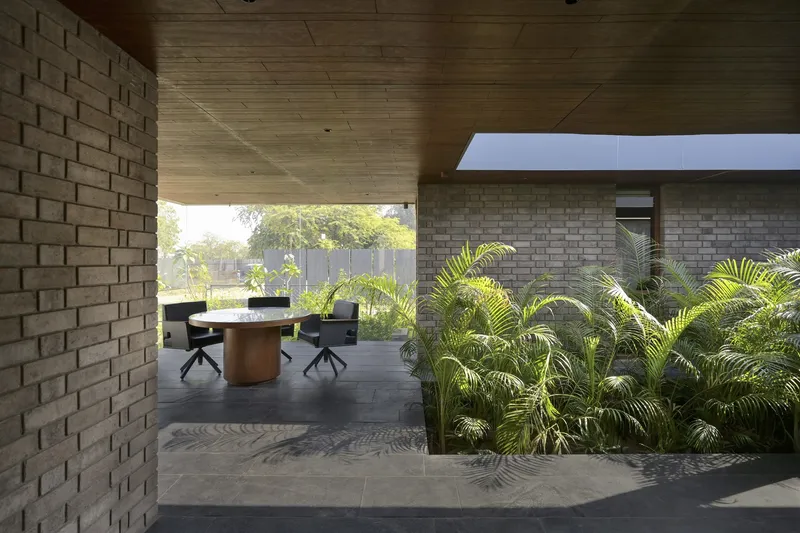
Integrating Green Spaces
The Role of Greenery
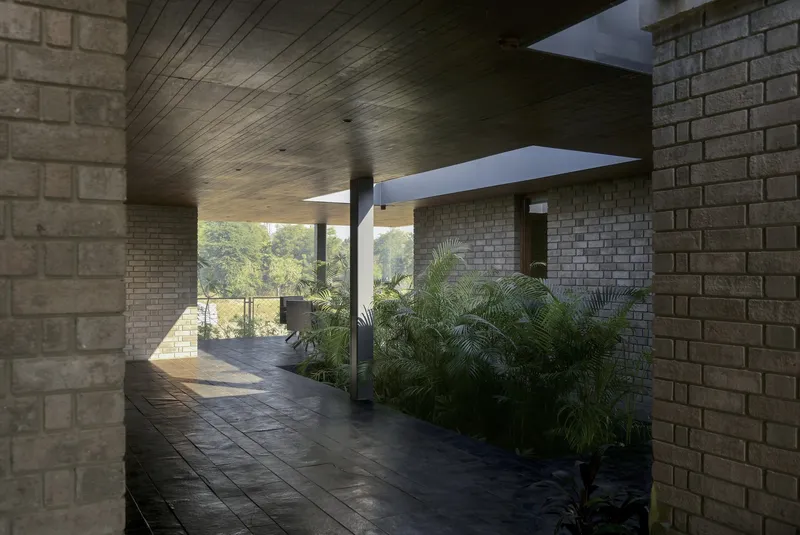
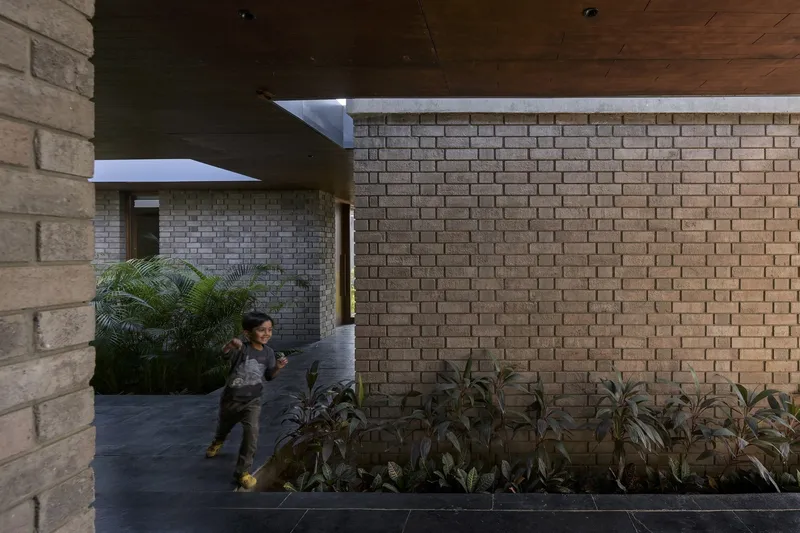
The integration of green spaces within the office layout is another aspect of its sustainable design. The presence of gardens, patios, and courtyards throughout the office not only enhances the aesthetic appeal but also contributes to the well-being of its occupants. These green areas are a testament to the project's vision of creating a harmonious balance between workspaces and natural environments, fostering a sense of tranquility and connection to nature.
The Impact of Sustainable Office Design
Changing Perceptions of Work Environments
The Few Walls and a Roof Office project serves as a model for how sustainable design principles can transform work environments. By prioritizing individual needs within a collective space and integrating sustainable practices and materials, this project challenges conventional office designs. It presents a vision for the future of office architecture, where sustainability and adaptability are at the forefront.
The Benefits of Sustainability in the Workplace
Adopting sustainable office design has numerous benefits, from reducing environmental impact to improving employee satisfaction and productivity. By creating spaces that are both aesthetically pleasing and environmentally conscious, projects like Few Walls and a Roof demonstrate how sustainability can enhance the quality of our work environments.
The Few Walls and a Roof Office project by inpractice in Ahmedabad, India, represents a significant step forward in sustainable office design. Through its innovative use of materials, integration of green spaces, and focus on adaptability, it offers valuable insights into how offices can be designed with sustainability at their core. As we look to the future, it is clear that sustainable office design will continue to play a crucial role in shaping our built environments, making them more responsive to both human and environmental needs.
All photographs are work of Vivek Eadara


Popular Articles
Popular articles from the community


Co-life: Sustainable Architecture for Age-Friendly Community Living
Co-life reimagines sustainable architecture for seniors through courtyards, rammed earth, shared gardens, and spaces designed for belonging.

Play: Fragments of Their World
Familiar architecture becomes modular playground design, creating safe spaces where displaced children can learn, connect, imagine and play.

Little Red Riding Hood: Architectural Design as a Journey Through Fear, Light, and Storytelling
Little Red Riding Hood reimagines the fairy tale through architectural design shaped by fear, light, scale, memory, uncertainty, and choice.

Conexión: Biophilic Design Reimagines High-Rise Living in Hong Kong
Conexión reimagines high-rise living in Hong Kong through biophilic design, green facades, shared spaces, daylight, water and nature within.

Similar Reads
You might also enjoy these articles

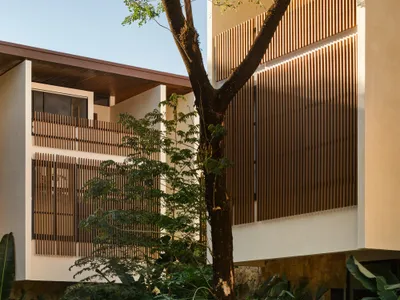
FAMM Arquitectura Organizes Ten Villas Around Courtyards and Jungle in Nosara, Costa Rica
El Molino pairs two elongated volumes with deep overhangs and timber louvers to build a compact coastal community five minutes from the beach.
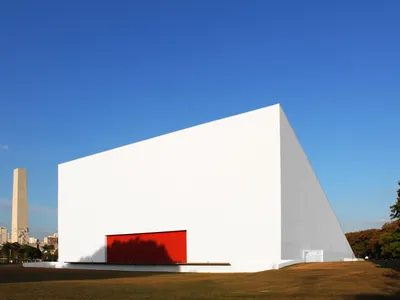
Oscar Niemeyer's Ibirapuera Park Pavilions Define São Paulo's Cultural Identity in Concrete and Curve
A constellation of modernist volumes set within São Paulo's most important urban park, conceived for the city's 400th anniversary in 1954.
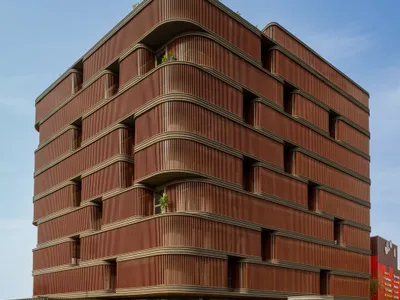
Sanjay Puri Architects Wraps a Jaipur Office Tower in Capsule-Shaped Green Buffers
A nine-level climate-responsive workplace near Jaipur Airport uses stacked planter terraces and aluminium screens to fight 40°C heat.
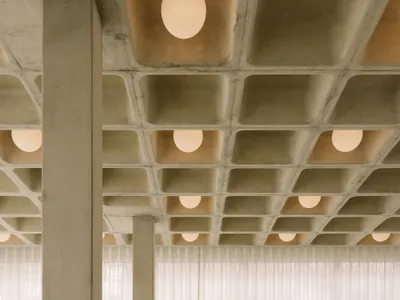
RHO Converts a Berlin Spree-Side Industrial Courtyard into Enkime's 1,000 m² Agency Headquarters
A social media agency's new home in Charlottenburg trades glossy branding for concrete waffle ceilings, glazed tile, and sheer curtains.

Explore Sustainable Features Competitions
Discover active competitions in this discipline

Challenge to reimagine the Iron Throne

Photograph architecture without architects

Illustrate the lost glory of Angkor Wat - Render Challenge

Design challenge to reuse E-waste
Comments (0)
Please login or sign up to add comments
No comments yet. Be the first to comment!