

Four Studios Resurrect Basingstoke's Hanging Gardens and Turn a 1970s Icon into a Biophilic Workplace
Plant Basingstoke restores Peter Foggo's terraced office building and James Russell's rooftop gardens to pursue BREEAM Outstanding status.


In 1973, Peter Foggo of Arup Associates designed a building in Basingstoke that answered a question most architects were not yet asking: what happens when you embed a landscape inside an office? The result, originally known as Gateway House, stepped down a steep site in a cascade of terraced floors, each ringed with planted gardens designed by horticulturist James Russell. The building earned an RIBA award in 1979, an English Heritage listing in 2015, and a reputation as one of the fifteen most important listed modern buildings in Britain. Then it needed saving.
The rescue required four practices working in concert: Feilden Clegg Bradley Studio, Studio Knight Stokoe, Twelve Architects, and landscape architects Grant Associates. Their brief was not simply preservation. Plant Basingstoke, as the project is now called, aims for both BREEAM Outstanding and WELL Platinum certification, targets that would make it a benchmark for commercial refurbishment in the UK. The team stripped back decades of poorly considered interior fit-outs to reveal Foggo's precast concrete coffers, upgraded the curtain wall for thermal performance, and brought 22,500 new plants to the rooftops. The ambition here is not nostalgia. It is the argument that the most sustainable office building might be one that already exists.
Terraces That Step with the Land
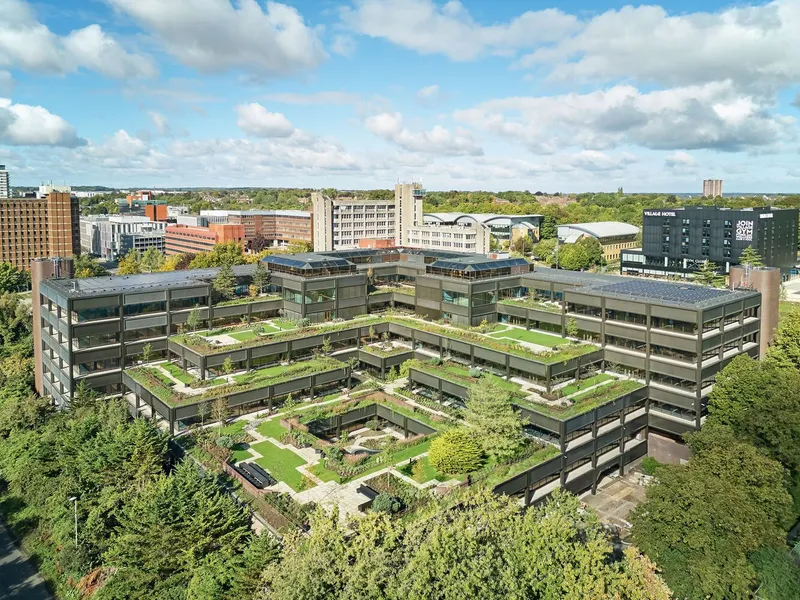
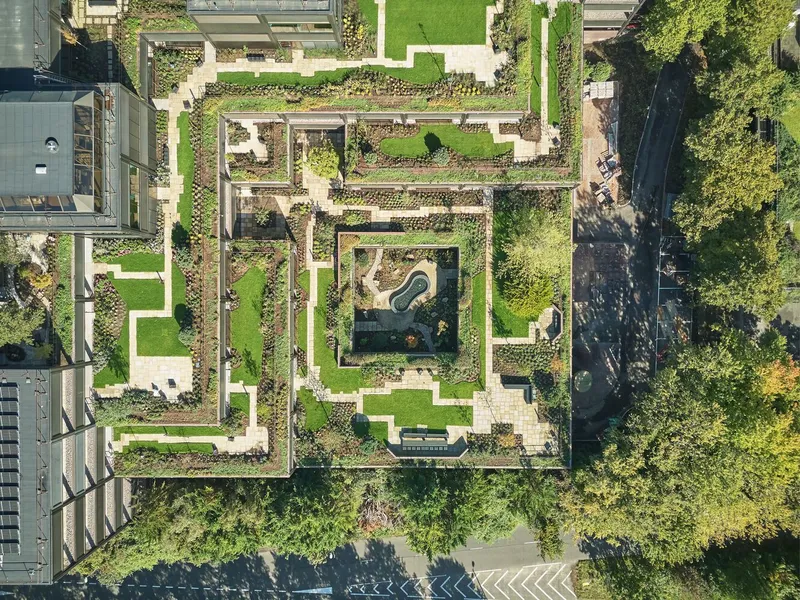
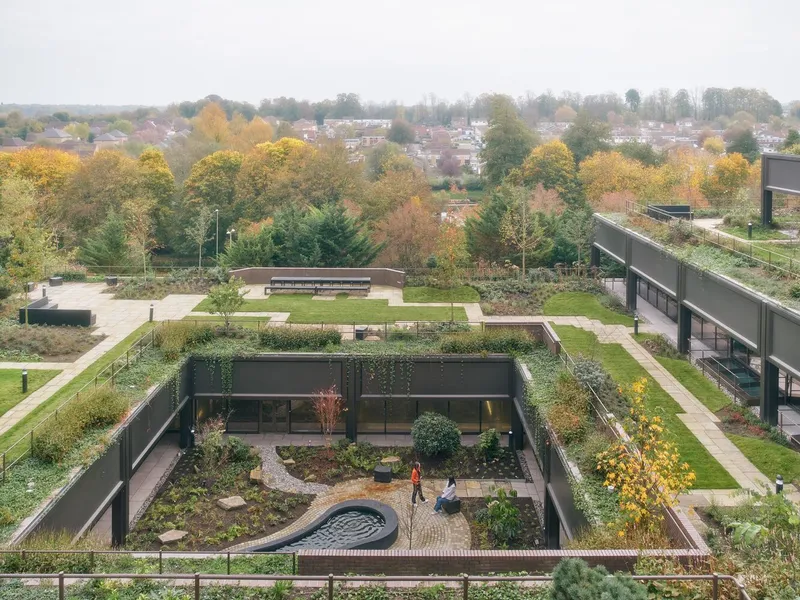
Gateway House was shaped by its site. The almost-square plan is oriented north-south but organized along a diagonal axis, stepping down in terraces toward a central courtyard. This configuration was drawn from precedents like Kevin Roche and John Dinkeloo's Oakland Museum in California and SOM's Weyerhaeuser Headquarters near Tacoma, both buildings that treated landscape and architecture as a continuous system. Foggo's interpretation adapted the idea to a business park in Hampshire, where Basingstoke had been designated a London overspill area and was actively courting corporations out of the capital.
From above, the logic is immediately legible. Six levels of office space wrap inward around the courtyard, each roof becoming the garden terrace for the floor above. The cascading profile gives every floor direct access to planting and daylight while the overhangs shade the glass below, reducing cooling loads without mechanical intervention. It is a passive strategy embedded in the massing itself, not applied as an afterthought.
Exposing the Coffer Grid
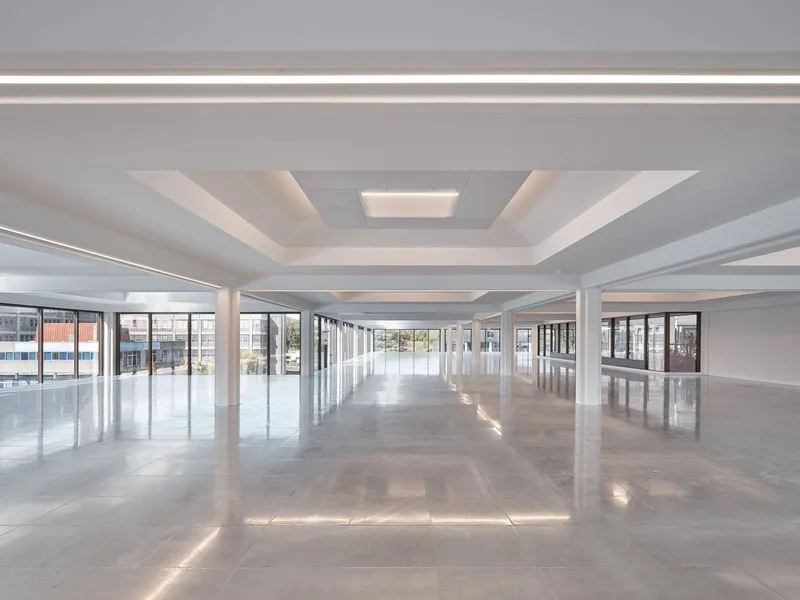
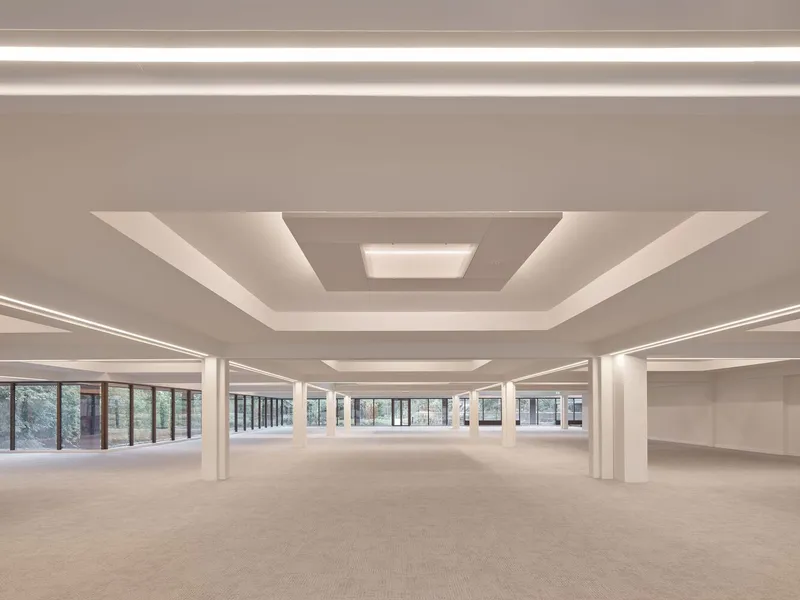
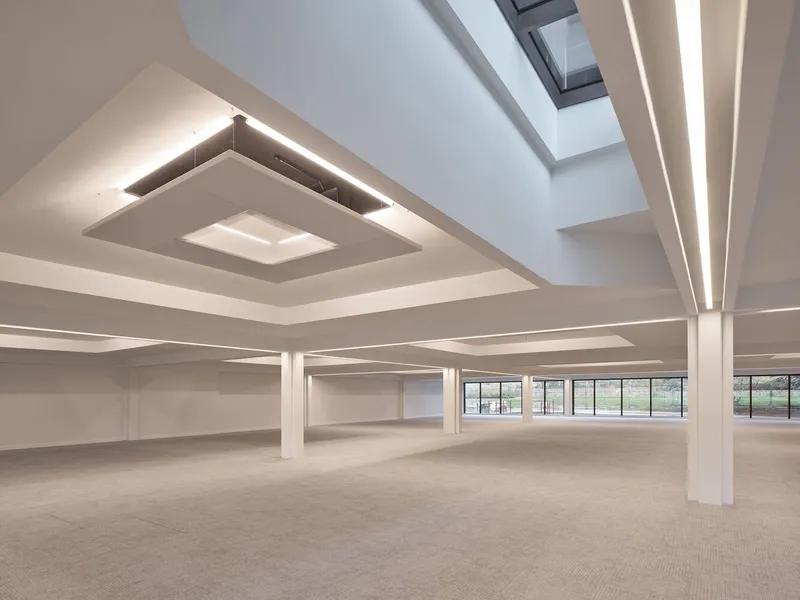
The most dramatic interior move was also the simplest: remove everything that had been added. Suspended ceilings came down. Internal partitions came out. What emerged was the building's original precast concrete skeleton, a 7.5-metre by 7.5-metre grid of cruciform columns supporting coffer-pyramid slabs. The coffers are not decorative; they route services through the structural depth while keeping the soffit exposed, giving the ceilings a rhythm of receding geometry that no dropped tile grid could replicate.
Linear lighting fixtures run cleanly between the coffers, and floor-to-ceiling glazing along the perimeter pulls the surrounding woodland into every sightline. The result is an open-plan office that feels expansive without feeling generic. The retained travertine and engineering brick wall finishes ground the palette in the building's own material history, while new timber elements and planters layer warmth without competing with the concrete.
A Bronze Skin Rebuilt
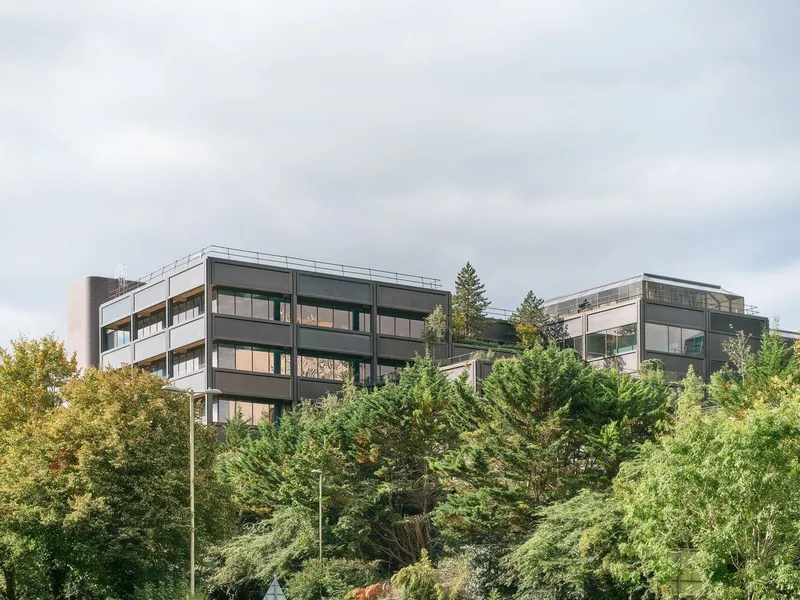
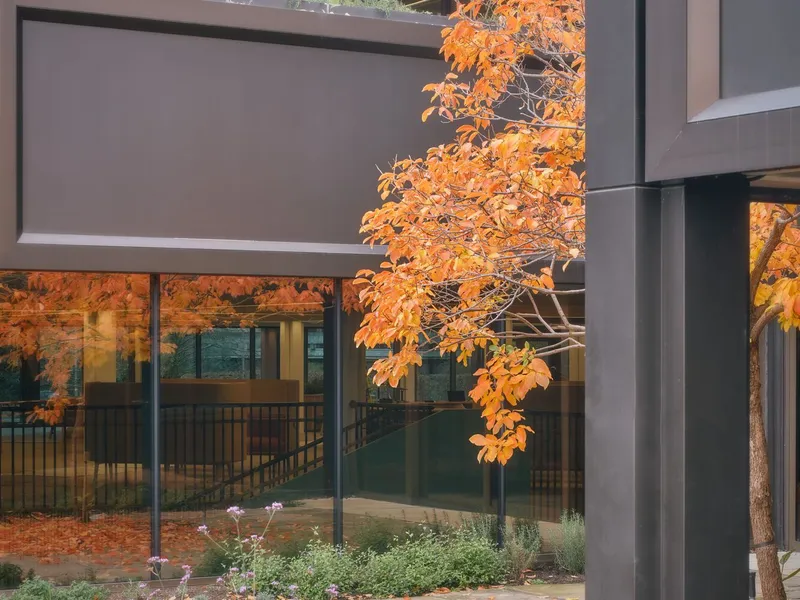
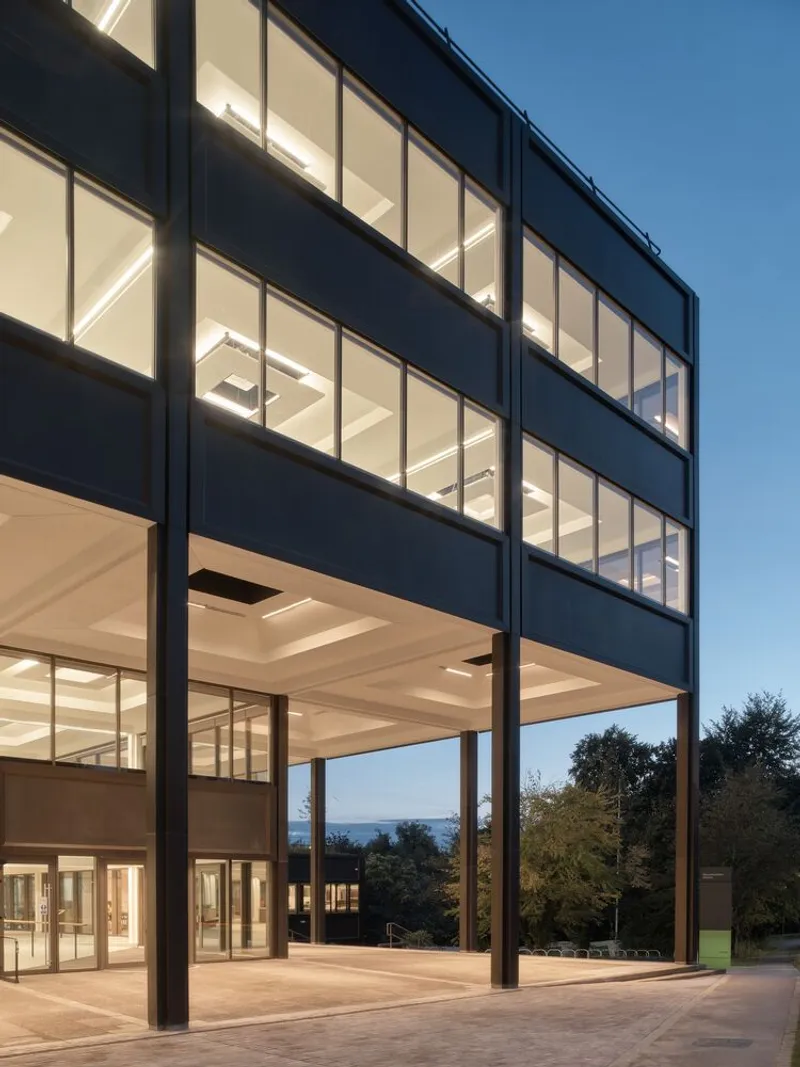
Foggo's original facade combined bronze-anodised aluminium cladding with bronze-tinted glass set in steel box mullions, a material palette that gave the building a warm metallic presence against the Hampshire greens. The curtain wall has been refurbished to improve thermal performance, a critical upgrade for a structure designed before contemporary insulation standards existed. The new glazing maintains the tonal register of the original while dramatically reducing energy consumption.
Two projecting stair towers in blue engineering brick punctuate the facade and remain intact, their muscular geometry contrasting with the horizontal banding of glass and panel. At dusk, the building reads as a stack of illuminated bands, the interior warmth leaking through the bronze glass in a way that makes the massing dissolve into horizontal lines.
The Hanging Gardens Reborn
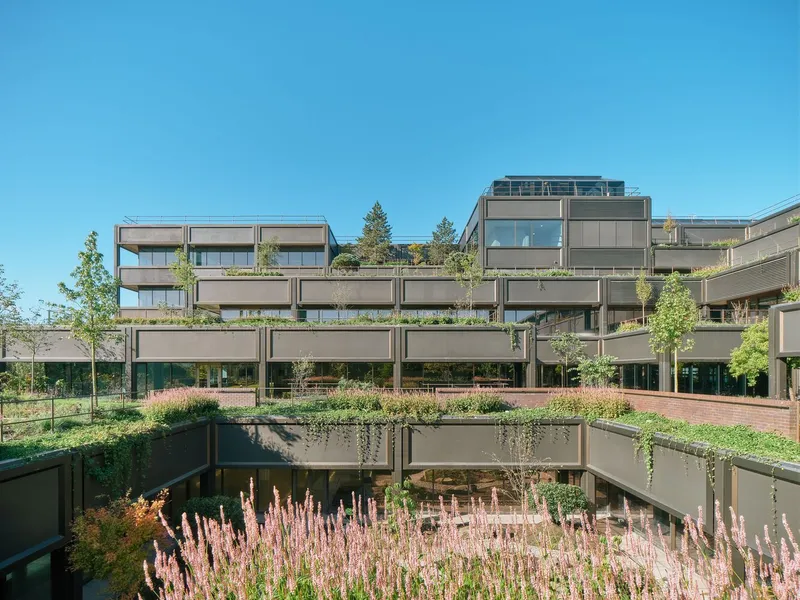
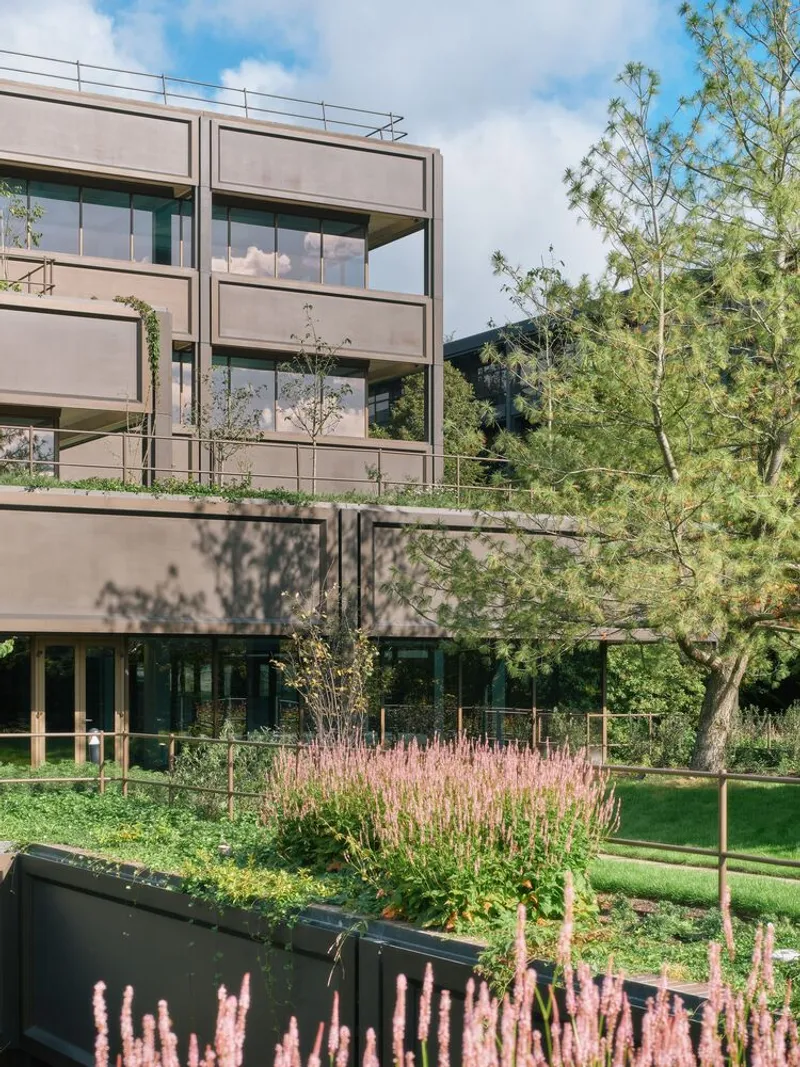
James Russell's original planting design was as ambitious as Foggo's architecture. Tiered roof gardens wrapped every level, their soil depths ranging from 225 millimetres to 900 millimetres, enough to support shrubs and small trees on structural slabs waterproofed with cellular glass membranes and three layers of mastic asphalt. Grant Associates dug into the archives at the University of York, recovering Russell's handwritten planting lists and analysing his historic palettes to understand what he intended versus what had survived.
The findings were instructive. Many original species had failed because they were poorly suited to exposed rooftop conditions. The restoration replaced these with climate-resistant alternatives selected for biodiversity value, a regenerative approach that honors Russell's spirit without blindly repeating his choices. Over 22,500 new plants and 86 trees went in. Every original paving element across the garden levels was recorded, catalogued, temporarily removed during construction, then replaced in its exact position. That level of care is the difference between renovation and restoration.
Courtyard and Water
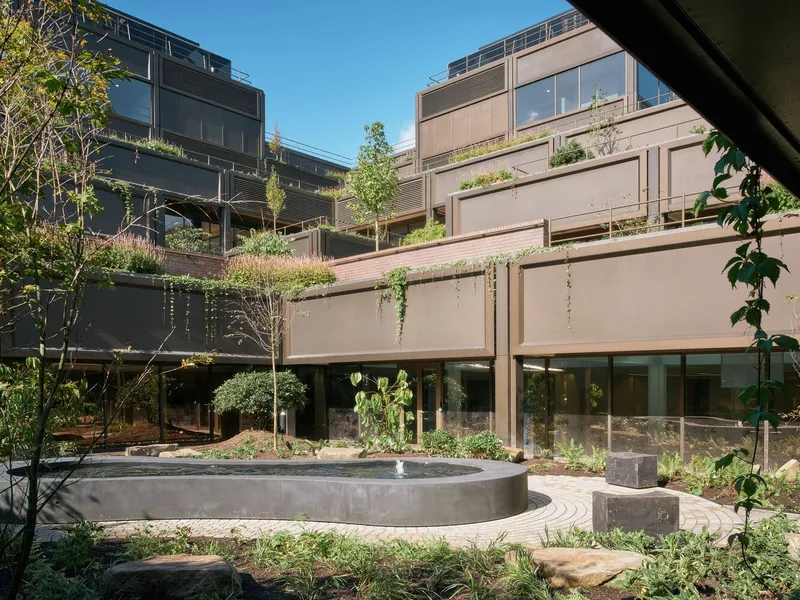
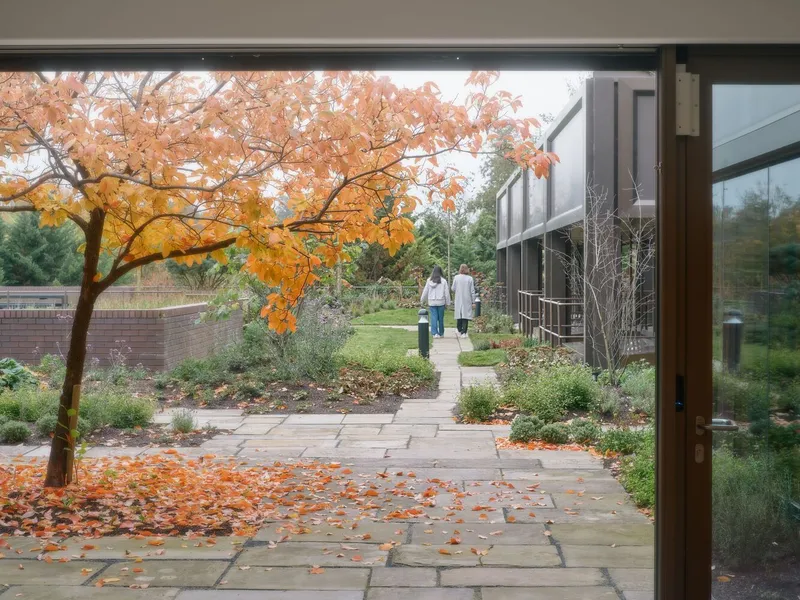
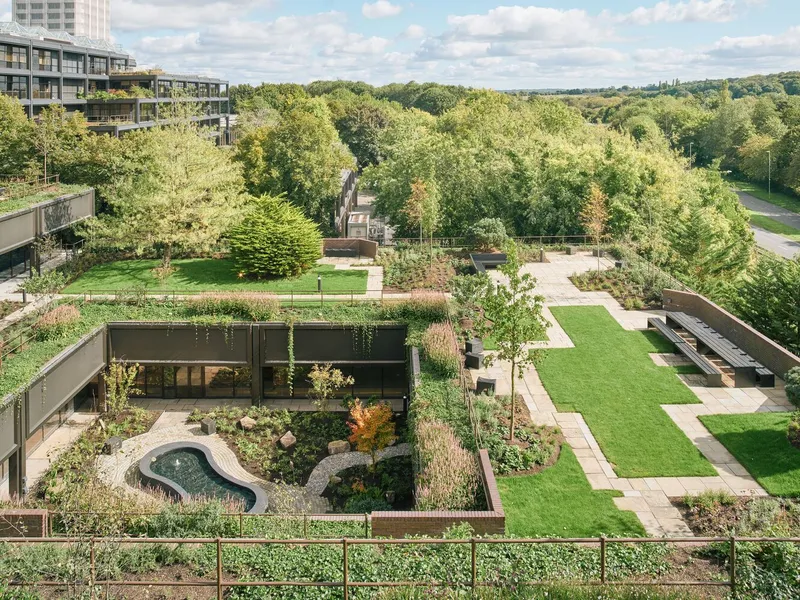
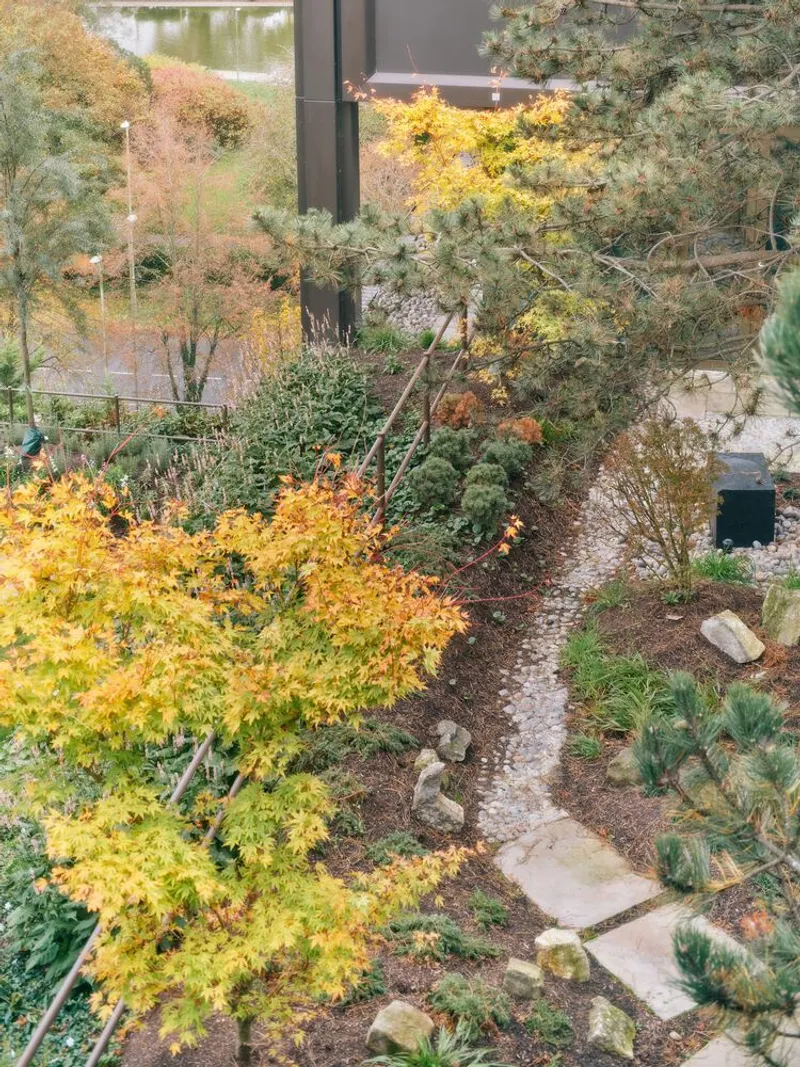
The central courtyard anchors the entire composition. At its heart, a deteriorating pond has been replaced with a sculpted contemporary water feature that honors the original form while functioning within modern drainage and irrigation systems. The courtyard is not a leftover void; it is the building's organizing principle, the point toward which every terrace descends and every sightline converges.
Stone paver paths wind through planted beds thick with autumn foliage, creating a ground-level landscape experience that connects to the rooftop gardens above. The effect is of a building that generates its own microclimate: sheltered, planted, layered. For a structure designed to hold up to 1,000 staff, this is not amenity space. It is infrastructure for wellbeing.
Interior Thresholds and Circulation
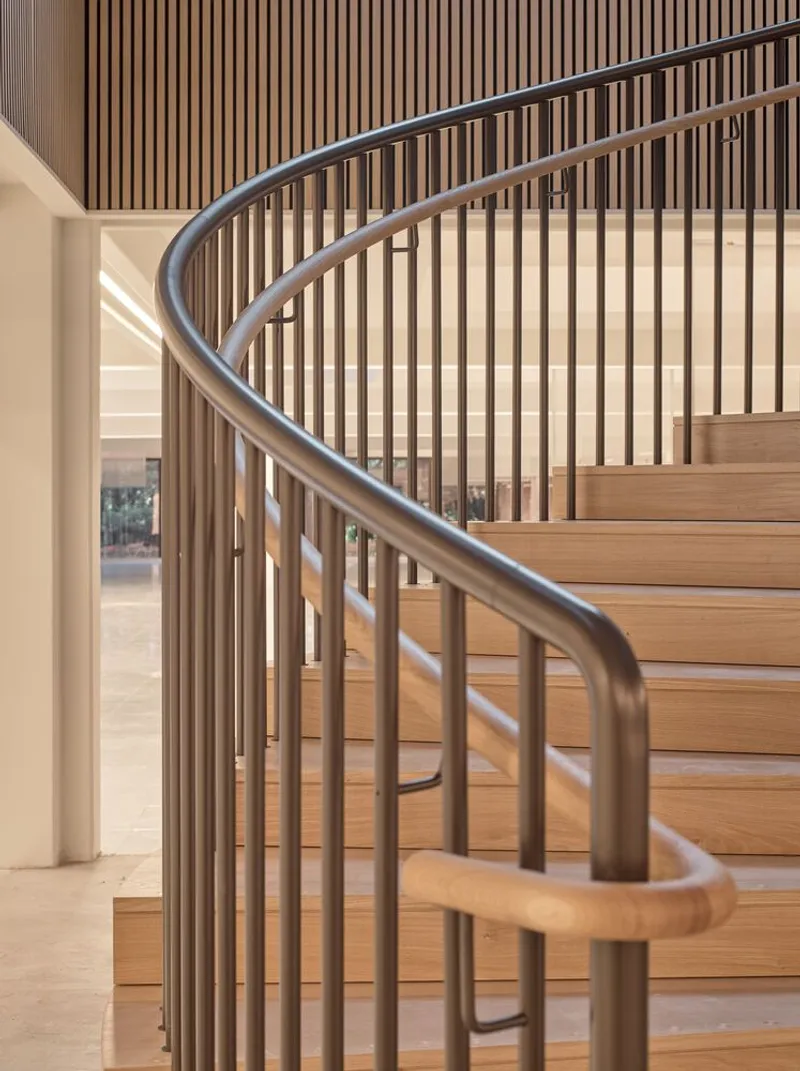
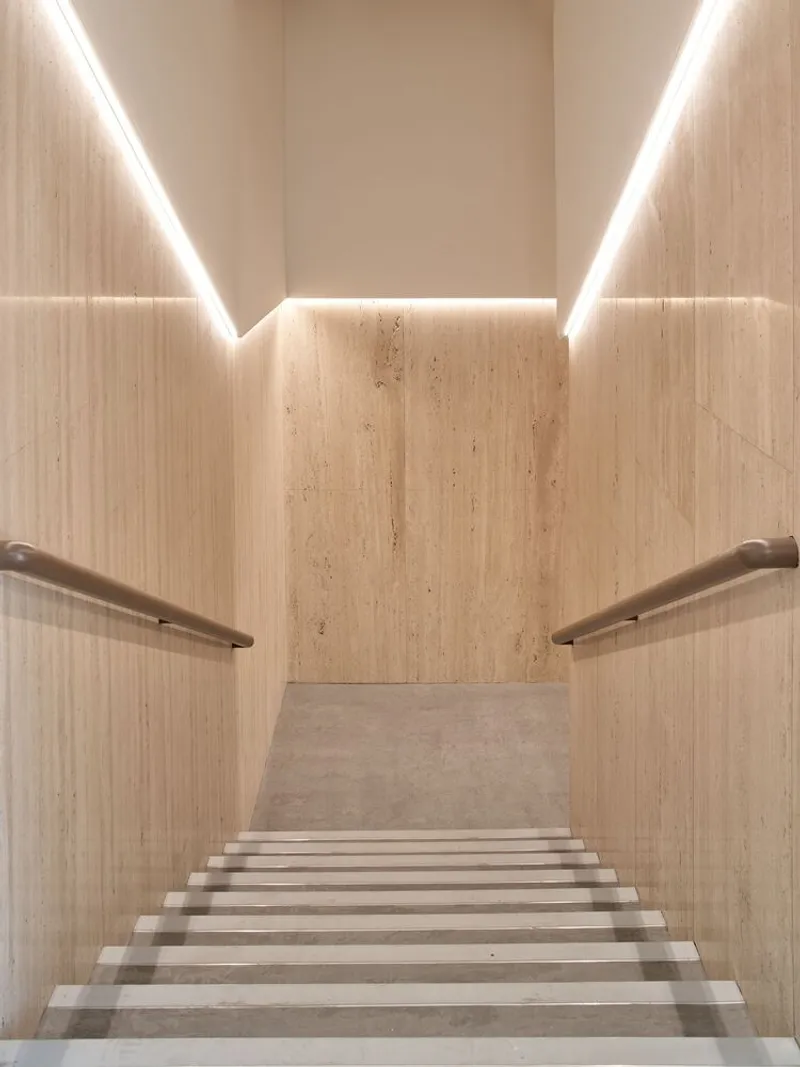
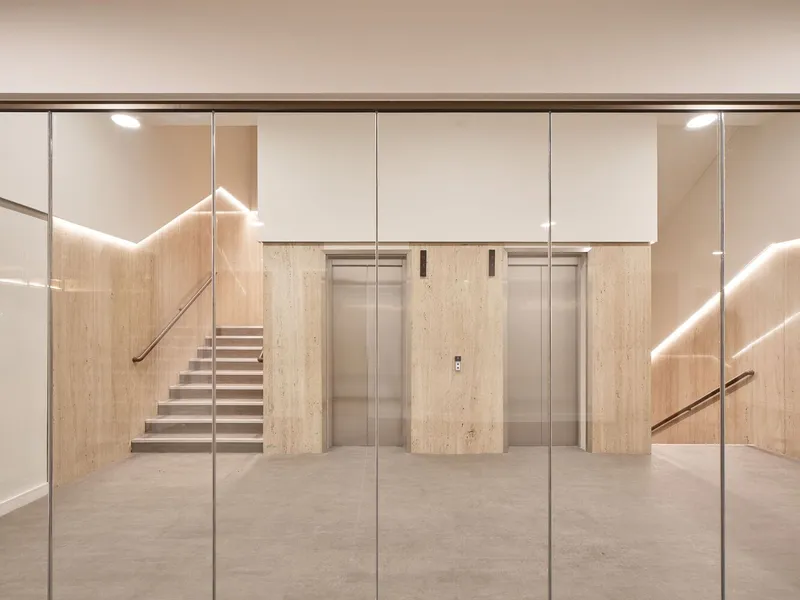
A new helical staircase in timber with a bronze metal handrail introduces a moment of sculptural generosity into the circulation sequence. It sits alongside the retained travertine staircase, which descends between cove-lit walls with original bronze handrails still in place. The juxtaposition is deliberate: new craft alongside old, both held to the same standard of material seriousness.
The glass-walled lobby with its travertine elevator surrounds reads as a threshold between the planted exterior and the exposed-concrete interior. Vertical timber slat screens filter light and create visual separation without closing off space, a tactic that runs through the interiors. This is 210,000 square feet of office space that includes a cafe, gym, shower and changing rooms, bike storage, and multipurpose areas, yet it never feels like a corporate campus. The materials hold it together.
Dusk and Atmosphere

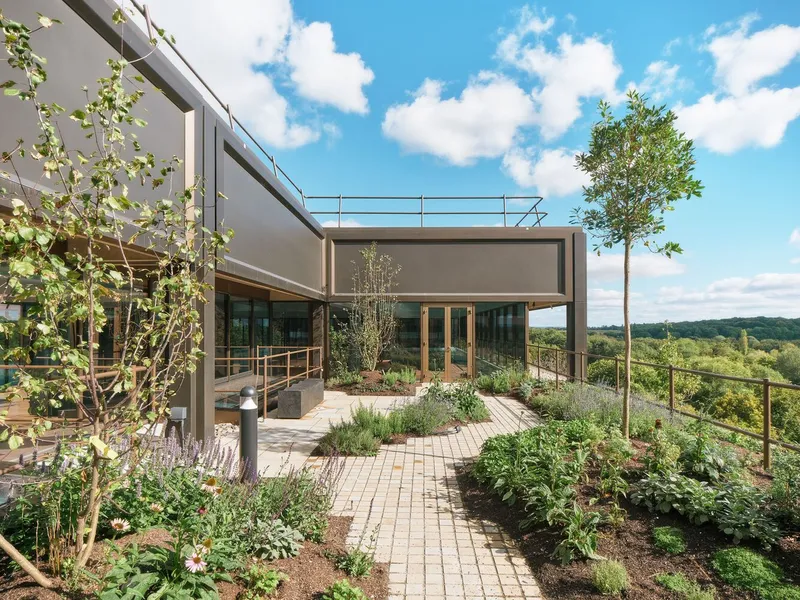
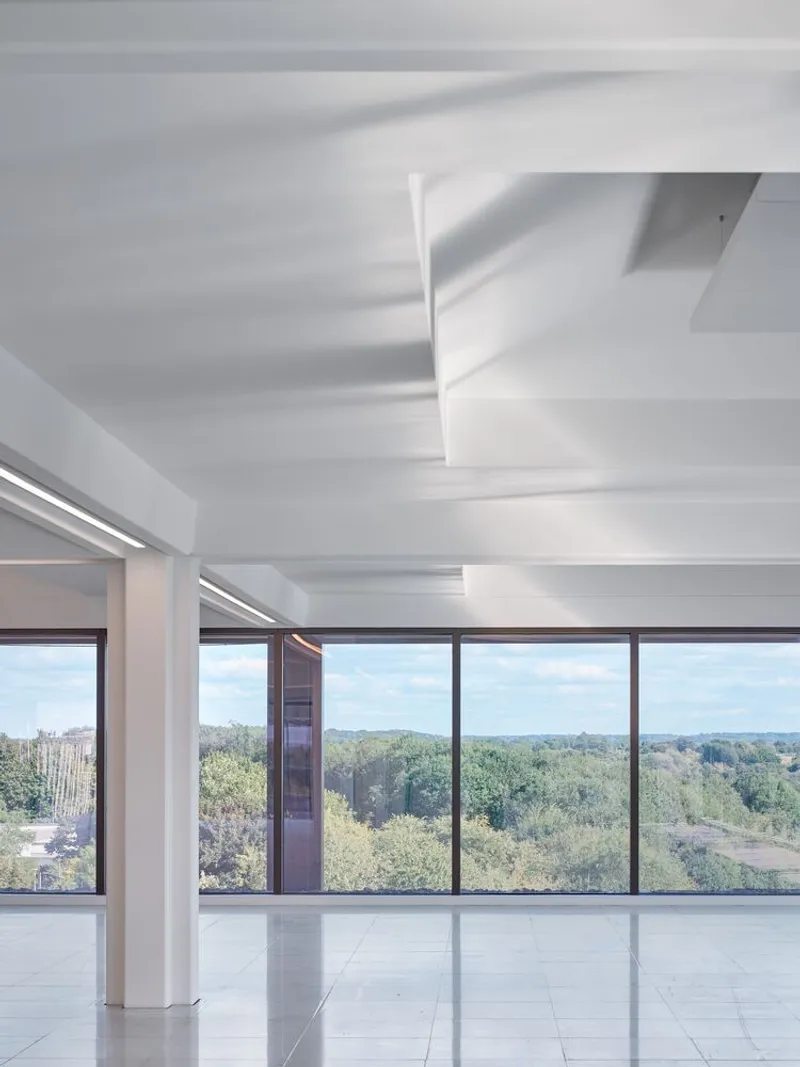
At twilight, the courtyard facade becomes a lantern. The planted balconies are lit from within, and the terraced levels read as a vertical garden glowing against the darkening sky. It is the moment when the building's dual identity, part office and part landscape, becomes most legible. The rooftop terrace with its brick paving and metal canopy frames views back across the stepped profile, and the interior spaces with their coffered ceilings and perimeter glazing appear to float above the treeline.
The atmosphere is not incidental. A building pursuing WELL Platinum certification needs to perform across sensory registers: light quality, air quality, acoustic comfort, visual connection to nature. Plant Basingstoke does not achieve this through gadgetry. It achieves it through the logic of the original design, updated with contemporary environmental systems but fundamentally unchanged in its conviction that architecture and landscape belong together.
Plans and Drawings
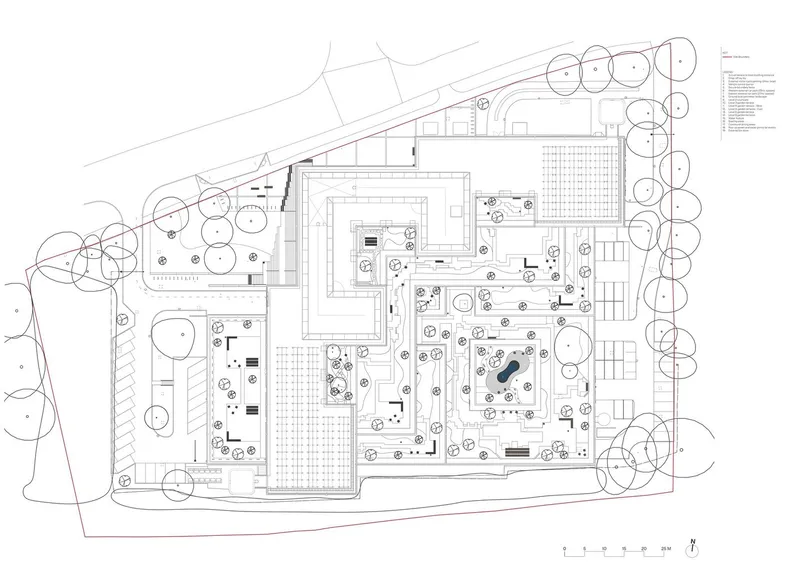
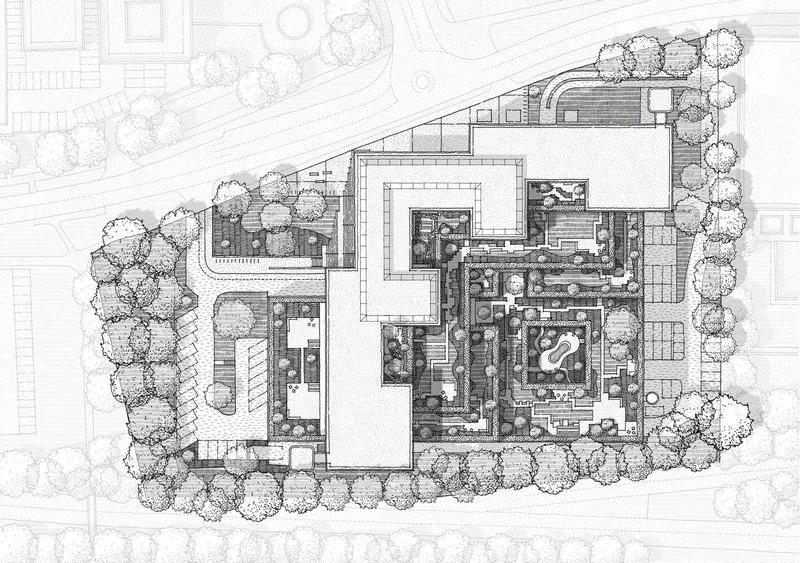
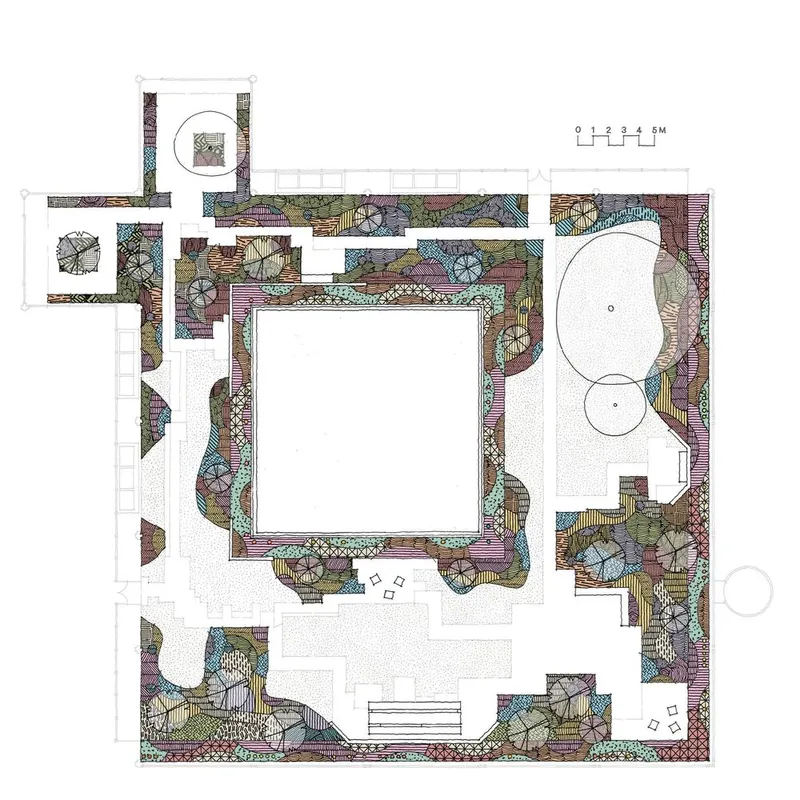
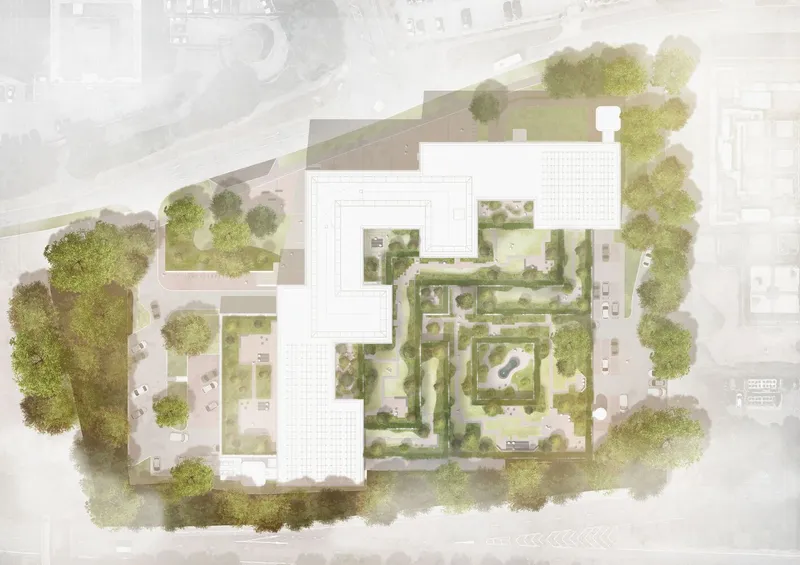
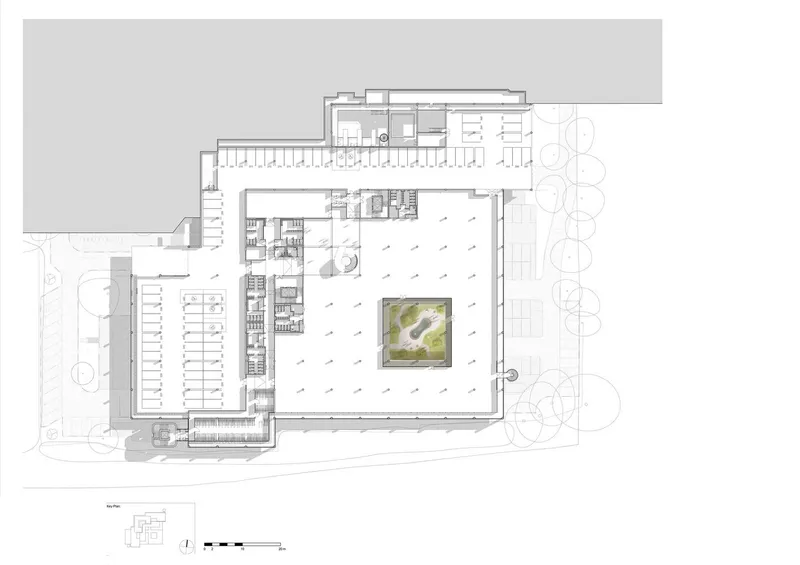
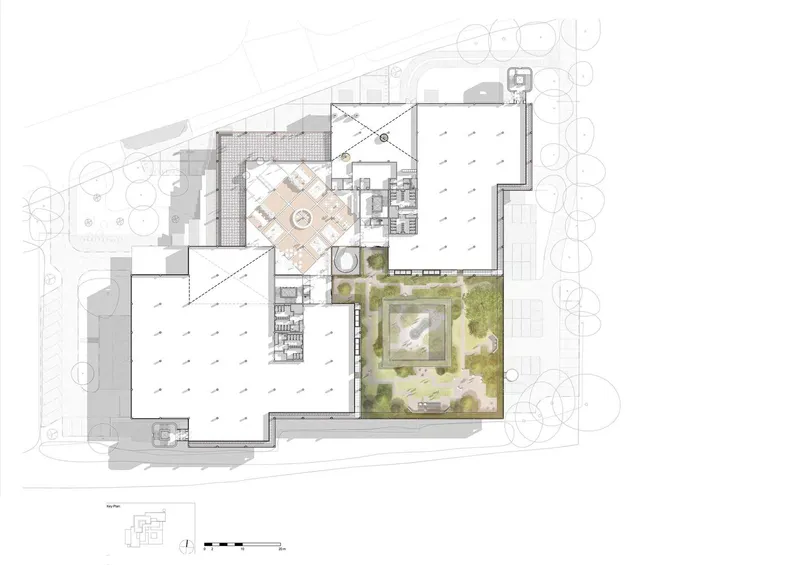
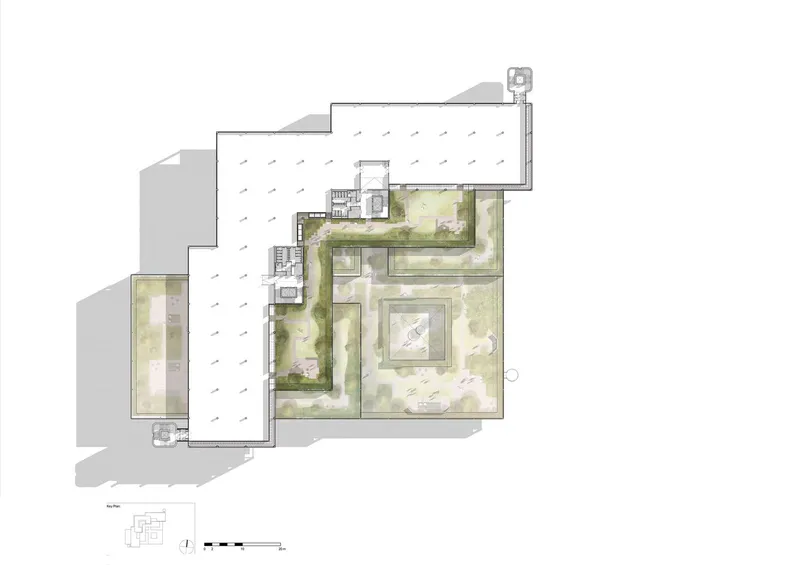
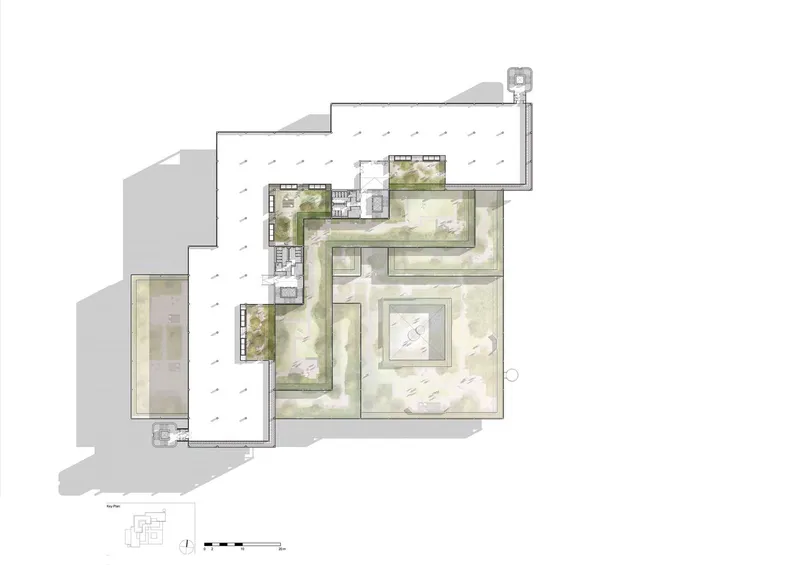
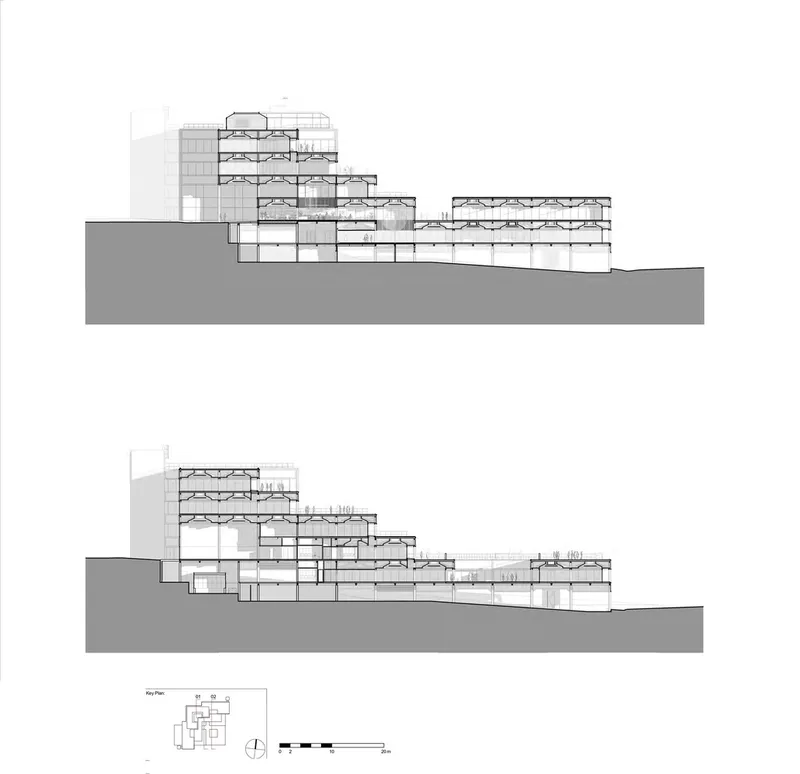
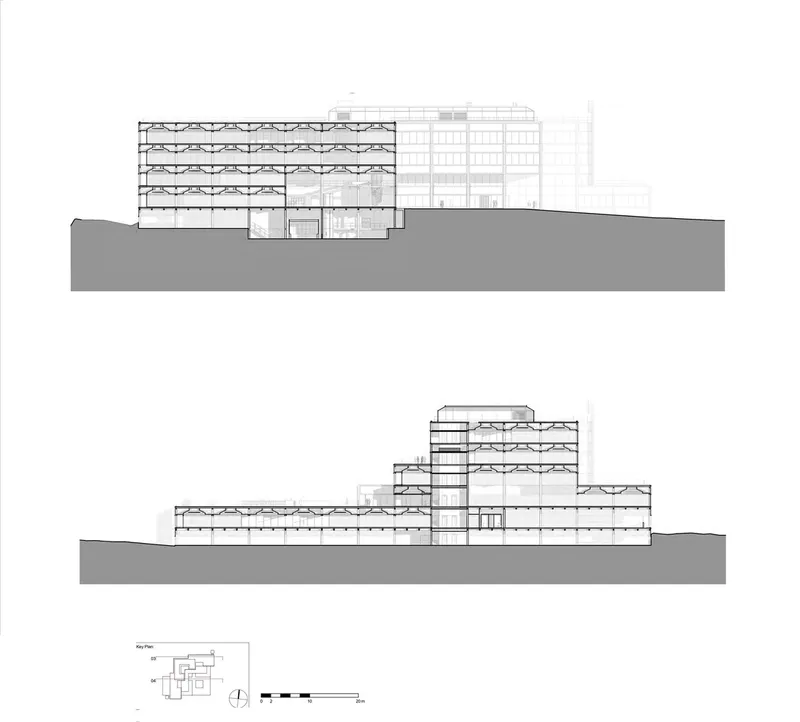
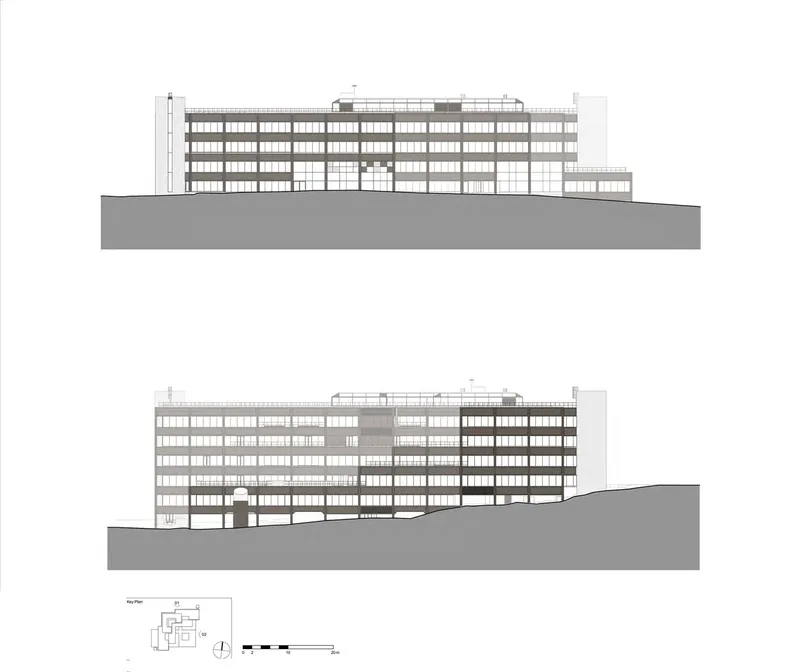
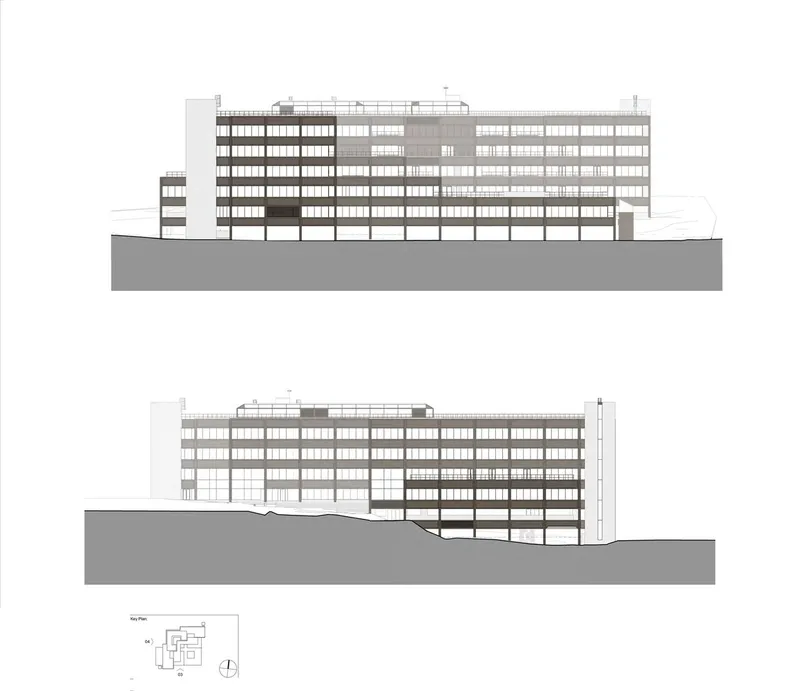
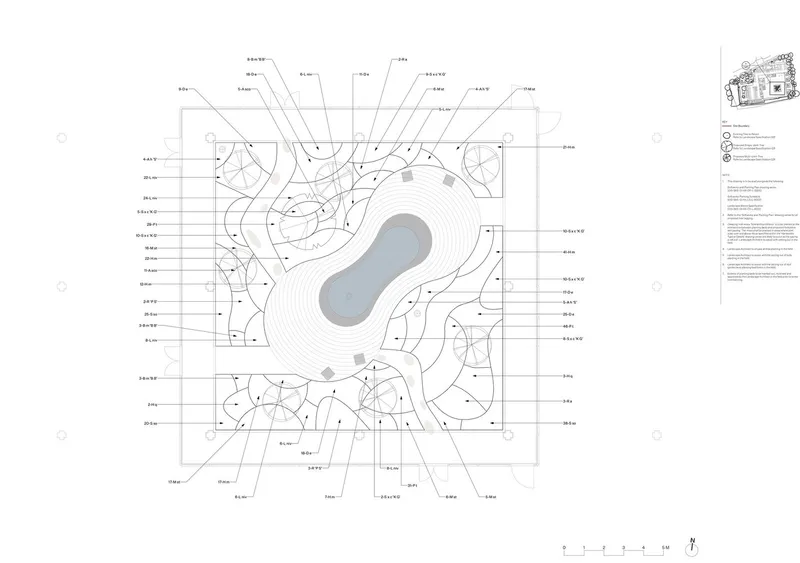
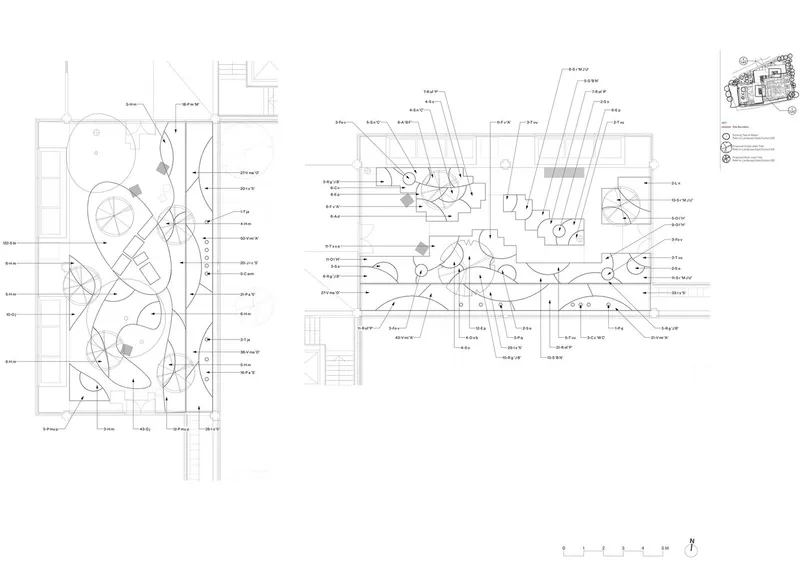
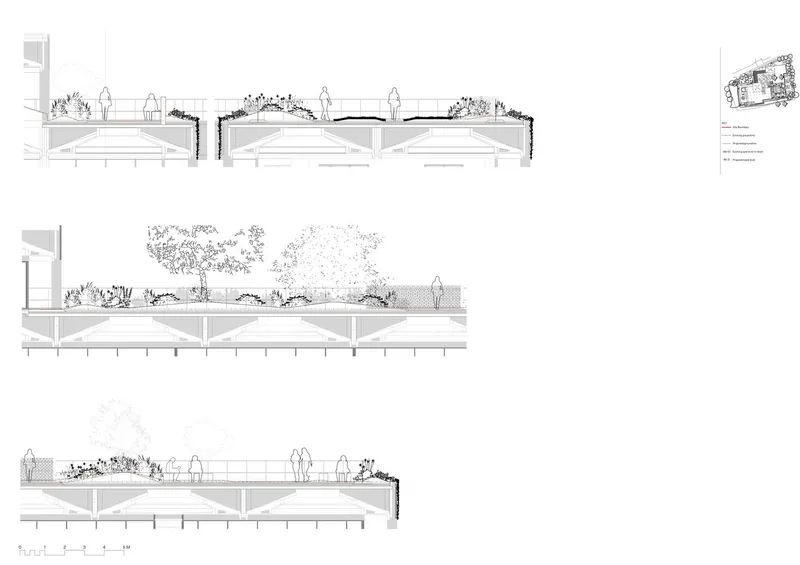
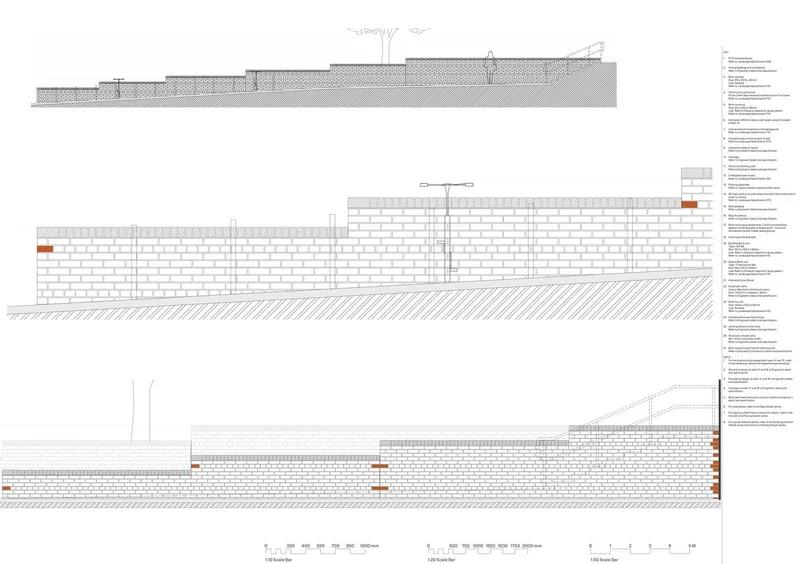
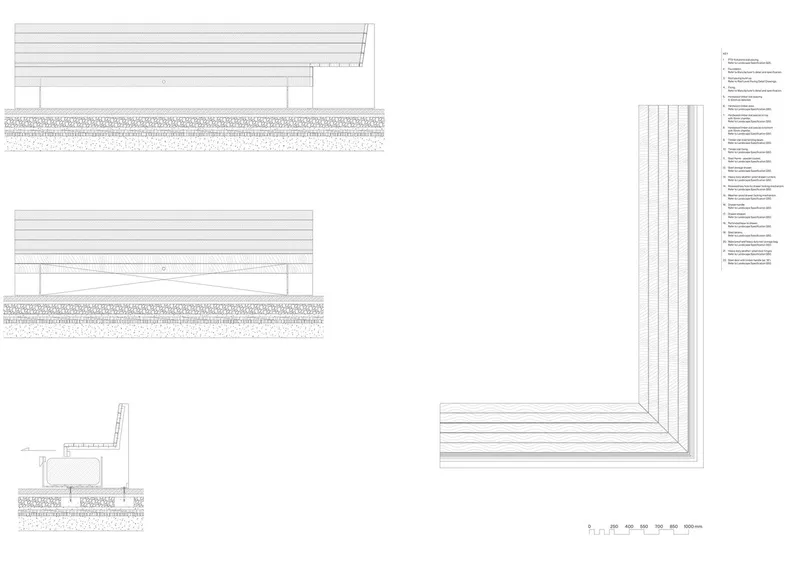
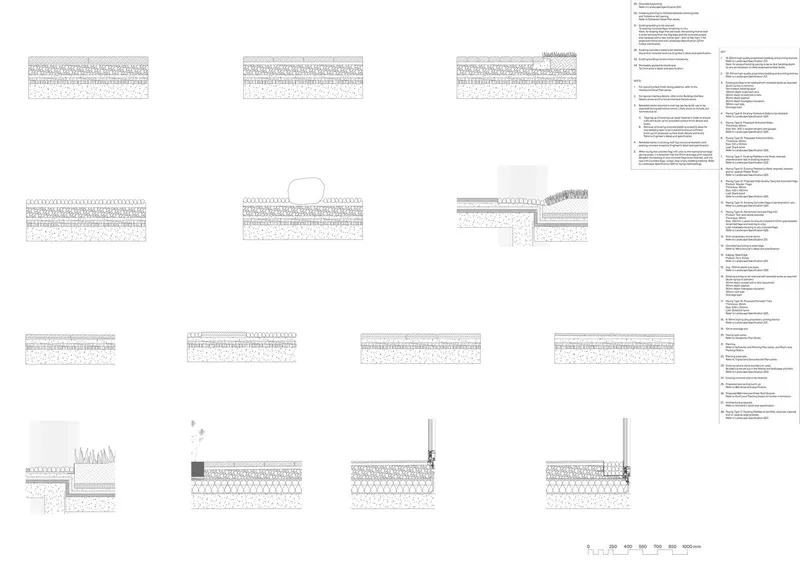
The drawings reveal what photographs cannot: the diagonal symmetry axis that organizes the stepping volumes, the relationship between the 7.5-metre structural grid and the landscape zones, and the way the building descends with the terrain rather than fighting it. The sections are particularly telling. Planted terraces with trees sit directly on the structural framework, their soil build-ups and waterproofing assemblies detailed with the kind of care that distinguishes real green roofs from marketing renders. The wall section details show foundation assemblies, vertical openings, and canopy attachments that clarify how the bronze cladding meets the engineering brick towers and how the roof edge conditions resolve. These are not presentation drawings. They are the technical evidence of a restoration that took the building's material culture as seriously as its spatial ambition.
Why This Project Matters
The commercial refurbishment sector has a credibility problem. Too many projects slap new lobbies and rooftop bars onto unremarkable shells and call it sustainable. Plant Basingstoke is different because the building it restores was already radical. Foggo's 1973 design anticipated biophilic principles by four decades. The team of Feilden Clegg Bradley Studio, Studio Knight Stokoe, Twelve Architects, and Grant Associates understood that the most responsible intervention was to let the original design speak while quietly upgrading everything behind the scenes: curtain wall performance, MEP systems, irrigation, waterproofing, planting resilience.
The project also reframes the conversation about heritage listings and commercial viability. A Grade II-listed modernist building is often seen as a liability by developers, its protections interpreted as obstacles to profit. Plant Basingstoke demonstrates that the listing is the asset. The coffered ceilings, the terraced gardens, the bronze facade: these are features that no new-build office could replicate at any budget. By restoring them to their original clarity and upgrading the building's environmental credentials to the highest available standards, the project proves that preservation and performance are not in conflict. They are the same argument, made in concrete and soil.
Plant Basingstoke, by Feilden Clegg Bradley Studio, Studio Knight Stokoe, Twelve Architects, and Grant Associates. Basingstoke, United Kingdom. 19,515 square metres. Photography by Andy Stagg.
About the Studio
Share Your Own Work on uni.xyz
If projects like this are the kind of work you want to make, uni.xyz is a place to publish your own, find collaborators, and enter design competitions.


Popular Articles
Popular articles from the community


Juan García Correa, John González and Claudia Rueda Sink a Circular Amphitheater into a Manizales Engineering Building
On the La Nubia campus in Manizales, Colombia, the S1 Building folds labs and offices into a hillside of ramped lawns that double as a campus route.

GROUP A Strips a 1969 Rotterdam Harbor Headquarters to Its Frame and Wraps It in Timber Louvers
In Rotterdam's M4H harbor district, Ferro Offices reuses a 1969 frame, adds one timber storey and reaches BREEAM-NL Outstanding.

David Macias Steps a Doorless Stone and Plaster House Down a Tropical Colombian Hillside
In the humid hills of Colombia, Threshold House replaces the front door with an open void and terraces its 850 m² down the slope instead of fighting it.

Architekt Andreas Gruber Scatters 23 Dark Timber Chalets Across a South Tyrolean Forest Edge
In Molini di Tures, Amonti Chalets breaks a resort into a hamlet of gabled timber houses, with parking, storage and services pushed into the slope.

Similar Reads
You might also enjoy these articles


Hodi-Mandai Geram
Project Function: Preservation and revitalization of the Intangible heritage and socio-spatial identity of the Hodi by Housing, Cultural Memory Center, Sacred Grove, landscape, local tourism economy


Olio Towers: A Mid-Rise for Performers That Fuses Housing, Rehearsal, and Stage
Located blocks from Houston's Theater District, this modular tower stacks living units around a central performance atrium.

Oasis: Modular Green Housing Carved into Dhaka's Urban Fabric
A shortlisted Plugin Housing entry reclaims unauthorized settlements in Dhaka with stepped concrete volumes, green roofs, and ventilation-driven design.

Black Hole: A Floating Megastructure for the Post-Physical Era
Emiliano Mazzarotto envisions a spherical, self-scaling arena where e-sports, digital hotels, and holographic stadiums replace traditional public space.

Explore Office Building Competitions
Discover active competitions in this discipline

Challenge to reimagine the Iron Throne

Photograph architecture without architects

Illustrate the lost glory of Angkor Wat - Render Challenge

Competition to design a workstation for architects
Comments (0)
Please login or sign up to add comments
No comments yet. Be the first to comment!