
Sustainable Pavilion Design in Chile: Guillermo Hevia García's Inverted Dome
This article explores the Inverted Dome Pavilion in Chile, showcasing innovative sustainable design and its message against plastic pollution.


Architecture Meets Environmental Activism
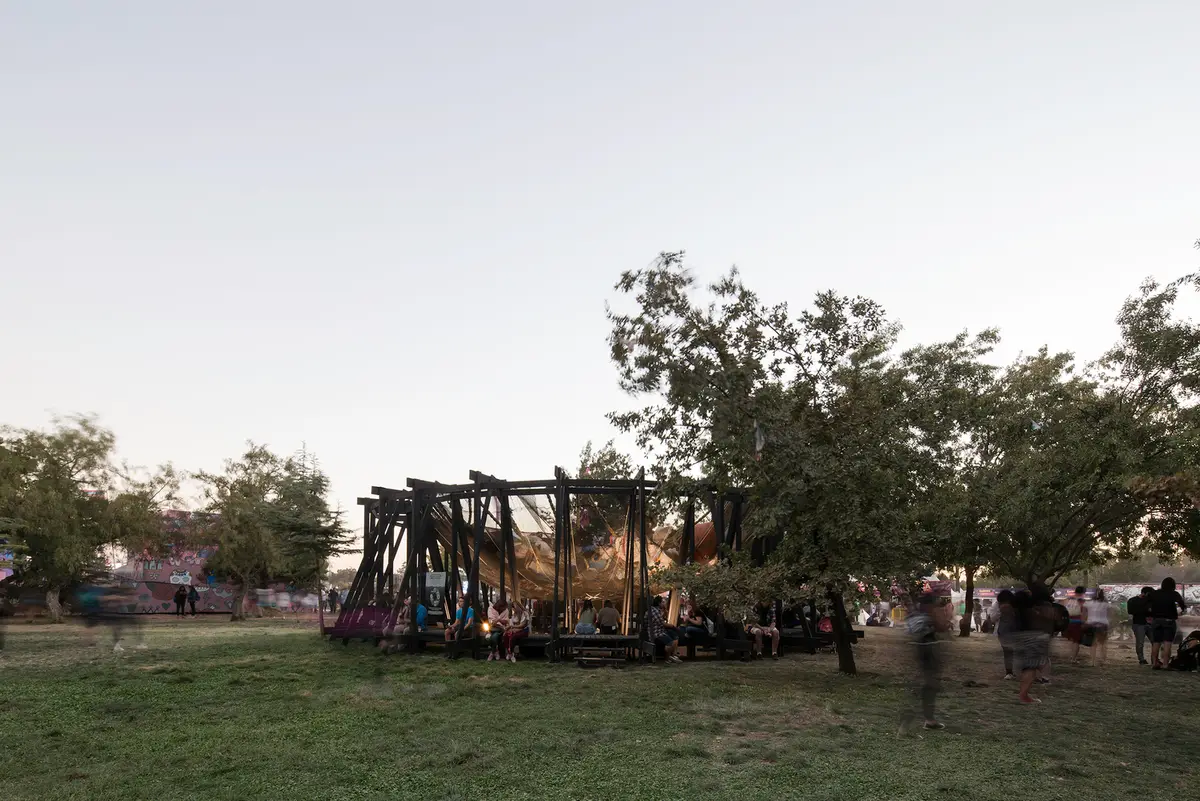
Set in the picturesque surroundings of Ranco Lake, Chile, Guillermo Hevia García’s Inverted Dome Pavilion is a groundbreaking architectural installation. Created for a music festival in a public park, the pavilion addresses one of the most pressing environmental challenges: oceanic plastic pollution. Its innovative design not only captivates visually but also raises awareness of the need for sustainability and responsible consumption.
Design Concept: The Inverted Dome as a Symbol
Raising Awareness Through Raw Presentation
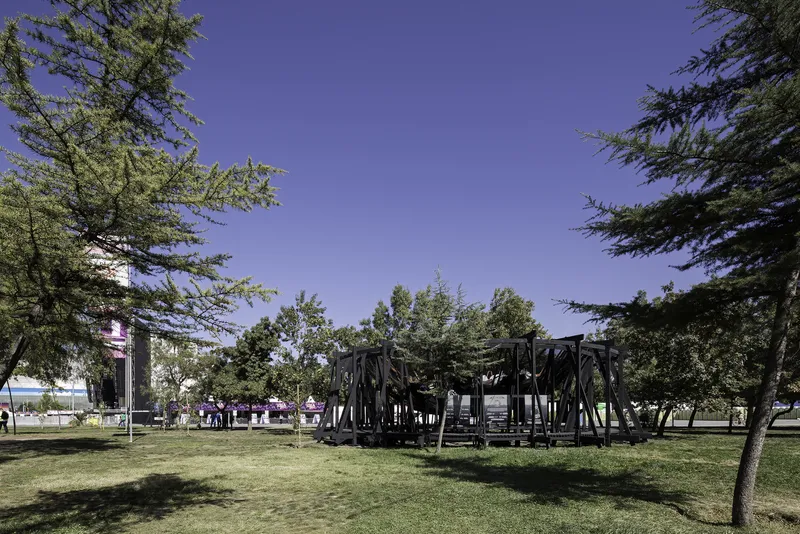
The pavilion takes an unconventional approach by displaying oceanic plastic waste in its unprocessed state. Suspended within a transparent inverted dome, the garbage reflects the alarming reality of pollution, serving as a visual metaphor for the growing "islands" of waste in the sea.
The Inverted Dome’s Unique Form
The dome’s inverted structure is both functional and symbolic:
- Visual Focus: The downward curve creates an enclosed space beneath, drawing viewers to engage with the issue of waste.
- Structural Efficiency: The circular form ensures even weight distribution, enabling the structure to support the suspended debris effectively.
A Sustainable Approach to Pavilion Design
Modular and Portable Construction
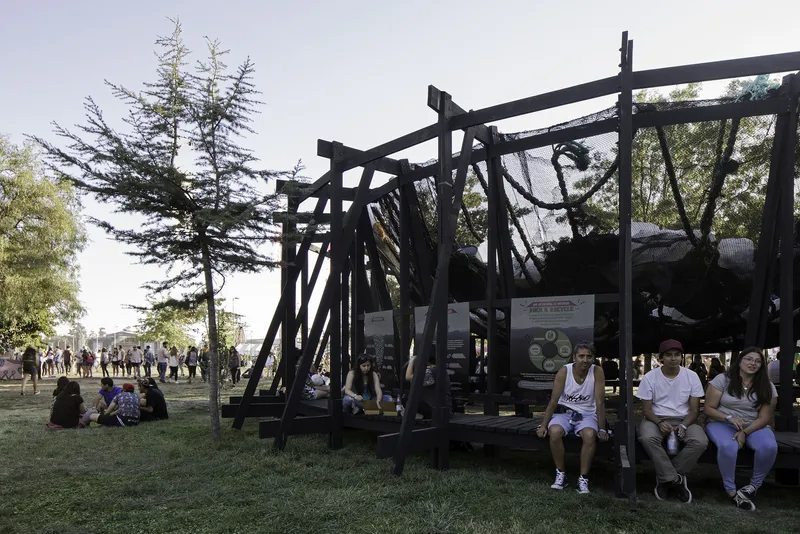
Inspired by the wooden piers commonly found along coastlines, the pavilion’s structure is composed of repeating wooden sections. This modular system ensures:
- Ease of Assembly and Disassembly: The structure can be moved and reused in different locations without generating additional waste.
- Sustainable Materials: The use of wood emphasizes eco-friendly construction, aligning with the installation’s environmental message.
Circular Economy in Design
The pavilion avoids single-use construction by integrating elements that can be repurposed. This reduces its carbon footprint and sets a precedent for future temporary installations.
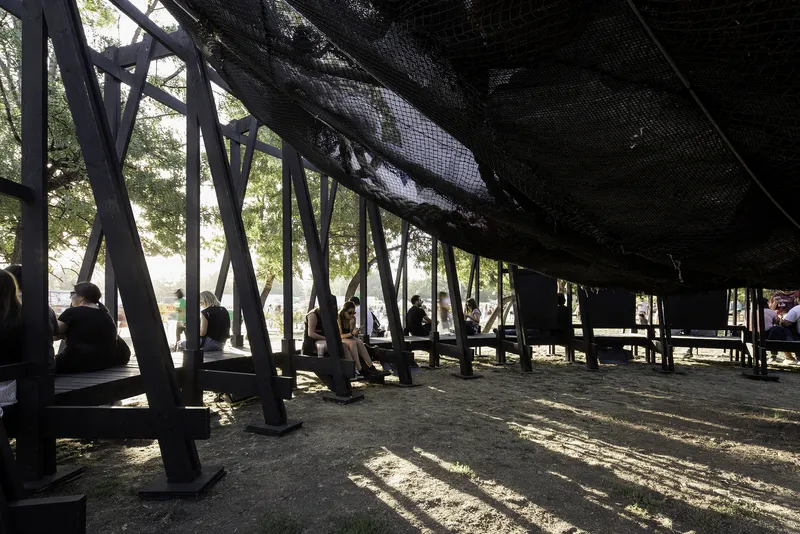
Community Engagement: A Space for Reflection
Interactive Perimeter Design
The pavilion’s circular wooden perimeter serves as more than just structural support. Visitors can:
- Sit and rest on the edges.
- Walk along the structure, experiencing the installation from different perspectives.
Gathering Space Under the Dome
Beneath the dome lies a communal area designed for interaction, contemplation, and discussion. This space provides a venue for festival-goers to reflect on the urgent need for environmental action.
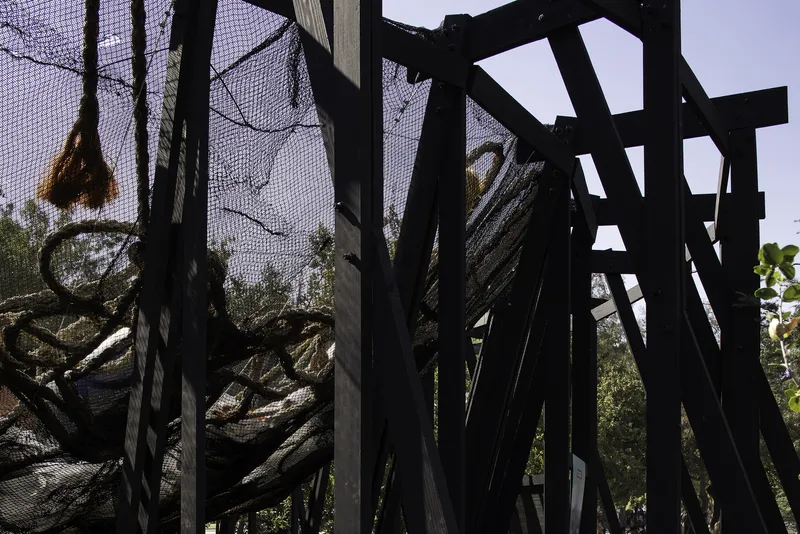
Architectural Efficiency in Open Spaces
Circular Design Advantages
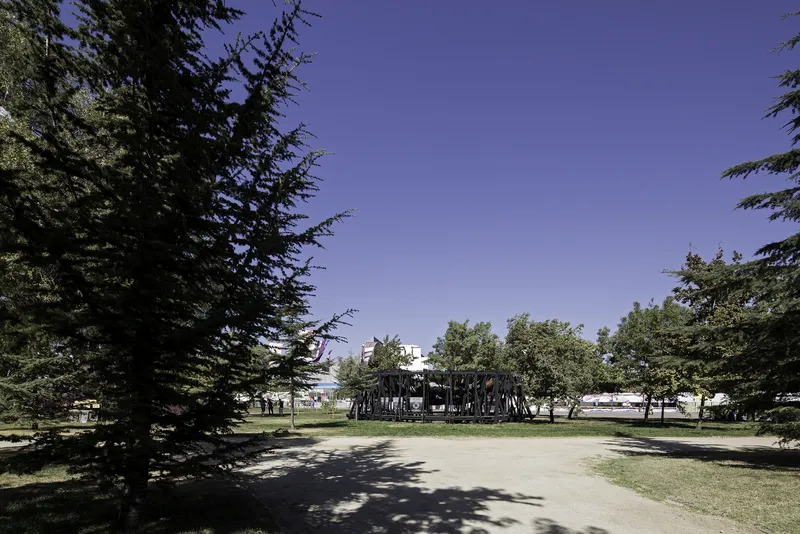
The circular plan enhances the pavilion’s functionality and aesthetic appeal:
- 360-Degree Visibility: The design looks identical from all angles, making it adaptable to various park layouts.
- Symbolic Significance: The circle reflects themes of unity and sustainability, reinforcing the pavilion’s environmental message.
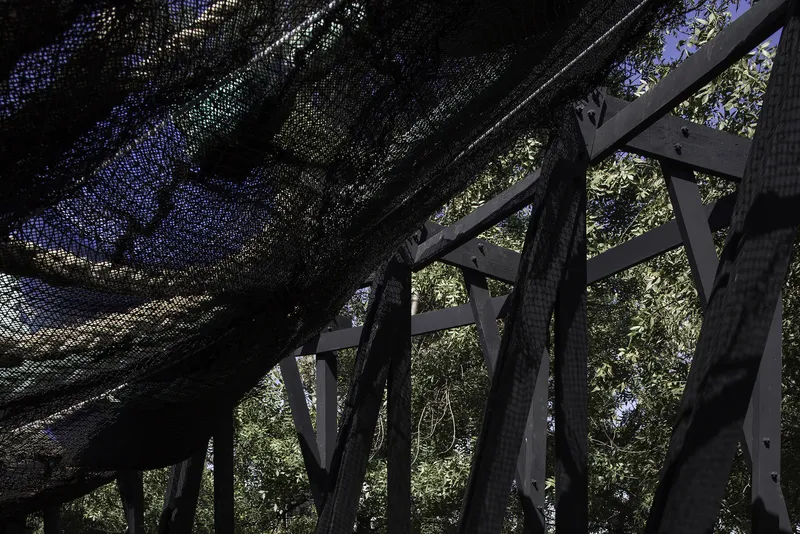
A Landmark in Public Parks
The structure’s distinctive design ensures it stands out in its natural setting, creating a memorable visual experience while delivering a strong message about the consequences of pollution.
Conclusion: A Blueprint for Sustainable Pavilion Design
Guillermo Hevia García’s Inverted Dome Pavilion is a testament to the potential of architecture to inspire social and environmental change. By combining sustainable construction with a powerful narrative, the pavilion challenges visitors to confront the reality of plastic pollution and reconsider their relationship with disposable materials.
This innovative installation demonstrates that architecture can transcend traditional boundaries, becoming a medium for awareness and advocacy. It sets a new standard for sustainable pavilion design in Chile and beyond, proving that even temporary structures can have a lasting impact on society.
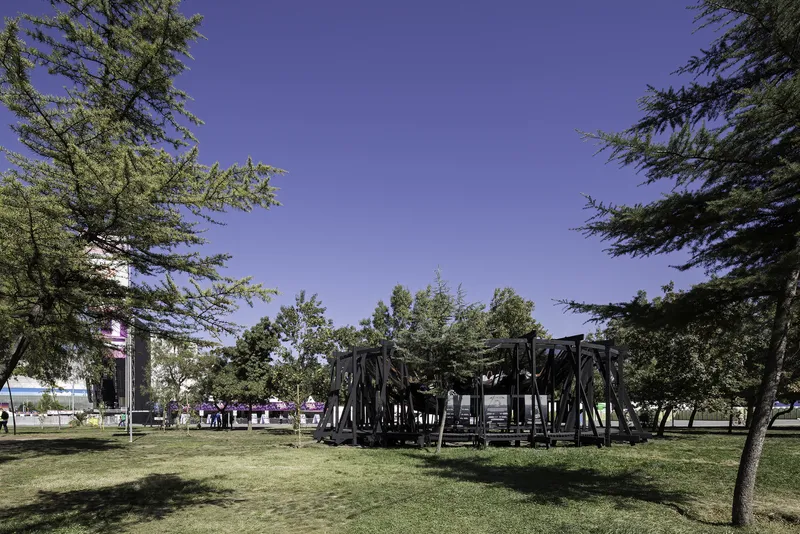
All Photographs are work of Nicolás Saieh


Popular Articles
Popular articles from the community


David Macias Steps a Doorless Stone and Plaster House Down a Tropical Colombian Hillside
In the humid hills of Colombia, Threshold House replaces the front door with an open void and terraces its 850 m² down the slope instead of fighting it.

David Ortega Stacks a Two-Story Mexico City Penthouse Around a Steel Stair and a Pergola-Shaded Roof Terrace
In Colonia Roma, a 300 m² penthouse uses oak joinery, a planted steel stair and a slatted roof pergola to make a new-build apartment feel like a house.

Juan García Correa, John González and Claudia Rueda Sink a Circular Amphitheater into a Manizales Engineering Building
On the La Nubia campus in Manizales, Colombia, the S1 Building folds labs and offices into a hillside of ramped lawns that double as a campus route.

U.GA Architects Wraps an Oval Rooftop Pool in Curved Board-Formed Concrete on Busan's Jeollidan-gil
In Busan's Jeonpo-dong, a 454 m² mixed-use block stacks a neighborhood facility, guest rooms and an oval rooftop pool inside spiraling concrete walls.

Similar Reads
You might also enjoy these articles


Hodi-Mandai Geram
Project Function: Preservation and revitalization of the Intangible heritage and socio-spatial identity of the Hodi by Housing, Cultural Memory Center, Sacred Grove, landscape, local tourism economy


Olio Towers: A Mid-Rise for Performers That Fuses Housing, Rehearsal, and Stage
Located blocks from Houston's Theater District, this modular tower stacks living units around a central performance atrium.

Oasis: Modular Green Housing Carved into Dhaka's Urban Fabric
A shortlisted Plugin Housing entry reclaims unauthorized settlements in Dhaka with stepped concrete volumes, green roofs, and ventilation-driven design.

Black Hole: A Floating Megastructure for the Post-Physical Era
Emiliano Mazzarotto envisions a spherical, self-scaling arena where e-sports, digital hotels, and holographic stadiums replace traditional public space.

Explore Hospitality Building Competitions
Discover active competitions in this discipline

Challenge to reimagine the Iron Throne

Photograph architecture without architects

Illustrate the lost glory of Angkor Wat - Render Challenge

Design challenge to reuse E-waste
Comments (0)
Please login or sign up to add comments
No comments yet. Be the first to comment!