

Sustainable School Architecture Design: Groupe Scolaire Claudie Haigneré by ValletdeMartinis Architectes
A deep dive into the sustainable design of Groupe Scolaire Claudie Haigneré, emphasizing ecological principles and innovative educational architecture.


Located in Brétigny-sur-Orge, France, the Groupe Scolaire Claudie Haigneré is an exemplary model of sustainable school architecture. Designed by ValletdeMartinis Architectes, this multifunctional educational complex harmonizes ecological principles with innovative design. The 3,781-square-meter project includes a nursery school, elementary school, catering center, and daycare, each thoughtfully integrated into its urban eco-neighborhood context. Completed in 2023, the school represents a new benchmark for combining functionality, aesthetics, and sustainability in educational architecture.


Context and Urban Integration
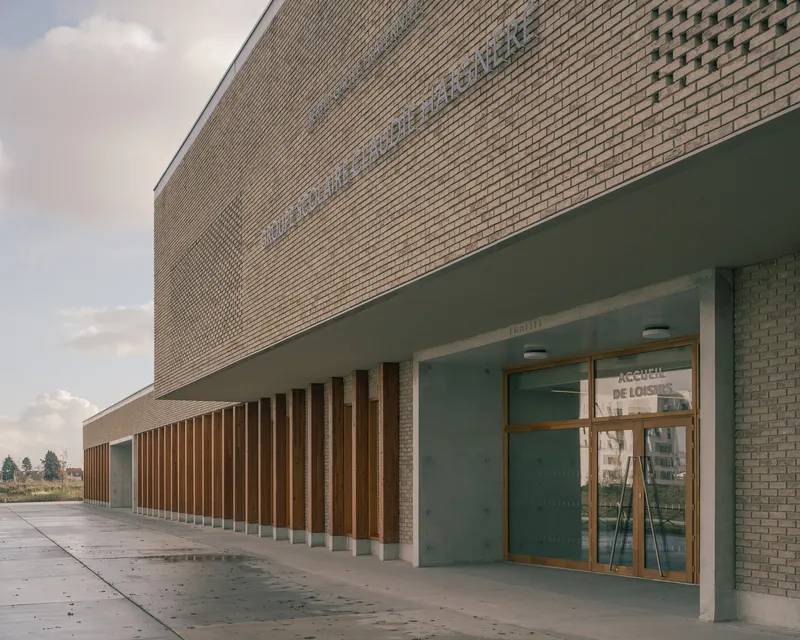
The school is situated within a dynamic fabric of urban and natural elements, bordered by small houses, multi-family housing projects, and green spaces like the Joncs Marins and Jardin de Traverse. The architects embraced the challenge of fitting the complex into this environment by creating a cohesive yet distinct architectural language. The design features three volumes on the main façade, representing the separate entities of the school group, while the layered volumetric landscape ensures the structure integrates seamlessly into the eco-neighborhood.
Each façade is treated uniquely based on its orientation, allowing the building to respond dynamically to its surroundings. The timber-framed façade with a wooden spine grid on a concrete base reveals the structural logic of the design, while natural materials like brick provide a nuanced treatment of light and shadow throughout the day.

Spatial Organization and Functionality
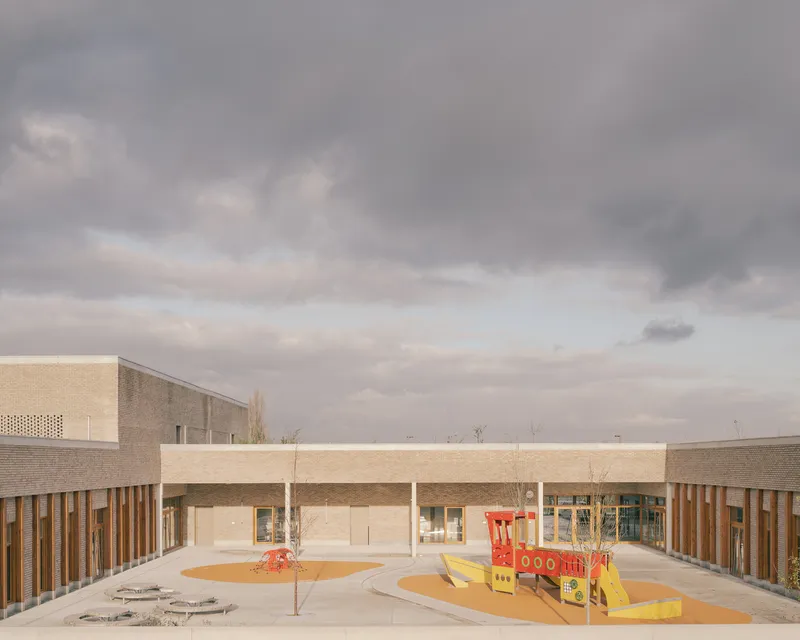
The school complex is arranged in a comb-like layout, with distinct areas for the kindergarten, elementary school, and communal facilities. This organization ensures autonomy for each educational entity while promoting easy navigation. The kindergarten occupies a single floor, while the elementary school spans two levels, with classrooms and adult facilities located on the upper floor. Central to the design are two playgrounds and a 110-square-meter patio, which foster interaction and outdoor engagement.
The design emphasizes the relationship between indoor and outdoor spaces. The kindergarten features a cloister-like courtyard with peripheral circulation, while the elementary school connects directly to the forest, creating distinct atmospheres for each age group. Planted terraces, educational gardens, and a vegetable patch further enhance the ecological value of the site, reducing the urban heat island effect and providing opportunities for hands-on learning.


Integration of Natural Materials
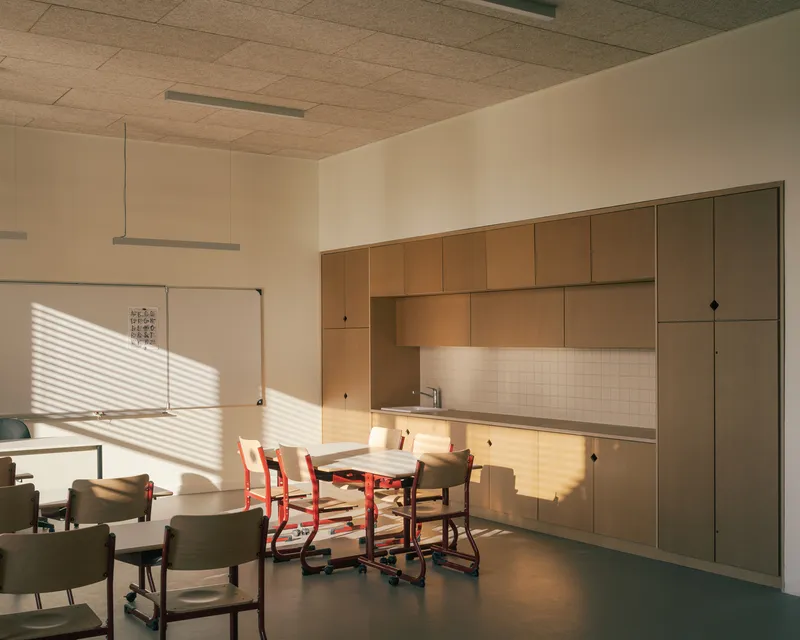
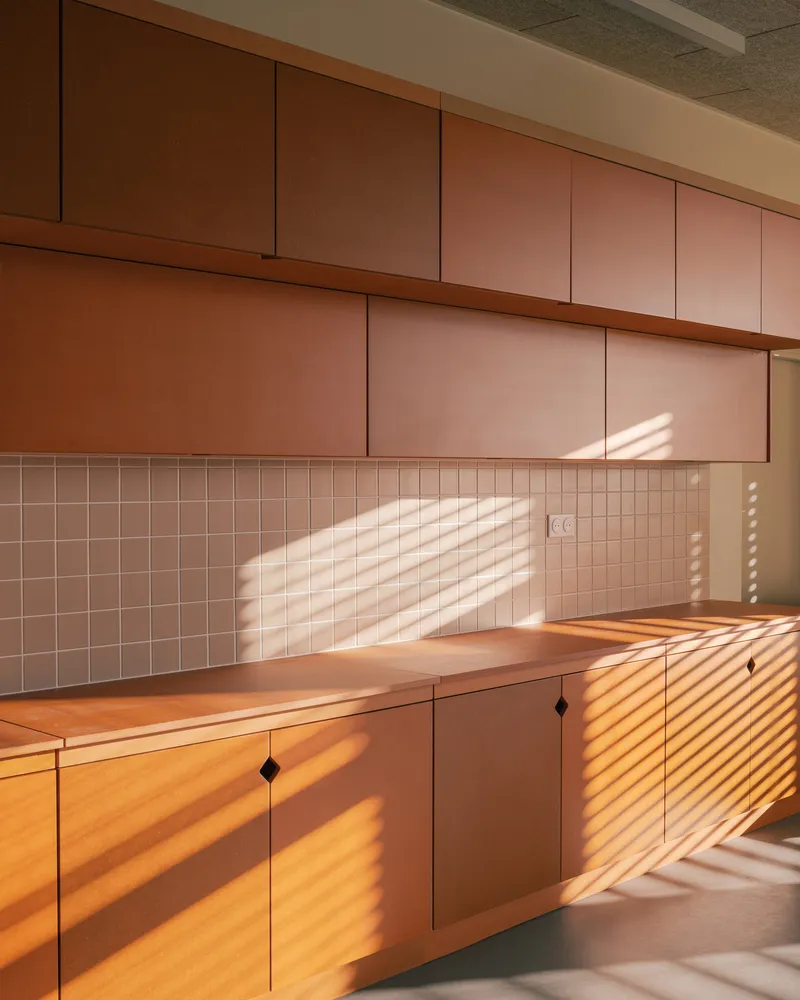
A key feature of the Groupe Scolaire Claudie Haigneré is its extensive use of natural materials. Mud brick, wood, and wood fiber acoustic insulation contribute to a warm and calm atmosphere conducive to learning and development. These materials ensure durability while reducing the environmental impact of the construction.
The interior design reinforces the connection between nature and education. Wide corridors act as transitional spaces, fostering a sense of community and ownership among students. Wooden benches, coat racks, and personal lockers provide functional yet inviting areas for students to interact and personalize their environment. Large glass frames above coat hooks ensure visibility and transparency, allowing natural light to permeate classrooms throughout the day.


Fostering a Child-Centered Learning Environment
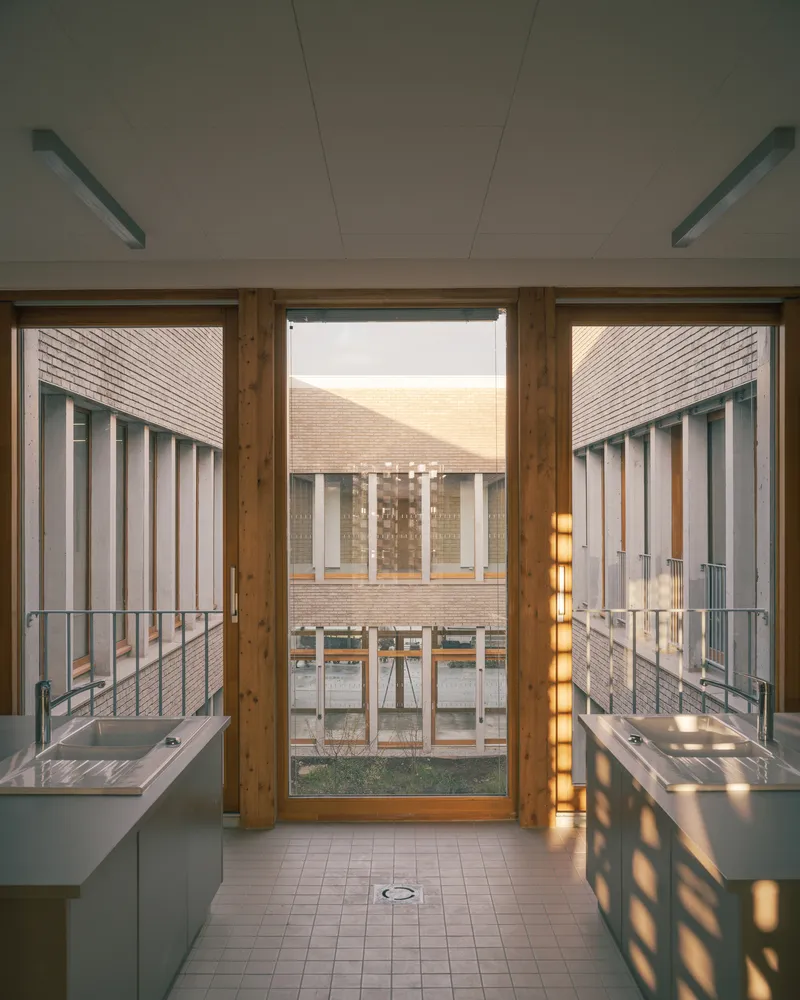
The architectural design prioritizes the well-being and development of students. Restrooms and activity rooms are oriented to maximize natural views and sunlight, creating a harmonious relationship with the surrounding Jardin de Traverse. The interplay of light, materials, and spatial organization encourages a nurturing and engaging atmosphere.
Playgrounds are thoughtfully designed to complement the interior spaces, offering diverse environments for recreation and learning. The kindergarten courtyard is intimate and sheltered, while the elementary school playground opens up to expansive forest views, allowing children to connect with nature in meaningful ways.

A Model for Sustainable Educational Design
The Groupe Scolaire Claudie Haigneré demonstrates how sustainable design principles can enhance educational architecture. By integrating natural materials, optimizing light and ventilation, and fostering a strong connection between indoor and outdoor spaces, ValletdeMartinis Architectes have created a space that is not only functional but also inspiring. The school stands as a testament to the transformative power of architecture in shaping future generations' experiences and relationships with their environment.


All Photographs are work of Charly Broyez


Popular Articles
Popular articles from the community


U.GA Architects Wraps an Oval Rooftop Pool in Curved Board-Formed Concrete on Busan's Jeollidan-gil
In Busan's Jeonpo-dong, a 454 m² mixed-use block stacks a neighborhood facility, guest rooms and an oval rooftop pool inside spiraling concrete walls.

LT2A and OPEN Architectes Thread a Brick and Glass High School Through a Wooded Belgian Campus
In Braine-l'Alleud, a 3,000 m² wing for Collège Cardinal Mercier pairs pale brick with a glazed colonnade, deferring to a small chapel and a dense wood.

Architekt Andreas Gruber Scatters 23 Dark Timber Chalets Across a South Tyrolean Forest Edge
In Molini di Tures, Amonti Chalets breaks a resort into a hamlet of gabled timber houses, with parking, storage and services pushed into the slope.

Juan García Correa, John González and Claudia Rueda Sink a Circular Amphitheater into a Manizales Engineering Building
On the La Nubia campus in Manizales, Colombia, the S1 Building folds labs and offices into a hillside of ramped lawns that double as a campus route.

Similar Reads
You might also enjoy these articles


Hodi-Mandai Geram
Project Function: Preservation and revitalization of the Intangible heritage and socio-spatial identity of the Hodi by Housing, Cultural Memory Center, Sacred Grove, landscape, local tourism economy


Olio Towers: A Mid-Rise for Performers That Fuses Housing, Rehearsal, and Stage
Located blocks from Houston's Theater District, this modular tower stacks living units around a central performance atrium.

Oasis: Modular Green Housing Carved into Dhaka's Urban Fabric
A shortlisted Plugin Housing entry reclaims unauthorized settlements in Dhaka with stepped concrete volumes, green roofs, and ventilation-driven design.

Black Hole: A Floating Megastructure for the Post-Physical Era
Emiliano Mazzarotto envisions a spherical, self-scaling arena where e-sports, digital hotels, and holographic stadiums replace traditional public space.

Explore Pont-Aven School Competitions
Discover active competitions in this discipline

Challenge to design public laboratory

Challenge to reimagine the Iron Throne

Photograph architecture without architects

Illustrate the lost glory of Angkor Wat - Render Challenge
Comments (0)
Please login or sign up to add comments
No comments yet. Be the first to comment!