
Sustainable School Architecture Design: Lully Vauban School and Music Conservatory Extension
A sustainable school design merging functionality and eco-consciousness, revitalizing educational spaces in the urban core of Versailles.

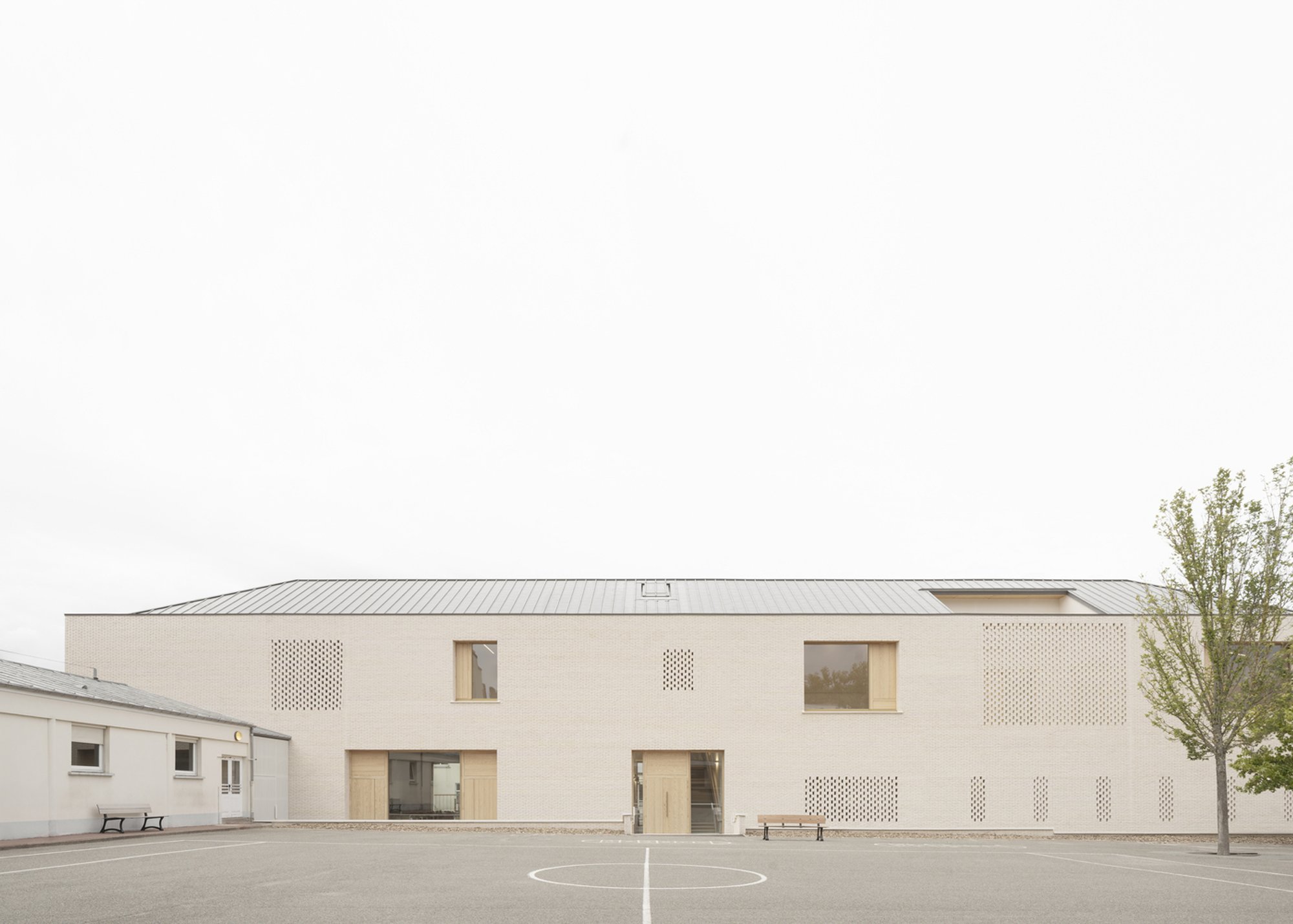
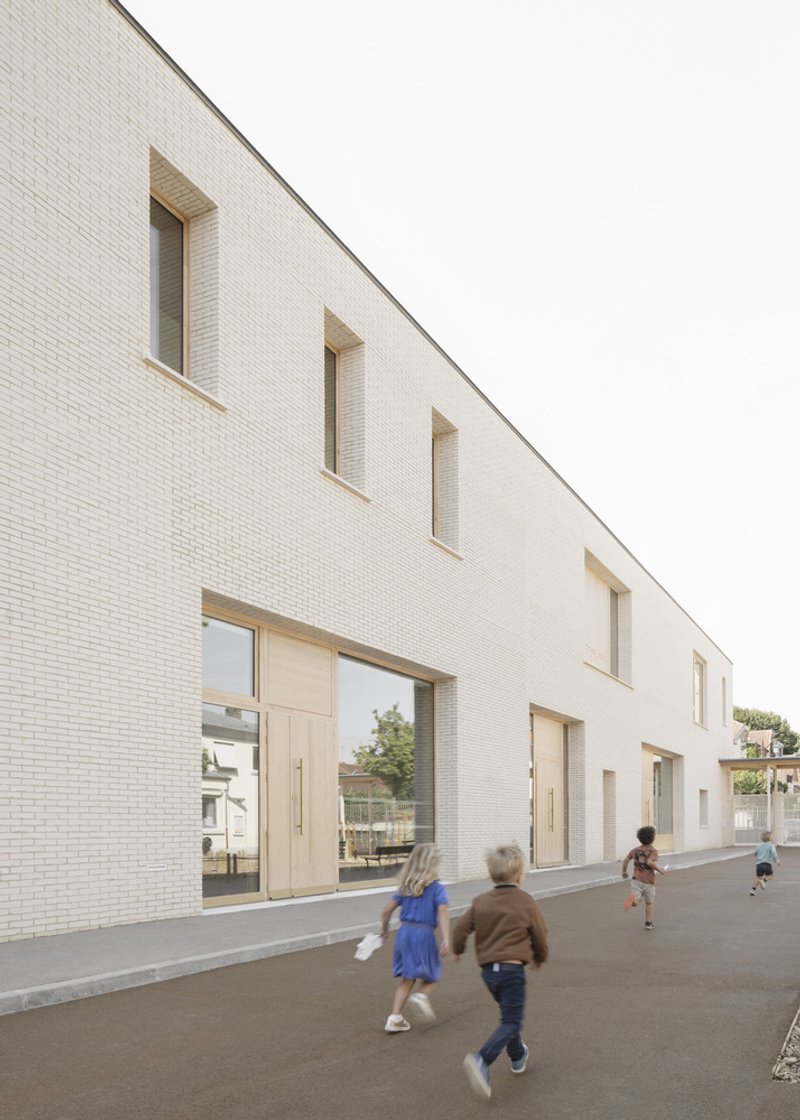
The Lully Vauban School and Music Conservatory Extension, designed by Atelier Serge Joly Architectes, exemplifies a harmonious blend of sustainable school architecture design and urban integration. Located in Versailles, France, this project balances functionality, sustainability, and community-oriented design within a city block. The extension not only enhances the educational facilities but also revitalizes the urban fabric by creating meaningful connections with its surroundings.
Urban Context and Integration
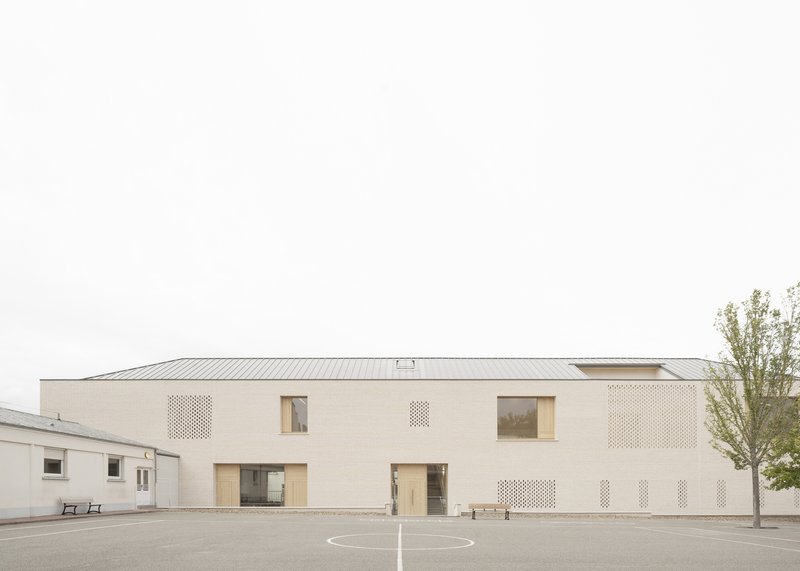
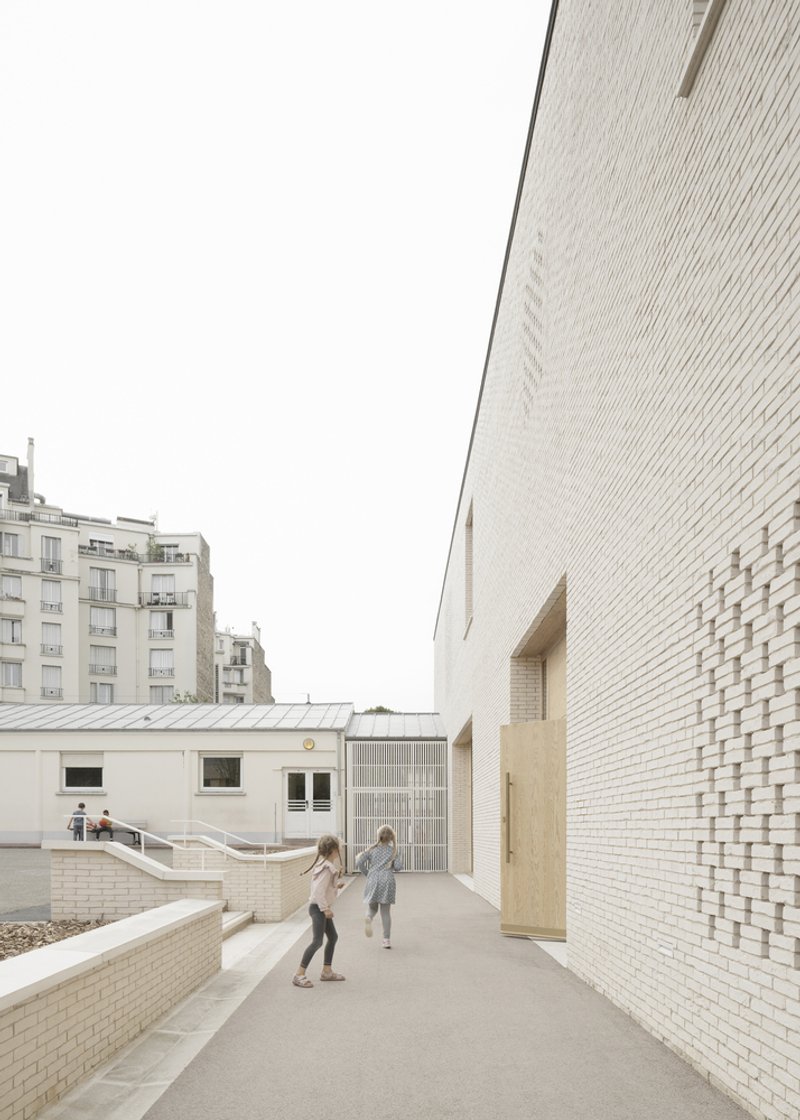
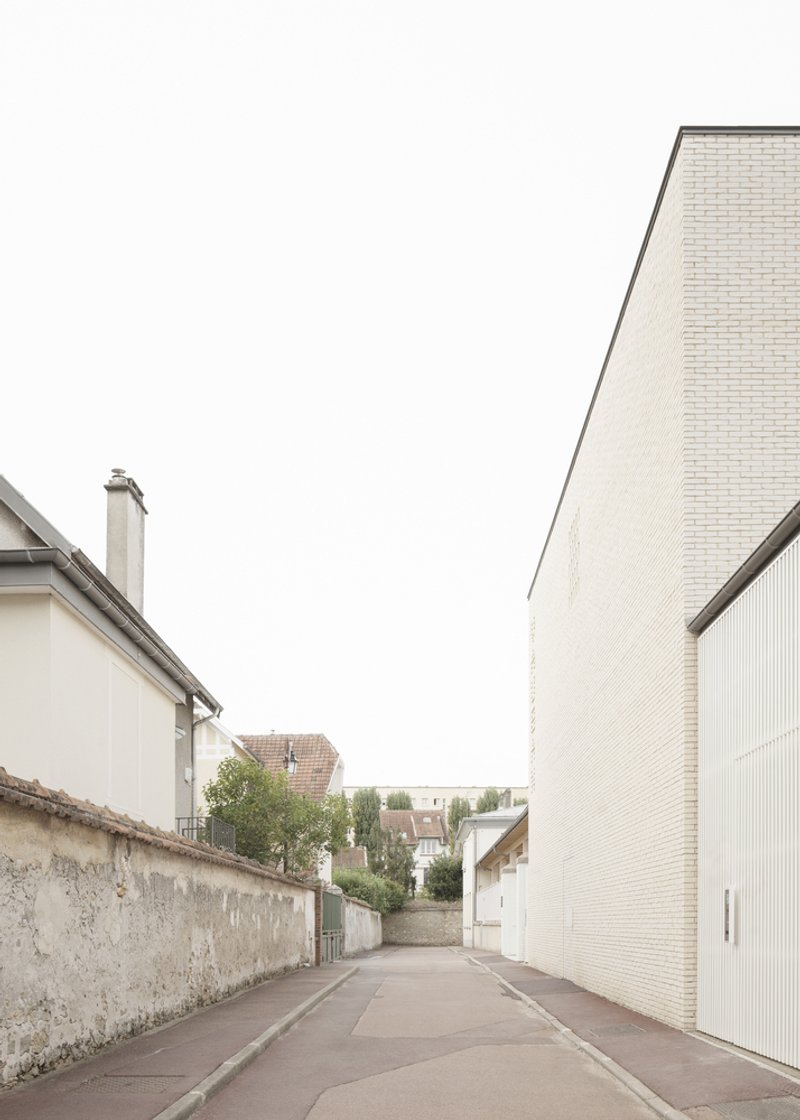
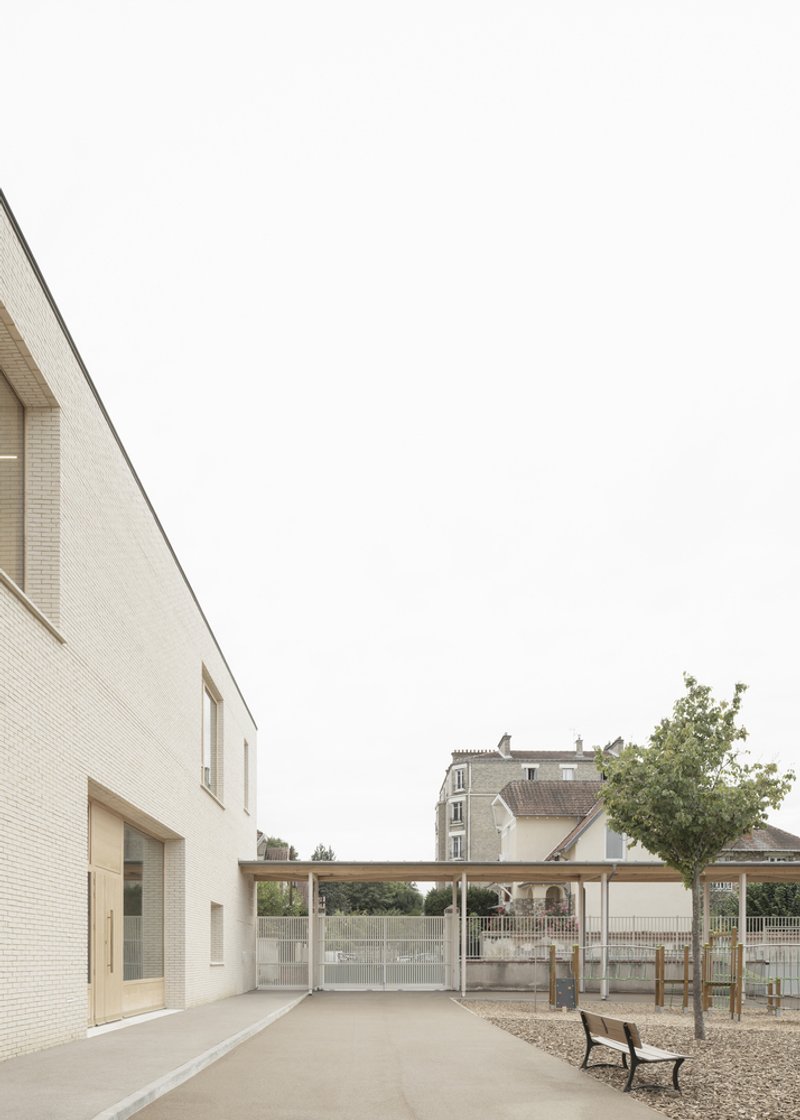
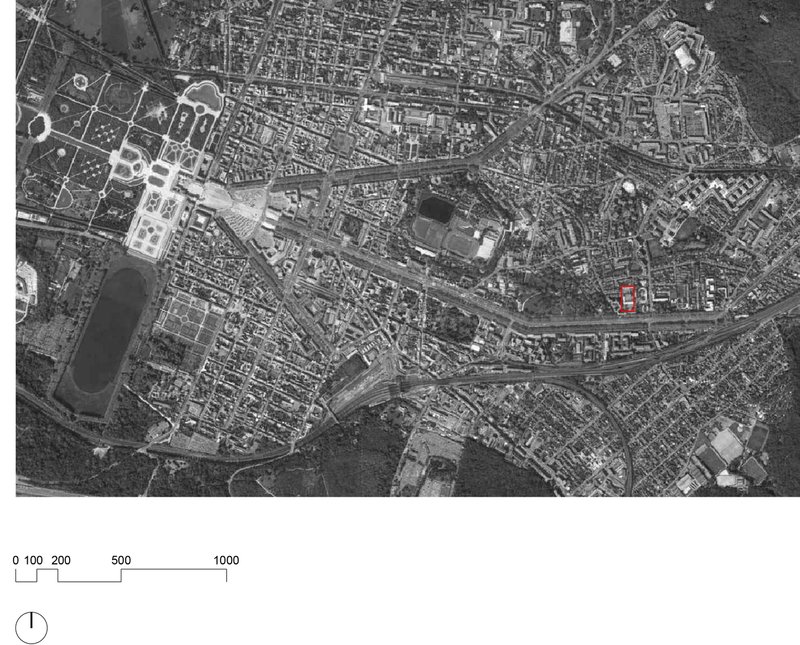
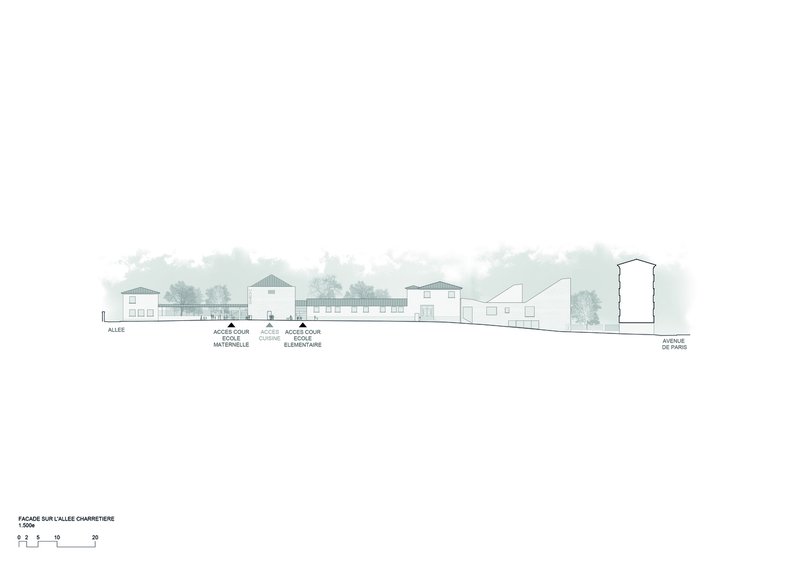
The project’s location within a densely built city block posed unique challenges and opportunities. Rather than disrupting the urban fabric, the extension embraces its introverted character by aligning with the existing architectural vocabulary. The design respects the logic of the existing constructions while establishing its own identity. Its discreet urban presence allows it to integrate seamlessly into the neighborhood, maintaining harmony with the surrounding residential structures.
Designing for Multi-Purpose Use
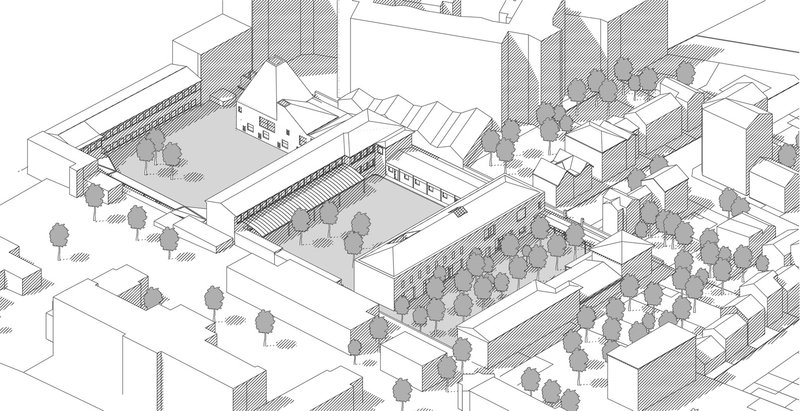
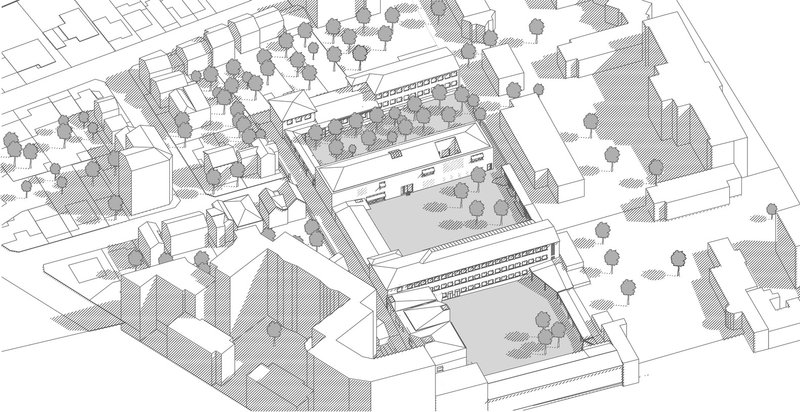
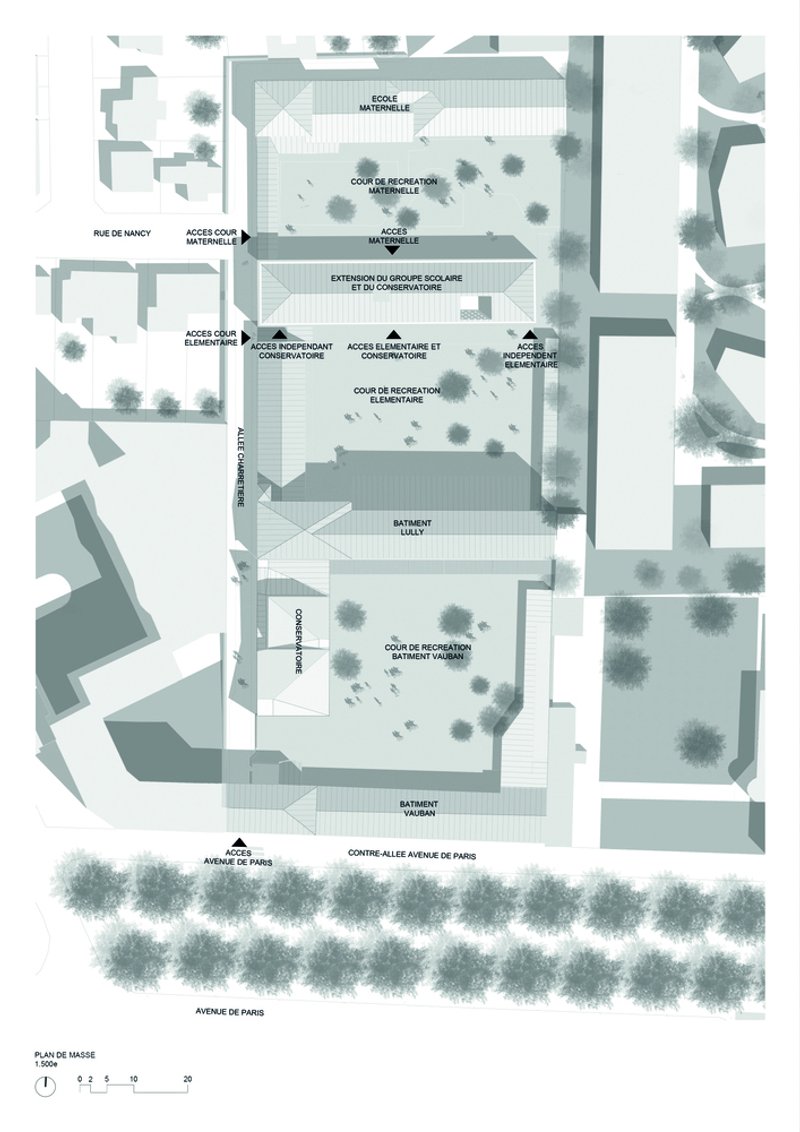
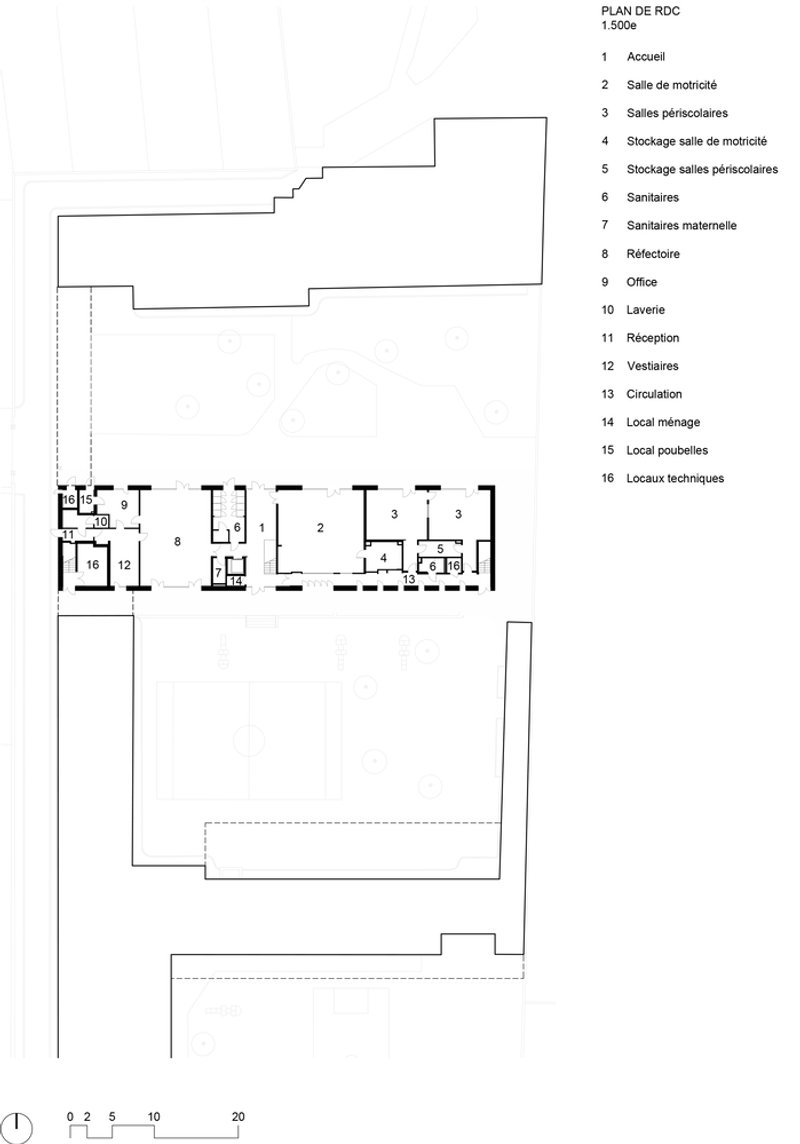
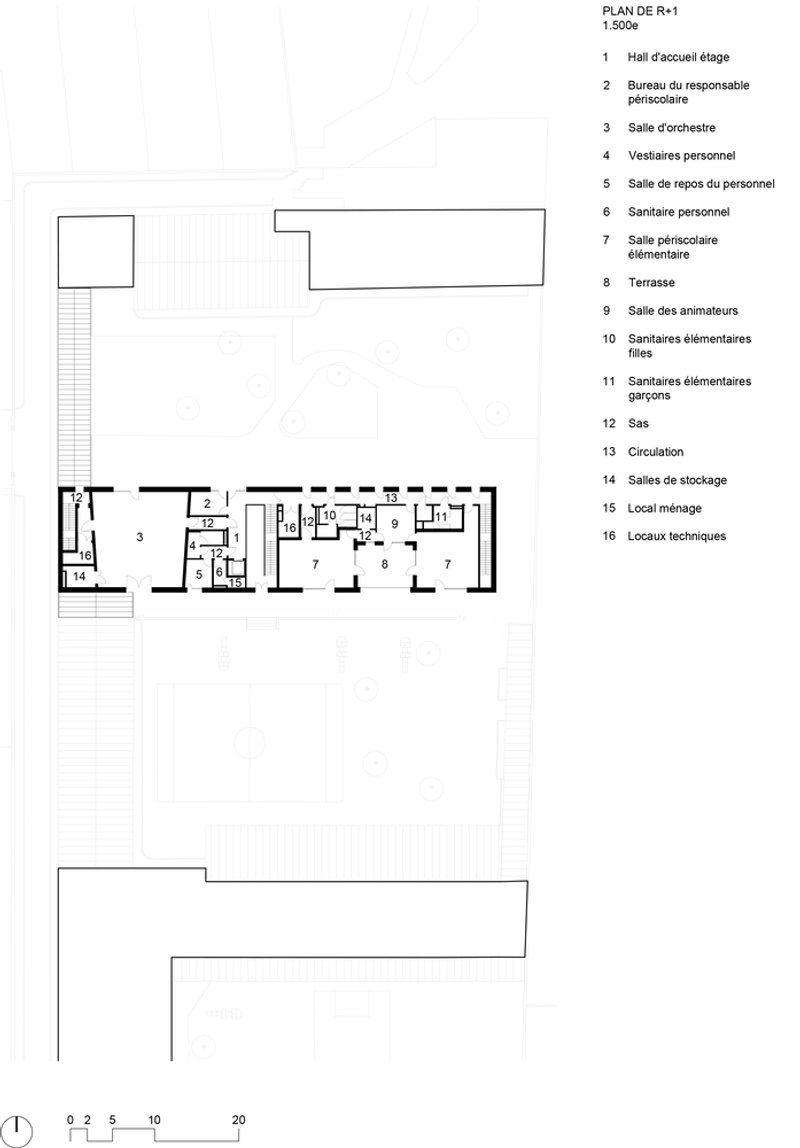
The Lully Vauban Extension serves as a hub for nursery and elementary education, as well as a music conservatory. This central positioning enhances its functional and educational significance while structuring the open spaces around it. The playgrounds, previously undefined, are now transformed into distinctive, organized areas that foster both play and learning.
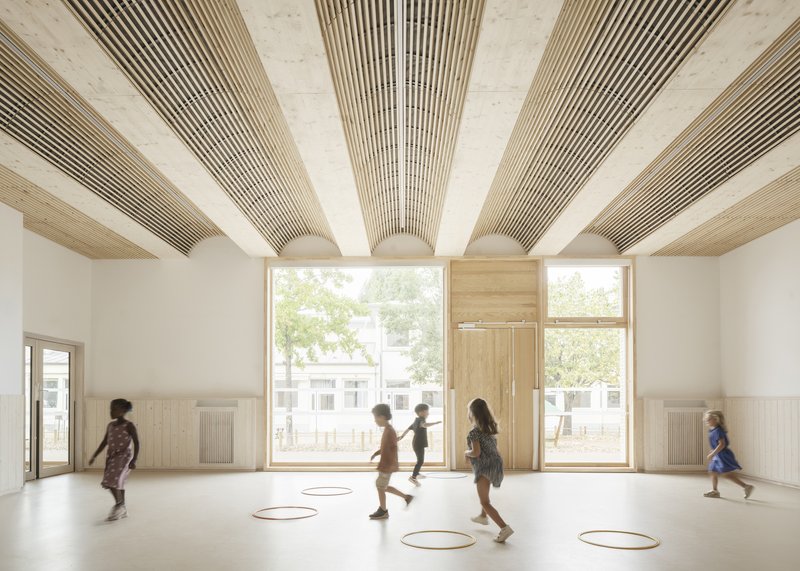
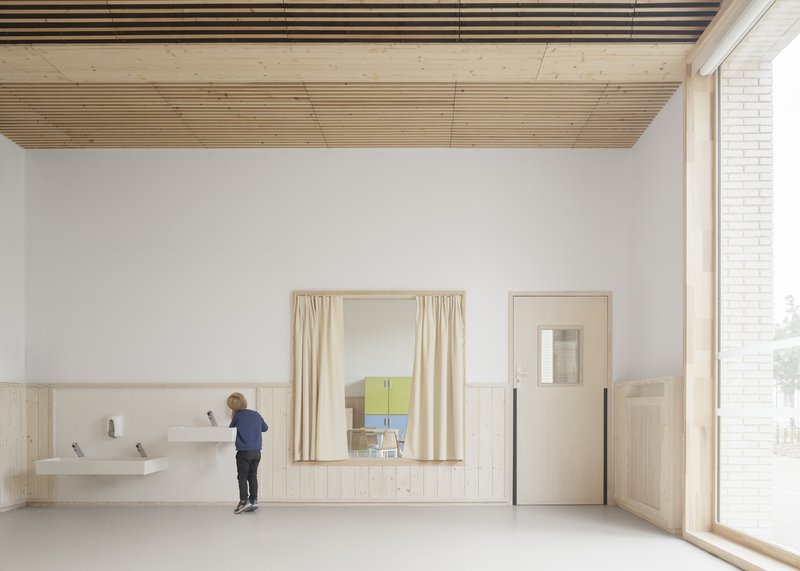
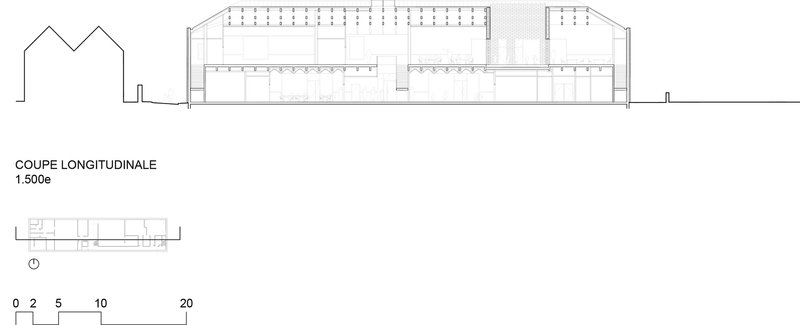
The ground floor houses nursery facilities, with direct access to an adjoining courtyard, ensuring a safe and interactive environment for younger children. The elementary after-school spaces are situated on the upper floor, oriented to the south, and connected to an outdoor terrace. This arrangement optimizes natural light and ventilation, promoting a healthy and inspiring atmosphere for learning.
Sustainability and Material Choices
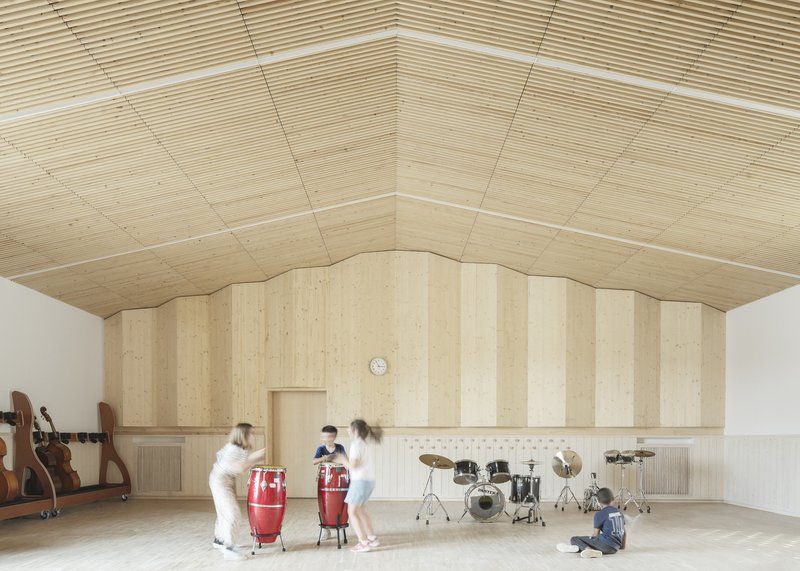
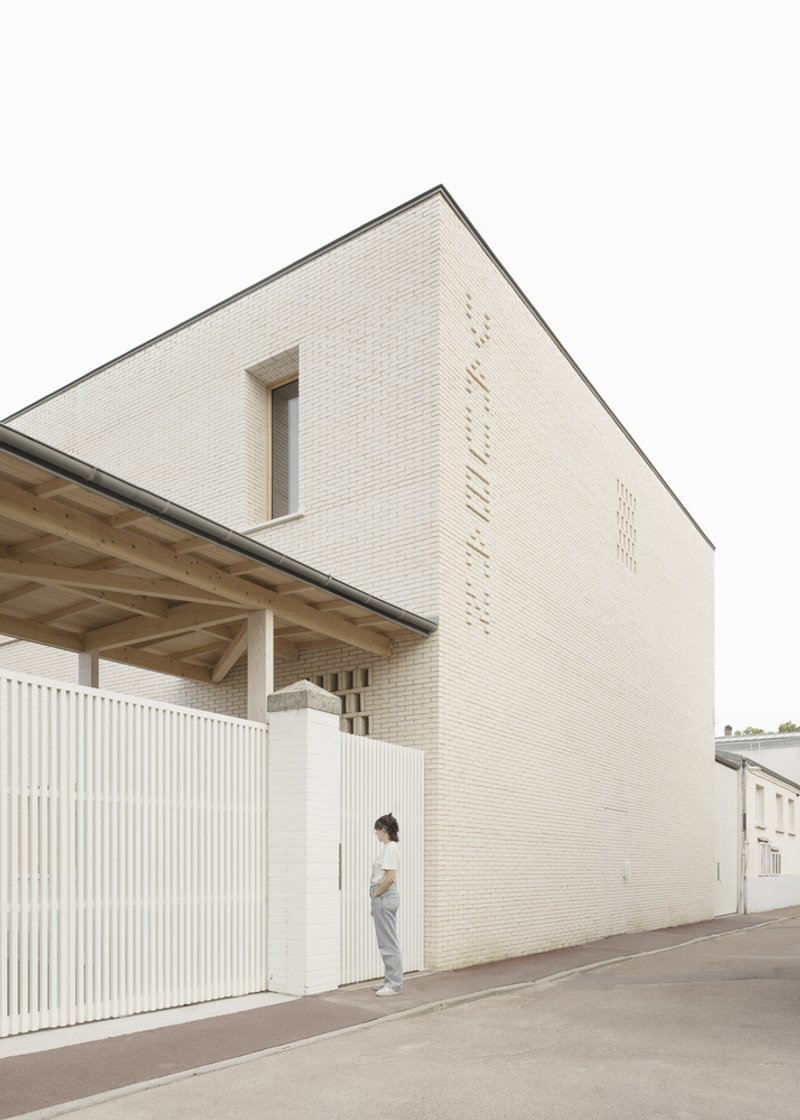
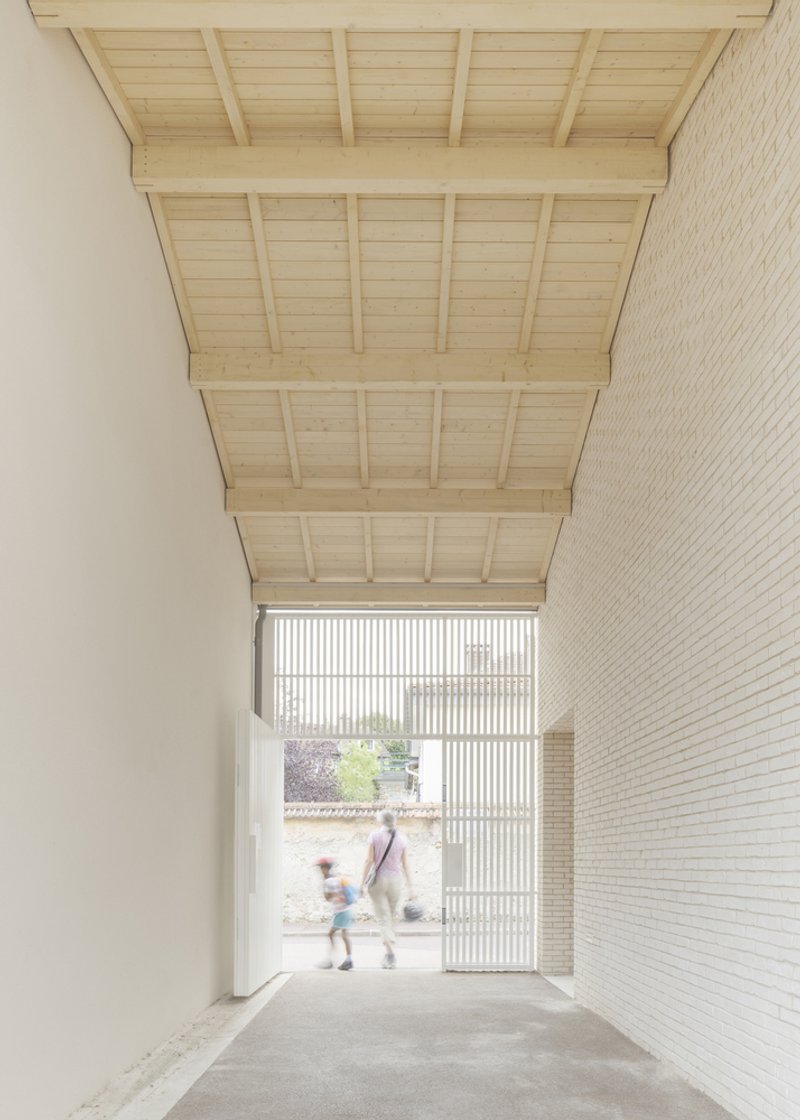
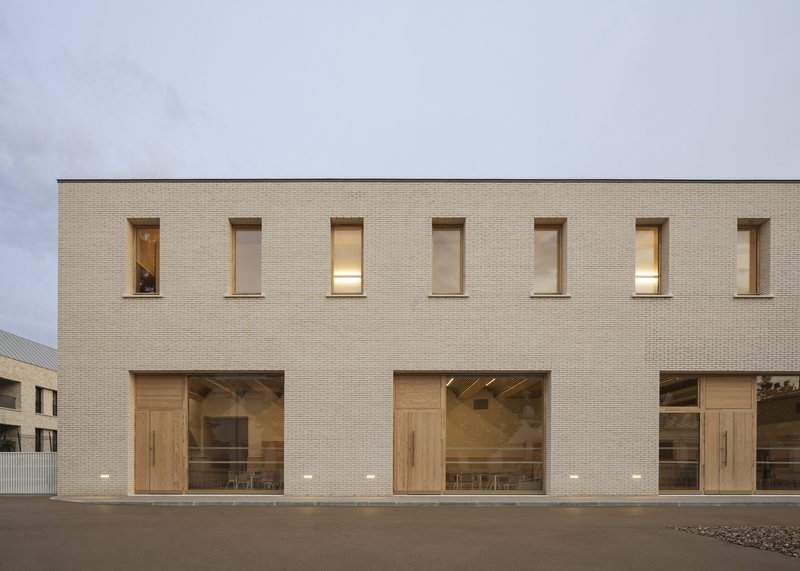
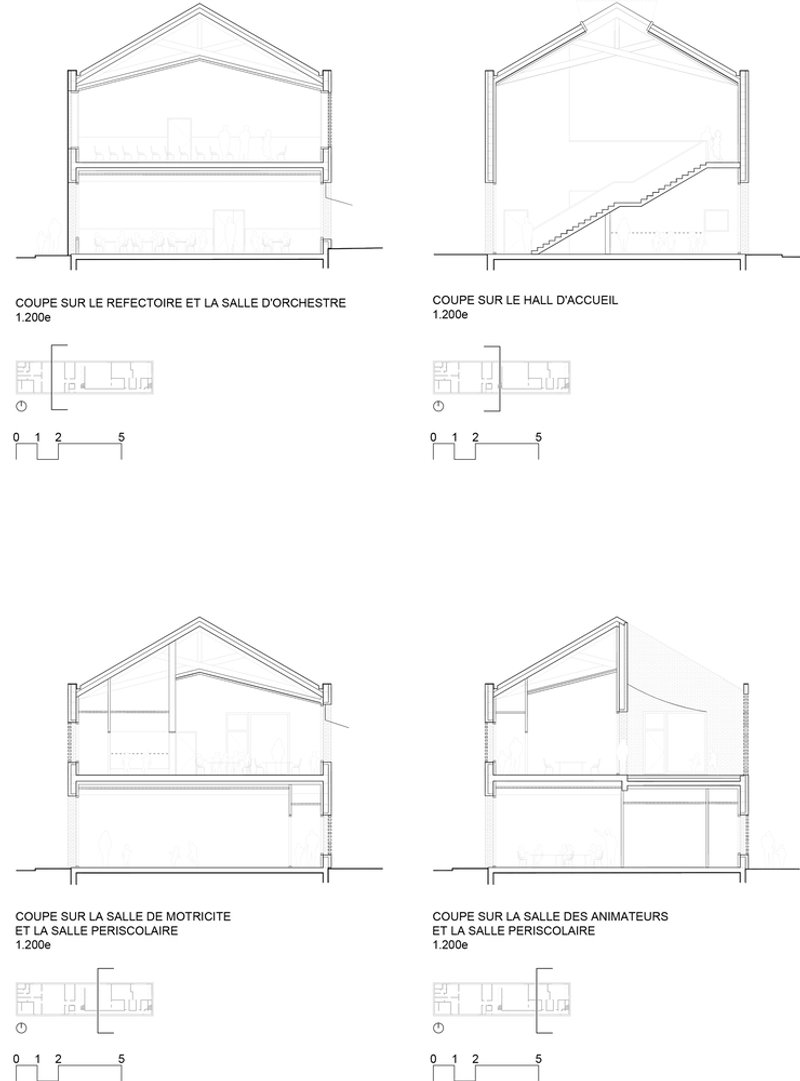
Sustainability is at the core of the project’s design philosophy. The building utilizes durable and recyclable materials such as wood, terracotta, zinc, and bio-sourced insulation, ensuring longevity and environmental responsibility. Masonry floors and walls address the acoustic challenges associated with the music conservatory, creating spaces optimized for both learning and performance.
The structural design emphasizes simplicity and adaptability. Supporting facades and prefabricated floors eliminate the need for interior support elements, resulting in open, flexible spaces that can evolve with future needs. The construction processes are efficient and economical, reflecting a commitment to both budgetary and environmental sustainability.
Enhancing Accessibility and Community Engagement
One of the project’s key objectives was to improve access and visibility for the school and conservatory. The redesigned entrance to the nursery school is now more apparent from the street, marked by a welcoming courtyard that doubles as a functional and aesthetic feature. These design enhancements strengthen the connection between the school and its urban context, fostering a sense of community and belonging.
Architectural Aesthetic and Urban Perception
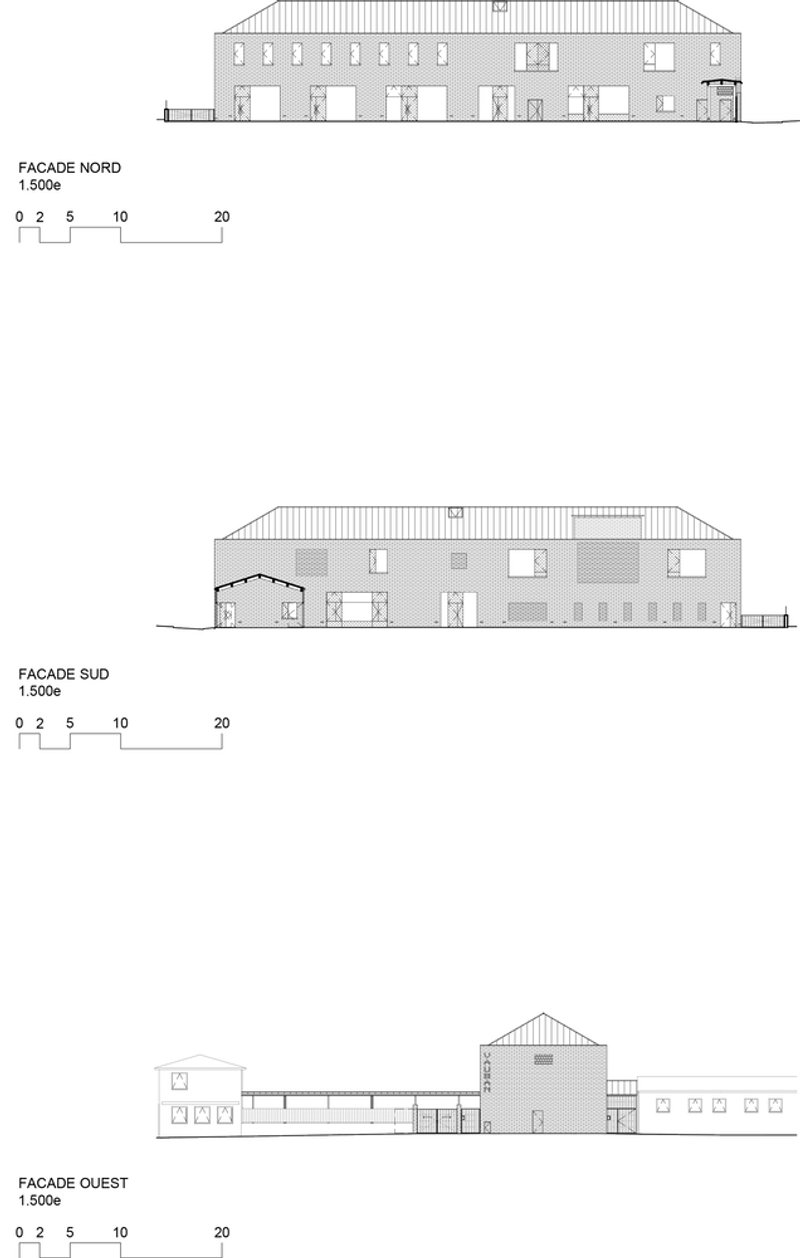
While modest in its urban impact, the extension makes a significant visual impression within the city block. Its architectural aesthetic, characterized by clean lines and a thoughtful material palette, offers a cohesive yet distinctive addition to the area. The building is a harmonious whole, providing a visual and functional upgrade that benefits both the school and the neighboring residences.
A Model for Sustainable Educational Design
The Lully Vauban School and Music Conservatory Extension exemplifies the principles of sustainable school architecture design. Through its thoughtful integration into the urban fabric, multi-functional spaces, and use of eco-friendly materials, it sets a precedent for future educational projects. This extension is not merely a building but a transformative space that enriches both its users and its environment.
All Photographs are work of Schnepp Renou




Popular Articles
Popular articles from the community

Takeshi Hosaka Architects Suspends a Concrete Cross Above a Yokohama Cemetery
A 28-square-meter burial renovation in Yokohama lifts the symbol of resurrection into the sky so mourners see it against heaven.
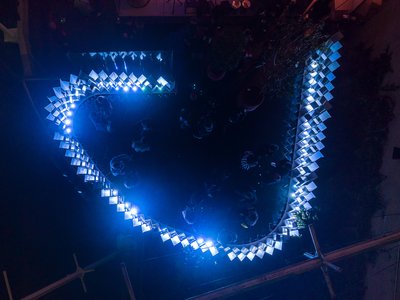
Rojkind Arquitectos and Think Parametric Build a Glueless Pavilion from 67 Interlocking Panels
A serpentine fiber-cement installation in Chapultepec Park celebrates a decade of architectural media in Mexico City.
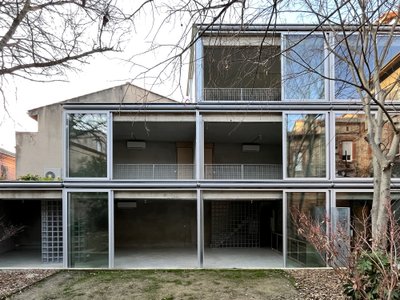
BAST Slots a Four-Story Glass House into a Narrow Gap Between Toulouse Townhouses
In the dense Bonnefoy district, a stepped infill building merges home and office while preserving a majestic hackberry tree.

20 Most Popular Office Building Projects of 2025
From biophilic workspaces in India to net-positive energy offices in New Delhi, 20 office building projects that defined architecture in 2025.


Similar Reads
You might also enjoy these articles
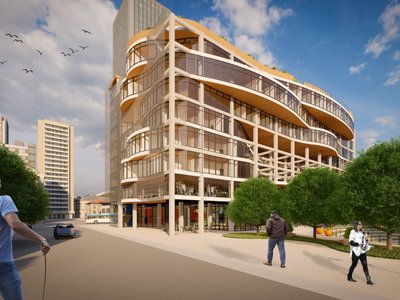
Olio Towers: A Mid-Rise for Performers That Fuses Housing, Rehearsal, and Stage
Located blocks from Houston's Theater District, this modular tower stacks living units around a central performance atrium.
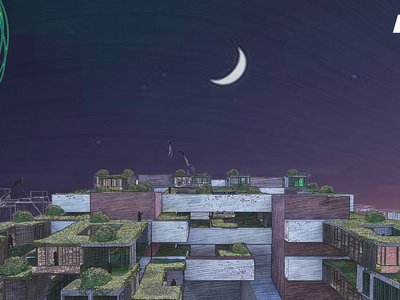
Oasis: Modular Green Housing Carved into Dhaka's Urban Fabric
A shortlisted Plugin Housing entry reclaims unauthorized settlements in Dhaka with stepped concrete volumes, green roofs, and ventilation-driven design.

Black Hole: A Floating Megastructure for the Post-Physical Era
Emiliano Mazzarotto envisions a spherical, self-scaling arena where e-sports, digital hotels, and holographic stadiums replace traditional public space.
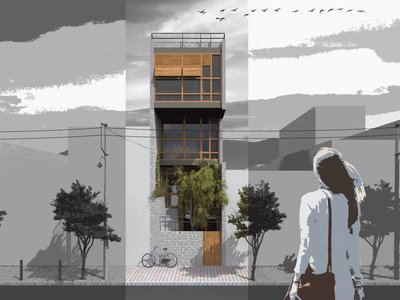
Compact & Sustainable Living in Piraeus: A Four-Level Family Home Built Around Light and Air
A narrow townhouse in one of Greece's densest port cities uses a central atrium and passive strategies to house three generations under one roof.
Explore Architecture Competitions
Discover active competitions in this discipline




The International Standard for Design Portfolios


The Global Benchmark for Architecture Dissertation Awards


The Global Benchmark for Graduation Excellence


Challenge to reimagine the Iron Throne
Comments (0)
Please login or sign up to add comments
No comments yet. Be the first to comment!