

Sustainable School Design for Special Education: Sai Kirupa Special School by Biome Environmental Solutions
Sai Kirupa Special School combines sustainable architecture and user-focused design to create an inclusive learning environment for special education.


Sai Kirupa Special School, located in Tiruppur, India, represents an inspiring blend of thoughtful architectural design, sustainability, and a deep understanding of the needs of children with Autism Spectrum Disorder (ASD) and other learning disabilities. Designed by Biome Environmental Solutions, the school’s campus reflects a commitment to fostering holistic development in students while addressing their unique sensory, cognitive, and physical needs.
A Vision for Inclusive and Sustainable Education
Sai Kirupa Special School was conceived as a center for specialized education and vocational training aimed at promoting independence and self-reliance among its students. Operated by a charitable trust, the project was designed to accommodate phased construction, ensuring flexibility and incremental development based on funding availability.
The school’s phased approach also allowed real-time feedback from users, enabling refinements that directly respond to the evolving needs of its students and staff. The result is a functional, inclusive, and ecologically responsible campus that nurtures growth and creativity.
Climate-Responsive Design
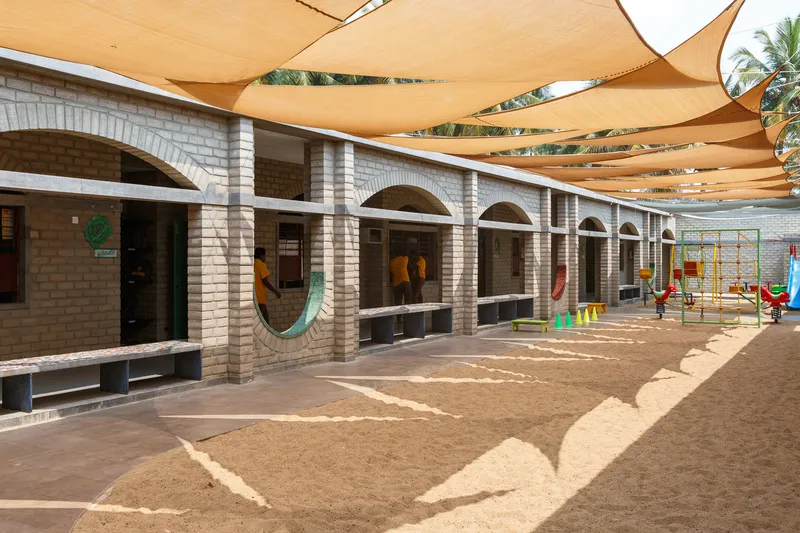
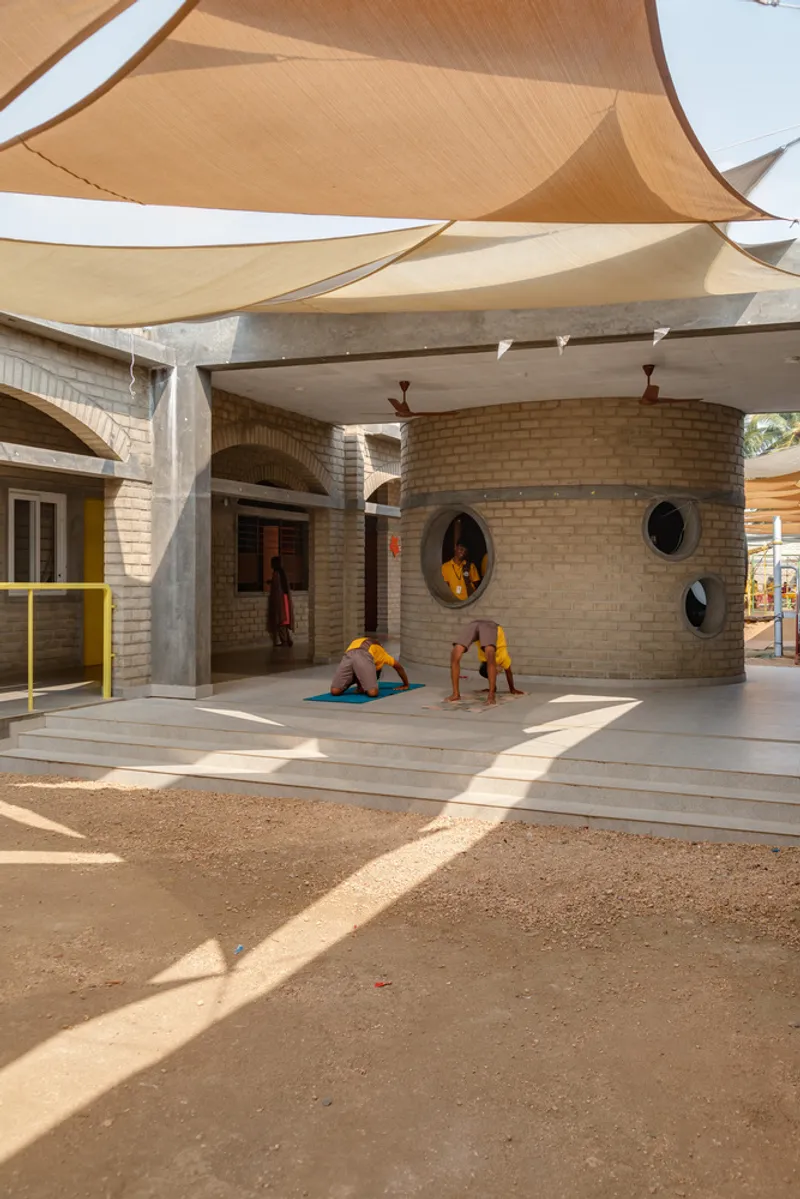
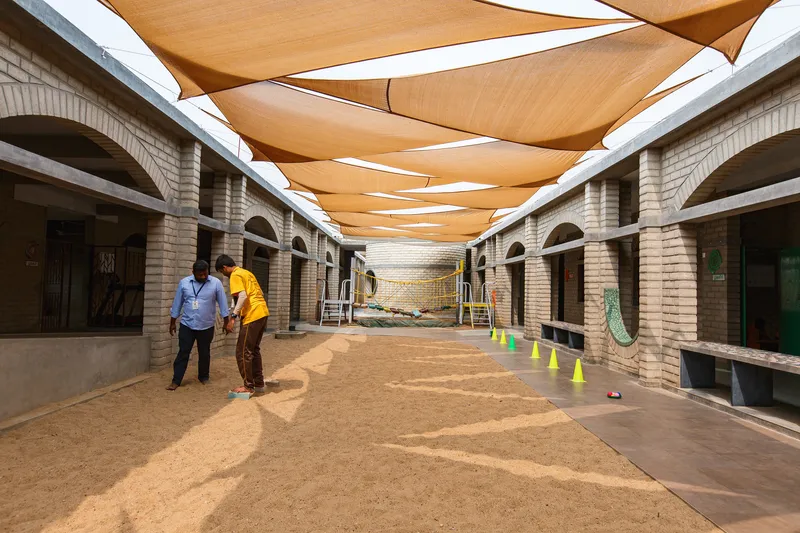
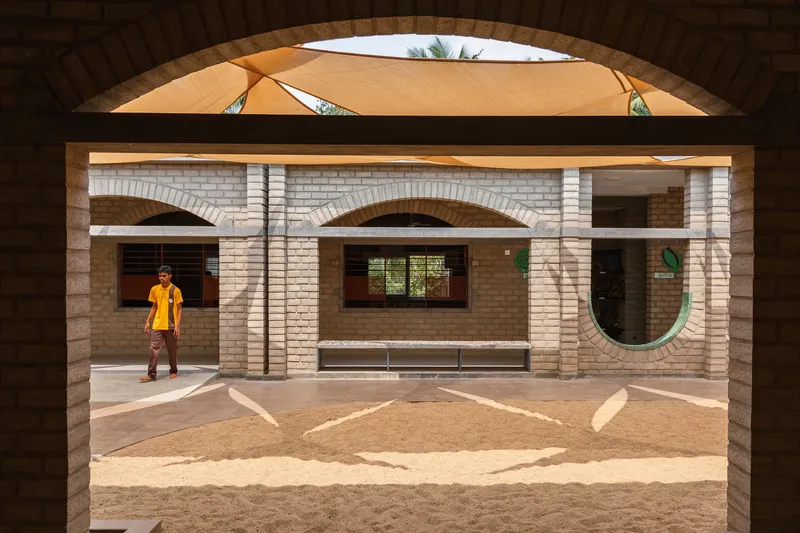
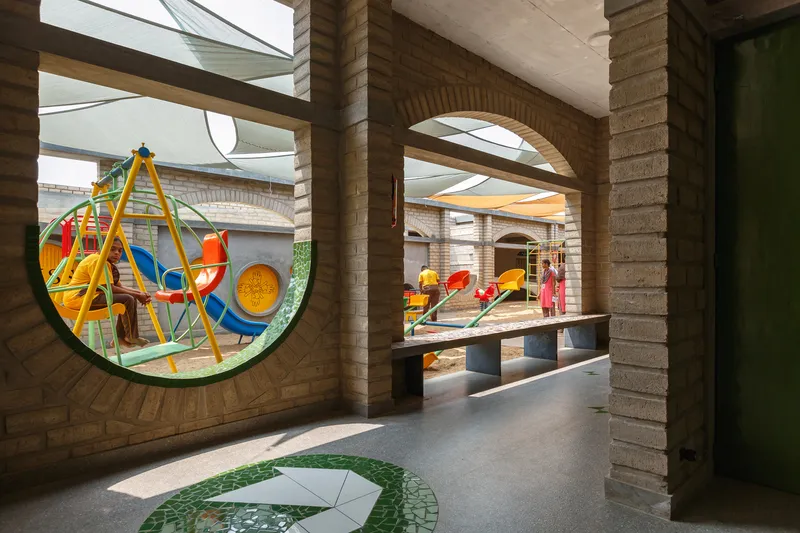
The architectural design is closely aligned with the local climate of Tiruppur. To mitigate the intense heat of the region, the building’s layout optimizes its north and south facades, minimizing solar heat gain while maximizing ventilation. Shaded courtyards and tensile fabric shade sails create comfortable outdoor spaces for recreation and therapy.
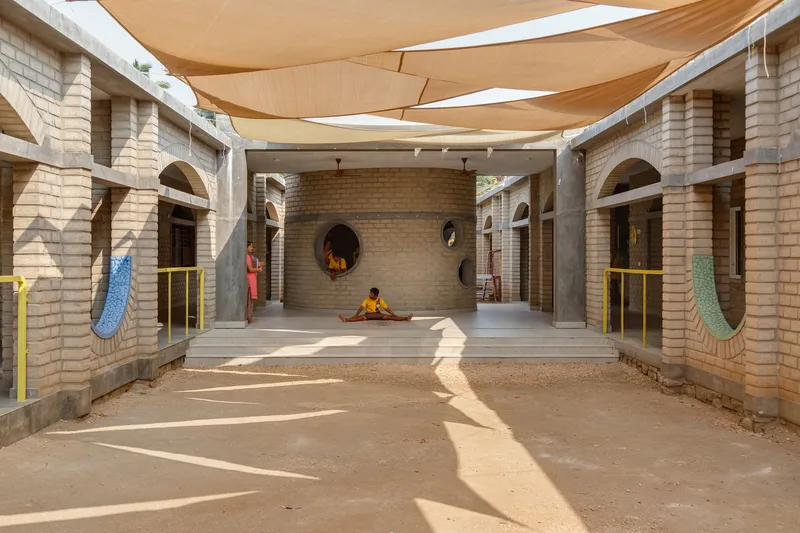
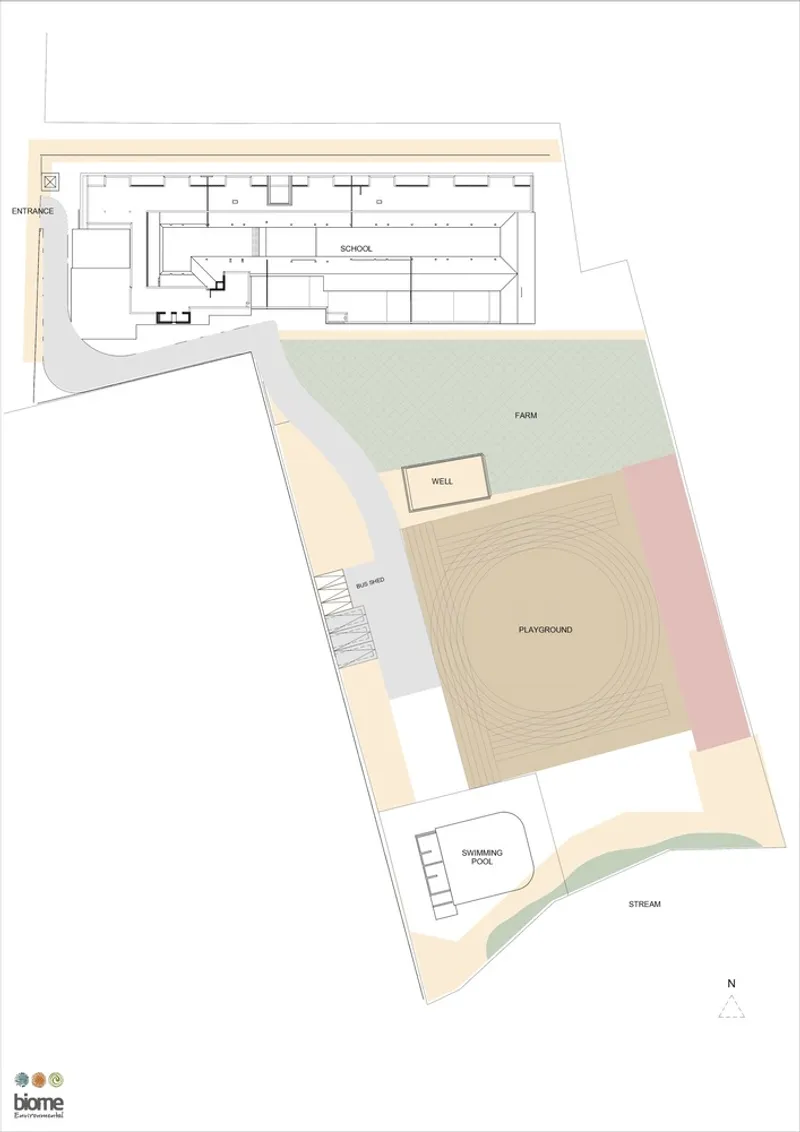
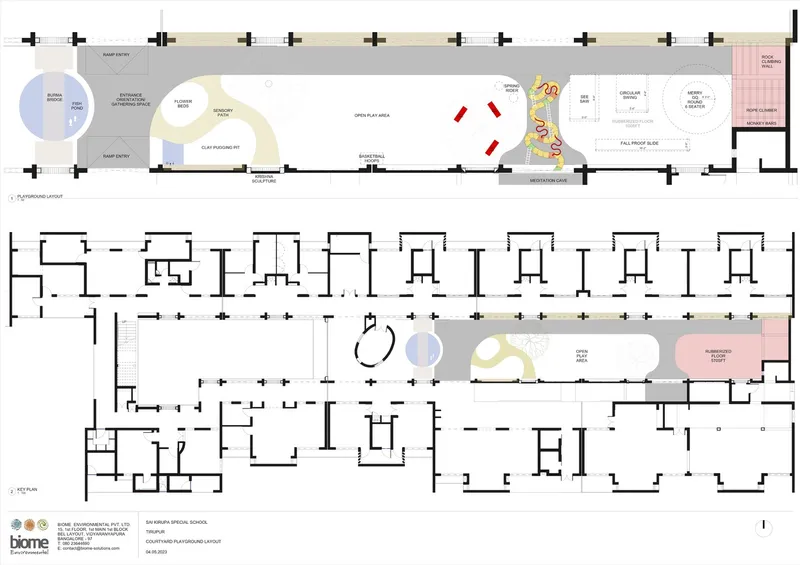
The rectangular layout of the building is organized around a central courtyard, which is further divided into smaller sections by a bridge. This configuration not only aids navigation but also provides functional spaces such as an amphitheater and therapy zones.
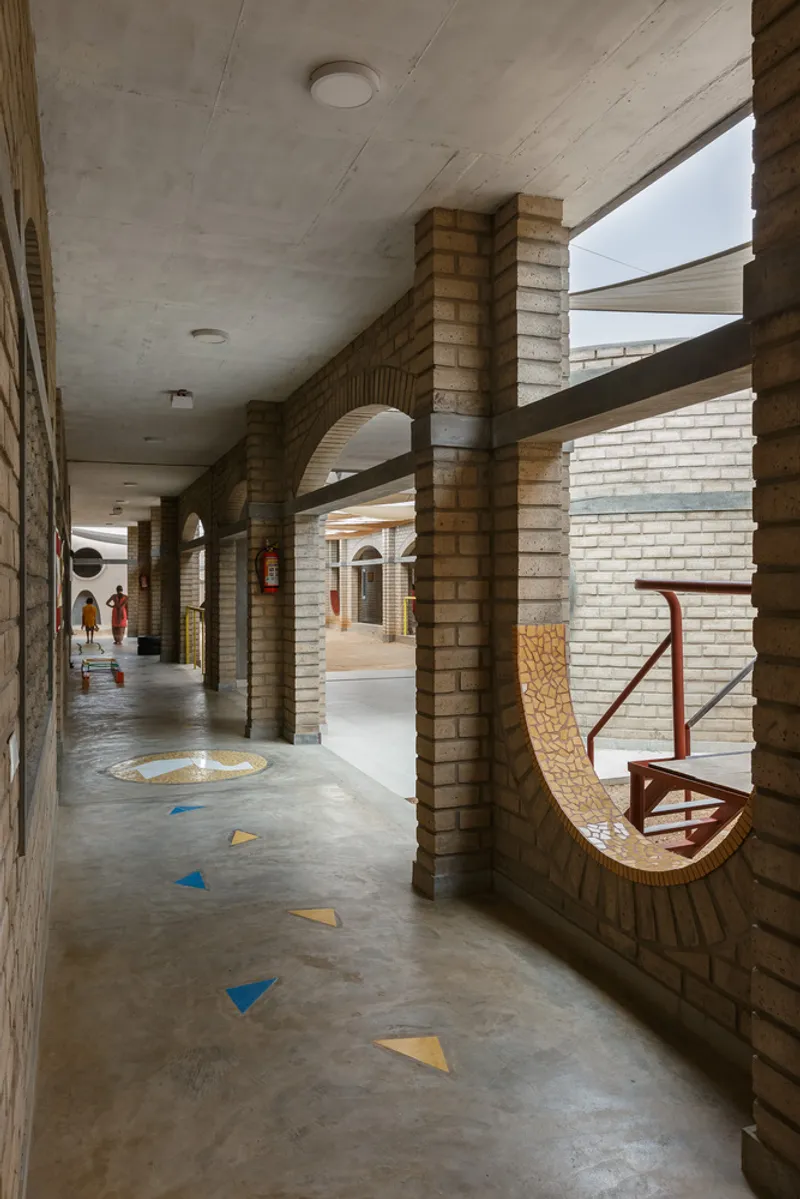
Spaces Tailored for Special Education
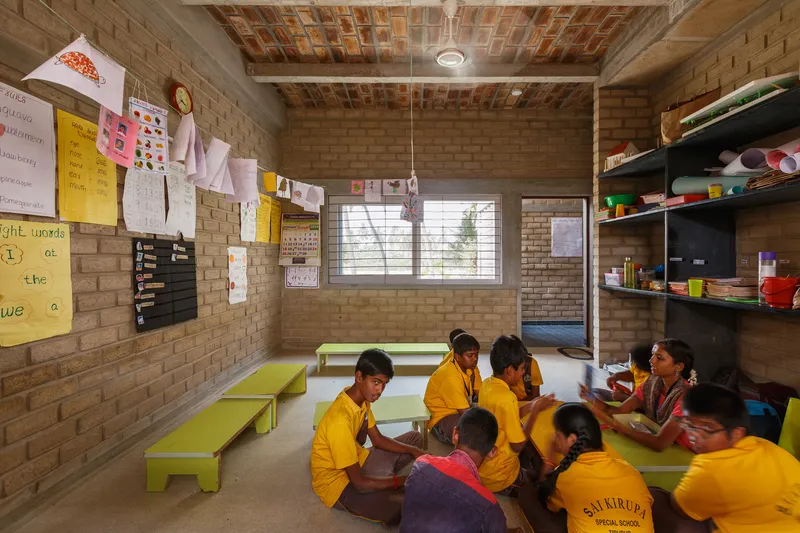
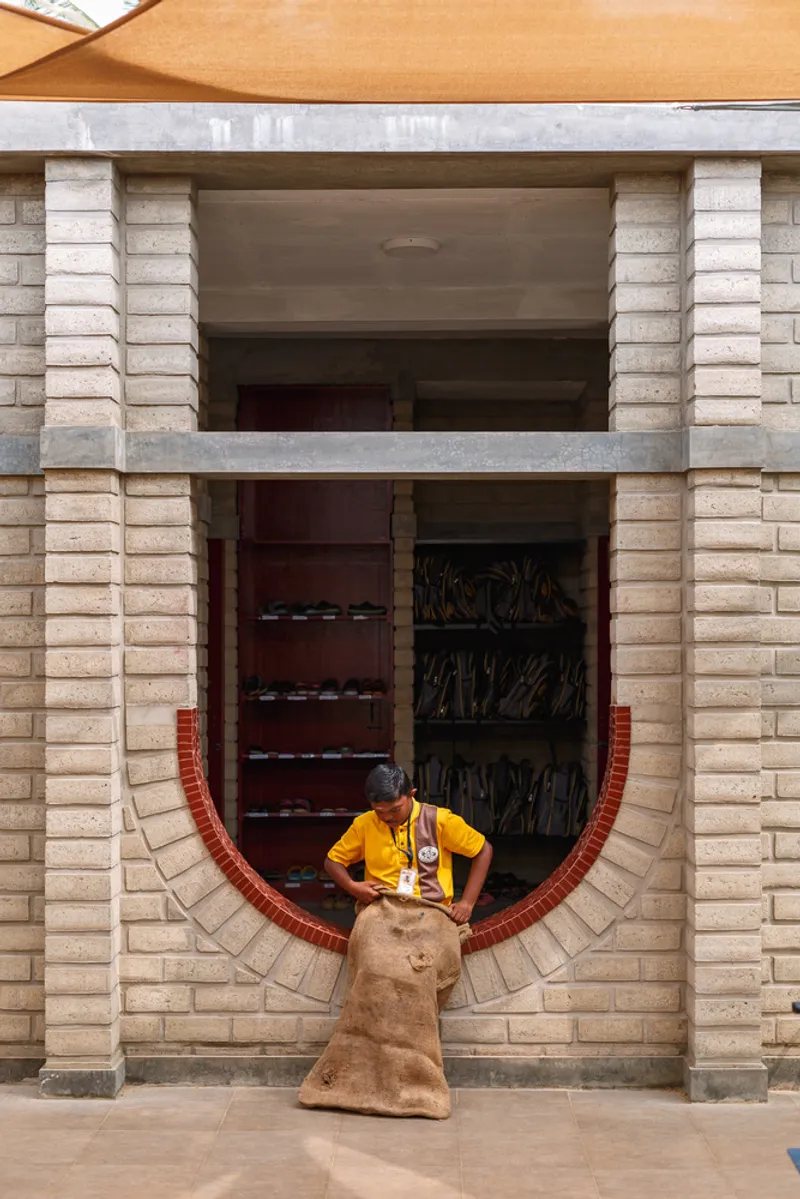
The school’s layout is meticulously crafted to cater to the sensory and functional needs of its students. On the ground floor, distinct zones house classrooms, therapy rooms, and caretaker spaces. Classrooms feature integrated toilet facilities and adjoining changing rooms, reflecting the specific requirements of students with ASD.
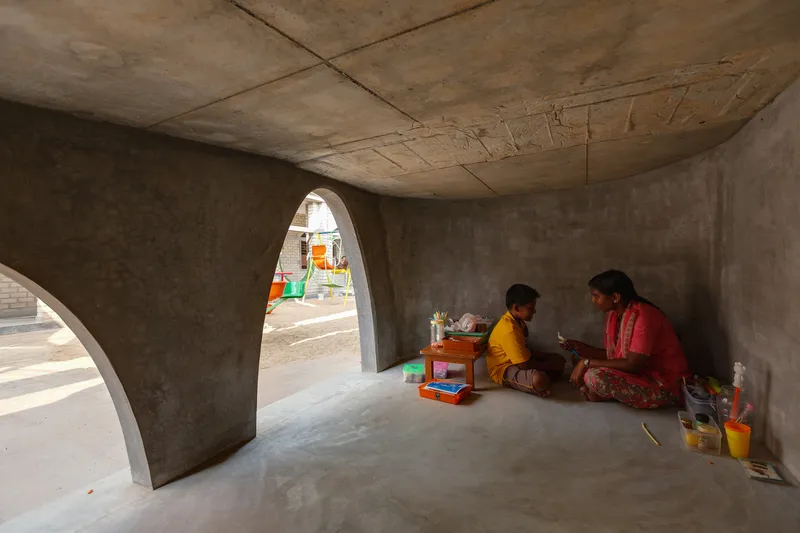
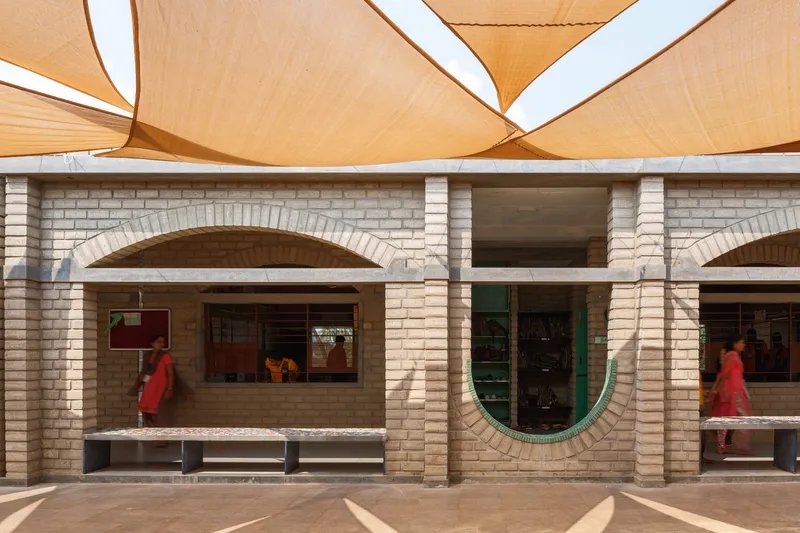
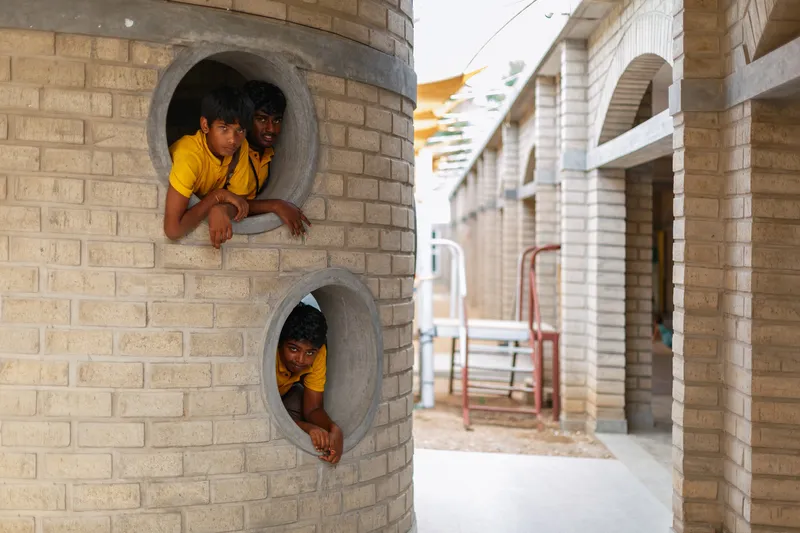
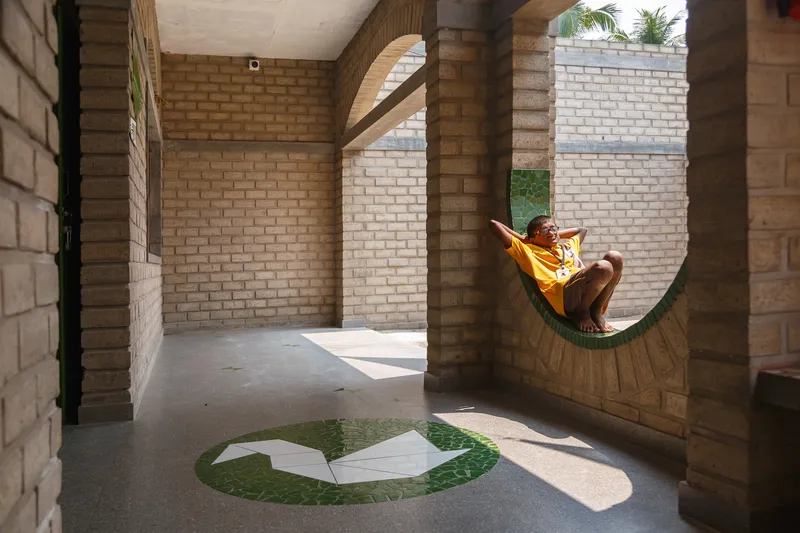
Transition spaces such as arcaded passages and alcoves provide areas for students to pause, engage, or observe activities. These thoughtful design elements ensure that the environment remains inclusive and calming.
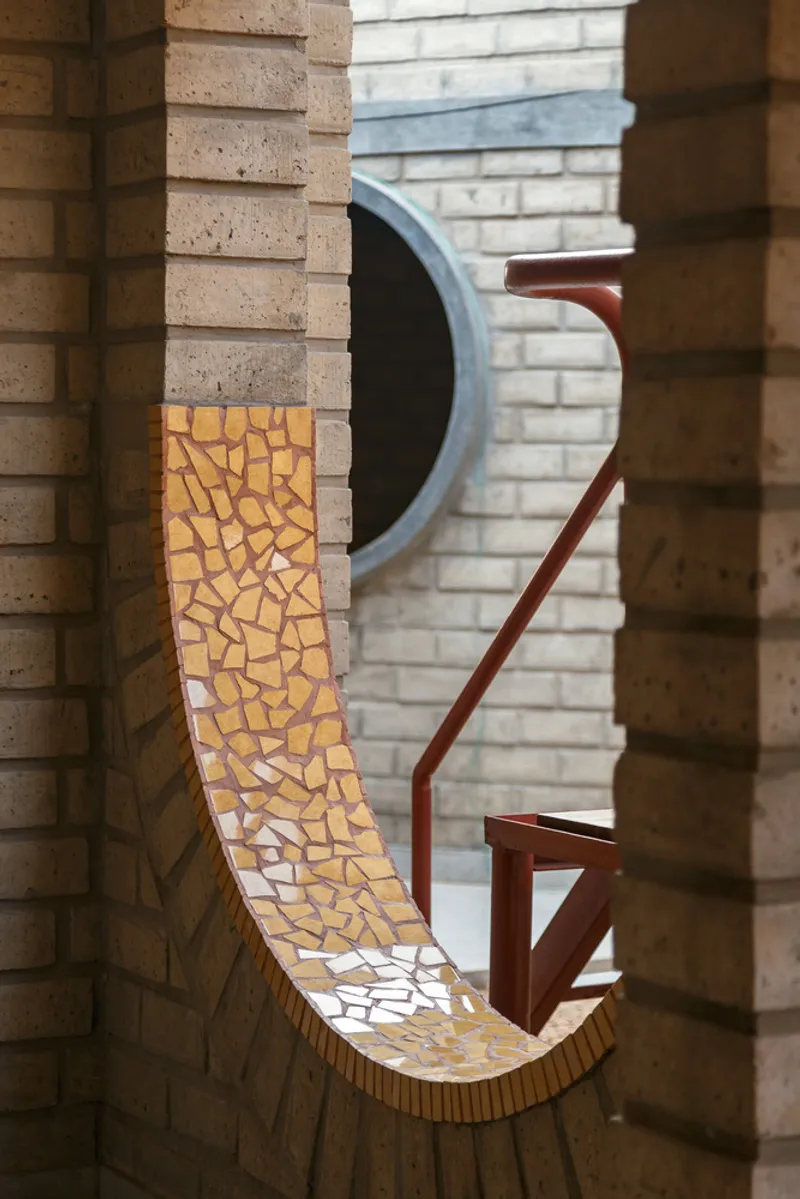
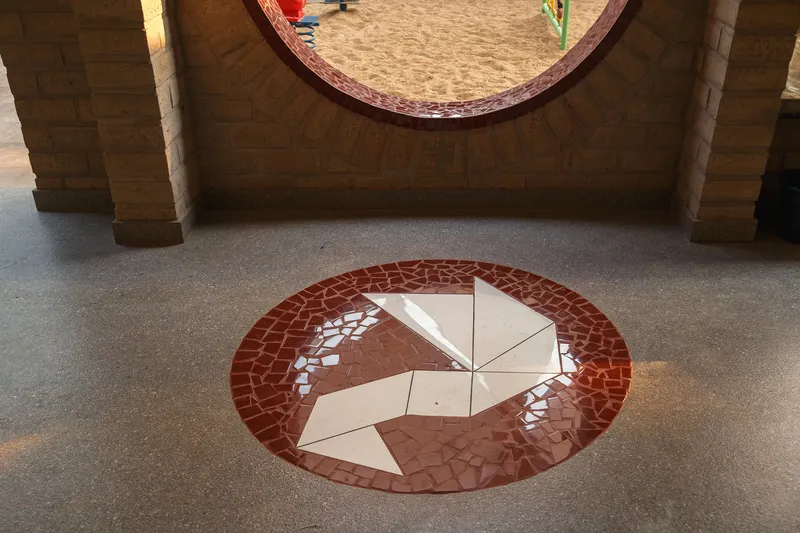
On the first floor, residential dormitories and classrooms accommodate students with lesser dependency needs, ensuring a smooth integration of academic and personal care facilities.
Sensory and Experiential Learning Features
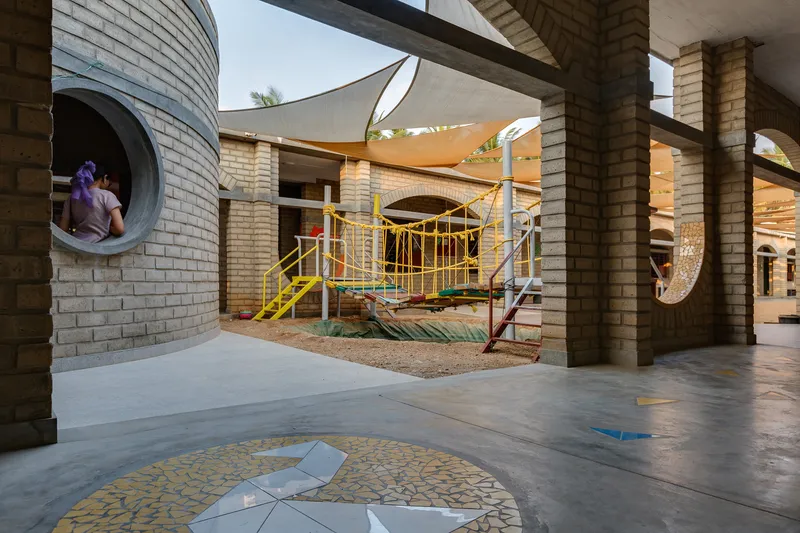
The design incorporates experiential elements that promote sensory engagement and motor skill development. Colored tile inserts in circulation paths serve as visual cues, encouraging movement through activities like hopping and skipping. Classroom entrances feature vibrant Tangram-patterned pause points and tactile surfaces, enhancing navigation and creating memorable spatial markers.
The outdoor areas are equally engaging, with sensory paths, shaded play zones, and a bridge over a pond that doubles as a tool for balance and coordination exercises.
Sustainable Construction and Materials
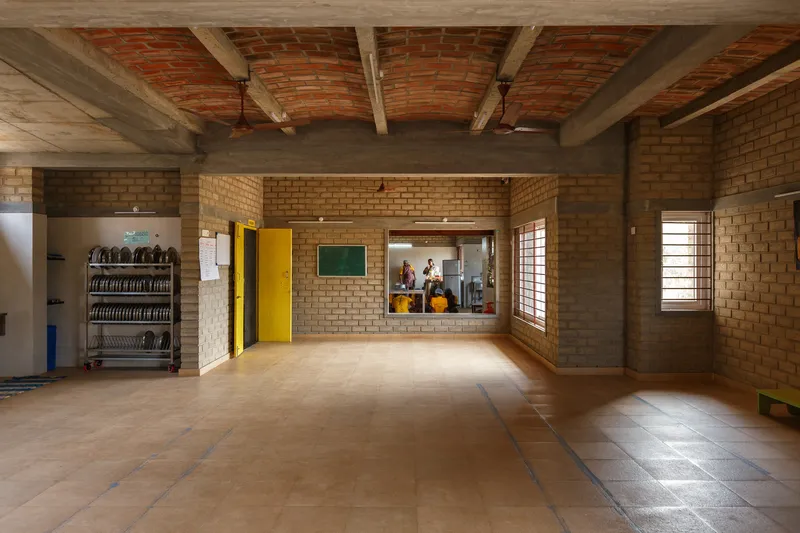
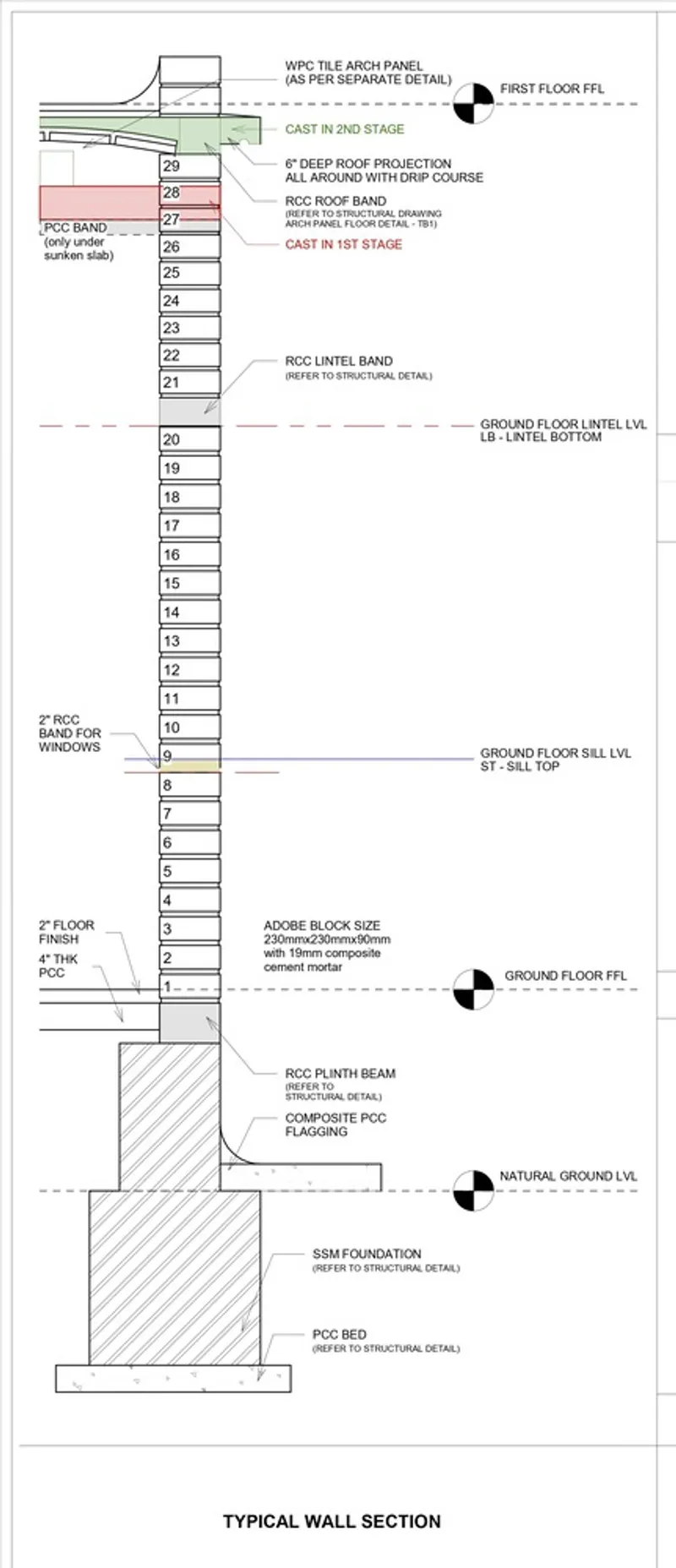
The school’s design emphasizes sustainability, utilizing locally sourced and environmentally friendly materials. Stones and boulders from the site form the foundation, while handmade adobe blocks crafted from on-site gravel create the exposed masonry. These materials not only reduce the building’s carbon footprint but also provide an earthy, textured aesthetic that complements the natural surroundings.
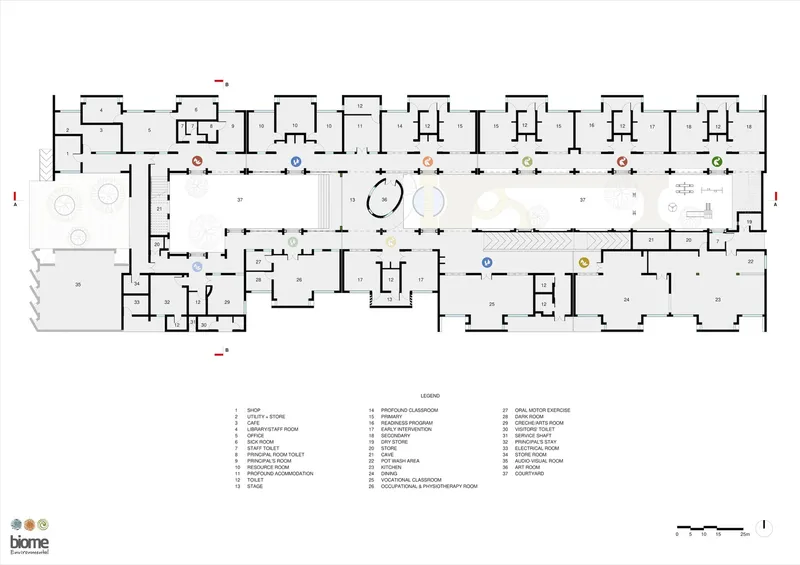
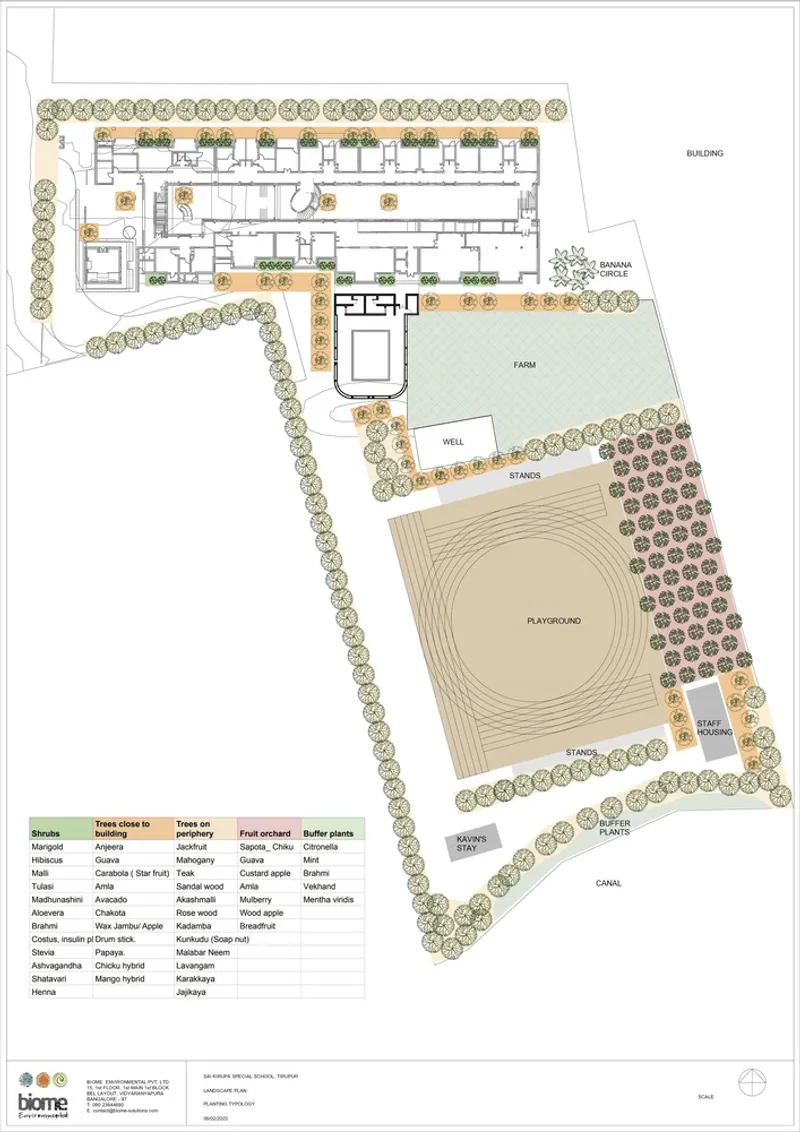
The rough-textured walls and jack arch ceilings help minimize ambient noise, creating a sensory-friendly environment conducive to learning. This focus on sustainability extends to the landscaping, which incorporates native plant species that thrive in the local climate.
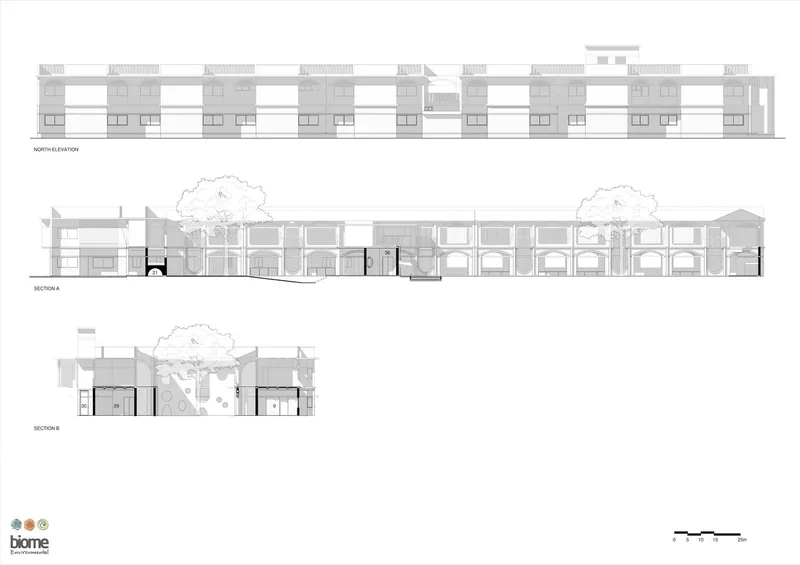
A Holistic Approach to Education
Sai Kirupa Special School’s design is more than a collection of physical spaces—it is a nurturing environment that supports the holistic development of its students. By addressing sensory needs, fostering creativity, and promoting sustainable practices, the campus serves as a model for inclusive educational design.
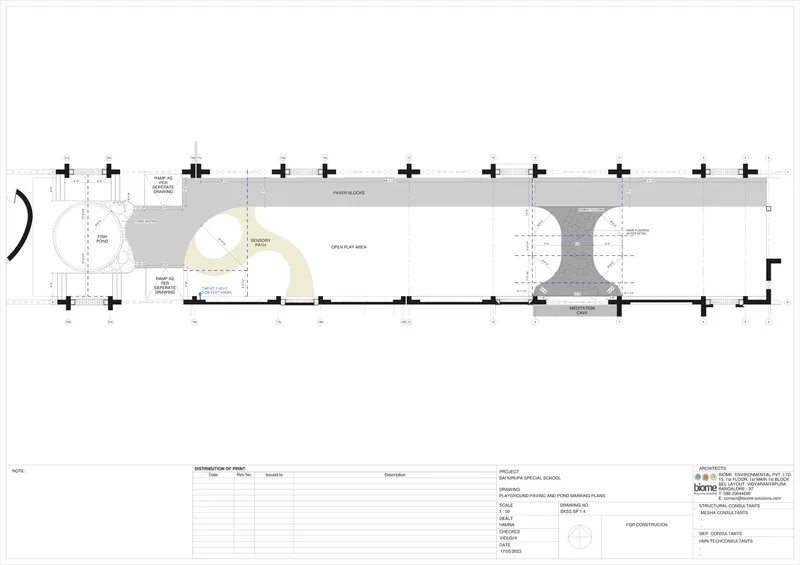
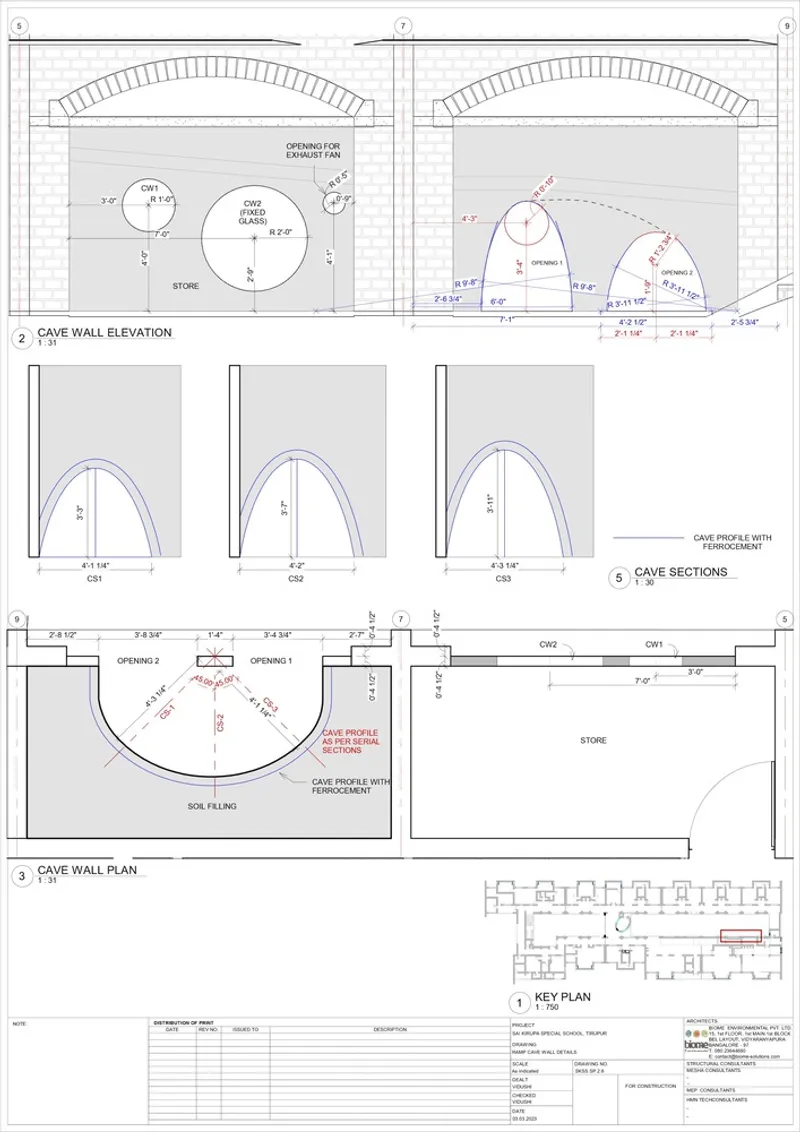
The integration of thoughtful architecture, ecological responsibility, and user-centric solutions demonstrates how schools can go beyond traditional learning environments to empower students and enhance their quality of life.
All Photographs are work of Link Studio


Popular Articles
Popular articles from the community


Cube Design Draws an Ecological Corridor Between Two Shenzhen Hills with the Nankai Building
Beside Shenzhen's container docks, the Nankai Building pairs stacked balconies with a climbing green screen to connect two hillsides across its height.

GROUP A Strips a 1969 Rotterdam Harbor Headquarters to Its Frame and Wraps It in Timber Louvers
In Rotterdam's M4H harbor district, Ferro Offices reuses a 1969 frame, adds one timber storey and reaches BREEAM-NL Outstanding.

longwave studio Reorganizes a 112 m² Tainan Apartment Around the Daily Routines of a Family and Two Cats
In Tainan, Taiwan, birch plywood, rust-red furniture and a freestanding plaster wall link arrival, storage, work and family life in one apartment.

David Macias Steps a Doorless Stone and Plaster House Down a Tropical Colombian Hillside
In the humid hills of Colombia, Threshold House replaces the front door with an open void and terraces its 850 m² down the slope instead of fighting it.

Similar Reads
You might also enjoy these articles


Hodi-Mandai Geram
Project Function: Preservation and revitalization of the Intangible heritage and socio-spatial identity of the Hodi by Housing, Cultural Memory Center, Sacred Grove, landscape, local tourism economy


Olio Towers: A Mid-Rise for Performers That Fuses Housing, Rehearsal, and Stage
Located blocks from Houston's Theater District, this modular tower stacks living units around a central performance atrium.

Oasis: Modular Green Housing Carved into Dhaka's Urban Fabric
A shortlisted Plugin Housing entry reclaims unauthorized settlements in Dhaka with stepped concrete volumes, green roofs, and ventilation-driven design.

Black Hole: A Floating Megastructure for the Post-Physical Era
Emiliano Mazzarotto envisions a spherical, self-scaling arena where e-sports, digital hotels, and holographic stadiums replace traditional public space.

Explore Educational Building Competitions
Discover active competitions in this discipline

Challenge to design public laboratory

Challenge to reimagine the Iron Throne

Photograph architecture without architects

Illustrate the lost glory of Angkor Wat - Render Challenge
Comments (0)
Please login or sign up to add comments
No comments yet. Be the first to comment!