

ARCHITECTS OFFICE and Triptyque Twist a São Paulo Tower into a Spiraling Green Exoskeleton
The AGE 360 Building wraps residential living in a rotating concrete diagrid that doubles as a scaffold for vertical gardens.


The residential high-rise has spent decades perfecting its own blandness: stack units, wrap them in curtain wall, repeat. The AGE 360 Building in São Paulo, designed by ARCHITECTS OFFICE and Triptyque, refuses that script entirely. Its floor plates rotate as they climb, generating a spiraling form held in place by a white concrete diagrid exoskeleton that is simultaneously structure, facade, and garden trellis. The result is a tower that reads differently from every vantage point and, more importantly, performs differently than its glass-box neighbors.
What makes this project genuinely interesting is the insistence that sustainability is not a hidden systems game but a visible, structural proposition. The diagrid is not decorative. It carries gravity and lateral loads while creating deep setbacks for planted terraces at every level. The rotation of the plan means no two floors share the same solar exposure for long, reducing heat gain on any single face and giving each unit a shifting relationship with the city below. It is a building whose form is its environmental strategy, and whose environmental strategy is its architecture.
The Twist as Structural Logic
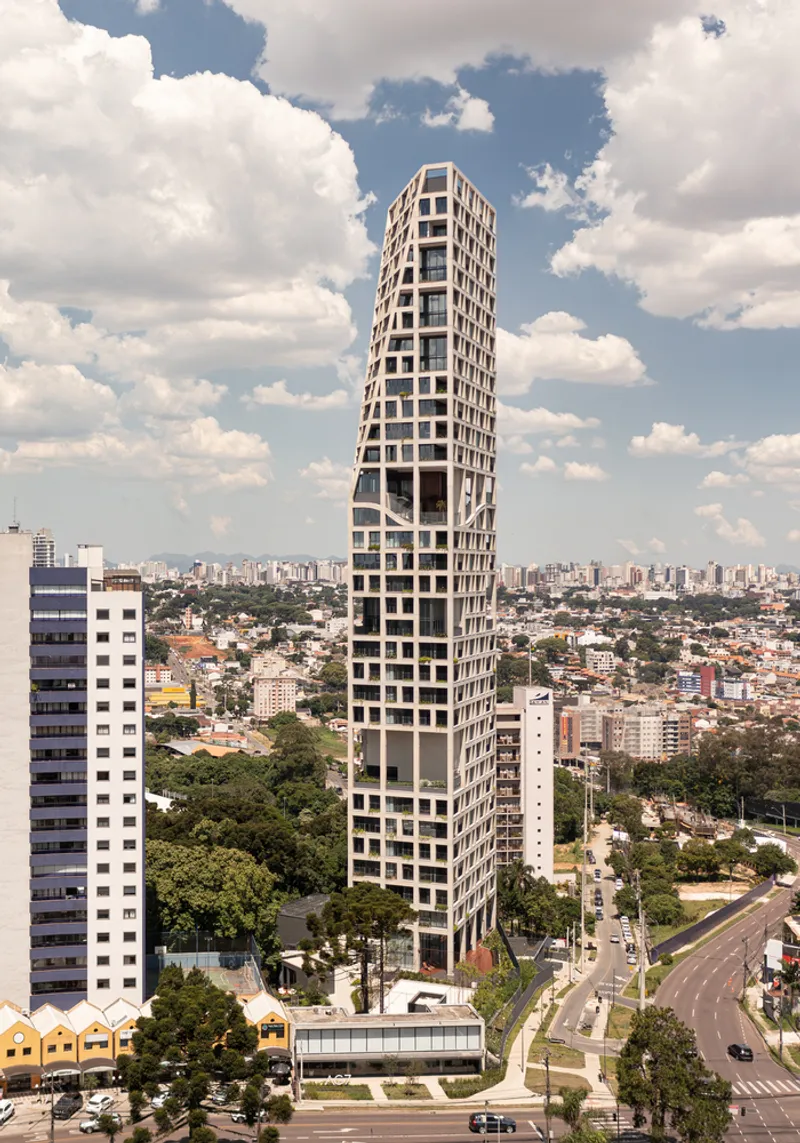
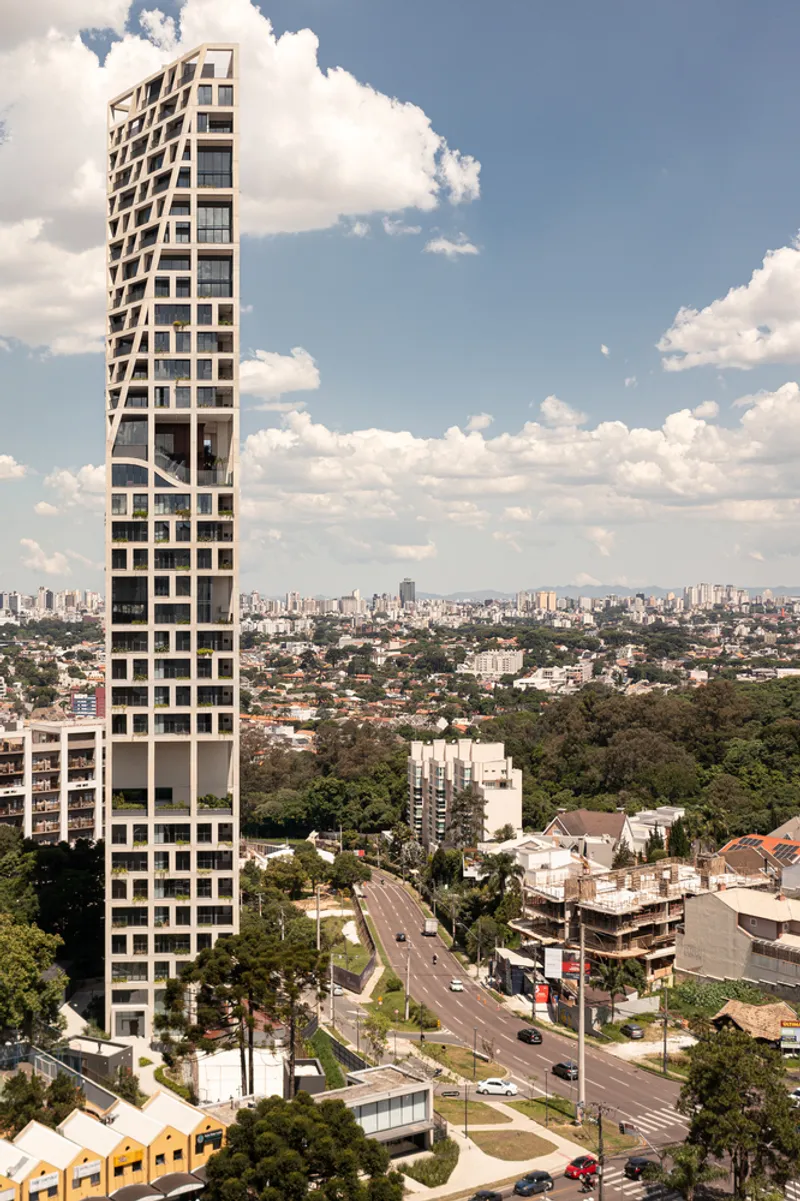
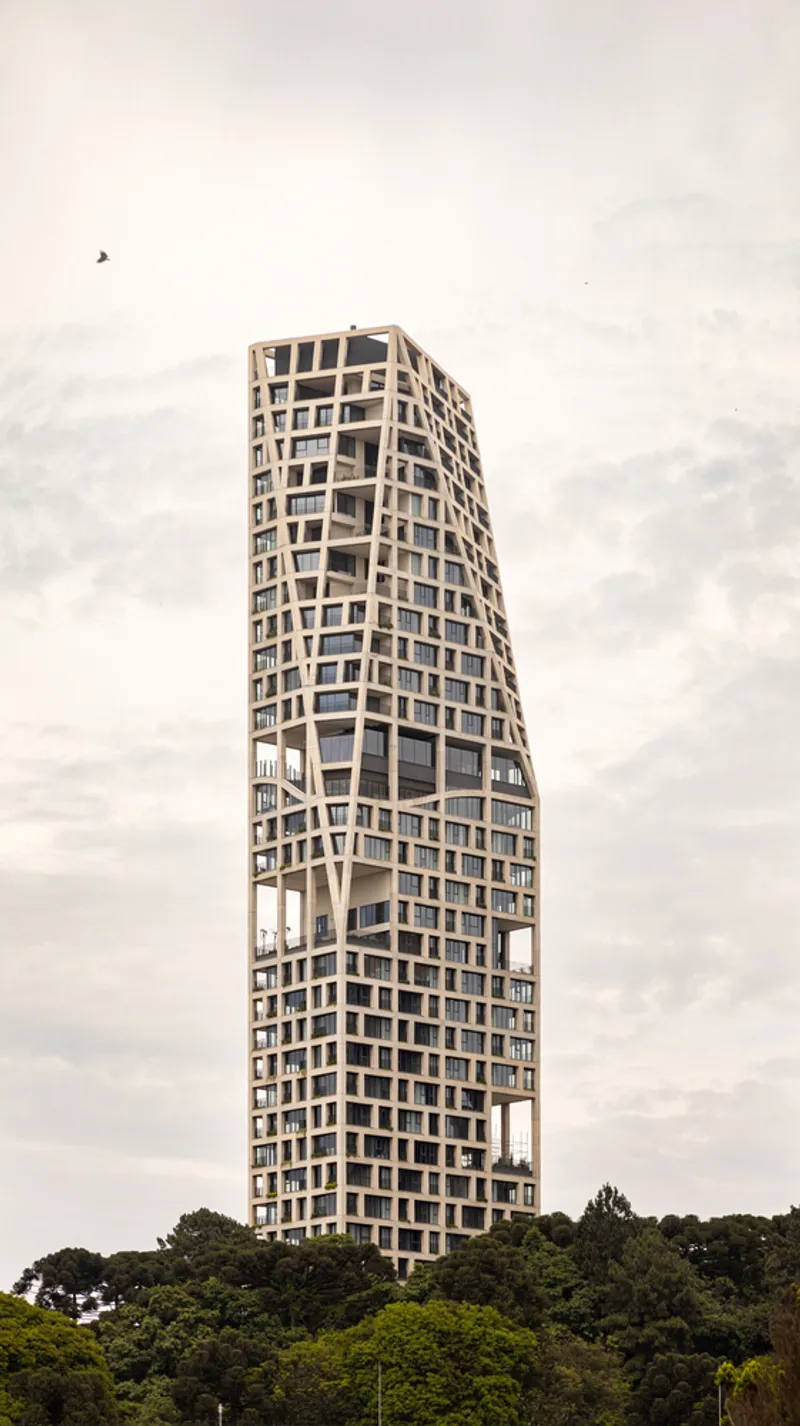
Rotating floor plates are not new, but they are rarely this honest about the structural consequences. Most twisted towers hide their gymnastics behind smooth skins. Here the rotation is legible in the concrete frame itself: the diagonal members shift angle as they ascend, and the resulting pattern is neither uniform nor random but follows the geometric logic of the plan's incremental turn. From the street, the tower appears to unwind. From across the city, it reads as a slender, faceted mass whose profile changes as you move around it.
The exoskeleton also liberates the interior. Because the load path runs through the perimeter diagrid rather than through internal columns, apartments gain column-free open plans with floor-to-ceiling glazing that opens directly onto generous balconies. Structure and space are negotiated in the same move.
A Facade That Breathes
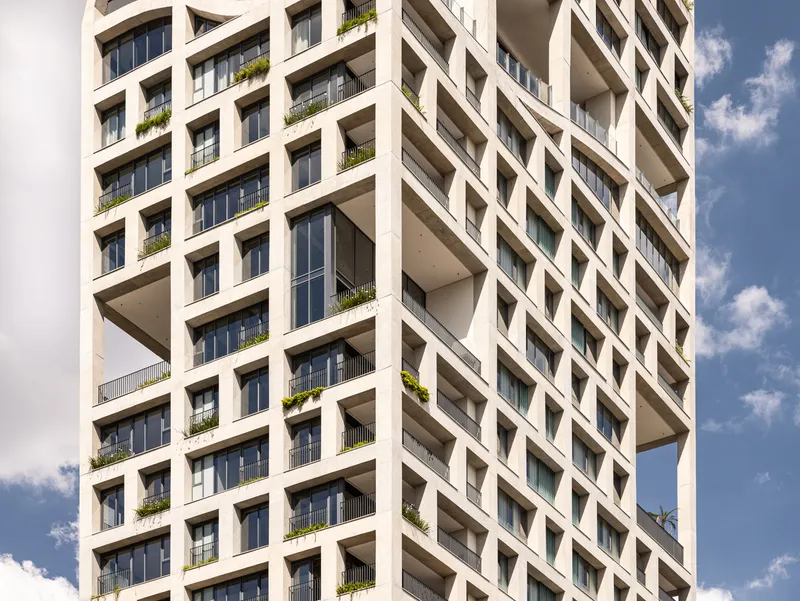
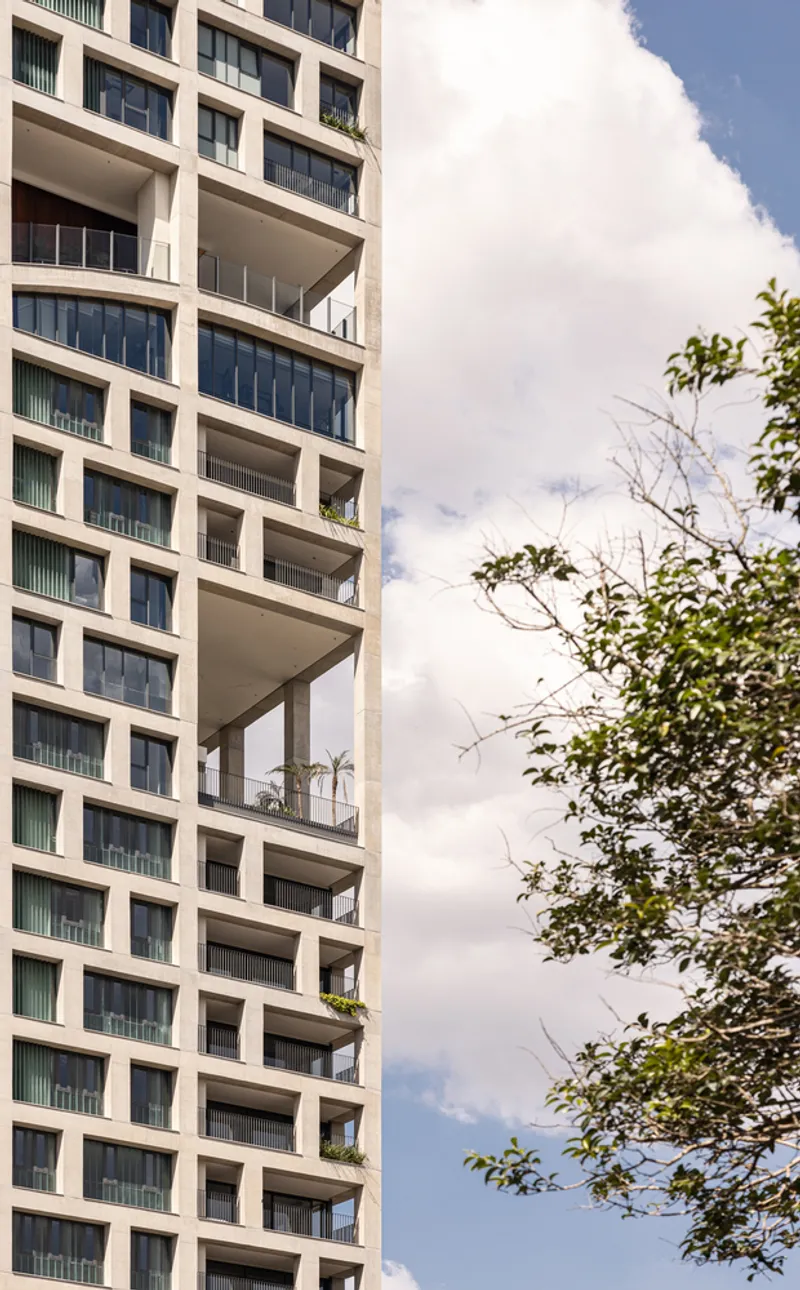
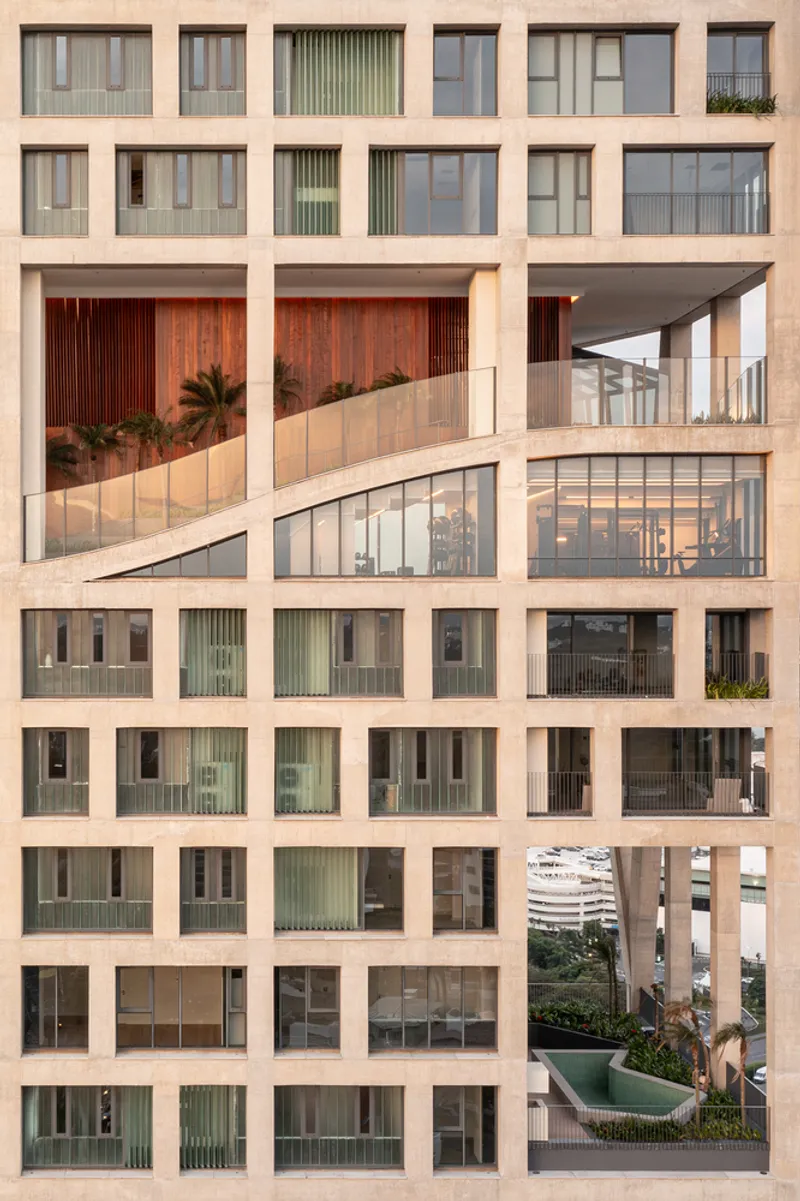
The deep terraces created by the diagrid are not afterthoughts. They are the building's primary environmental buffer, filled with planting that provides shade, reduces reflected heat, and captures rainwater. At mid-height, leafy canopies from street trees nearly merge with the tower's own vegetation, blurring the boundary between ground-level landscape and vertical garden. The planted terraces give every unit a threshold between conditioned interior and open sky, a gradient of comfort rather than a binary wall.
Timber screens appear at strategic points across the facade, introducing a second material register that filters light and provides privacy without sealing off the view. The interplay between white concrete, dark timber, and living green keeps the facade visually active across seasons and through the day as sunlight rakes across the angled surfaces.
Communal Layers at the Sky
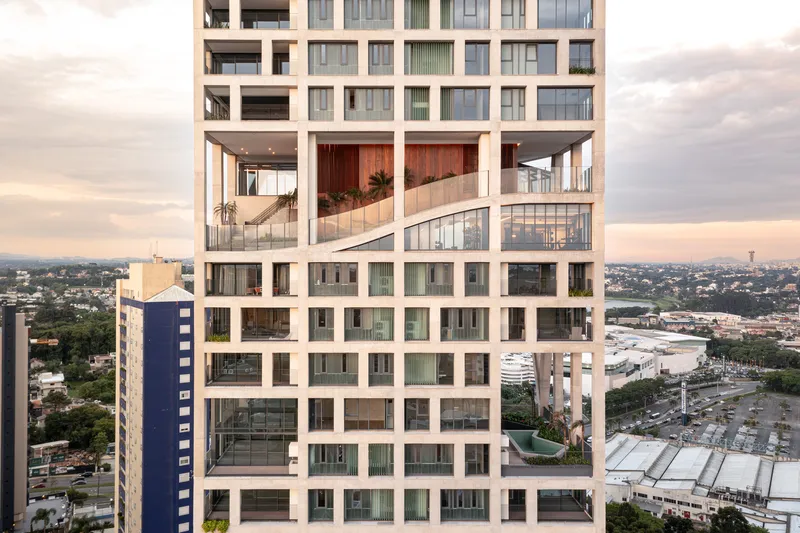
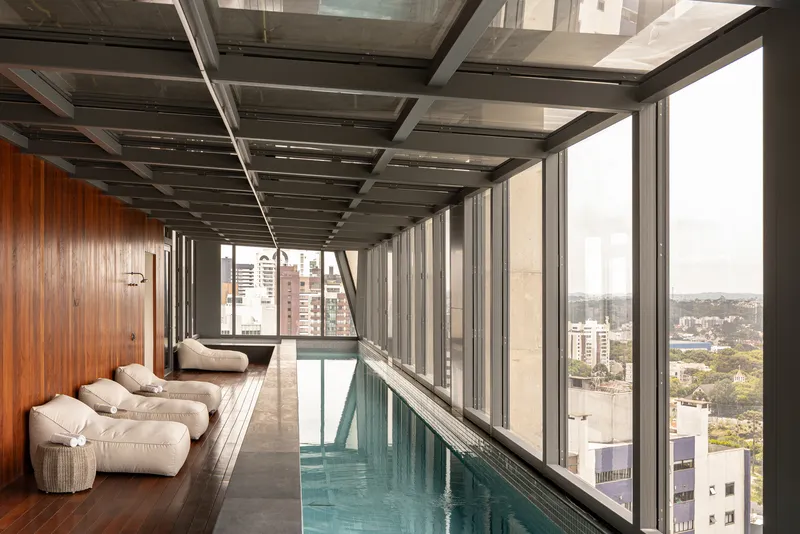
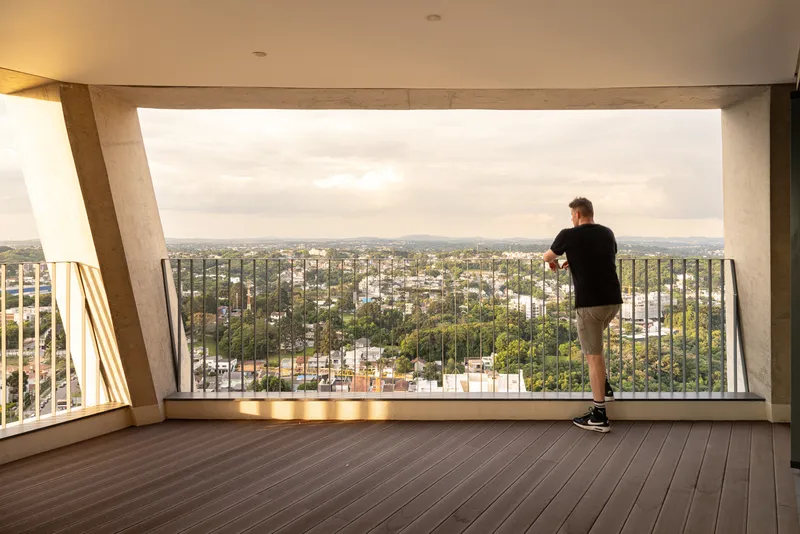
Residential towers too often reserve their best real estate for penthouse owners. AGE 360 breaks that pattern by inserting communal double-height terraces at intervals up the building's height. At dusk, these floors glow like open lanterns within the diagrid, their timber-screened volumes visible from blocks away. An indoor pool occupies one such level, its exposed steel ceiling grid and full-height glazing turning a utilitarian amenity into a civic gesture visible from the street.
The upper terraces, decked in timber and framed by the angled concrete, offer panoramic views of São Paulo's horizon. They feel less like rooftop additions and more like carved-out rooms within the structure itself, spaces where the exoskeleton becomes furniture: bench, wall, and shade canopy all at once.
Ground and Podium
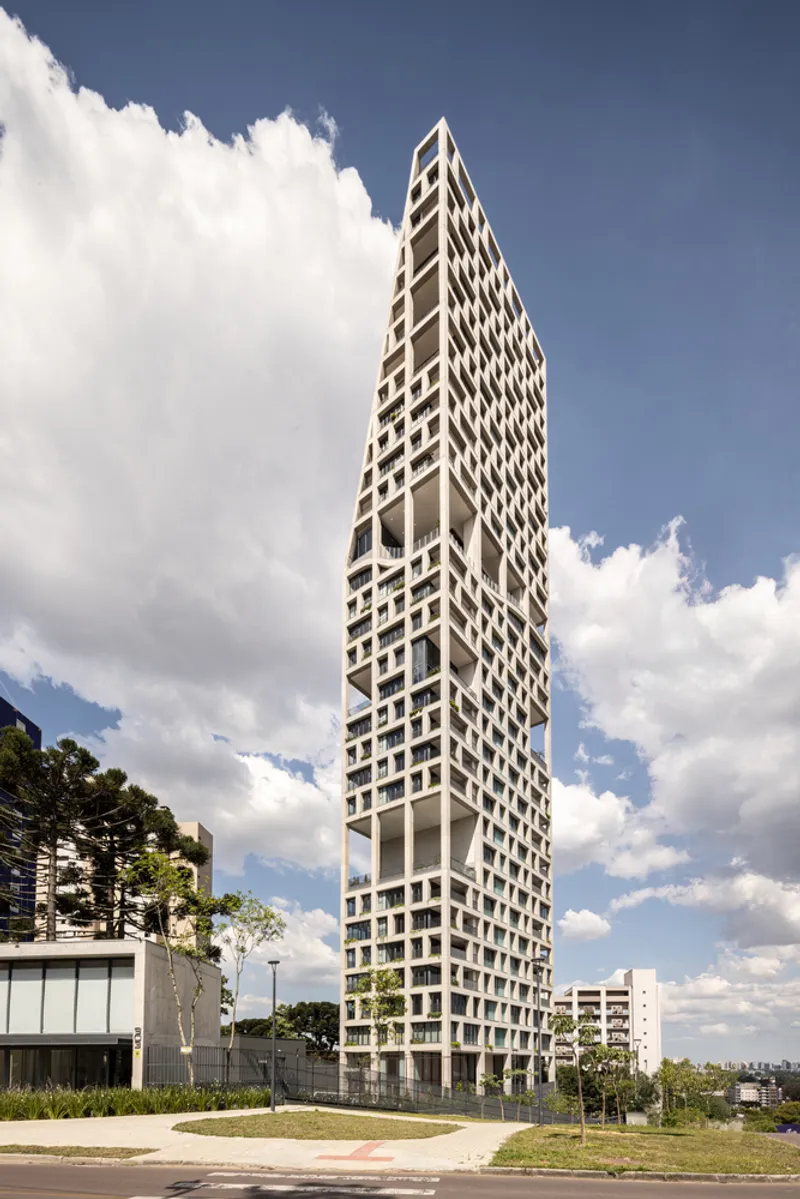
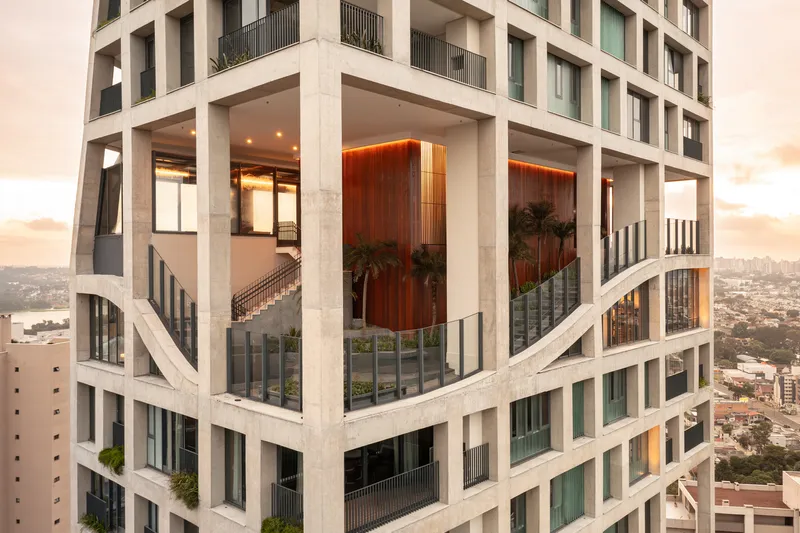
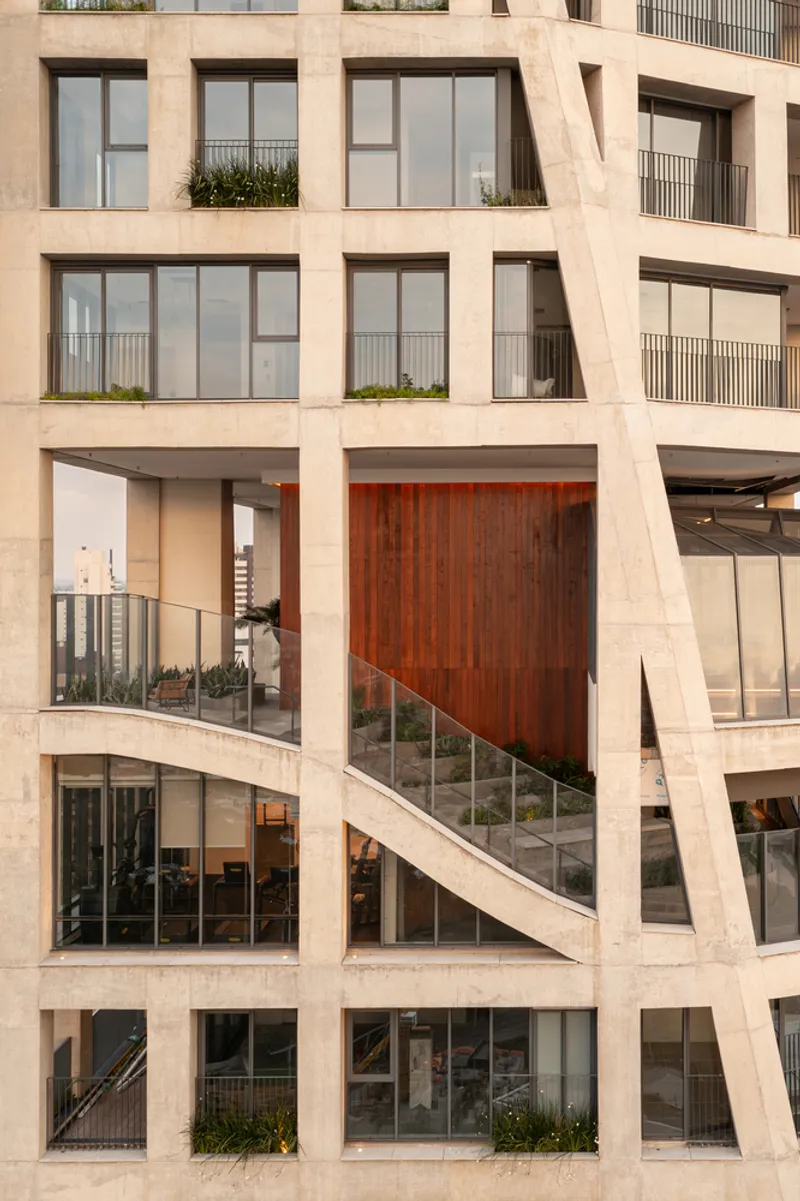
The tower tapers toward the ground, narrowing to a raised concrete podium that lifts the mass off a grassy plaza. The diagonal bracing of the exoskeleton is most legible here, where the structural members meet earth and the forces concentrate. Glazed communal spaces and timber-clad volumes tuck beneath the first residential levels, creating an inhabited base that mediates between the public sidewalk and the private lobby.
Planted beds and palm trees soften the transition, while a concrete staircase threads between landscaped terraces to connect ground level with the raised amenity deck above. It is a careful choreography of arrival: you do not simply enter a lobby, you ascend through a garden into the building's structural canopy.
Private Terraces and the Luxury of Depth
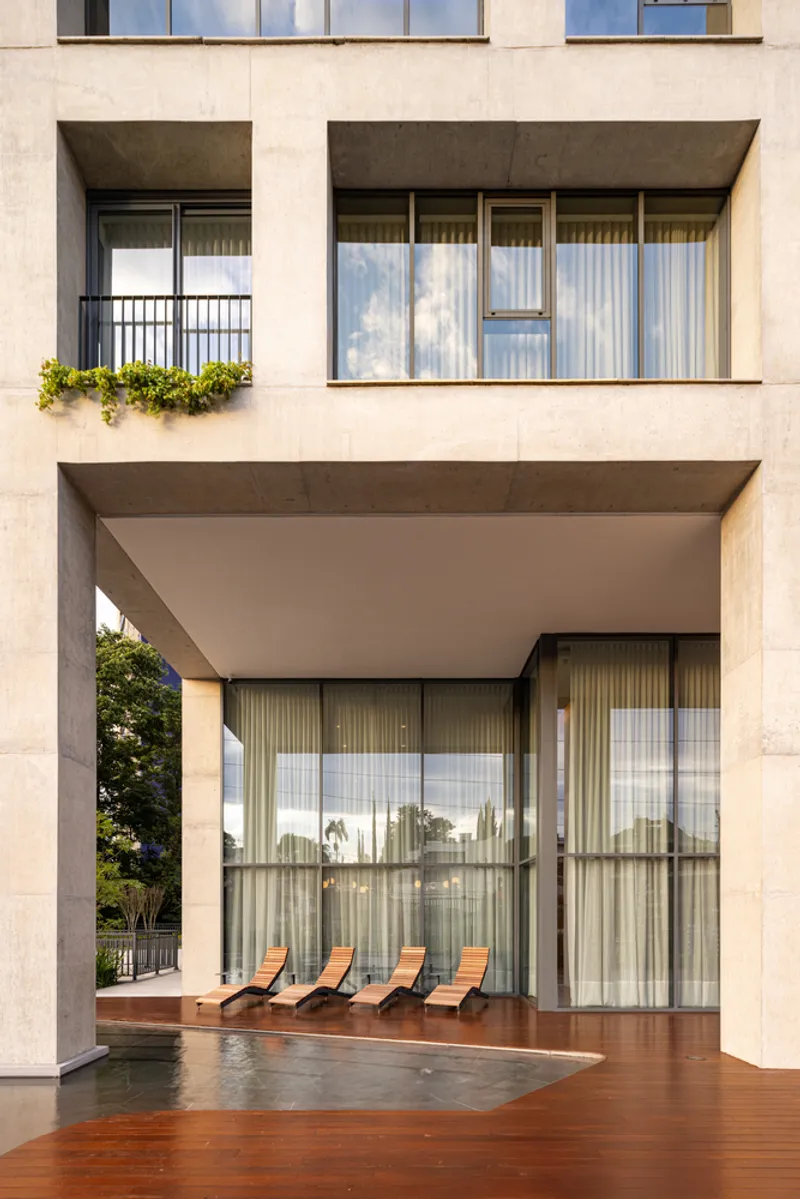
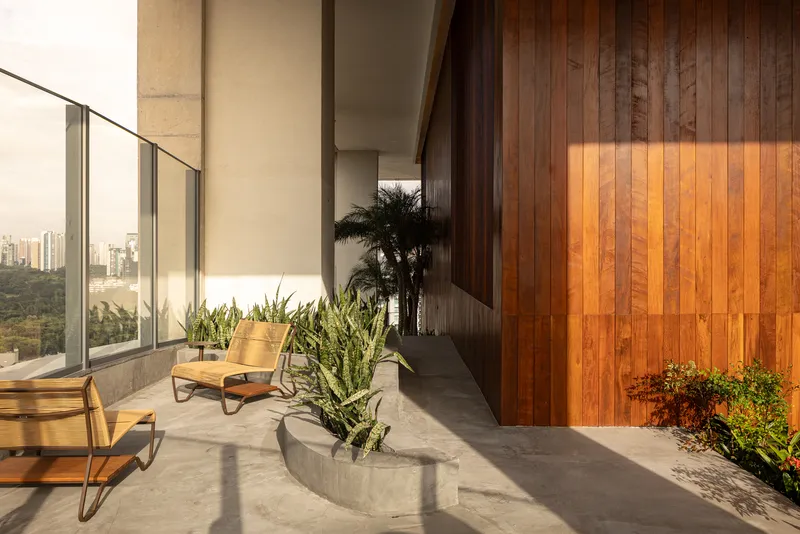
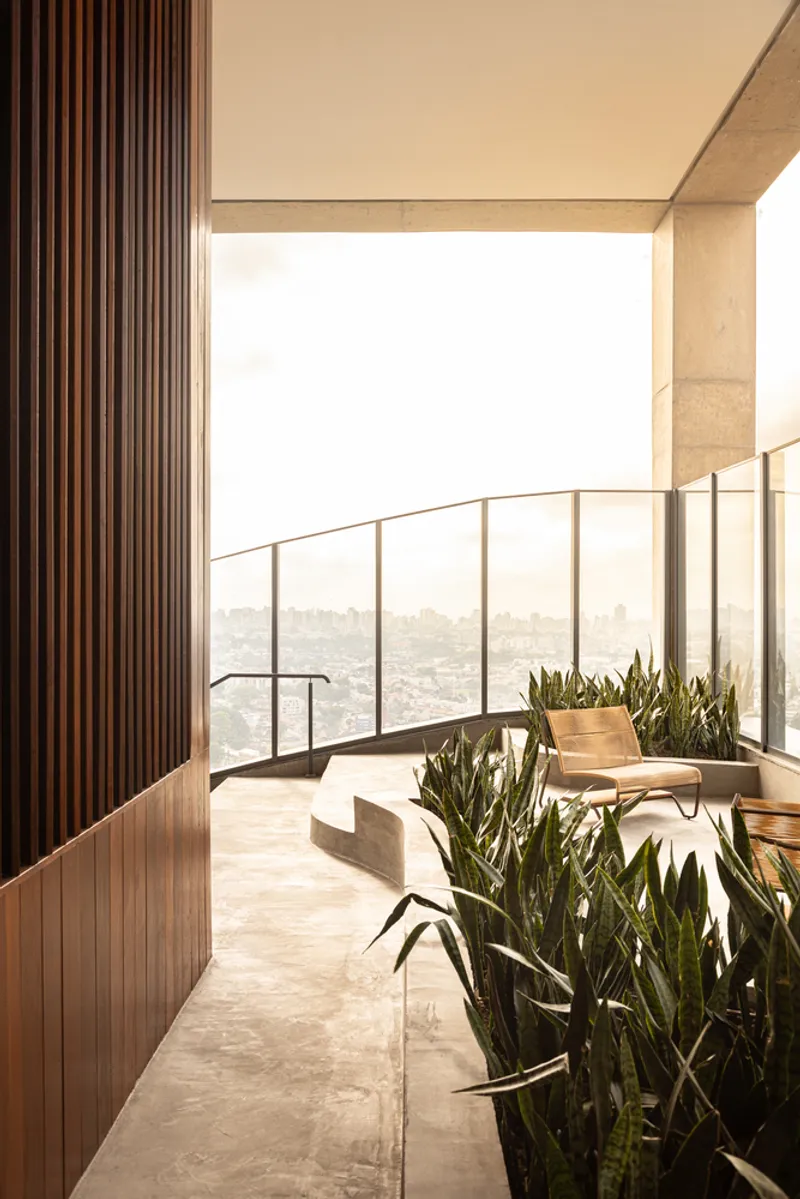
The individual terraces are not token balconies. The diagrid's depth yields outdoor spaces large enough for swimming pools, lounge furniture, and mature planting. One unit features a timber-decked terrace with a lap pool and four loungers behind floor-to-ceiling glass, a setup that would feel at home in a resort but here sits 20 stories above a major avenue. The luxury is not in finish materials but in sheer spatial generosity, a direct consequence of the structural system.
Vertical timber screens and curved concrete planters define the edges of these outdoor rooms, giving each unit a sense of enclosure without cutting off the breeze. Potted palms and cascading greenery spill over railings, reinforcing the tower's identity as a living, layered thing rather than a sealed object.
Urban Presence
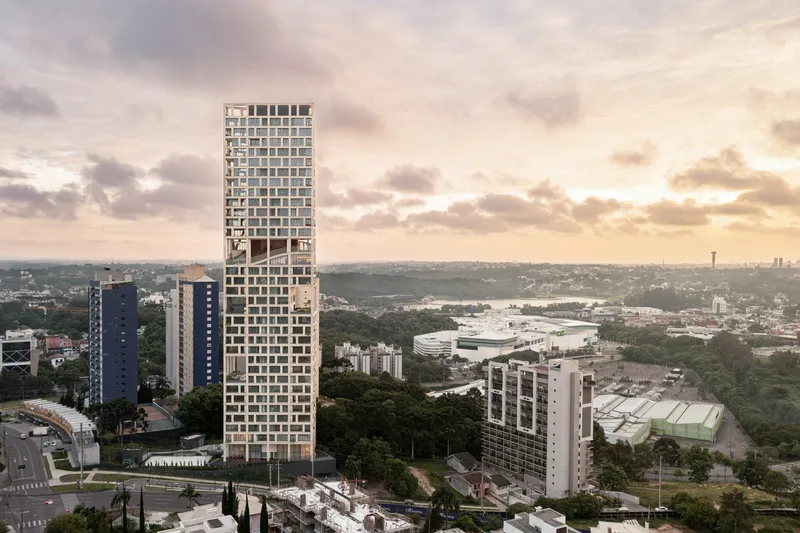
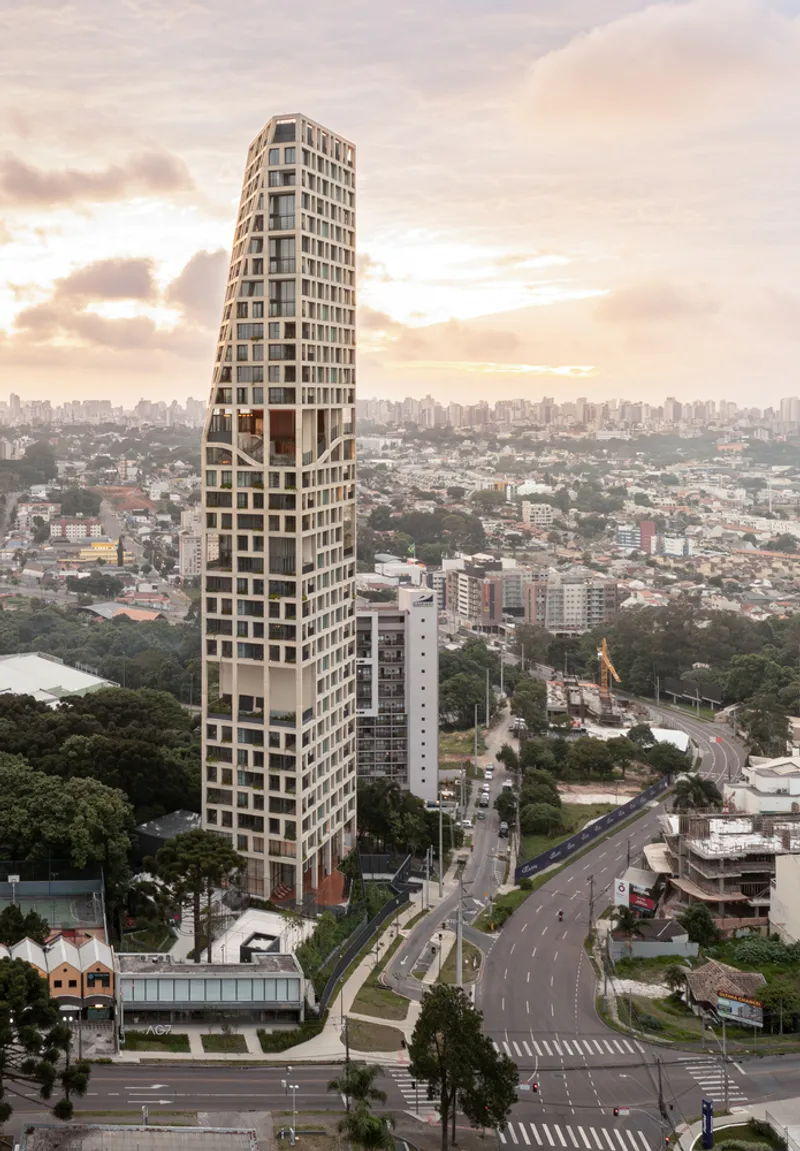
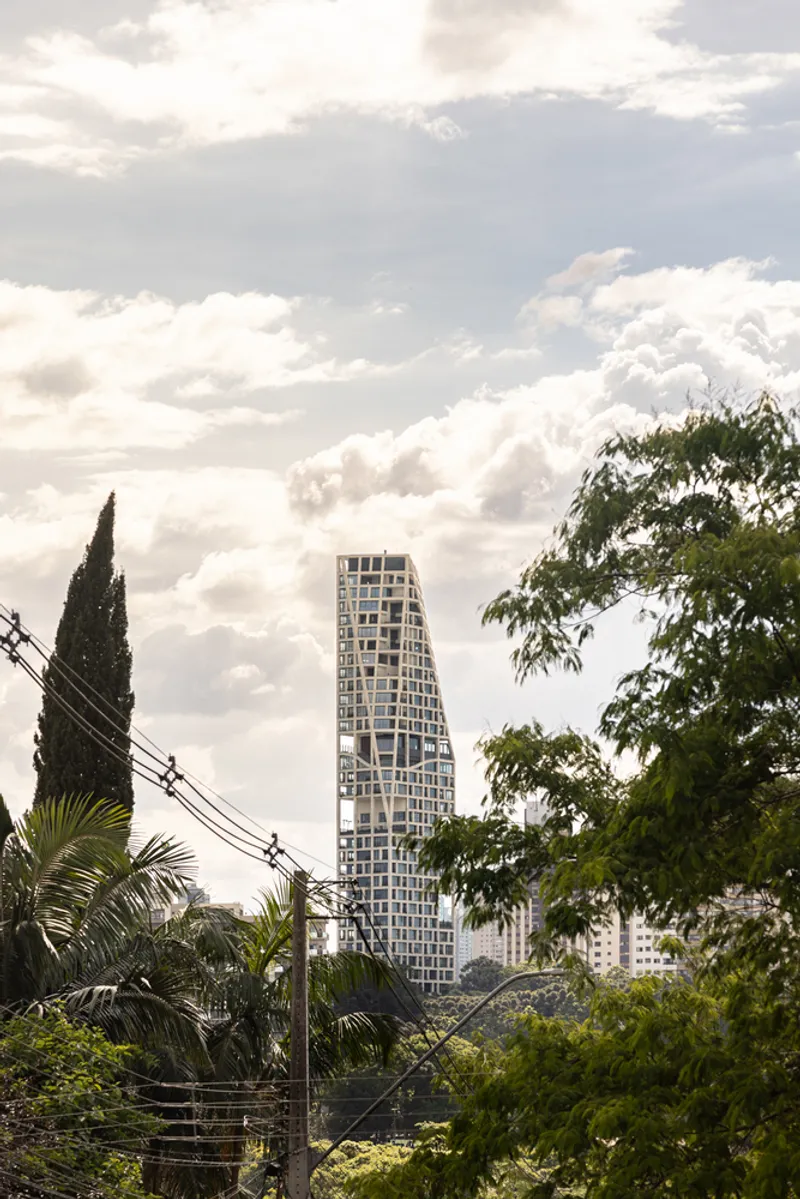
From a distance, AGE 360 registers as a distinctive silhouette in the São Paulo skyline. Its slender profile and staggered concrete frames read clearly against the waterfront and low-rise fabric. At dawn and dusk, the deep shadows within the diagrid give the tower a chiaroscuro quality that flat-skinned neighbors simply cannot match. Even from behind utility lines and palm canopies, the building asserts itself through geometry rather than height alone.
Plans and Drawings
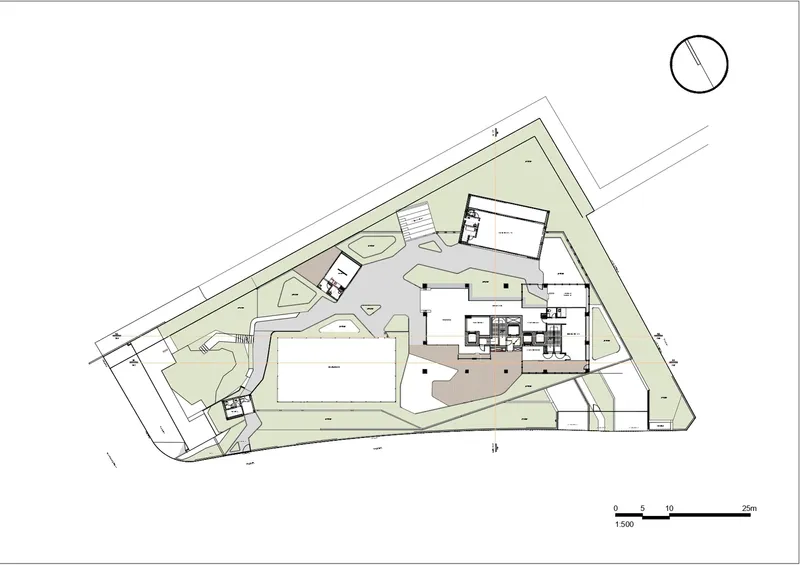
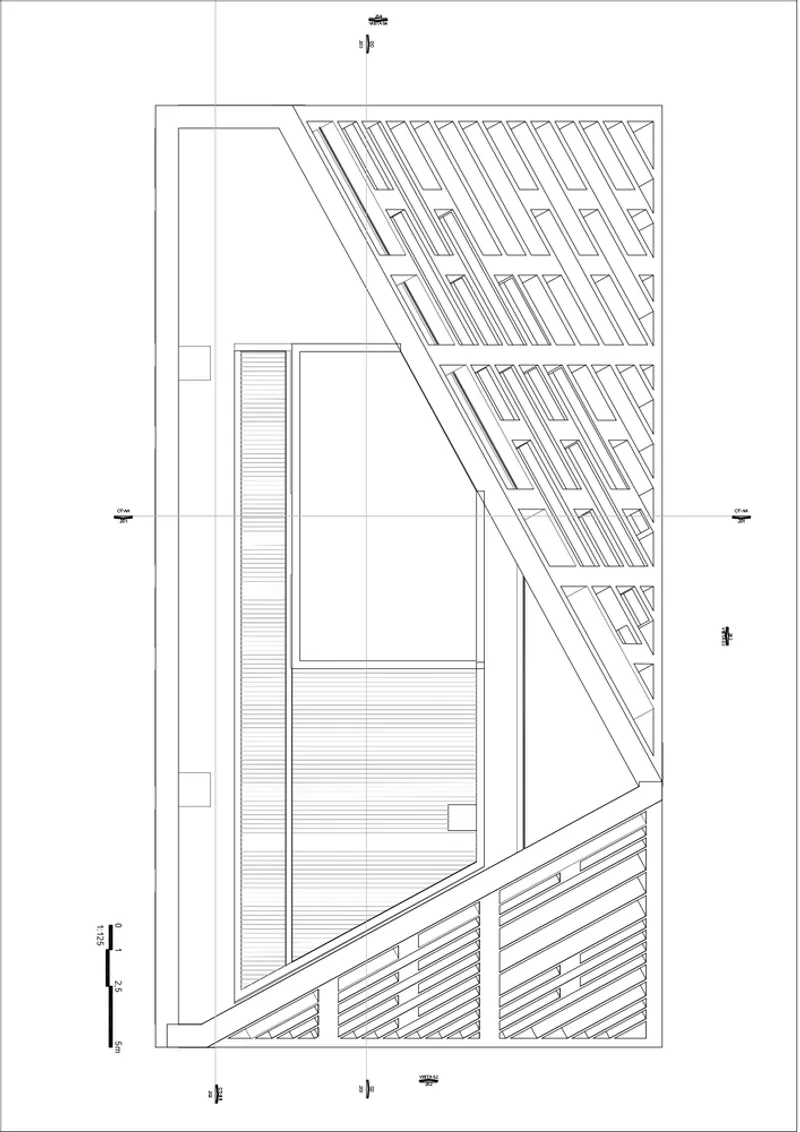
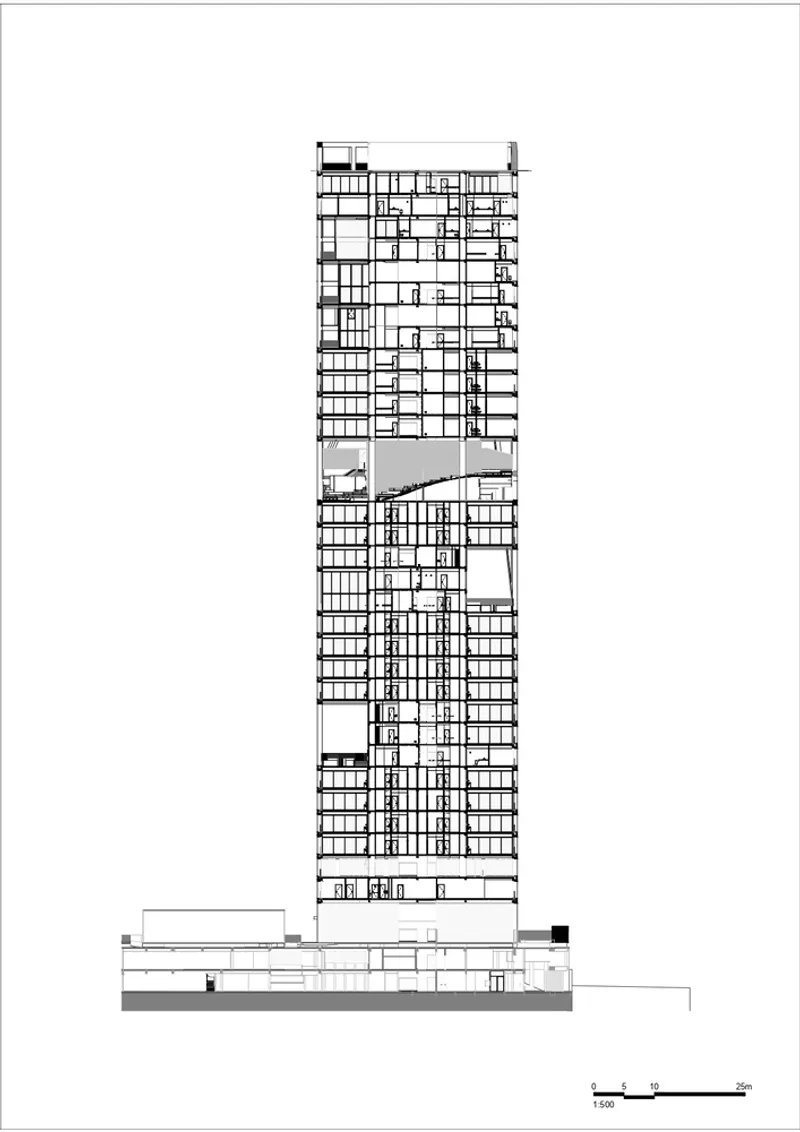
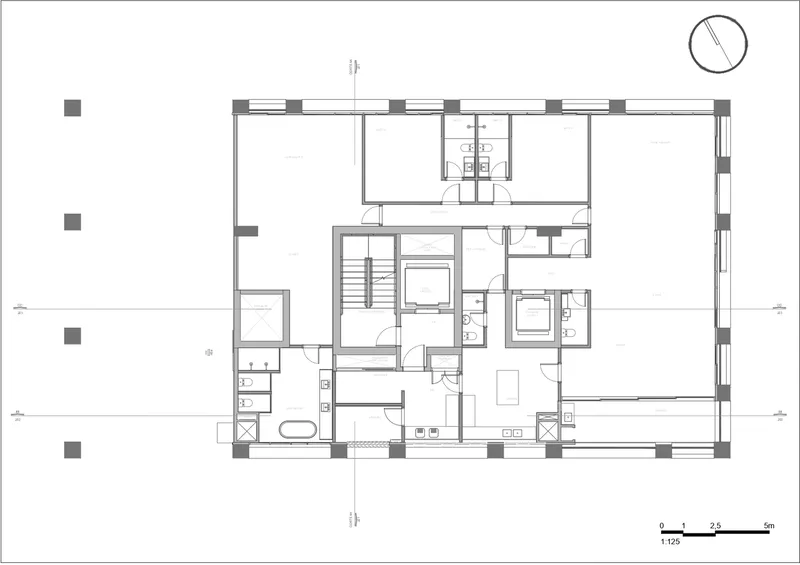
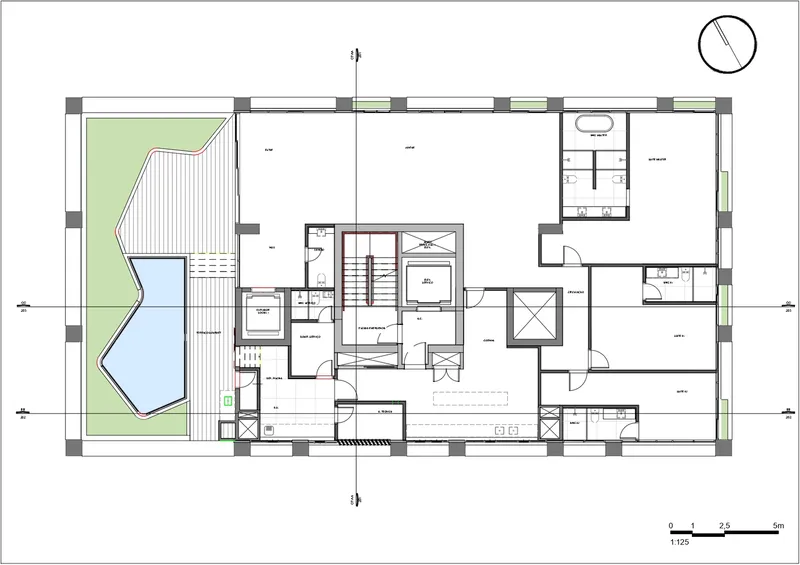
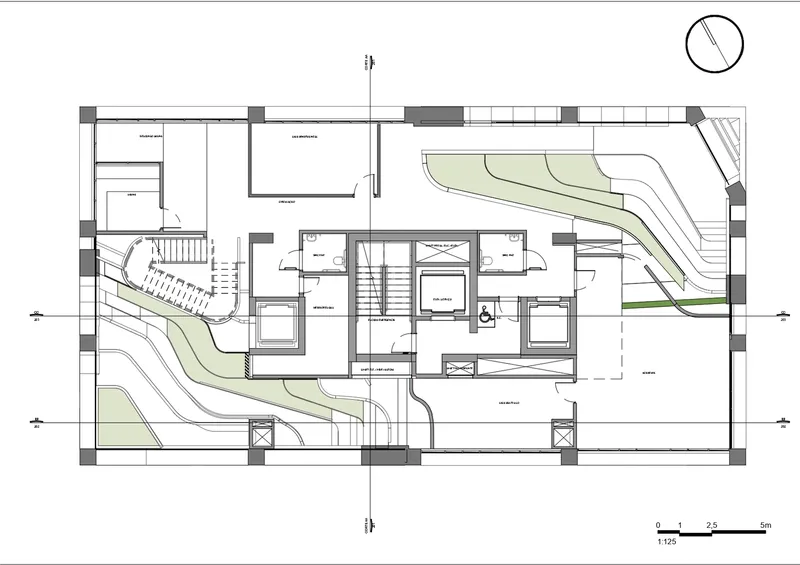
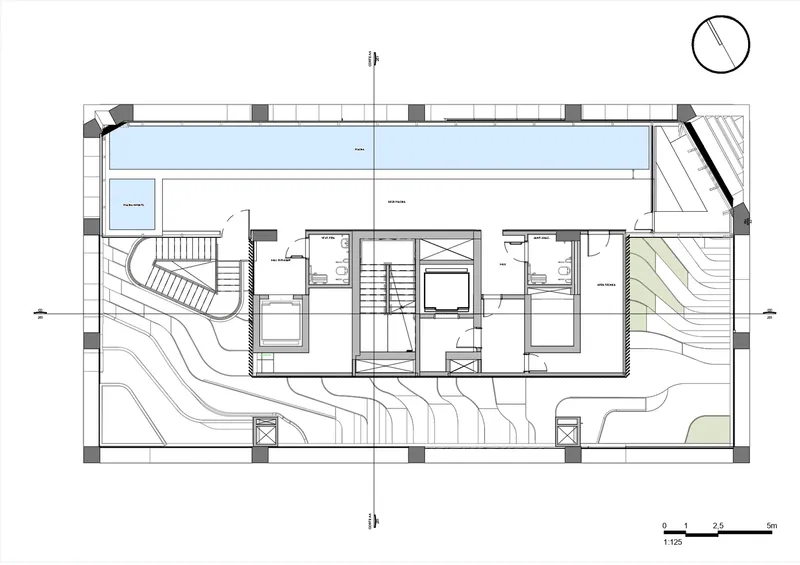
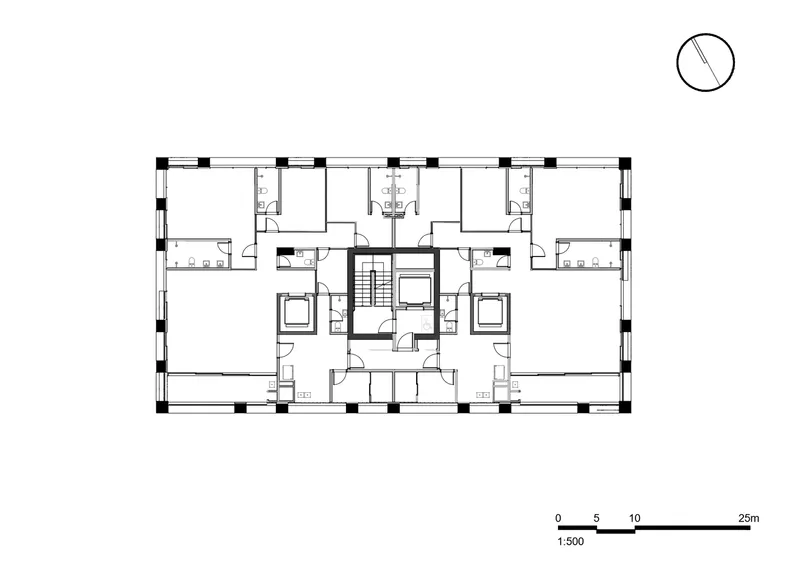
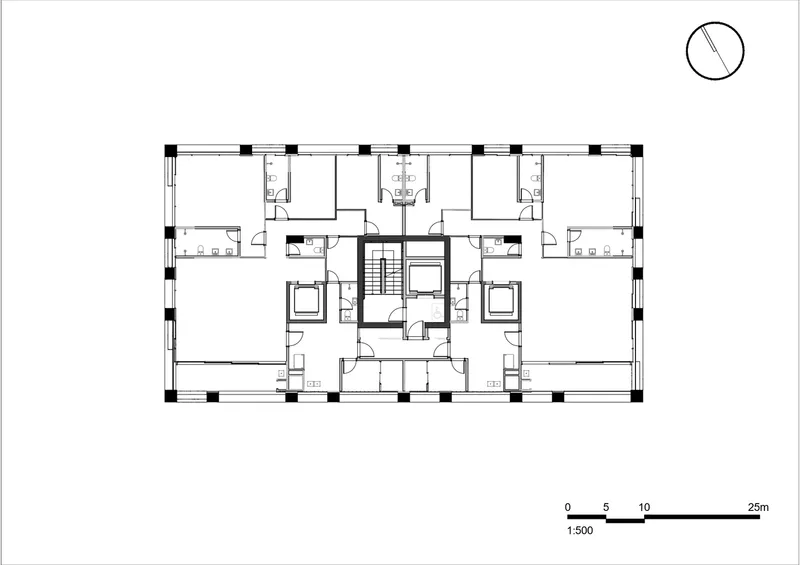
The site plan reveals the tower's position within a triangular parcel, its footprint carefully oriented to maximize garden setbacks and minimize shading of neighboring plots. Typical floor plans show residential units organized around a central circulation core, with generous terraces wrapping the perimeter. The rotation of the plan is visible in the shifting orientation of these terraces from floor to floor, confirming that the twist is not cosmetic but embedded in the layout of every unit.
The building section is the most telling drawing. It exposes the full height of the tower, revealing mid-height mechanical voids, the tapering base, and the rhythm of double-height communal floors punctuating the residential stack. Upper levels show rooftop terraces with contoured landscape bands, while the lower section illustrates how diagonal solar panel arrays supplement the sustainable agenda at ground level. Every drawing reinforces the same message: structure, landscape, and program are inseparable here.
Why This Project Matters
The AGE 360 Building matters because it makes sustainability legible. In an era when green credentials are often buried in mechanical rooms and energy reports, ARCHITECTS OFFICE and Triptyque chose to put the environmental strategy on the outside, literally framing it in concrete. The diagrid exoskeleton is not a skin applied over a conventional tower; it is the tower, carrying loads, shading glass, supporting planting, and generating the spiral geometry that reduces solar gain. The argument is that genuine sustainability should be visible, structural, and beautiful in its own right.
More broadly, the project demonstrates that the residential skyscraper still has room for invention. The type is often dismissed as a pure real-estate product, optimized for saleable area and little else. AGE 360 proves that a developer tower can also be a piece of serious architectural research, one that advances ideas about exoskeletons, rotation, and vertical landscape simultaneously. That it does so in São Paulo, a city whose skyline is dominated by anonymous slabs, makes the provocation all the more pointed.
AGE 360 Building by ARCHITECTS OFFICE and Triptyque, São Paulo, Brazil. Photography by Joana França.
About the Studio
Share Your Own Work on uni.xyz
If projects like this are the kind of work you want to make, uni.xyz is a place to publish your own, find collaborators, and enter design competitions.


Popular Articles
Popular articles from the community


Jaramillo Van Sluys Arquitectura and Urbanismo Turn a Demolished Registry Lot in Quito into an Orchard Plaza
In Quito's Centro Histórico, a 2,800 m² plaza exposes the San Agustín convent wall and redraws its lost Augustinian orchard in volcanic stone.

Cube Design Draws an Ecological Corridor Between Two Shenzhen Hills with the Nankai Building
Beside Shenzhen's container docks, the Nankai Building pairs stacked balconies with a climbing green screen to connect two hillsides across its height.

GROUP A Strips a 1969 Rotterdam Harbor Headquarters to Its Frame and Wraps It in Timber Louvers
In Rotterdam's M4H harbor district, Ferro Offices reuses a 1969 frame, adds one timber storey and reaches BREEAM-NL Outstanding.

U.GA Architects Wraps an Oval Rooftop Pool in Curved Board-Formed Concrete on Busan's Jeollidan-gil
In Busan's Jeonpo-dong, a 454 m² mixed-use block stacks a neighborhood facility, guest rooms and an oval rooftop pool inside spiraling concrete walls.

Similar Reads
You might also enjoy these articles


Hodi-Mandai Geram
Project Function: Preservation and revitalization of the Intangible heritage and socio-spatial identity of the Hodi by Housing, Cultural Memory Center, Sacred Grove, landscape, local tourism economy


Olio Towers: A Mid-Rise for Performers That Fuses Housing, Rehearsal, and Stage
Located blocks from Houston's Theater District, this modular tower stacks living units around a central performance atrium.

Oasis: Modular Green Housing Carved into Dhaka's Urban Fabric
A shortlisted Plugin Housing entry reclaims unauthorized settlements in Dhaka with stepped concrete volumes, green roofs, and ventilation-driven design.

Black Hole: A Floating Megastructure for the Post-Physical Era
Emiliano Mazzarotto envisions a spherical, self-scaling arena where e-sports, digital hotels, and holographic stadiums replace traditional public space.

Explore High Rise Building Competitions
Discover active competitions in this discipline

Challenge to design mud housing for contemporary communities

Challenge to reimagine the Iron Throne

Photograph architecture without architects

Illustrate the lost glory of Angkor Wat - Render Challenge
Comments (0)
Please login or sign up to add comments
No comments yet. Be the first to comment!