

Sustainable Waterfront Guest House Architecture: Morris Cove by Bates Masi + Architects
A sustainable waterfront guest house that merges architectural elegance with ecological resilience on a Sag Harbor peninsula.


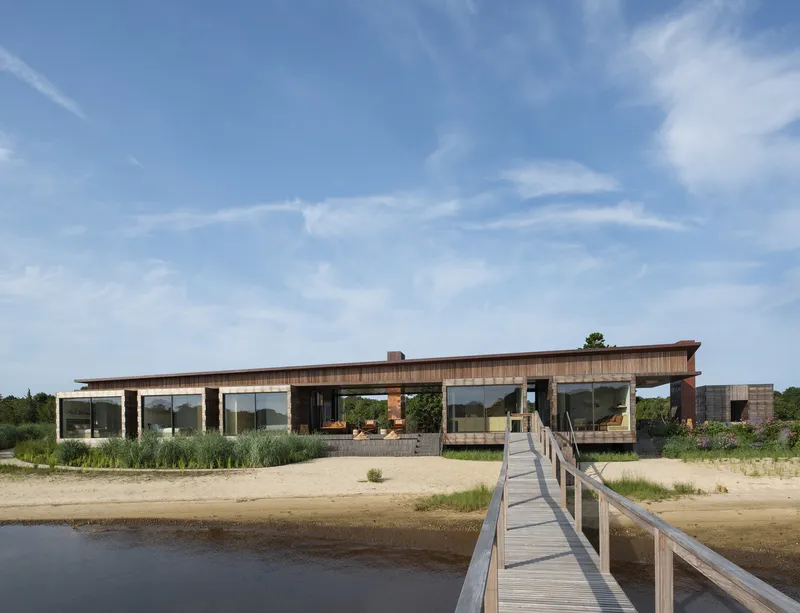
In the heart of Sag Harbor, New York, Bates Masi + Architects has crafted Morris Cove, a 3,325-square-foot guest house that redefines sustainable waterfront living. Set on a narrow peninsula with water views on all sides, this architectural gem blends environmental stewardship with poetic spatial experiences. Designed for a family with a deep-rooted connection to the land, Morris Cove exemplifies how contemporary architecture can both protect and enhance its natural context.
A Site-Responsive Design on the Water’s Edge
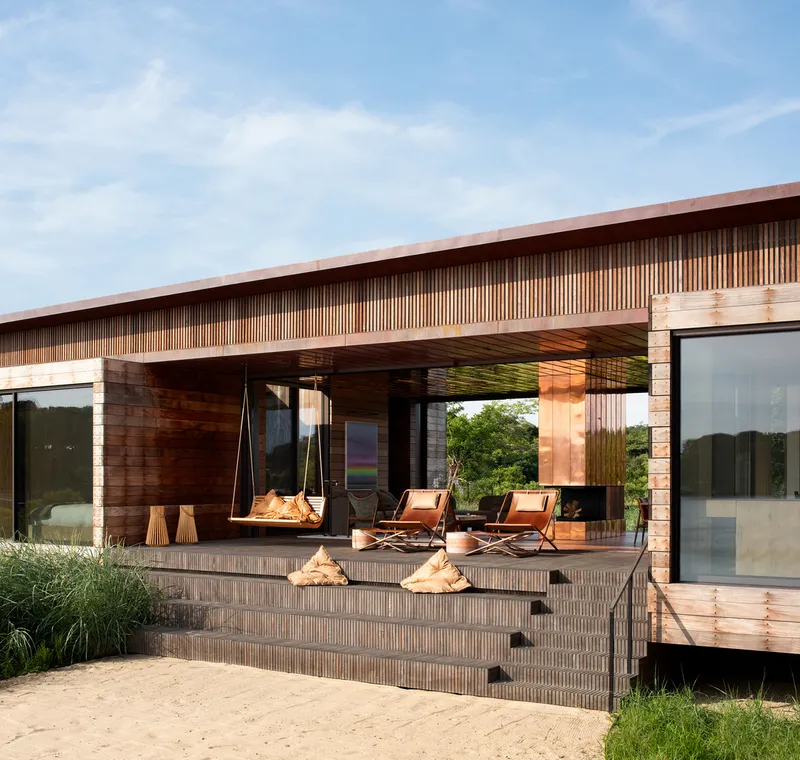
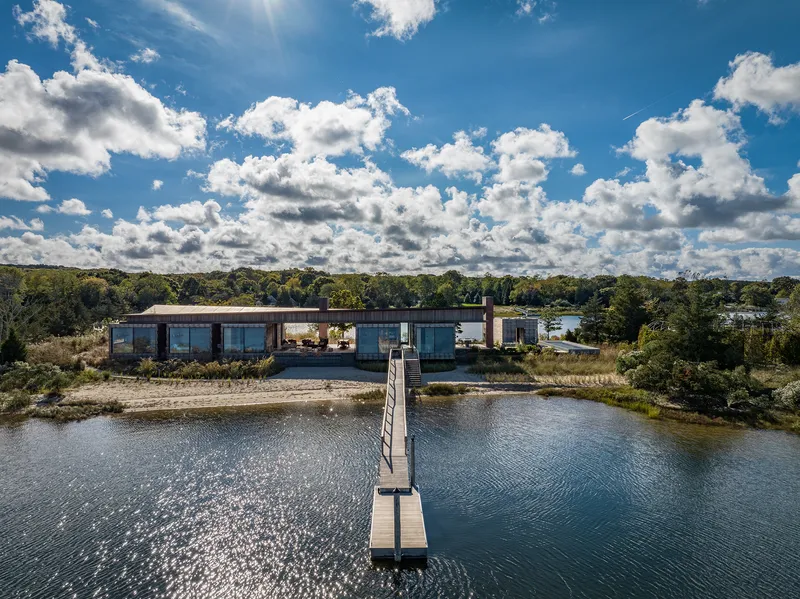
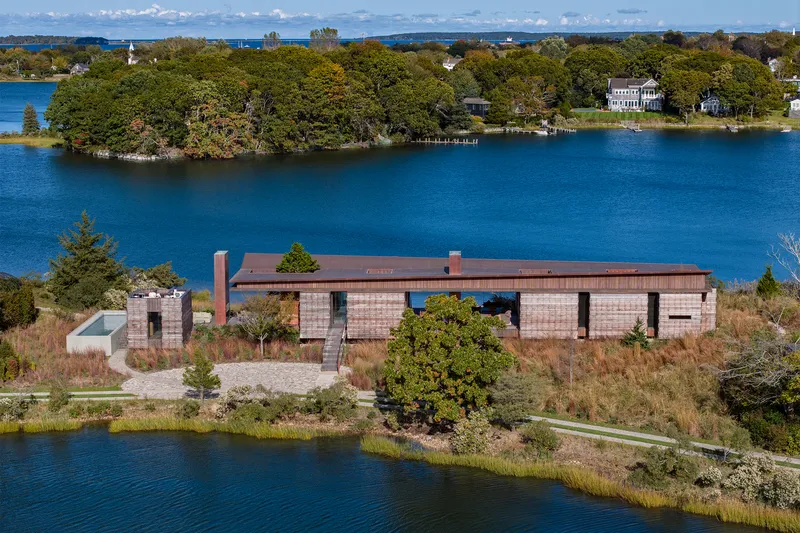
Morris Cove is not simply a residence—it is a restorative intervention in a sensitive coastal environment. The narrow peninsula demanded a design that respected its vulnerability to erosion, flooding, and water pollution. The architects responded with a series of five pavilions—each housing private functions such as a master suite, guest suites, kitchen, and family room—connected beneath a shared roof structure.
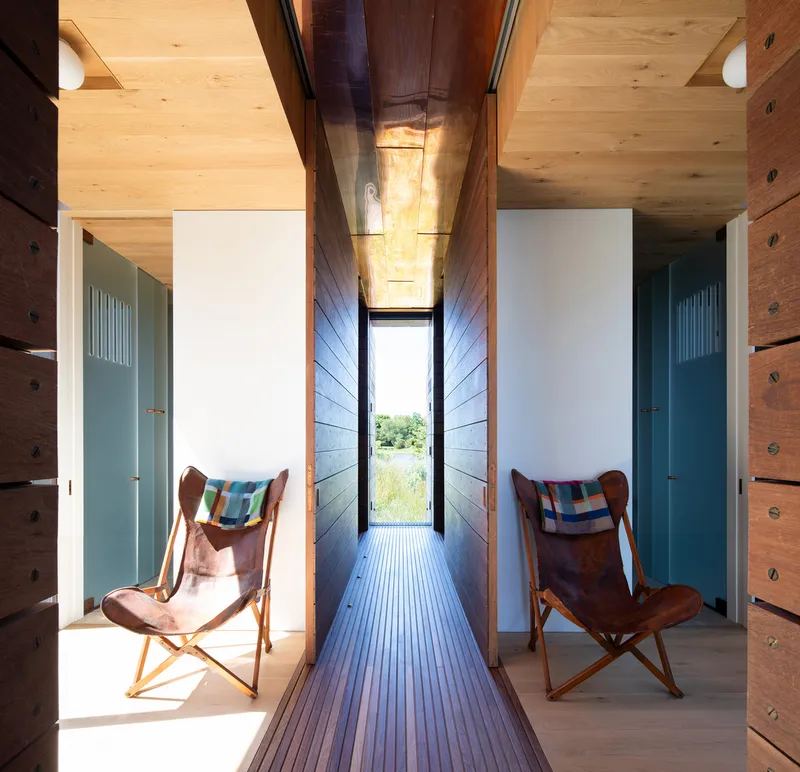
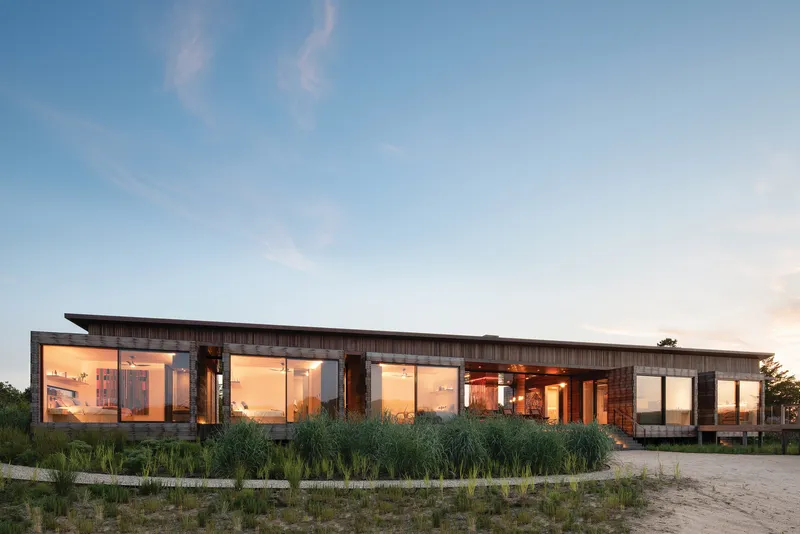
These pavilions are arranged to create interstitial spaces that respond to weather, light, and the seasons. By breaking up the building mass, the design minimizes environmental disruption and increases permeability to the landscape. The placement of these volumes was carefully choreographed to maximize water views while preserving and enhancing the land’s hydrology.
Courtyards as Ecological and Experiential Anchors
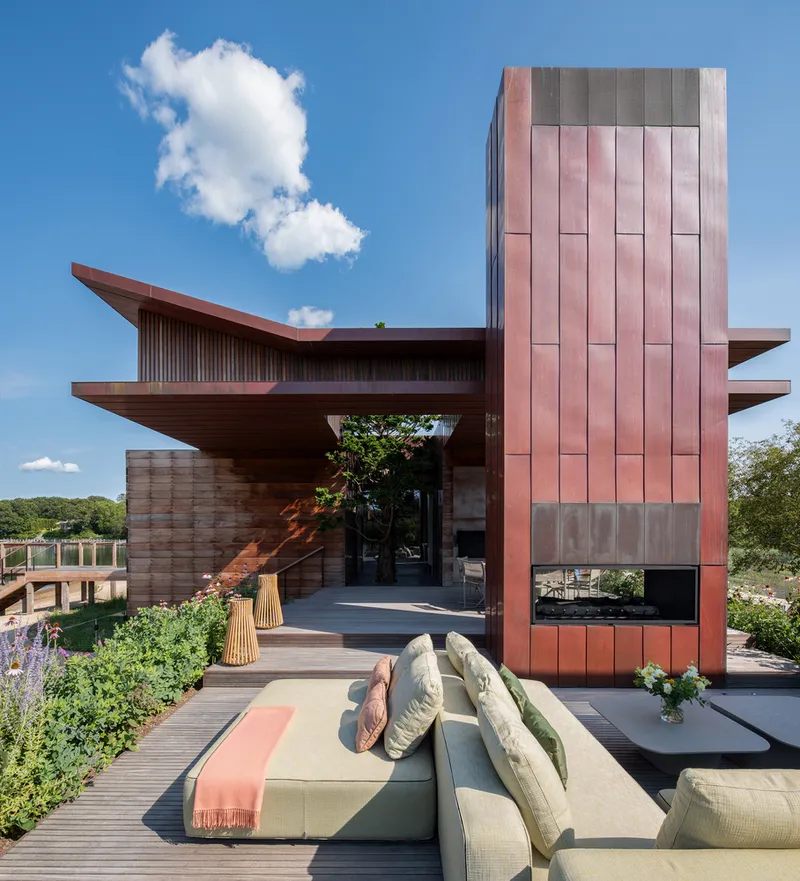
Each pavilion is anchored by an internal courtyard, acting as both an intimate sanctuary and a high-performance stormwater system. Inspired by terrariums, these gardens contrast the wild coastal landscape with curated, introspective planting. Rainwater runoff from the folded roof structure is directed into these courtyard gardens—trickling gently along copper siding during light rain, or cascading dramatically during storms.
Functionally, these gardens are engineered ecosystems. The roof runoff is absorbed and filtered through layers of sand, gravel, and soil. Only after the rain subsides is the cleansed water returned to the aquifer, preventing erosion and improving groundwater quality. Elevated three feet above grade and supported by concrete piers, the courtyard foundations reduce the building's contact with the land and limit displacement of floodwaters during storm surges.
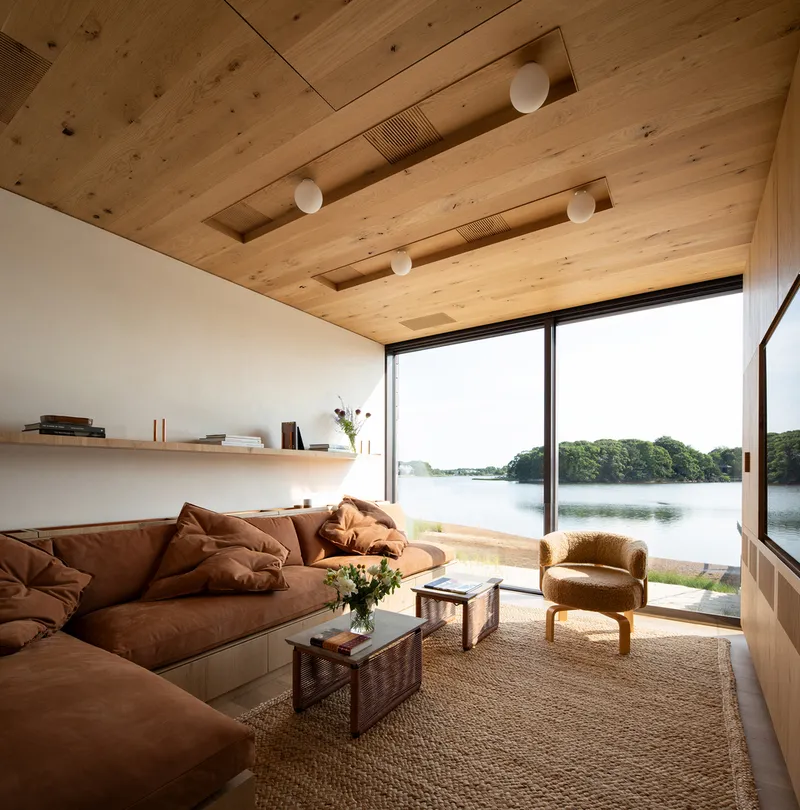
A Roof That Does More Than Shelter
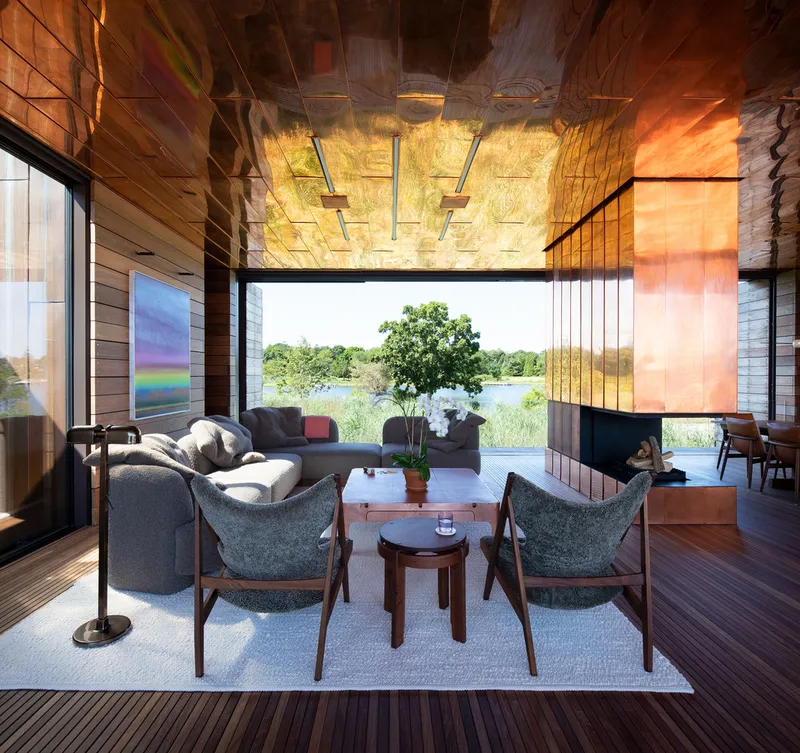
The folded geometry of the roof serves multiple critical purposes. Visually unifying the five pavilions, the overarching roof also conceals mechanical systems above the flood line and channels rainwater into the courtyards. It creates a varied spatial experience—compressed in the private volumes, then soaring over the interstitial public spaces. These fluctuations in ceiling height and light quality echo the rhythms of the natural surroundings.
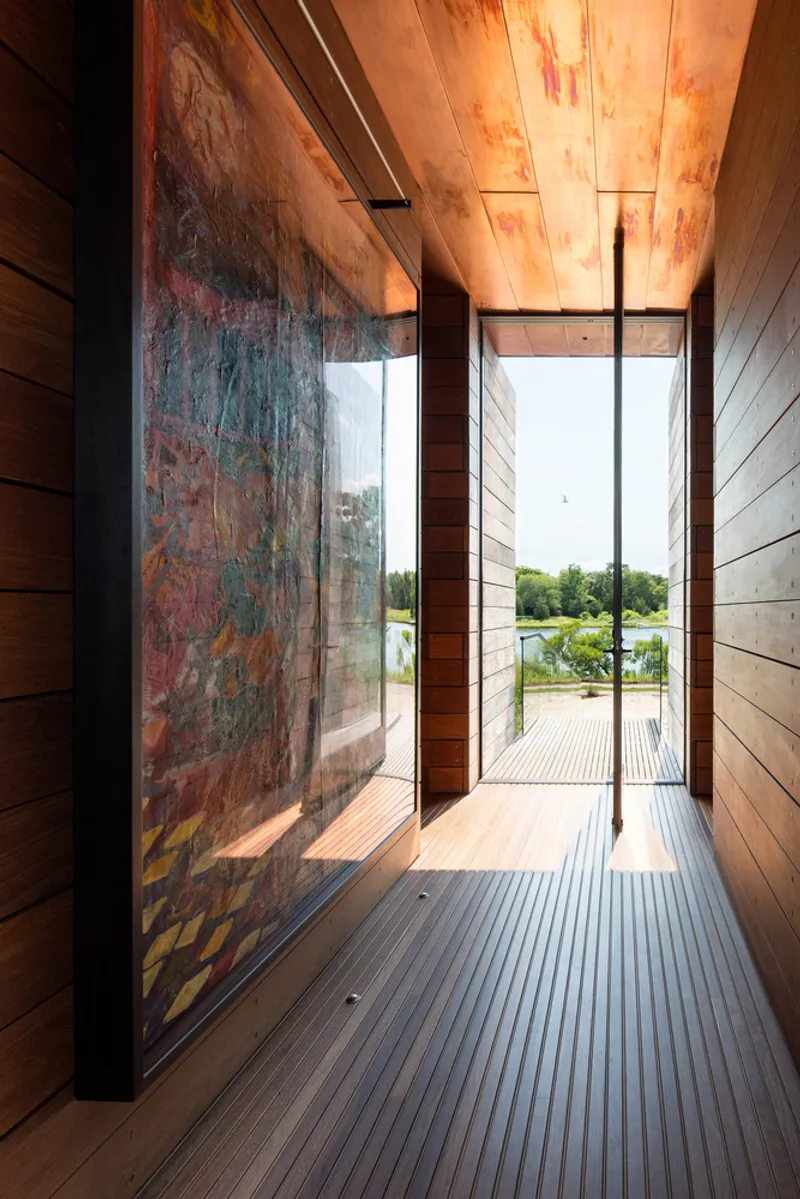
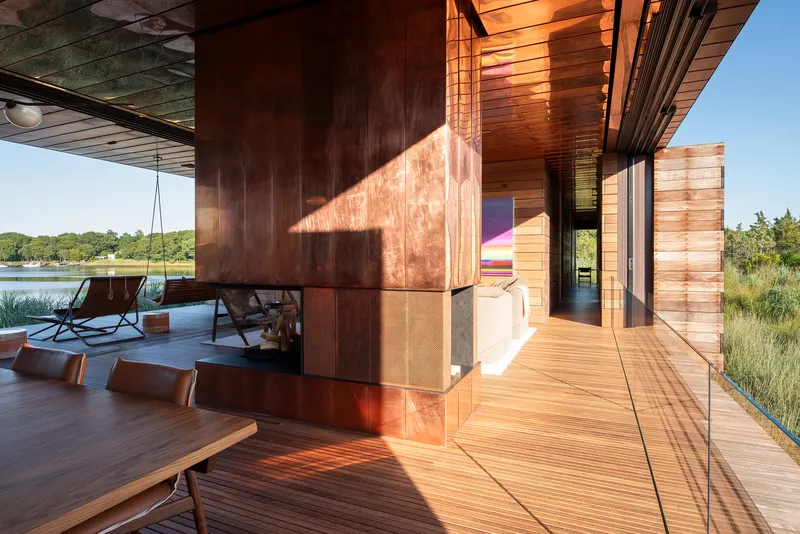
When weather permits, the operable glass walls of the public spaces disappear entirely, transforming the interiors into open-air decks. The private pavilions then read as independent cabins, linked by boardwalk-style hallways that blur the boundary between indoor and outdoor space.
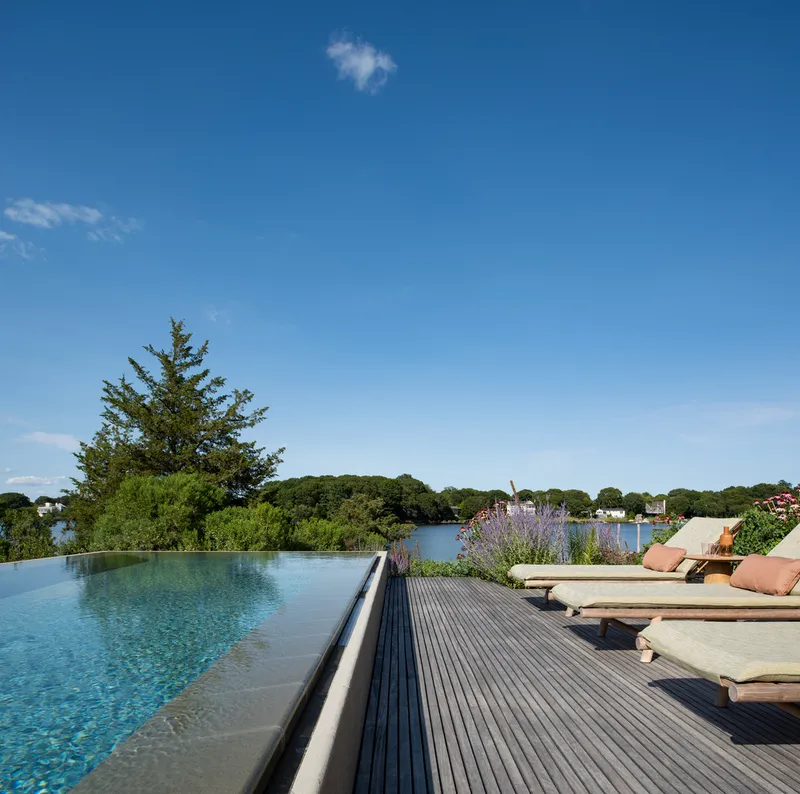
Materials That Age Gracefully With the Landscape
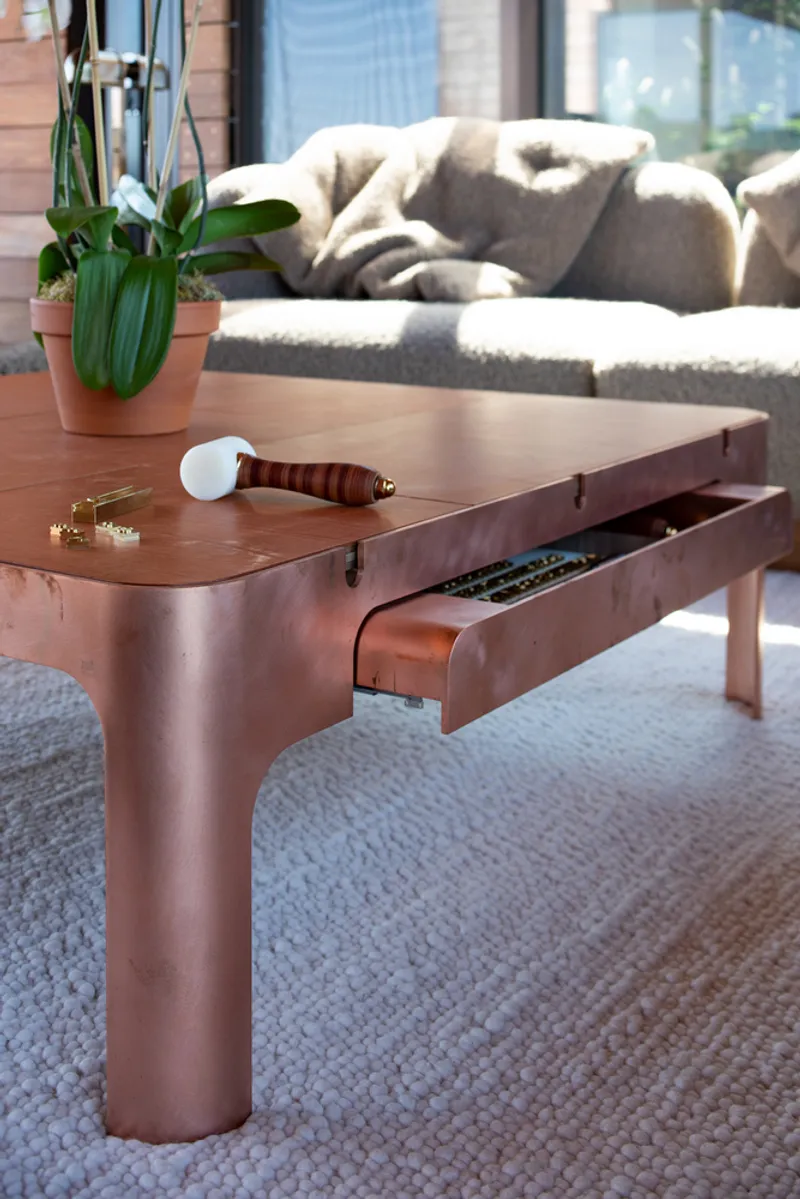
Morris Cove’s material palette reinforces the home’s dialogue with nature. Exterior cladding in ipe wood and copper soffits continues into the interior living spaces, further dissolving the boundaries between inside and outside. Over time, the copper develops a rich patina, while the wood weathers to a silvery grey—materials that reflect the changing character of the shoreline environment.
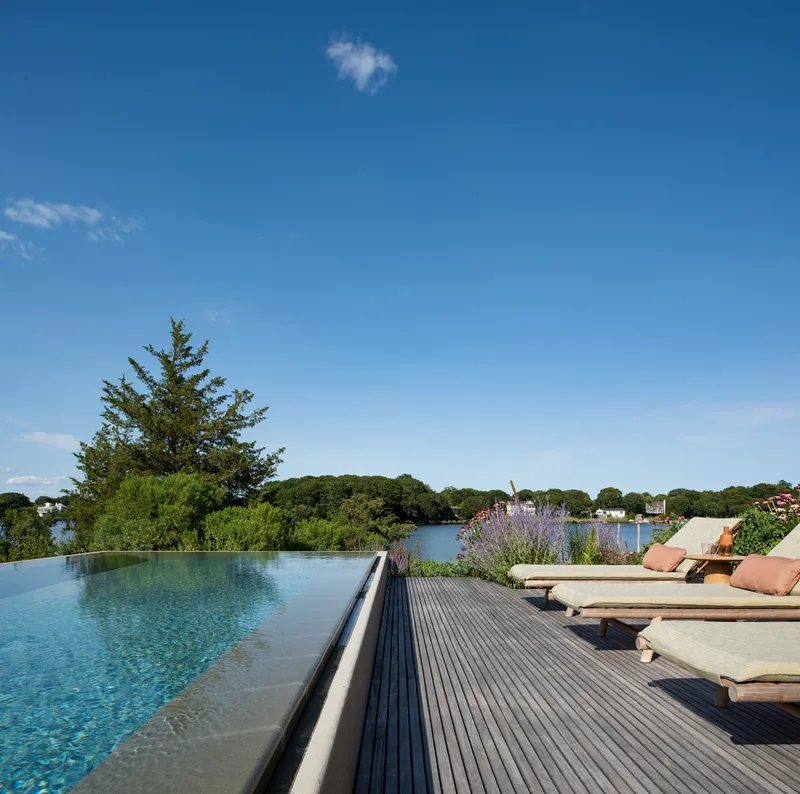
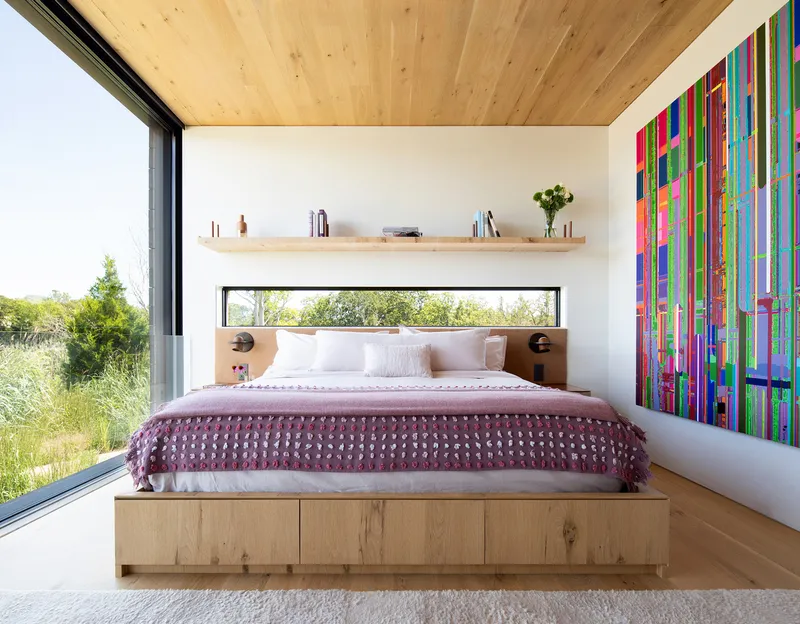
Interior surfaces are serene and understated, featuring bleached oak floors and ceilings and walls finished in warm, tactile plaster. These materials enhance the spatial intimacy of the private pavilions, creating a tranquil contrast to the openness of the living areas and the vastness of the site beyond.
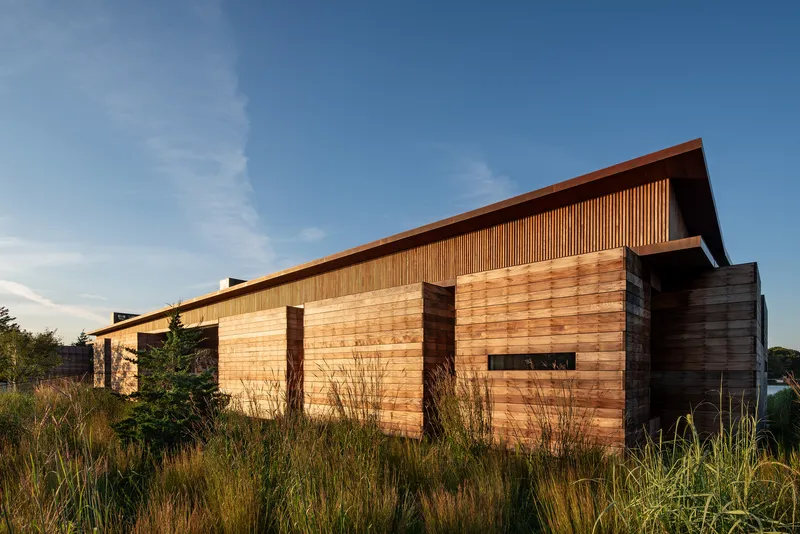
Architectural Stewardship Rooted in Love of Place
Morris Cove is more than a collection of elegant structures; it is an act of stewardship by a family deeply invested in the preservation of their land. Bates Masi + Architects’ thoughtful integration of performance-driven design and refined aesthetics demonstrates how architecture can simultaneously protect sensitive environments and deepen the human experience of place.
Every design gesture—from courtyard hydrology to operable glass walls—was conceived not just for comfort and beauty, but for environmental responsibility. In doing so, Morris Cove sets a new benchmark for sustainable waterfront guest house architecture, where every element contributes to a more resilient and harmonious relationship between people and the coastlines they cherish.


Popular Articles
Popular articles from the community


LT2A and OPEN Architectes Thread a Brick and Glass High School Through a Wooded Belgian Campus
In Braine-l'Alleud, a 3,000 m² wing for Collège Cardinal Mercier pairs pale brick with a glazed colonnade, deferring to a small chapel and a dense wood.

Jaramillo Van Sluys Arquitectura and Urbanismo Turn a Demolished Registry Lot in Quito into an Orchard Plaza
In Quito's Centro Histórico, a 2,800 m² plaza exposes the San Agustín convent wall and redraws its lost Augustinian orchard in volcanic stone.

Architekt Andreas Gruber Scatters 23 Dark Timber Chalets Across a South Tyrolean Forest Edge
In Molini di Tures, Amonti Chalets breaks a resort into a hamlet of gabled timber houses, with parking, storage and services pushed into the slope.

longwave studio Reorganizes a 112 m² Tainan Apartment Around the Daily Routines of a Family and Two Cats
In Tainan, Taiwan, birch plywood, rust-red furniture and a freestanding plaster wall link arrival, storage, work and family life in one apartment.

Similar Reads
You might also enjoy these articles

Gil Mello Arquitetura Tilts a Single Roof Toward the Waterfalls on a Plateau Above Aiuruoca, Brazil
In Aiuruoca, Minas Gerais, a 200 m² house of local labor and reclaimed poles pairs a low valley veranda with a tall mountain one.

U.GA Architects Wraps an Oval Rooftop Pool in Curved Board-Formed Concrete on Busan's Jeollidan-gil
In Busan's Jeonpo-dong, a 454 m² mixed-use block stacks a neighborhood facility, guest rooms and an oval rooftop pool inside spiraling concrete walls.

Felipe Hess Arquitetos Turns a Blind Stone Wall to the Street and Opens a Brazilian House onto a Courtyard and Canal
A canal-front house in Brazil hides behind painted stone and planting, then opens to an olive-tree courtyard, a reed-ceilinged porch and a curving pool.

David Macias Steps a Doorless Stone and Plaster House Down a Tropical Colombian Hillside
In the humid hills of Colombia, Threshold House replaces the front door with an open void and terraces its 850 m² down the slope instead of fighting it.

Explore Architecture Competitions
Discover active competitions in this discipline

Challenge to reimagine the Iron Throne

Photograph architecture without architects

Illustrate the lost glory of Angkor Wat - Render Challenge

Design challenge to reuse E-waste
Comments (0)
Please login or sign up to add comments
No comments yet. Be the first to comment!