
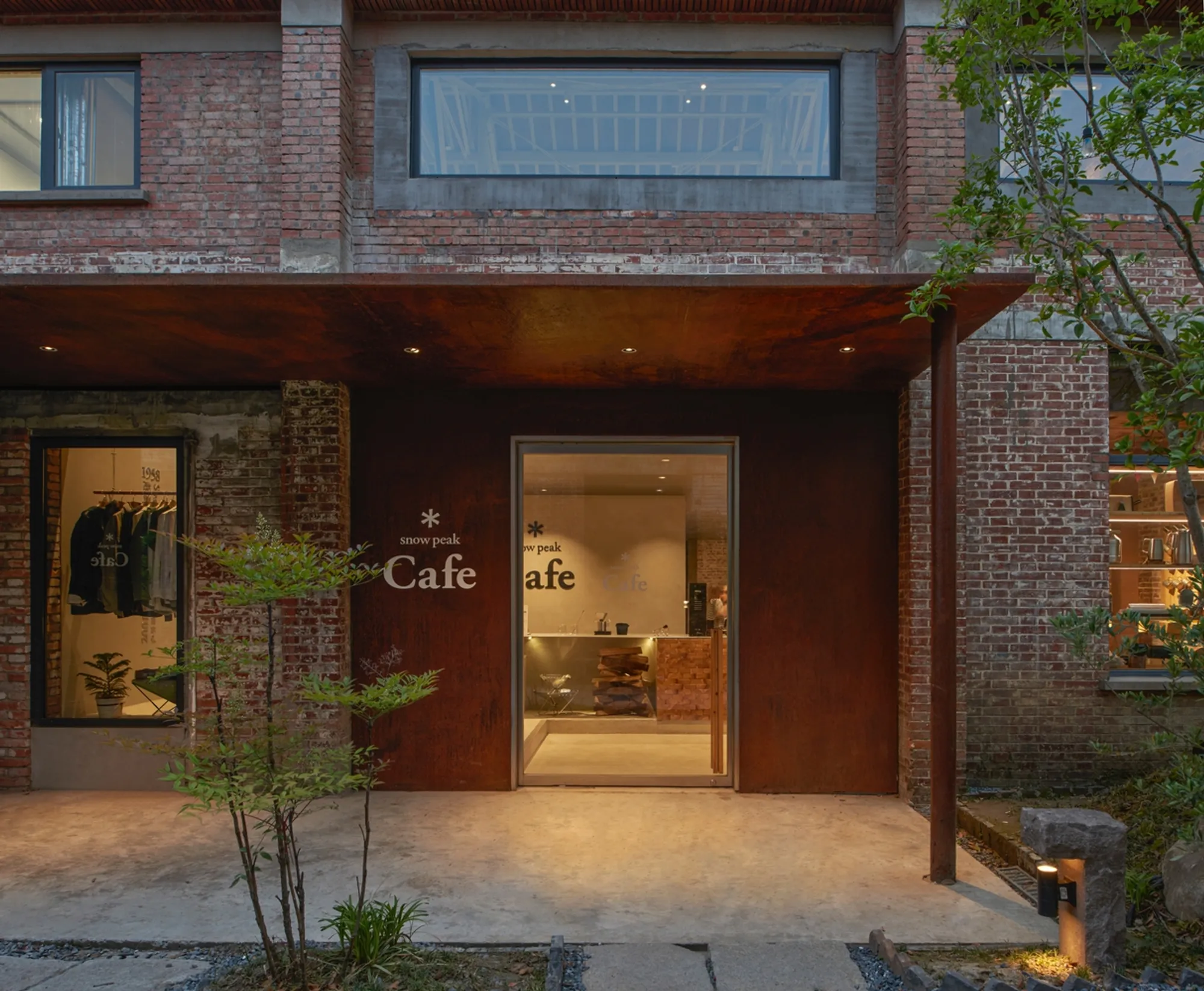
Suzhou Snow Peak Café by KiKi ARCHi: Where Nature, History, and Minimalism Meet
Suzhou Snow Peak Café by KiKi ARCHi blends red-brick heritage, minimalist interiors, and nature-inspired design, creating a tranquil cultural retreat.


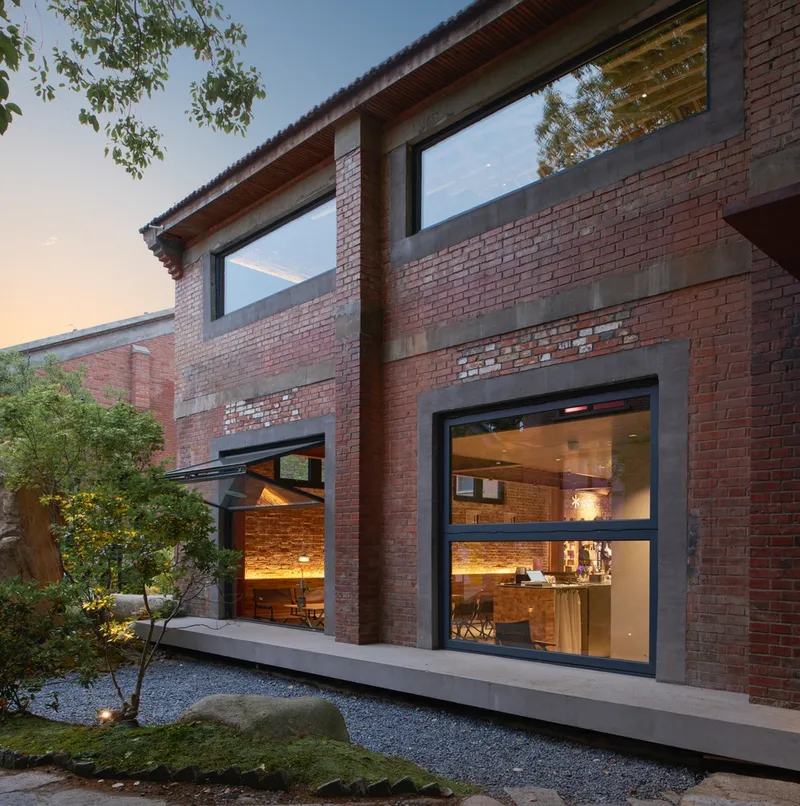
Nestled within a two-story red brick building at the MATRO Luxury Centre in Suzhou, the Suzhou Snow Peak Café, designed by KiKi ARCHi, represents a poetic balance between industrial heritage and natural calm. Located beside the Humble Administrator's Garden, one of China’s most celebrated classical gardens, the project reimagines a former cluster of 1950s red-brick warehouses into a tranquil retreat where design, nature, and community intersect.
Guided by Snow Peak’s core philosophy of “Embrace Your Nature”, architect Yoshihiko Seki sought to create more than just a café. The result is a multifunctional cultural space that celebrates the textures of history, the warmth of natural materials, and the brand’s ethos of simplicity and outdoor living.
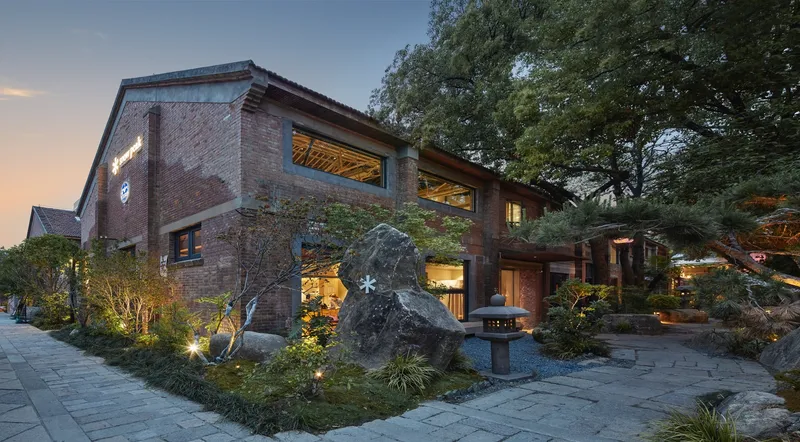
Respecting Heritage, Crafting Continuity
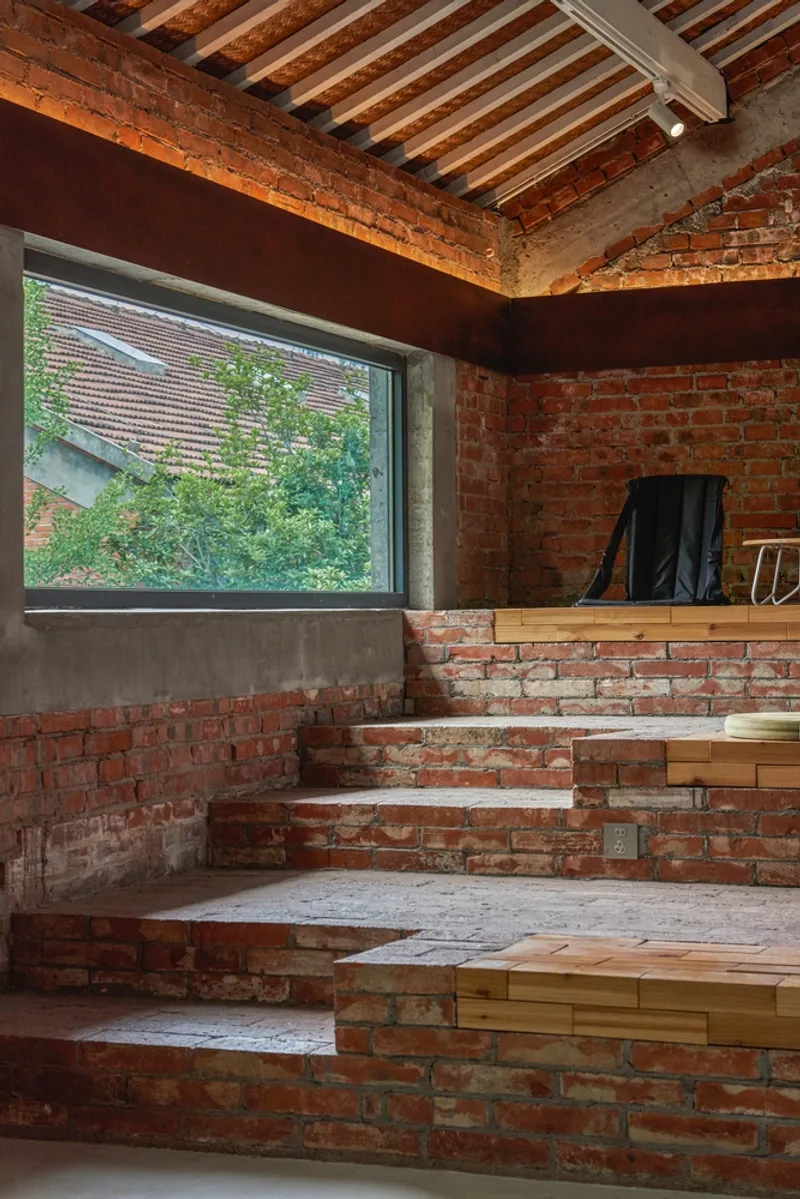
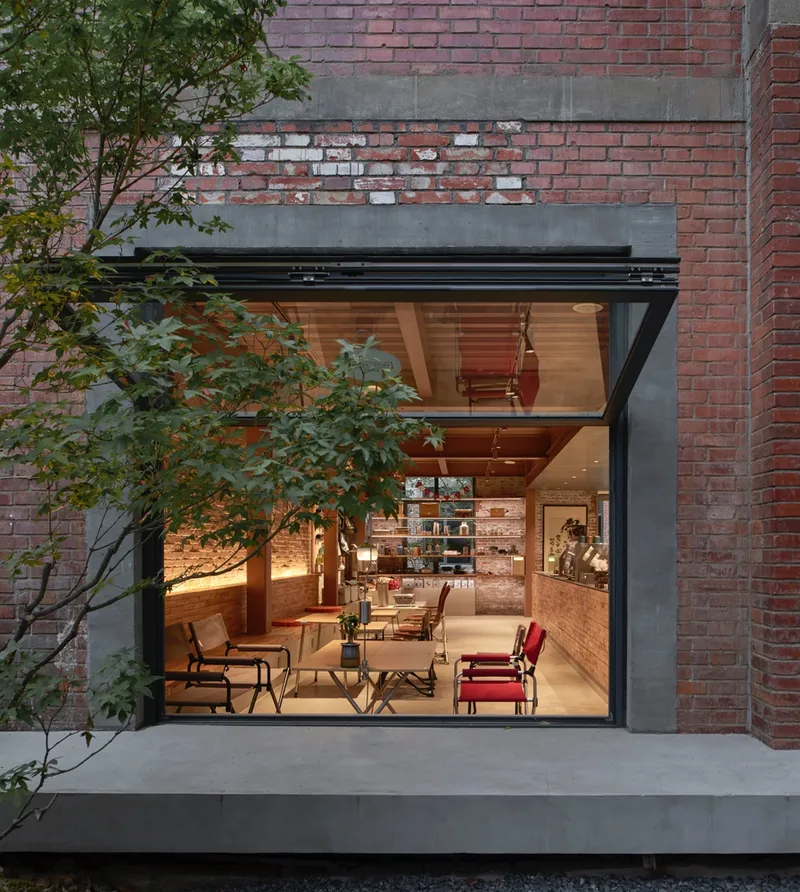
The design approach was one of minimal intervention. The original red-brick walls and timber structure were carefully preserved, grounding the project in Suzhou’s layered urban memory. These historical traces are interwoven with new insertions—steel, micro-cement, and reclaimed timber—that create a dialogue between the raw authenticity of the site and the refined craftsmanship of Snow Peak.
This contrast is never harsh but harmoniously orchestrated, embodying a quiet coexistence between past and present, tradition and modernity.
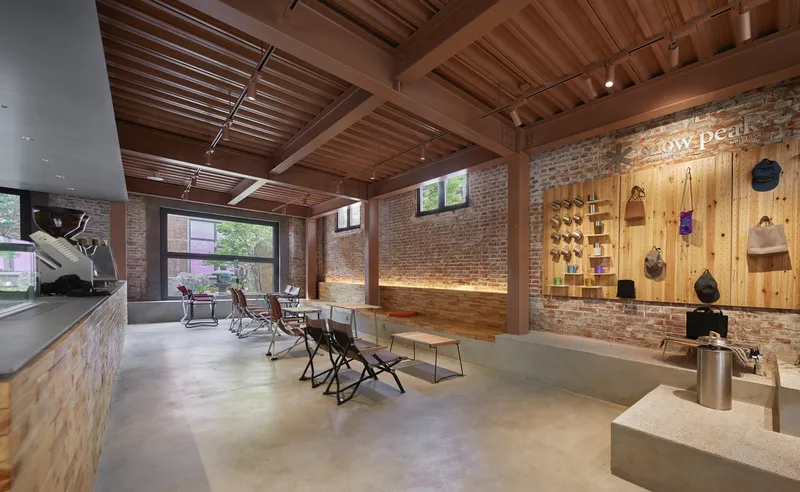
A Spatial Narrative of Flow and Freedom
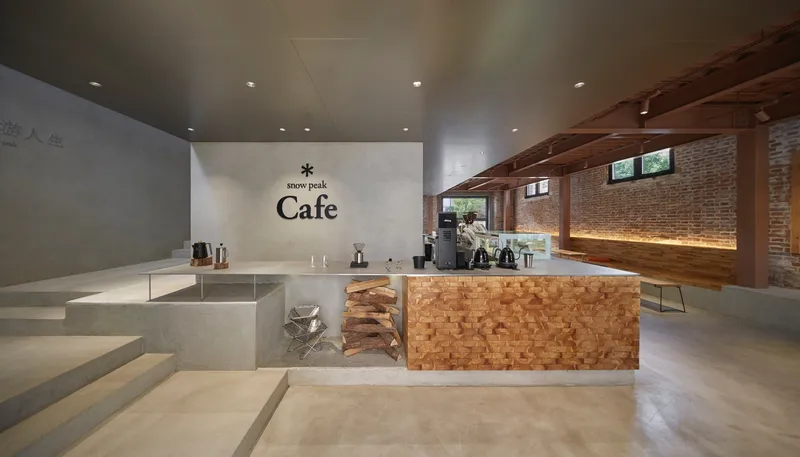
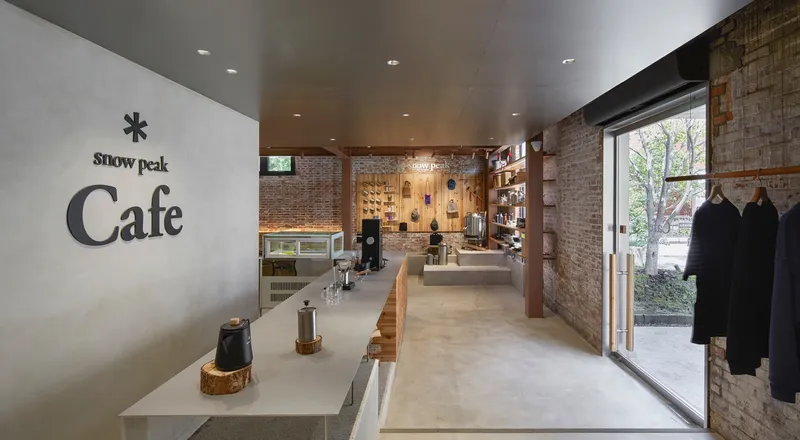
Upon entering, the eye is immediately drawn to the central bar on the ground floor. Designed as both the functional and symbolic heart of the café, it integrates brand display, pour-over coffee preparation, and cashier functions. Constructed from layered timber strips that echo stacked red bricks and topped with a floating steel panel, the bar is both grounded and light, creating a sculptural focal point.
The micro-cement staircase extends organically from this centerpiece, rising fluidly to the upper level. More than a circulation element, it acts as a display and spatial connector, embodying the architectural rhythm of movement and progression.
Immersive Second Floor Experience
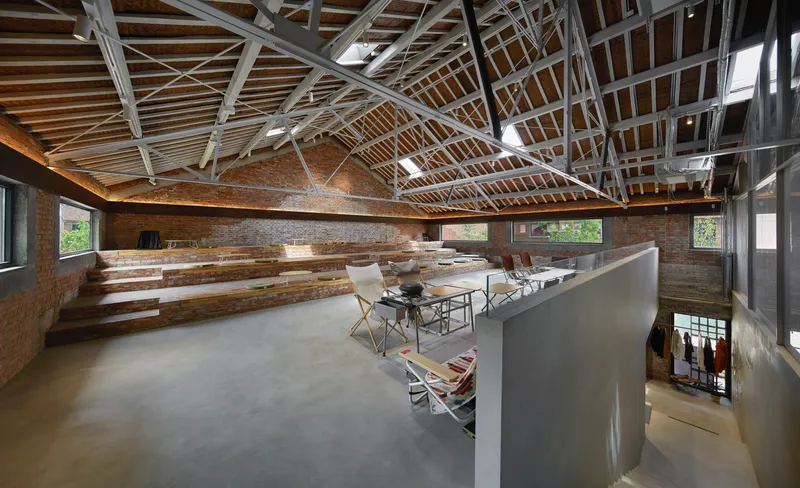
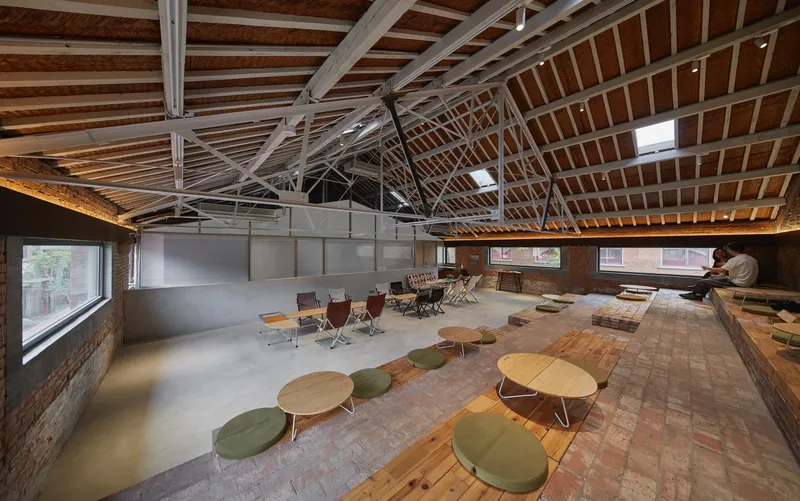
The upper floor is intentionally restrained and contemplative. Stepped seating crafted from reclaimed bricks creates an amphitheater-like quality, while slender timber strips gently define seating areas. Here, visitors are invited to dwell in a space that feels both raw and natural yet soft and refined.
Painted white timber beams lighten the overall atmosphere, diffusing the weight of the red brick and wood while evoking the serenity of Snow Peak’s outdoor living philosophy.
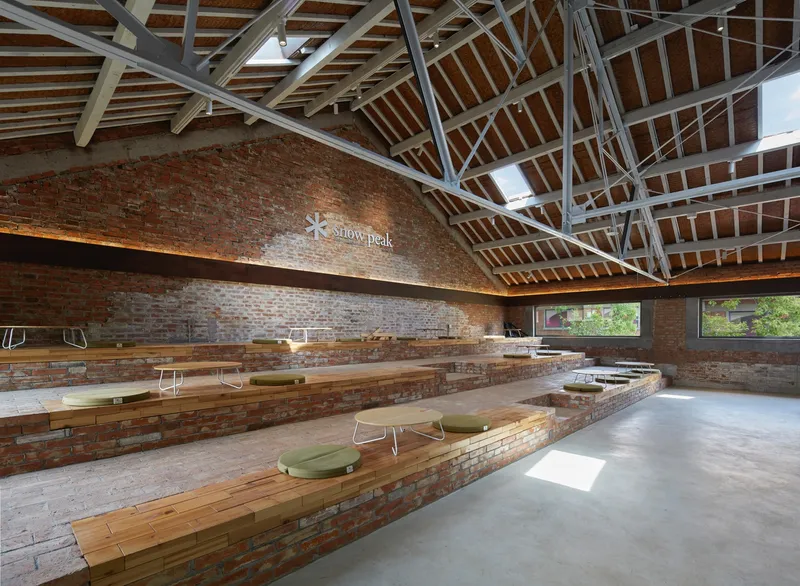
Material Dialogues: Nature and Craftsmanship
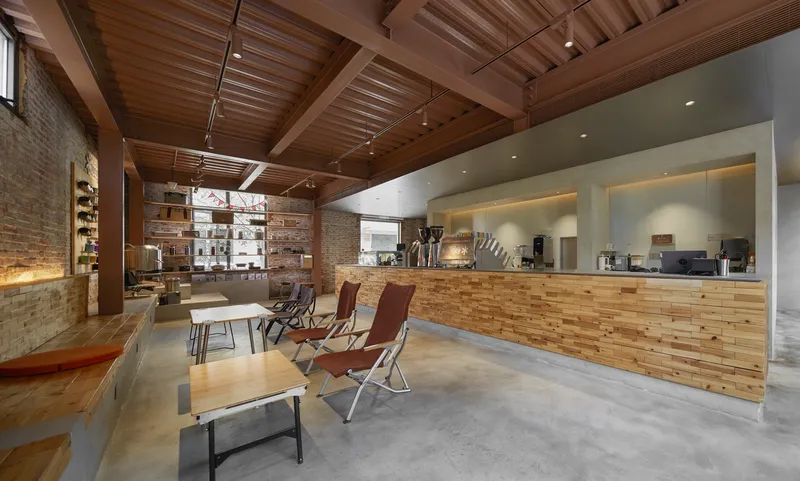
Throughout the 200 m² space, the material palette emphasizes dialogue over dominance. Natural timber, weathered red brick, smooth steel, and micro-cement coexist seamlessly, reinforcing the brand’s identity. Each material tells a story: the brick recalls the site’s industrial past, the timber connects to nature, while steel and cement highlight the precision of modern craft.
This harmony translates into a calm, open environment where visitors experience not just a café, but a sensory journey into Snow Peak’s world—one where urban dwellers can reconnect with the poetry of nature.
A Café Beyond Coffee
More than a place for coffee, the Suzhou Snow Peak Café is a community space, cultural landmark, and architectural expression. It embodies Snow Peak’s pursuit of a lifestyle that blurs the boundaries between indoor comfort and outdoor freedom. By respecting heritage, engaging with materials honestly, and shaping space with restraint, KiKi ARCHi has created a project that feels timeless, rooted, and deeply human.
All Photographs are works of Ruijing Photo




Popular Articles
Popular articles from the community


The Musturak Paradise: Senior Living Architecture for a Connected Future in Temara, Morocco
The Musturak Paradise reimagines senior living architecture in Temara via private homes, social spaces, culture, community, and shared care.

Co-Life: Senior Housing Design That Reconnects Older Adults With the City
Co-Life reimagines senior housing design through healing gardens, shared streets, workshops, and a sustainable community across generations.

Lunar Spiral: Space Architecture Shaped by the Mathematics of the Universe
Lunar Spiral reimagines space architecture through Fibonacci geometry, lunar regolith, levitating habitats, and self-sustaining Moon living.

Co-life: Sustainable Architecture for Age-Friendly Community Living
Co-life reimagines sustainable architecture for seniors through courtyards, rammed earth, shared gardens, and spaces designed for belonging.

Similar Reads
You might also enjoy these articles


Hodi-Mandai Geram
Project Function: Preservation and revitalization of the Intangible heritage and socio-spatial identity of the Hodi by Housing, Cultural Memory Center, Sacred Grove, landscape, local tourism economy


Olio Towers: A Mid-Rise for Performers That Fuses Housing, Rehearsal, and Stage
Located blocks from Houston's Theater District, this modular tower stacks living units around a central performance atrium.

Oasis: Modular Green Housing Carved into Dhaka's Urban Fabric
A shortlisted Plugin Housing entry reclaims unauthorized settlements in Dhaka with stepped concrete volumes, green roofs, and ventilation-driven design.

Black Hole: A Floating Megastructure for the Post-Physical Era
Emiliano Mazzarotto envisions a spherical, self-scaling arena where e-sports, digital hotels, and holographic stadiums replace traditional public space.


Explore Interior Design Competitions
Discover active competitions in this discipline


Challenge to design luxury tourism on rails


Challenge to reimagine the Iron Throne


Photograph architecture without architects


VR headsets Storefront design competition
Comments (0)
Please login or sign up to add comments
No comments yet. Be the first to comment!