
Svarga Cilimus House by PSA Studio: A Contemporary Villa in the Rice Fields of West Java
Svarga Cilimus House by PSA Studio is a tropical villa in West Java, blending modern design with rice fields and mountain views.


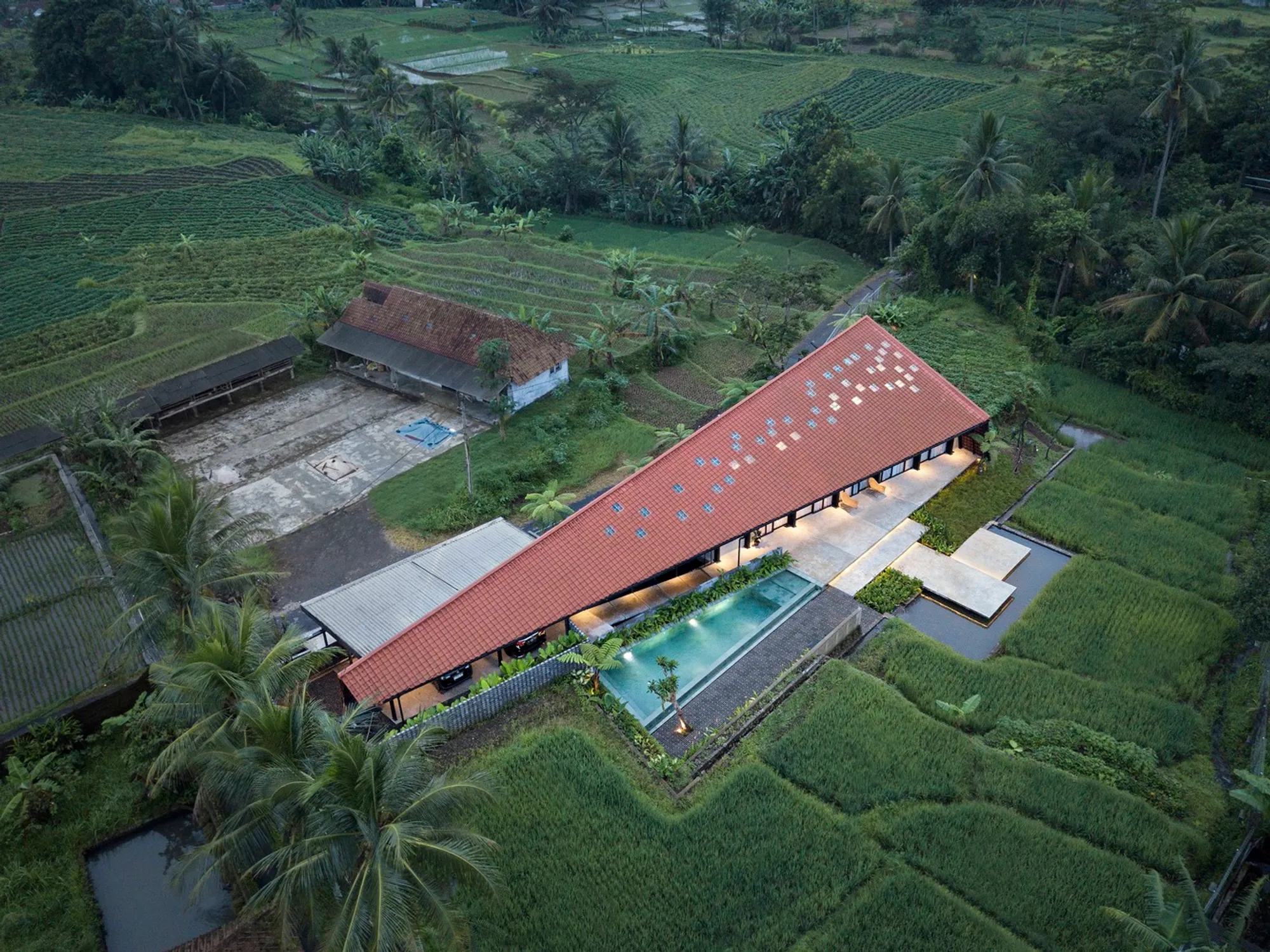
Nestled in the serene landscape of Cilimus, Kuningan, West Java, Indonesia, the Svarga Cilimus House by PSA Studio is a contemporary two-bedroom villa designed as an intimate retreat away from the fast-paced life of Jakarta. Completed in 2022, this 276 m² residence embraces its natural surroundings while offering modern comforts and uninterrupted views of the majestic Ciremai Mountain.

Context and Setting
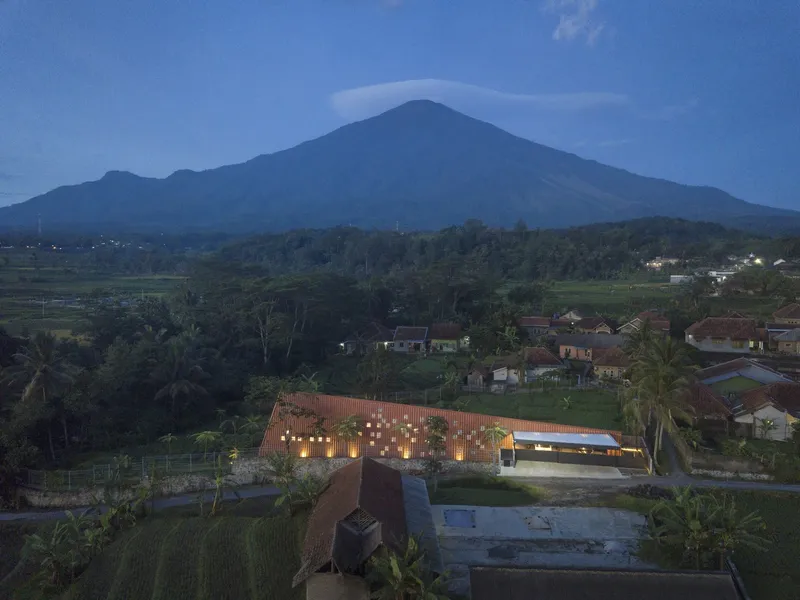
The villa is situated on a 2,300 m² rice field, surrounded by a local farming village where rice cultivation shapes daily life. Respecting its environment, the house minimizes its footprint on the land while maximizing exposure to the natural scenery. The uninterrupted mountain views and vast rice fields form the project’s main architectural inspiration, creating a dialogue between contemporary tropical design and rural tradition.
Design Concept
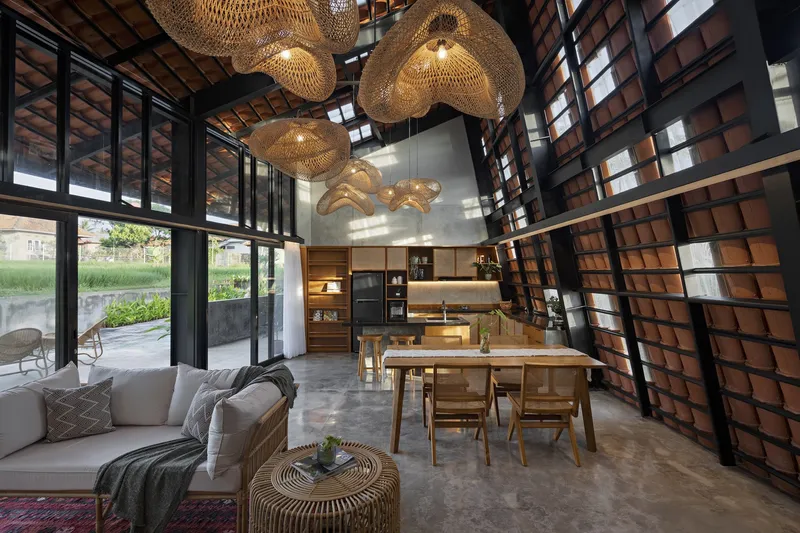
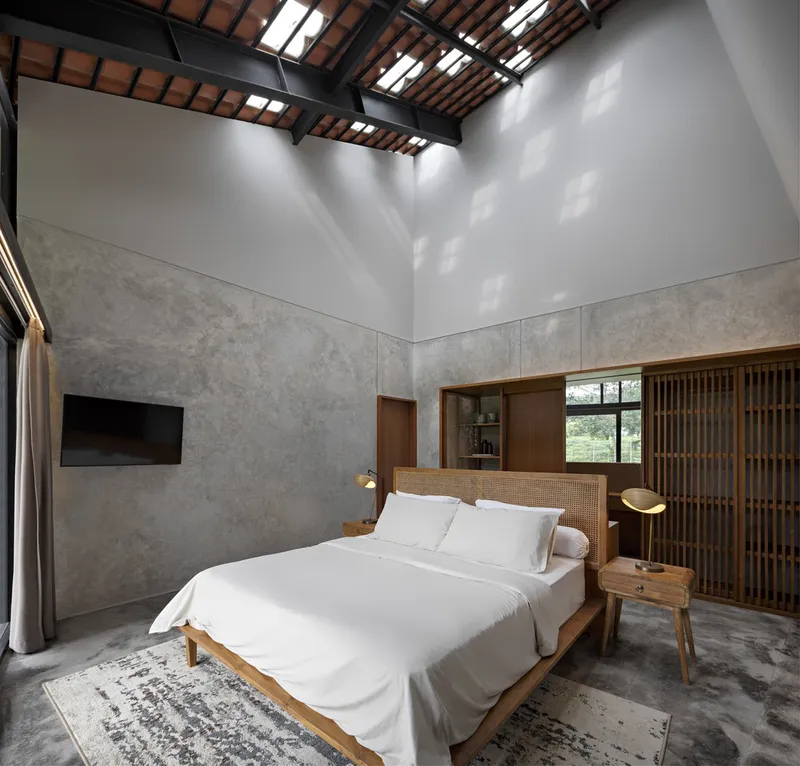
PSA Studio envisioned Svarga Cilimus House as a getaway destination—just a three-hour drive from Jakarta—where tranquility meets architecture. The residence is carefully positioned along the width of the site, ensuring every room captures views of Ciremai Mountain. The elongated, slender building mass allows sunlight to flood interiors, enhancing spatial quality and reducing artificial lighting needs.
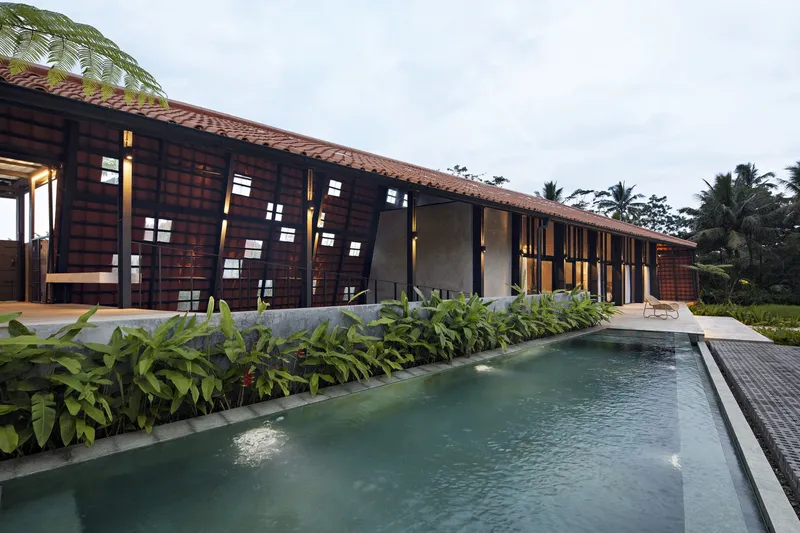
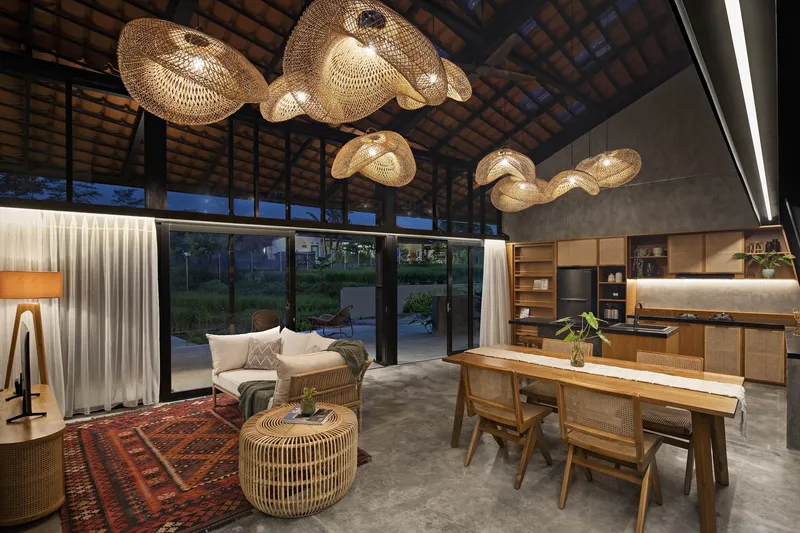
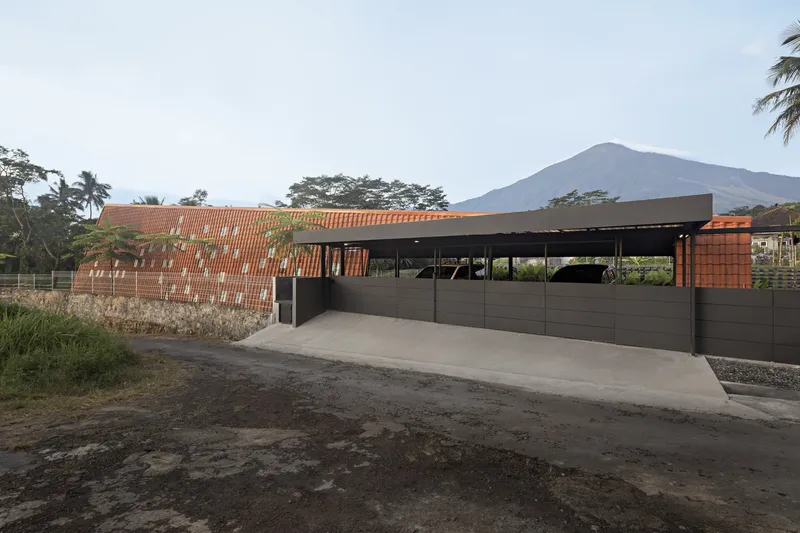
On the mountain-facing side, full-height glass panels open interiors to panoramic landscapes, blurring boundaries between indoors and outdoors. On the street-facing side, privacy is maintained with a continuous clay tile roof, echoing the material language of surrounding village houses while shielding the home from external gaze.
Materiality and Construction
Material selection emphasizes honesty and connection to context. The dominant clay roof responds to the vernacular tradition of nearby residences. Steel structures ensure durability and efficient construction, while glass walls maximize transparency and natural light. Concrete floors and walls provide a neutral, grounding base that balances the warmth of natural textures.
By raising the villa above ground level, PSA Studio creates a floating effect above the rice fields, reinforcing the sense of retreat while protecting the building from potential flooding. The single sweeping roof form unifies the entire program—from car porch and fishpond to dining, kitchen, and bedrooms—enhancing visual continuity.


A Contemporary Tropical Response
Svarga Cilimus House demonstrates a contemporary tropical design approach, where openness, shading, and material expression work harmoniously with the environment. Instead of overpowering its rural setting, the villa blends into the cultural and natural landscape, offering an architectural sanctuary that celebrates both privacy and openness.

All Photographs are works of Mario Wibowo



Popular Articles
Popular articles from the community


The Ocean Hive: Sustainable Architecture for a Self-Sufficient Civilization at Sea
The Ocean Hive imagines sustainable architecture at sea, where modular habitats, algae, wave power and ocean waste sustain a growing colony.

The Musturak Paradise: Senior Living Architecture for a Connected Future in Temara, Morocco
The Musturak Paradise reimagines senior living architecture in Temara via private homes, social spaces, culture, community, and shared care.
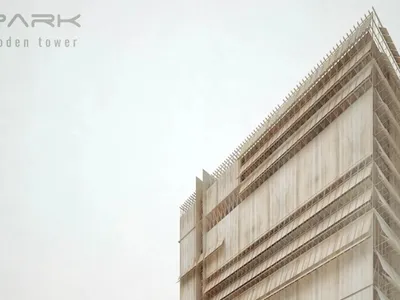
EW PARK: Sustainable Architecture Reimagines the Future of Urban Parking
EW PARK reimagines city parking as a modular wooden tower combining automation, solar energy, electric mobility, and adaptable urban design.

Riyadh For All: Intergenerational Urban Design for Active Aging in Rabat
Riyadh For All reimagines urban design in Rabat with intergenerational co-living, adaptive courtyards, and Moroccan cultural exchange today.


Similar Reads
You might also enjoy these articles


Hodi-Mandai Geram
Project Function: Preservation and revitalization of the Intangible heritage and socio-spatial identity of the Hodi by Housing, Cultural Memory Center, Sacred Grove, landscape, local tourism economy


Olio Towers: A Mid-Rise for Performers That Fuses Housing, Rehearsal, and Stage
Located blocks from Houston's Theater District, this modular tower stacks living units around a central performance atrium.

Oasis: Modular Green Housing Carved into Dhaka's Urban Fabric
A shortlisted Plugin Housing entry reclaims unauthorized settlements in Dhaka with stepped concrete volumes, green roofs, and ventilation-driven design.

Black Hole: A Floating Megastructure for the Post-Physical Era
Emiliano Mazzarotto envisions a spherical, self-scaling arena where e-sports, digital hotels, and holographic stadiums replace traditional public space.


Explore Architecture Competitions
Discover active competitions in this discipline



Challenge to reimagine the Iron Throne


Photograph architecture without architects


Illustrate the lost glory of Angkor Wat - Render Challenge


Design challenge to reuse E-waste
Comments (0)
Please login or sign up to add comments
No comments yet. Be the first to comment!