
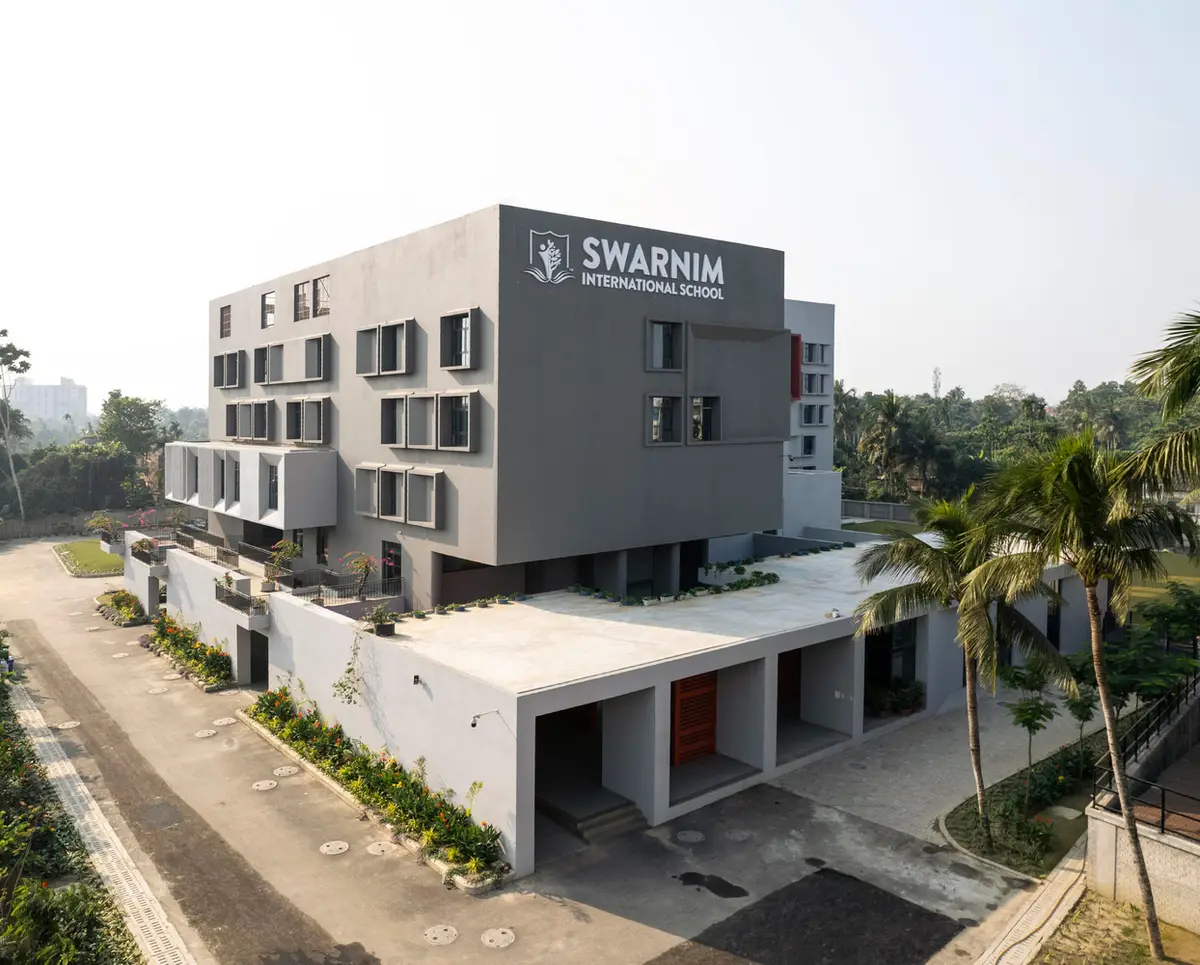
Swarnim International School by Abin Design Studio
Swarnim International School by Abin Design Studio blends bold facades, courtyards, and vibrant spaces to create a dynamic, student-centric learning environment.


Located in Kolkata, India, Swarnim International School designed by Abin Design Studio redefines the idea of a school as a “second home.” Spread across 10,000 m² and completed in 2022, the project establishes an innovative model of educational architecture where learning environments are shaped not only by classrooms but also by spaces that foster interaction, creativity, and well-being.
Children spend a significant part of their formative years within school walls, making the built environment a critical factor in their development. Abin Design Studio’s approach emphasizes comfort, safety, growth, and empowerment, while also recognizing the need for personal nooks and playful corners where children can claim their own “spot.”
Architectural Design & Form
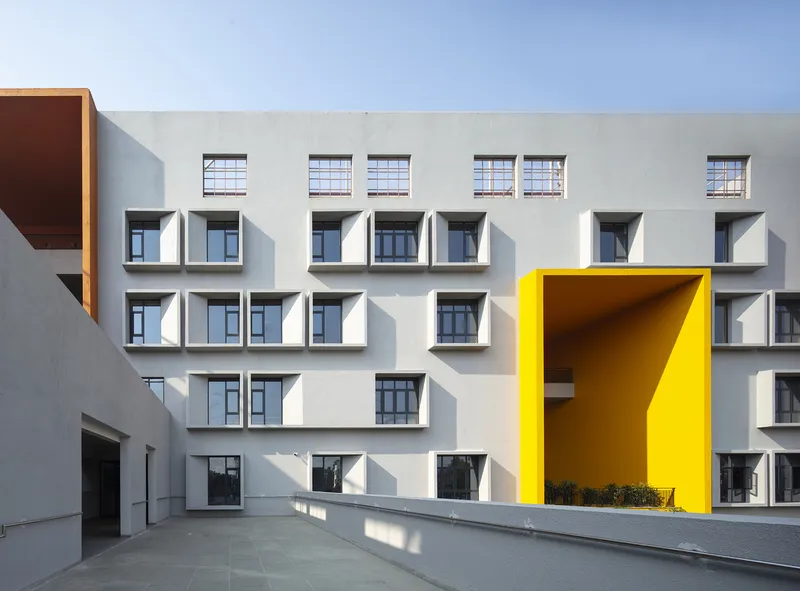
The architectural massing follows a “tetris-stacking” composition—a rhythmic arrangement of blocks that feels both dominant and protective. From the outside, the building stands proud with a striking facade, but once inside, it unfolds into a C-shaped plan embracing the central playground and open field.
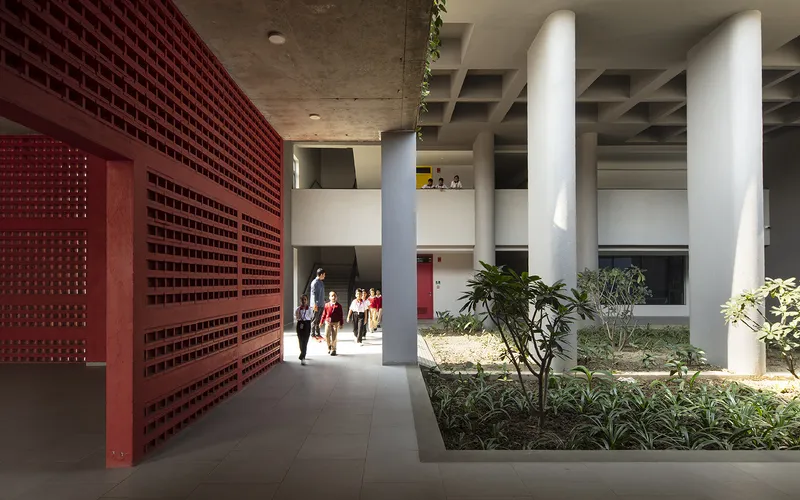
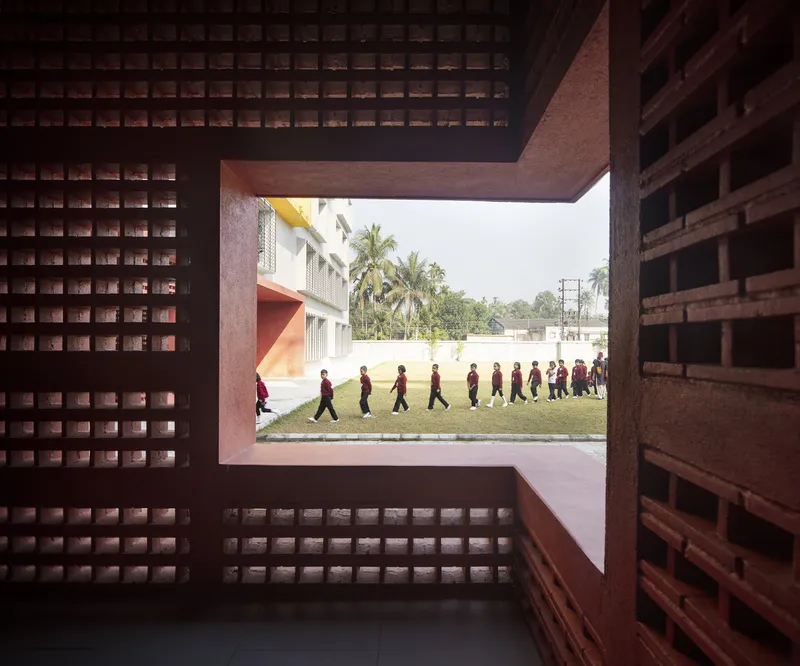
The jali facade, accentuated in bold red, is not only a defining visual identity but also serves a functional purpose. It allows cross-ventilation while producing a dramatic play of light and shadow that changes dynamically throughout the day, creating an ever-evolving atmosphere for students and teachers alike.
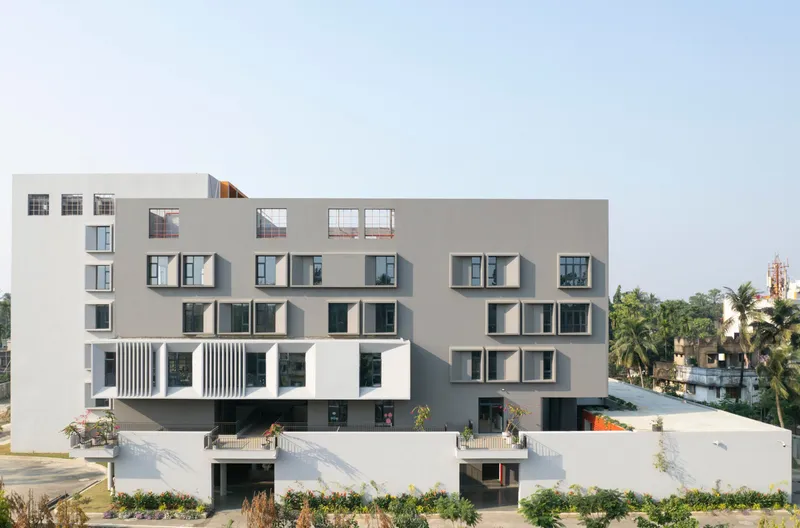
Spaces for Interaction & Learning
The school is designed to go beyond traditional classrooms, incorporating planted courtyards, breakout zones, informal corridors, and play areas. These strategically placed spaces encourage collaboration, socialization, and outdoor learning. The seamless integration of greenery within the courtyards strengthens the connection between interior and exterior, cultivating a nurturing and vibrant atmosphere.
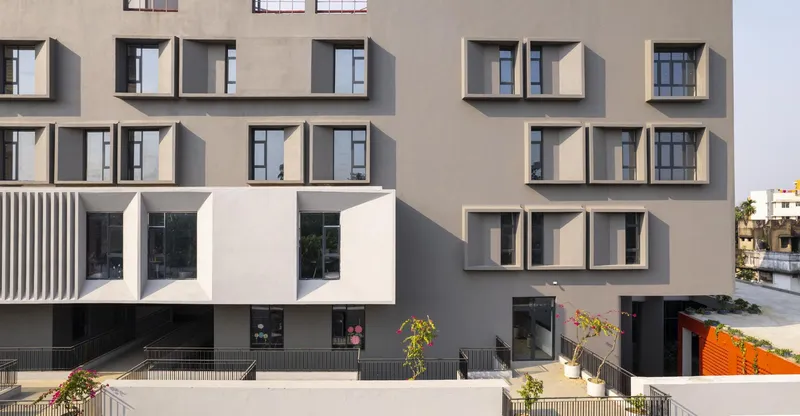
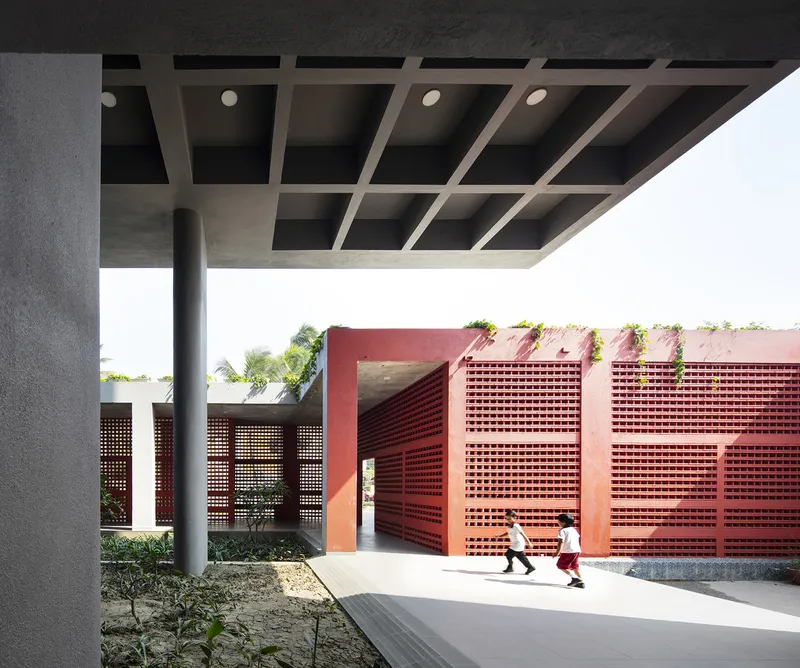
Light, Color & Openness
One of the most distinctive elements of the design is the series of triple-height cut-outs, highlighted in vivid colors. With slender cantilevers and sculptural voids, these punctures break the monotony of the facade while introducing a sense of grandeur, openness, and fluidity. They maximize natural light and ventilation, creating a healthier learning environment.
The use of bold colors, minimalistic geometry, and youthful detailing reinforces the school’s identity as a space for curiosity, discovery, and creativity. The architecture doesn’t impose—it inspires, offering children a dynamic and engaging environment that supports both formal and informal modes of learning.
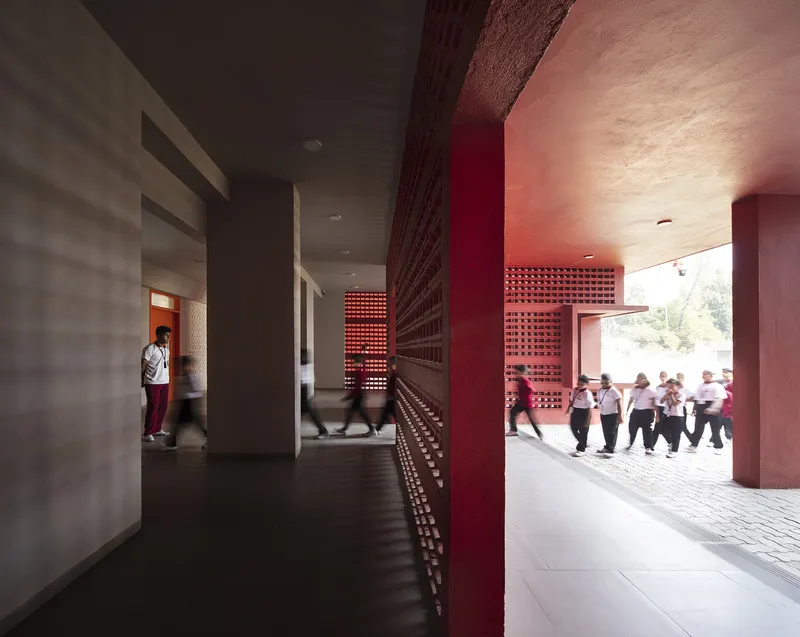
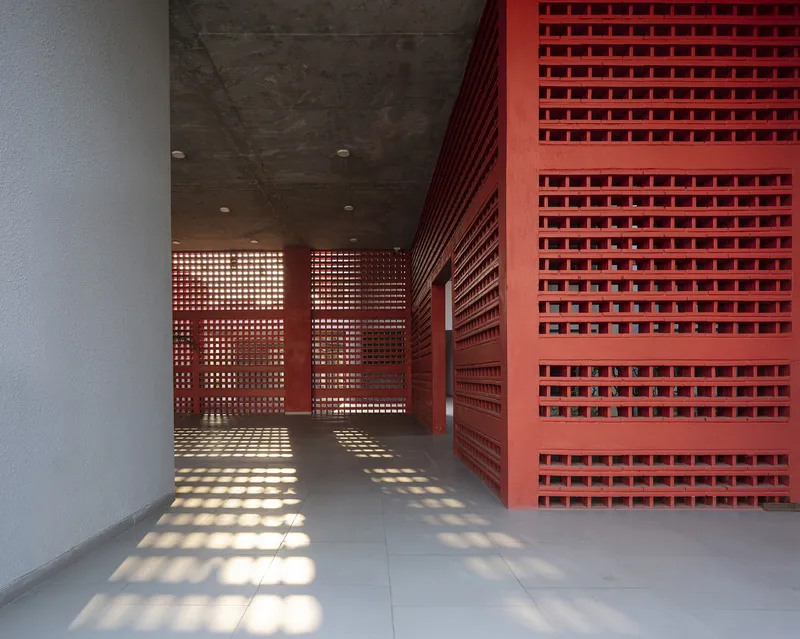
Swarnim International School by Abin Design Studio is not just a building but an educational ecosystem, blending modern design, functionality, and child-centric planning. Its thoughtful integration of spaces for play, nature, and interaction demonstrates how architecture can profoundly influence the way children learn, grow, and connect with their environment.
All Photographs are works of Niveditaa Gupta


Popular Articles
Popular articles from the community


Manzana Morphosis: Stretching Barcelona's Grid into a Living Landscape for 2050
A radical reworking of the Eixample manzana turns density into a tool for generous public space, vertical ecology, and environmental performance.

Cloaked Colonization: A Mobile Underwater Habitat That Moves Like a Fish
Micah Abaya's shortlisted EHC Pacific entry reimagines ocean settlement as a dispersed network of self-sustaining architectural organisms.

Extended Shell: Retrofitting Kolkata's Balconies as Living Urban Thresholds
A modular retrofit system recovers the social and environmental intelligence of Kolkata's historic verandas for contemporary Park Street residents.

Temporary Home for Dogs: A Reversed Zoo Rethinks Animal Shelter Architecture
In Bucharest, a sinuous corridor and freed landscape flip the logic of containment, designing a shelter that works to make itself unnecessary.

Similar Reads
You might also enjoy these articles


Hodi-Mandai Geram
Project Function: Preservation and revitalization of the Intangible heritage and socio-spatial identity of the Hodi by Housing, Cultural Memory Center, Sacred Grove, landscape, local tourism economy


Olio Towers: A Mid-Rise for Performers That Fuses Housing, Rehearsal, and Stage
Located blocks from Houston's Theater District, this modular tower stacks living units around a central performance atrium.

Oasis: Modular Green Housing Carved into Dhaka's Urban Fabric
A shortlisted Plugin Housing entry reclaims unauthorized settlements in Dhaka with stepped concrete volumes, green roofs, and ventilation-driven design.

Black Hole: A Floating Megastructure for the Post-Physical Era
Emiliano Mazzarotto envisions a spherical, self-scaling arena where e-sports, digital hotels, and holographic stadiums replace traditional public space.

Explore NY School Of Interior Design Competitions
Discover active competitions in this discipline

Challenge to design public laboratory

Challenge to reimagine the Iron Throne

Photograph architecture without architects

Illustrate the lost glory of Angkor Wat - Render Challenge
Comments (0)
Please login or sign up to add comments
No comments yet. Be the first to comment!