
T-A-St-Germain Library: Adaptive Reuse and Cultural Renewal in Downtown Saint-Hyacinthe
Adaptive reuse library in Saint-Hyacinthe transforms vacant office building into luminous cultural hub overlooking Yamaska River, fostering community interaction.


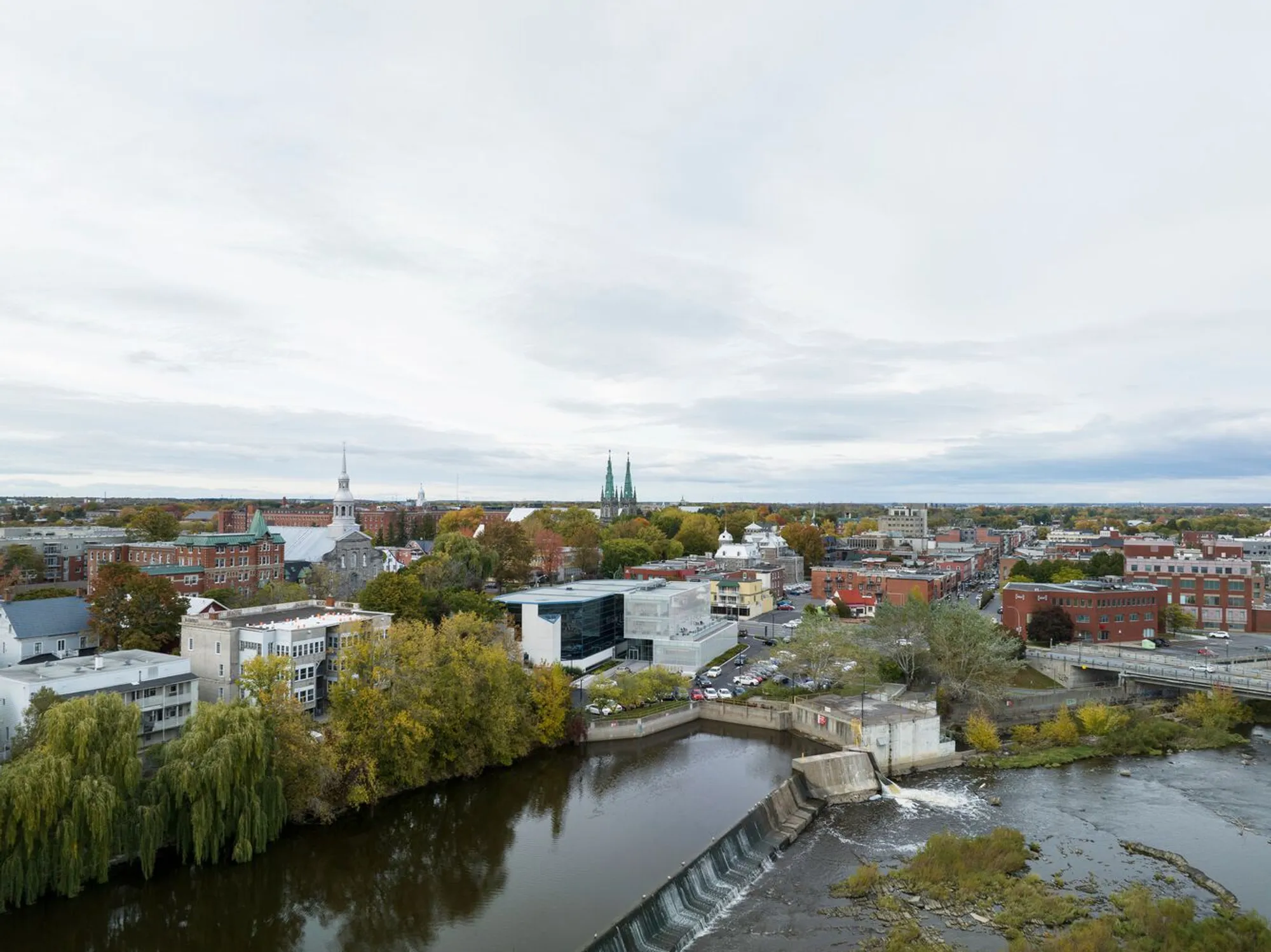
The T-A-St-Germain Library, designed by ACDF Architecture, stands as a contemporary cultural landmark in Saint-Hyacinthe, redefining the role of the public library through adaptive reuse, architectural frugality, and urban regeneration. Completed in 2023, this 52,200-square-foot transformation expands an existing vacant office building into a vibrant, multi-program cultural hub that actively reconnects the historic downtown with the Yamaska River.
A Library Beyond Books: A New Civic Living Room
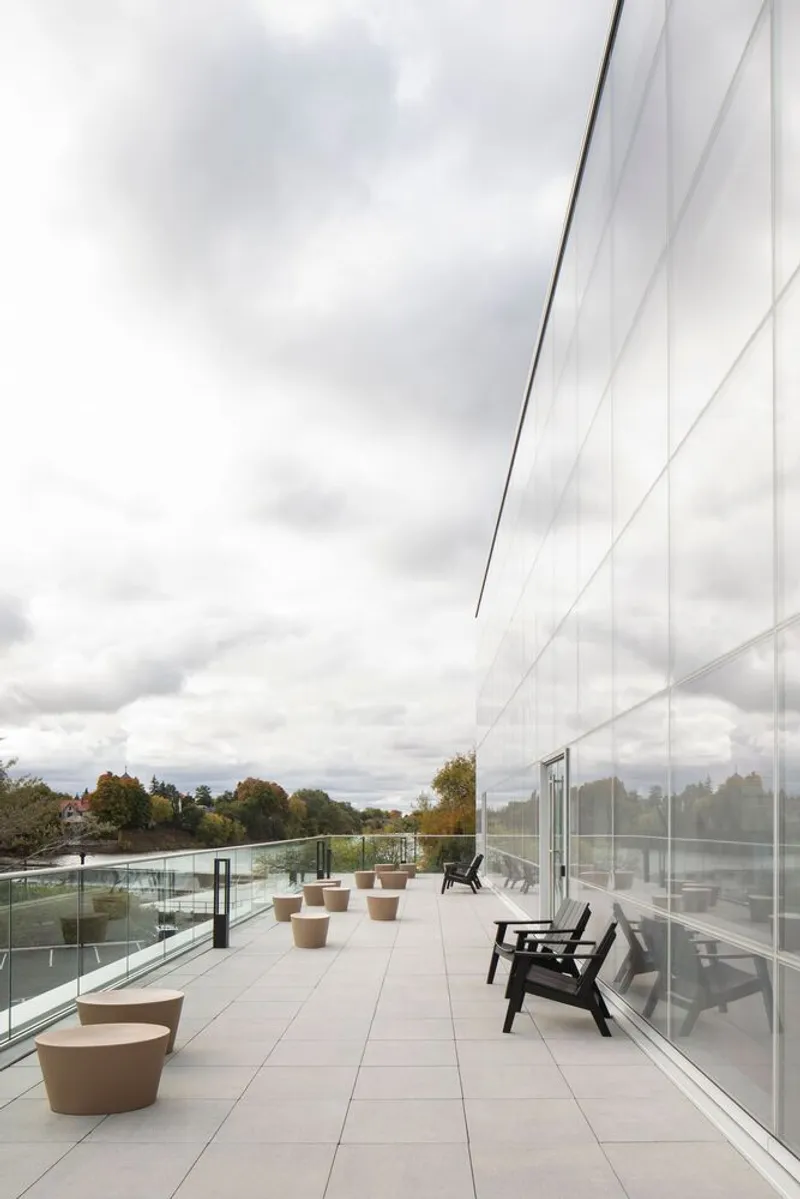
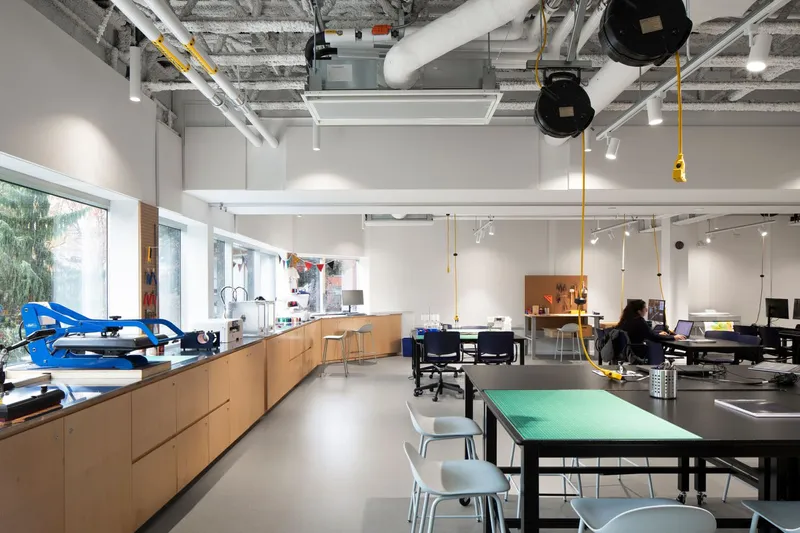
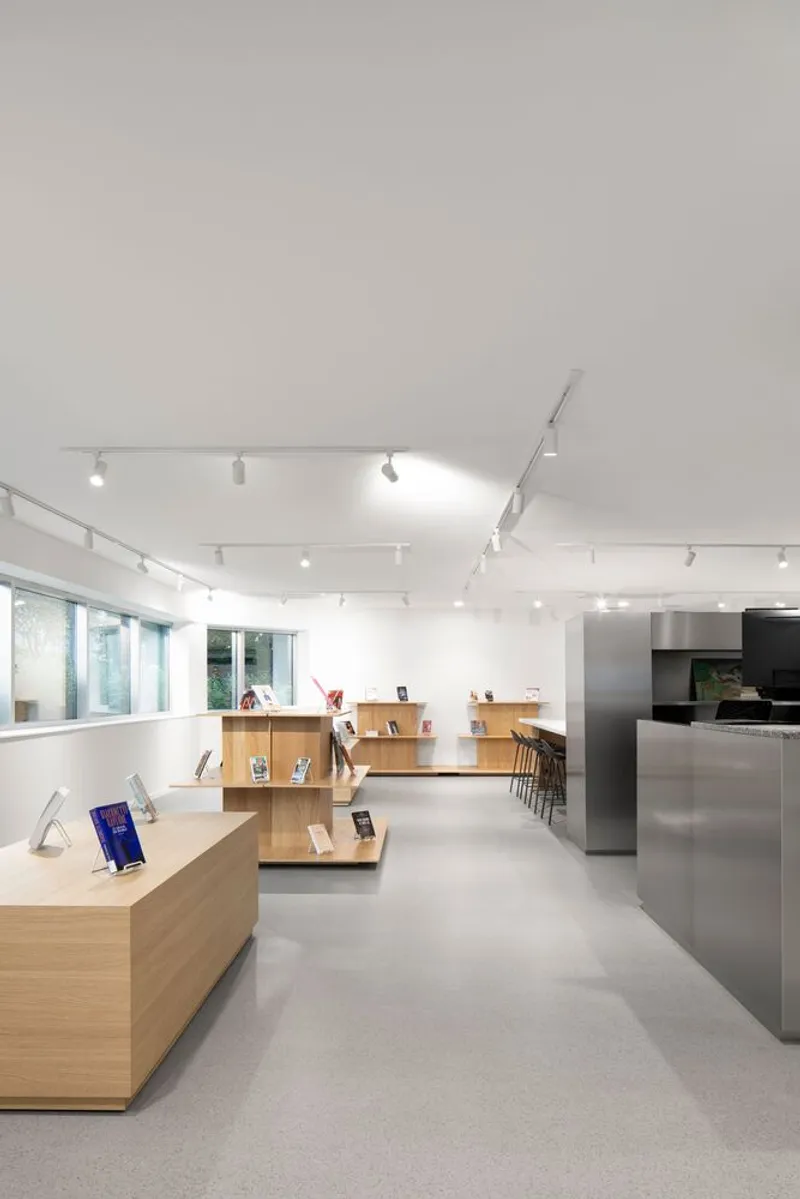
Moving beyond the traditional model of a library as a silent repository of books, the T-A-St-Germain Library is conceived as an inclusive social infrastructure. Distributed across three levels, the program integrates multi-purpose rooms, exhibition spaces, co-working areas, FabLab and multimedia studios, a computer lab, café, outdoor terrace, and dedicated zones for children, teenagers, and adults. This diversity of uses transforms the library into a daily destination that supports learning, creativity, informal encounters, and community life.
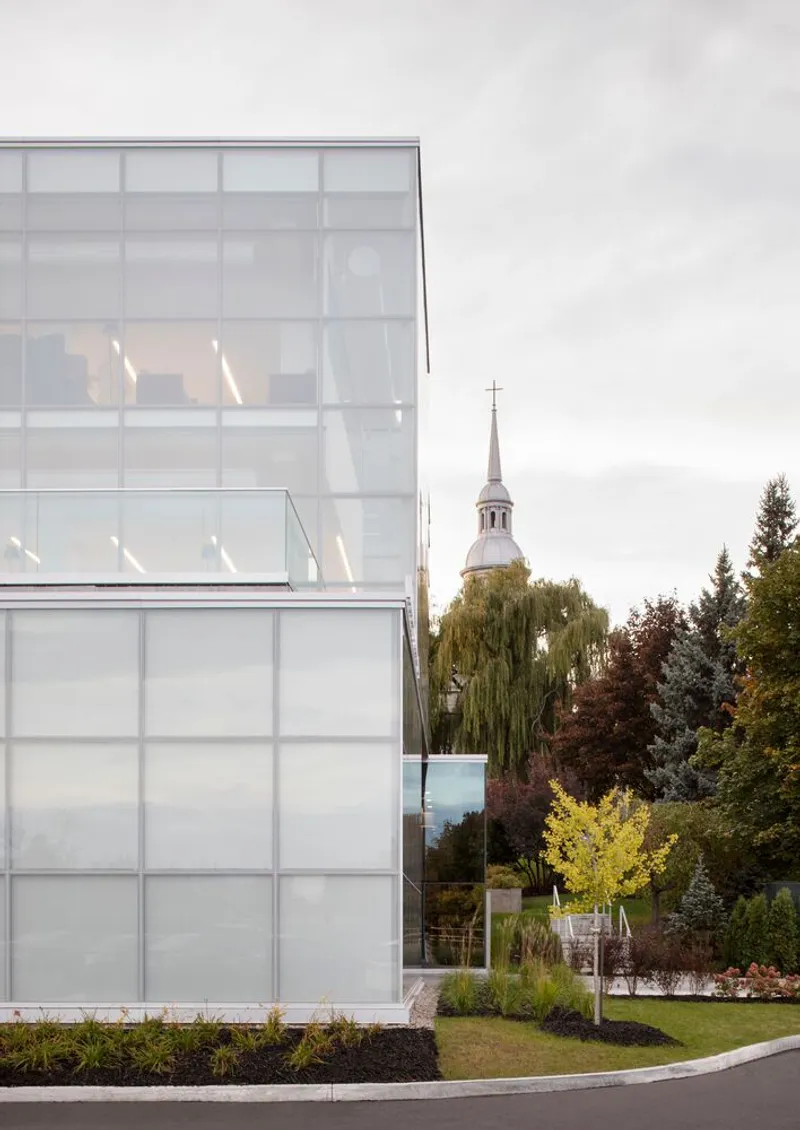
Urban Strategy: Anchoring a New Riverfront Corridor
The project plays a pivotal role in Saint-Hyacinthe’s broader urban vision to revitalize its historic core and counter the outward migration of commercial and residential life. Located near the Barsalou Bridge, the site serves as a key gateway between the west bank communities and downtown. Positioned at the heart of a future 1.5-mile pedestrian and cycling river corridor, the library becomes the first built catalyst of a long-term waterfront regeneration strategy, establishing arts and culture as drivers of urban renewal.
Preserving What Exists: Sustainable Transformation Over Demolition
Initially commissioned to evaluate whether demolition was necessary, ACDF Architecture demonstrated the environmental and architectural value of preserving the existing structure. Despite challenges such as low floor-to-ceiling heights, accessibility constraints, and a dated postmodern aesthetic, the building’s structural integrity, functional envelope, and mature landscaped forecourts justified its retention. This decision significantly reduced the project’s embodied carbon footprint while reinforcing the architects’ commitment to responsible reuse and conservation of built heritage.
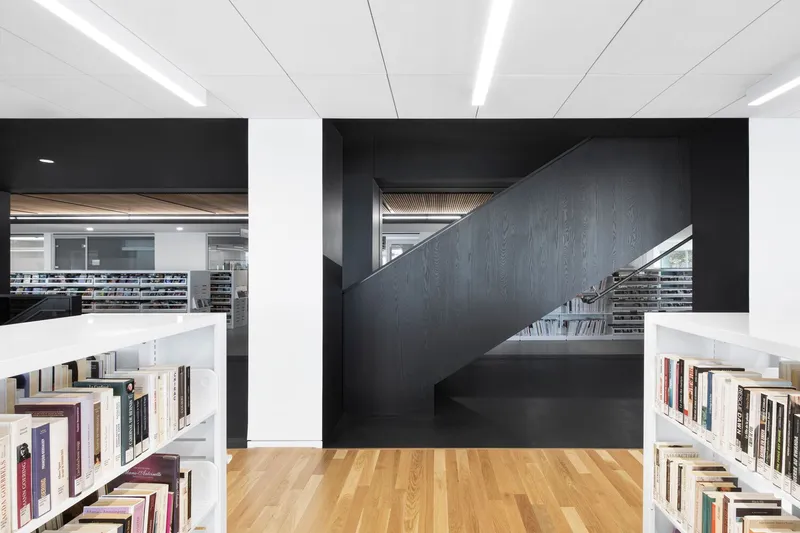
Architectural Sobriety and Environmental Responsibility
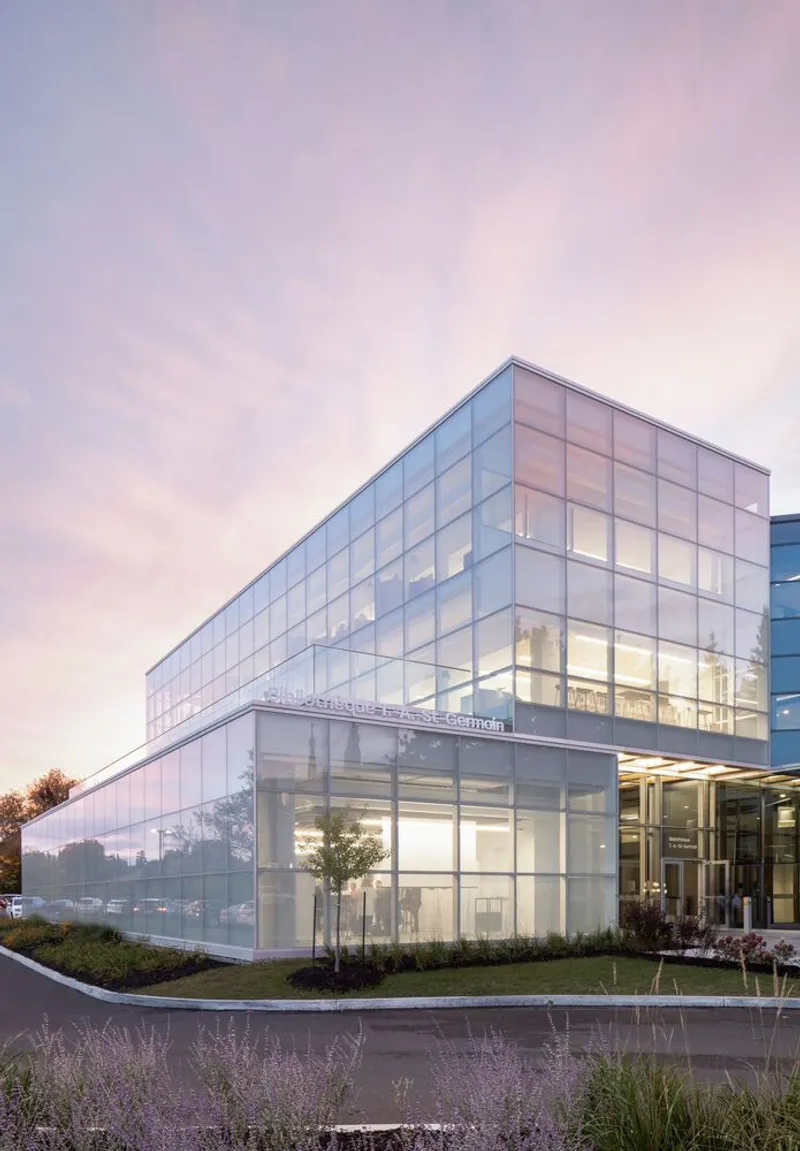
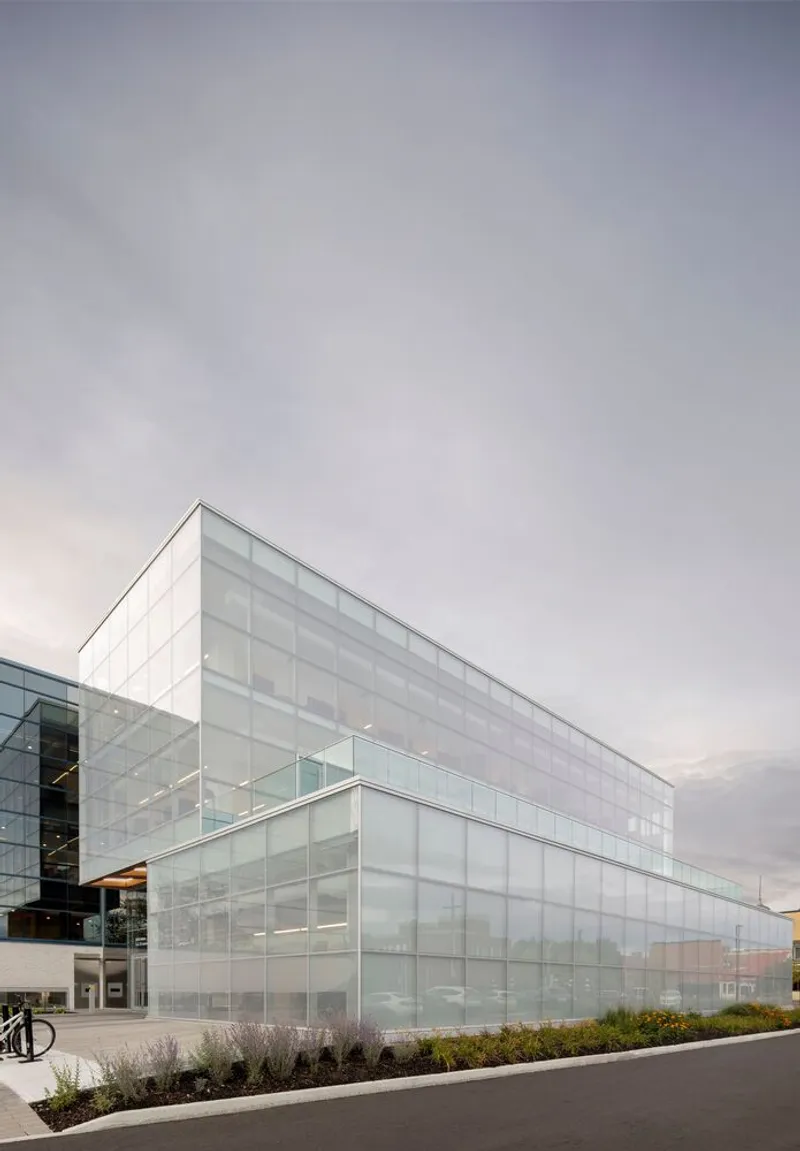
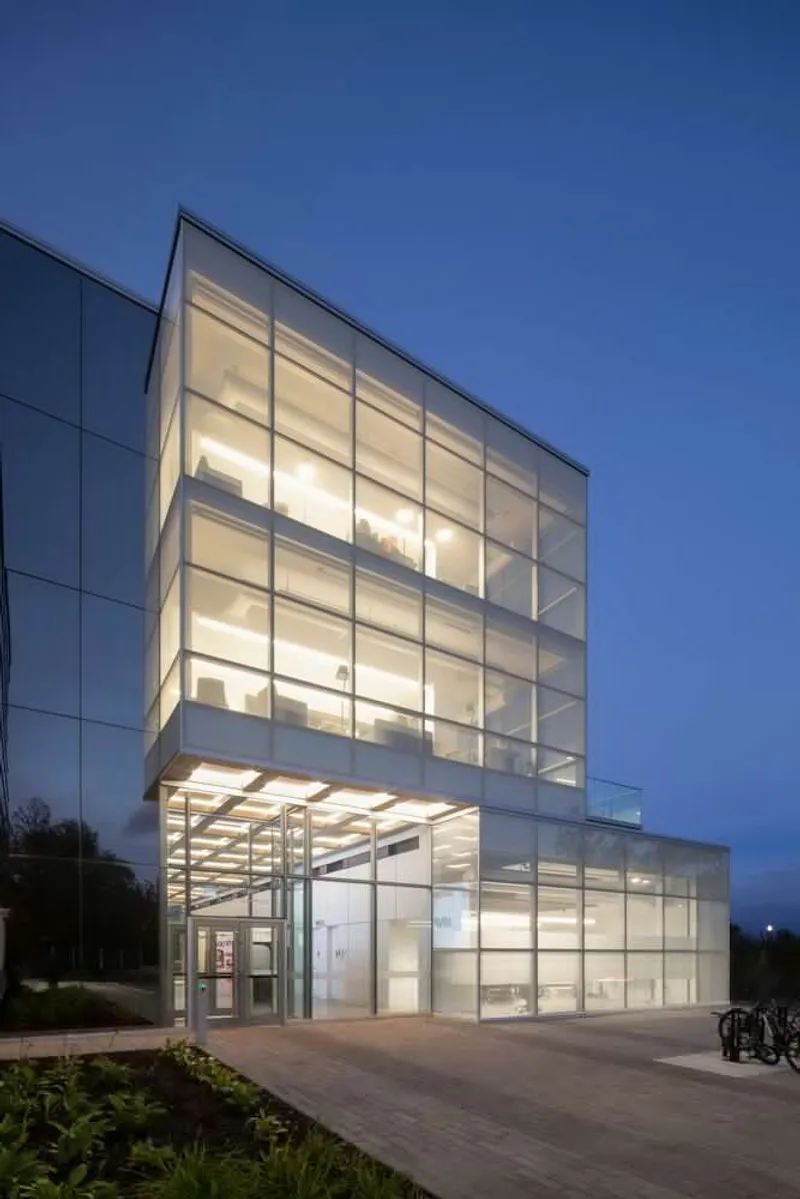
Rather than imposing a monumental or iconic form, the design adopts a sober and balanced architectural language rooted in pragmatic elegance. The existing 1987 building is carefully rehabilitated, while a contemporary extension clad in a translucent, whitish glass envelope subtly announces the library’s new civic presence. At night, this luminous skin transforms the extension into an urban beacon, while its modular rhythm echoes the proportions of the original structure, ensuring visual continuity and coherence.
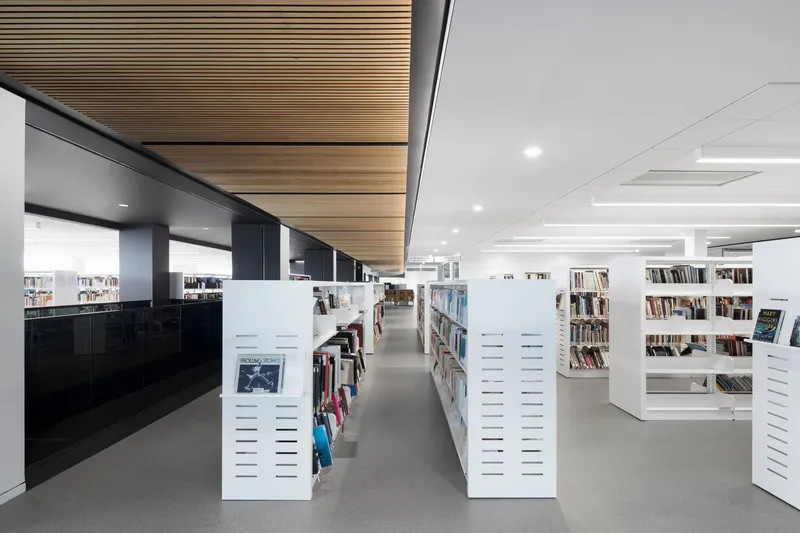
Light, Space, and Contrast: Old and New in Dialogue
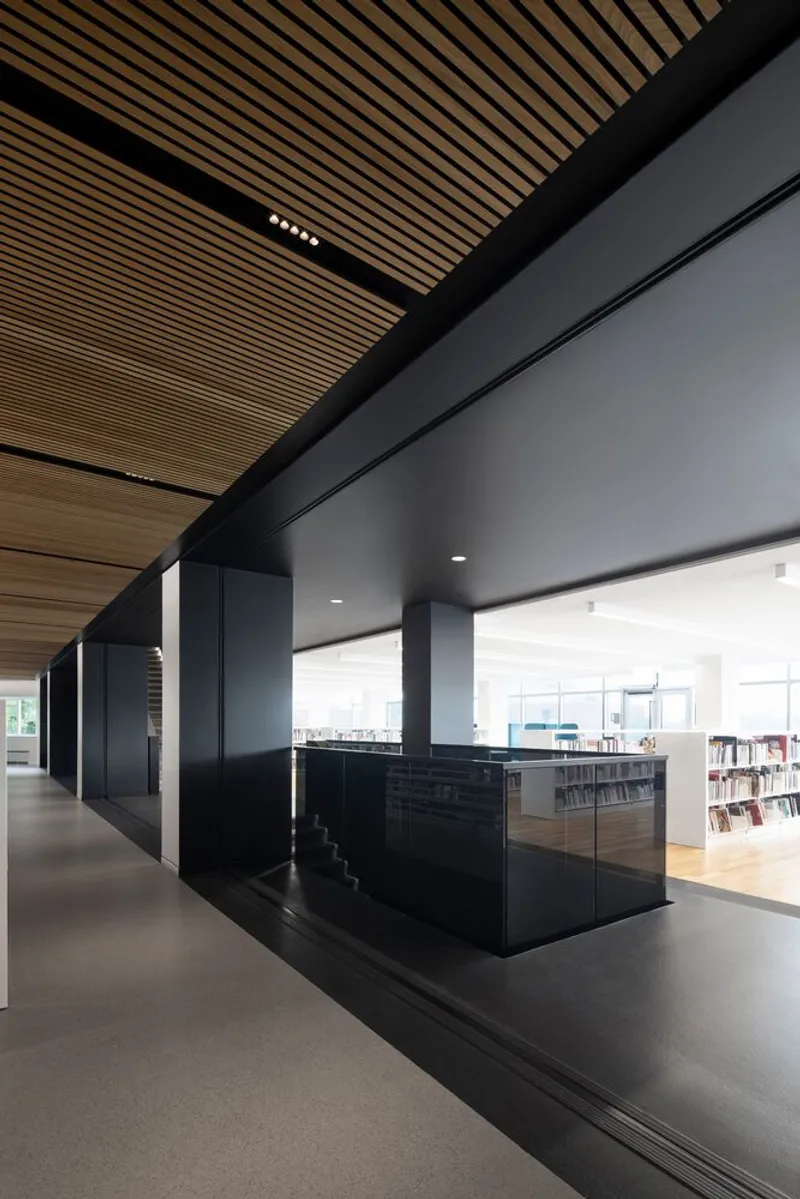
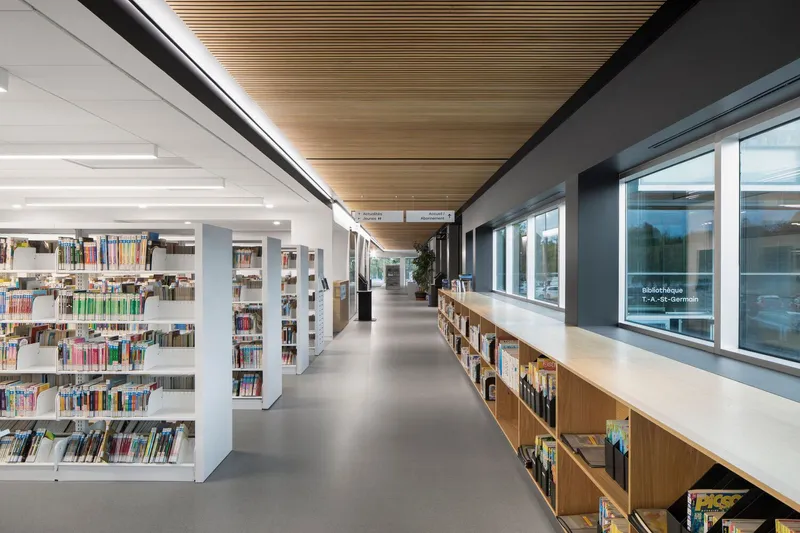
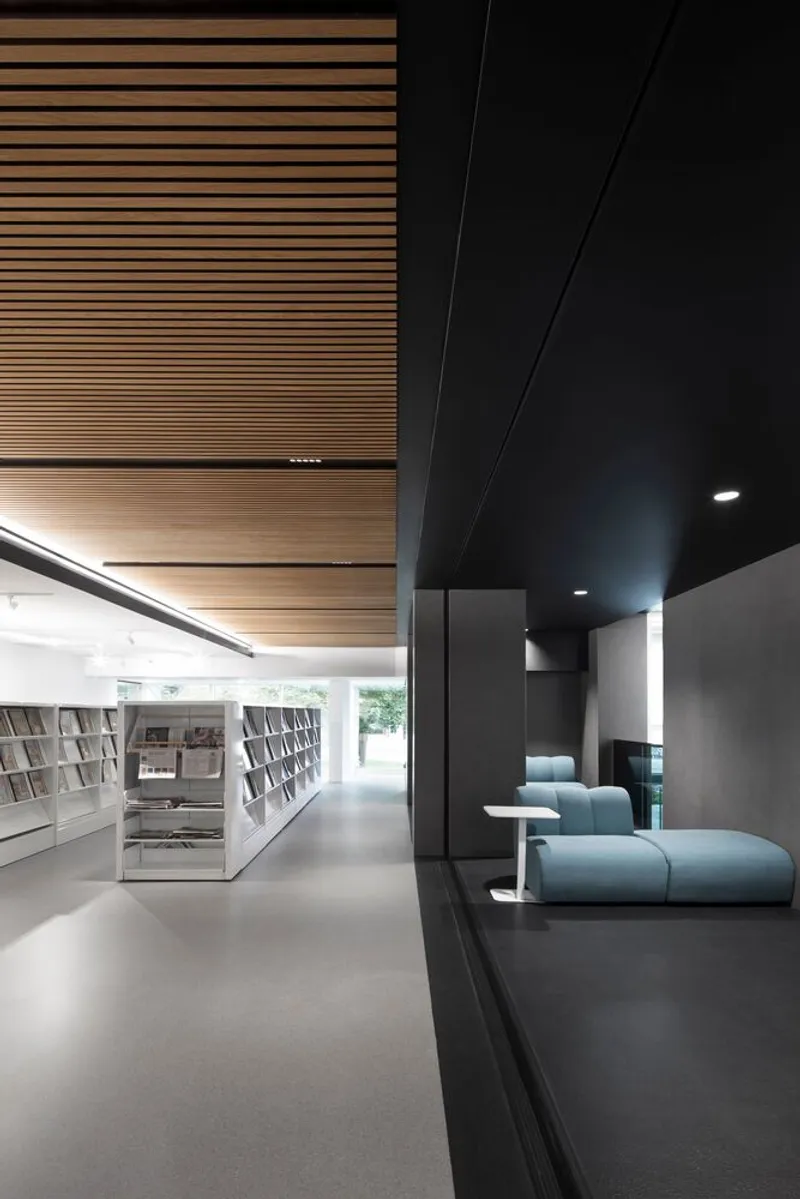
The project’s bipartite composition enriches the spatial experience through contrast. The extension compensates for the original building’s limited fenestration by introducing expansive, light-filled spaces with panoramic views of the Yamaska River and direct access to an outdoor terrace. Meanwhile, the existing building’s lower ceilings and linear windows create intimate, human-scaled reading and working environments conducive to focus and calm. This duality of atmospheres, introverted and extroverted, subdued and open, enhances user comfort and spatial diversity.
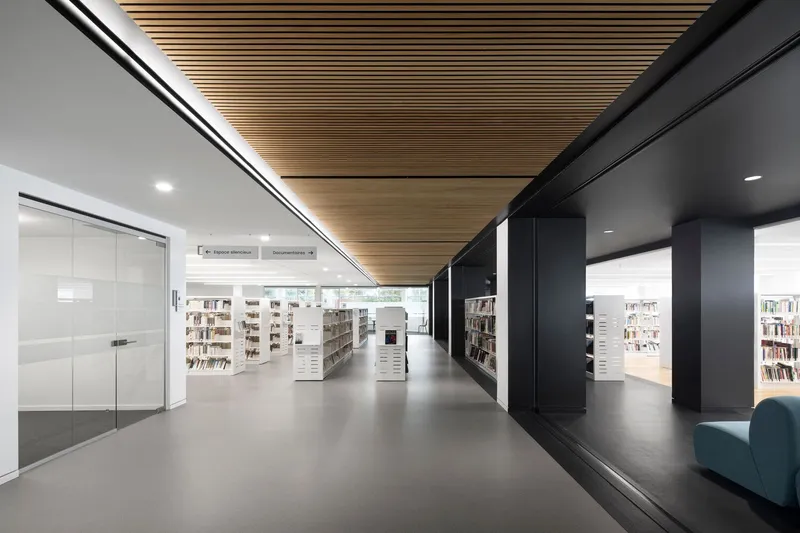
A Dynamic Interior Landscape
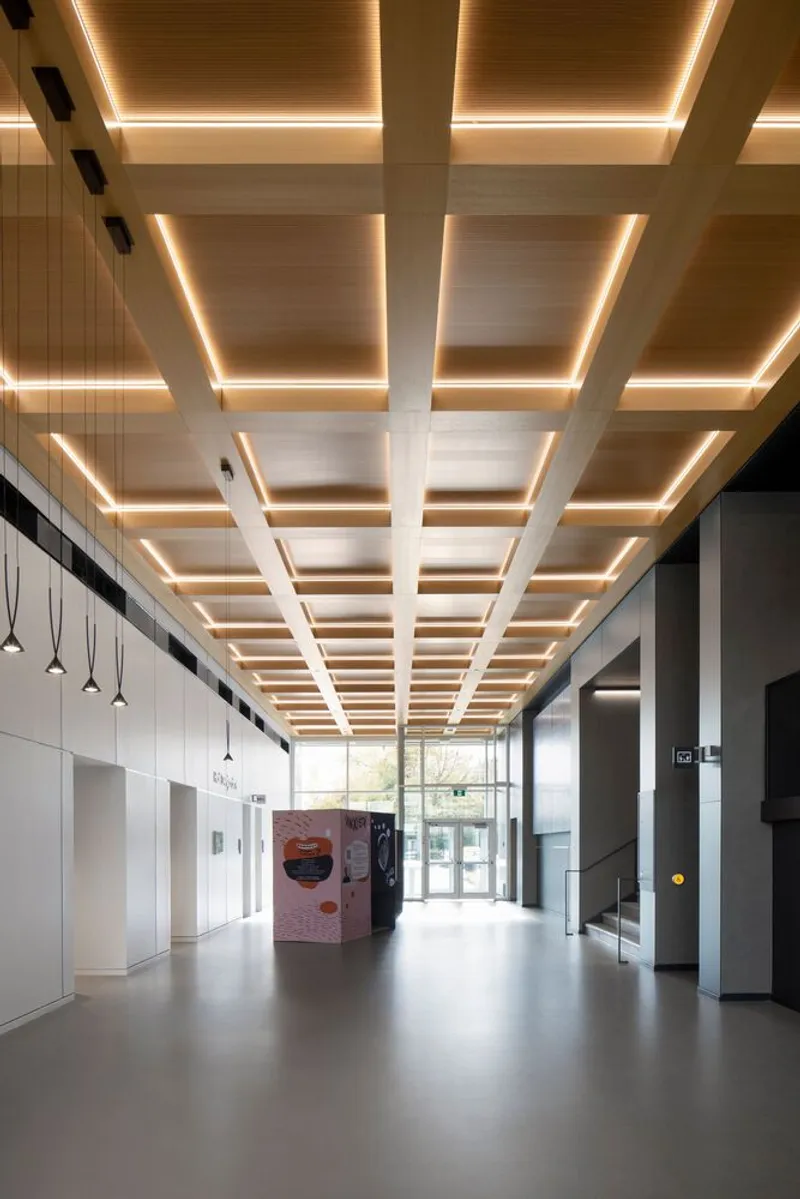
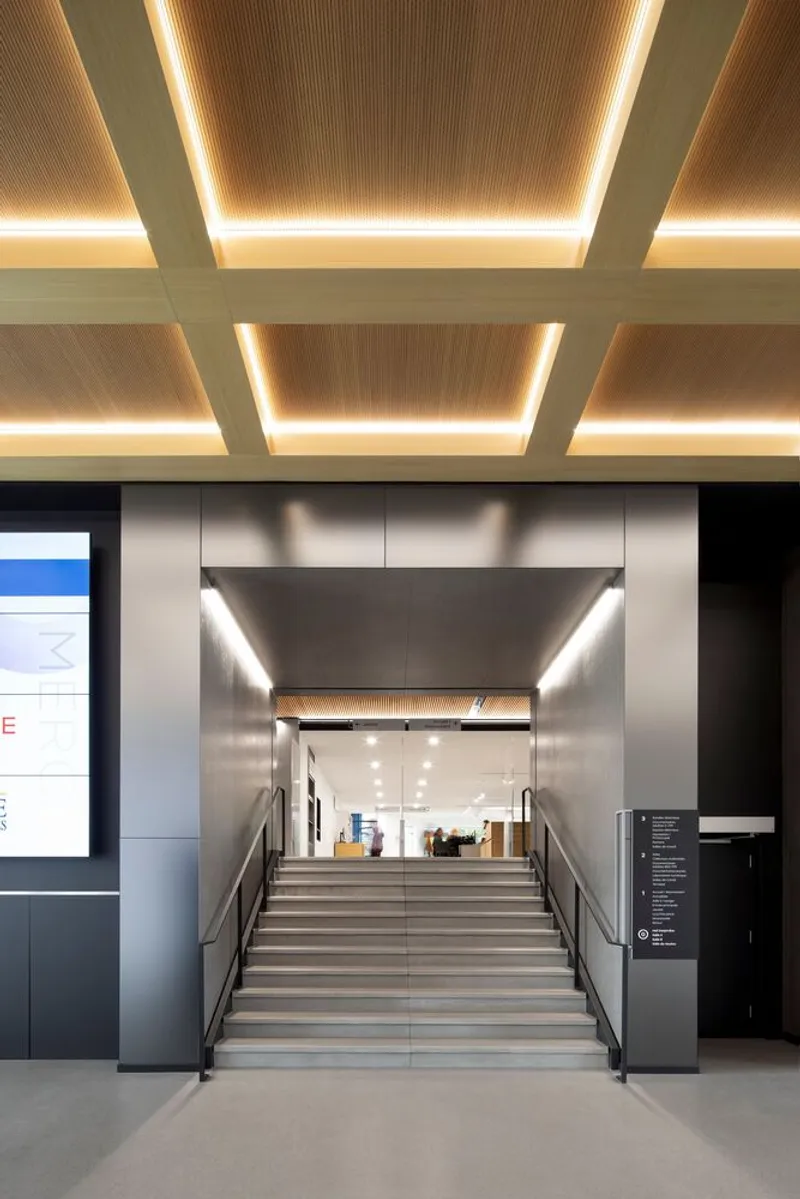
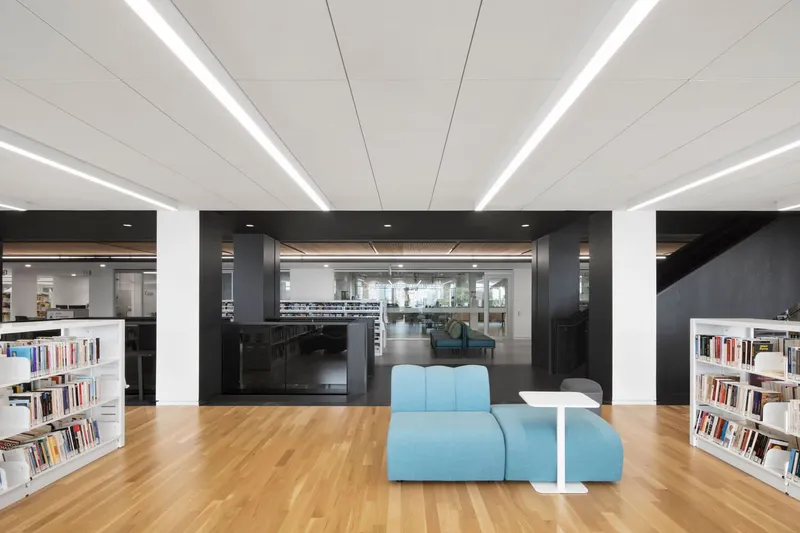
At the heart of the extension, two interlocking volumes slide past one another to form a generous, transversal hall that functions as reception area, café, event foyer, and social crossroads. Visible from the street, this animated interior draws passers-by inside, reinforcing the library’s civic role. A warm coffered wooden ceiling softens the scale of the space, while ground-floor multi-purpose rooms activate the adjacent urban promenade and remain accessible beyond library hours, supporting exhibitions, cultural events, and community gatherings.
A Cultural Beacon for the City
Today, the T-A-St-Germain Library stands as a defining presence in downtown Saint-Hyacinthe: a contemporary cultural beacon rooted in restraint, sustainability, and contextual sensitivity. The project exemplifies ACDF Architecture’s philosophy of balancing efficiency and architectural quality, demonstrating how modest means, when combined with thoughtful design and adaptive reuse, can produce meaningful public architecture that strengthens community identity and urban life.
All photographs are works of
Adrien Williams



Popular Articles
Popular articles from the community


The Musturak Paradise: Senior Living Architecture for a Connected Future in Temara, Morocco
The Musturak Paradise reimagines senior living architecture in Temara via private homes, social spaces, culture, community, and shared care.

The Ocean Hive: Sustainable Architecture for a Self-Sufficient Civilization at Sea
The Ocean Hive imagines sustainable architecture at sea, where modular habitats, algae, wave power and ocean waste sustain a growing colony.

AL-JANNAH: Sustainable Architecture and Permaculture for Afghan Widows
AL-JANNAH uses sustainable architecture and permaculture to create resilient oasis of housing, learning, work and renewal for Afghan widows.

The Earth Pod: 3D Printed Homes for Resilient Refugee Communities
The Earth Pod reimagines refugee housing through 3D printed homes made from clay, combining resilience, self-sufficiency, and rapid shelter.

Similar Reads
You might also enjoy these articles


FAMM Arquitectura Organizes Ten Villas Around Courtyards and Jungle in Nosara, Costa Rica
El Molino pairs two elongated volumes with deep overhangs and timber louvers to build a compact coastal community five minutes from the beach.

Oscar Niemeyer's Ibirapuera Park Pavilions Define São Paulo's Cultural Identity in Concrete and Curve
A constellation of modernist volumes set within São Paulo's most important urban park, conceived for the city's 400th anniversary in 1954.
How Henri Picq's 1889 Paris Pavilion Traveled 11,000 Kilometers to Become Santiago's Artequín Museum
A prefabricated iron and glass pavilion built for the Paris Universal Exposition found a second life as a children's art museum in Chile.

Sanjay Puri Architects Wraps a Jaipur Office Tower in Capsule-Shaped Green Buffers
A nine-level climate-responsive workplace near Jaipur Airport uses stacked planter terraces and aluminium screens to fight 40°C heat.


Explore Architecture Competitions
Discover active competitions in this discipline



Challenge to reimagine the Iron Throne


Photograph architecture without architects


Illustrate the lost glory of Angkor Wat - Render Challenge


Bring back Drive In's
Comments (0)
Please login or sign up to add comments
No comments yet. Be the first to comment!