

TAGI Hair Salon by SIDES CORE: A Flexible Cultural Salon Redefining Intimacy and Spatial Fluidity in Fukui
TAGI Hair Salon blends flexible layouts, suspended fixtures, and soft partitions to create a calm, multi-functional cultural space for two stylists.


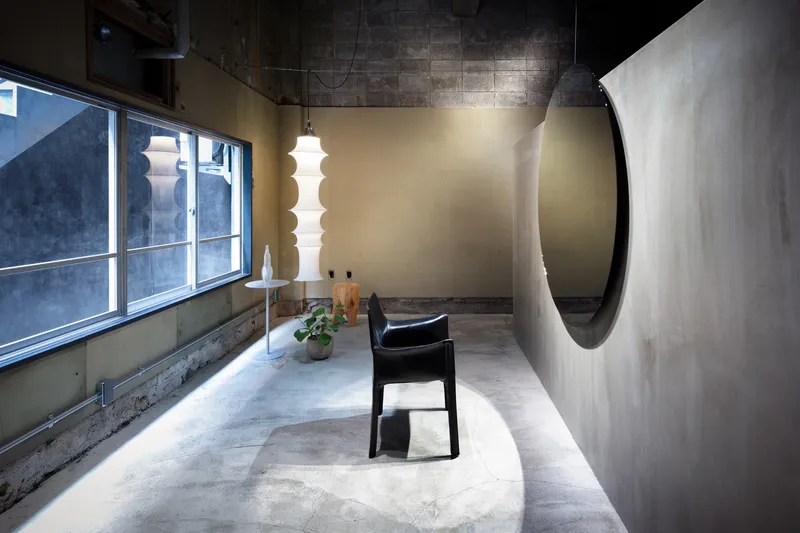
Located in Fukui, Japan, TAGI Hair Salon by SIDES CORE transforms a compact 73 m² basement space into a flexible, community-oriented environment that merges hairstyling, retail, and cultural programming. Designed in 2024 by lead architect Sohei Arao, the salon embodies a thoughtful response to the unique working style of a stylist couple, each with an established and separate clientele, requiring both privacy and shared spatial experiences.
A Dual-Function Layout Designed for Two Stylists
The project began with a clear challenge: create an interior where two stylists can work comfortably side-by-side while maintaining distinct client flows. SIDES CORE accomplishes this by blending cozy personal zones with expanded, interconnected areas that remain visually open yet tactically separated.
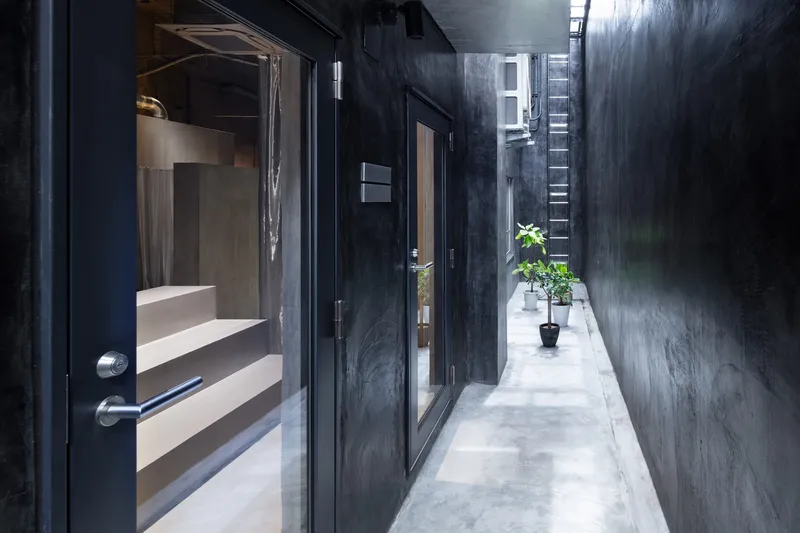
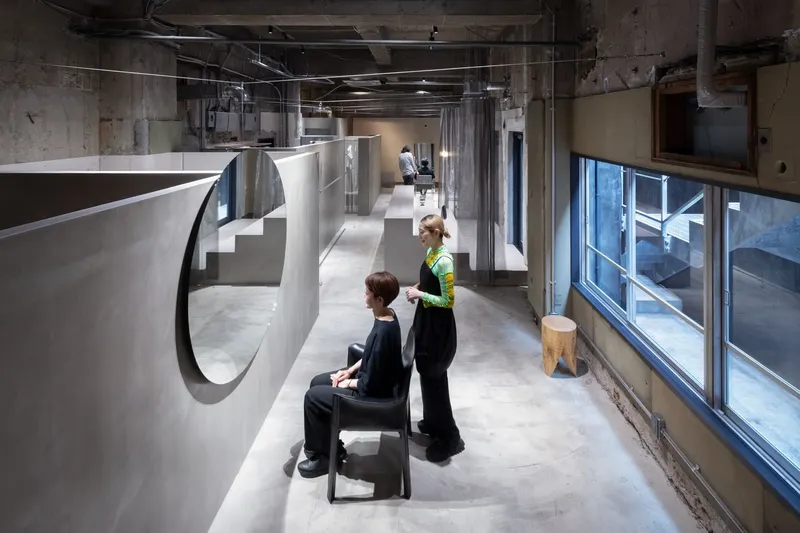
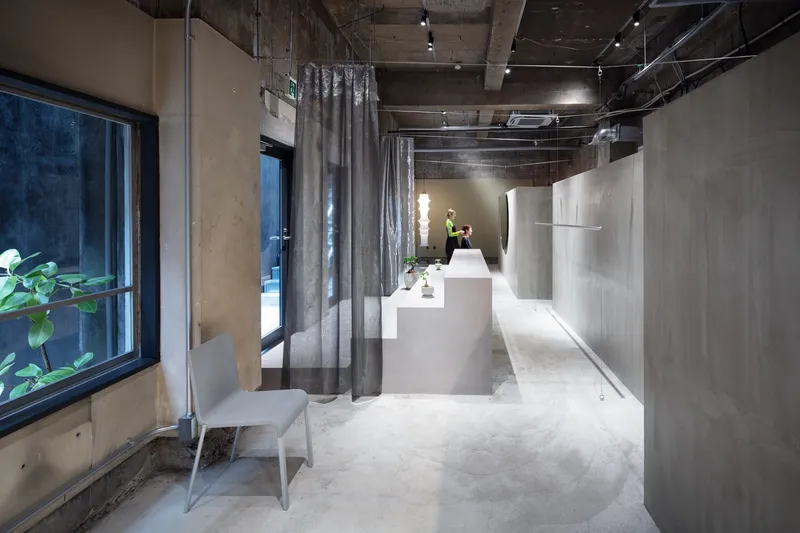
The existing basement unit featured two original doors, which the architects embraced as symbolic elements. These doors anchor a 3-meter-long stepped counter, acting as the spatial heart of the interior, guiding guest circulation to the left and right cutting areas while generating a subtle buffer between the stylists’ zones. Complemented by low partitions and the existing dry area, the result is an unexpectedly open, airy atmosphere.

A Soft Spatial Language for Comfort and Relaxation
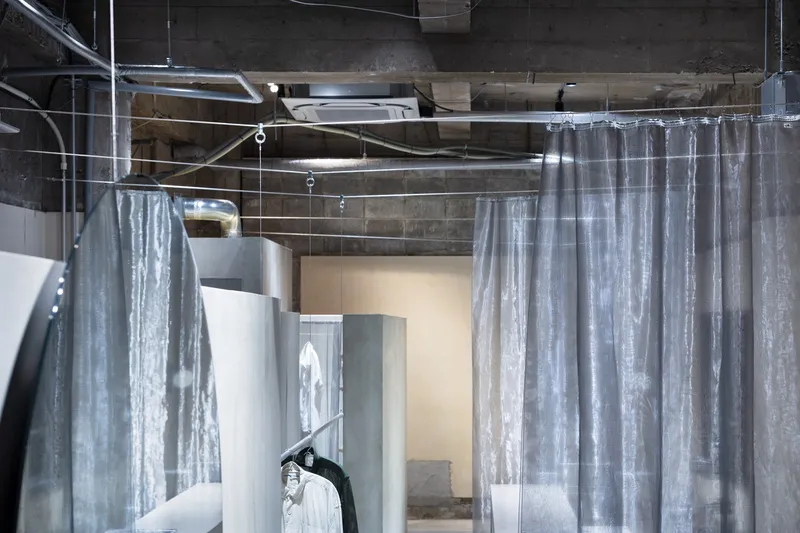
To cultivate calmness in a window-lined basement, SIDES CORE uses sheer curtains, diffused lighting, and carefully modulated sightlines. Just two lightly draped curtains introduce softness and create distinct moments of privacy without closing off the space entirely. Their transparency maintains a sense of connection, supporting relaxed, unhurried interactions between stylist and client.


A Salon That Extends Into Local Culture
The salon’s name, “Tagi,” refers to a place that deepens cultural interaction. True to this concept, the interior serves multiple roles beyond haircare. The stepped front counter and wire-suspended hanger pipes double as display areas for apparel curated by the owners. When not functioning as a salon, the space transforms into a pop-up retail venue or community event location, hosting local makers, lifestyle brands, and cultural activities. This adaptability positions TAGI as a hybrid social space rooted in the rhythms of its neighborhood.
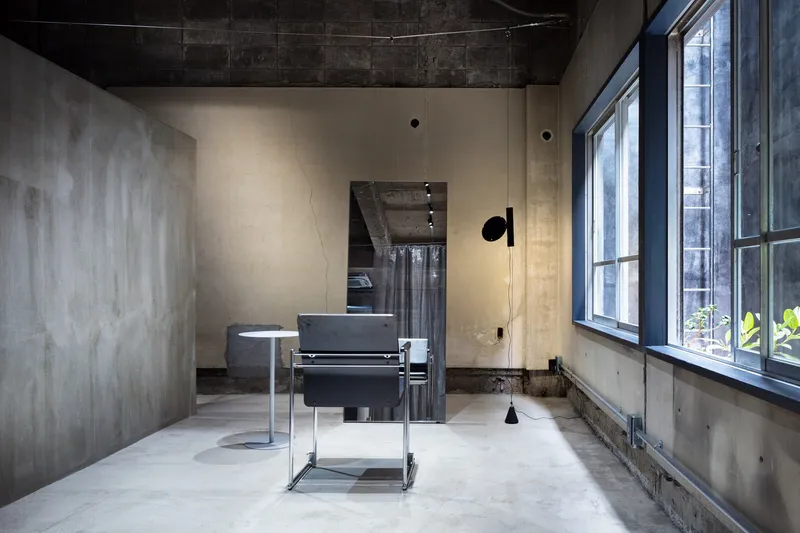
Flexible Infrastructure Suspended From Seven Parallel Wires
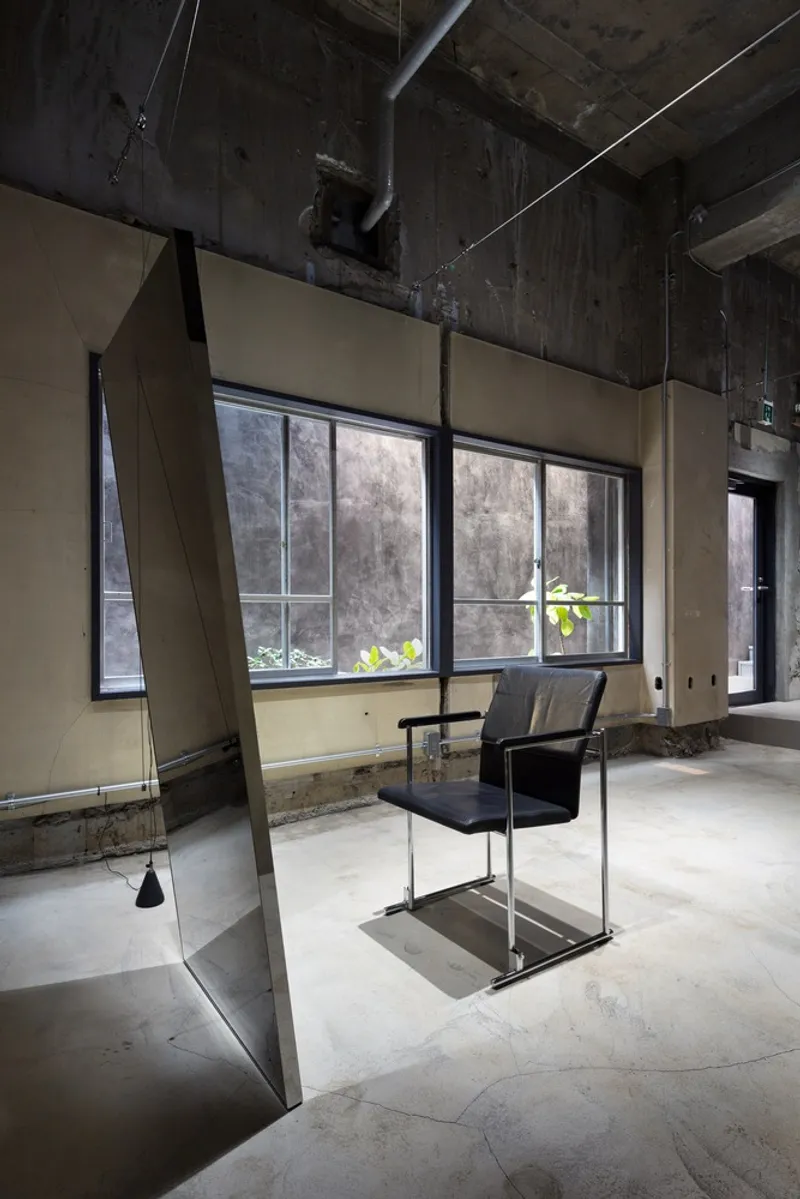
SIDES CORE introduces a distinctive system of seven parallel suspension wires: a minimalist but multifunctional installation that supports mirrors, shelves, lighting, and fabric dividers. Each element can be added, removed, or reconfigured depending on daily needs. Weighted ends keep the wires taut, introducing a subtle sense of tension and movement that complements the salon’s refined material palette. This suspended approach frees the compact floor area, improving circulation and delivering a sense of architectural lightness.
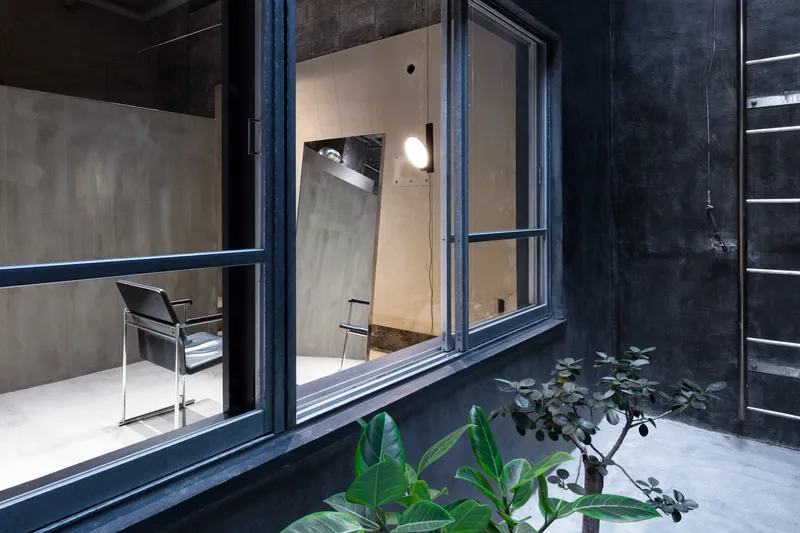
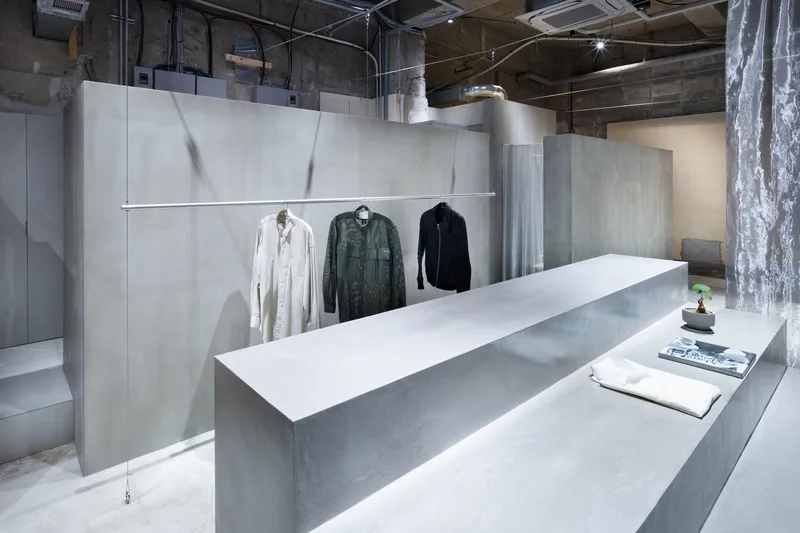
A Refuge Away From Street-Level Activity
Although set below ground, TAGI exudes openness through its carefully framed windows, stepped thresholds, and strategic lighting. Clients enter a space that feels detached from the city’s bustle: a calm refuge encouraging conversation, creativity, and cultural engagement. SIDES CORE’s design elevates the everyday salon experience into an immersive spatial encounter.
All photographs are works of
Takumi Ota




Popular Articles
Popular articles from the community


Co-life: Sustainable Architecture for Age-Friendly Community Living
Co-life reimagines sustainable architecture for seniors through courtyards, rammed earth, shared gardens, and spaces designed for belonging.

Hill & Cross Opera: Sculptural Opera House Architecture Shaped by Tallinn’s Landscape and Identity
Hill & Cross Opera reimagines opera house architecture in Tallinn through its sculptural hill, civic plaza, glass wave and a luminous cross.

Conexión: Biophilic Design Reimagines High-Rise Living in Hong Kong
Conexión reimagines high-rise living in Hong Kong through biophilic design, green facades, shared spaces, daylight, water and nature within.

AL-JANNAH: Sustainable Architecture and Permaculture for Afghan Widows
AL-JANNAH uses sustainable architecture and permaculture to create resilient oasis of housing, learning, work and renewal for Afghan widows.


Similar Reads
You might also enjoy these articles


Hodi-Mandai Geram
Project Function: Preservation and revitalization of the Intangible heritage and socio-spatial identity of the Hodi by Housing, Cultural Memory Center, Sacred Grove, landscape, local tourism economy


Olio Towers: A Mid-Rise for Performers That Fuses Housing, Rehearsal, and Stage
Located blocks from Houston's Theater District, this modular tower stacks living units around a central performance atrium.

Oasis: Modular Green Housing Carved into Dhaka's Urban Fabric
A shortlisted Plugin Housing entry reclaims unauthorized settlements in Dhaka with stepped concrete volumes, green roofs, and ventilation-driven design.

Black Hole: A Floating Megastructure for the Post-Physical Era
Emiliano Mazzarotto envisions a spherical, self-scaling arena where e-sports, digital hotels, and holographic stadiums replace traditional public space.


Explore Interior Design Competitions
Discover active competitions in this discipline


Challenge to design luxury tourism on rails


Challenge to reimagine the Iron Throne


Photograph architecture without architects


VR headsets Storefront design competition
Comments (0)
Please login or sign up to add comments
No comments yet. Be the first to comment!