
TAKUAPÍ Covered School Patio: Sustainable Educational Architecture in Ruiz de Montoya
Covered school patio blending timber structure, cultural identity, and sustainable design to serve Mbya Guaraní community in Ruiz de Montoya.


A Culturally Rooted Educational Pavilion
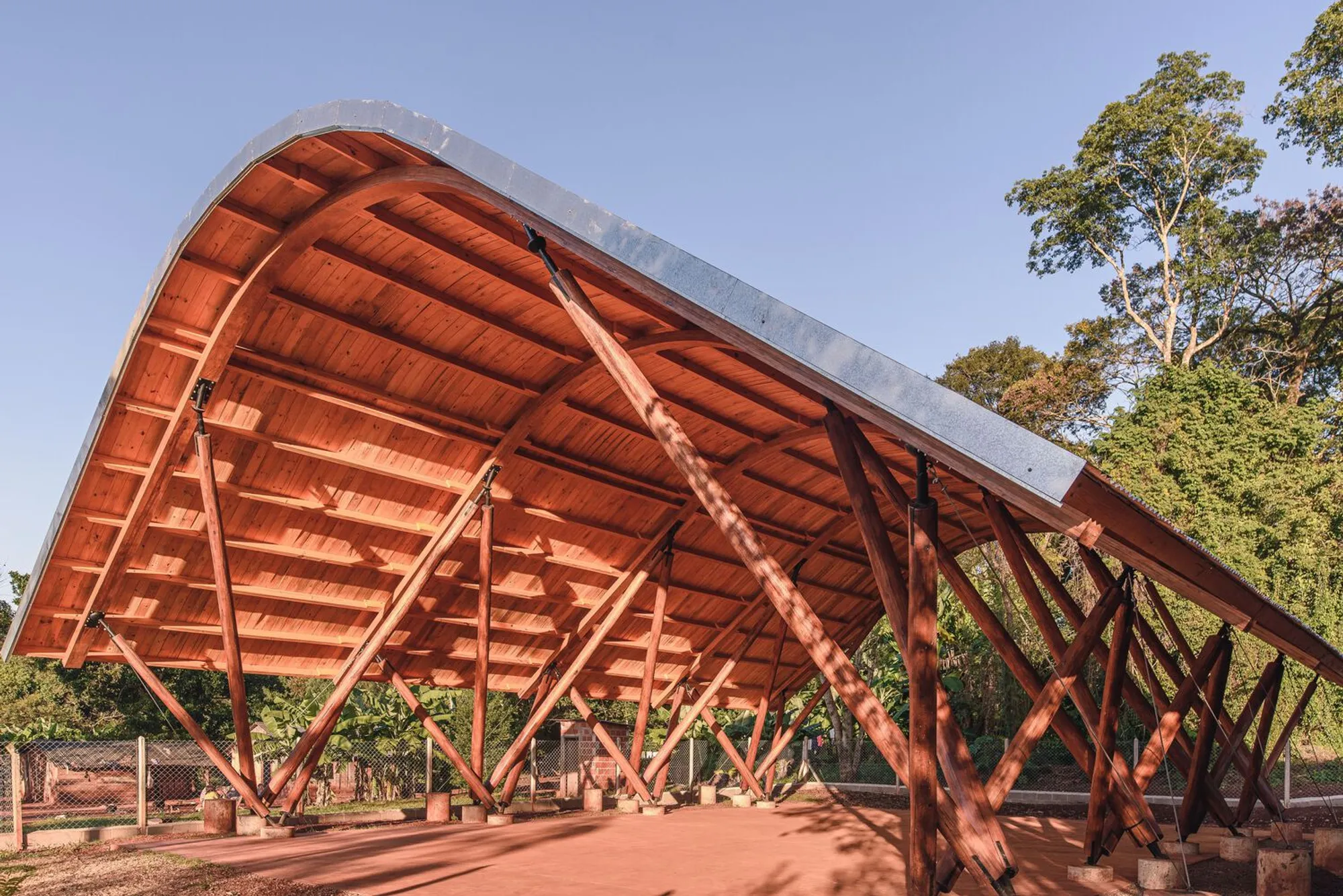
The TAKUAPÍ Covered School Patio is a transformative architectural intervention designed by MASS Arquitectos, Pintaluba, and Kuhn. Situated in the historic Mbya Guaraní community of Takuapí in Ruiz de Montoya, Argentina, this project responds to the urgent need for a multifunctional covered space at the Intercultural Bilingual School Takuapí. Beyond functionality, it embraces indigenous heritage, sustainable design practices, and regional construction wisdom.
Contextual Foundation & Cultural Significance
Takuapí is one of the oldest Mbya Guaraní communities in the region, where traditional building practices were historically rooted in native timber construction. Although the area has since shifted to using foreign wood species due to industrial forestry, the essence of timber architecture remains deeply embedded in the local identity. Recognizing this, the design team sought to revalue wood as a primary material—not just as a structural solution but as a means of cultural and environmental expression.
Material Logic & Sustainable Construction
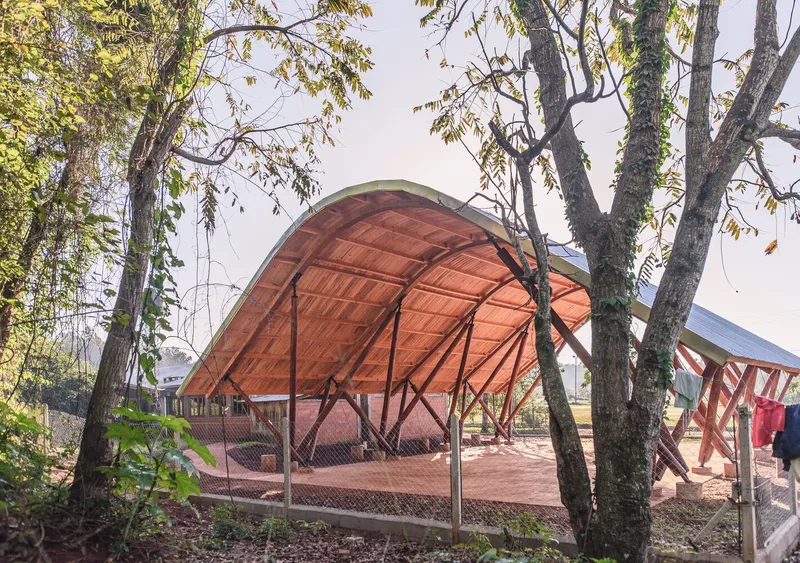
The architectural team employed a low-tech, high-ingenuity approach using local resources and labor. Prioritizing economic feasibility and ecological responsibility, the pavilion was built with:
- Minimal-machining timber for structural and aesthetic consistency
- Recycled steel components strategically used without excess
- Locally adapted construction systems to suit available tools and skills
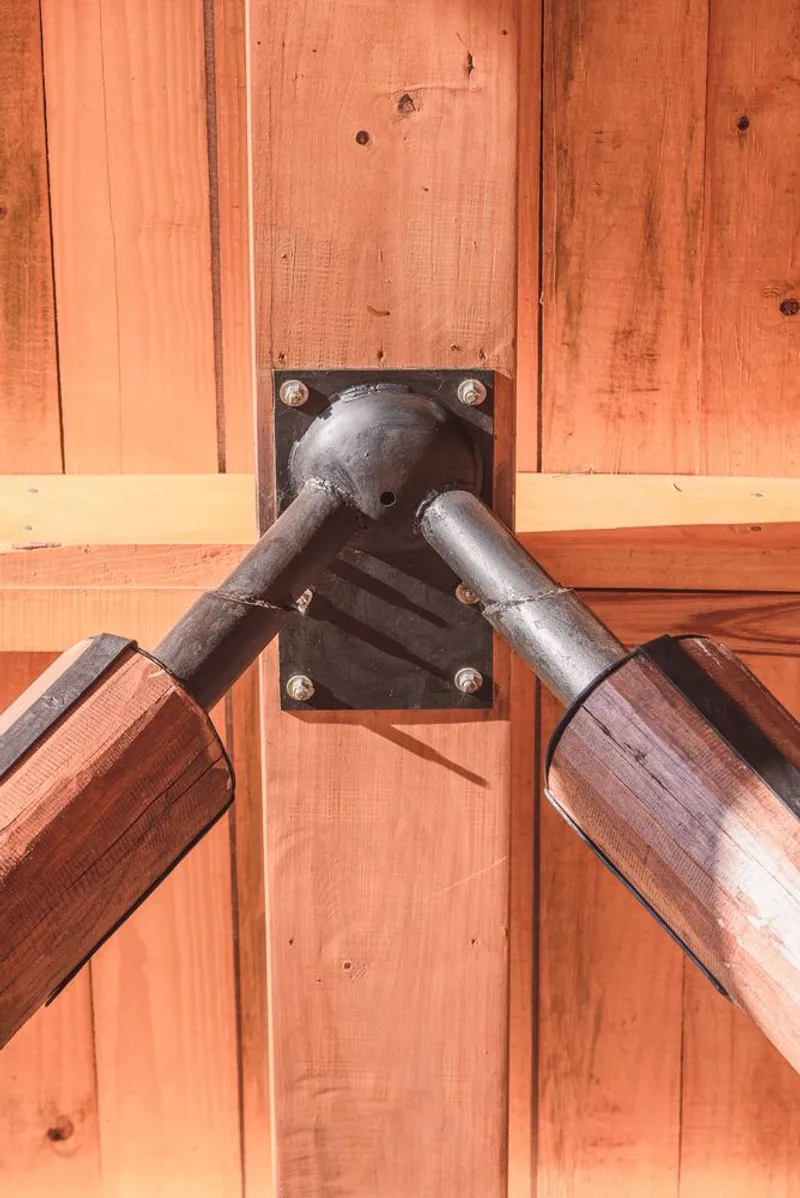
- Custom-fabricated tools and metal joints to simplify complex assemblies
This resourceful strategy enabled community participation and avoided reliance on sophisticated equipment, making it replicable in similar contexts.
Structural Innovation: Four Key Components
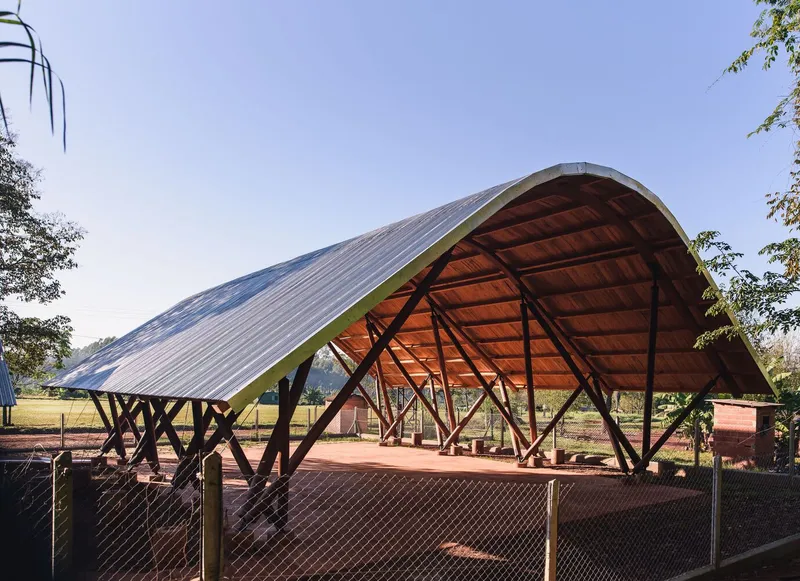
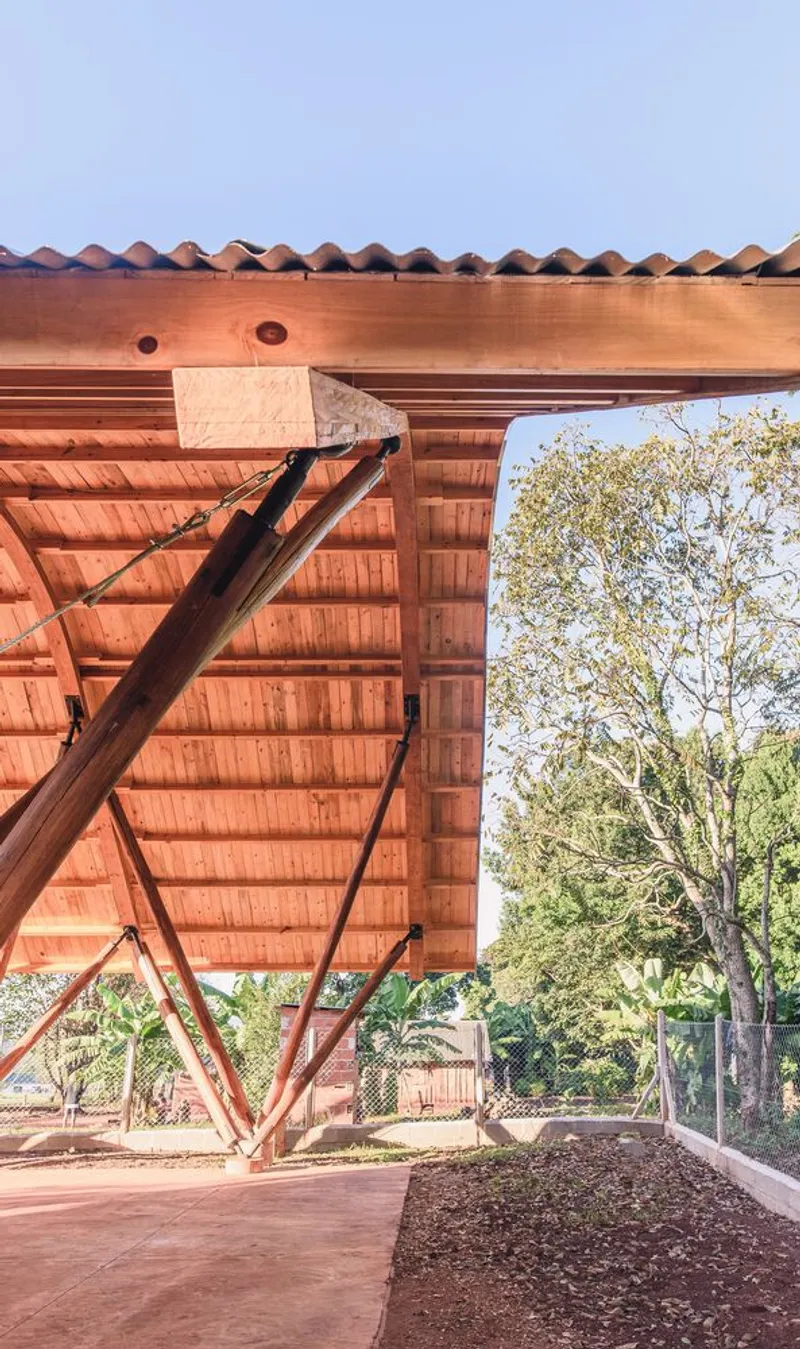
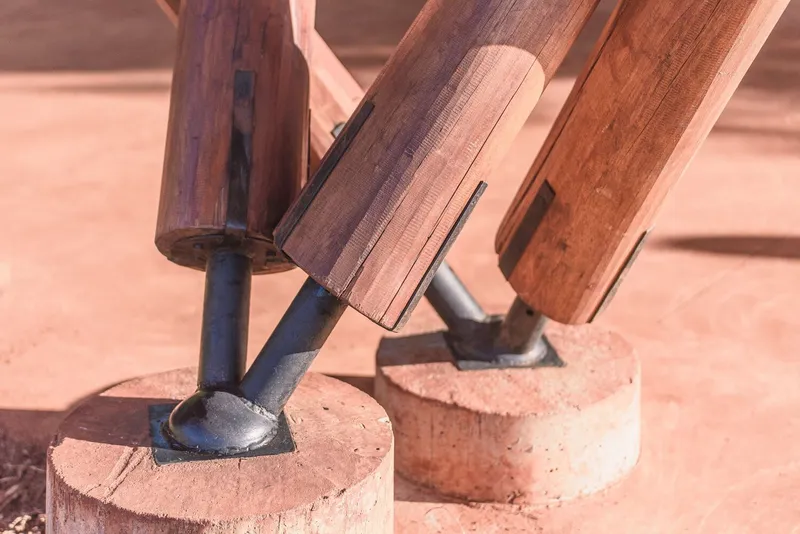
- Concrete Footings: Raise the structure to prevent moisture damage from the ground, addressing local climatic conditions.
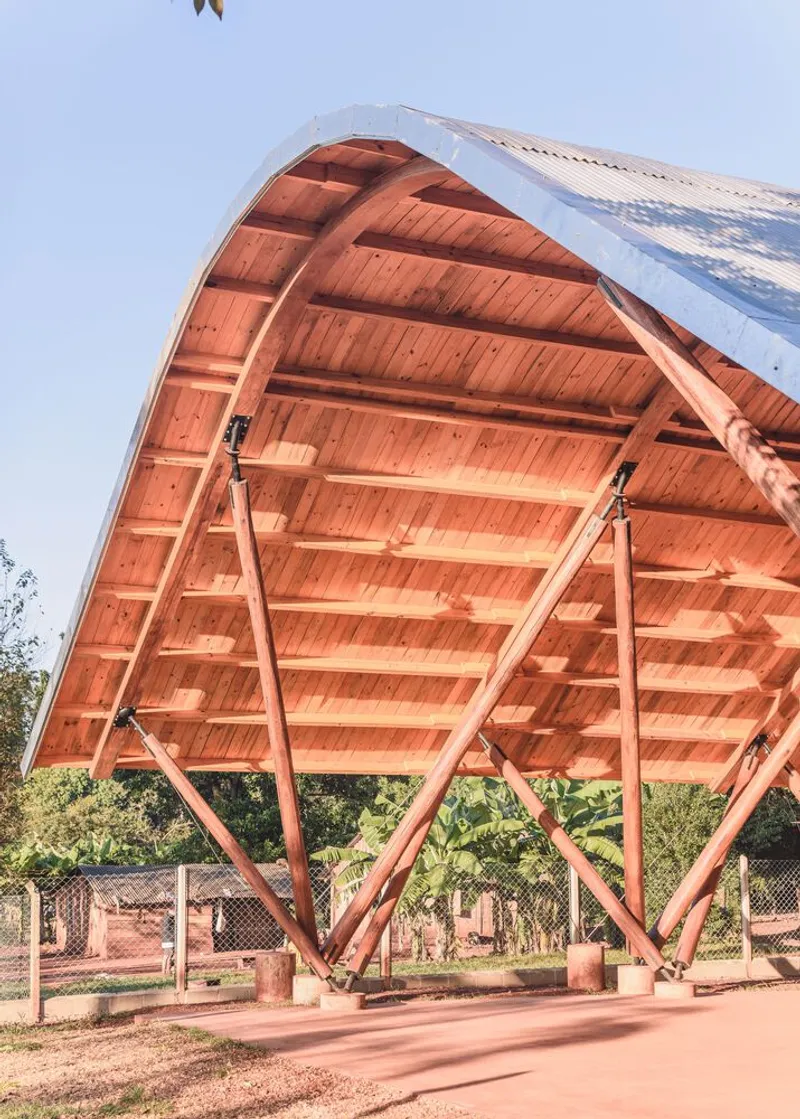
- Lattice Supports: A "spatial mesh" of logs and tension rods—wood elements face inward for protection, metal elements face outward to seal and support.
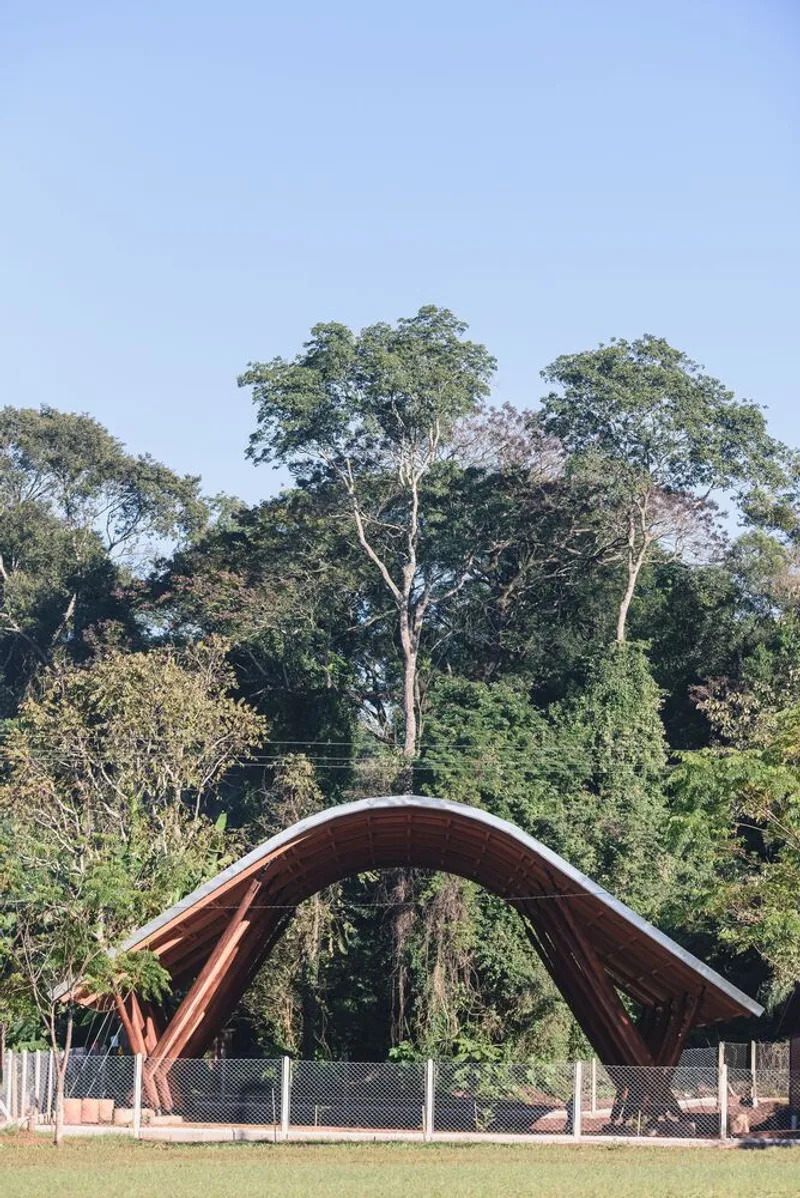
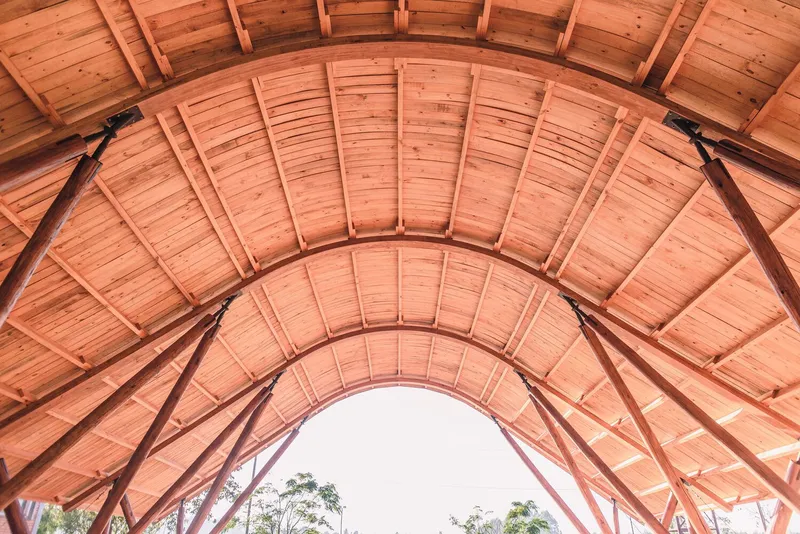
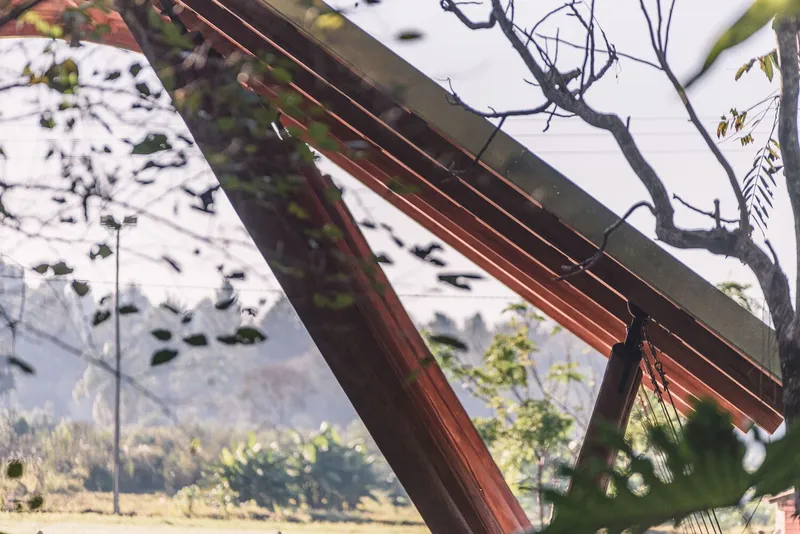
- Laminated Timber Arches: Built in situ, the arches follow a carefully calculated curvature, balancing wood elasticity and load requirements to form a fluid, unified roof envelope.
- Custom Metal Joints: Precision-engineered to simplify connections between elements at varying angles, allowing fast and safe assembly without intricate cuts.
Spatial Outcome: A Place of Belonging
More than a roofed patio, this structure serves as a cultural and educational beacon. It provides a versatile, sheltered space for learning, gathering, and celebrating within the community. The architectural language speaks softly but powerfully—rooted in place, shaped by necessity, and open to the sky.




Popular Articles
Popular articles from the community


The Musturak Paradise: Senior Living Architecture for a Connected Future in Temara, Morocco
The Musturak Paradise reimagines senior living architecture in Temara via private homes, social spaces, culture, community, and shared care.

Hill & Cross Opera: Sculptural Opera House Architecture Shaped by Tallinn’s Landscape and Identity
Hill & Cross Opera reimagines opera house architecture in Tallinn through its sculptural hill, civic plaza, glass wave and a luminous cross.

Play: Fragments of Their World
Familiar architecture becomes modular playground design, creating safe spaces where displaced children can learn, connect, imagine and play.

Conexión: Biophilic Design Reimagines High-Rise Living in Hong Kong
Conexión reimagines high-rise living in Hong Kong through biophilic design, green facades, shared spaces, daylight, water and nature within.


Similar Reads
You might also enjoy these articles


Hodi-Mandai Geram
Project Function: Preservation and revitalization of the Intangible heritage and socio-spatial identity of the Hodi by Housing, Cultural Memory Center, Sacred Grove, landscape, local tourism economy


Olio Towers: A Mid-Rise for Performers That Fuses Housing, Rehearsal, and Stage
Located blocks from Houston's Theater District, this modular tower stacks living units around a central performance atrium.

Oasis: Modular Green Housing Carved into Dhaka's Urban Fabric
A shortlisted Plugin Housing entry reclaims unauthorized settlements in Dhaka with stepped concrete volumes, green roofs, and ventilation-driven design.

Black Hole: A Floating Megastructure for the Post-Physical Era
Emiliano Mazzarotto envisions a spherical, self-scaling arena where e-sports, digital hotels, and holographic stadiums replace traditional public space.


Explore Educational Building Competitions
Discover active competitions in this discipline



Challenge to design public laboratory


Challenge to reimagine the Iron Throne


Photograph architecture without architects


Illustrate the lost glory of Angkor Wat - Render Challenge
Comments (0)
Please login or sign up to add comments
No comments yet. Be the first to comment!