
Taoyuan Elementary School by CUBE DESIGN: A Vertical Urban Oasis Redefining Modern Education in Shenzhen
Vertical urban school in Shenzhen blending nature, flexible learning spaces, and community facilities, redefining education through sustainable, high-density architectural design.

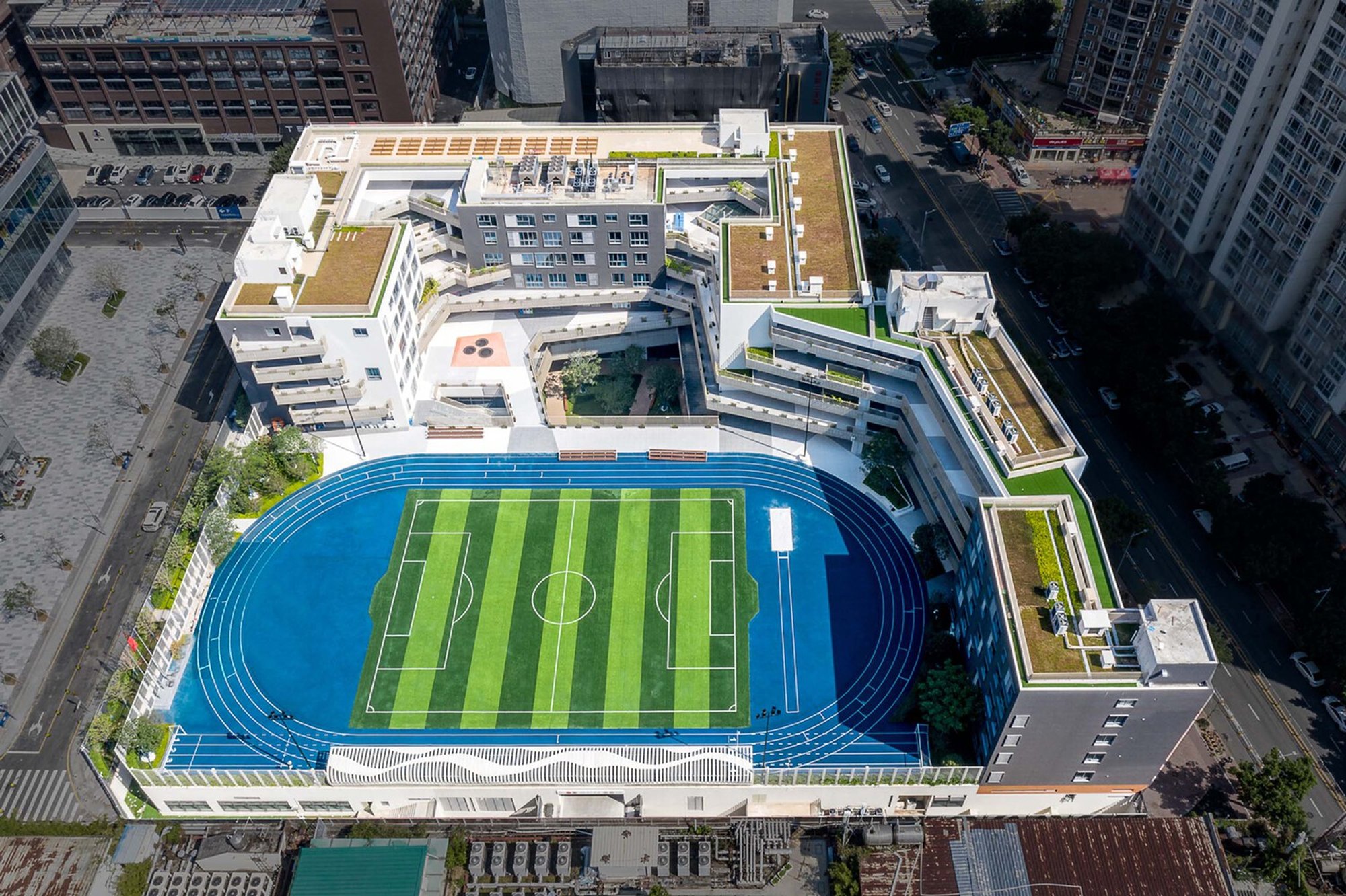
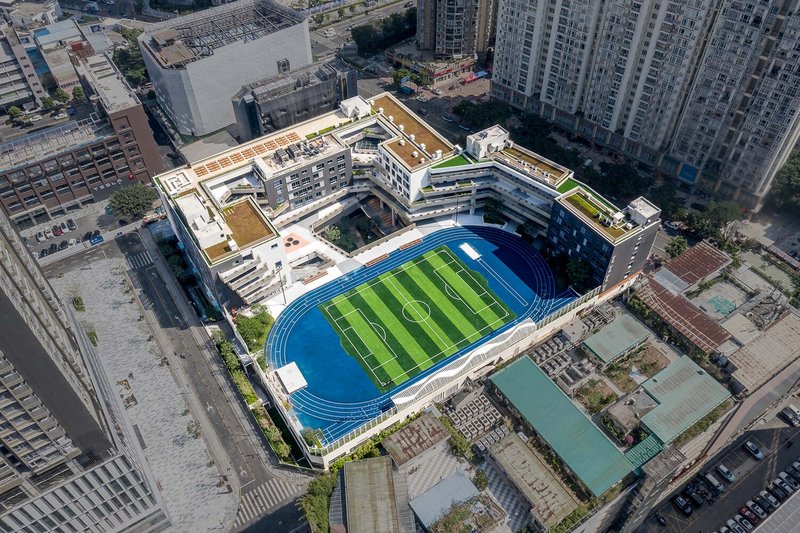
Located in the rapidly evolving district of Sungang in Luohu, Shenzhen, Taoyuan Elementary School by CUBE DESIGN represents a transformative approach to contemporary educational architecture. Designed as a response to high-density urban conditions, this 42,000 m² campus reimagines the traditional school typology by integrating nature, flexibility, and community engagement into a compact vertical framework.
Urban Context and Educational Vision
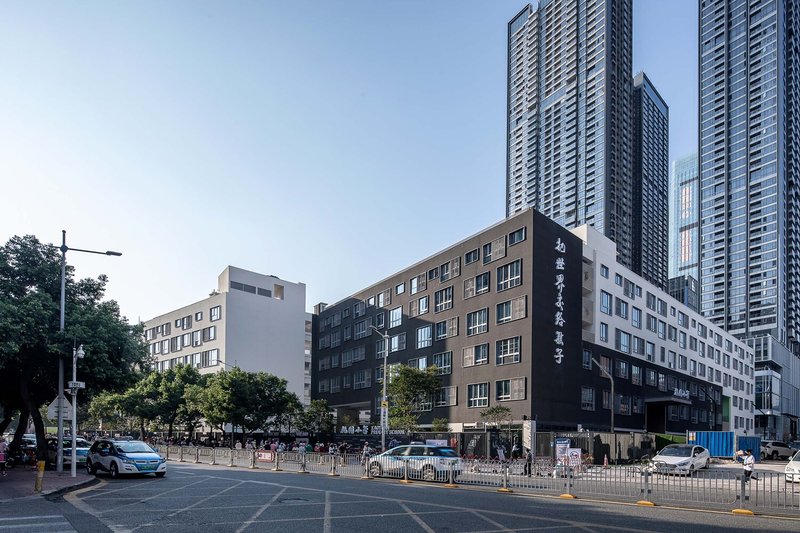
Set within a densely populated neighborhood dominated by residential, industrial, and commercial developments, the project addresses a critical shortage of modern educational infrastructure. Existing nearby schools suffer from aging facilities and limited capacity, making Taoyuan Elementary School a vital addition to the region.
The design aligns with the broader vision of “New Luohu,” which emphasizes innovation, ecological responsibility, and cultural integration. The school is conceived not merely as a place of instruction, but as a benchmark for future-ready education, promoting holistic development while easing enrollment pressures in the district.
Designing Within Density: The “Urban Oasis” Concept
With a site area of approximately 13,000 m² and the requirement to accommodate 36 classes plus 12 flexible classrooms, the project embraces the challenge of high plot ratio. Instead of viewing density as a limitation, CUBE DESIGN transforms it into an opportunity by conceptualizing the campus as a vertical “urban oasis.”
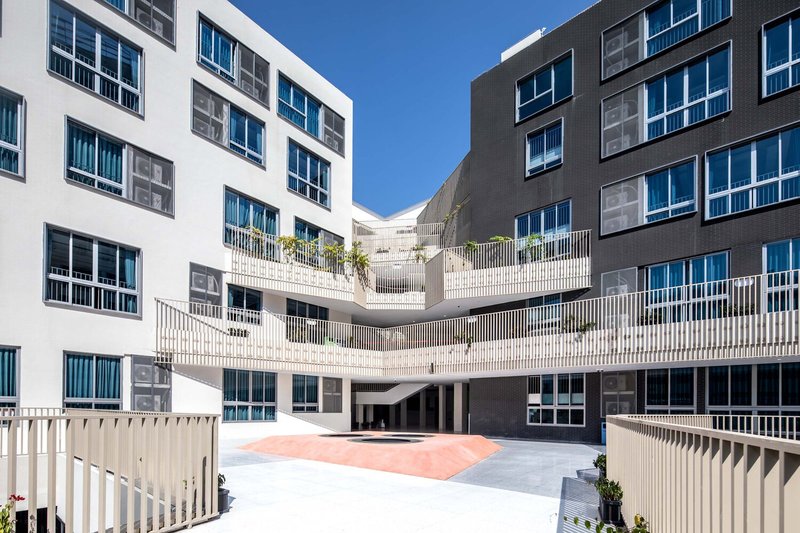
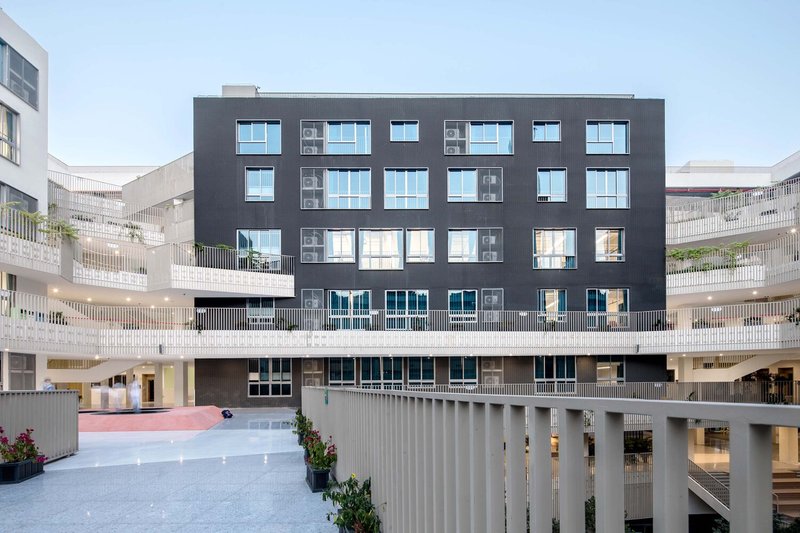
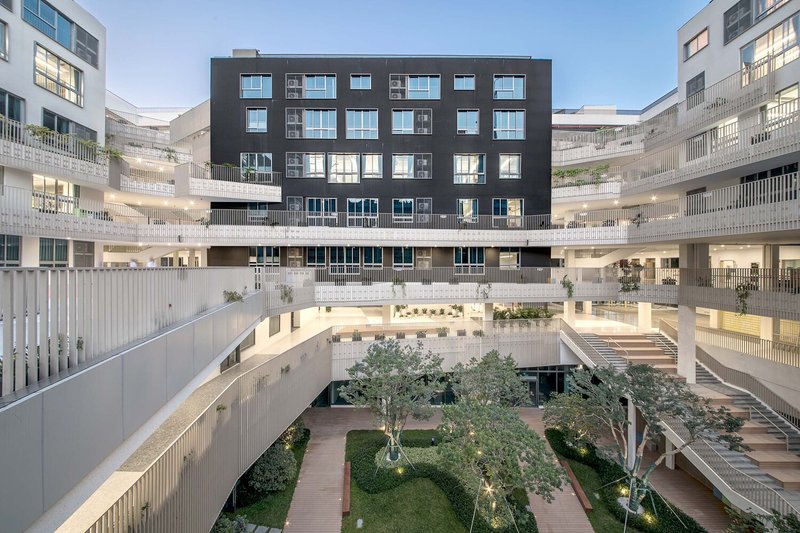
Lush greenery, layered terraces, and open courtyards are integrated into the building mass, ensuring natural ventilation, optimal daylighting, and a strong connection to nature. This approach creates a healthy and stimulating environment where students can explore, interact, and learn beyond traditional classroom boundaries.
Flexible Functional Layout and Shared Spaces
The campus is organized into four primary functional zones: teaching, academic, sports, and living. These zones are reinterpreted through a flexible and shared spatial strategy that allows dynamic interaction between different functions.
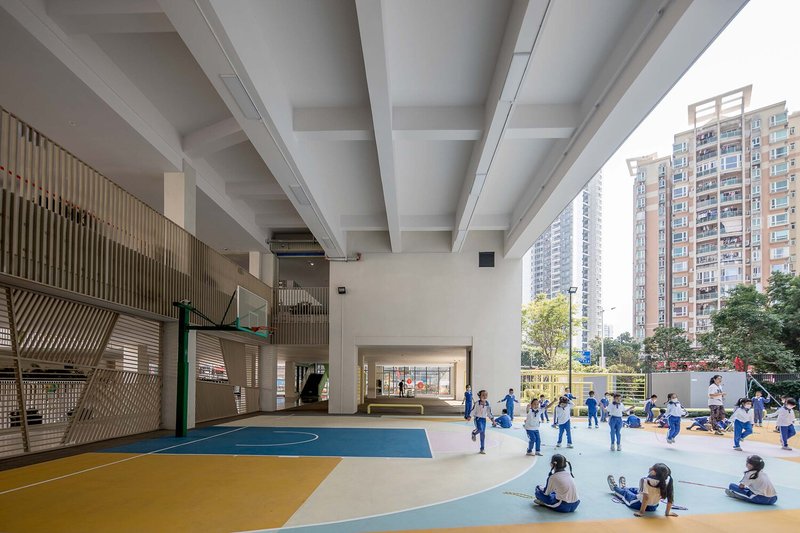
- Lower Levels (Basement & Ground Floors): Designed as shared community spaces, these include facilities such as a library, swimming pool, and basketball courts. These areas can be opened to the public during non-school hours, maximizing resource utilization.
- Middle Levels: Dedicated to teaching and learning, these floors combine classrooms with collaborative and informal learning areas.
- Upper Levels: Reserved for administrative and more private functions, ensuring a clear hierarchy of spatial intimacy.
This vertical zoning enhances efficiency while fostering a sense of openness and connectivity across the campus.
The Four-Level Vertical Spatial Strategy
A defining feature of the project is its innovative “four-level vertical space” system, which reinterprets the concept of ground and activity spaces:
- Underground Shared Level: Houses large-scale cultural and sports facilities, doubling as a community hub.
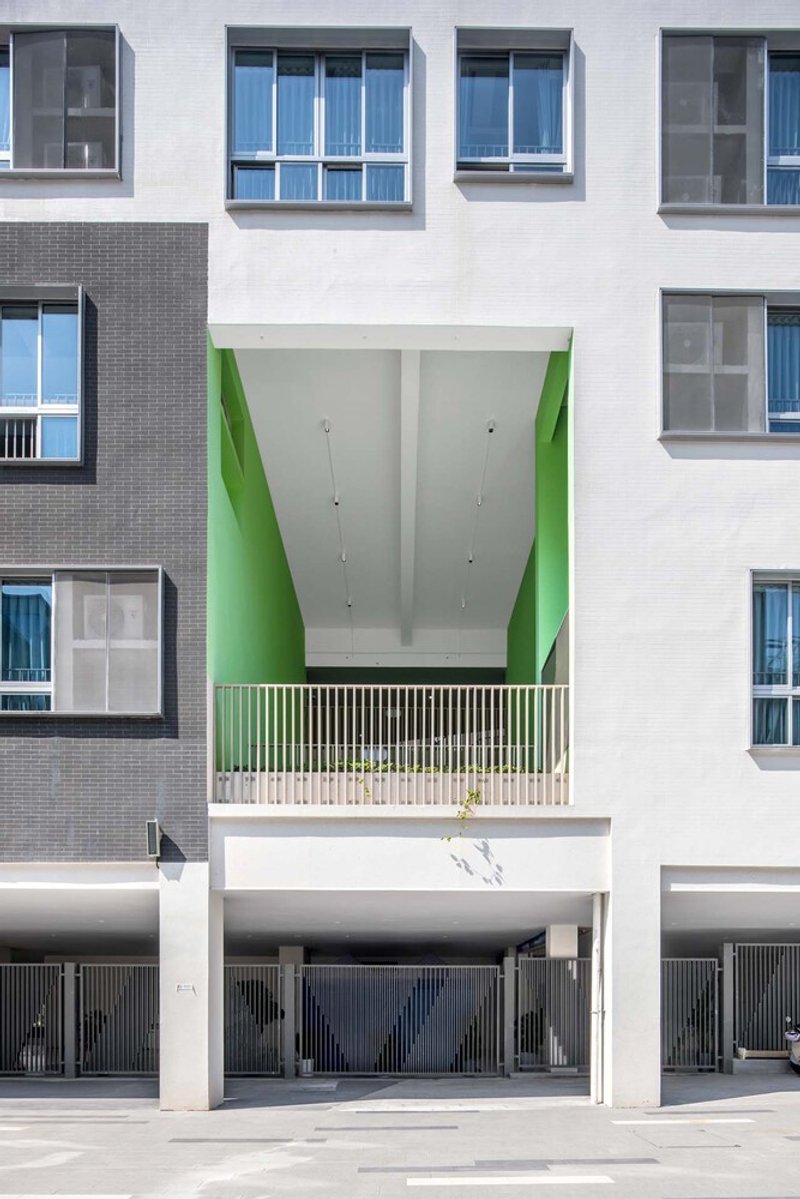
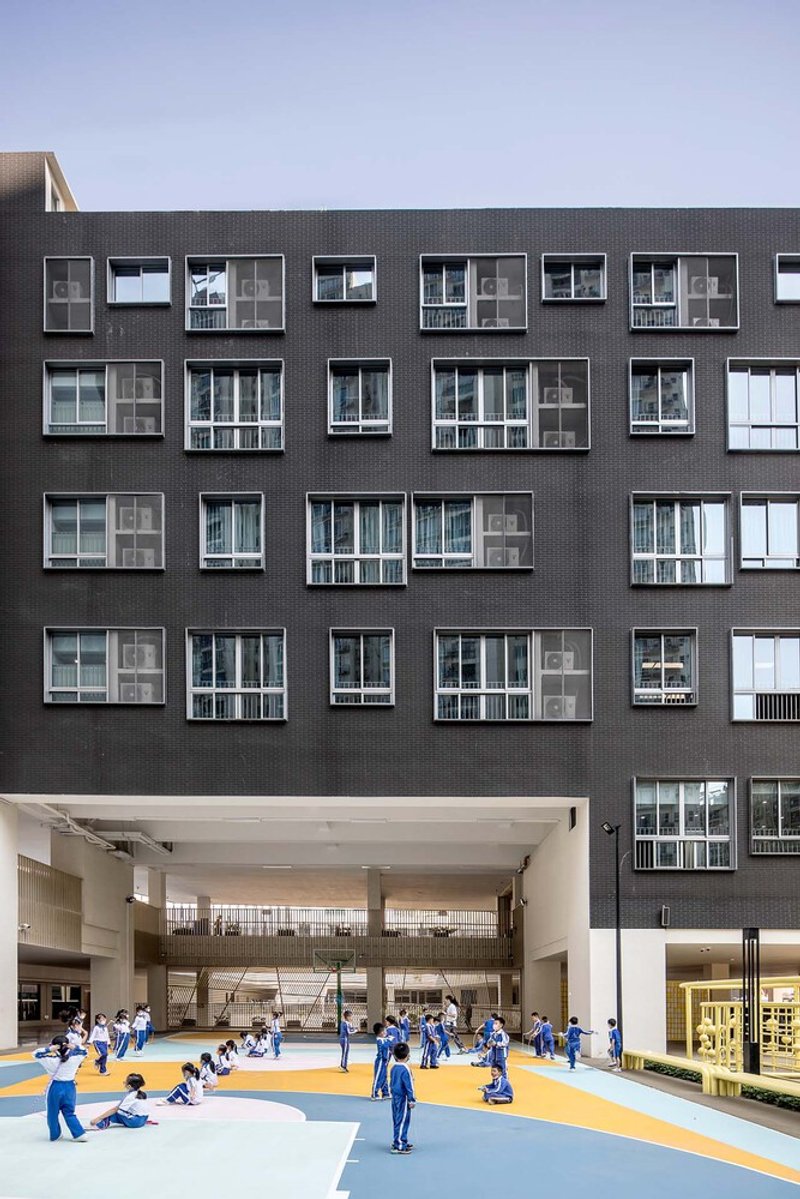
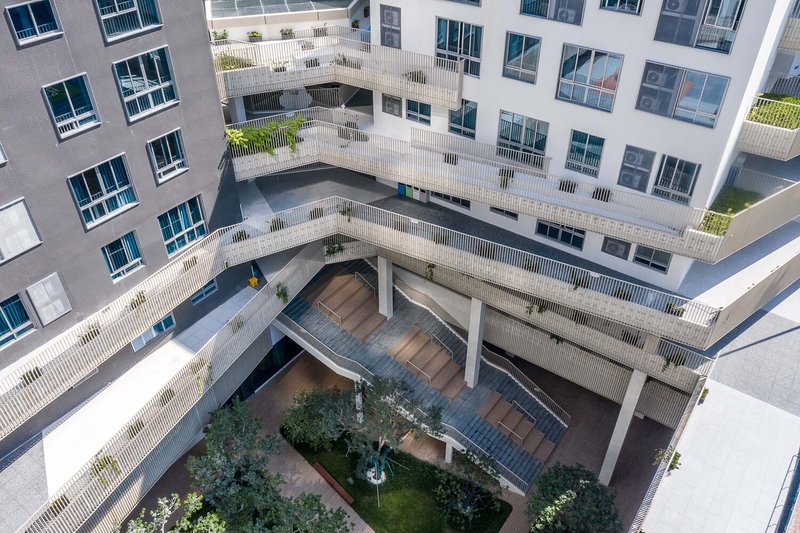
- Ground Vitality Level: A “multi-first-floor” design that merges different levels through courtyards, terraces, and open steps, creating a continuous flow of activity.
- Middle Order Level: Integrates teaching spaces with communication zones and landscape elements, encouraging interaction and collaboration.
- Top Interaction Level: Activates the roof with multifunctional spaces for sports, recreation, and social engagement.
This layered approach maximizes limited land while enriching spatial experiences across different levels.
Stacked Gardens and Landscape Integration
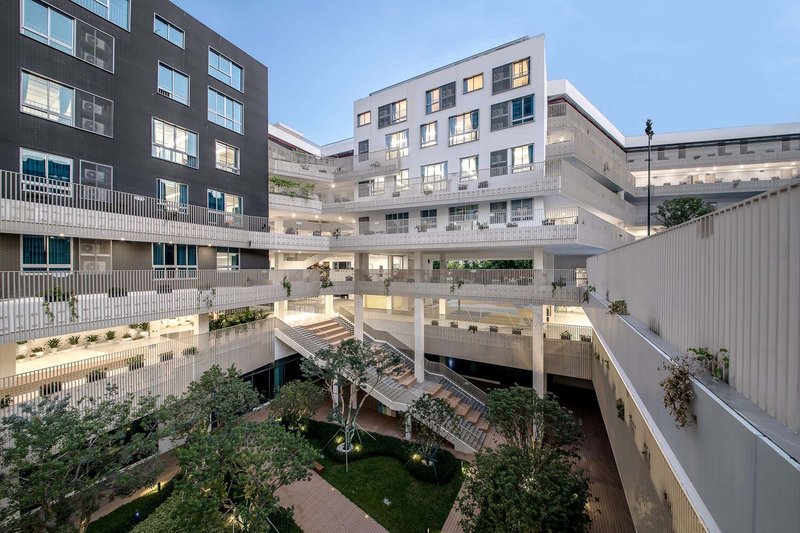
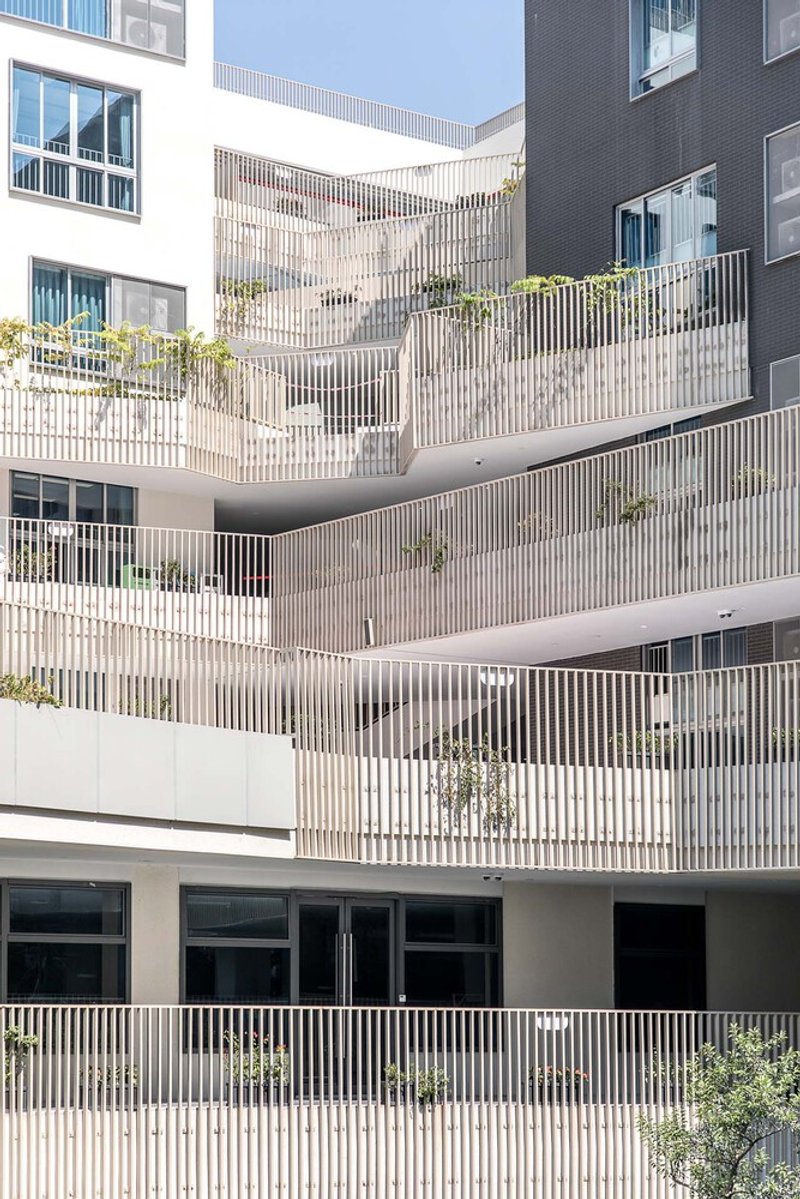
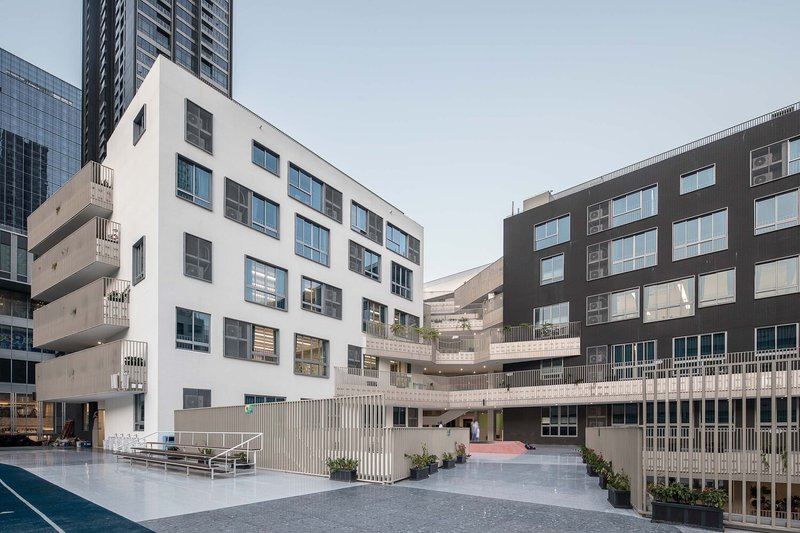
Nature plays a central role in shaping the campus identity. The concept of “stacked gardens” introduces a series of overlapping courtyards and vertical landscapes that permeate the building.
These green spaces:
- Enhance environmental performance through natural cooling and ventilation
- Provide students with accessible outdoor areas on multiple levels
- Create a seamless dialogue between architecture and landscape
The integration of atriums, terraces, and vertical greenery ensures that students remain connected to nature throughout the day, fostering well-being and creativity.
Expanding the Boundaries of Learning
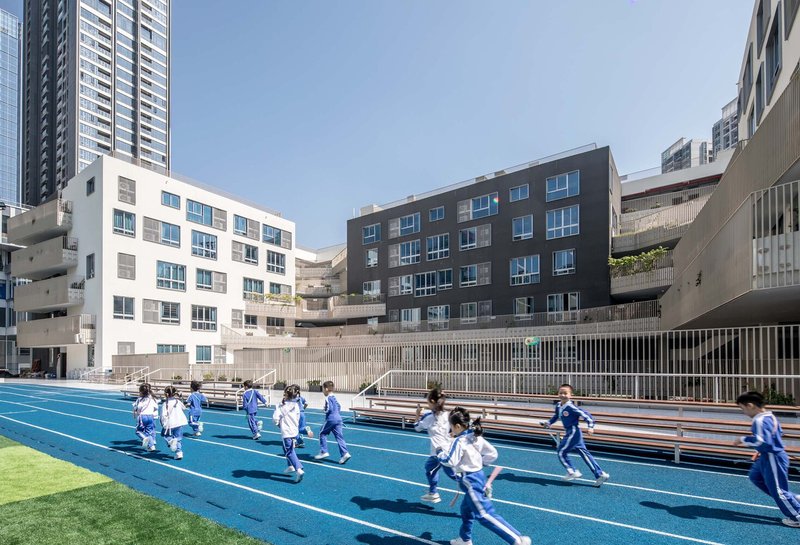
Taoyuan Elementary School challenges conventional educational models by redefining where and how learning occurs. The design extends learning beyond classrooms into corridors, social galleries, reading corners, and discussion zones.
Wide corridors and flexible interfaces replace traditional narrow hallways, transforming circulation spaces into active learning environments. This approach supports diverse teaching methods and encourages peer interaction, collaboration, and informal learning.
Architectural Expression and Material Palette
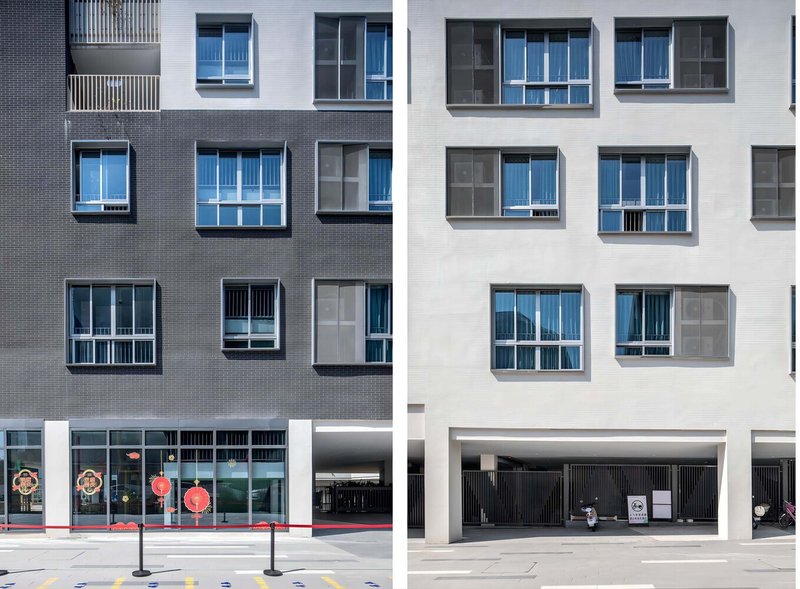
The building’s façade reflects a balance between simplicity and dynamism. A Nordic-inspired palette of black, white, and gray is complemented by strategic bursts of color, creating a visually engaging yet disciplined architectural language.
Inside, warm wood tones establish a მშვიდ and focused learning atmosphere, while vibrant accents: such as blue, orange, and green, define different functional zones and stimulate students’ psychological well-being.
This thoughtful use of color and materiality not only enhances aesthetics but also contributes to spatial clarity and emotional comfort.
A Model for Future Educational Environments
In an era where urban density continues to rise, Taoyuan Elementary School offers a compelling model for sustainable and adaptive educational design. By combining vertical planning, ecological integration, and flexible learning environments, the project demonstrates how architecture can respond creatively to spatial constraints while enhancing user experience.
More importantly, it reaffirms the idea that education extends beyond classrooms, encompassing interactions with nature, community, and diverse spatial experiences.
Taoyuan Elementary School by CUBE DESIGN is more than a school: it is a dynamic ecosystem of learning, nature, and community. Through its innovative design strategies, it successfully transforms a constrained urban site into a vibrant educational landscape that nurtures curiosity, collaboration, and growth.
All photographs are works of
Jinwei Chen




Popular Articles
Popular articles from the community

MAKER architecten Rewire a 1972 Brutalist Dormitory on the VUB Campus as a Living Lab
A modular renovation strategy in Belgium breathes new life into Willy Van Der Meeren's modernist student housing without erasing its concrete bones.
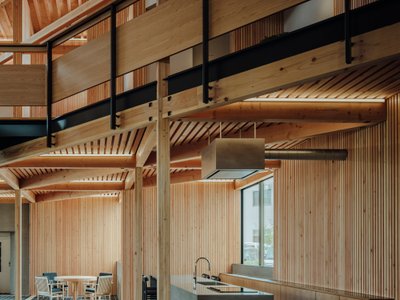
ure LLC Builds a Timber-Framed Suburban Office That Doubles as a Community Living Room in Hiroshima
KItoNOKO wraps sawtooth roofs and corrugated metal around an exposed timber frame to give a commercial district a new civic anchor.
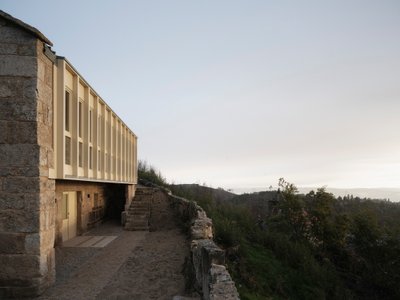
Three Architects Stitch a Social Center into a Crumbling Galician Hamlet
In Muimenta, Spain, timber and plywood volumes graft onto granite ruins to anchor a rural revitalization effort.
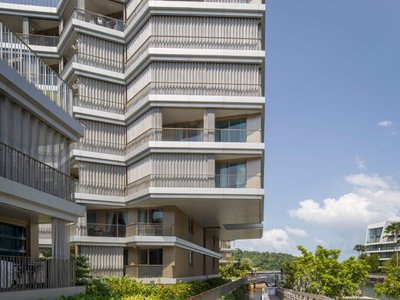
KCAP and DCA Architects Build a Stepped Urban Village on Singapore's King's Dock Waterfront
A 26,000 square meter residential development in Singapore trades tower isolation for terraced courtyards and a planted promenade along the harbor.


Similar Reads
You might also enjoy these articles
Three Architects Stitch a Social Center into a Crumbling Galician Hamlet
In Muimenta, Spain, timber and plywood volumes graft onto granite ruins to anchor a rural revitalization effort.
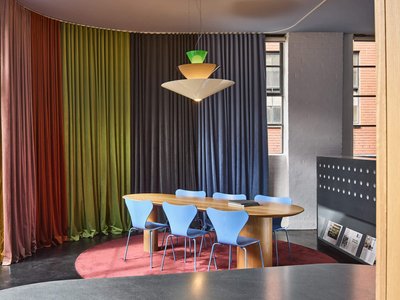
IF Architecture Designs Its Own Collingwood Studio as a Textile-Wrapped Incubator for Ideas
A 90-square-metre office in Melbourne's Collingwood uses layered curtains and color to turn a compact footprint into a laboratory for design.
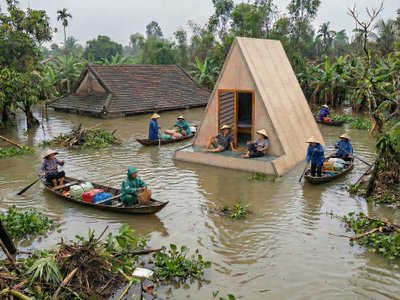
CTA | Creative Architects Designs Triangular Floating Shelters for Vietnam's Flood-Ravaged Communities
A timber-louvered triangular shelter rises on concrete pontoons to keep Vietnamese families safe and together when floodwaters come.
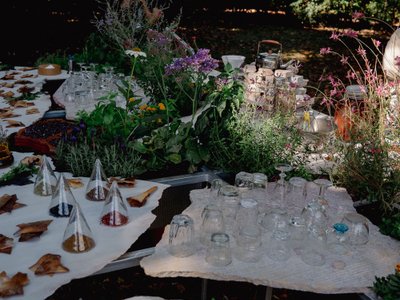
Francisca Sottomayor and Fahrenheit.Works Build a Living Kitchen Where Plants Cook Alongside People
A multispecies dining installation in Porto transforms a communal table into a working ecosystem of herbs, fire, and shared meals.
Explore Architecture Competitions
Discover active competitions in this discipline




The International Standard for Design Portfolios


The Global Benchmark for Architecture Dissertation Awards


The Global Benchmark for Graduation Excellence


Challenge to design public laboratory
Comments (0)
Please login or sign up to add comments
No comments yet. Be the first to comment!