
TARANG Pavilion by The Grid Architects: A Monument to Sustainable Architecture, Craftsmanship & Biophilic Design
TARANG Pavilion blends traditional craftsmanship with sustainable design, creating India’s largest terracotta vault using local materials and biophilic architecture.

A Landmark in Earth-Conscious Architecture
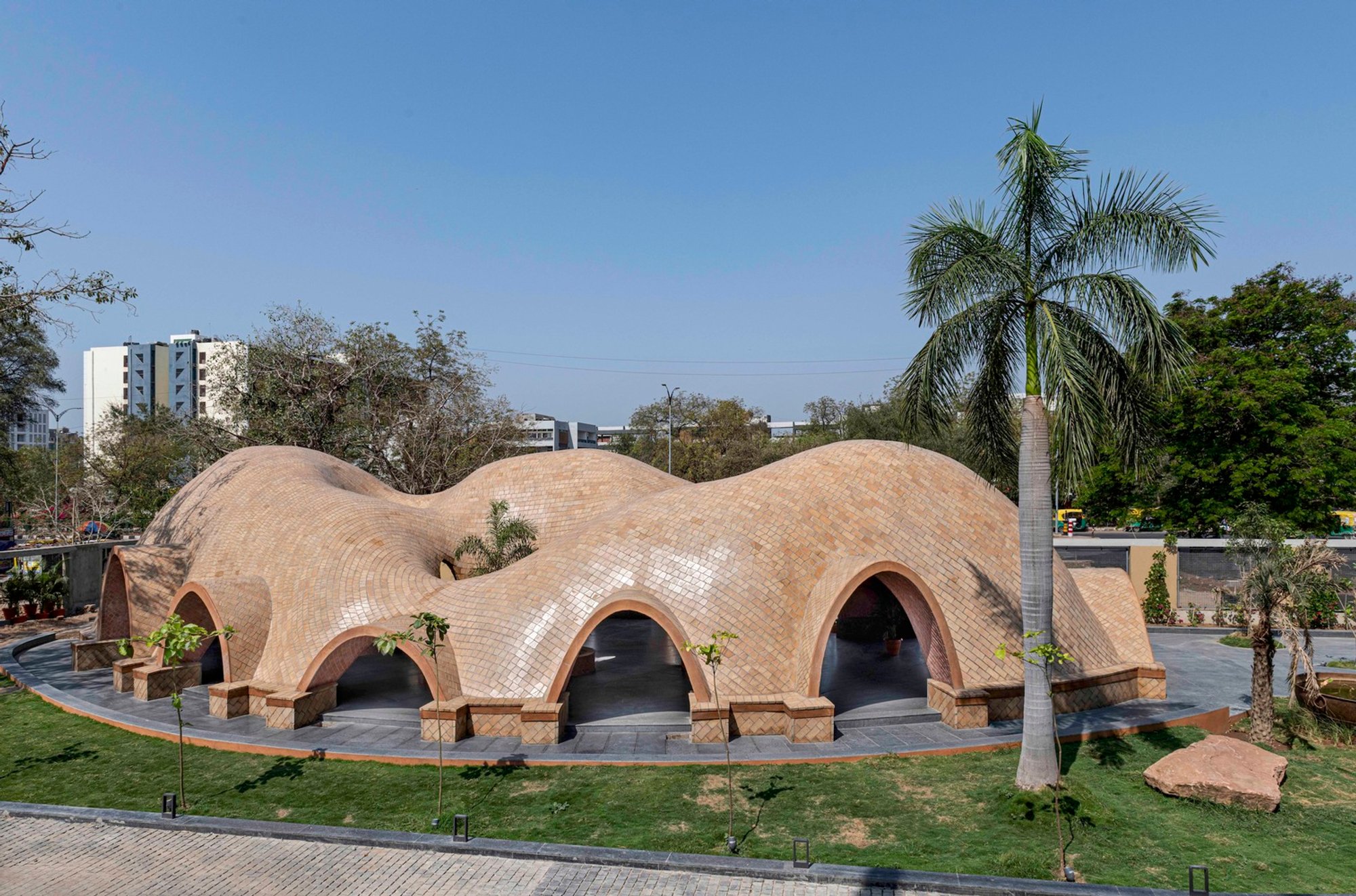
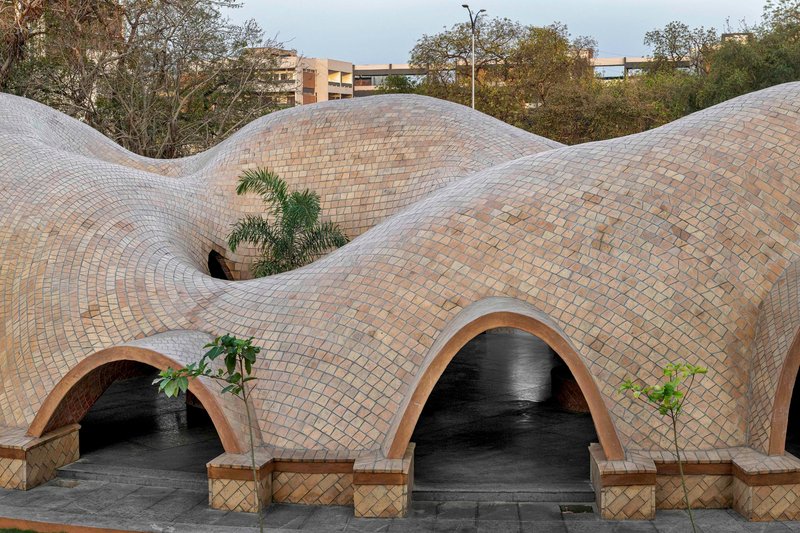
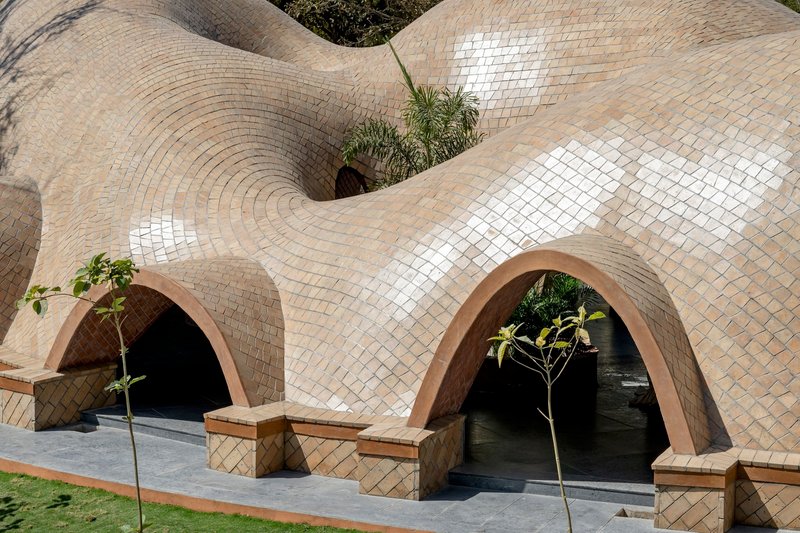
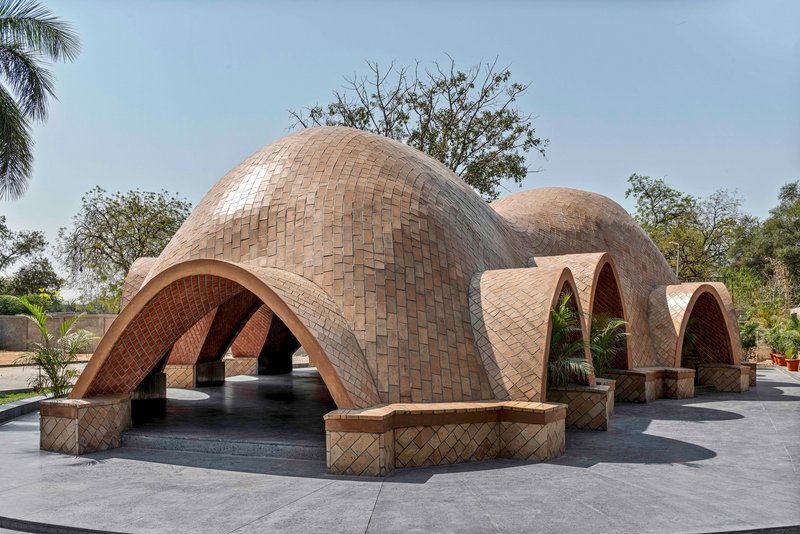
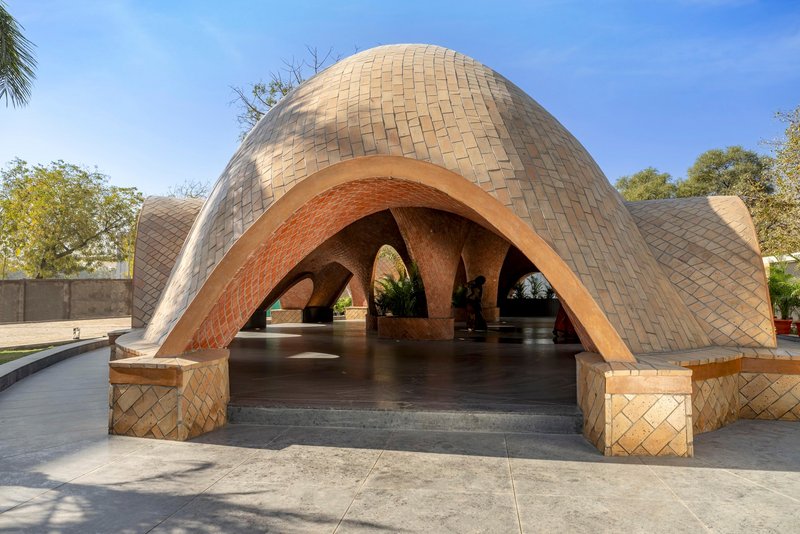
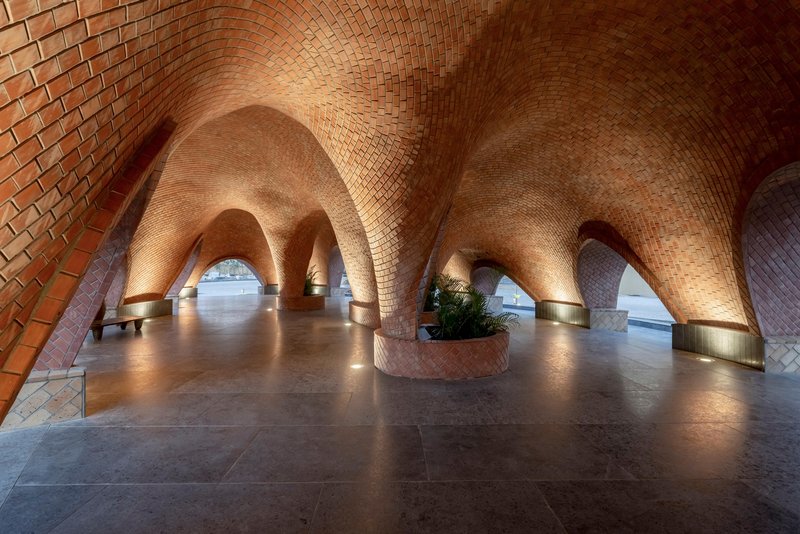
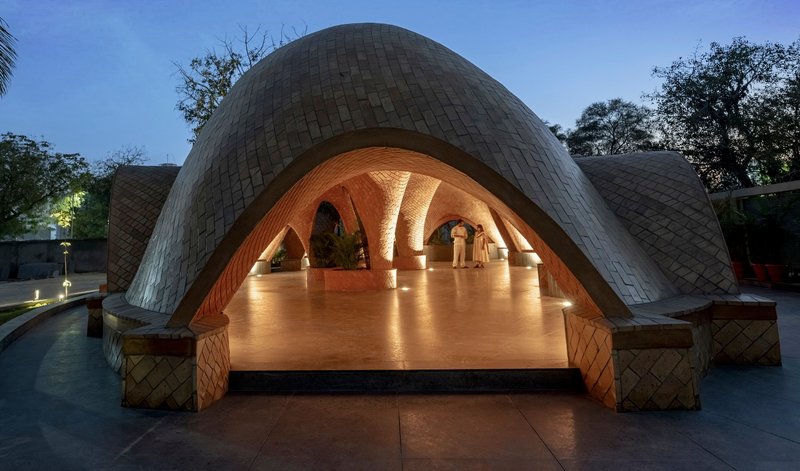
The TARANG Pavilion stands as a monumental achievement in contemporary Indian architecture. Designed by The Grid Architects, this awe-inspiring installation is currently India's largest terracotta tile arched vault structure, built without beams, reinforcement, or shuttering systems. Located in Gandhinagar, Gujarat, the pavilion defies conventional engineering by harmonizing ancient building methods with biophilic design principles, setting a new standard for sustainable architecture in India.
A Philosophy Rooted in Time and Nature
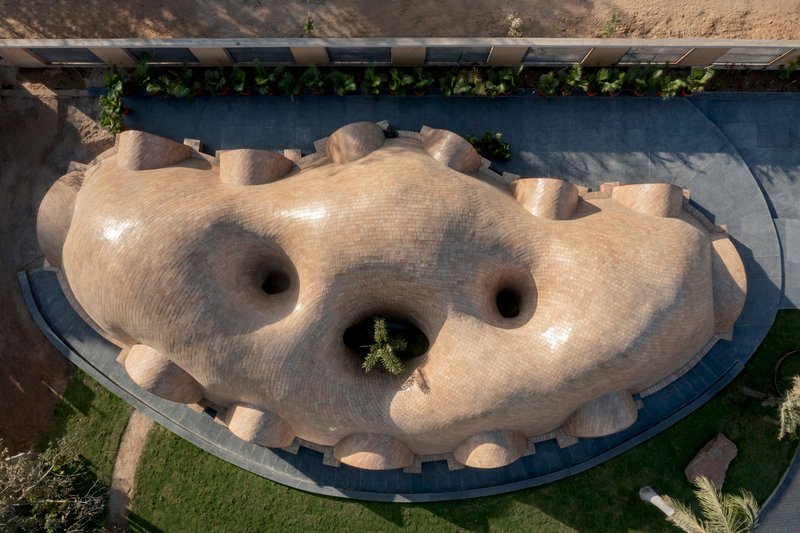
“TARANG” – meaning "wave" – evokes continuity, harmony, and timelessness. The design cultivates a silent dialogue between past and present, nature and human craft, permanence and transience. It is an architectural meditation crafted from natural elements and traditional wisdom.
In an age dominated by high-tech solutions, TARANG celebrates manual craftsmanship and intuitive building practices. Constructed without the use of digital tools or complex formwork, the pavilion embodies an organic, nature-inspired form built entirely by hand. It is a soulful example of slow architecture—a response to the urgent need for eco-sensitive design.
Spatial Flexibility and Intent
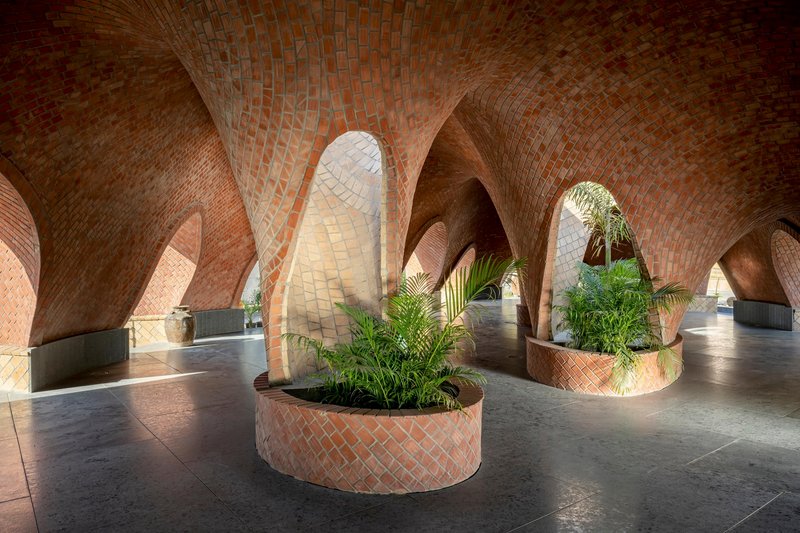
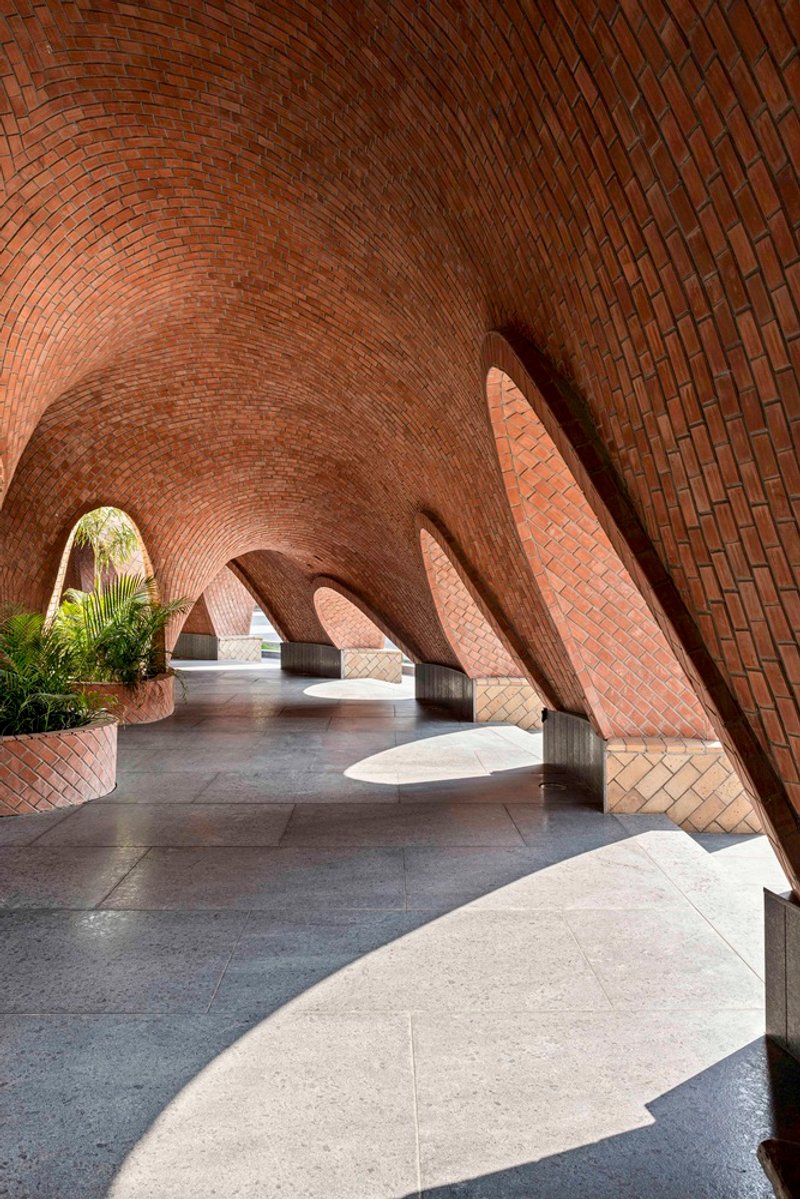
The pavilion was envisioned as a multi-functional cultural space—an immersive gallery, a gathering zone, and an evolving platform for exhibitions and performances. Every curve, void, and wall in the structure flows like a wave, accommodating varied interactions and sensory experiences.
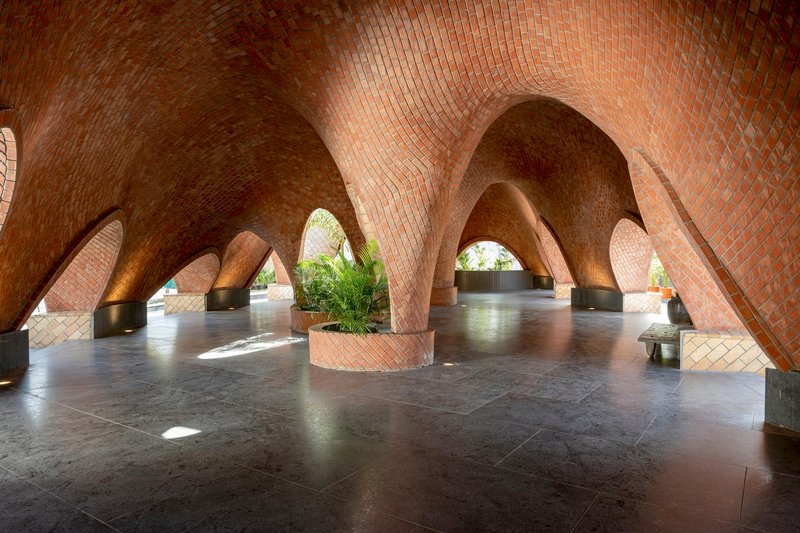
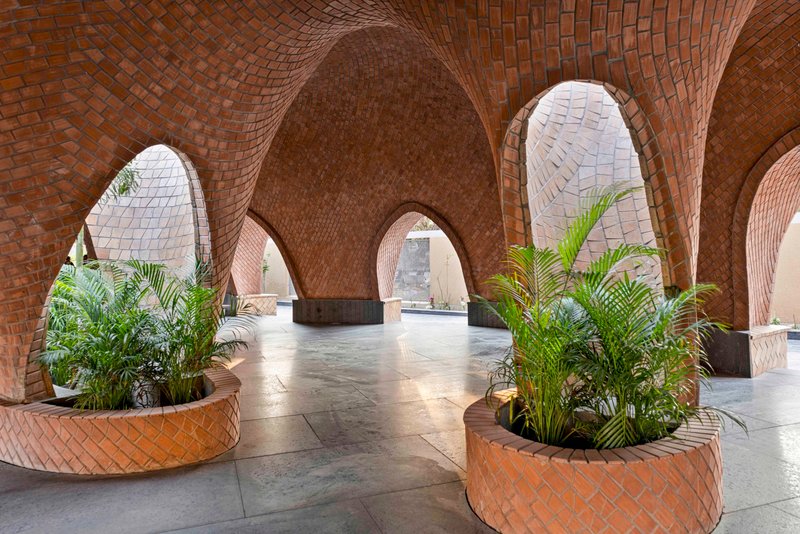
Its biophilic form—a series of soft undulating terracotta arches—encloses a tranquil environment where light filters softly, wind flows gently, and silence speaks volumes. The brick-vaulted interiors, devoid of columns or beams, emphasize open space and organic rhythm, allowing users to adapt the space for different uses and moods throughout the day.
A Model for Sustainable Construction
Sustainability is deeply embedded in every brick of TARANG. The project sourced locally available, low-embodied energy materials like terracotta, sandstone, and Kotah stone. This material selection significantly reduces the carbon footprint of construction while honoring India’s rich heritage of indigenous building methods.
The Grid Architects collaborated with traditional artisans and masons, upskilling them and reviving nearly lost earth-based construction techniques. The terracotta vaults, assembled by hand, not only embody durability but also contribute to passive thermal regulation, making the space comfortable year-round even in harsh Indian climates.
Design That Sings with Nature
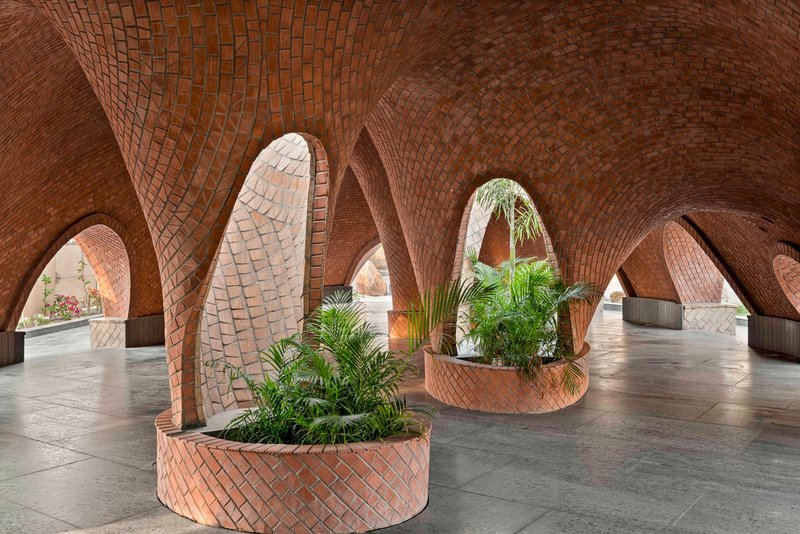
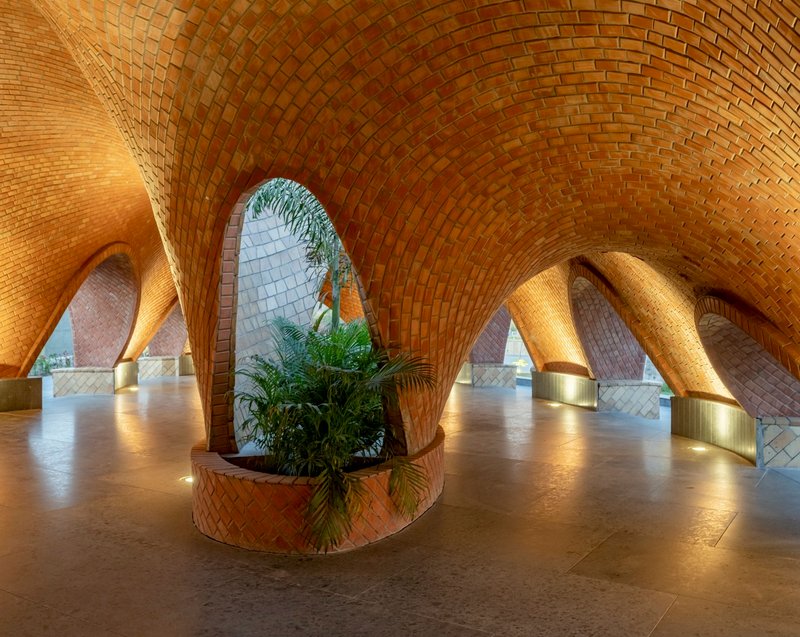
As light and shadows dance across the curving interiors, TARANG becomes alive. The absence of rigid corners, the acoustic resonance of earthen materials, and the ever-changing patterns of sunlight create a meditative, immersive space. It invites one to pause, reflect, and reconnect—not just with architecture, but with the earth itself.
The built form appears less like a structure and more like an extension of the land, as if the pavilion has organically emerged from the soil. The design promotes spatial harmony, where walls are waves, ceilings breathe, and every moment spent inside becomes a serene experience.
Artistic Interpretation Through Film
The TARANG Pavilion has also been immortalized in a short architectural film that explores the pavilion’s emotional and symbolic depth. Dancers interpret the flowing forms through movement, echoing the fluid grace of the vaulted arches. The film serves as an expression of the human longing for connection—between people, materials, and the environment.
Values That Build More Than Structures
The Grid Architects—Snehal and Bhadri Suthar—infused the TARANG Pavilion with values rooted in aesthetics, ethics, and a spiritual connection to nature. The pavilion reflects a deep respect for Mother Earth, a celebration of craftsmanship, and an appreciation for cultural heritage. It represents an architectural vision that is inclusive, sustainable, and timeless.
Final Reflection
The TARANG Pavilion is not just an architectural installation; it is a philosophy made tangible. It reminds us that architecture can be soulful, craft can be sacred, and design can inspire change. As India faces growing ecological challenges, structures like TARANG light the way forward—quietly powerful, environmentally responsible, and deeply human.
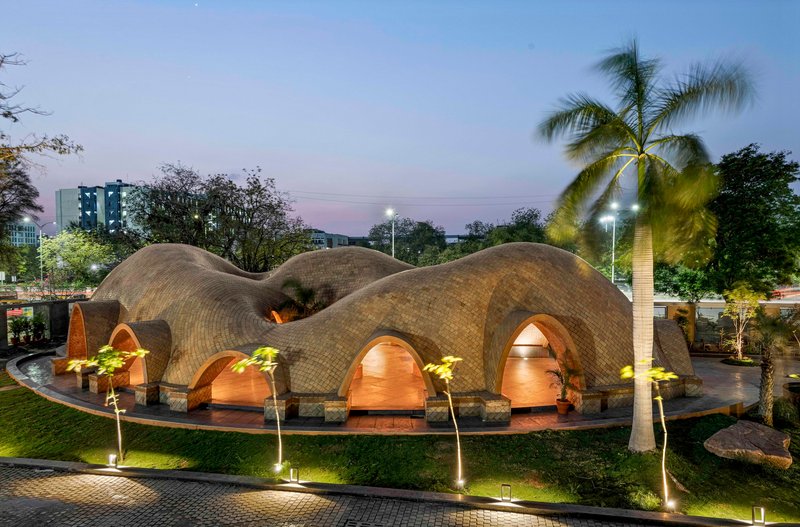
All the photographs are works of Photographix, Vinay Panjwani




Popular Articles
Popular articles from the community

Takeshi Hosaka Architects Suspends a Concrete Cross Above a Yokohama Cemetery
A 28-square-meter burial renovation in Yokohama lifts the symbol of resurrection into the sky so mourners see it against heaven.
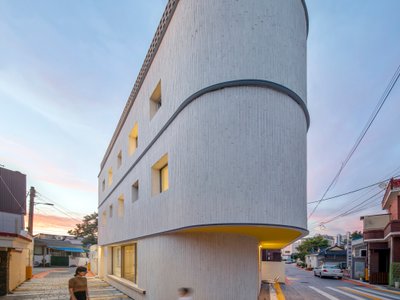
YOAP Architects Round a Corner in Yeongcheon with a Cylindrical Community Hub
A 197-square-meter brick and ribbed-clad tower turns a forgotten alley corner in South Korea into a public garden with a low threshold.
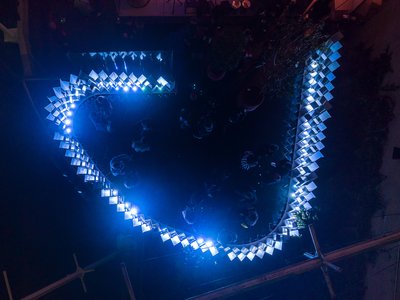
Rojkind Arquitectos and Think Parametric Build a Glueless Pavilion from 67 Interlocking Panels
A serpentine fiber-cement installation in Chapultepec Park celebrates a decade of architectural media in Mexico City.
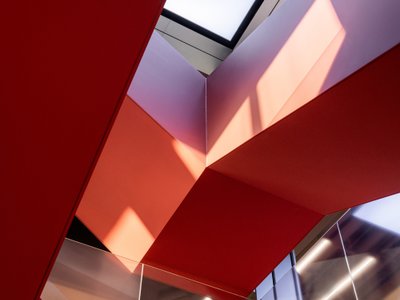
Ippolito Fleitz Group Identity Architects Turn Eight Floors in Shanghai into a Vertical Creative City
Publicis Groupe's new headquarters in Xintiandi reimagines the office as a courtyard-driven urban landscape stacked across eight floors.


Similar Reads
You might also enjoy these articles

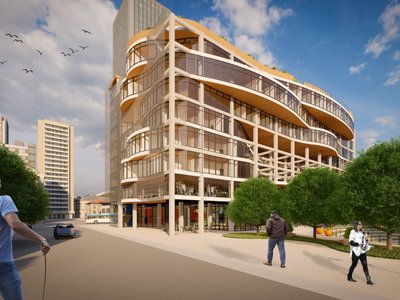
Olio Towers: A Mid-Rise for Performers That Fuses Housing, Rehearsal, and Stage
Located blocks from Houston's Theater District, this modular tower stacks living units around a central performance atrium.
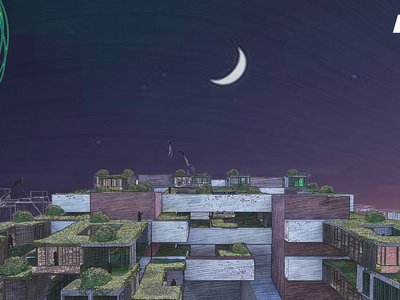
Oasis: Modular Green Housing Carved into Dhaka's Urban Fabric
A shortlisted Plugin Housing entry reclaims unauthorized settlements in Dhaka with stepped concrete volumes, green roofs, and ventilation-driven design.

Black Hole: A Floating Megastructure for the Post-Physical Era
Emiliano Mazzarotto envisions a spherical, self-scaling arena where e-sports, digital hotels, and holographic stadiums replace traditional public space.
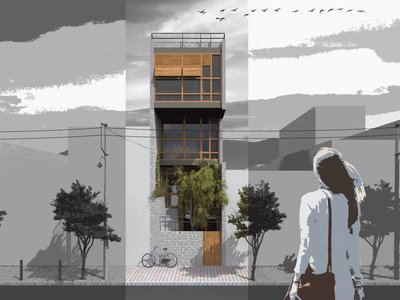
Compact & Sustainable Living in Piraeus: A Four-Level Family Home Built Around Light and Air
A narrow townhouse in one of Greece's densest port cities uses a central atrium and passive strategies to house three generations under one roof.


Explore Architecture Competitions
Discover active competitions in this discipline




The International Standard for Design Portfolios


The Global Benchmark for Architecture Dissertation Awards


The Global Benchmark for Graduation Excellence


Challenge to design a portable theatre
Comments (0)
Please login or sign up to add comments
No comments yet. Be the first to comment!