
Taylor Reynolds Architects Graft a Double-Height Plywood Pavilion onto a Century-Old Melbourne Cottage
In Preston's inner suburbs, a modest timber villa gains a gabled rear addition that trades lean-tos for light and height.

A hundred-year-old timber cottage in Preston, one of Melbourne's inner northern suburbs, had been limping along with a series of decrepit lean-tos tacked onto its rear: a cramped kitchen, a dining room that barely functioned, a laundry, and an outdoor toilet. The front rooms were fine, three bedrooms and a living room arranged in the plain logic of a Victorian worker's villa. The back, however, was falling apart. Taylor Reynolds Architects, led by Jeremy Reynolds and Lauren Taylor, chose not to demolish the entire house but to keep the existing villa intact and replace only the failing additions with a new gabled volume that brings an entirely different spatial quality to the site.
What makes Presti and Billy's House compelling is not the strategy of front-keep, rear-replace, which is common enough in Australian residential work, but the specific way the new volume negotiates its 1000-square-metre north-facing site. The rear yard faces south, hemmed by tall mature trees that cast deep shade. Rather than sprawling outward and losing the garden, the architects pushed the addition upward into a double-height gabled form. This single move captures tall views to the south through generous glazing while pulling northern light into the core of the plan via a linking courtyard. The result is a 140-square-metre intervention that feels far larger than its footprint suggests.
A New Volume in Metal and Timber
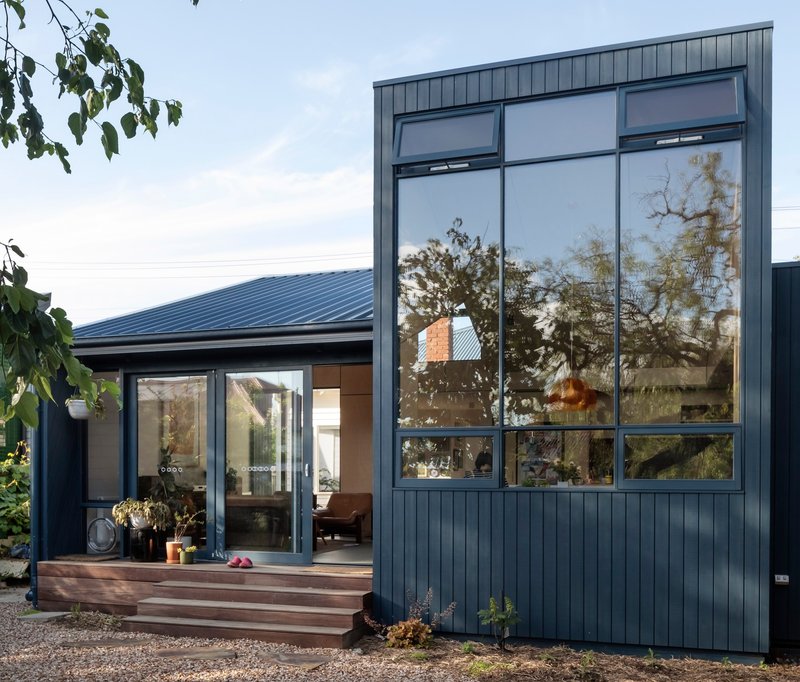
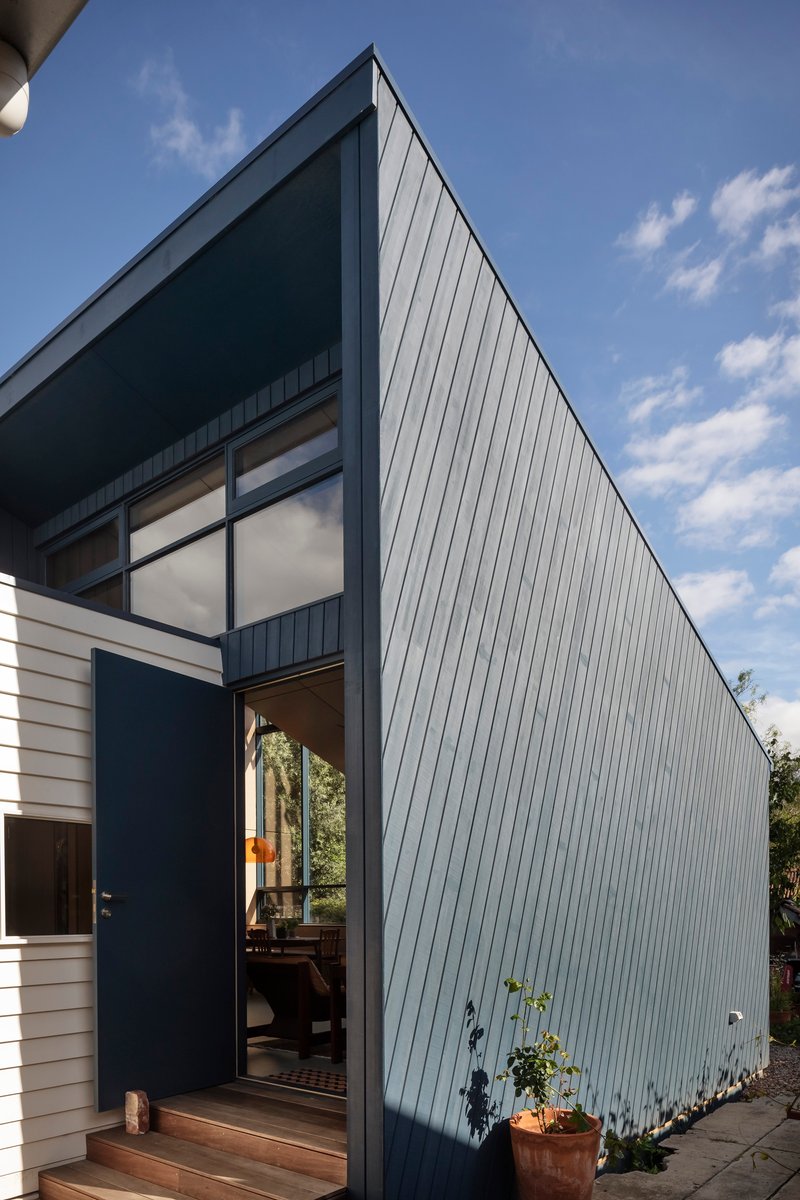
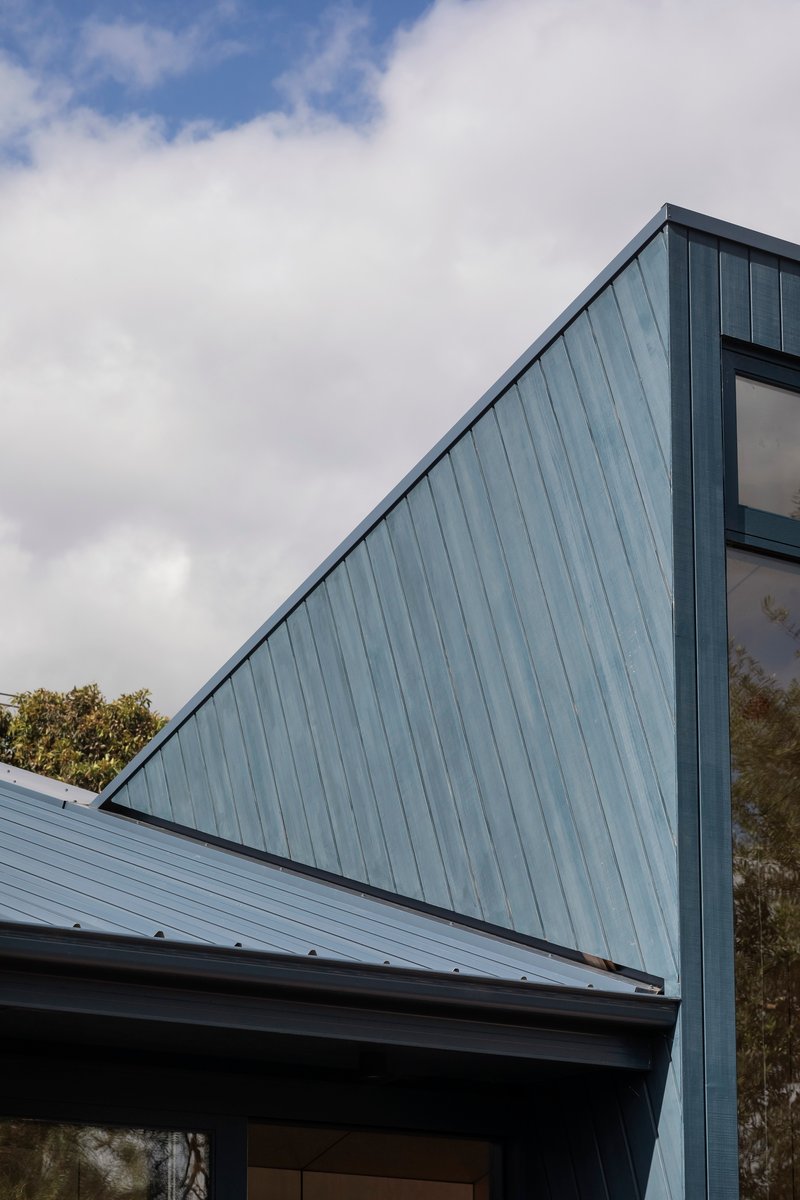
From the outside, the addition reads as a crisp gabled form clad in vertical metal panels, likely Stramit or Kingspan products, that distinguish it sharply from the weatherboard villa it sits behind. The ridge rises high enough to accommodate the double-height interior, and the metal cladding wraps tightly over the angled roof planes. At the threshold, potted plants and a gravel courtyard soften the junction between old and new, preventing the metal box from feeling clinical. The restrained palette, dark vertical ribs against a cloudy Melbourne sky, gives the extension a quiet industrial presence that neither imitates the original cottage nor shouts over it.
The Courtyard Link
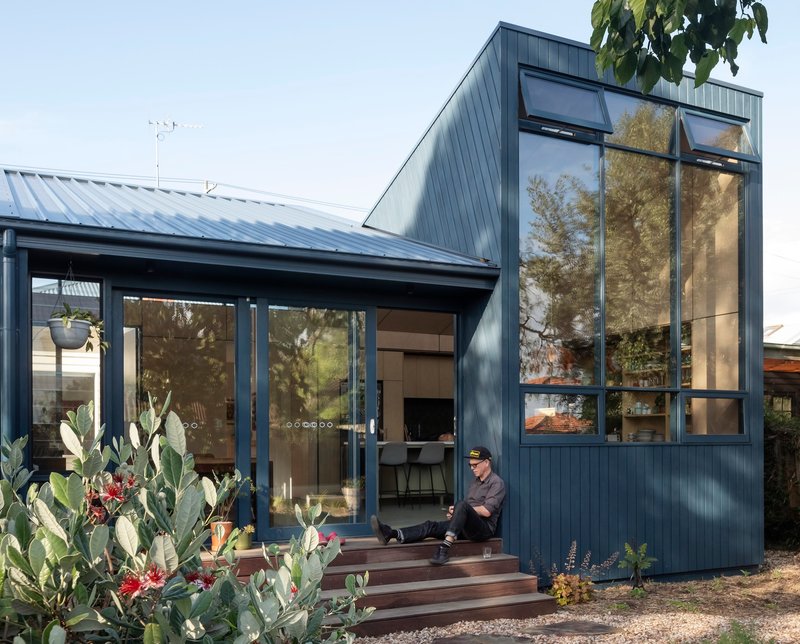
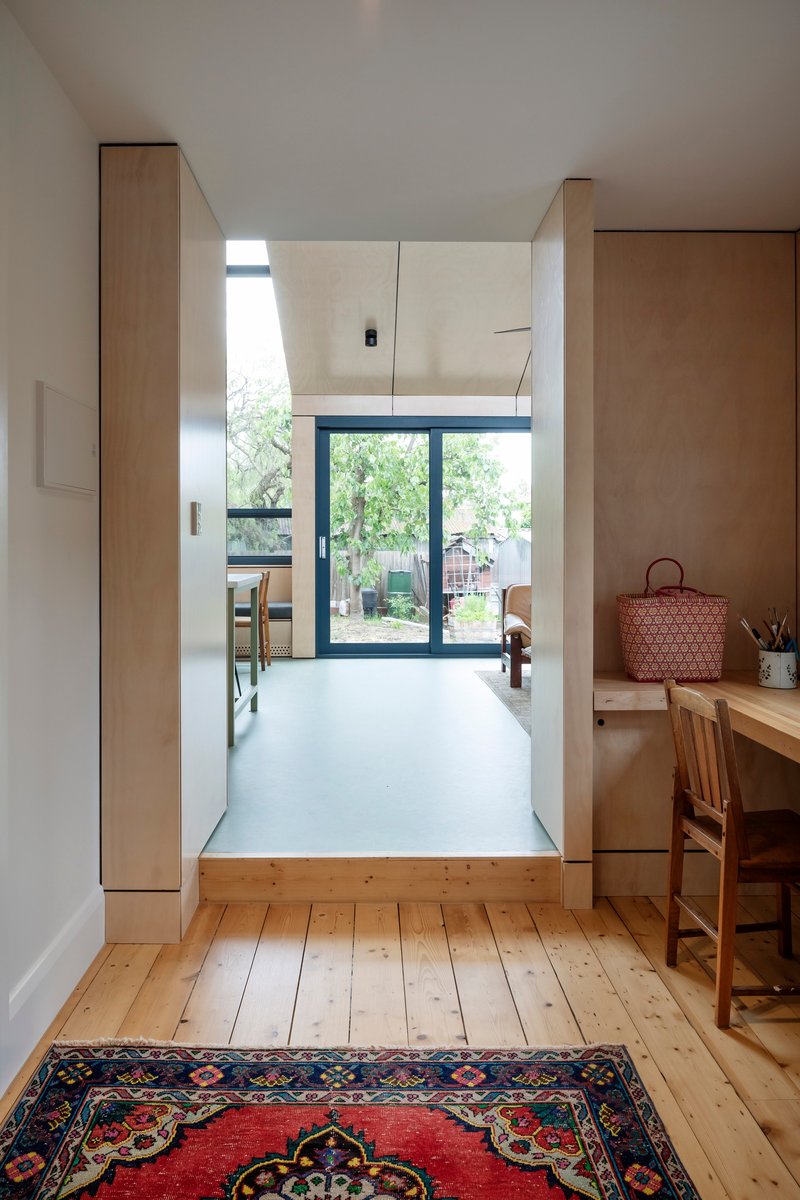
Between the retained villa and the new rear volume, a courtyard and glazed link do two things at once. They separate the bedrooms from the living and cooking spaces, creating acoustic distance for a family with two teenagers, and they flood the centre of the plan with north light. The timber steps at the entry, where a resident sits casually on the threshold in one shot, establish an informal, porch-like quality. Looking back through the timber-framed doorway toward the kitchen, you can read the entire sequence: old hallway, courtyard pause, new pavilion. It is a legible plan that never tries to disguise the join.
The Existing Villa Holds Its Own
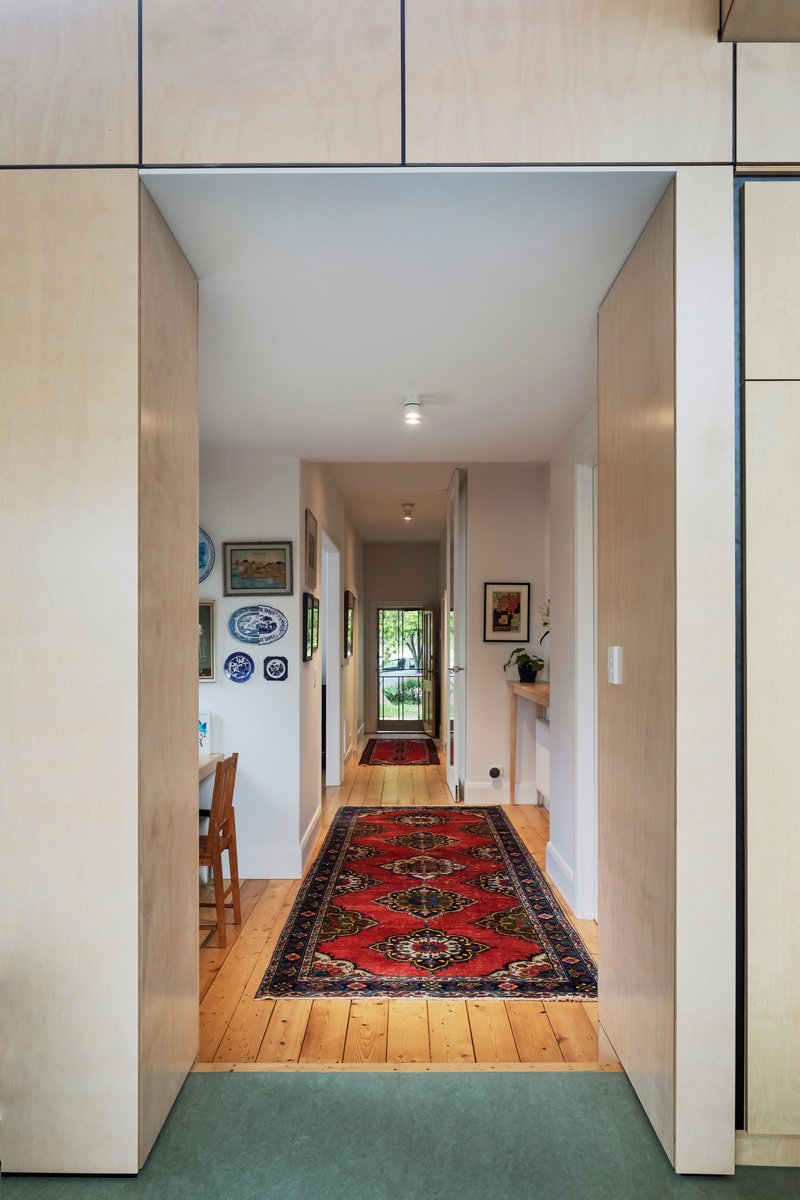
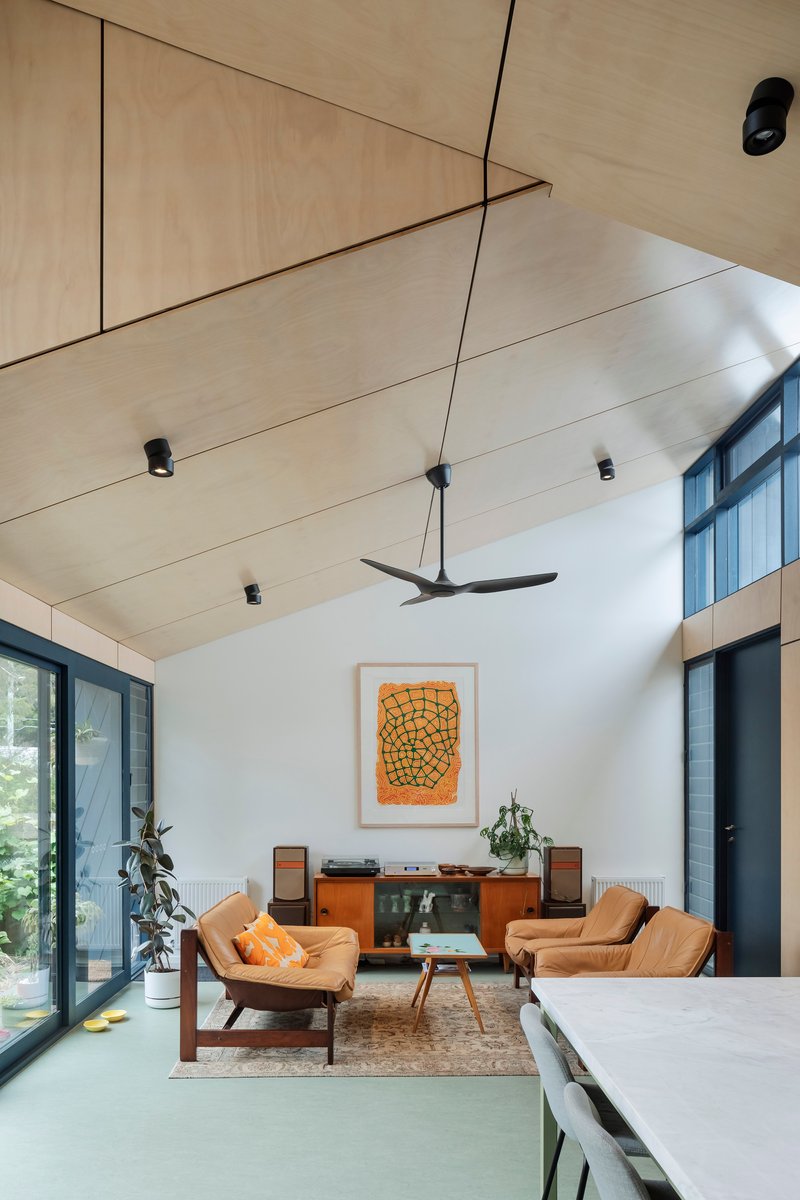
The original hallway, with its white walls, decorative plates, and a red oriental rug running down the centre, has been left largely as found. There is no attempt to modernize this passage into something it is not. It remains a nineteenth-century corridor, and the contrast with the plywood-lined spaces ahead makes both halves more vivid. The front living room similarly retains a domestic warmth, now lit by borrowed views through to the addition. Mid-century furniture and a vaulted plywood ceiling here suggest the transition zone where old and new begin to overlap.
Double Height and Tall Light
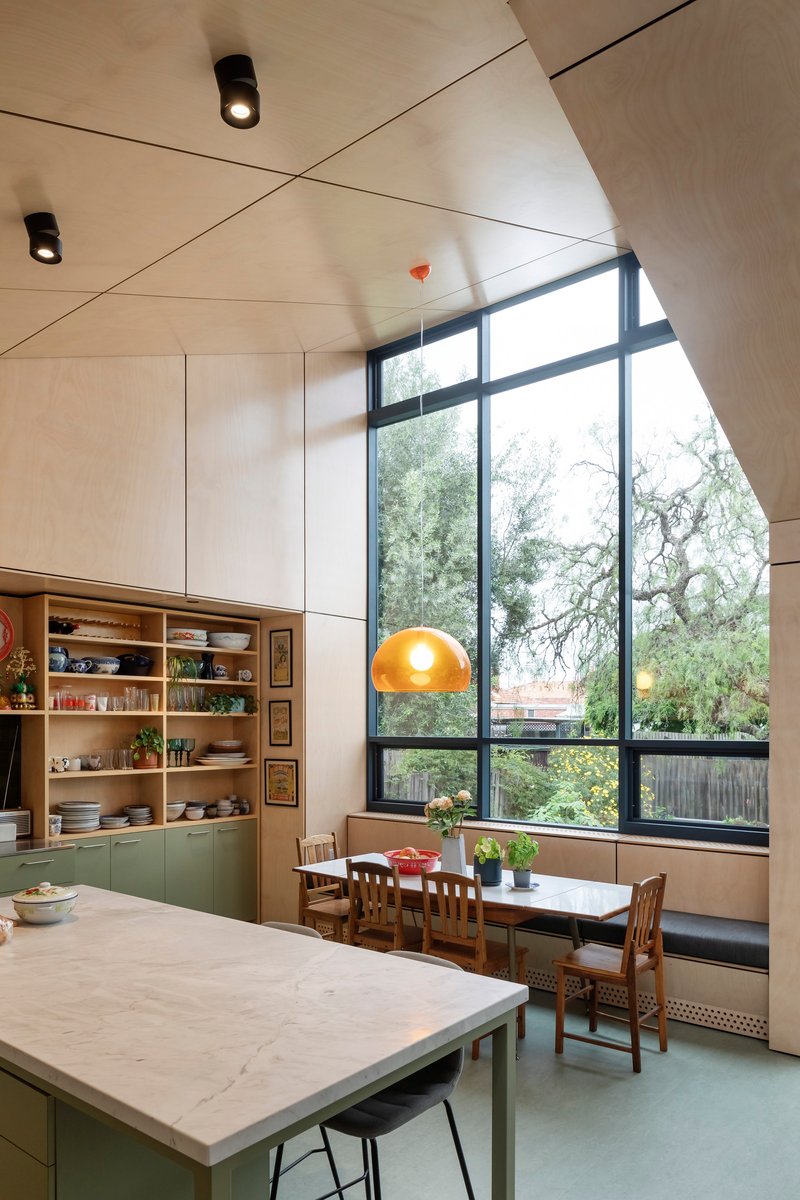
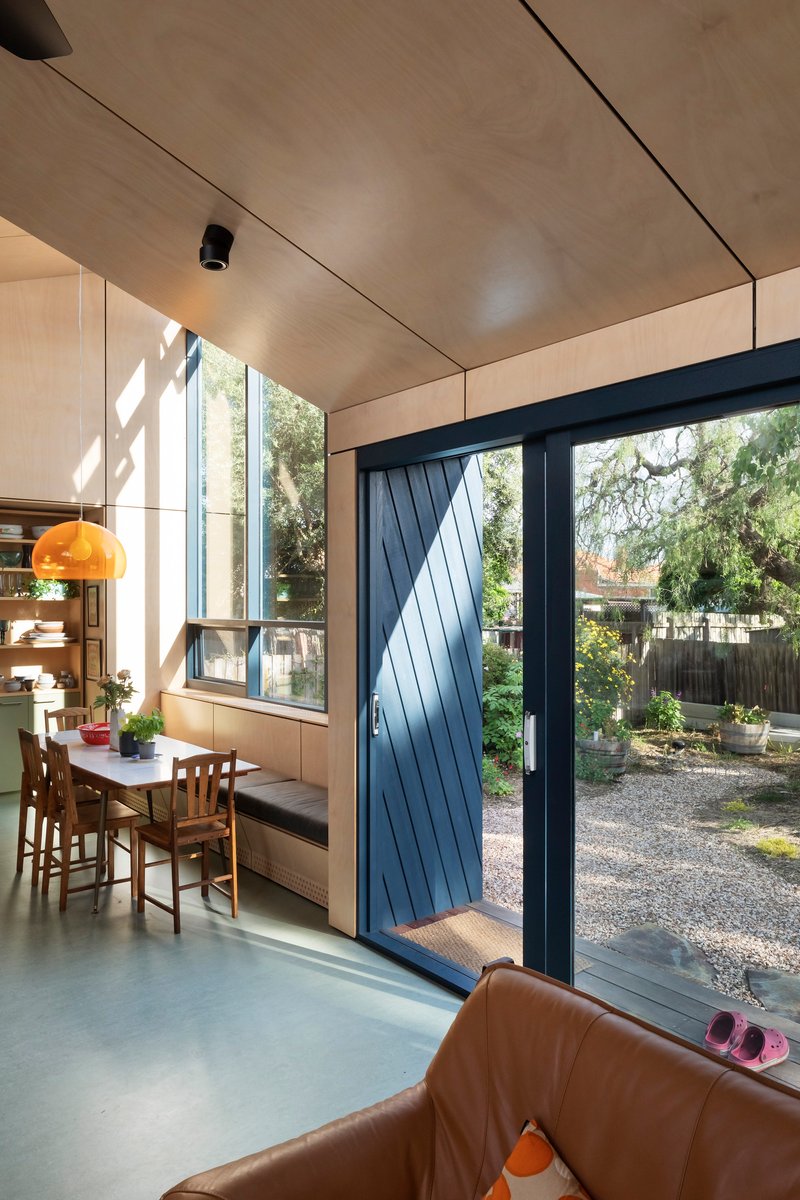
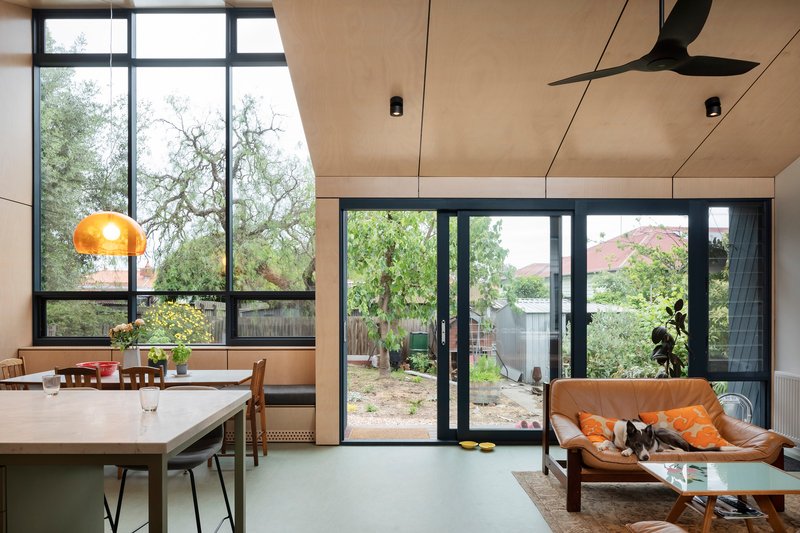
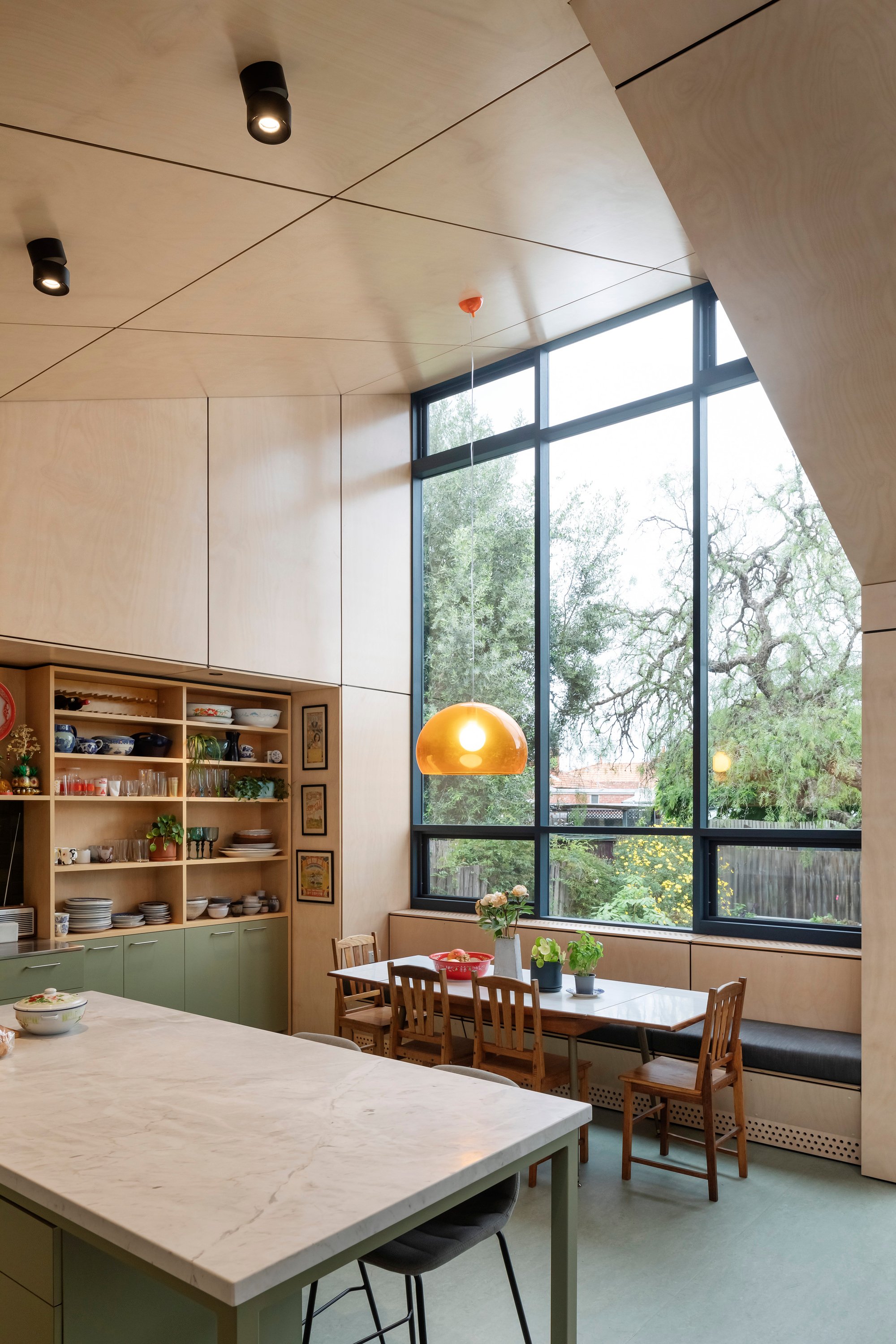
The defining spatial experience of the addition is its double-height dining area. Tall windows on the south wall frame the canopy of mature trees that surround the rear yard, pulling greenery into the room at a scale that a single-storey opening could never achieve. An amber pendant light hangs in the void, marking the vertical centre of the space. The proportions feel almost chapel-like: narrow in plan, generous in section.
Large sliding doors and glazed panels along the garden edge dissolve the boundary between inside and out, a strategy that also supports passive ventilation aided by Big Ass Fans overhead. Hydrotherm hydronic heating handles Melbourne's cooler months, while the north-facing courtyard and tall south-facing glass work together to balance daylight without overheating the garden. The architects clearly thought about the sun path with precision, not just aesthetics.
Plywood, Green Cabinetry, and Material Honesty
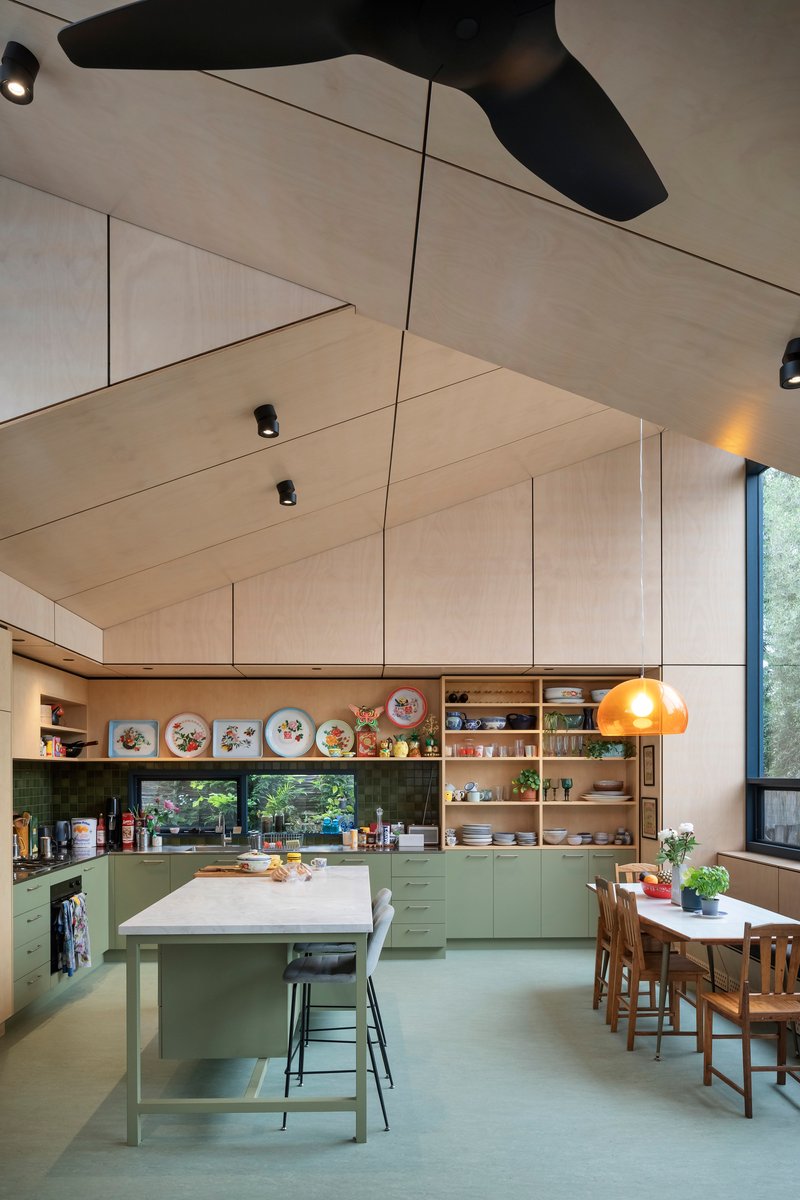
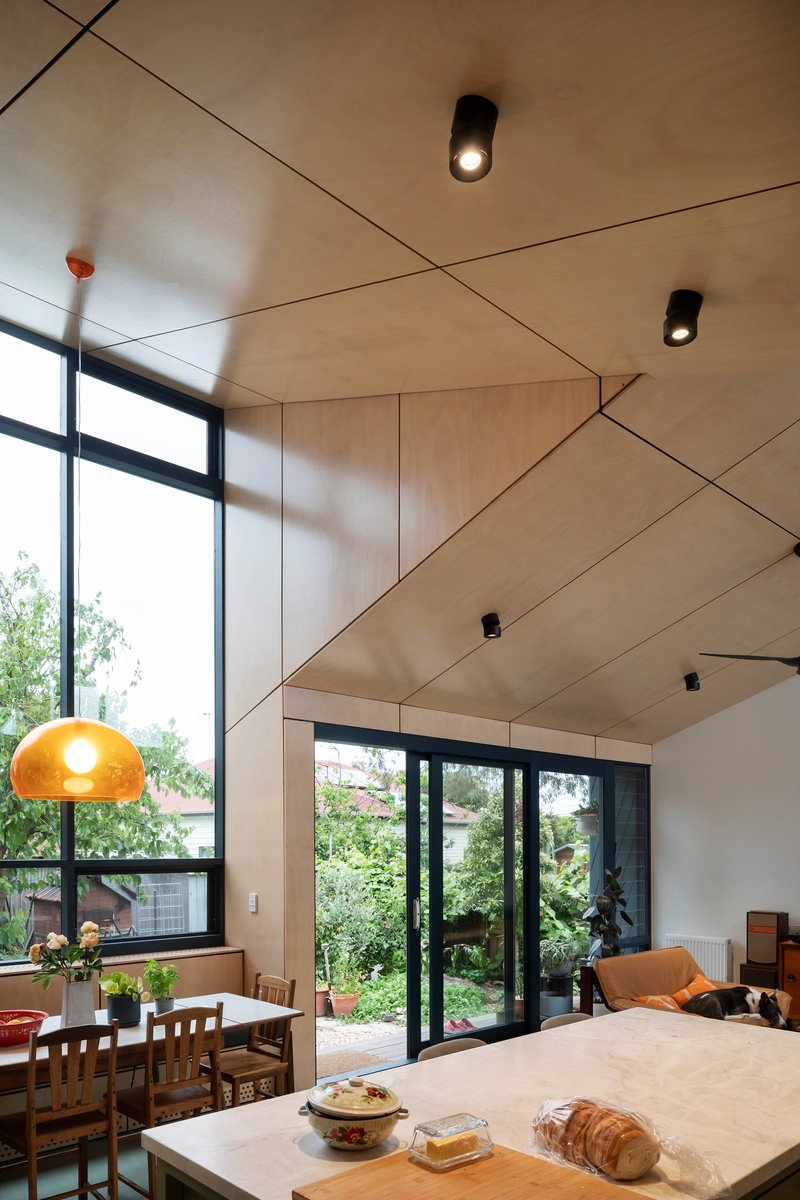
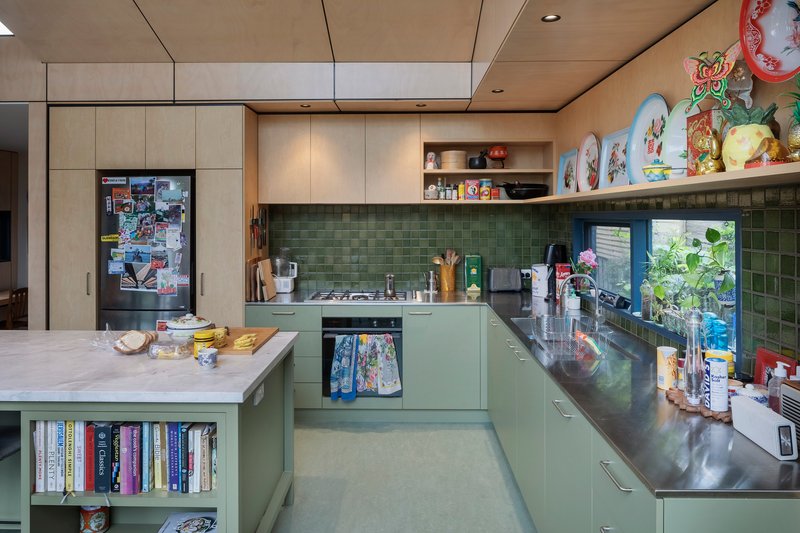
Inside the addition, Austral Plywood lines the ceiling in large panels, finished with Rubio Monocoat to let the grain read clearly. The material wraps over angled planes and down into built-in joinery, giving the new volume a warm, continuous interior skin. Against this blonde timber backdrop, the kitchen cabinetry lands in a saturated green, paired with a stainless steel countertop and open shelving. It is a bold colour choice that works precisely because the plywood provides a neutral field around it.
Black downlights punctuate the ceiling without competing with the timber, and Forbo flooring underfoot offers a durable, low-maintenance surface appropriate for a family with teenagers. Nagoya Mosaic-Tile and Academy Tiles appear in the wet areas, adding texture without excess. The material palette is tight: five or six materials, each doing real work, none decorative for its own sake.
Living Within the Garden
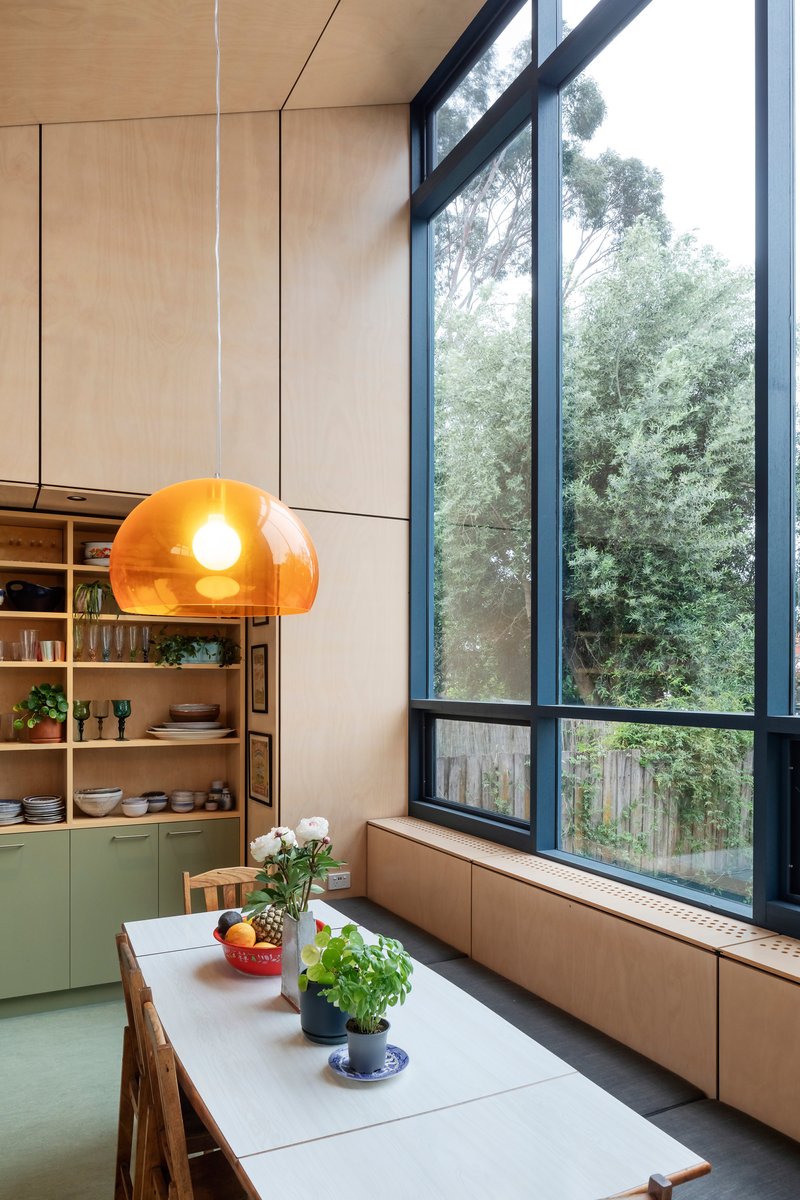
The built-in dining bench along one wall, paired with a large table under pendant lighting, establishes a calm, grounded eating area that opens directly to the garden through full-height glass. The minimalist detailing of the plywood walls lets the landscape do the talking. In a suburb where lot coverage often creeps toward maximum, retaining most of a 1000-square-metre site as garden is a deliberate and generous move. The house gains its character from what it chose not to build on.
Plans and Drawings
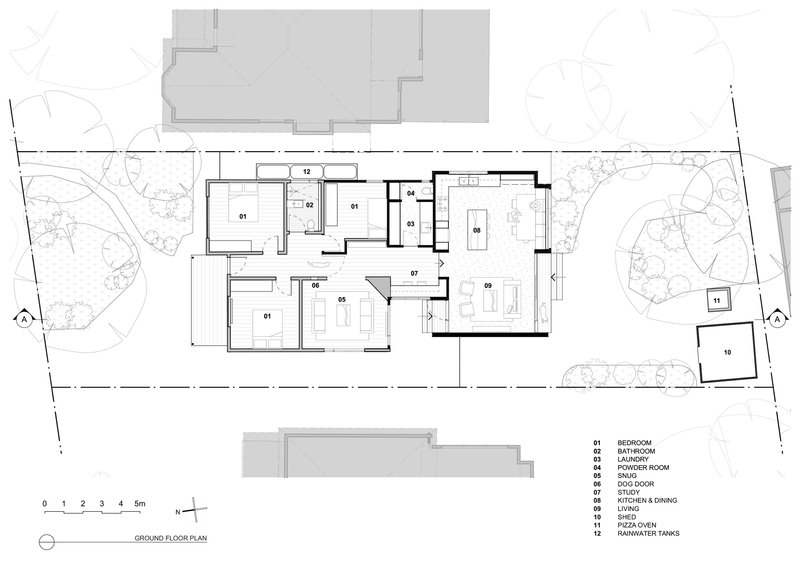
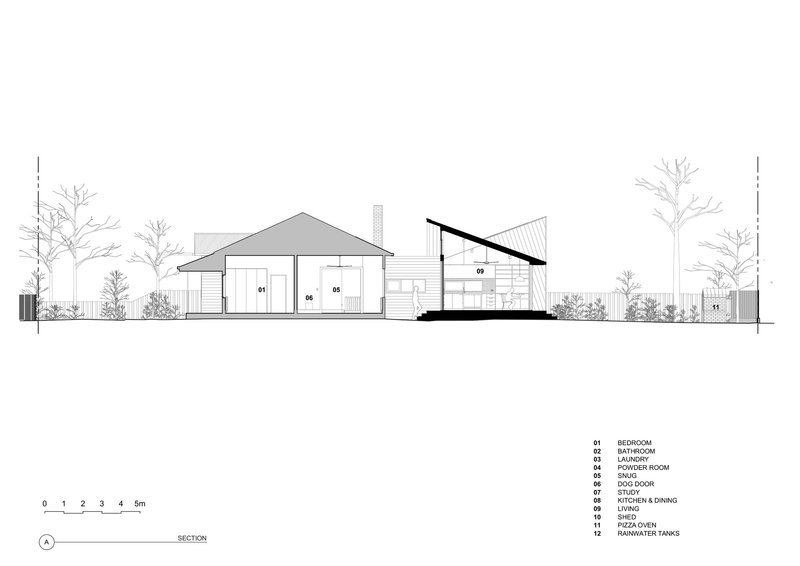
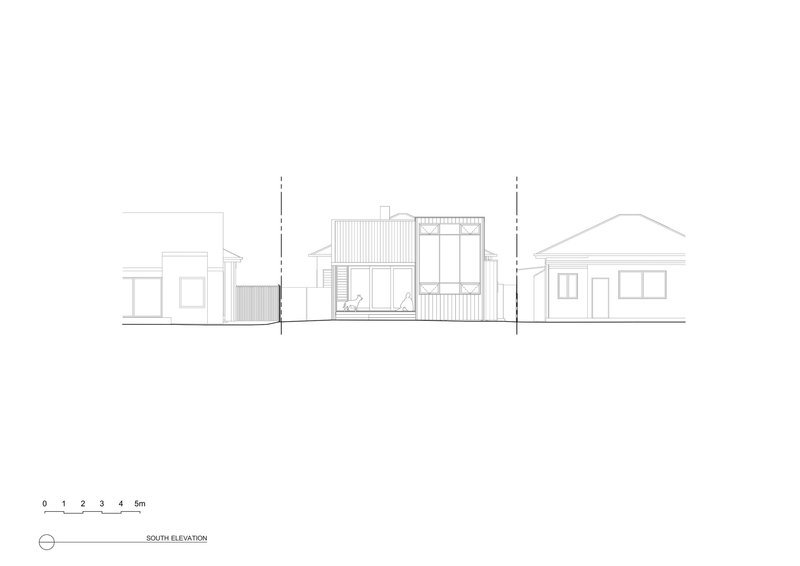
The ground floor plan confirms the linear arrangement: the original villa's three bedrooms and front living room sit at the street edge, connected by the courtyard link to the open-plan kitchen, dining, and living pavilion at the rear. The section drawing reveals how the gabled roof pitches upward to create the double-height void over the dining table, while a lower, sloped-roof element bridges between old and new. The south elevation shows the addition's corrugated metal cladding in context, flanked by the pitched roofs of neighbouring houses, fitting comfortably within Preston's suburban grain.
Why This Project Matters
Melbourne's inner suburbs are full of modest timber villas with failing rear additions. The default response, tear it all down or build a flat-roofed box behind it, has become so routine that it barely registers. Presti and Billy's House offers a different proposition: a gabled addition with real sectional ambition, where a double-height space and carefully oriented glazing transform the everyday act of eating dinner into something approaching ritual. The courtyard link between old and new is not just a transition zone but an active piece of the environmental strategy, pulling north light into the plan's centre.
The project also demonstrates that restraint in footprint can produce generosity in experience. By keeping the addition compact and pushing volume upward rather than outward, Taylor Reynolds Architects preserved the garden and the mature trees that define it, then framed those trees as the primary interior view. For a family of four navigating the tension between teenage privacy and shared life, the separation of bedrooms in the old villa from living spaces in the new pavilion is a quietly smart piece of planning. This is a house that knows what to keep, what to remove, and where to spend its spatial energy.
Presti and Billy's House by Taylor Reynolds Architects (Jeremy Reynolds, Lauren Taylor, Bree Lord). Preston, Melbourne, Australia. 140 m². Completed 2022. Photography by Patrick Reynolds.
About the Studio
Share Your Own Work on uni.xyz
If projects like this are the kind of work you want to make, uni.xyz is a place to publish your own, find collaborators, and enter design competitions.




Popular Articles
Popular articles from the community

20 Most Popular Office Building Projects of 2025
From biophilic workspaces in India to net-positive energy offices in New Delhi, 20 office building projects that defined architecture in 2025.

Atelier LAI Scatters a Timber Resort Across a Terraced Anhui Valley
Nanshan Junning Resort uses wood joinery and topographic sensitivity to settle 6,700 square meters into a ten-meter slope near Hefei.
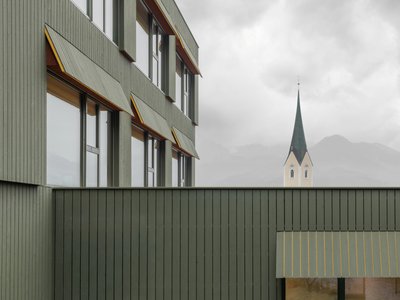
Pedevilla Architects Disguise a Five-Story School as a Tyrolean Farmhouse in Kössen
A dark-clad education center in rural Austria borrows the robust calm of Alpine vernacular to anchor a village's northern edge.
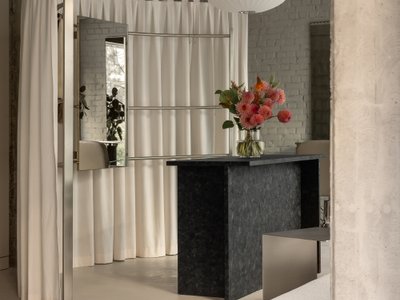
MAVA Design Turns a Column-Riddled Shell into a Serene Hair Extension Salon in Kyiv
Inside a former motorcycle factory campus, a 110 square metre beauty atelier treats structural obstacles as spatial anchors.


Similar Reads
You might also enjoy these articles

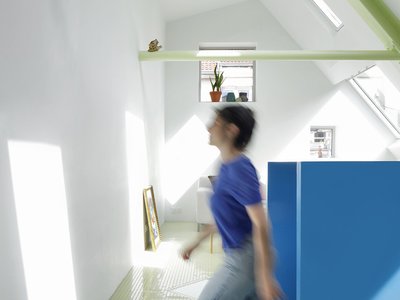
127af Flips a Tiny Bagnolet Rowhouse Upside Down with a Handcrafted Roof Extension
A 55-square-meter terraced house on the edge of Paris gains a luminous upper living floor through lightweight timber and steel.
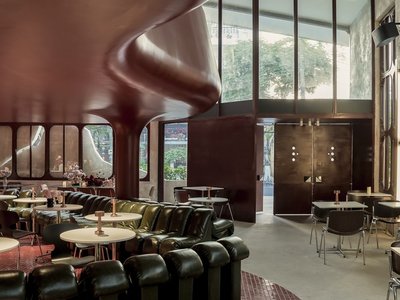
1.61 Design Workshop Wraps a 600-Square-Meter Café in Vietnam in Sculptural Burgundy Drama
Reden Café & Bistro pairs a helical staircase, mosaic floors, and deep red interiors to rethink Vietnamese hospitality space.
The Unbound Brain: A School Shaped by Cognitive Architecture
Cylindrical learning pods radiate like neurons from a central cortex, turning the floor plan into a spatial model of human thought.
Revival Vernacular Architecture: Rammed Earth Settlements for the Sahara
A modular desert community in Mauritania that fuses passive cooling techniques with earthen construction and local craftsmanship.


Explore Landscape Design Competitions
Discover active competitions in this discipline




The Global Benchmark for Architecture Dissertation Awards


Challenge to design mud housing for contemporary communities
Comments (0)
Please login or sign up to add comments
No comments yet. Be the first to comment!