

Techo International Airport Cambodia by Foster + Partners: A Sustainable Gateway to the Future
Techo International Airport by Foster + Partners blends Cambodian heritage with modern sustainability, featuring natural light, greenery, and innovative architectural design.


Techo International Airport, designed by the world-renowned architectural firm Foster + Partners, marks a new era of sustainable infrastructure in Cambodia. Officially inaugurated in Phnom Penh, the airport stands as a symbol of national growth and architectural innovation. Inspired by Cambodia’s ancient heritage and tropical climate, the design blends cultural identity with cutting-edge engineering and environmental consciousness.


Located 20 kilometers south of Phnom Penh’s city center, the airport terminal consists of a central headhouse and two aerofoil-shaped piers. The first phase, including the headhouse and northern pier, opened in 2025, while the southern pier is expected to complete by 2030. The layout prioritizes passenger comfort through short walking distances, clear sightlines, and intuitive navigation. The vast terminal is unified under a single sweeping roof canopy, supported by striking structural “trees” spanning 36 meters each.


The roof’s undulating form draws inspiration from Cambodia’s palaces and temples, symbolizing a harmony between tradition and progress. Beneath it, a latticed soffit inspired by traditional basket weaving filters daylight beautifully into the spacious terminal. Over 180 skylights bring soft, natural light throughout the day, while warm artificial lighting integrated into the structure creates a serene nighttime ambiance.


According to Stefan Behling, Head of Studio at Foster + Partners:
“Techo International Airport is a celebration of Cambodian culture and light. It’s one of the most sustainable airports in the region—filled with natural daylight, local greenery, and a deep connection to the landscape.”
Greenery flows throughout the terminal, featuring native Romduol trees, palms, and local flora that emphasize the sense of place. The interiors showcase warm, tactile materials and 200 handcrafted sculptures, including a bronze-cast Buddha, reflecting Cambodia’s artistic heritage and modern identity.


Sustainability is at the core of the design. The terminal’s overhanging roof minimizes solar gain, reducing the need for artificial cooling. The intelligent daylight strategy significantly cuts energy use, establishing the project as one of the greenest airports globally.
Foster + Partners also masterplanned the broader airport city, envisioning a vibrant urban hub centered around a green public park and a future high-speed rail link—encouraging public transport and reducing carbon emissions.

“Our design merges innovation with Cambodia’s cultural identity, creating a space that is both technologically advanced and emotionally resonant.”
The result is a transformative gateway that redefines the travel experience in Southeast Asia—an architectural masterpiece that merges sustainability, technology, and culture into one seamless vision of the future.

All the photographs are works of Nigel Young


Popular Articles
Popular articles from the community


Cloaked Colonization: A Mobile Underwater Habitat That Moves Like a Fish
Micah Abaya's shortlisted EHC Pacific entry reimagines ocean settlement as a dispersed network of self-sustaining architectural organisms.

Singing Woman: Contemporary Architecture Inspired by Estonia’s Voice and the Sea
Singing Woman turns Estonia’s song culture into flowing opera house architecture, blending public life, landscape, sea, and national memory.
Faces of the Soviet Avant-Garde: Turning Moscow's Street Names into an Open-Air Museum
A network of sculptural installations across a Moscow residential district transforms forgotten architect names into spatial encounters with cultural memor
Temporary Home for Dogs: A Reversed Zoo Rethinks Animal Shelter Architecture
In Bucharest, a sinuous corridor and freed landscape flip the logic of containment, designing a shelter that works to make itself unnecessary.

Similar Reads
You might also enjoy these articles

Hodi-Mandai Geram
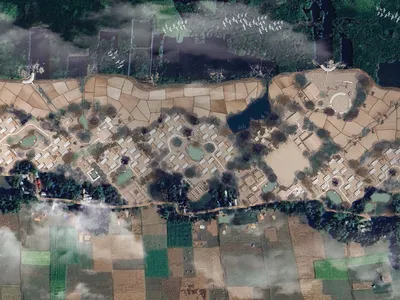
Project Function: Preservation and revitalization of the Intangible heritage and socio-spatial identity of the Hodi by Housing, Cultural Memory Center, Sacred Grove, landscape, local tourism economy

Olio Towers: A Mid-Rise for Performers That Fuses Housing, Rehearsal, and Stage
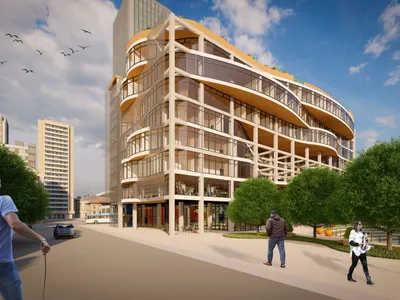
Located blocks from Houston's Theater District, this modular tower stacks living units around a central performance atrium.

Oasis: Modular Green Housing Carved into Dhaka's Urban Fabric
A shortlisted Plugin Housing entry reclaims unauthorized settlements in Dhaka with stepped concrete volumes, green roofs, and ventilation-driven design.

Black Hole: A Floating Megastructure for the Post-Physical Era
Emiliano Mazzarotto envisions a spherical, self-scaling arena where e-sports, digital hotels, and holographic stadiums replace traditional public space.

Explore Hospitality Building Competitions
Discover active competitions in this discipline

Challenge to reimagine the Iron Throne

Photograph architecture without architects

Illustrate the lost glory of Angkor Wat - Render Challenge

Design challenge to reuse E-waste
Comments (0)
Please login or sign up to add comments
No comments yet. Be the first to comment!