

Tepoztlán Market by Laboratorio Regional de Arquitectura + Ramírez Suárez Arquitectos
A vibrant municipal market in Tepoztlán blending local materials, modular design, and cultural heritage to revitalize community commerce and urban life.


Reimagining Urban Commerce in a Historic Context
The Tepoztlán Market by Laboratorio Regional de Arquitectura + Ramírez Suárez Arquitectos stands as a landmark project within the Urban Improvement Program (PMU) initiated by Mexico’s Secretariat of Agrarian, Territorial, and Urban Development (SEDATU). Conceived as a contemporary municipal market, it responds to the growing need for formalized trading spaces in Tepoztlán’s historic center, where informal commerce had long occupied public areas.
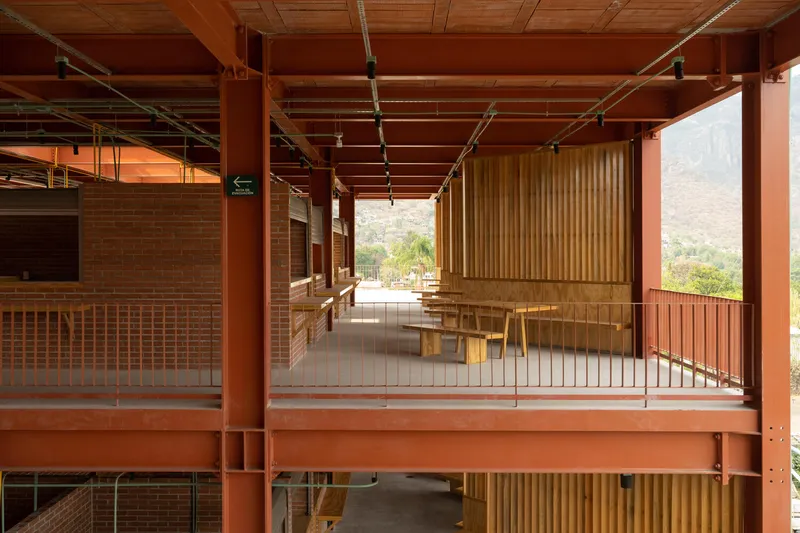
By relocating street vendors into a thoughtfully designed new complex, the architects achieved more than logistical order—they restored the urban legibility of the city’s historic core and strengthened the connection between the market and the surrounding cultural and natural landscape. This approach underscores the balance between heritage conservation and modern public infrastructure, a defining feature of contemporary Mexican architecture.
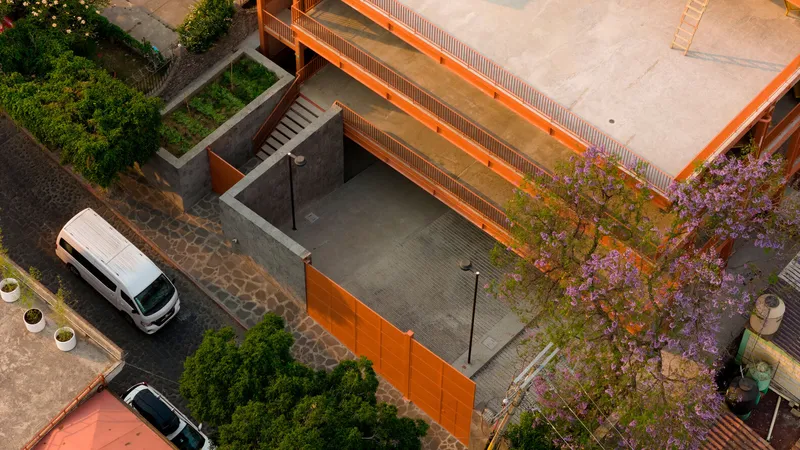
Site and Urban Integration
Positioned southeast of the Convent of the Nativity of Mary, a UNESCO World Heritage site, the market occupies a rectangular plot with a marked slope descending from west to east and south to north. With three street-facing façades, the design engages the urban fabric while adapting to the site’s topography through a layered spatial organization.
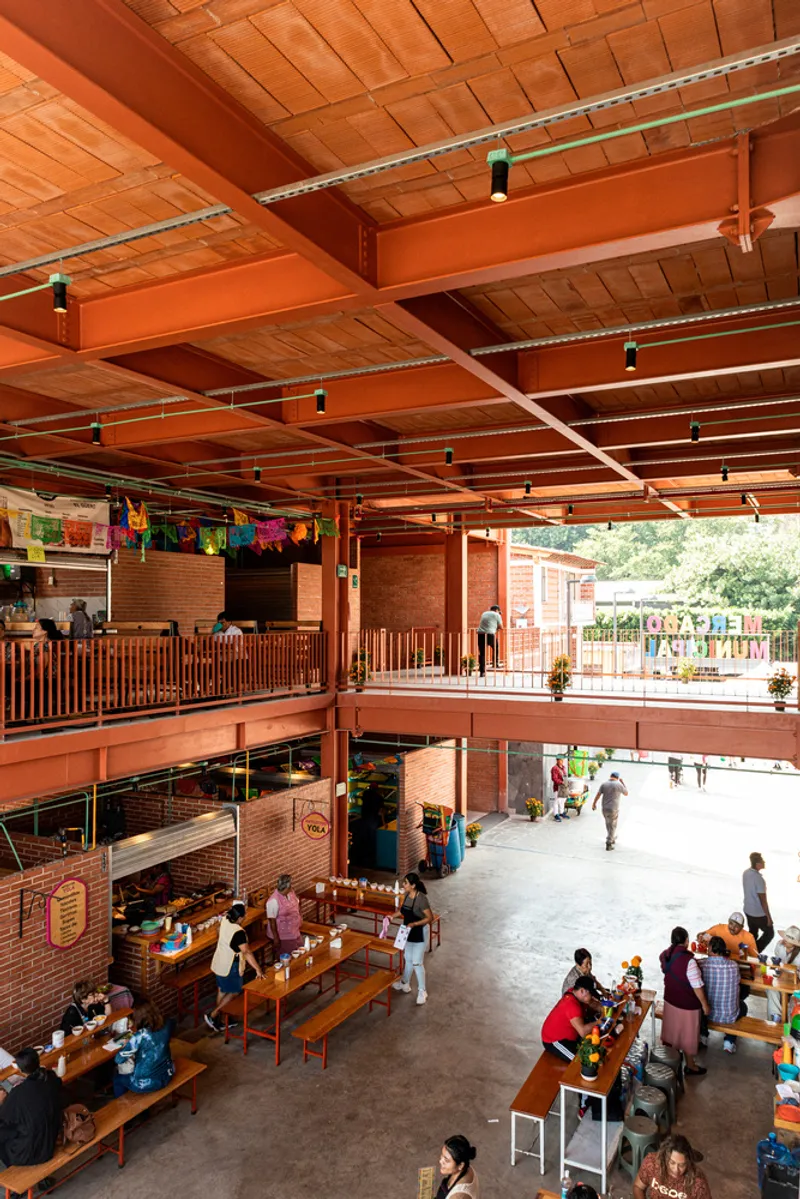
The program unfolds across several levels:
- Basement Parking Level: Providing logistical support and accessibility.
- Supply and Service Level: Dedicated to wholesale and vendor operations.
- Two Food Market Levels: Hosting 195 stalls offering fresh produce, local gastronomy, and artisanal crafts.
- Observation Terrace: A public platform with panoramic views of Tepoztlán’s mountainous surroundings.
This vertical composition allows the building to maximize usable space while maintaining a modest scale compatible with the surrounding townscape.
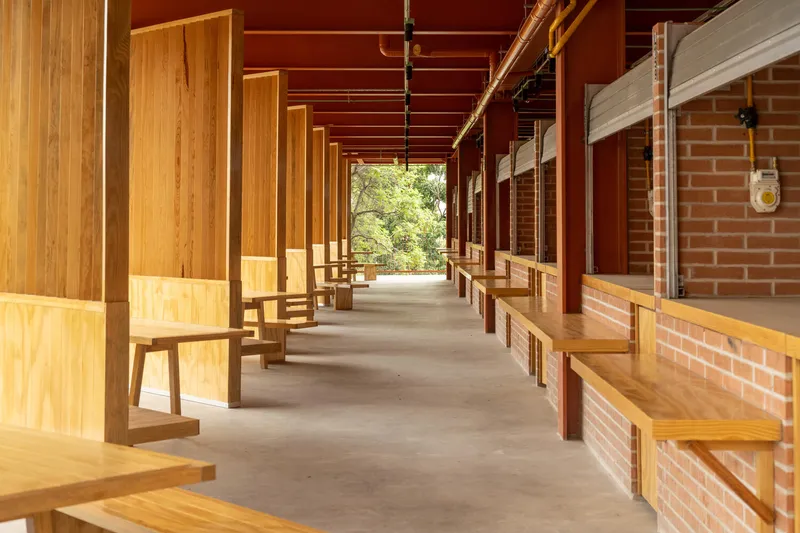
Materiality and Structure
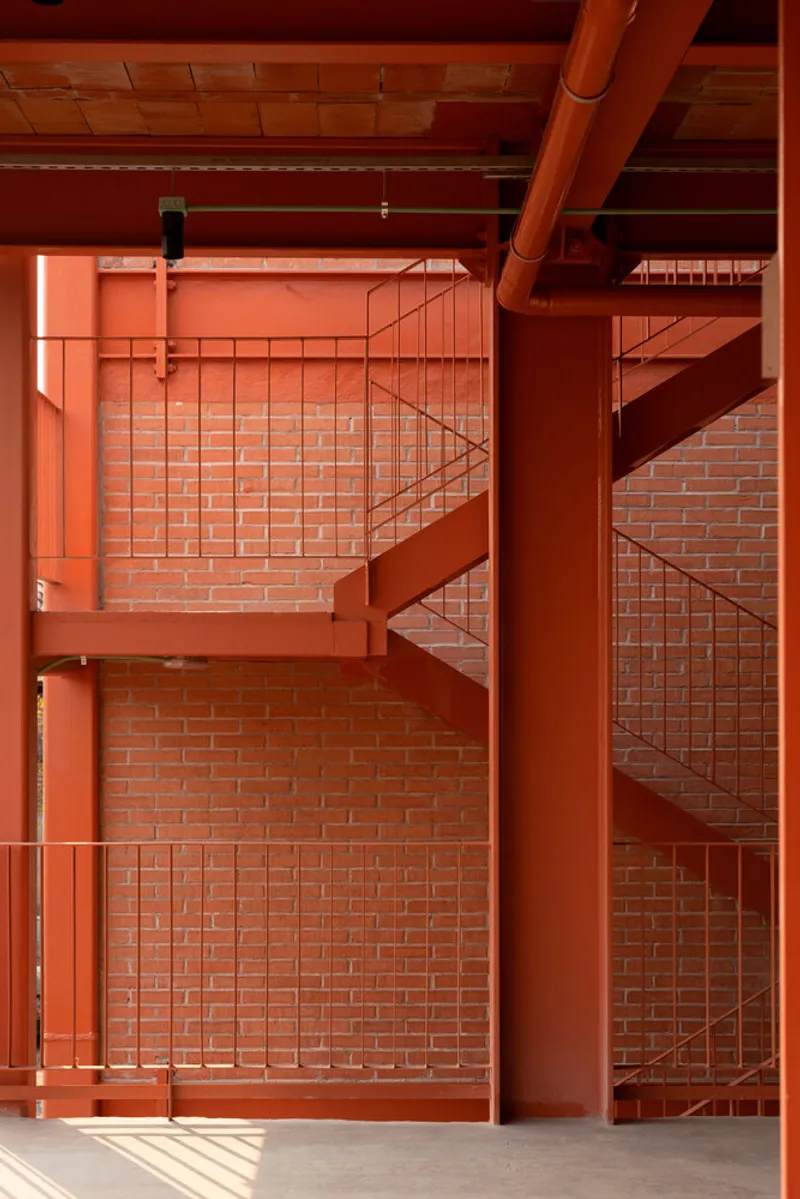
The architectural language of the Tepoztlán Market reflects the regional identity through a careful selection of local materials and structural efficiency. The market is built on a metal framework composed of IPR-type profiles, forming a consistent 2.50 x 2.50-meter grid. This modular system not only standardizes the layout of stalls but also ensures structural clarity and spatial rhythm throughout the building.
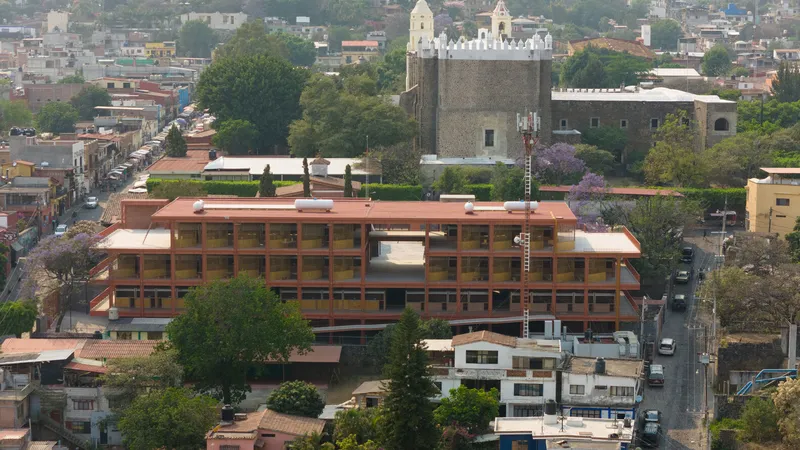
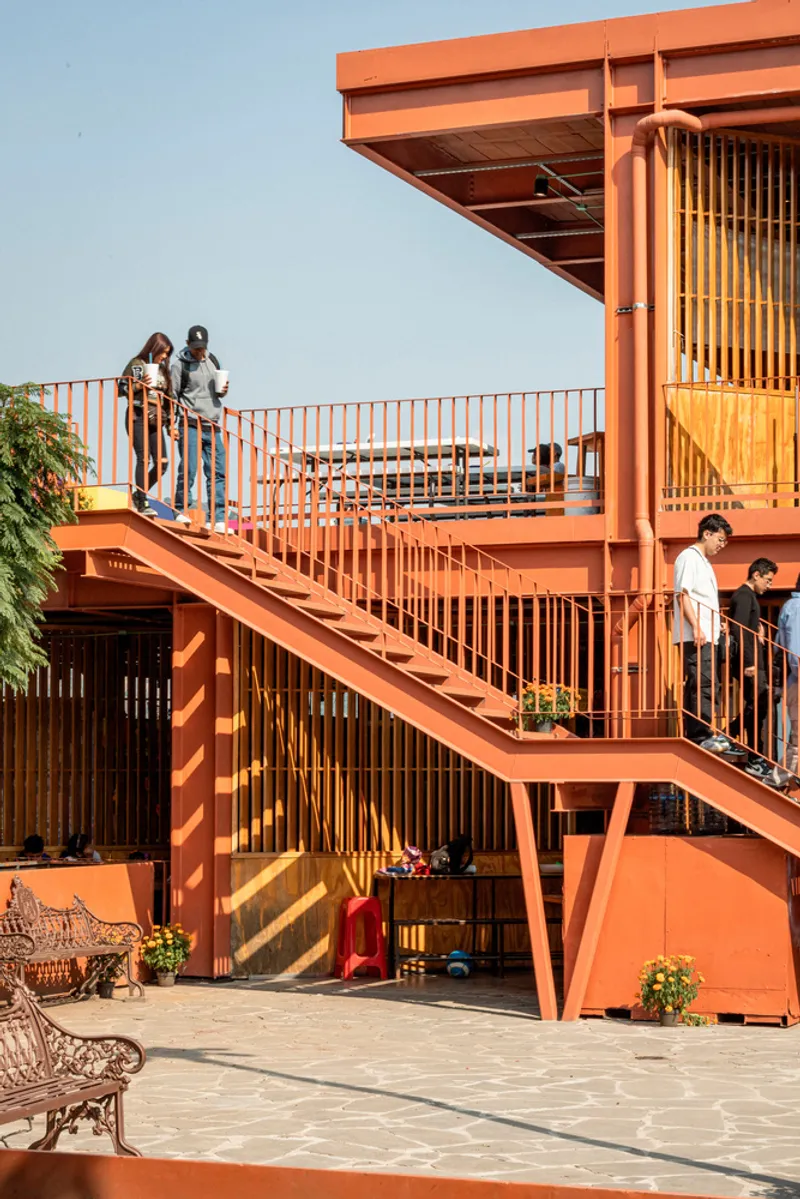
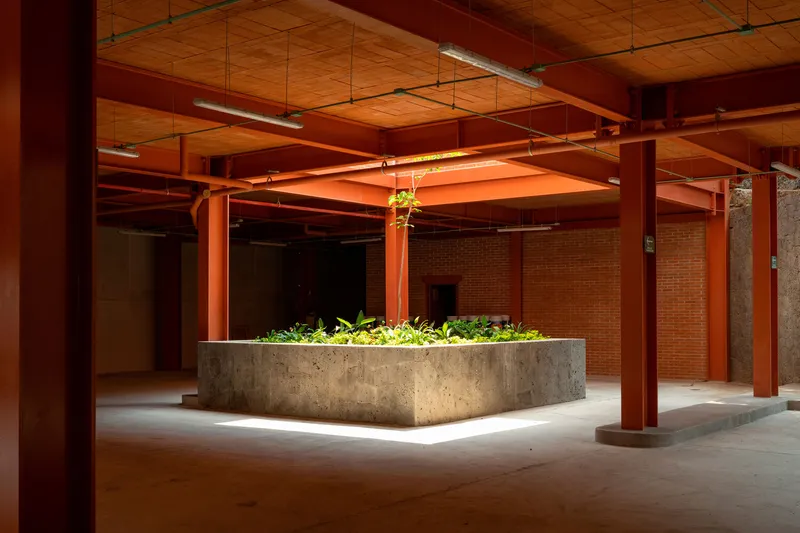
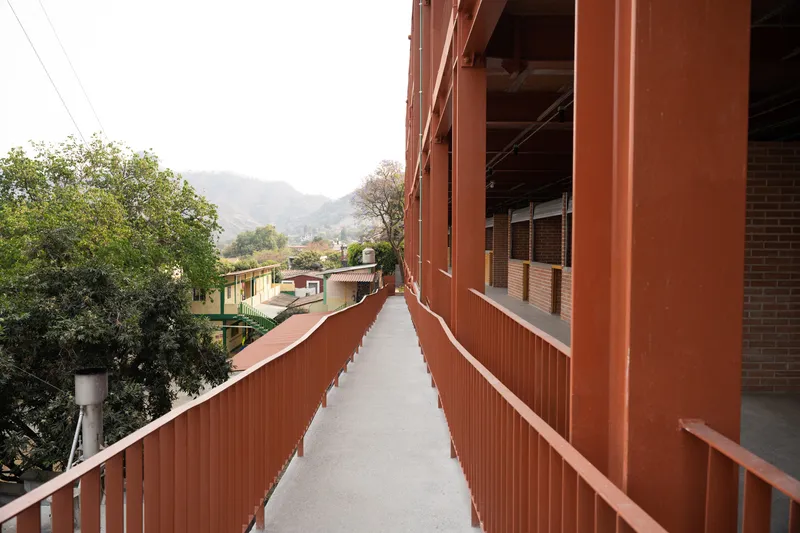
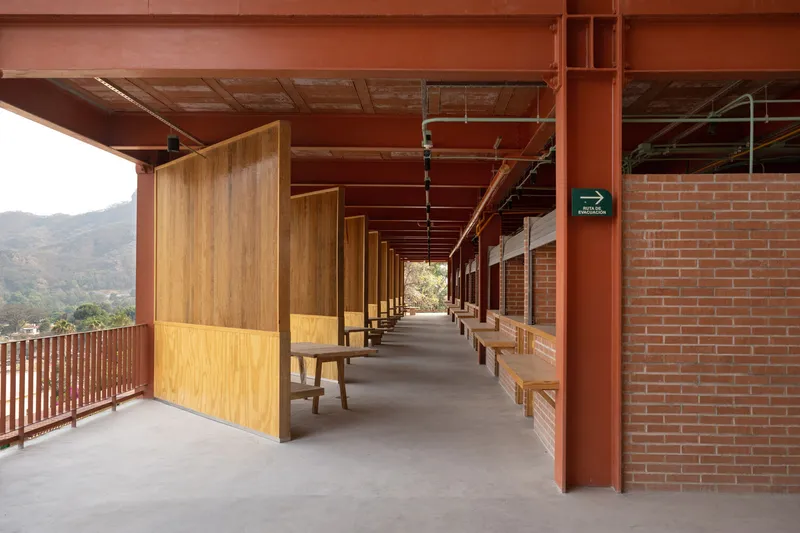
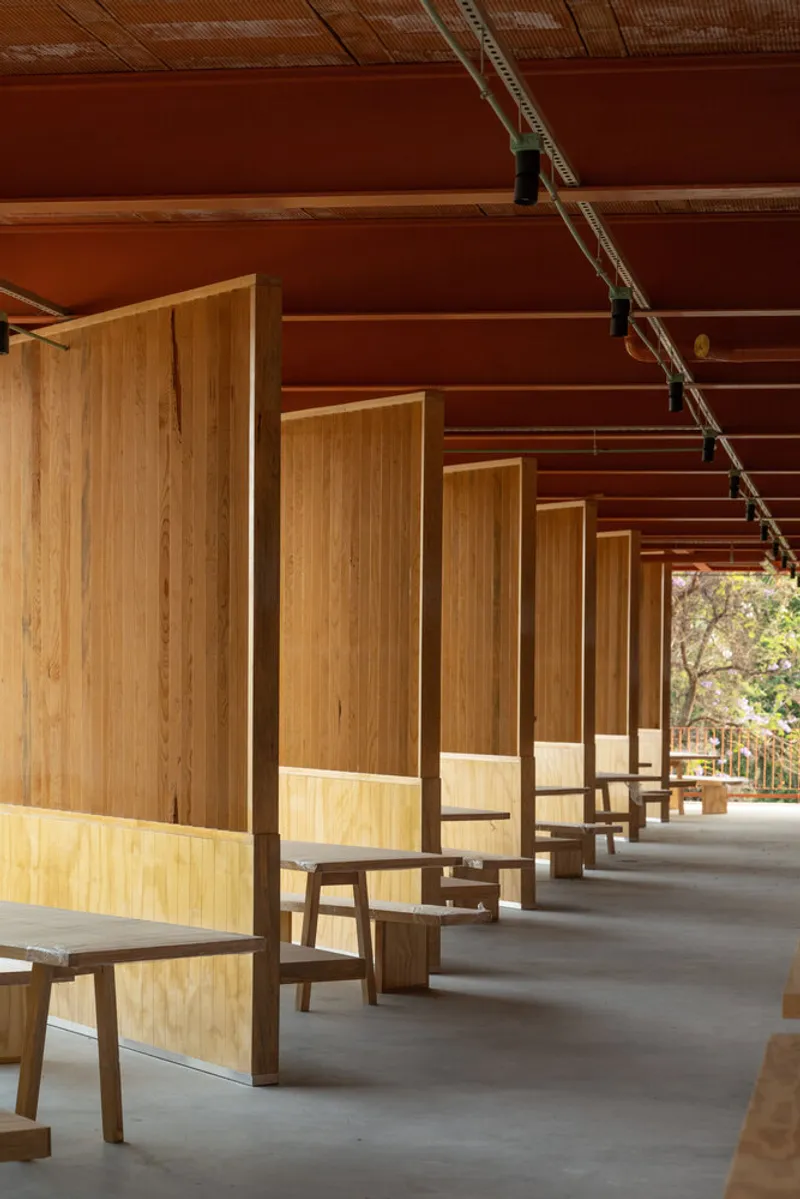
The reddish-painted steel evokes the color of Tepoztlán’s natural clay, seamlessly integrating the new architecture into its earthy context. Complementary materials—exposed brick, wood, and concrete—create a tactile and warm environment that blurs the boundaries between traditional craft and modern design.
Spatial Experience and Community Connection
At the ground level, the market opens into a large plaza that doubles as a public gathering space. The main entrance, accessible via a pedestrian ramp from the parking area, ensures inclusive mobility for all visitors. This thoughtful circulation design enhances both functionality and the sense of openness within the market.
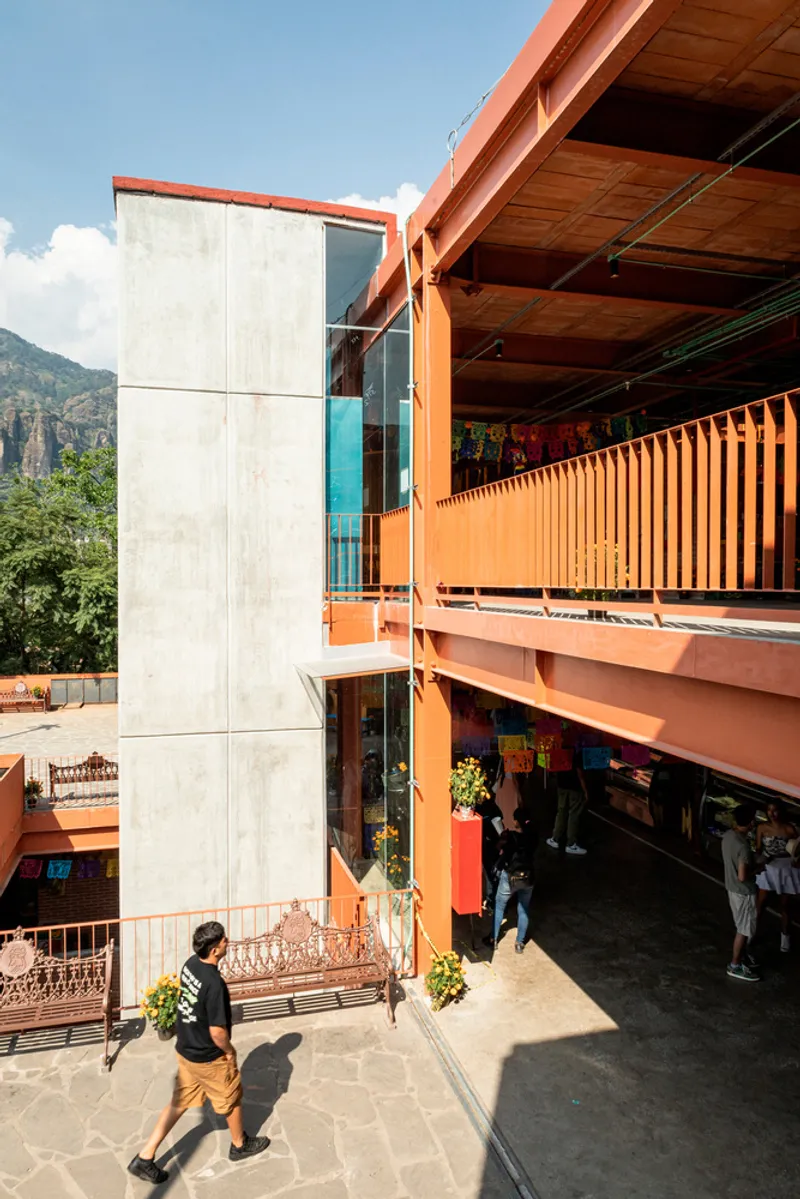
Inside, daylight filters through wooden beams and open corridors, emphasizing the natural textures of the materials and creating a welcoming, human-scale atmosphere. The modular stalls encourage interaction, celebrating the social and cultural rituals that define market life in Mexico.
Beyond its function as a commercial hub, the market acts as a civic catalyst, supporting local livelihoods, preserving culinary traditions, and revitalizing the town’s public realm. It becomes a space of continuity—where modern infrastructure respects ancestral patterns of exchange and community gathering.
Architectural Significance
The Tepoztlán Market is more than a building—it is a statement about sustainable urban regeneration in historical environments. By addressing informal commerce through design rather than displacement, the project illustrates a socially conscious model for urban transformation across Latin America.
Through its integration of contextual materials, modular design, and inclusive spatial planning, the market demonstrates how contemporary architecture can strengthen cultural identity while fostering economic resilience and social equity.
Meta Description (SEO)
Tepoztlán Market, Laboratorio Regional de Arquitectura, Ramírez Suárez Arquitectos, Mexican architecture, public market design, urban regeneration, sustainable architecture, local materials, cultural preservation, SEDATU Urban Improvement Program, contemporary architecture Mexico.
All photographs are works of Ana Paula Álvarez, Miguel Cobos


Popular Articles
Popular articles from the community


Opera on the Sea: Driftwood Logic Shapes a Timber Opera House on Estonia's Coast
Trevor Orgill's opera house translates the entangled drift of floating timber into a civic building where wood, water, and music converge.
Extended Shell: Retrofitting Kolkata's Balconies as Living Urban Thresholds
A modular retrofit system recovers the social and environmental intelligence of Kolkata's historic verandas for contemporary Park Street residents.

Cloaked Colonization: A Mobile Underwater Habitat That Moves Like a Fish
Micah Abaya's shortlisted EHC Pacific entry reimagines ocean settlement as a dispersed network of self-sustaining architectural organisms.

The Amber Palace Opera: A Geological Fiction Surfaces on Tallinn's Baltic Waterfront
Pierre Brillard reimagines a Baltic legend as a public landscape, opera house, and waterfront promenade rooted in Tallinn's coastal identity.

Similar Reads
You might also enjoy these articles


Hodi-Mandai Geram
Project Function: Preservation and revitalization of the Intangible heritage and socio-spatial identity of the Hodi by Housing, Cultural Memory Center, Sacred Grove, landscape, local tourism economy


Olio Towers: A Mid-Rise for Performers That Fuses Housing, Rehearsal, and Stage
Located blocks from Houston's Theater District, this modular tower stacks living units around a central performance atrium.

Oasis: Modular Green Housing Carved into Dhaka's Urban Fabric
A shortlisted Plugin Housing entry reclaims unauthorized settlements in Dhaka with stepped concrete volumes, green roofs, and ventilation-driven design.

Black Hole: A Floating Megastructure for the Post-Physical Era
Emiliano Mazzarotto envisions a spherical, self-scaling arena where e-sports, digital hotels, and holographic stadiums replace traditional public space.

Explore Mexican Design Competitions
Discover active competitions in this discipline

Challenge to reimagine the Iron Throne

Photograph architecture without architects

Illustrate the lost glory of Angkor Wat - Render Challenge

Design challenge to reuse E-waste
Comments (0)
Please login or sign up to add comments
No comments yet. Be the first to comment!