

Terabe Guest House by Tomoaki Uno Architects: Craft, Landscape, and Living Architecture on Japan’s Coast
Terabe Guest House by Tomoaki Uno Architects is a serene wooden structure on pilotis, blending craftsmanship, coastal views, and contemporary Japanese architecture.


Located directly in front of Terabe Beach overlooking Mikawa Bay, Terabe Guest House is a finely crafted wooden architecture project that merges hospitality, craftsmanship, and landscape sensitivity. Designed by Tomoaki Uno Architects and completed in 2024, the 211-square-meter building in Nishio, Japan, reinterprets traditional Japanese construction through contemporary structural innovation and deep collaboration with local craftsmen.
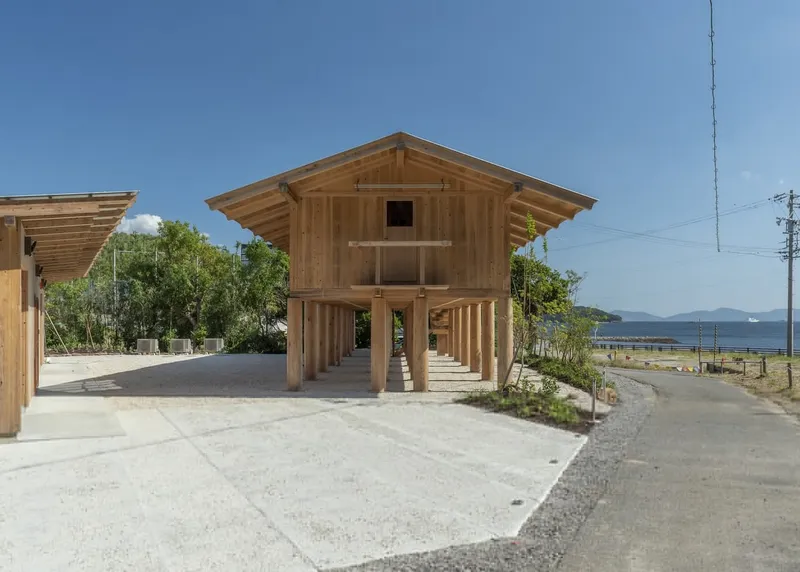
The project was commissioned by the owner of a company pioneering the everyday preparation of enzymatic brown rice—an invention that transformed a time-intensive health practice into a simple daily ritual. As the business expanded, the existing beachside showroom and tasting space, originally adapted from a former family beach house, no longer reflected the company’s values or ambitions. The decision was made to rebuild, creating a calm, welcoming guest house that could serve simultaneously as a showroom, tasting space, and architectural statement.
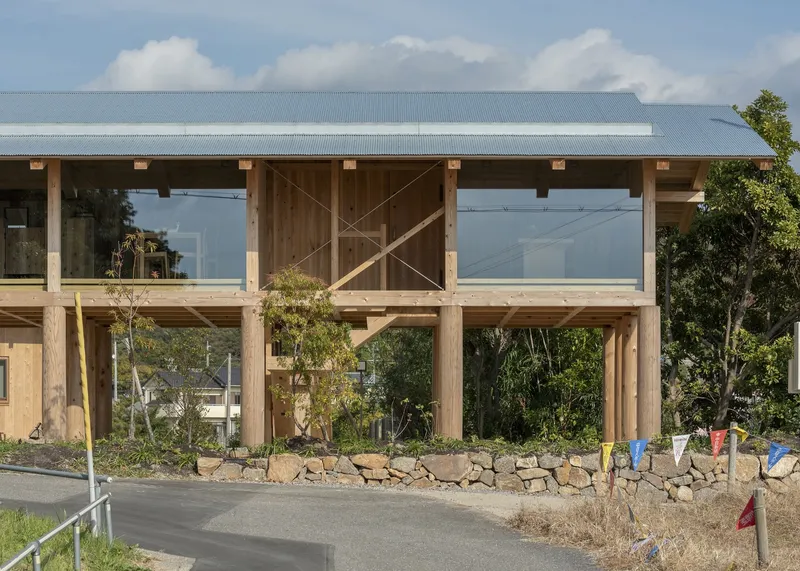
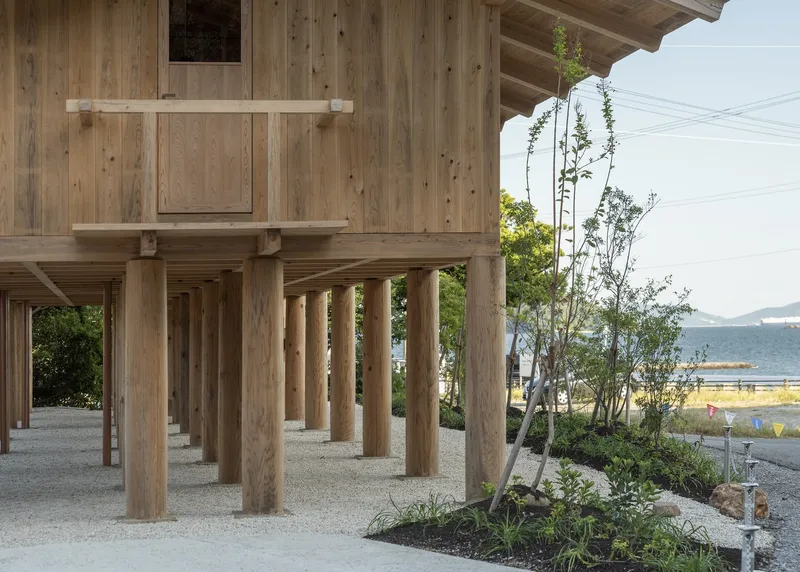
Facing a lively seaside resort that becomes crowded during summer months, the architects sought a structure that would remain serene and dignified while fully embracing the expansive coastal scenery. Wood was selected as the primary material, aligning with both the company’s natural philosophy and the surrounding landscape. The defining architectural gesture was the decision to elevate the entire building on pilotis, freeing the ground level and allowing uninterrupted views, airflow, and multifunctional use, including parking beneath the structure.
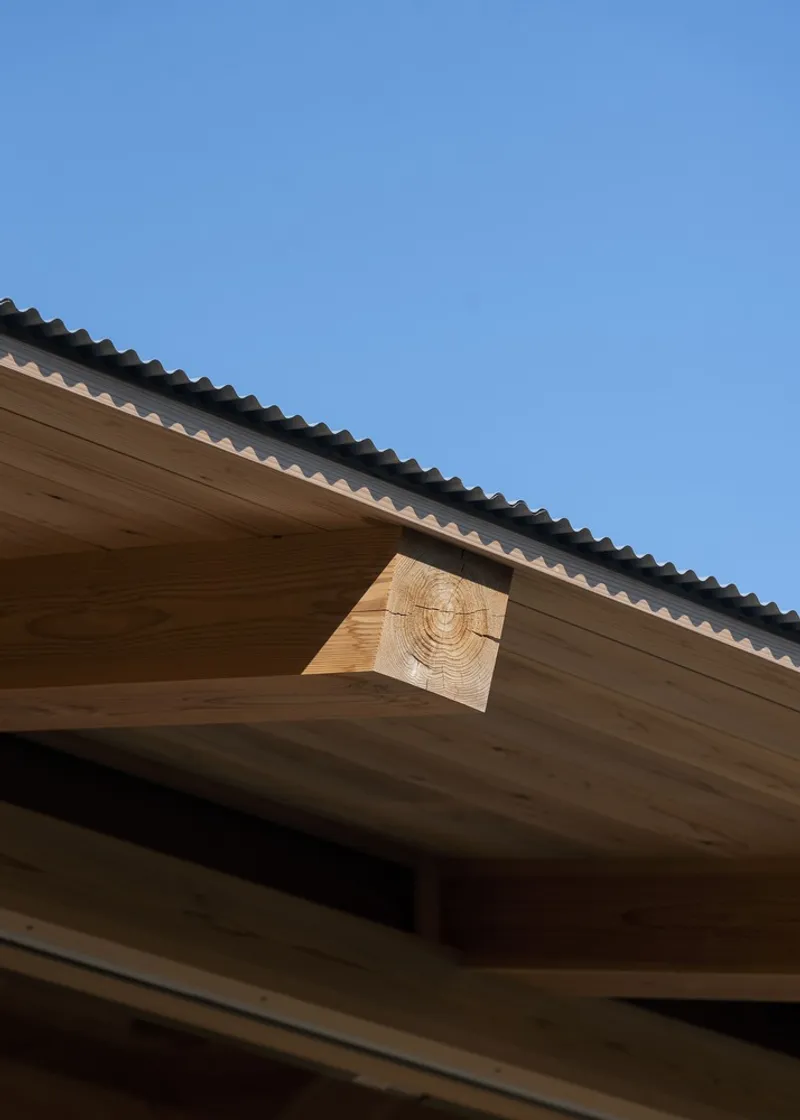
Structurally, this decision presented significant challenges. Conventional point foundations were unsuitable due to the scale of the building and budget constraints. After nearly six months of research and testing, the project adopted a contemporary construction method using steel “home connectors” to rigidly join wooden columns to a solid foundation, with the upper structure resting atop these supports. The resulting system balances seismic stability with architectural lightness, while carefully calibrated column spacing and dimensions maintain both strength and visual elegance.
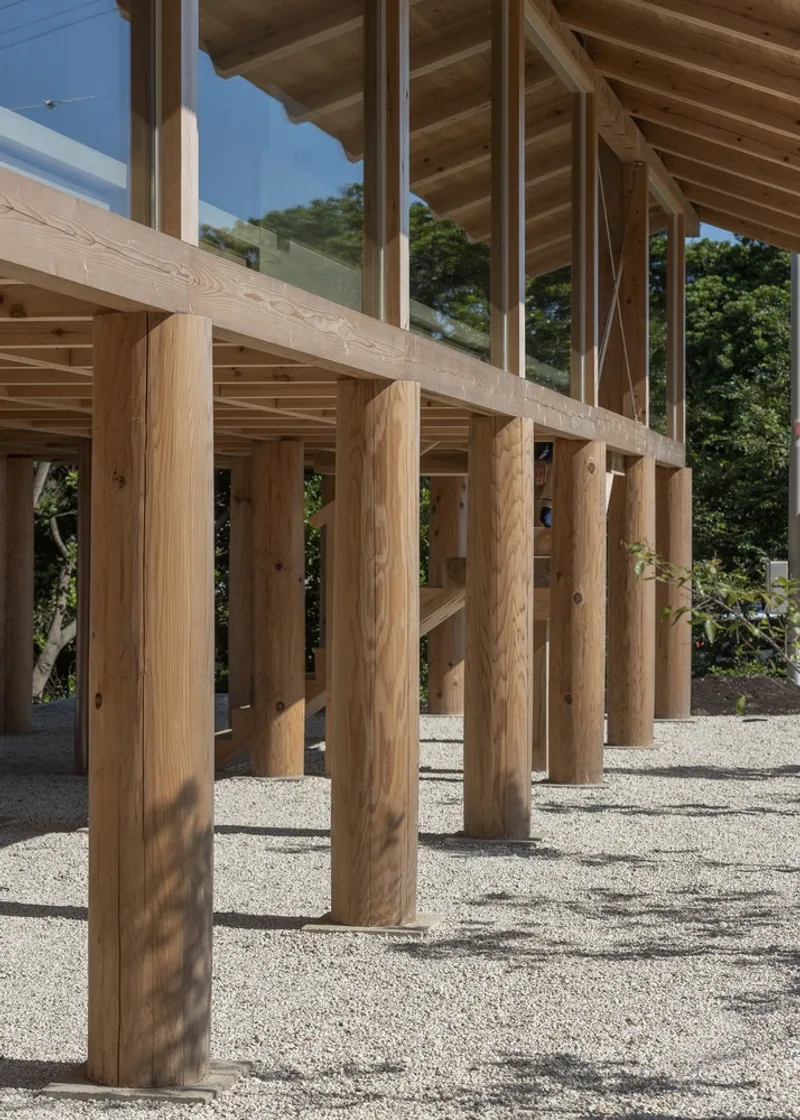
A defining feature of the project is its expressive wooden columns. Rather than machine-cutting, the architects and craftsmen shaped uneven logs into 33-centimeter circular columns directly on site, blending traditional hand tools with modern electric planers. Inspired by historic Japanese temples and shrines, the columns were subtly shaped with “mukuri”, a gentle convex curvature that lends warmth, vitality, and softness to the structure. This nuanced detail—barely perceptible at first glance—embodies the project’s deep respect for traditional Japanese architectural aesthetics.
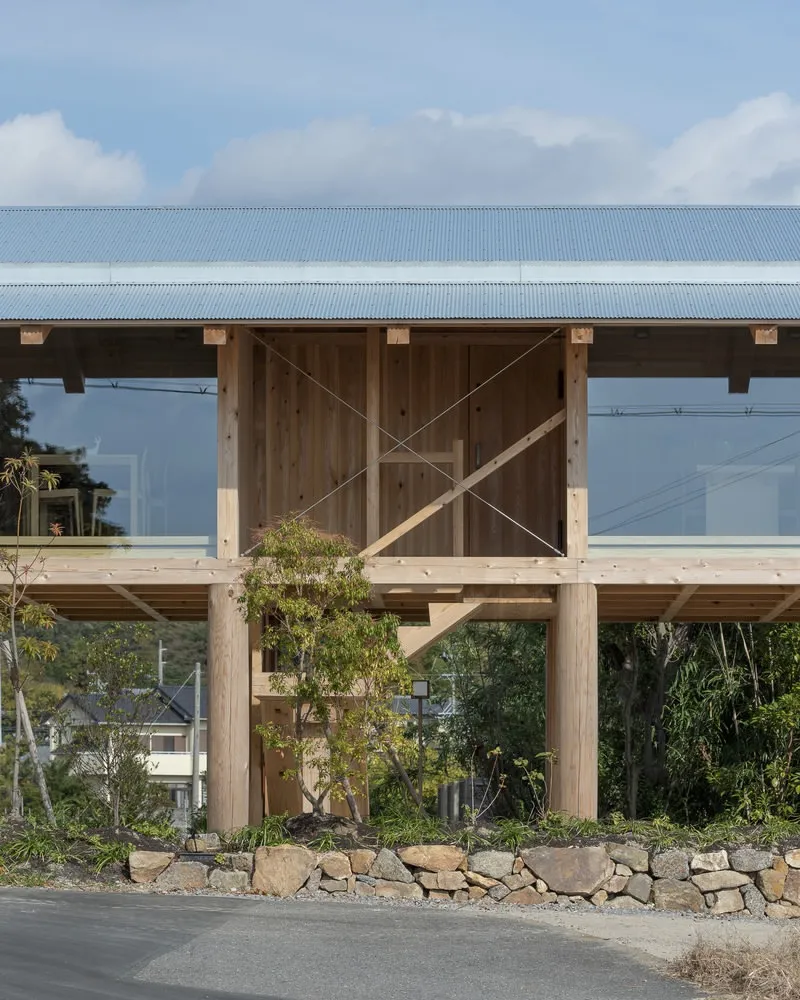
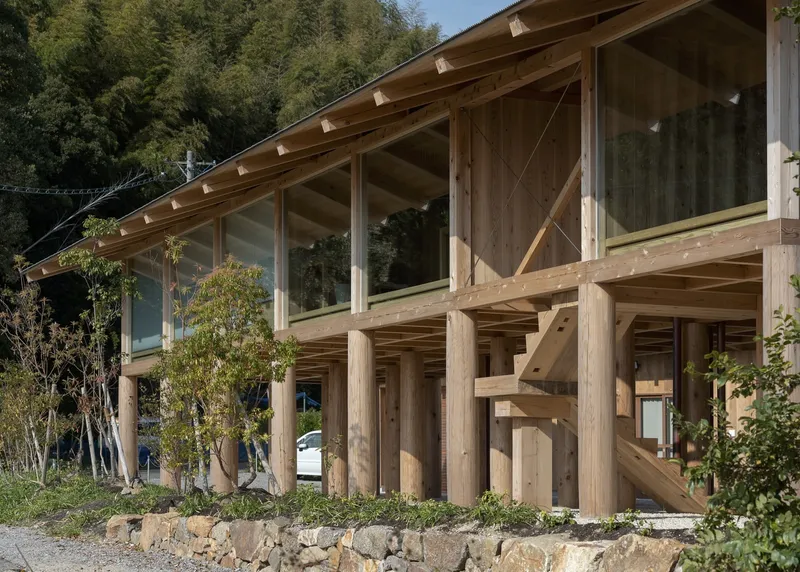
Construction evolved as a collaborative process, with craftsmen contributing critical insights that enhanced both performance and longevity. Structural refinements to stair landings, balcony construction, and material selection emerged through on-site dialogue. For example, the balcony flooring, made from weather-resistant Australian cypress, was reinforced using concealed horizontal round bars to prevent warping while increasing rigidity—an elegant solution that remains invisible yet essential. Many such interventions are hidden within the architecture, underscoring the project’s quiet sophistication and the ethos of true craftsmanship.
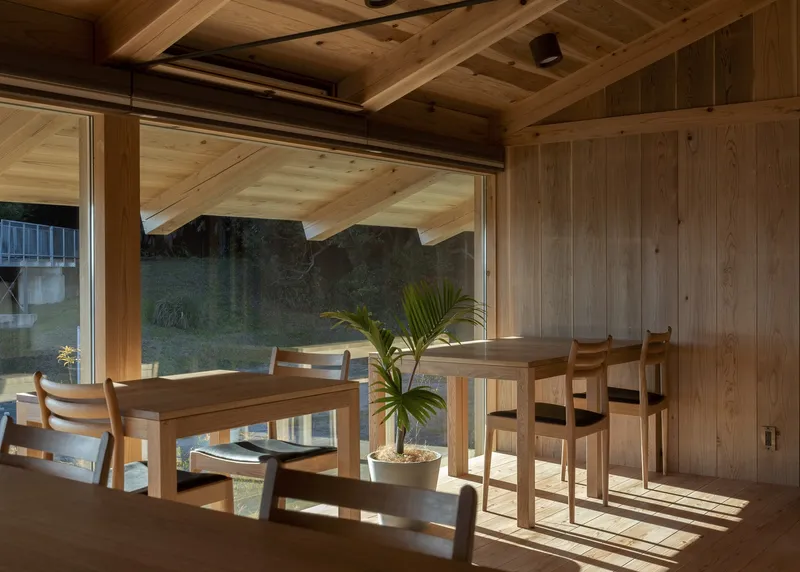
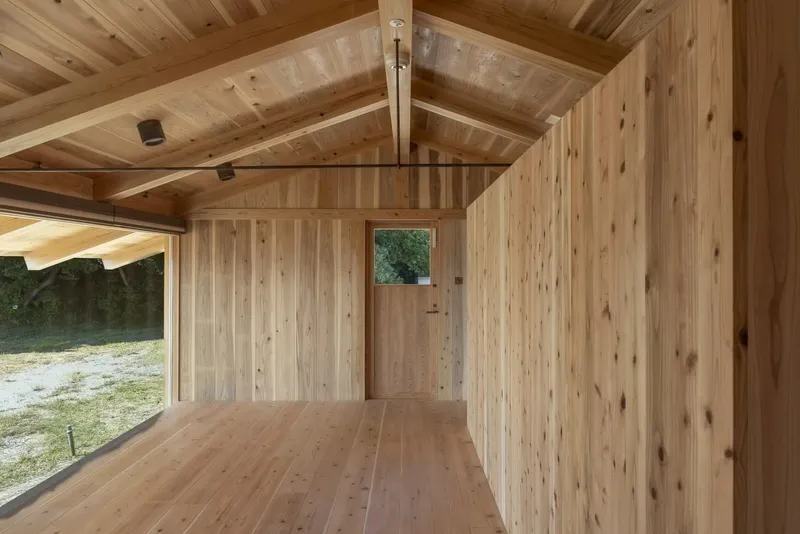
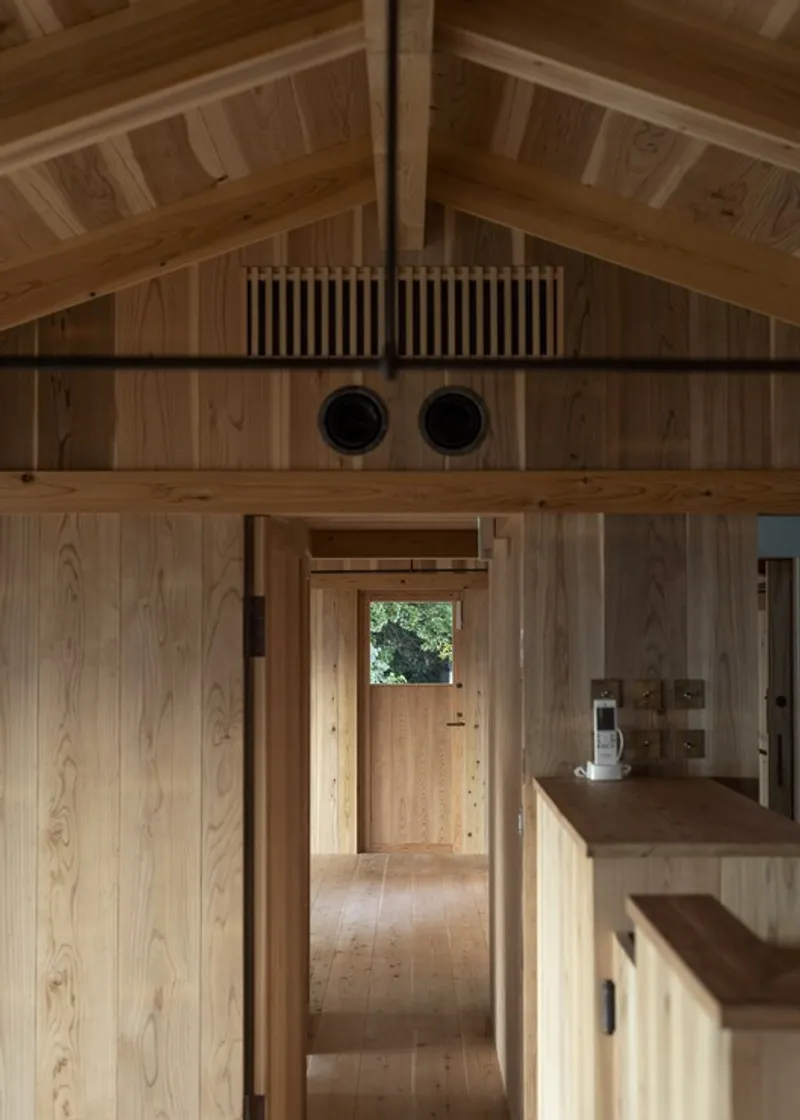
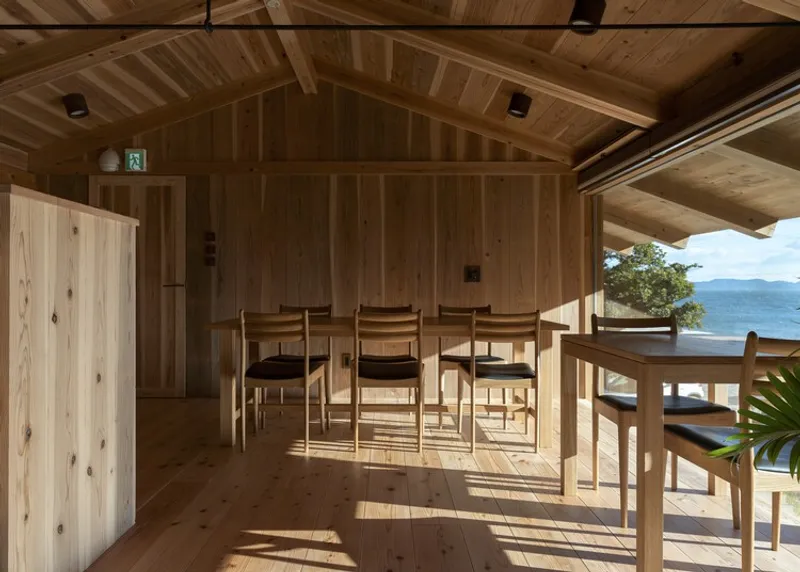
Interior spaces are defined by exposed timber beams, carefully proportioned rooms, and filtered views toward the sea. Dining, kitchen, and guest areas flow naturally, reinforcing a sense of calm continuity while allowing the building to function flexibly as both hospitality space and corporate showroom. Natural light, wood textures, and structural clarity create an atmosphere that is simultaneously contemporary and deeply rooted in tradition.
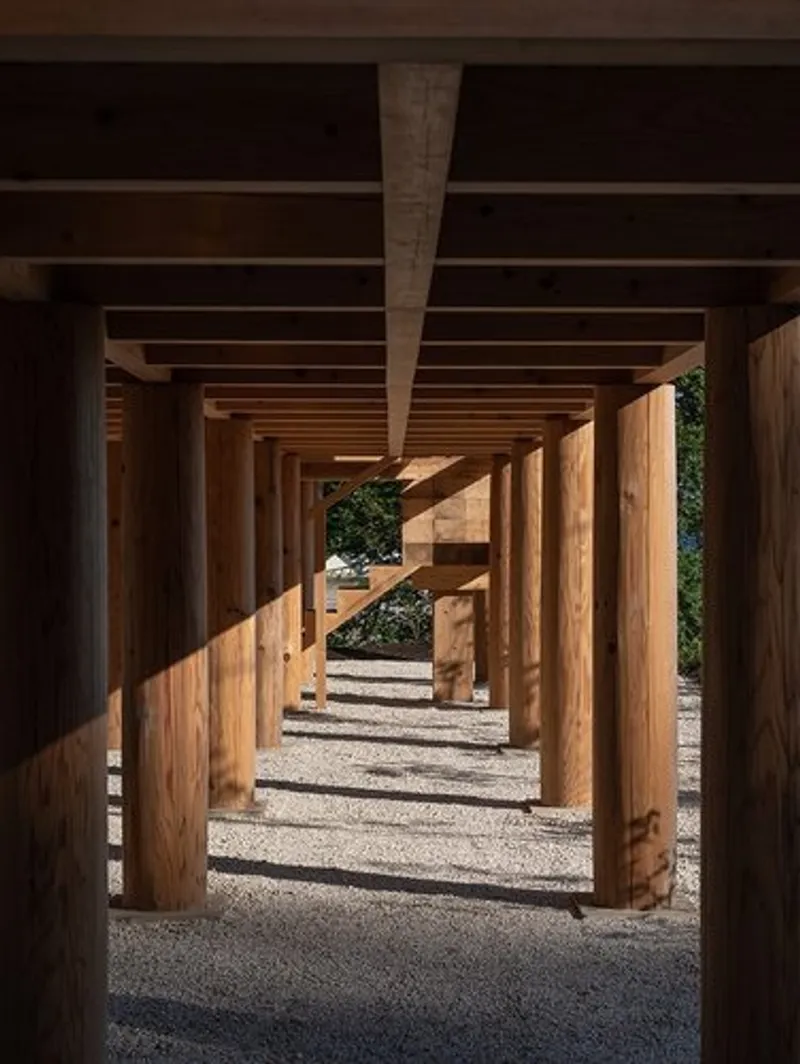
For Tomoaki Uno, the project represents more than a completed building—it reflects an architectural philosophy shaped by years of hands-on construction experience. Viewing the construction site as a living organism, Uno embraces the idea that architecture continues to be designed during the act of building itself. Desktop concepts are refined through material reality, craft knowledge, and real-time decision-making. In Terabe Guest House, this approach results in a structure that feels both precise and alive, grounded in place, people, and process.
All photographs are works of Nathanael Bennett


Popular Articles
Popular articles from the community


longwave studio Reorganizes a 112 m² Tainan Apartment Around the Daily Routines of a Family and Two Cats
In Tainan, Taiwan, birch plywood, rust-red furniture and a freestanding plaster wall link arrival, storage, work and family life in one apartment.

David Ortega Stacks a Two-Story Mexico City Penthouse Around a Steel Stair and a Pergola-Shaded Roof Terrace
In Colonia Roma, a 300 m² penthouse uses oak joinery, a planted steel stair and a slatted roof pergola to make a new-build apartment feel like a house.

GROUP A Strips a 1969 Rotterdam Harbor Headquarters to Its Frame and Wraps It in Timber Louvers
In Rotterdam's M4H harbor district, Ferro Offices reuses a 1969 frame, adds one timber storey and reaches BREEAM-NL Outstanding.

Cube Design Draws an Ecological Corridor Between Two Shenzhen Hills with the Nankai Building
Beside Shenzhen's container docks, the Nankai Building pairs stacked balconies with a climbing green screen to connect two hillsides across its height.

Similar Reads
You might also enjoy these articles


Hodi-Mandai Geram
Project Function: Preservation and revitalization of the Intangible heritage and socio-spatial identity of the Hodi by Housing, Cultural Memory Center, Sacred Grove, landscape, local tourism economy


Olio Towers: A Mid-Rise for Performers That Fuses Housing, Rehearsal, and Stage
Located blocks from Houston's Theater District, this modular tower stacks living units around a central performance atrium.

Oasis: Modular Green Housing Carved into Dhaka's Urban Fabric
A shortlisted Plugin Housing entry reclaims unauthorized settlements in Dhaka with stepped concrete volumes, green roofs, and ventilation-driven design.

Black Hole: A Floating Megastructure for the Post-Physical Era
Emiliano Mazzarotto envisions a spherical, self-scaling arena where e-sports, digital hotels, and holographic stadiums replace traditional public space.

Explore Tetsuo Kobori Architects Competitions
Discover active competitions in this discipline

Challenge to reimagine the Iron Throne

Photograph architecture without architects

Illustrate the lost glory of Angkor Wat - Render Challenge

Design challenge to reuse E-waste
Comments (0)
Please login or sign up to add comments
No comments yet. Be the first to comment!