

The 300 Square Feet House by HnP Architects: Innovative Compact Living in Tiruchirappalli
The 300 Square Feet House by HnP Architects maximizes a tiny urban plot with flexible layouts, raw materials, natural light, and sustainable design.


Located in one of the busiest neighborhoods of Tiruchirappalli, India, The 300 Square Feet House by HnP Architects is a remarkable example of compact and functional residential design. Completed in 2024, this innovative home transforms a modest 12' x 22' plot, acquired after the demolition of the client’s ancestral property, into a thoughtfully organized three-story residence. Despite the constraints of a wall-to-wall urban setting, the architects achieved a design that balances functionality, aesthetics, and cultural context.
Efficient Use of Space
The house accommodates two commercial units on the ground floor and one household unit on each of the upper floors. With a total built-up area of 900 ft², every inch of the 300 sq.ft plot is utilized to maximize usability. The architects emphasized spatial flexibility, reducing solid walls to allow open, adaptable interior layouts.
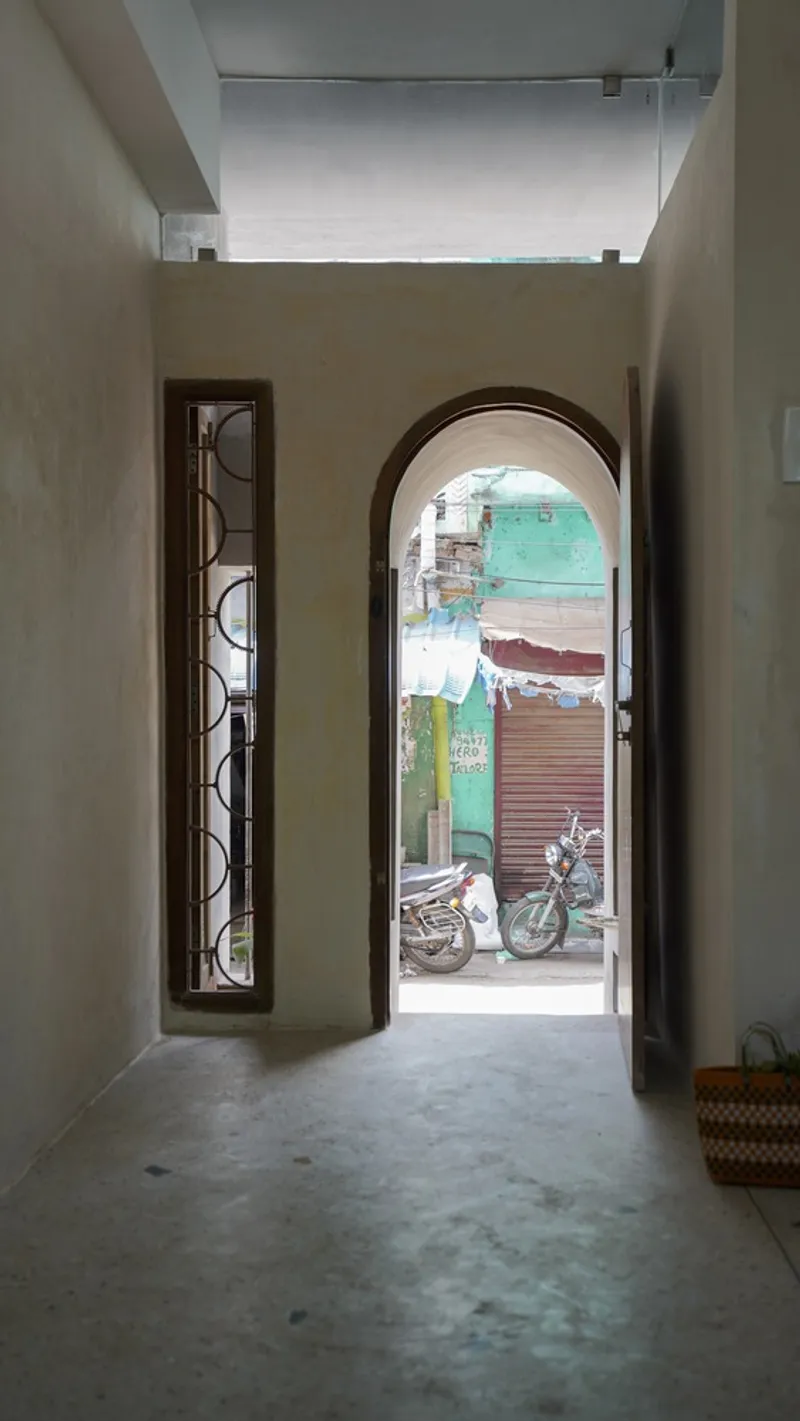
A traditional thinnai seater, positioned next to the street, provides a welcoming space for residents to interact with the neighborhood while enjoying the bustling street view. The staircase connecting the ground floor to the upper levels is shared with the adjacent plot, optimizing circulation without compromising privacy.
Thoughtful Interior Layouts
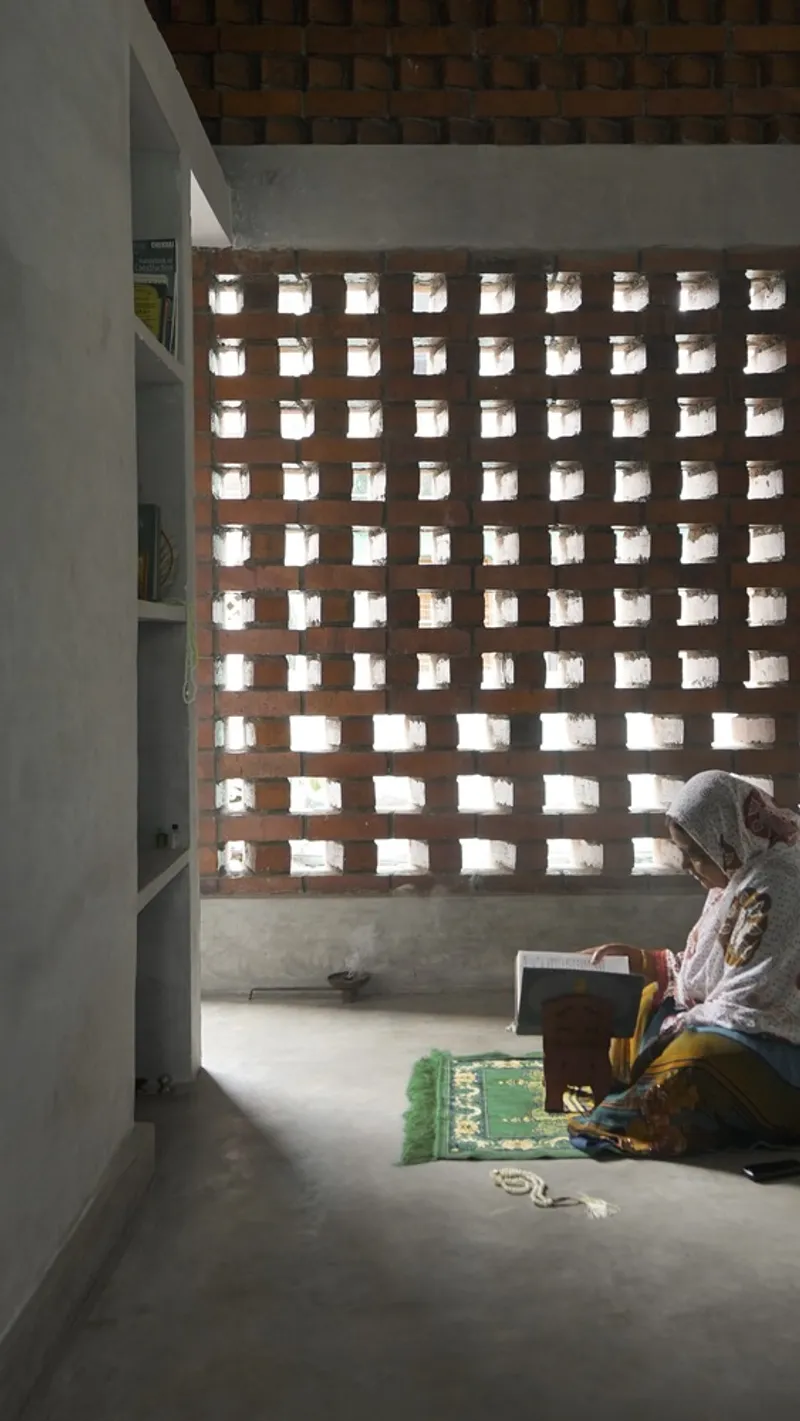
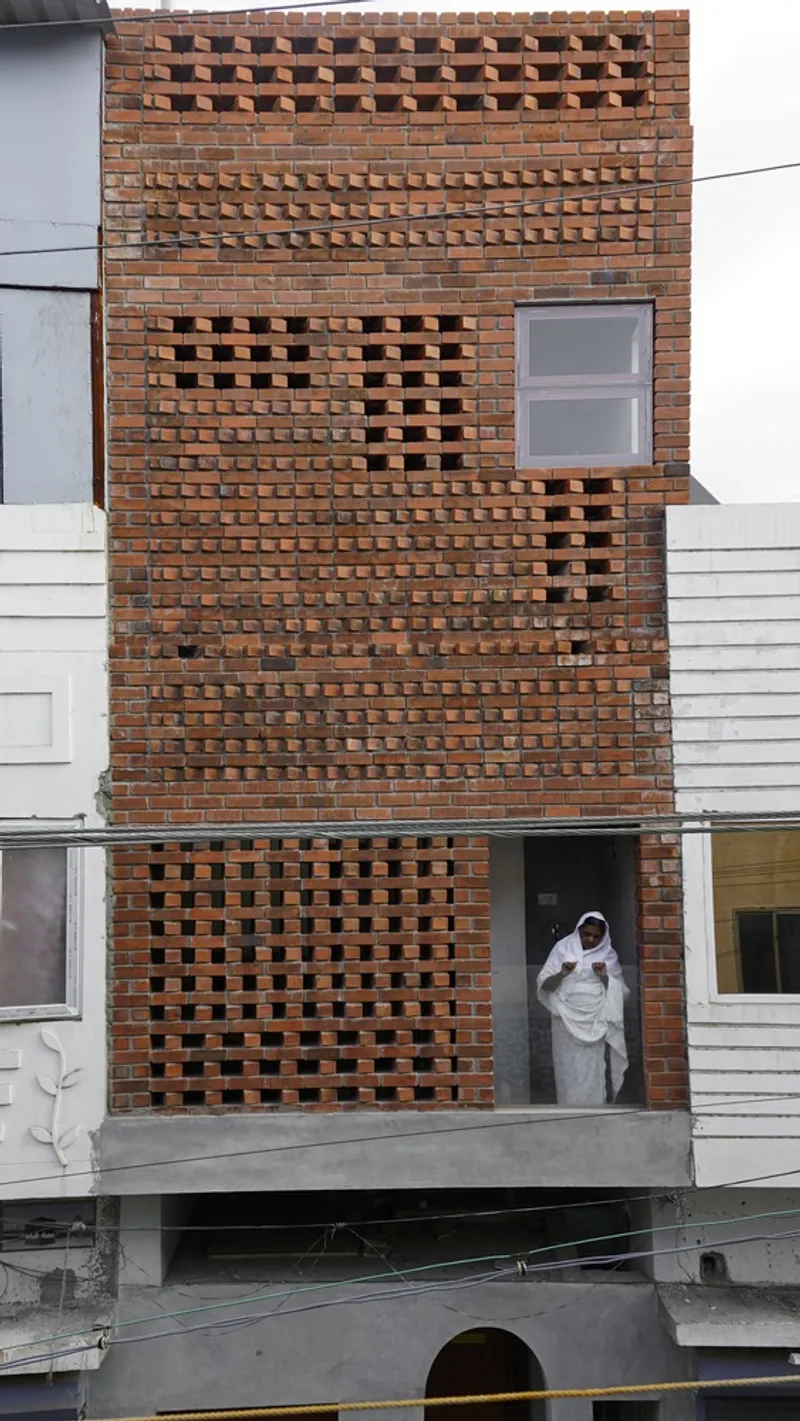
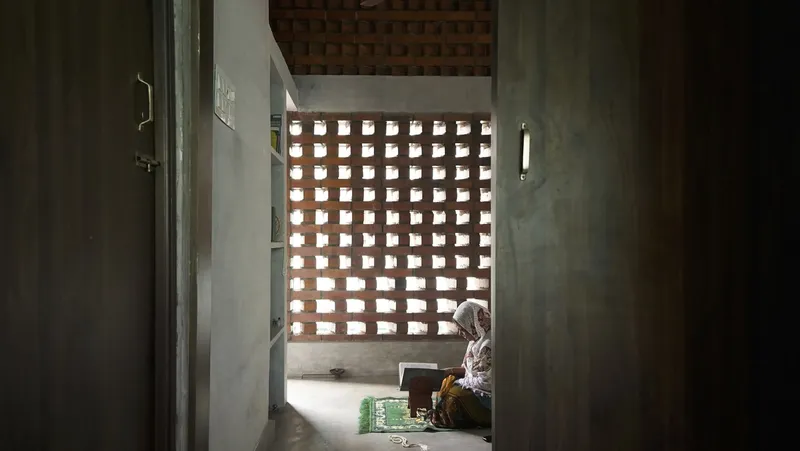
The first floor features a living area, cooking counter, bedroom, common toilet, and a balcony. A diagonally patterned brick jaali wall ensures privacy while framing views of the street. The balcony doubles as a utility area for laundry, demonstrating the clever multi-functional design approach.
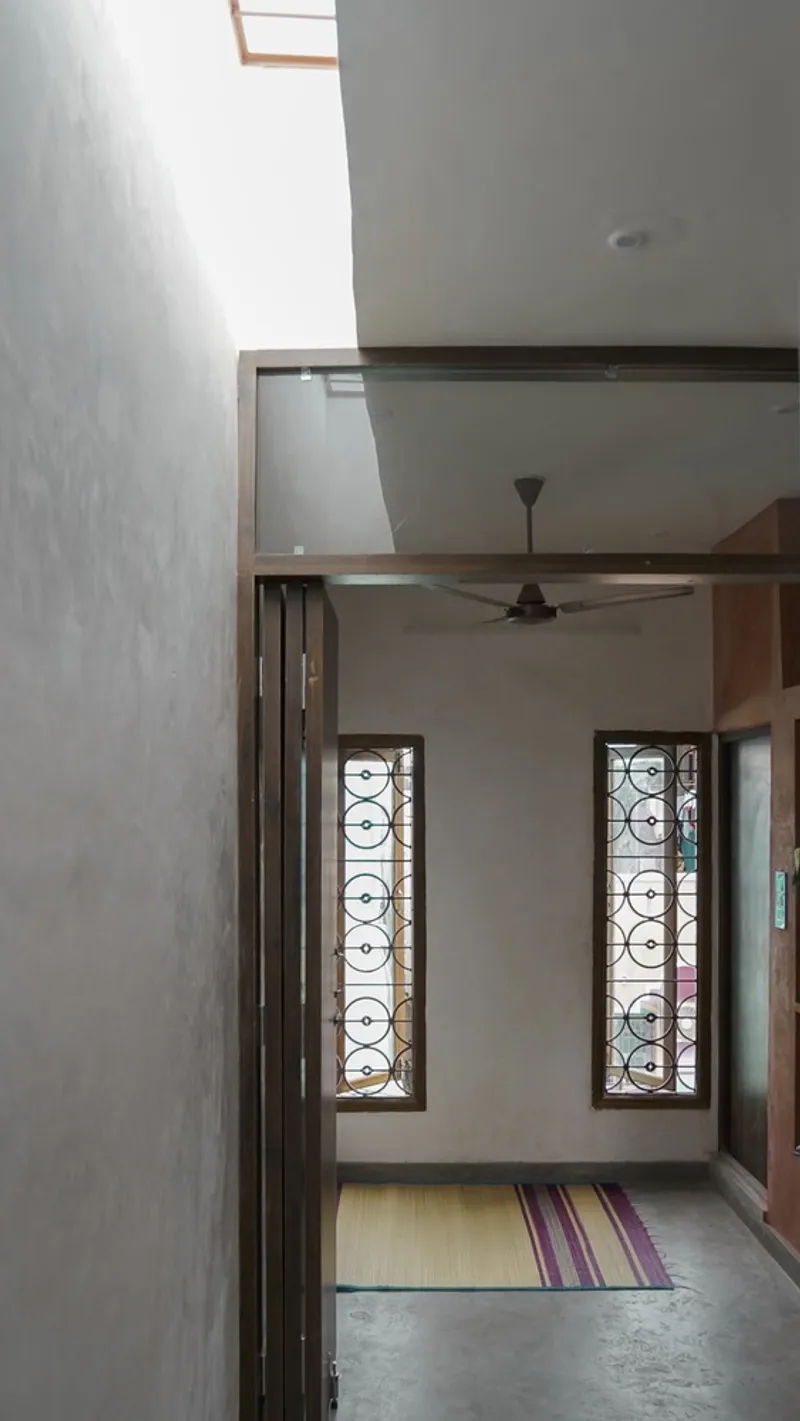
On the second floor, a buffer space leads into a living room with an open kitchen. A sliding folding door separates the living and bedroom areas, providing flexibility for gatherings or special occasions. Bathrooms are strategically positioned to maintain privacy, and loft storage spaces above toilet and bathroom areas preserve openness throughout the home.

Raw Materials and Sustainable Design
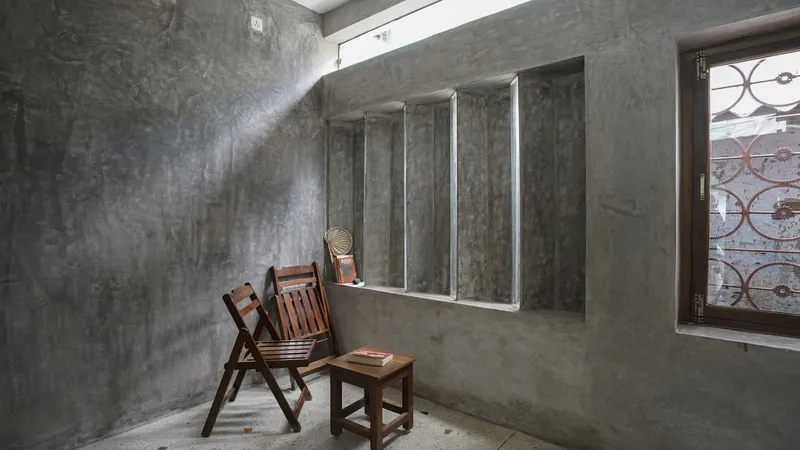
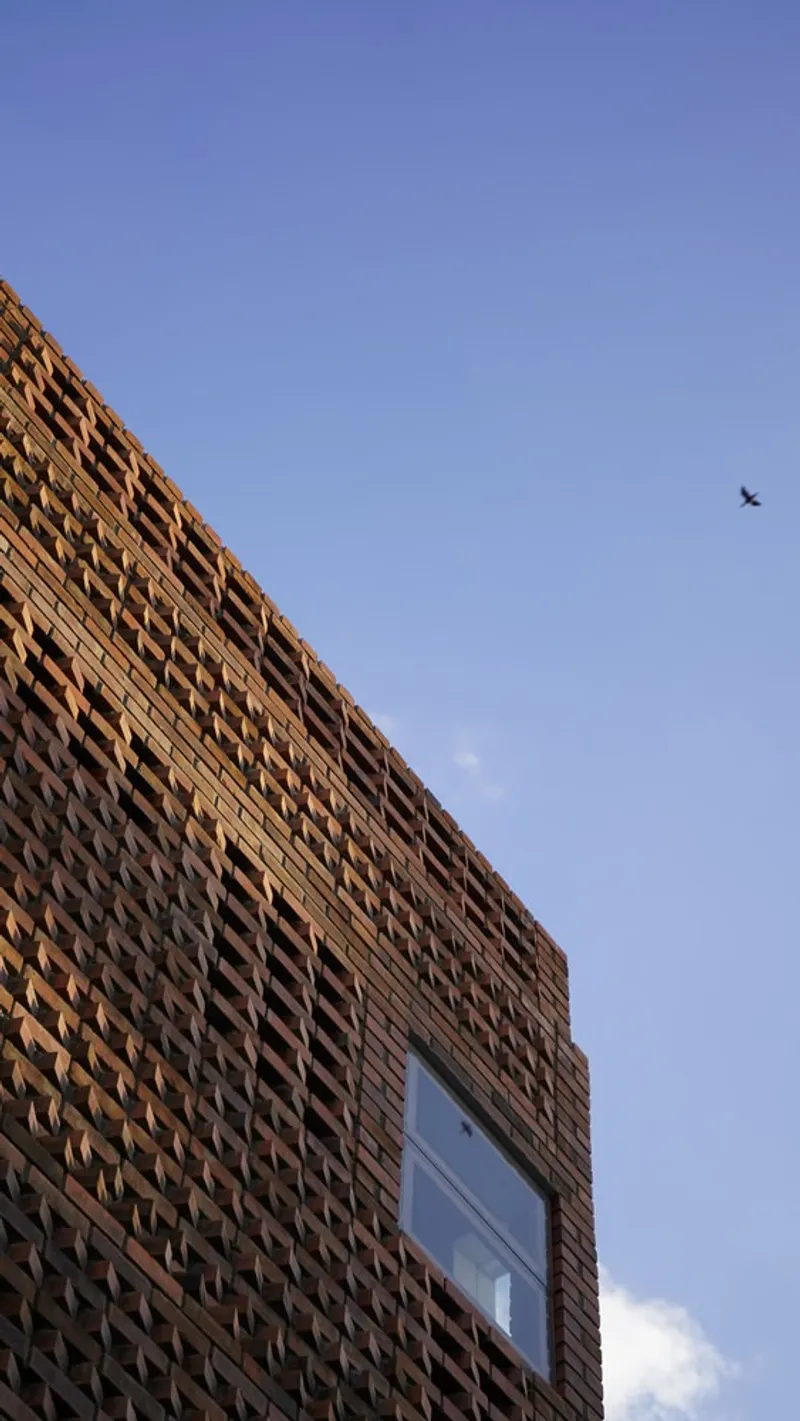
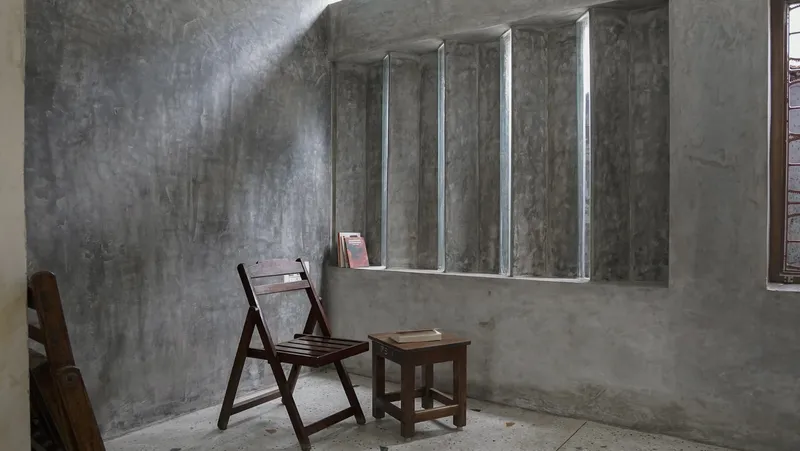
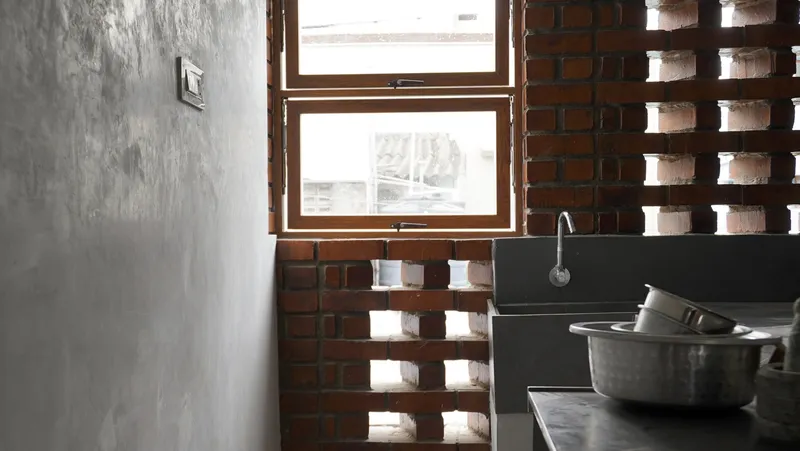
The aesthetics of the home rely on the natural beauty of its materials. Exposed brick walls, lime-plastered interiors, terrazzo and cement oxide flooring, reclaimed wood for doors and window frames, and repurposed motor parts for window grills celebrate raw, honest architecture. This material-first approach reduces unnecessary ornamentation while highlighting the beauty of simplicity.
Natural Light and Ventilation
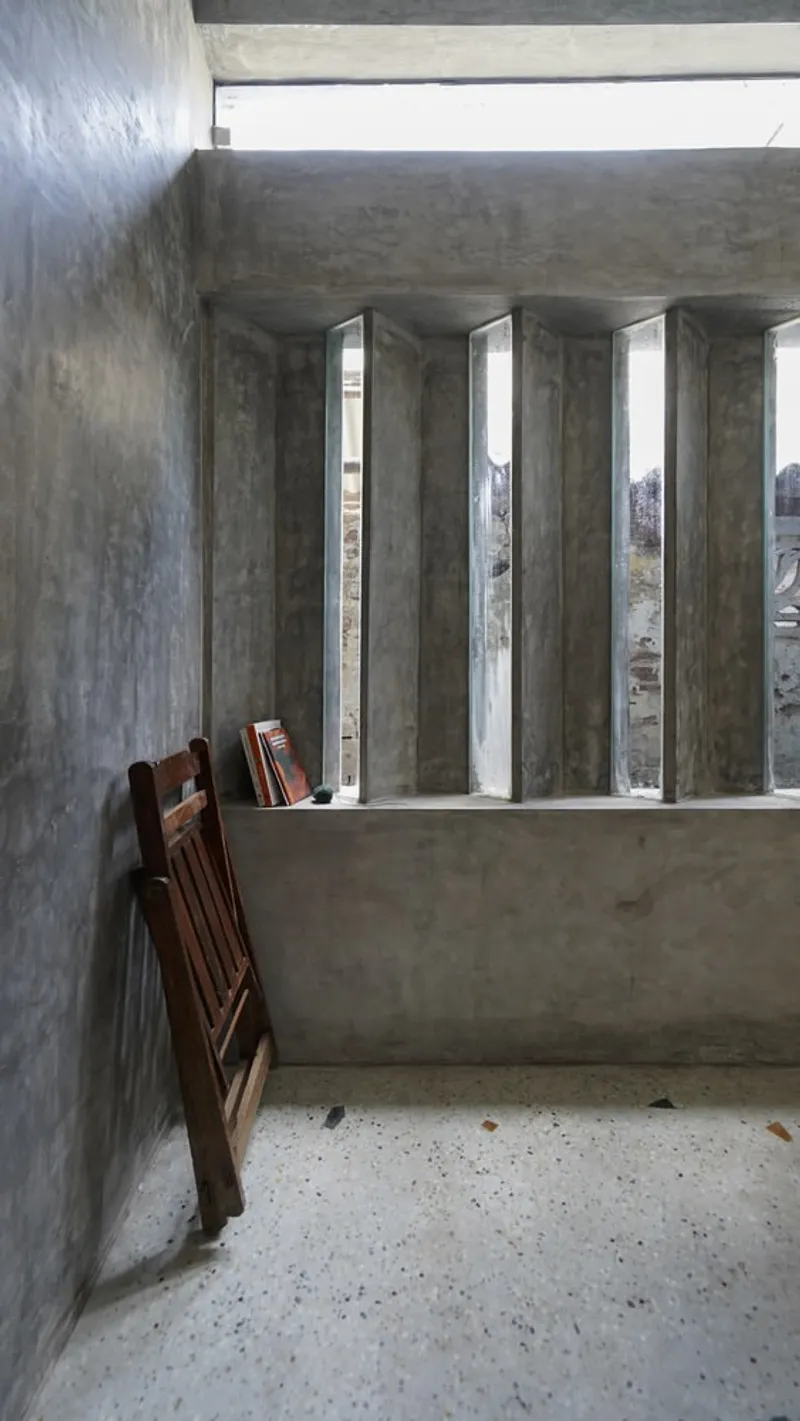
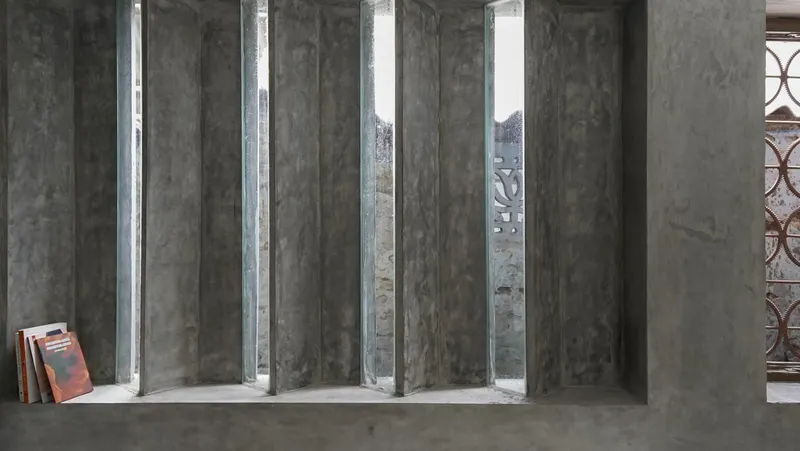
Minimizing artificial lighting and ventilation was a key priority. With east and west walls shared with neighbors, north-south orientation and clever design strategies were essential. Wall slits, clerestories, skylights, and a north-facing brick jaali provide ample daylight and cross-ventilation, creating a comfortable indoor environment. The tilted brick arrangement on the jaali reflects cultural sensitivity to the nearby mosque and local traditions.
Construction Challenges
Constructing a home in a narrow, wall-to-wall street posed logistical challenges. Even accommodating construction vehicles and mixing materials required careful planning. Despite these hurdles, HnP Architects completed a project that demonstrates how small urban plots can yield functional, culturally responsive, and beautiful architecture.
A Simple Yet Impactful Statement
The 300 Square Feet House is proof that compact architecture need not compromise on design integrity. With smart planning, sustainable materials, and careful attention to light, ventilation, and spatial flexibility, even modest urban plots can achieve exceptional residential architecture. This project challenges conventional notions that beauty in architecture requires extravagance, showing that thoughtful minimalism can create extraordinary living spaces.
All photographs are works of cut.idam



Popular Articles
Popular articles from the community


AL-JANNAH: Sustainable Architecture and Permaculture for Afghan Widows
AL-JANNAH uses sustainable architecture and permaculture to create resilient oasis of housing, learning, work and renewal for Afghan widows.

The Musturak Paradise: Senior Living Architecture for a Connected Future in Temara, Morocco
The Musturak Paradise reimagines senior living architecture in Temara via private homes, social spaces, culture, community, and shared care.

Riyadh For All: Intergenerational Urban Design for Active Aging in Rabat
Riyadh For All reimagines urban design in Rabat with intergenerational co-living, adaptive courtyards, and Moroccan cultural exchange today.
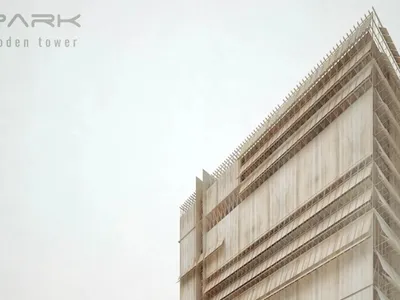
EW PARK: Sustainable Architecture Reimagines the Future of Urban Parking
EW PARK reimagines city parking as a modular wooden tower combining automation, solar energy, electric mobility, and adaptable urban design.


Similar Reads
You might also enjoy these articles


Hodi-Mandai Geram
Project Function: Preservation and revitalization of the Intangible heritage and socio-spatial identity of the Hodi by Housing, Cultural Memory Center, Sacred Grove, landscape, local tourism economy


Olio Towers: A Mid-Rise for Performers That Fuses Housing, Rehearsal, and Stage
Located blocks from Houston's Theater District, this modular tower stacks living units around a central performance atrium.

Oasis: Modular Green Housing Carved into Dhaka's Urban Fabric
A shortlisted Plugin Housing entry reclaims unauthorized settlements in Dhaka with stepped concrete volumes, green roofs, and ventilation-driven design.

Black Hole: A Floating Megastructure for the Post-Physical Era
Emiliano Mazzarotto envisions a spherical, self-scaling arena where e-sports, digital hotels, and holographic stadiums replace traditional public space.


Explore Tiny House Competitions
Discover active competitions in this discipline



Challenge to reimagine the Iron Throne


Photograph architecture without architects


Illustrate the lost glory of Angkor Wat - Render Challenge


Design challenge to reuse E-waste
Comments (0)
Please login or sign up to add comments
No comments yet. Be the first to comment!