
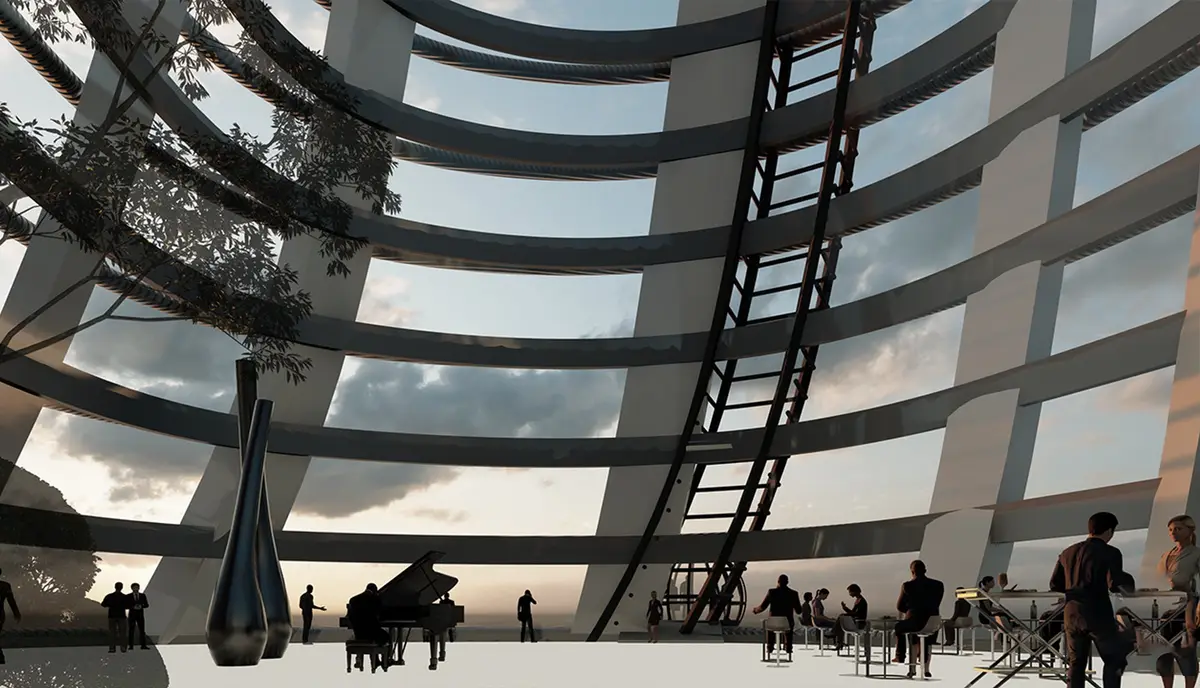
The Adsequor: A New Paradigm in Sustainable High-Rise Architecture
A visionary sustainable high-rise architecture redefining coastal cities by restoring wetlands, optimizing energy, and reshaping urban ecological balance.


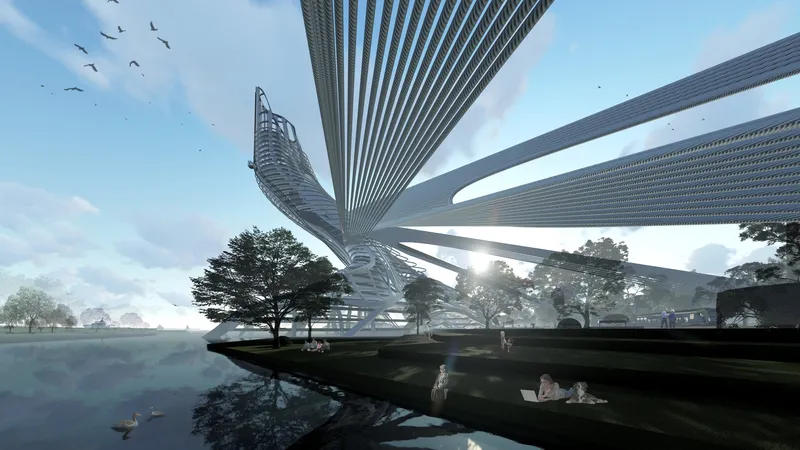
The Adsequor is a forward-thinking exploration of sustainable high-rise architecture, positioned along the seashores of Izmir where the historic Meles Stream meets the fragile ecosystem of the Meles Delta. This wetland, once a vital ecological asset, has gradually been neglected under the pressure of rapid urbanization and the uncontrolled expansion of high-rise developments. The project proposes not only a building, but a systemic intervention that redefines the relationship between vertical architecture and natural landscapes.
Designed by Naz Kaplan, and recognized as a People's Choice Award entry in Commercial '20, The Adsequor challenges the conventional high-rise typology by embedding ecological repair into its core design logic. Instead of occupying land as a static object, the project acts as an environmental mediator between city and nature.
Reimagining High-Rise Typology Through Ecology
At the heart of The Adsequor lies a critical question: can a high-rise building contribute positively to its ecosystem rather than deplete it? The project answers this through a hybrid architectural system that integrates water management, structural innovation, and environmental responsiveness.
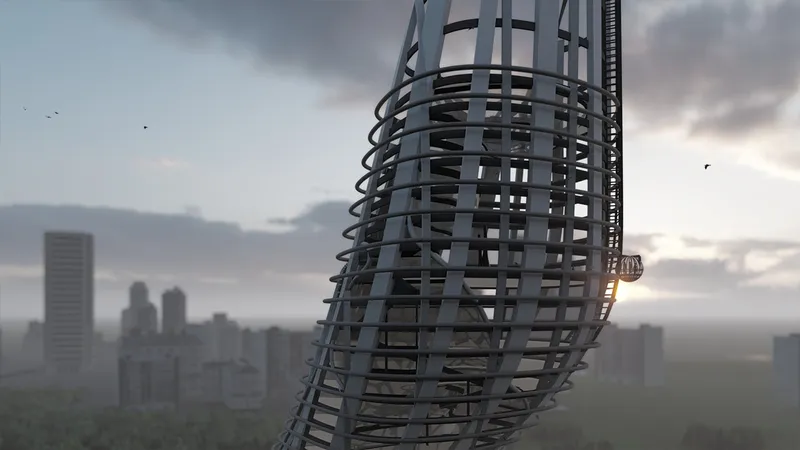
The tower adopts a leaning form oriented towards the northeast. This is not merely a formal gesture, but a performance-driven decision. The inclination increases the surface area available for rainwater collection, turning the building into a vertical water-harvesting device. In a city context where water management is increasingly critical, this strategy positions architecture as active infrastructure.
Simultaneously, the leaning geometry redistributes structural loads across a broader footprint, reducing pressure on the sensitive wetland soil. This approach mitigates the risk of ecological damage while establishing a more resilient foundation system suited to unstable terrains.
Structural Intelligence and Load Distribution
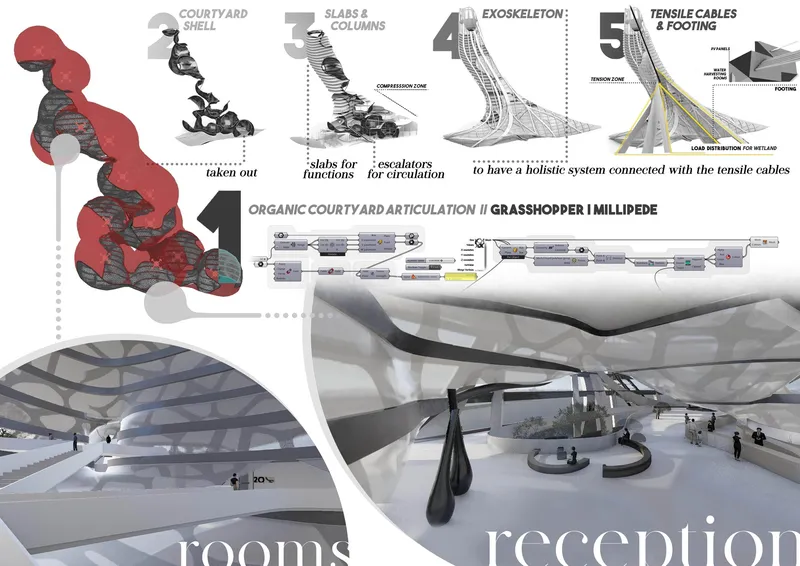
The structural system of The Adsequor operates as an integrated exoskeleton supported by tensile cable networks. This combination allows for efficient load transfer while maintaining architectural fluidity. The exoskeleton defines the building envelope, reducing the need for excessive internal columns and enabling flexible interior configurations.
The tensile cables extend into the ground, distributing forces across the wetland in a controlled manner. This system not only stabilizes the structure but also minimizes disruption to the natural substrata. The result is a building that behaves as a lightweight intervention despite its vertical scale.
The interplay between compression zones in the core and tension systems along the exterior creates a dynamic structural equilibrium. This balance allows the tower to maintain its sculptural form while responding to environmental forces such as wind and seismic activity.
Programmatic Zoning and Experiential Design
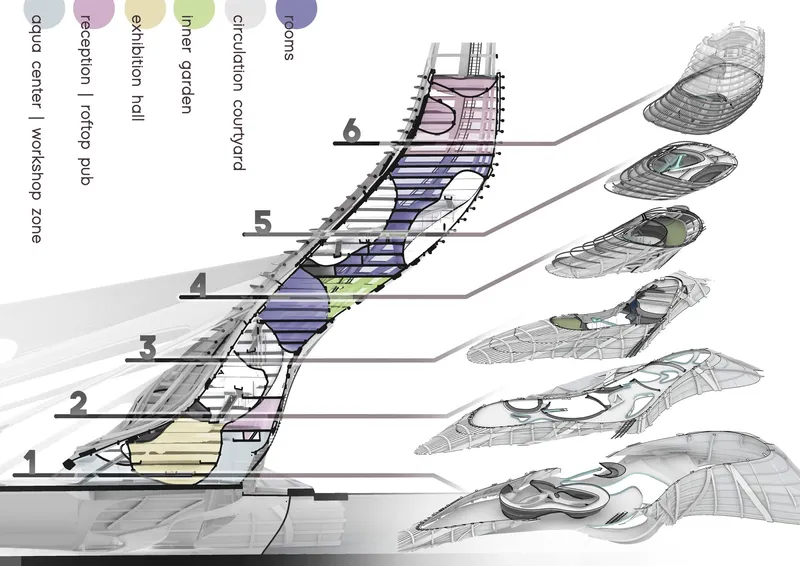
The Adsequor organizes its program vertically, responding to environmental conditions and user experience. The southwest elevation houses the functional core of the building, including technical spaces and energy systems. This orientation maximizes solar exposure, enabling passive energy generation and reducing operational demands.
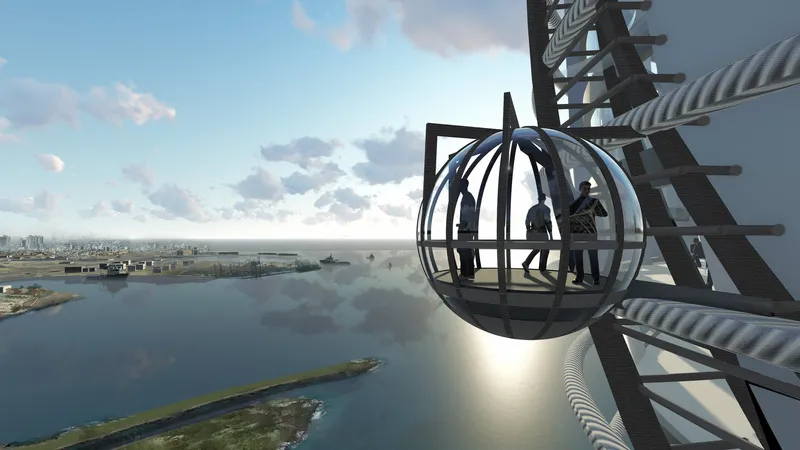
On the northeast side, the building opens towards the wetland landscape. Hotel rooms are positioned to capture expansive views of the delta, offering guests an immersive connection to the restored ecosystem. The shadow cast by the leaning structure enhances thermal comfort and creates varied spatial experiences throughout the day.
Circulation is facilitated through a series of ramps, escalators, and vertical cores that weave through the structure. These elements are not hidden but expressed as part of the architectural language, reinforcing the building's identity as a living system.
Water, Energy, and Environmental Integration
Water management is central to the project's sustainability strategy. The building's geometry channels rainwater into collection systems that support both internal use and wetland restoration. This cyclical approach transforms the tower into a contributor to the hydrological network of the site.
Energy production is integrated through solar exposure on the southwest façade, where photovoltaic systems can be embedded within the structural framework. The combination of passive and active strategies reduces reliance on external energy sources.
Furthermore, the project enhances biodiversity by stabilizing the wetland environment. By carefully distributing loads and managing water flows, The Adsequor supports the regeneration of native flora and fauna, effectively reversing the ecological degradation caused by previous developments.
Computational Design and Organic Form Generation
The architectural form of The Adsequor emerges from computational design processes, utilizing parametric tools such as Grasshopper and Millipede. These tools enable the optimization of structural performance, environmental response, and spatial organization simultaneously.
The organic courtyard articulation within the building is a direct result of algorithmic exploration. Instead of imposing rigid geometries, the design evolves through iterative simulations that respond to site conditions, load requirements, and user movement patterns.
This approach reflects a broader shift in sustainable high-rise architecture, where data-driven methodologies replace intuition-based design. The result is a building that is both efficient and expressive, merging engineering precision with architectural innovation.
Toward a Regenerative Urban Future
The Adsequor represents a significant departure from traditional high-rise development models. Rather than contributing to environmental degradation, it positions architecture as an agent of regeneration. By addressing water systems, structural impact, and ecological integration, the project establishes a new benchmark for sustainable high-rise architecture.
In the context of Izmir's evolving skyline, The Adsequor offers a critical alternative. It demonstrates that density and sustainability are not mutually exclusive, and that vertical growth can coexist with environmental restoration when guided by intelligent design.
Ultimately, the project is not just a building, but a prototype for future urban interventions. It challenges architects and developers to rethink the role of high-rise structures in fragile ecosystems and opens new possibilities for architecture that heals as it grows.


Popular Articles
Popular articles from the community

Extended Shell: Retrofitting Kolkata's Balconies as Living Urban Thresholds
A modular retrofit system recovers the social and environmental intelligence of Kolkata's historic verandas for contemporary Park Street residents.

Opera by the Sea Estonia: Three Shells Dissolving Architecture into Tallinn's Coastline
A winning opera house proposal replaces monumental form with interconnected shells that blur the boundary between building, park and Baltic Sea.
Opera on the Sea: Driftwood Logic Shapes a Timber Opera House on Estonia's Coast
Trevor Orgill's opera house translates the entangled drift of floating timber into a civic building where wood, water, and music converge.
Temporary Home for Dogs: A Reversed Zoo Rethinks Animal Shelter Architecture
In Bucharest, a sinuous corridor and freed landscape flip the logic of containment, designing a shelter that works to make itself unnecessary.

Similar Reads
You might also enjoy these articles

Eco Chapel: A Green Architecture Pavilion Designed in Symbiosis with the Forest
Eco Chapel uses green architecture to weave prayer, learning and reuse into a forest pavilion shaped by modular hexagonal canopies for life.
Kaffeebühnen: Coffee Shop Architecture Designed as a Civic Stage Between Vienna’s City and Park
Kaffeebühnen turns coffee shop architecture into a civic stage, linking Vienna’s park edge, urban life, warm timber yards, and coffee craft.
Healing Façade: Sustainable Architecture for Reforestation, Community, and Sacred Ecology in Ethiopia
Healing Façade reimagines sustainable architecture as a living wall that restores soil, catches water and renews Ethiopia's forest churches.


Urban Forest: A Vertical Ecosystem for 5,000 Workers in Singapore's Changi Business Park
Radially stacked pods and layered green decks turn a 7-acre plot into 47 acres of ecological workspace projected for 2040.

Explore Sustainable Urbanism Competitions
Discover active competitions in this discipline

Challenge to reimagine the Iron Throne

Photograph architecture without architects

Illustrate the lost glory of Angkor Wat - Render Challenge

Design challenge to reuse E-waste
Comments (0)
Please login or sign up to add comments
No comments yet. Be the first to comment!