
The Anti-Pelago: A Networked Desert Habitat
A modular octagonal grid of interconnected habitats designed to expand across the Sahara, linking nodes through tube corridors and mesh shells.

The word archipelago describes a chain of islands. The Anti-Pelago inverts it: a chain of habitable nodes spread across a sea of sand. Designed by Hiron Li, Wang Youzhi, Fengkai Qi, and Darius, this project was shortlisted as a finalist in the Extreme Habitat Challenge: Sahara on uni.xyz.
The concept proposes a sprawling network of modular habitats arranged in an octagonal grid, connected by tube corridors and anchored by vertical towers. Starting from a prototype for 1,000 people, the system is designed to scale outward indefinitely. It is less a city than an organism: growing, connecting, and colonising hostile ground one node at a time.
The Network as Urban Form
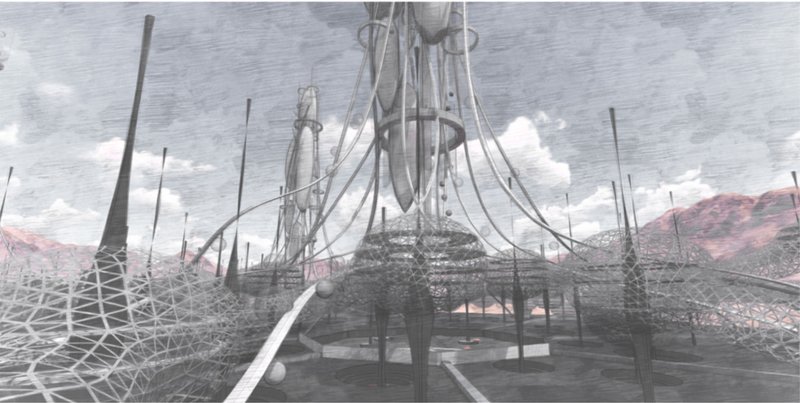
Most urban proposals for extreme environments draw a boundary and fill it in. The Anti-Pelago does the opposite. It starts with connections. Each node is linked to its neighbours through elevated tube corridors that carry people, air, water, and energy. The network comes first. The buildings grow from the network.
This has a practical advantage. A networked settlement can expand in any direction without redesigning its core. New nodes attach to the nearest existing corridor. The plan is never finished and never needs to be. Growth is additive, not disruptive.
The Hub: Where Structure Meets
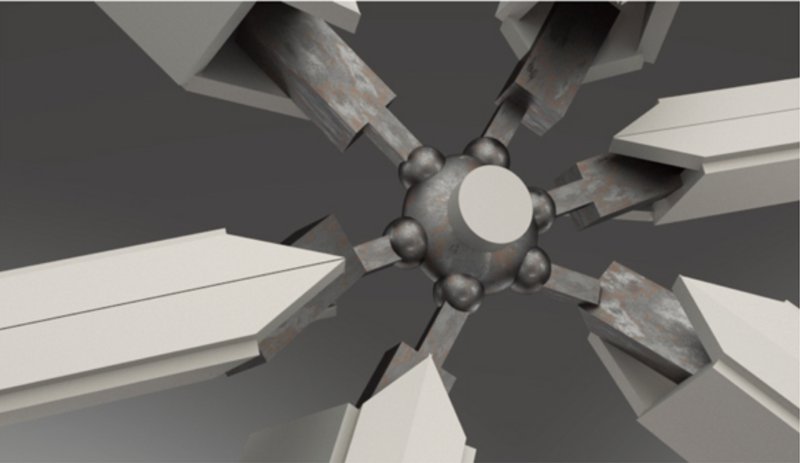
At the centre of each cluster sits a hub node: a structural joint where six radial arms converge. This is both the structural anchor and the social centre. Resources are distributed from here. People pass through here. It is the crossroads of each neighbourhood.
The radial geometry is efficient. Six arms means six directions of expansion with equal structural loading. No arm is a dead end. Every connection leads somewhere. The hub works like a roundabout in traffic: it keeps movement flowing without requiring centralized control.
The Bubble: Human Scale in a Vast System
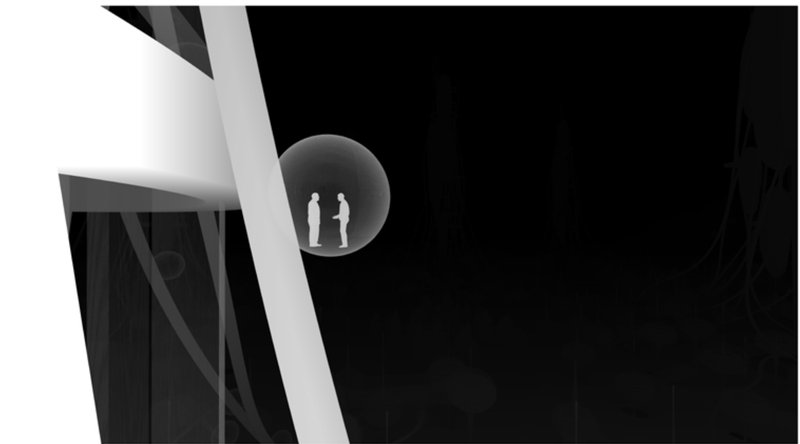
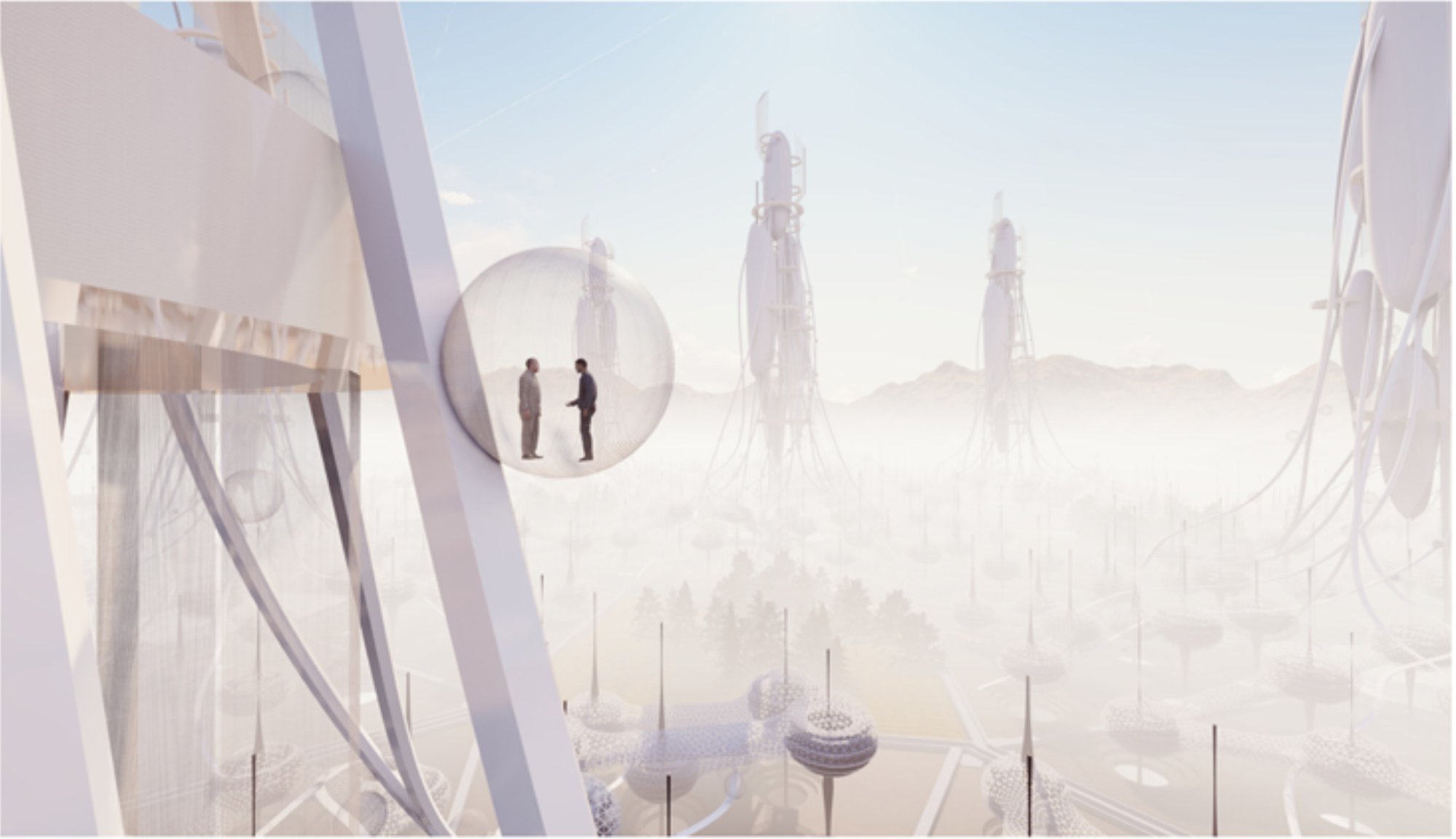
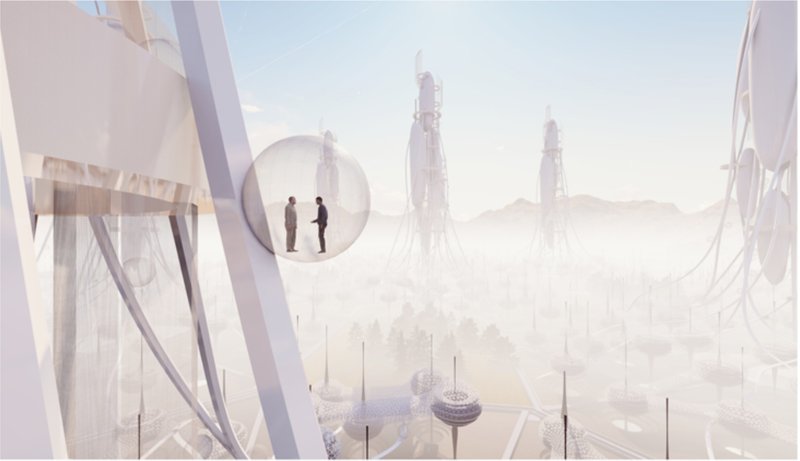
One of the project's most striking images shows two figures standing inside a transparent sphere, suspended in the dark between massive structural members. It is a small, intimate space inside a vast machine. This is the Anti-Pelago's answer to a common criticism of megastructure projects: that they forget the person.
These bubble pods appear throughout the network as meeting spaces, observation points, and connectors. They are the rooms where you stop moving and start talking. In a system designed for flow and expansion, these moments of pause are architecturally essential.
The Module: Mesh Shell and Platform
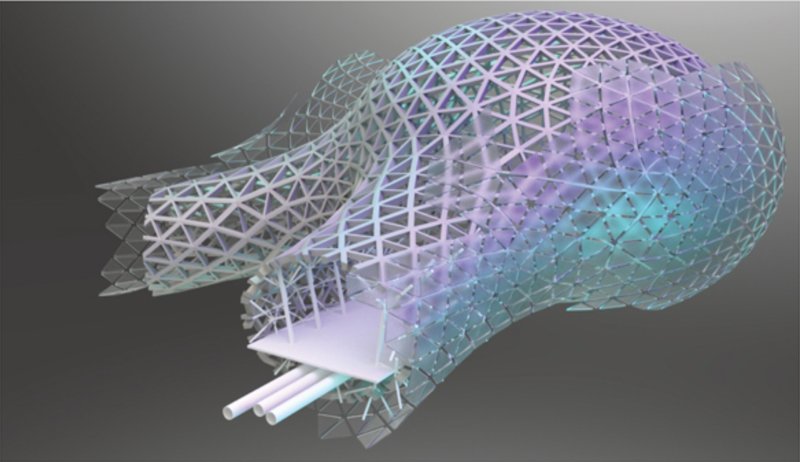
Each habitat module uses a triangulated mesh shell, a lightweight structural system that can be fabricated from standardised components and assembled on site. The shell encloses a platform with utility conduits running beneath. The geometry is organic but the logic is industrial: mass production of identical parts, local assembly, infinite repetition.
This is where the project shows its engineering ambition. The mesh shell handles wind loading, sand abrasion, and thermal expansion. The triangulated geometry distributes stress evenly, which means the shell can be thin and light without sacrificing strength. Less material, more span.
Why This Project Matters
The Anti-Pelago is one of the more technically developed entries in the EHC Sahara competition. It does not stop at the atmospheric render. It proposes a structural system, a growth model, a circulation strategy, and a social logic. The octagonal grid is not arbitrary; it is derived from the requirements of equal connectivity and modular expansion.
For anyone studying networked urbanism, modular architecture, or extreme environment design, this project demonstrates how to think at the system level without losing the human scale. The bubble pods prove that a megastructure can still have intimacy. The mesh shells prove that ambition can be structurally grounded.
View the Full Project
About the Designers
Designers: Hiron Li, Wang Youzhi, Fengkai Qi, Darius
Enter a Design Competition on uni.xyz
If networked, modular, or speculative architecture is the kind of work you want to produce, uni.xyz runs design competitions year-round that reward systems thinking and structural ambition.
Project credits: The Anti-Pelago by Hiron Li, Wang Youzhi, Fengkai Qi, Darius. Finalist, Extreme Habitat Challenge: Sahara (uni.xyz).




Popular Articles
Popular articles from the community

Takeshi Hosaka Architects Suspends a Concrete Cross Above a Yokohama Cemetery
A 28-square-meter burial renovation in Yokohama lifts the symbol of resurrection into the sky so mourners see it against heaven.

20 Most Popular Office Building Projects of 2025
From biophilic workspaces in India to net-positive energy offices in New Delhi, 20 office building projects that defined architecture in 2025.
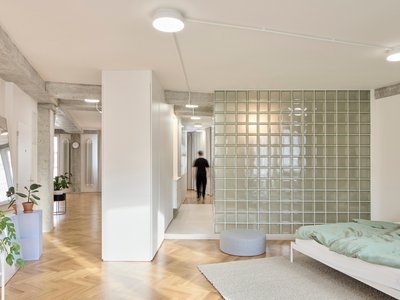
RDTH architekti Rips Out Nearly Every Wall in a Prague Apartment and Replaces Them with Furniture
A 101-square-meter post-war flat in Prague trades rigid partitions for a single rotated furniture block, curtains, and glass concrete.
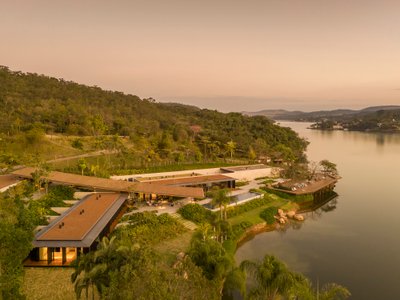
Bernardes Arquitetura Stretches a Timber Roof Along a Reservoir's Edge in Minas Gerais
Dam House in Itaúna lets a sweeping wooden canopy dissolve the boundary between hillside terrain and open water.


Similar Reads
You might also enjoy these articles

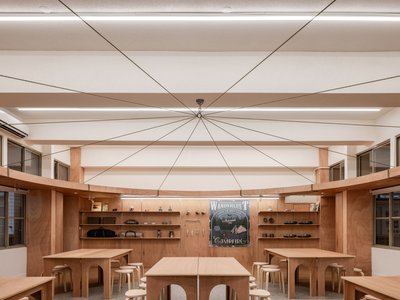
317studio Turns an 87 m² Classroom into a Forest Clearing for Scouts in New Taipei City
A rope canopy, student-made specimens, and campfire geometry replace rows of desks in this Scouting classroom in Xizhi District.
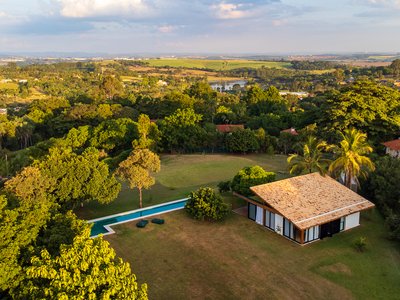
24 7 Arquitetura Builds a Timber Pavilion as a Family's First Act on a 5,000 m² Brazilian Plot
In Jaguariúna, a prefabricated glulam house nestles among mature trees as the opening move of a larger residential masterplan.
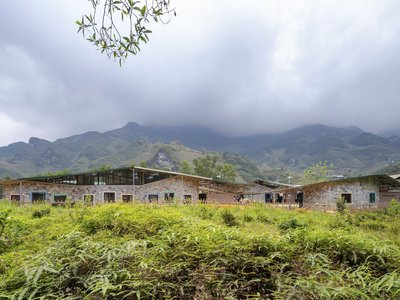
1+1>2 Architects Build a School from 900 Blocks of Hmong Stone on Vietnam's Rocky Plateau
On a barren valley in Ha Giang province, a community quarried its own stone to raise a kindergarten and primary school rooted in Hmong identity.
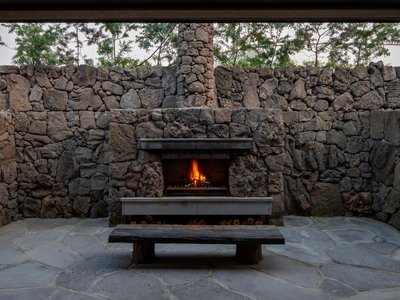
100A Associates Builds a Volcanic Stone Retreat on Jeju Island Rooted in Ritual and Restraint
Watarstay [Wa:Tar] in Bongseong-ri channels Jeju's basalt, reed, and hemp into a 150 m² hospitality space shaped by contemplation.





Comments (0)
Please login or sign up to add comments
No comments yet. Be the first to comment!