
The Architectural Renovation of Creative House of Hezareh into a Coworking Space
This article explores the Creative House of Hezareh, showcasing adaptive reuse architecture in Tehran through innovative design and sustainability.

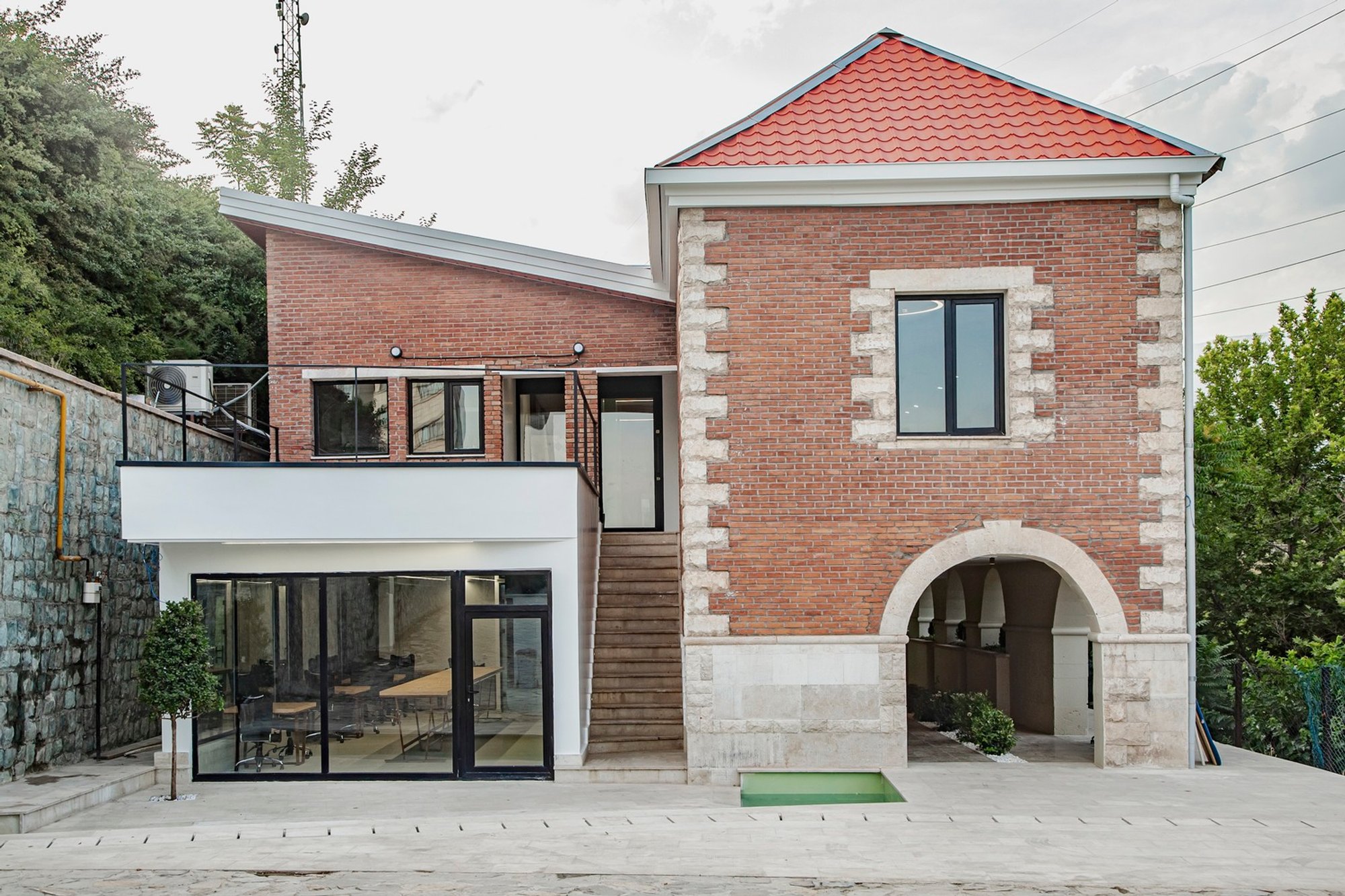
the heart of Tehran, near the renowned Tabiat Bridge and nestled within the lush expanse of “Ab o Atash” Park, stands the Creative House of Hezareh. This innovative project, designed by the Criteria Group, exemplifies the principles of adaptive reuse architecture in Tehran by transforming a neglected stable into a vibrant coworking space. Completed in 2023, this architectural marvel combines historical preservation with modern functionality, redefining the potential of urban regeneration.
Preserving the Past: A Stable Transformed
One of the standout features of adaptive reuse architecture is its ability to honor the past while embracing the future. Originally constructed as a stable for horses, the building had fallen into disrepair over the years. The Criteria Group approached the project with a vision to retain the structure’s identity while revitalizing it for a new purpose.
Key Renovation Strategies:
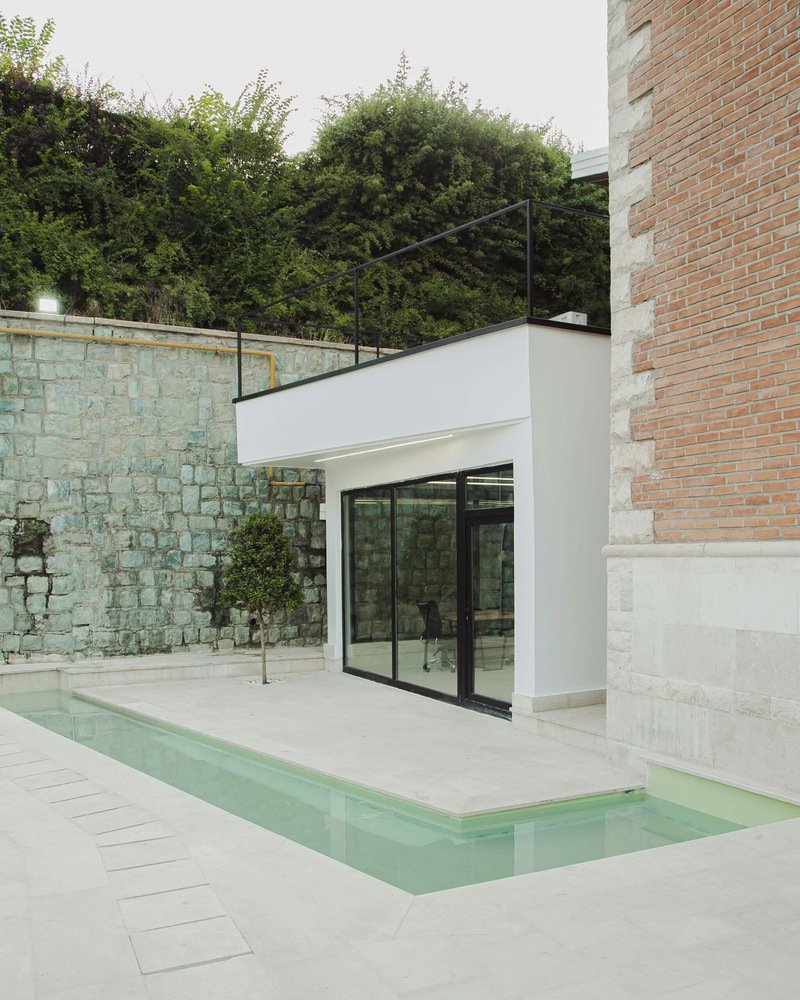
- Preservation of the Facade: The original brickwork and form were maintained to respect the historical essence of the structure.
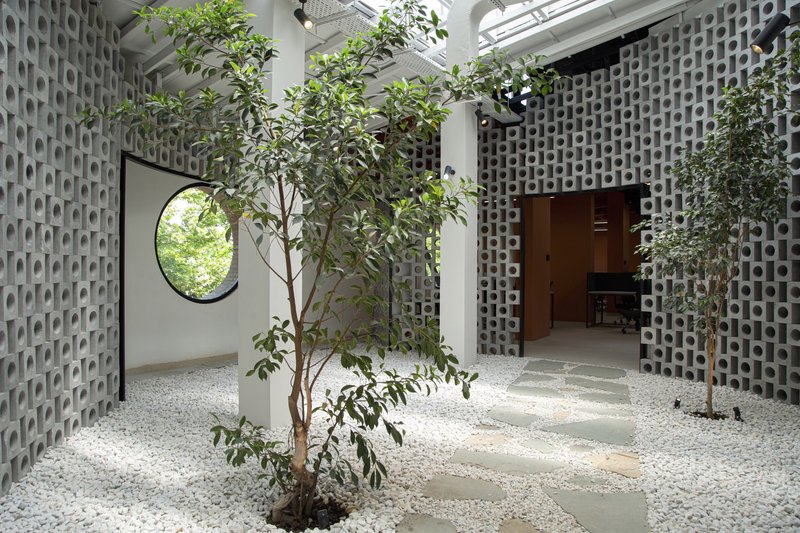
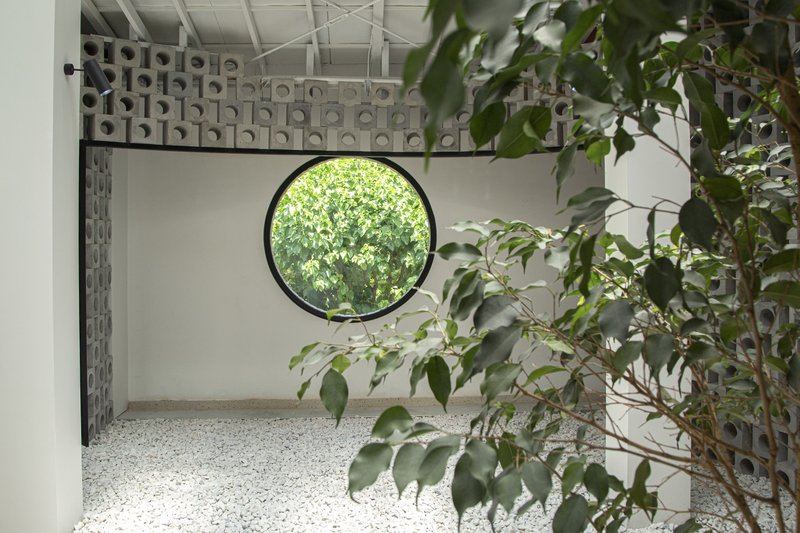
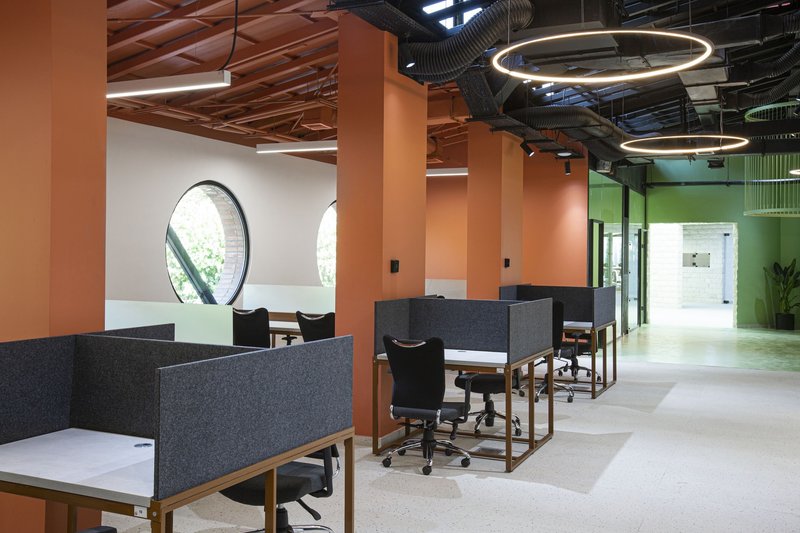
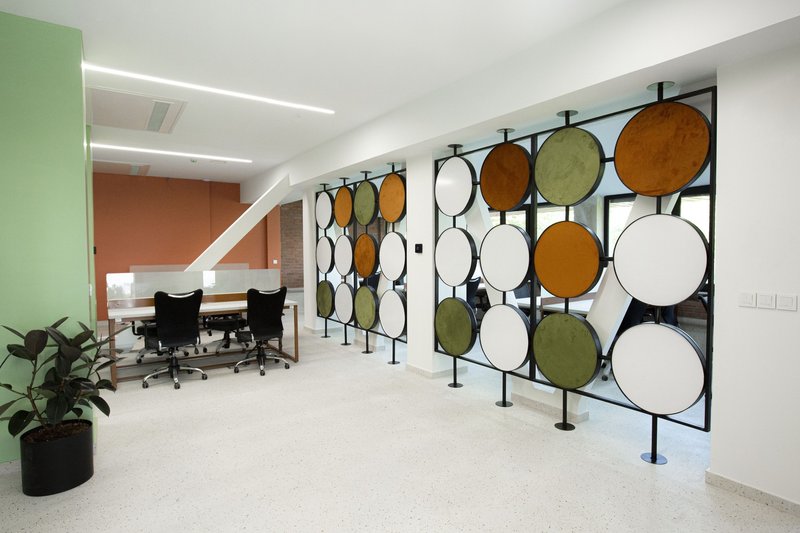
- Integration of Modern Elements: Circular windows, skylights, and contemporary materials brought new life to the old building, balancing tradition and innovation.
Design Philosophy: Blending Nature and Architecture
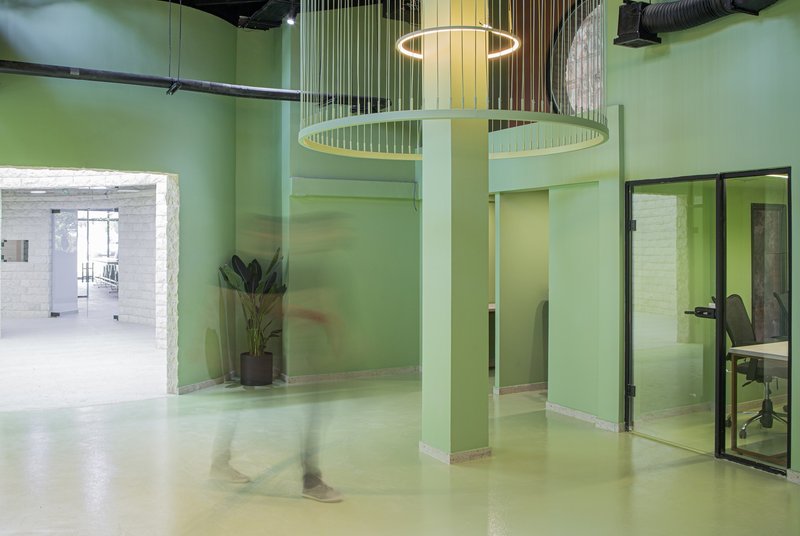
Adaptive reuse architecture thrives when it seamlessly integrates with its surroundings, and the Creative House of Hezareh is no exception. The building’s location within a densely vegetated park and proximity to a bustling highway presented unique challenges and opportunities.
Connecting Indoor and Outdoor Spaces:
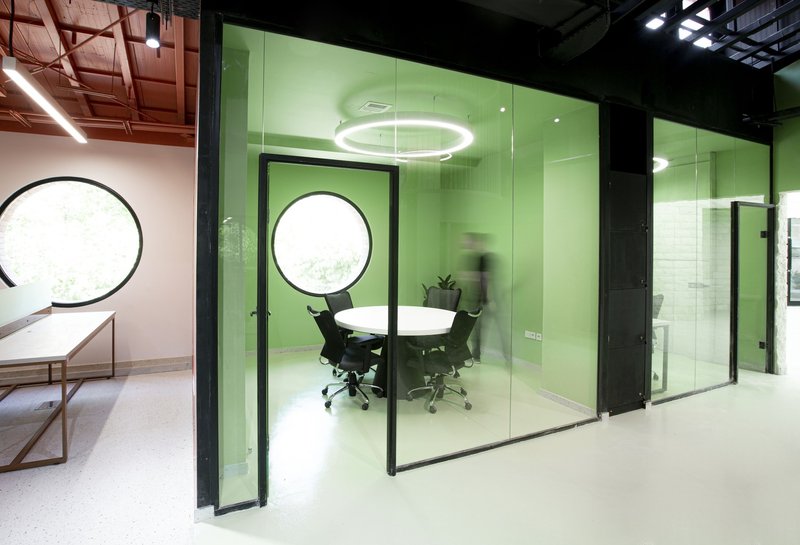
- Circular Windows: Large, strategically placed circular windows ensure that the building’s interior is bathed in natural light while providing sweeping views of the park.
- Skylights: These additions flood the coworking space with sunlight, creating an inviting and energizing atmosphere.
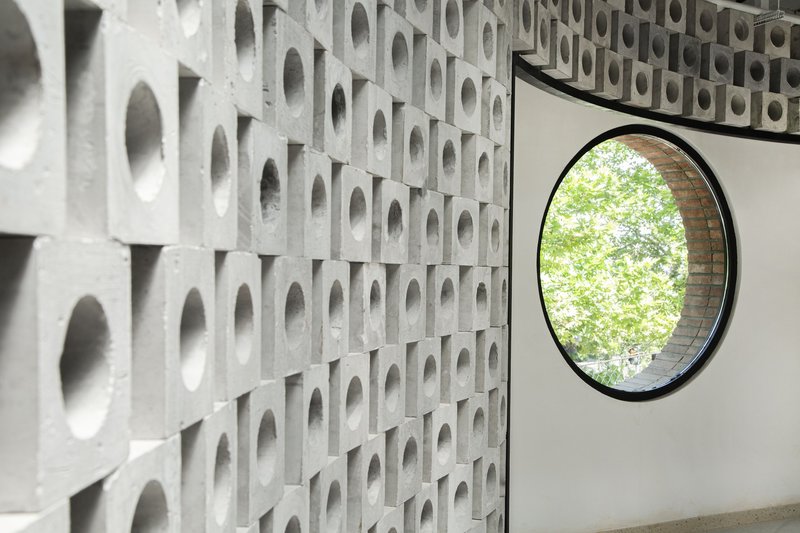
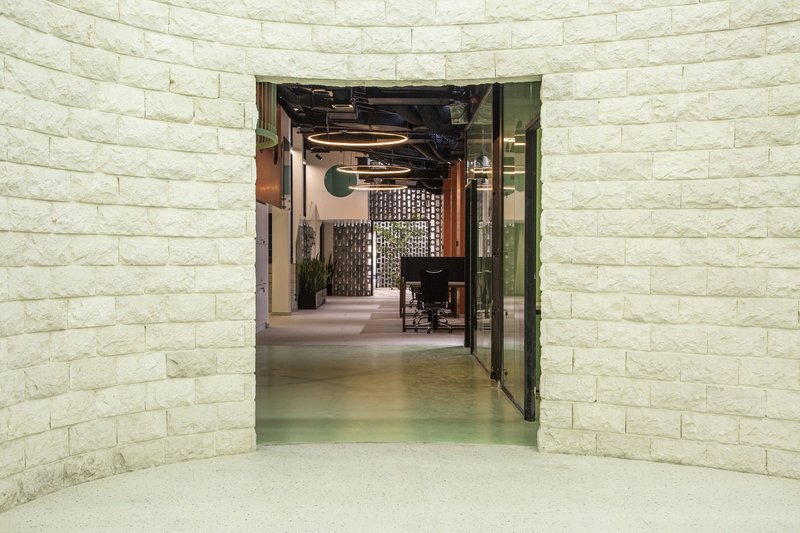
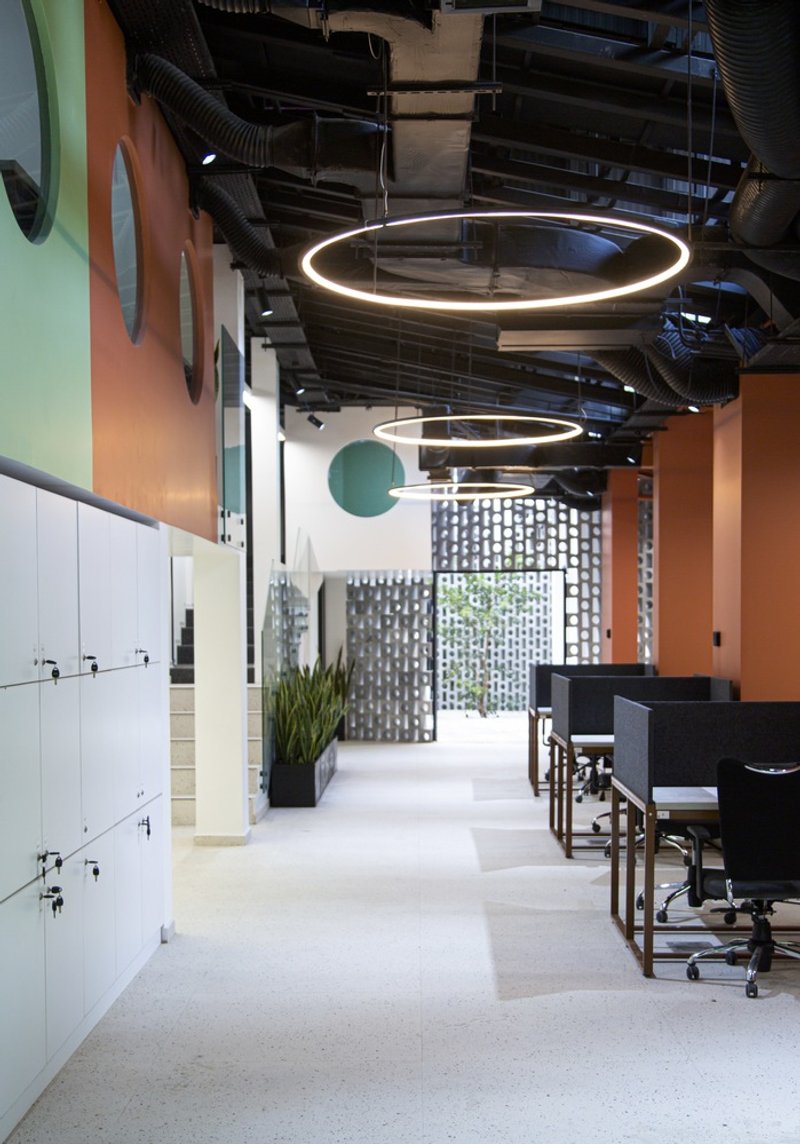
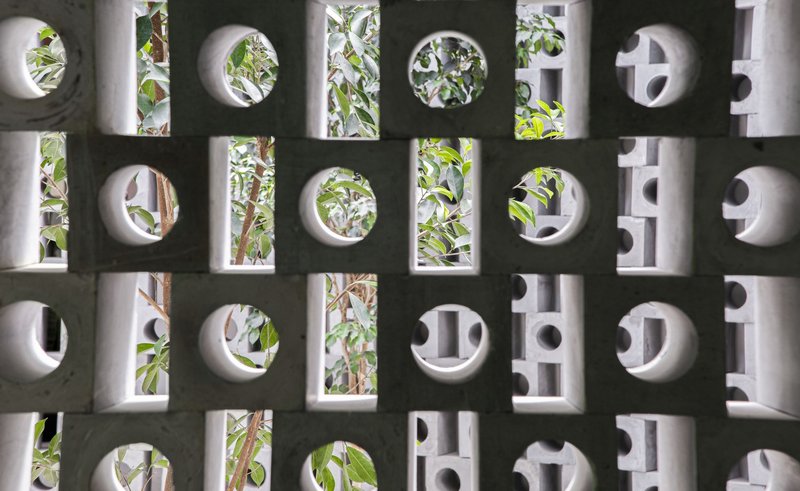
- Permeable Walls: Handcrafted concrete blocks form permeable partitions, enhancing airflow and fostering a sense of openness.
By emphasizing these design elements, the architects created a space that feels intrinsically connected to nature, fostering creativity and well-being for its users.
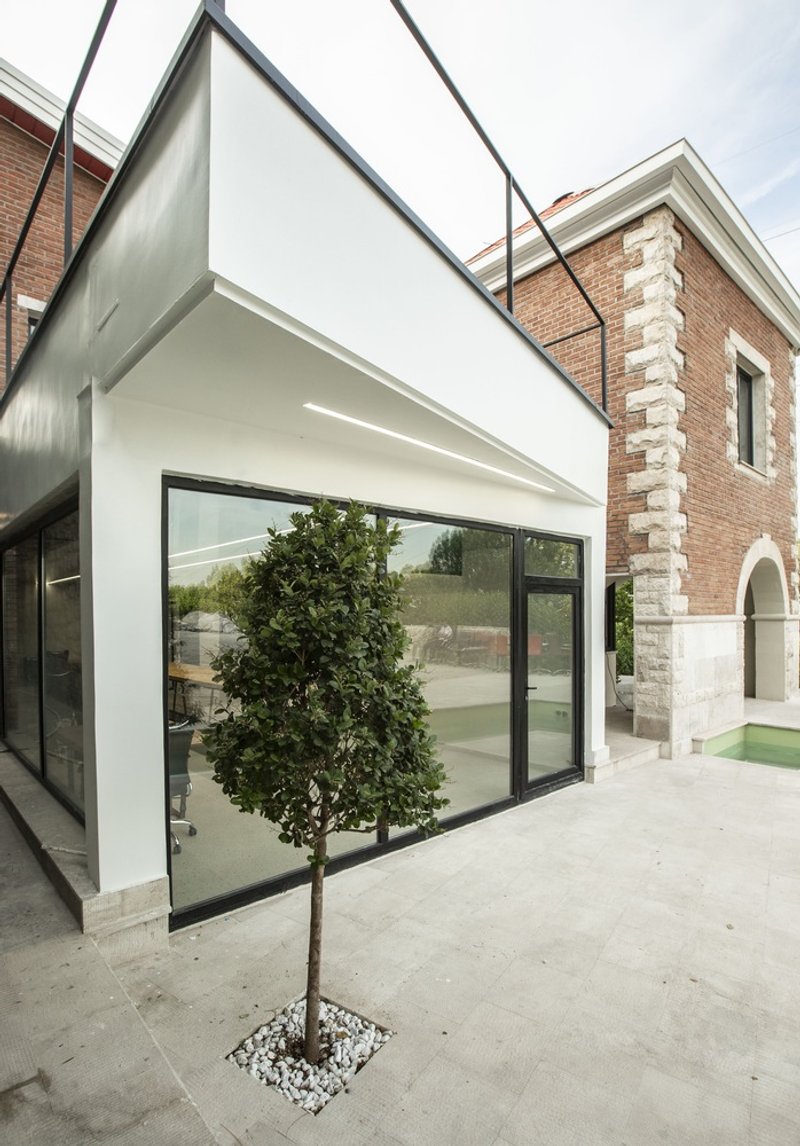
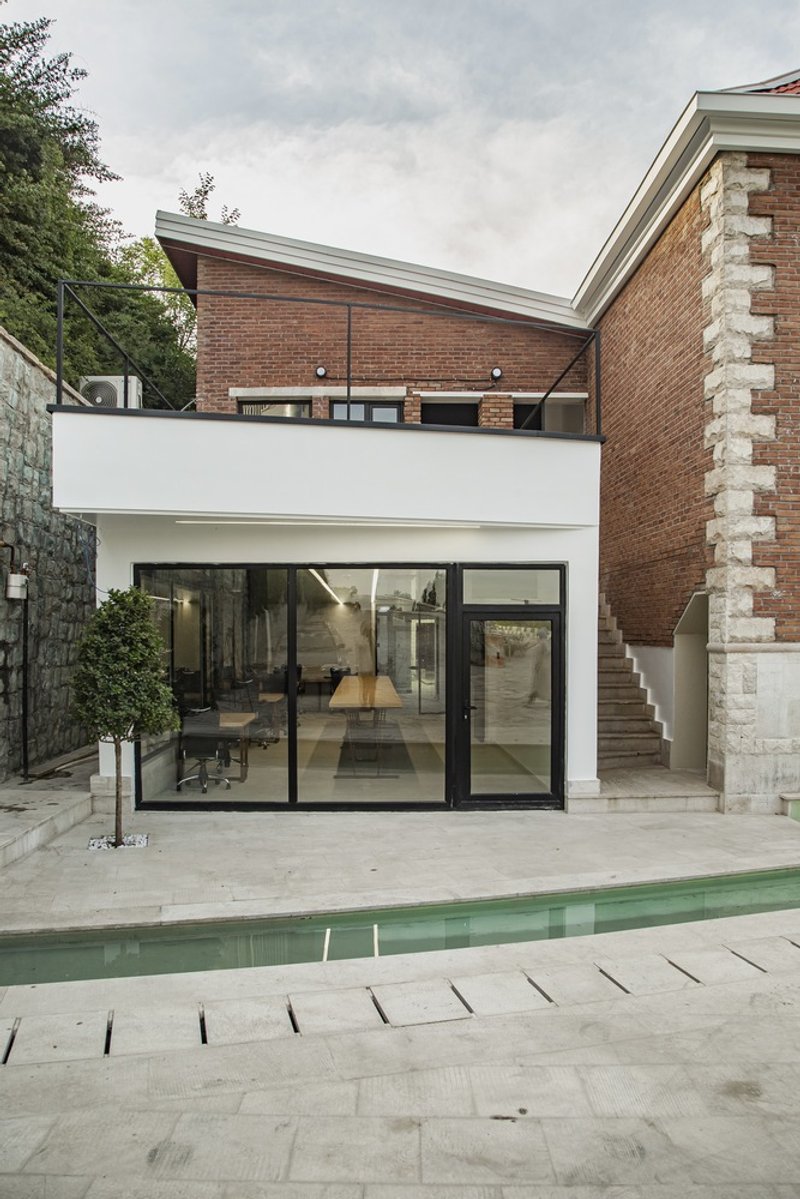
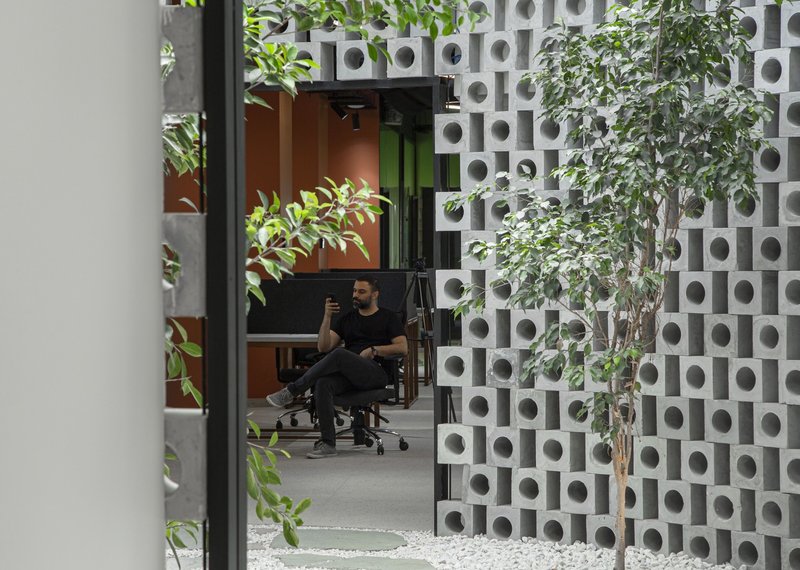
Spatial Innovation: The Role of Elliptical Forms
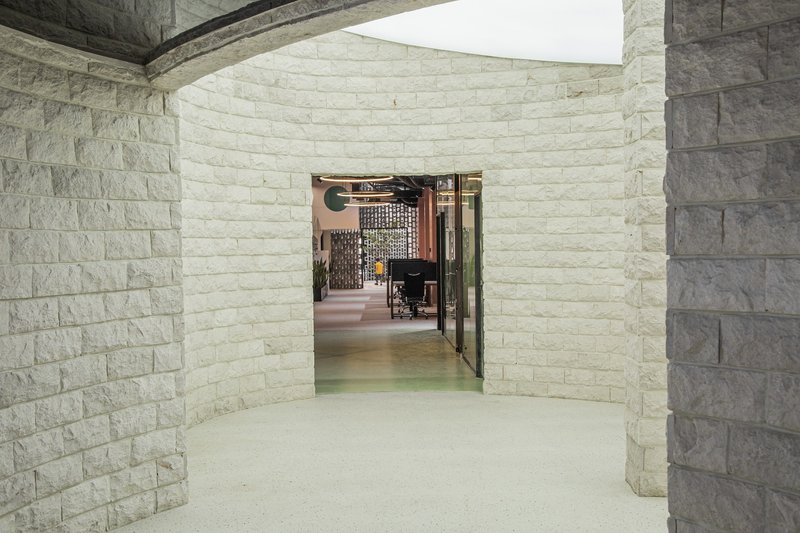
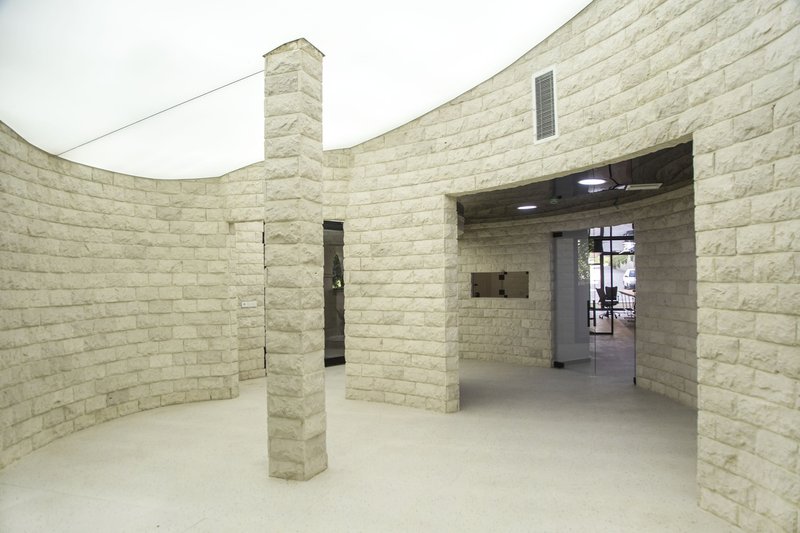
The building’s elongated ground floor posed a design challenge. To prevent the space from feeling overwhelming, the architects introduced two elliptical spaces that serve both functional and aesthetic purposes.
Purpose of the Elliptical Spaces:
- Entrance and Partitioning: One ellipse creates a welcoming entrance area that divides the space without obstructing movement.
- Rest and Atrium Space: The second ellipse serves as a tranquil rest area, providing a focal point for relaxation and collaboration.
These architectural interventions enhance the flow and usability of the space while maintaining the structure’s original proportions.
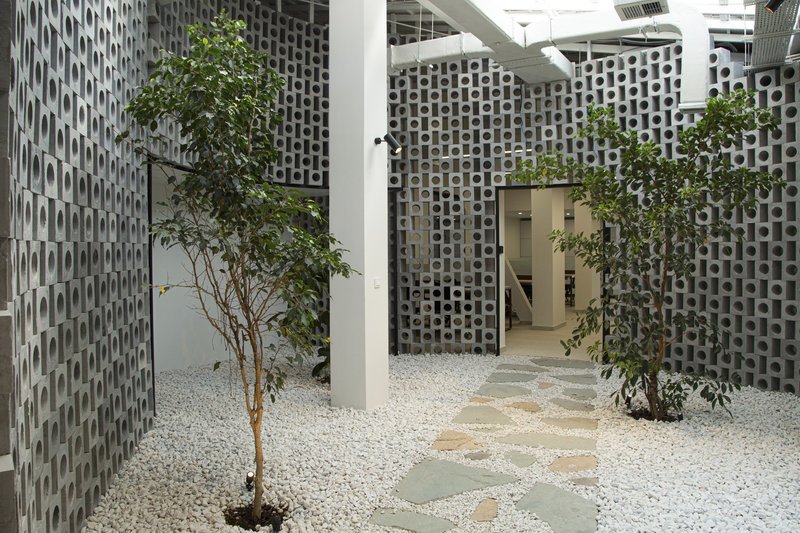
Craftsmanship and Materials: A Tribute to Local Artistry
The Creative House of Hezareh also showcases the value of local craftsmanship. The architects designed and fabricated over 2,000 polymer concrete blocks on-site to construct the permeable walls. Using custom metal molds, the team created blocks that are both functional and visually striking.
Key Material Highlights:
- Polymer Concrete Blocks: Handcrafted on-site to ensure precision and uniqueness.
- Locally Sourced Materials: Incorporating local resources minimized the project’s environmental impact and supported the local economy.
This emphasis on handcrafted materials adds a layer of authenticity to the project, aligning with the principles of sustainable architecture.
Social Impact: Breathing New Life into Urban Spaces
Adaptive reuse architecture in Tehran is not just about aesthetics; it’s about revitalizing communities. The transformation of this stable into a coworking space has had profound economic and social implications.
Benefits of the Transformation:
- Increased Economic Activity: The coworking space now hosts multiple teams daily, contributing to the local economy.
- Community Engagement: By repurposing an abandoned structure, the project fosters a sense of pride and ownership among the community.
- Sustainable Development: Adaptive reuse reduces the need for new construction, conserving resources and minimizing waste.
This project highlights how thoughtful architecture can reintegrate unused spaces into the fabric of a city.
A Model for Adaptive Reuse Architecture in Tehran
The Creative House of Hezareh is a shining example of how adaptive reuse architecture can bridge the gap between the past and the future. By preserving the identity of an old stable while transforming it into a coworking hub, the Criteria Group has set a benchmark for sustainable urban regeneration in Tehran.
As cities around the world face the challenge of repurposing aging infrastructure, projects like the Creative House of Hezareh demonstrate the power of innovative design to create spaces that are functional, beautiful, and socially impactful. This building is not just a coworking space; it is a testament to the enduring potential of adaptive reuse architecture.
All Photographs are work of Solo Studio




Popular Articles
Popular articles from the community

Bood Design Bureau Splits a Gilan Residence in Two to Let the Forest In
Double Side House negotiates privacy and openness through interlocking concrete volumes and planted courtyards in northern Iran's humid Caspian lowlands.
Not All Architecture Grounds a Timber Retreat in Victoria's Coastal Bushland
Ironbark House stretches low beneath eucalyptus canopy, threading a quiet domestic life between courtyard, deck, and landscape.
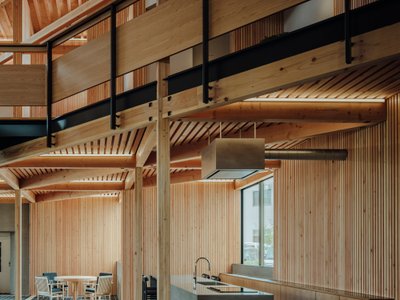
ure LLC Builds a Timber-Framed Suburban Office That Doubles as a Community Living Room in Hiroshima
KItoNOKO wraps sawtooth roofs and corrugated metal around an exposed timber frame to give a commercial district a new civic anchor.
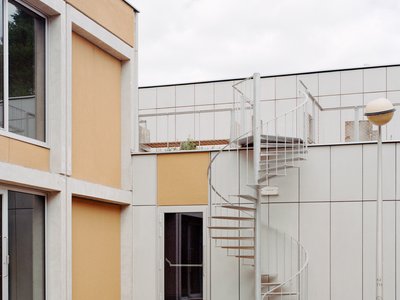
MAKER architecten Rewire a 1972 Brutalist Dormitory on the VUB Campus as a Living Lab
A modular renovation strategy in Belgium breathes new life into Willy Van Der Meeren's modernist student housing without erasing its concrete bones.

Similar Reads
You might also enjoy these articles

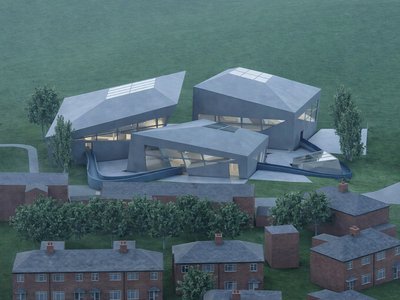
Filtering Space: A Gradual Spatial Experience
From urban intensity to spatial calm.


The Ken Roberts Memorial Delineation Competition (Krob)
As the most senior architectural drawing competition currently in operation anywhere in the world, it draws hundreds of entries each year, awarding the very best submissions in a series of medium-based categories.


Waterfront Redevelopment and Urban Revitalization in Mumbai: Forging a New Dawn for Darukhana
A transformative waterfront redevelopment project reimagining Darukhana’s shipbreaking heritage into an inclusive urban future.

OUT-OF-MAP: A Call for Postcards on Feminist Narratives of Public Space
Rhizoma Design and Research Lab invites artists, designers, architects, researchers, and students to reflect on how feminist perspectives can reshape public space. Selected works will be exhibited in Barcelona, October 2026. Submissions open until 15 April 2026.

Explore Architecture Competitions
Discover active competitions in this discipline




The International Standard for Design Portfolios


The Global Benchmark for Architecture Dissertation Awards


The Global Benchmark for Graduation Excellence


Challenge to reimagine the Iron Throne
Comments (0)
Please login or sign up to add comments
No comments yet. Be the first to comment!