

The Black House by MDAMMM + The Black House Studio
The Black House transforms a suburban home into a striking monochromatic landmark, using black façades, vertical accents, and dynamic architectural layering.


Completed in 2022 in Sant Cugat, Spain, this 785 m² project by MDAMMM and The Black House Studio showcases refined contemporary design. Led by Marc Duran, Alba Masides, and Margarita Masides, the architecture blends spatial clarity with natural light, captured beautifully in Filippo Poli’s photography.

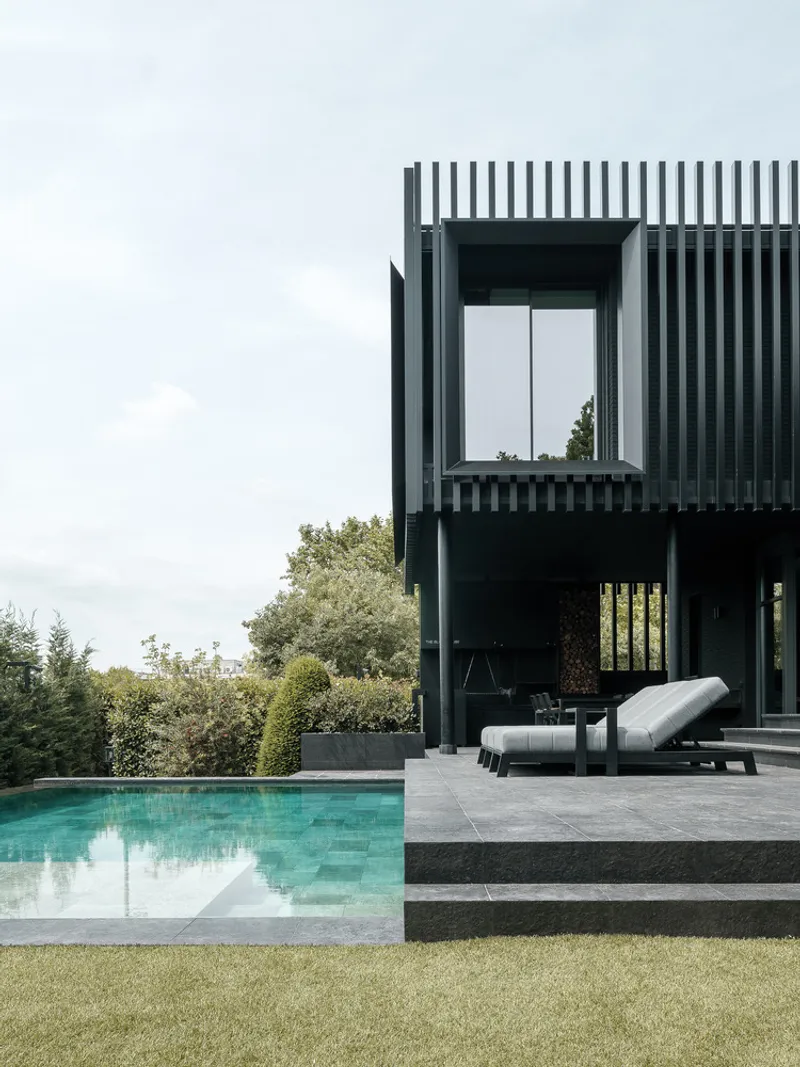
A Radical Transformation Through Monochromatic Design
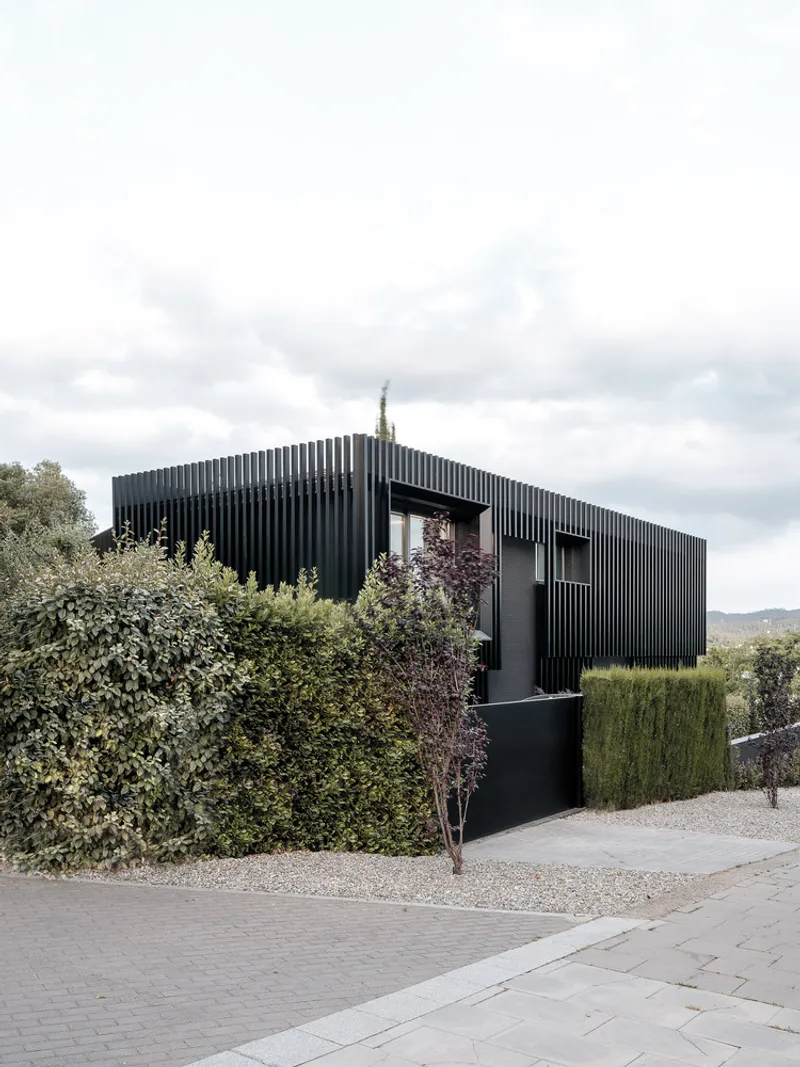
The Black House by MDAMMM and The Black House Studio redefines the character of a suburban single-family home in Sant Cugat, Spain. Originally built in 2010, the residence lacked architectural identity, featuring exposed ochre brick façades and mismatched grey finishes. The design team envisioned a bold transformation: preserving the existing volume while completely reimagining its presence through a monochromatic black exterior.
This simple yet radical gesture turned an ordinary dwelling into a striking architectural landmark, harmonizing with its surrounding garden while emphasizing the purity of form.
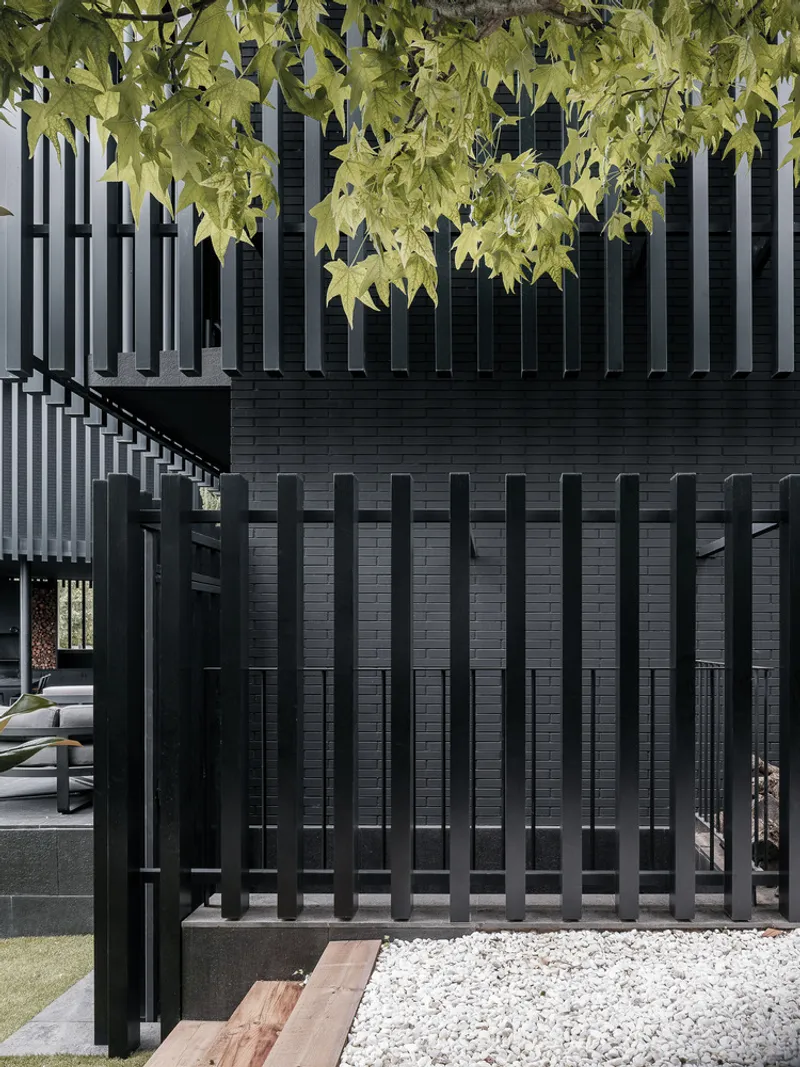

Geometry and Site Context
The home’s V-shaped floor plan wraps around a central garden, offering a dynamic relationship between interior and exterior spaces. While the original geometry was intriguing, the enclosure lacked definition and presence. The renovation embraced this layout, enhancing its spatial clarity with a stronger architectural language.
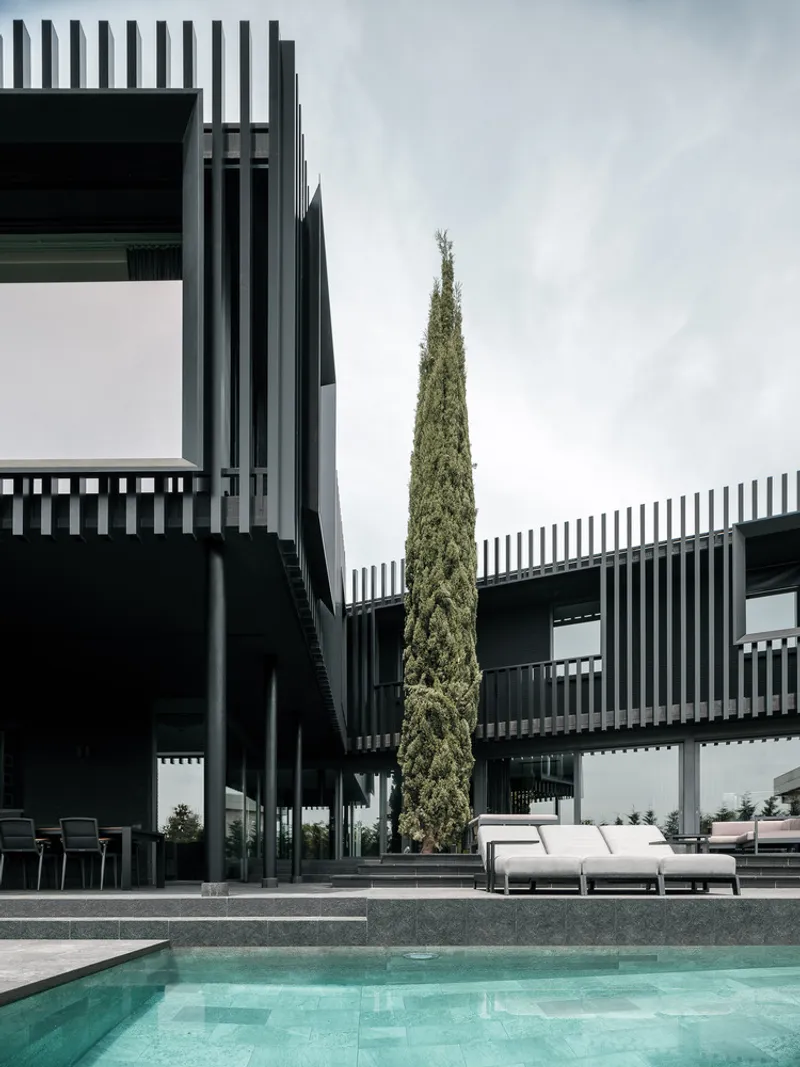
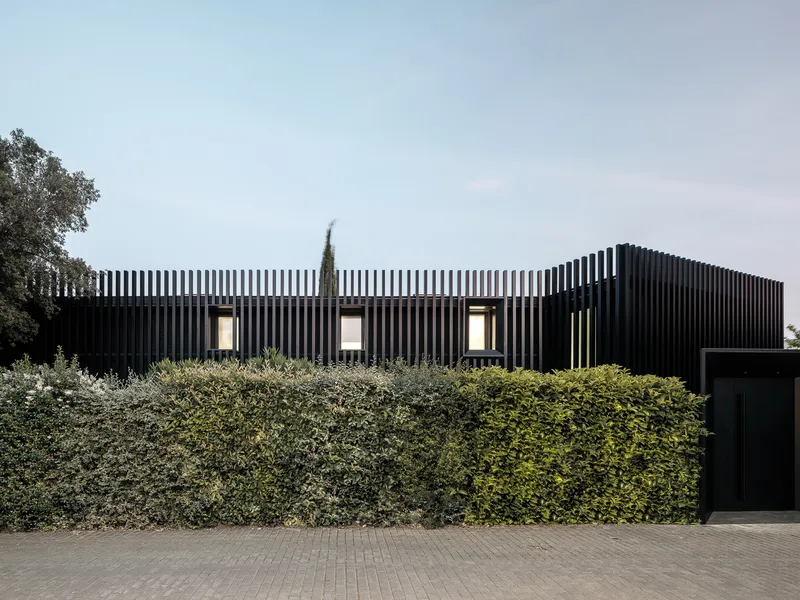
Design Strategy: Four Guiding Principles
The intervention was structured around four conceptual axes:
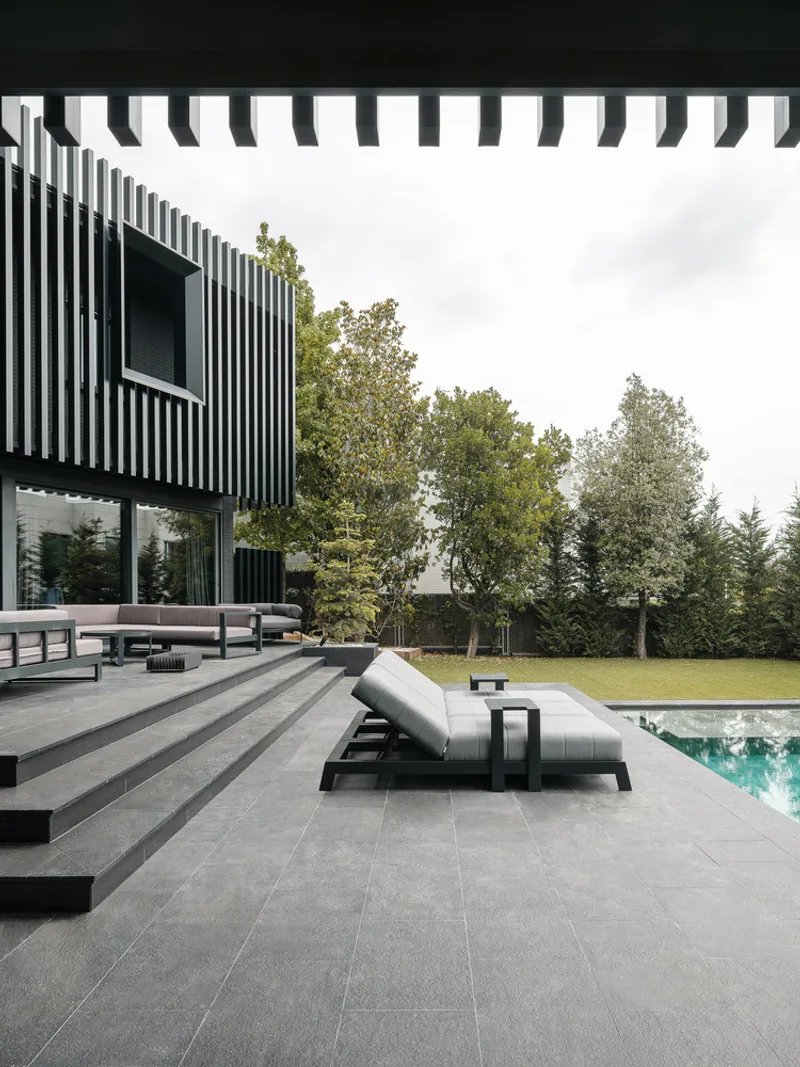
- Monochromatism Every surface and structural element was unified in black, creating a dramatic contrast with the lush greenery of the site. This choice not only modernized the home but also gave it a powerful, sculptural identity.
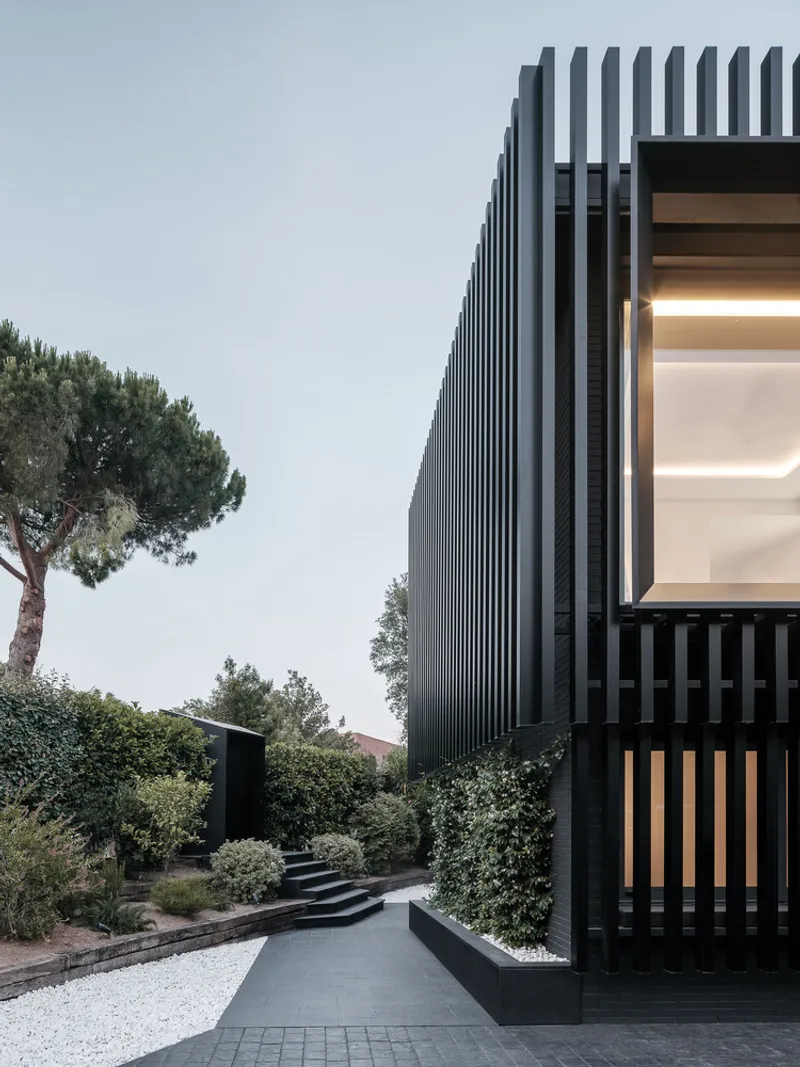
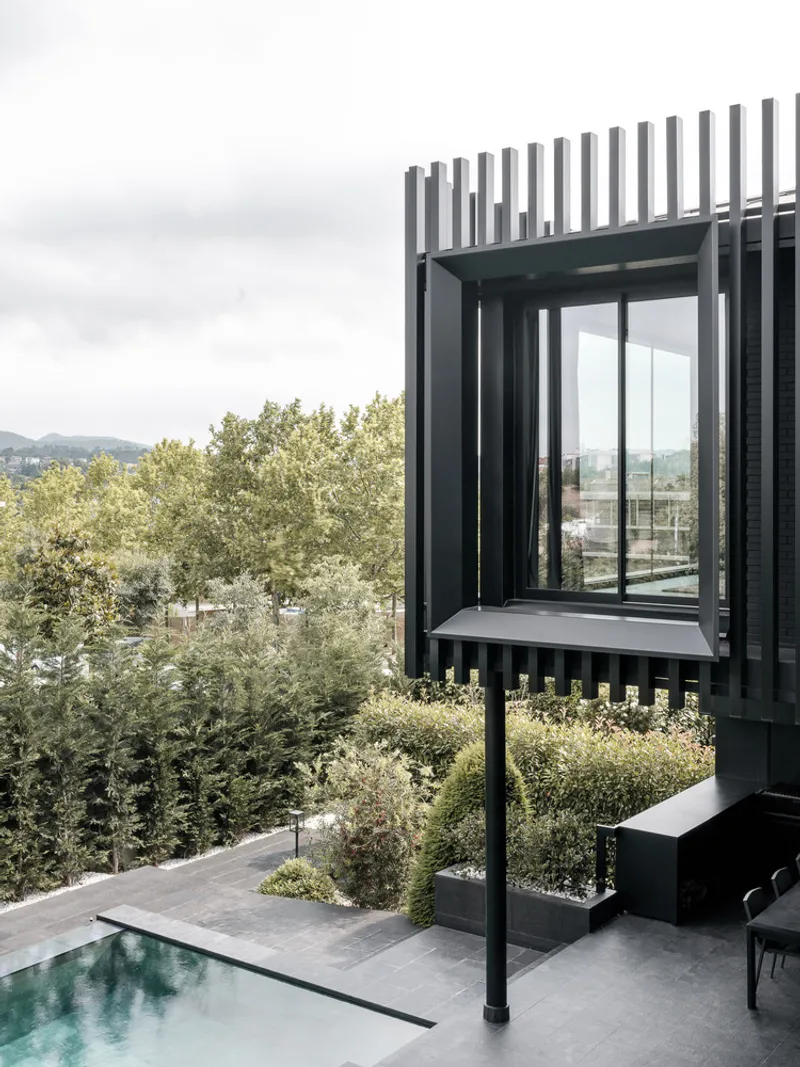
- Accents on the Openings Angular sheet-metal frames were added to emphasize the windows and openings. These protruding elements act as bold architectural signatures, extending beyond the façade and creating depth with their interplay of shadow and light.
- Verticality Vertical lathing was introduced as a secondary skin, multiplying the visual rhythm of the façades. The varied cadences and lengths enhance the home’s proportions, giving it an elegant vertical emphasis absent in the original construction.
- Capillarity The façade treatment incorporates layered separations that enrich the building’s surface. This subtle detachment adds lightness and mutability, as the structure interacts with natural light during the day and glows with interior illumination at night.
Materiality and Expression
The project’s restrained material palette amplifies its graphic quality. Black-painted metal lathing, sheet steel frames, and deep window cuts transform the house into what the architects describe as “a graphic sign—monochrome and essential.” The shadows cast throughout the day create a kinetic façade, constantly evolving with the sun’s movement.
At night, the house becomes even more expressive. The dark shell dissolves into the background, while light radiating from within projects through the vertical openings, reinforcing the architecture’s atmospheric character.

A Contemporary Spanish Icon
The Black House demonstrates how minimal intervention can radically shift architectural perception. By respecting the existing structure while reimagining its finishes and façade language, MDAMMM and The Black House Studio created a residence that is both timeless and contemporary.



Popular Articles
Popular articles from the community


Hill & Cross Opera: Sculptural Opera House Architecture Shaped by Tallinn’s Landscape and Identity
Hill & Cross Opera reimagines opera house architecture in Tallinn through its sculptural hill, civic plaza, glass wave and a luminous cross.

Co-life: Sustainable Architecture for Age-Friendly Community Living
Co-life reimagines sustainable architecture for seniors through courtyards, rammed earth, shared gardens, and spaces designed for belonging.

The Ocean Hive: Sustainable Architecture for a Self-Sufficient Civilization at Sea
The Ocean Hive imagines sustainable architecture at sea, where modular habitats, algae, wave power and ocean waste sustain a growing colony.

Co-Life: Senior Housing Design That Reconnects Older Adults With the City
Co-Life reimagines senior housing design through healing gardens, shared streets, workshops, and a sustainable community across generations.

Similar Reads
You might also enjoy these articles


Hodi-Mandai Geram
Project Function: Preservation and revitalization of the Intangible heritage and socio-spatial identity of the Hodi by Housing, Cultural Memory Center, Sacred Grove, landscape, local tourism economy


Olio Towers: A Mid-Rise for Performers That Fuses Housing, Rehearsal, and Stage
Located blocks from Houston's Theater District, this modular tower stacks living units around a central performance atrium.

Oasis: Modular Green Housing Carved into Dhaka's Urban Fabric
A shortlisted Plugin Housing entry reclaims unauthorized settlements in Dhaka with stepped concrete volumes, green roofs, and ventilation-driven design.

Black Hole: A Floating Megastructure for the Post-Physical Era
Emiliano Mazzarotto envisions a spherical, self-scaling arena where e-sports, digital hotels, and holographic stadiums replace traditional public space.

Explore Architecture Competitions
Discover active competitions in this discipline



Challenge to reimagine the Iron Throne


Photograph architecture without architects


Illustrate the lost glory of Angkor Wat - Render Challenge


Design challenge to reuse E-waste
Comments (0)
Please login or sign up to add comments
No comments yet. Be the first to comment!