
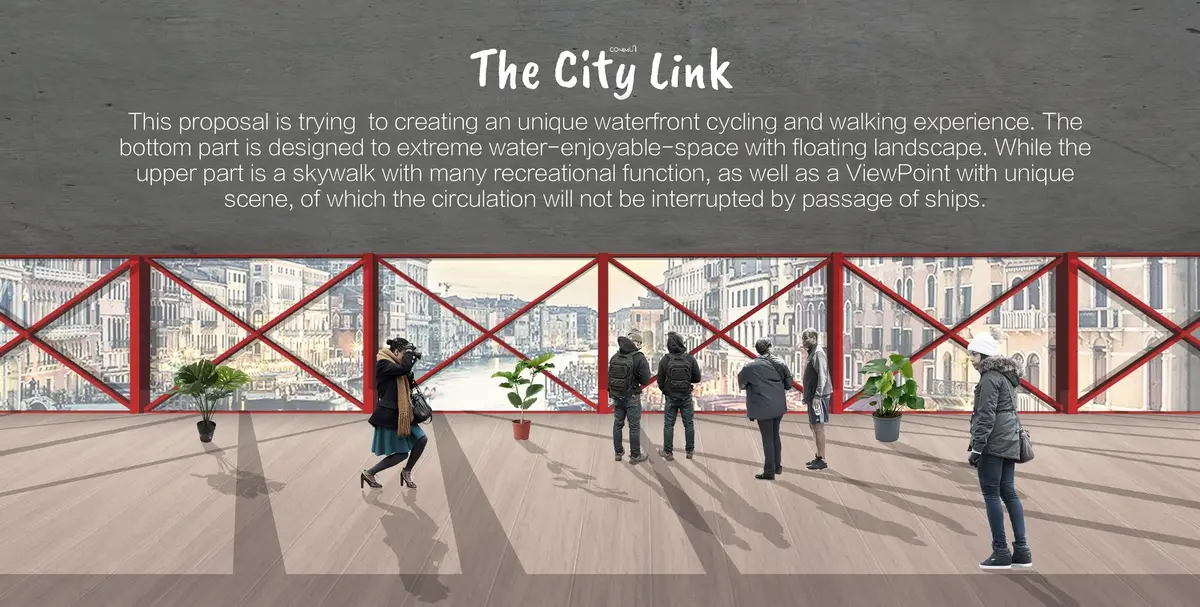
The City Link: A Landmark in Sustainable Urban Design and Waterfront Architecture
A dynamic waterfront cycling bridge redefining sustainable urban design in Copenhagen with floating landscapes and elevated public space.


In a city globally recognized for its cycling culture and progressive planning strategies, The City Link emerges as a bold statement in sustainable urban design. Designed to create a seamless waterfront cycling and walking experience, the proposal transforms the traditional concept of a bridge into a multi-layered public destination.
The project reimagines infrastructure not merely as a connector of two points, but as an active urban landscape: one that integrates mobility, recreation, and environmental engagement into a single architectural gesture.
Developed by the Ethan Team, the proposal positions itself at the intersection of innovative waterfront architecture and people-centered urban design.
A New Typology of Waterfront Architecture
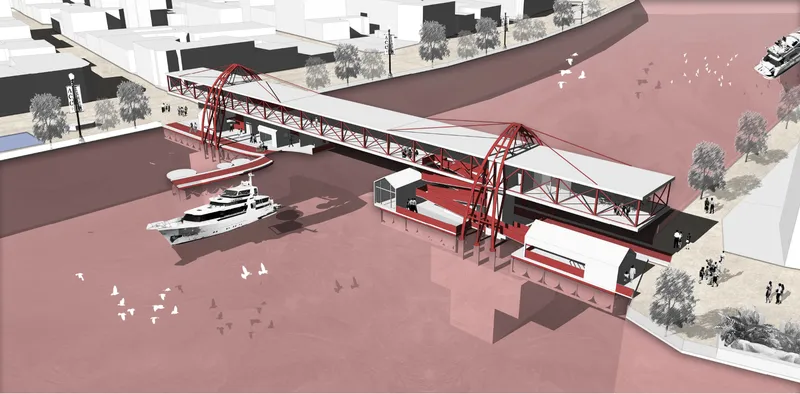
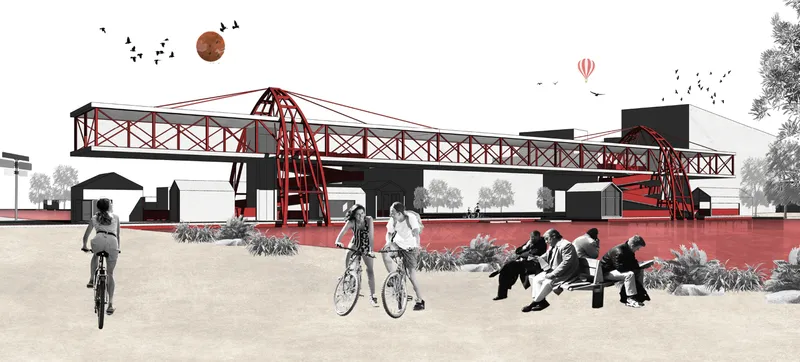
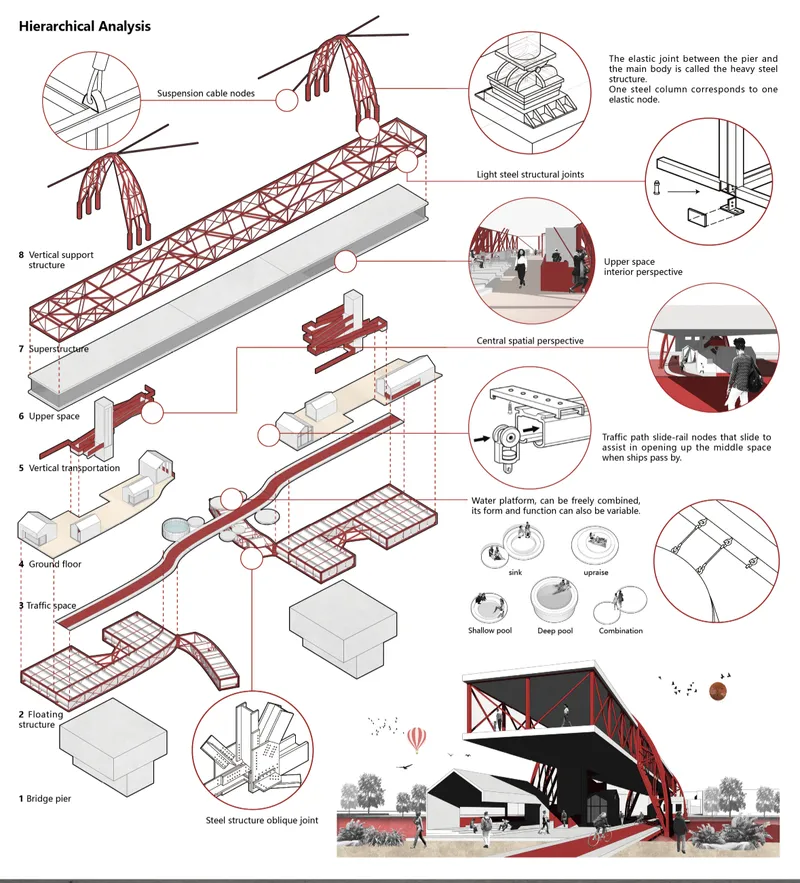
Unlike conventional bridges that prioritize transit efficiency, The City Link introduces a dual-layered spatial strategy. The lower level activates the waterfront with immersive, water-oriented experiences, while the upper level offers an uninterrupted skywalk with panoramic viewpoints.
This approach reflects contemporary trends in sustainable urban design, where infrastructure doubles as public space and enhances environmental connectivity.
Lower Level: Floating Landscape Experience
The bottom portion of the structure is conceived as an extreme water-enjoyable space. A flexible floating platform system allows for adaptable configurations: shallow pools, gathering areas, interactive water features, and recreational zones. This floating landscape encourages citizens to engage directly with the waterfront, strengthening Copenhagen’s relationship with its harbor.
The platform’s variable geometry ensures resilience and adaptability while supporting pedestrian and cycling movement across the site.
Elevated Public Realm: The Skywalk Experience
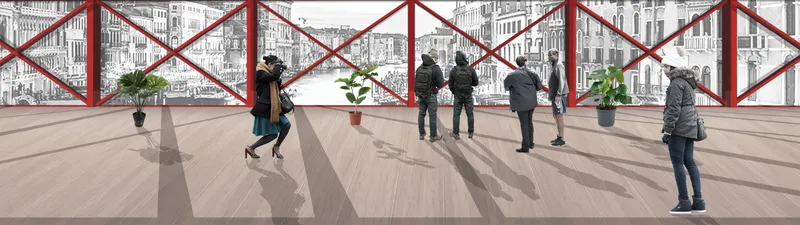
The upper structure functions as a dynamic skywalk, combining mobility and recreation. Here, cyclists and pedestrians move through a protected yet open environment that frames curated urban views.
The elevated volume allows:
- Uninterrupted circulation even during ship passage
- A dedicated cycling track integrated with walking paths
- Recreational nodes and pause points
- A unique waterfront viewpoint overlooking the city
By lifting the primary volume, the design maximizes openness at ground level while preserving maritime functionality. Ships can pass without disrupting circulation, reinforcing the bridge’s adaptability within a working harbor context.
Structural Innovation and Adaptive Mechanisms
The City Link integrates advanced structural systems to support its layered spatial organization. A robust steel superstructure anchors the elevated skywalk, while movable central segments allow portions of the bridge to rotate smoothly when ships pass.
Key architectural features include:
- Suspension cable nodes for structural stability
- Light steel structural joints for flexibility
- Sliding traffic-path rail nodes to assist opening mechanisms
- A floating platform system with modular adaptability
This synergy between engineering precision and architectural clarity demonstrates how sustainable urban design can incorporate technical performance without sacrificing spatial quality.
Site Integration and Urban Connectivity
Site analysis reveals significant potential for strengthening pedestrian and cycling networks across adjacent neighborhoods. Copenhagen’s cycling culture, where a large percentage of citizens cycle daily, demands infrastructure that enhances both mobility and experience.
The proposal responds by:
- Connecting major pedestrian routes
- Extending waterfront public spaces
- Activating underutilized harbor edges
- Creating multi-functional community zones
By combining transportation infrastructure with social programming, The City Link becomes more than a crossing, it becomes an urban catalyst.
Experience, Landscape, and Human Scale
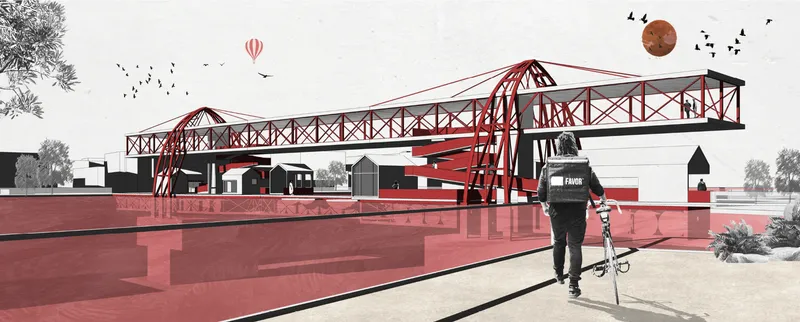
One of the most compelling aspects of the project lies in its spatial hierarchy. The elevated building volume allows maximum landscape enjoyment while freeing the ground level for open public interaction.
The architectural language, defined by red structural arches and exposed steel frameworks, creates a bold visual identity while maintaining transparency and openness. Users experience shifting perspectives: water at eye level below, skyline views above, and dynamic movement through layered circulation paths.
This blending of infrastructure and landscape reinforces the project’s commitment to sustainable urban design principles:
- Enhancing walkability and cyclability
- Encouraging public gathering
- Integrating ecological and recreational systems
- Preserving uninterrupted maritime movement
A Vision for Future Waterfront Cities
The City Link demonstrates how future waterfront architecture can transcend utility and become experiential civic space. Through floating landscapes, adaptable structural systems, and elevated public realms, the project sets a new benchmark for integrated mobility infrastructure.
By combining engineering innovation with human-centered design, the Ethan Team proposes a transformative vision, one where bridges are no longer passive crossings but active urban landscapes.
In redefining what a cycling bridge can be, The City Link positions sustainable urban design at the forefront of architectural progress in Copenhagen and beyond.


Popular Articles
Popular articles from the community


Hill & Cross Opera: Sculptural Opera House Architecture Shaped by Tallinn’s Landscape and Identity
Hill & Cross Opera reimagines opera house architecture in Tallinn through its sculptural hill, civic plaza, glass wave and a luminous cross.

Co-Life: Senior Housing Design That Reconnects Older Adults With the City
Co-Life reimagines senior housing design through healing gardens, shared streets, workshops, and a sustainable community across generations.

Little Red Riding Hood: Architectural Design as a Journey Through Fear, Light, and Storytelling
Little Red Riding Hood reimagines the fairy tale through architectural design shaped by fear, light, scale, memory, uncertainty, and choice.

ALGAL REALM: A Bio-Integrated Lunar Habitat Design for Life Beyond Earth
ALGAL REALM reimagines lunar habitat design with algae-powered life support, 3D-printed regolith, and vertical living for a lunar future.

Similar Reads
You might also enjoy these articles

Eco Chapel: A Green Architecture Pavilion Designed in Symbiosis with the Forest
Eco Chapel uses green architecture to weave prayer, learning and reuse into a forest pavilion shaped by modular hexagonal canopies for life.
Kaffeebühnen: Coffee Shop Architecture Designed as a Civic Stage Between Vienna’s City and Park
Kaffeebühnen turns coffee shop architecture into a civic stage, linking Vienna’s park edge, urban life, warm timber yards, and coffee craft.
Healing Façade: Sustainable Architecture for Reforestation, Community, and Sacred Ecology in Ethiopia
Healing Façade reimagines sustainable architecture as a living wall that restores soil, catches water and renews Ethiopia's forest churches.


Urban Forest: A Vertical Ecosystem for 5,000 Workers in Singapore's Changi Business Park
Radially stacked pods and layered green decks turn a 7-acre plot into 47 acres of ecological workspace projected for 2040.

Comments (0)
Please login or sign up to add comments
No comments yet. Be the first to comment!