

The Dream Block
The Dream Block is a hospice inspired by the children's building blocks game. It aims at providing a place where they will be able to dream again and allows them to live in a supportive and comforting environment while being nurtured by Nature.

The Dream Block is inspired by the children's game that everyone has played in their childhood : building blocks, the outline of our project has been created by assembling 3 different sizes of blocks : 7.5m/7.5m; 5m/5m and 2.5m/2.5m.
We then decided to use a grid, which base module is 1.25m/1.25m, in elevation and plan views to sculpt our volumes.
We chose building blocks for the significance it has in every child’s world as it is a means to dream and construct one’s imaginary and ideal space.
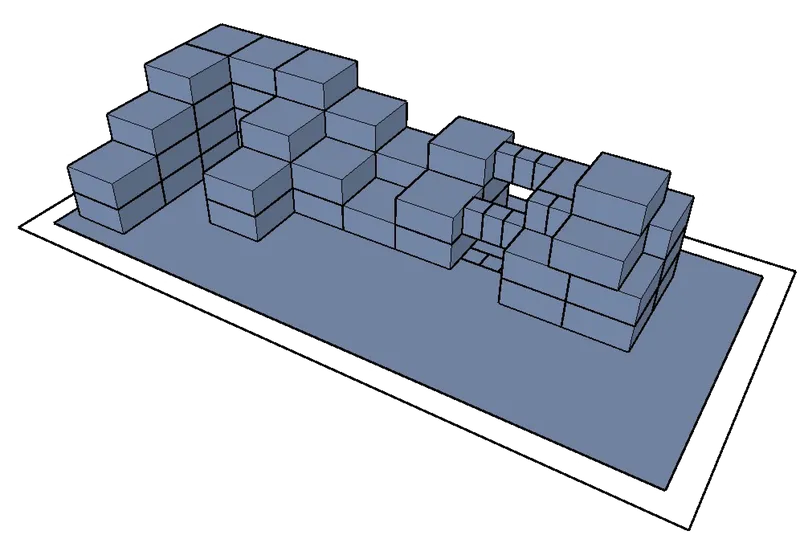 The First Attempt of Assembly of what later become The Dream Block
When we organized the elements of our project, our main idea was : “The further from the main road, the more private the functions become”.
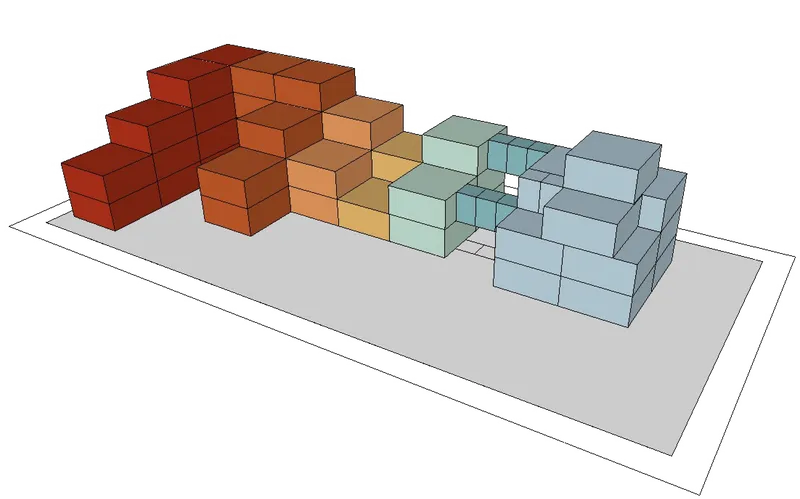 The most private areas of the building are the warmest as the residents would feel more secure and at ease
In the beginning we tried to organize our spaces around a central interior courtyard, but then with the limitations of the ground coverage and FAR, we realized that we will be covering only a small portion of our actual site, so we decided to change the elements’ organization in order to better use the plot we were given.
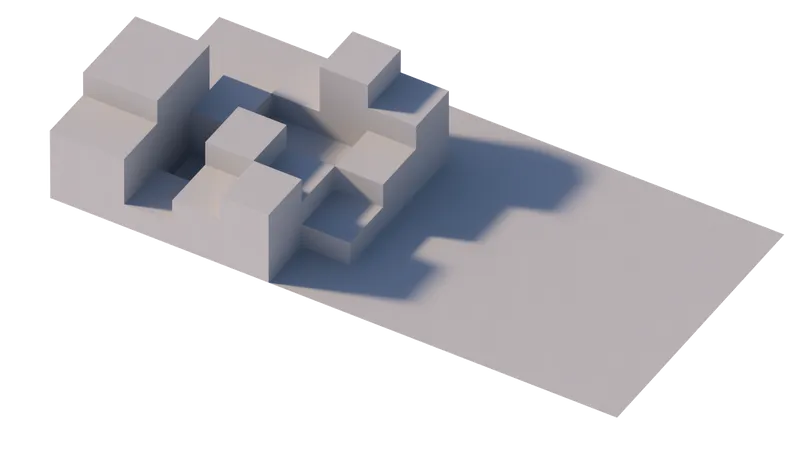
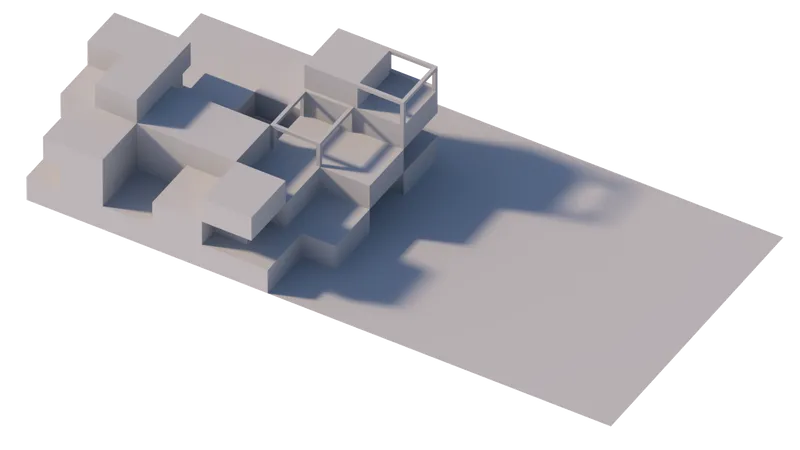
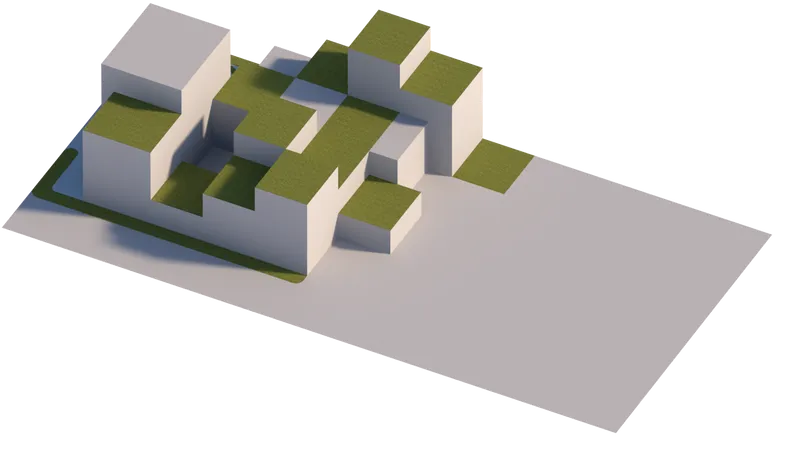
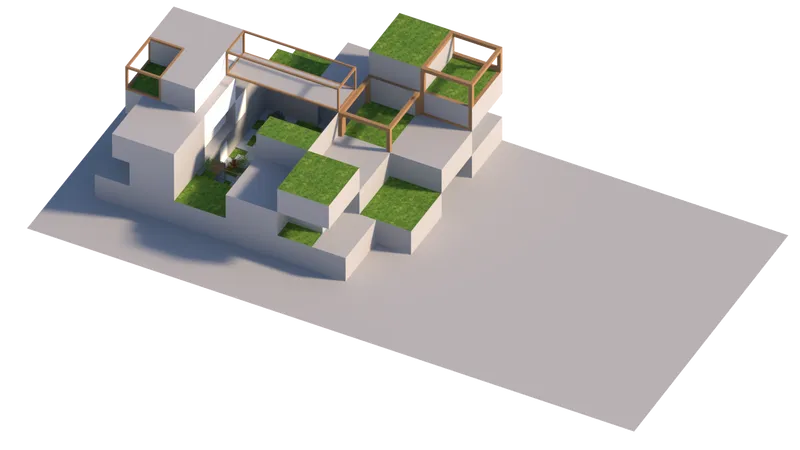 Earliest iterations of the project
The main goal we tried to achieve is to create a nurturing environment where the resident kids would feel at home while being enveloped by Nature’s embrace, and that is why all the living spaces face the courtyard, so that the children can still profit from the view even if they are staying inside. Likewise, we chose not to separate the kitchen-dining-hall-sitting area so that the children can also contribute to cooking when there are visiting parents for example.
They could as well share snacks with neighboring school children if they happen to be allowed in.
What greets the visitors upon arrival in the Dream Block is a memorial garden, which will be the place to remember the little angels that once took refuge under the Block’s roof, that ensures the transition between the road and the building entrance.
We decided to separate the administration side from the actual living quarters of the children in order to give them privacy and free roaming of the space while being in a secure environment. And to facilitate staff access, we added bridges that link both building parts on the upper floors.
The Courtyard faces South so that the plants benefit from the sun exposure.
All the living space faces the courtyard, the service area however faces North which is the direction less exposed to sun beams
On the First Floor, a corridor of 2.5m of width starts at the beds' lifts and runs the whole distance to the entrance to permit easy evacuation in case of emergency.
As our terrain is constituted by different levels, we decided to even it all out to the level of the main road’s side so that we won’t be using stairs or ramps on the first floor.
Even though it was recommended to have several dining areas in some regulations we consulted during our research, we thought that it would be best to have a larger one facing the courtyard so that all the residents will come together like a big family, and children could interact together, benefit from the services of volunteers or teachers visiting from the nearby school, so the dining hall could double as a classroom.
The building is mainly made of concrete, which is the recommended material for healthcare facilities. We chose to use wood as well, as it is living and natural, so that the connection with Nature is increased. It is also a local material since the neighboring houses are all made of wood.
As for the choice of colors, we opted for pastel ones as a theme in our design because it inspires softness and helps to create a nurturing and sensitive environment for these children who need to be reassured and supported.

Popular Articles
Popular articles from the community


FCC Arquitectura Expands a Portuguese Granite House with a Board-Marked Concrete Wing
In Portugal, JV House pairs a cleaned-up whitewashed and granite dwelling with a timber-shuttered concrete extension, courtyards and a garden pool.

ETEH Reworks the Shared Spaces of São Domingos School in Brazil Around Timber, Color and Hanging Plants
At São Domingos School in Brazil, 436 m² of hall, refectory and library are recast with timber joinery, a yellow and blue code and trailing greenery.

Cube Design Draws an Ecological Corridor Between Two Shenzhen Hills with the Nankai Building
Beside Shenzhen's container docks, the Nankai Building pairs stacked balconies with a climbing green screen to connect two hillsides across its height.


The Amber Palace Opera: A Geological Fiction Surfaces on Tallinn's Baltic Waterfront
Pierre Brillard reimagines a Baltic legend as a public landscape, opera house, and waterfront promenade rooted in Tallinn's coastal identity.

Similar Reads
You might also enjoy these articles

The Rhythm of Seasons
A Farmers' Market Connecting Nature and the City

More Than a Building-Designing a Living System
More Than a Building-Designing a Living System
Base Beyond
DESERT COMPOUND ARID: TOURISM OF ABSENCE AND ABUNDANCE

Comments (0)
Please login or sign up to add comments
No comments yet. Be the first to comment!