
The Driftwood Village Center: Innovative Community Center Architecture in China
The Driftwood Village Center in China exemplifies community center architecture, blending timber construction, open interiors, and landscape integration for villagers.


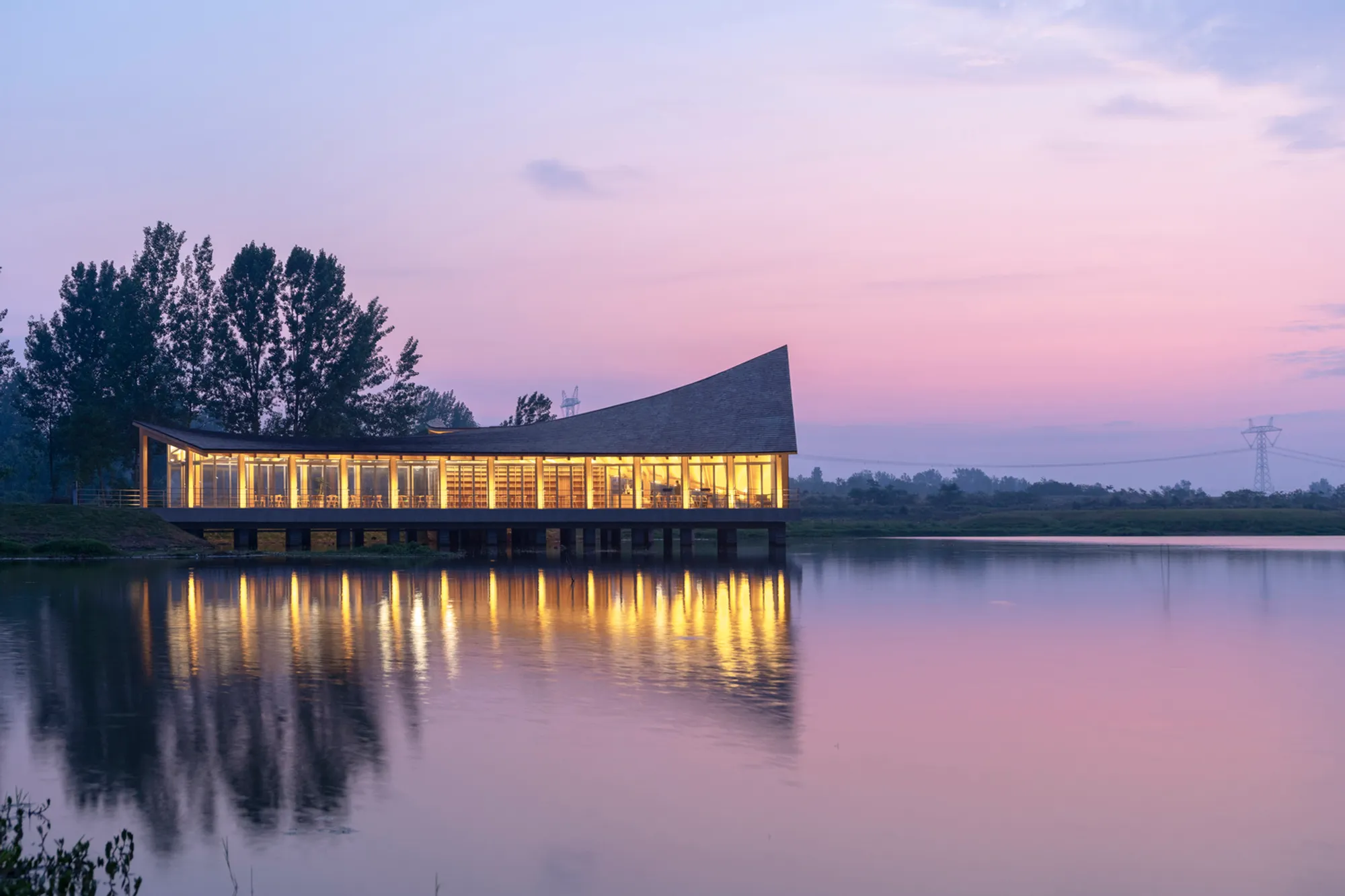
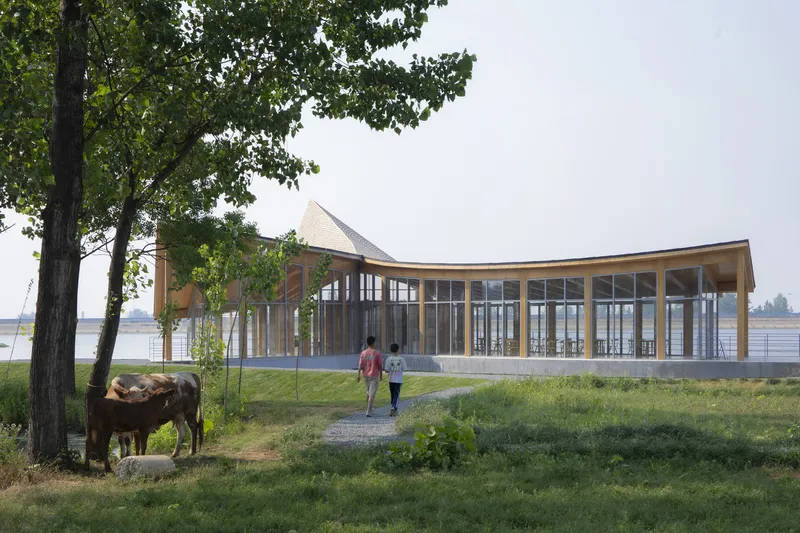
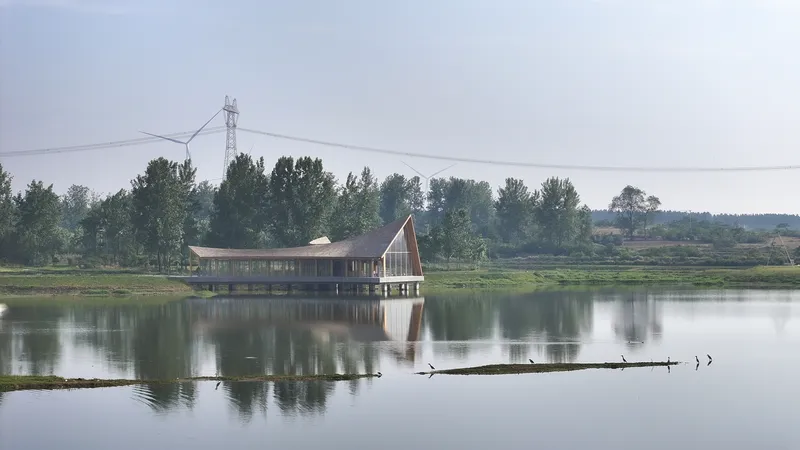
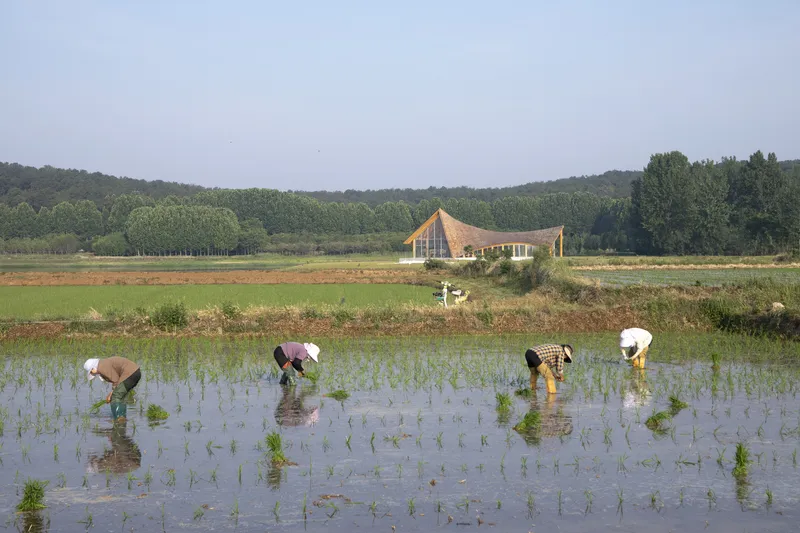
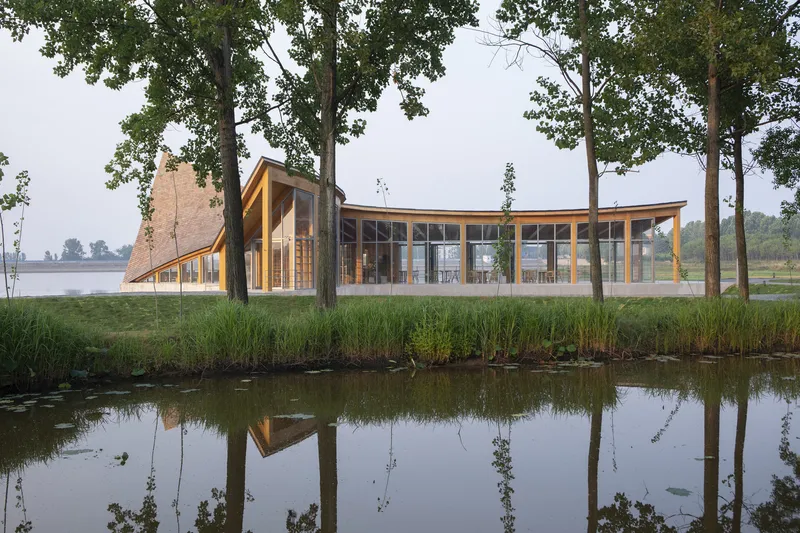
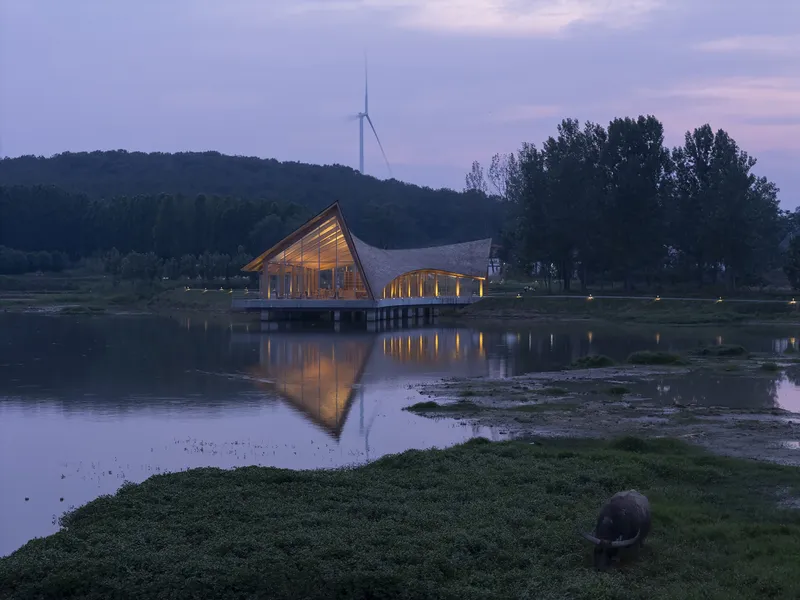
Located in Liugang Village, Xinyang, The Driftwood Village Center is a remarkable example of community center architecture in China. Designed by Primary Architects, this 425 m² building serves as a hub for villagers, integrating agrarian life with the surrounding natural landscape. Its design responds thoughtfully to the seasonal changes of the nearby reservoir and the rhythm of local farming practices.
Context and Site Integration
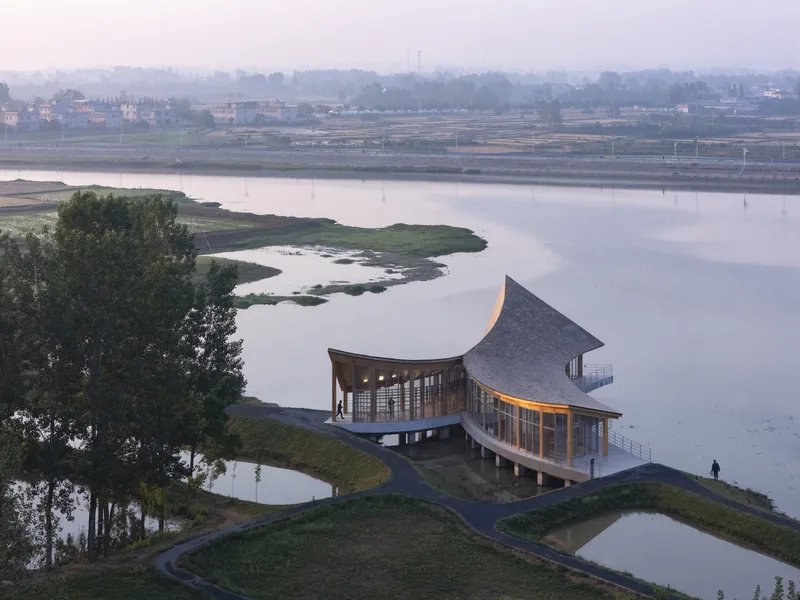
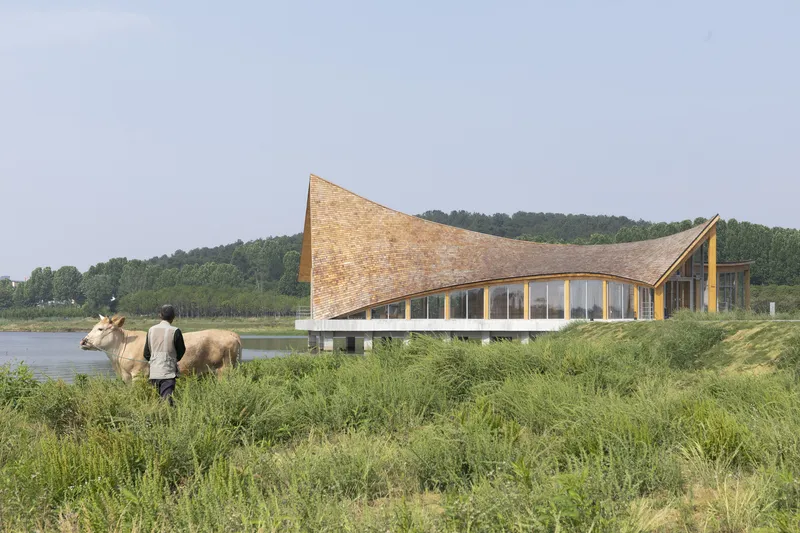
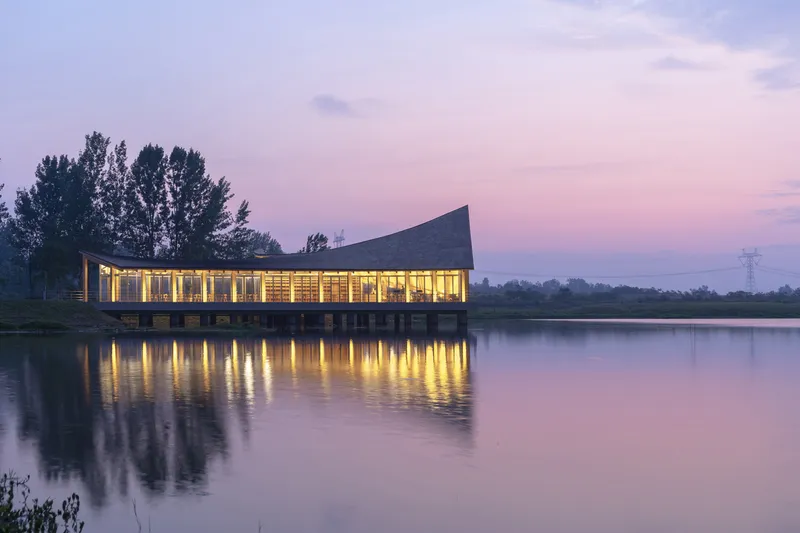
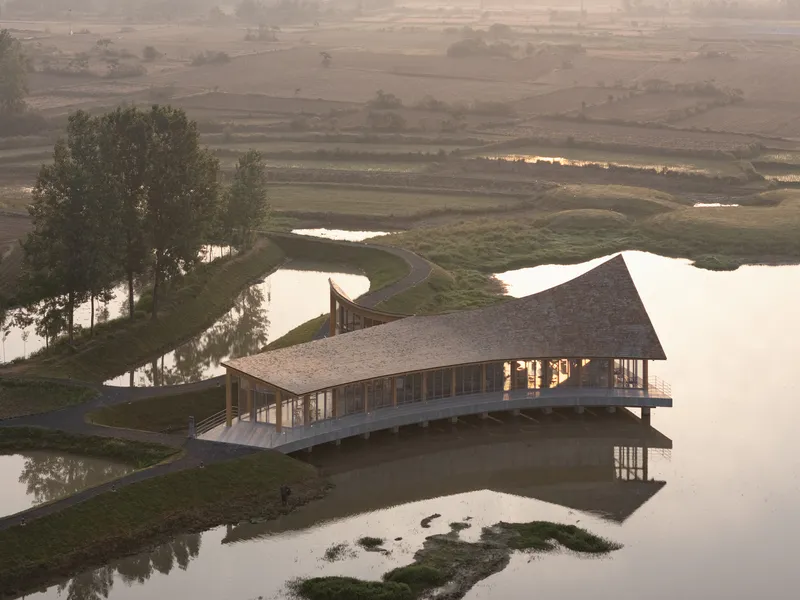
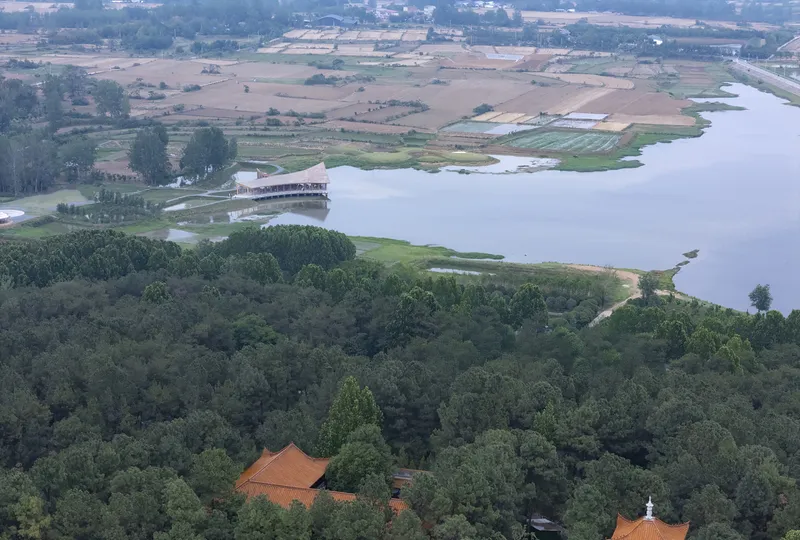
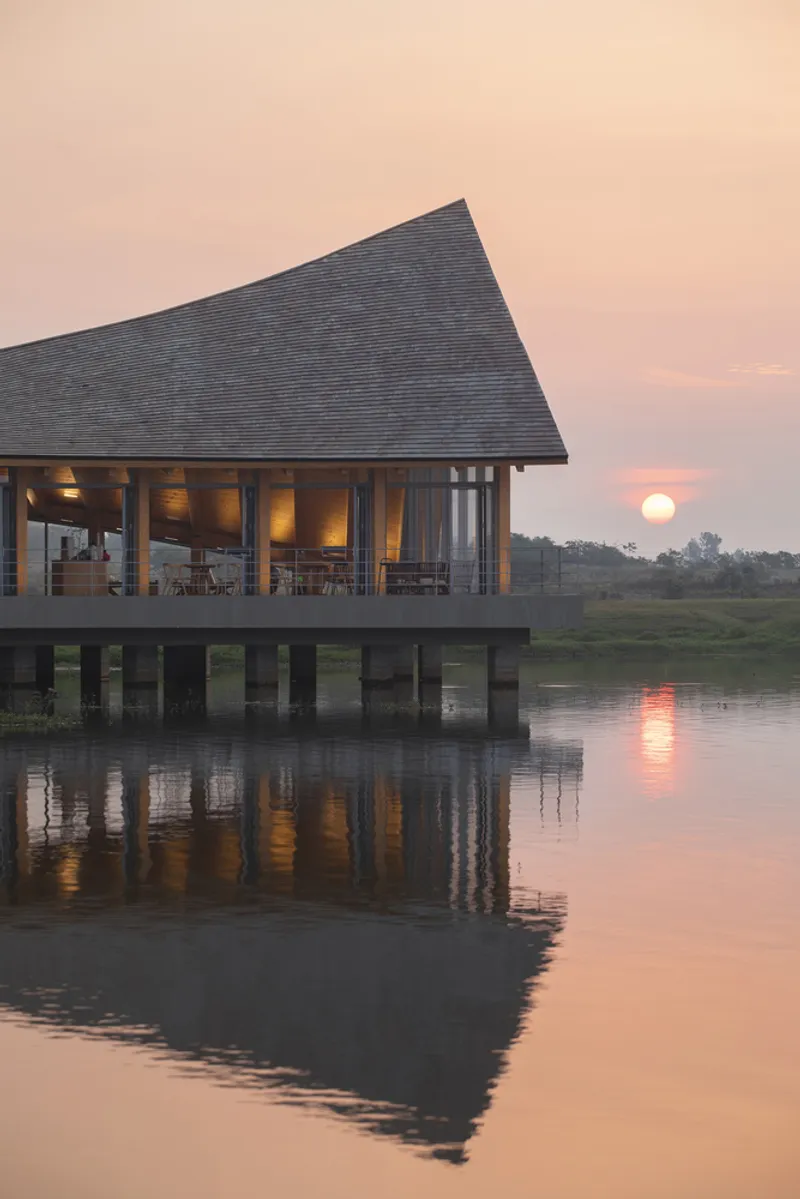
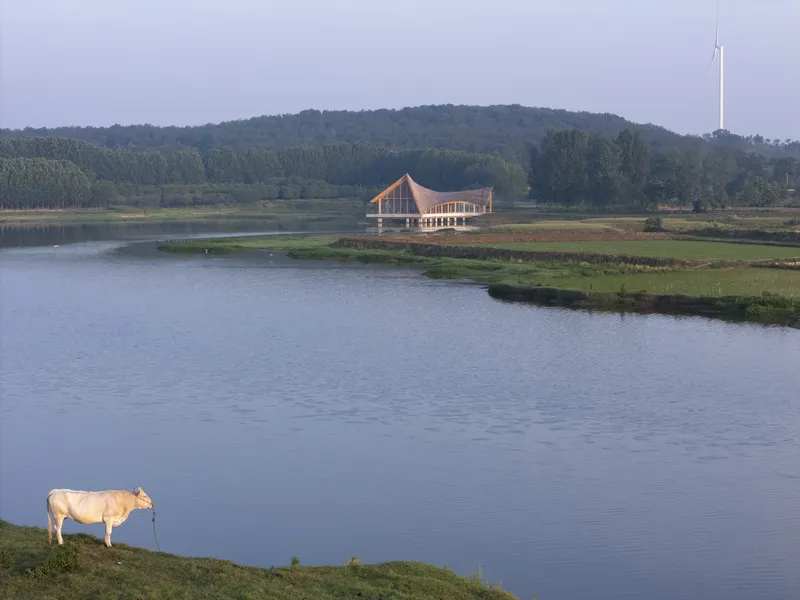
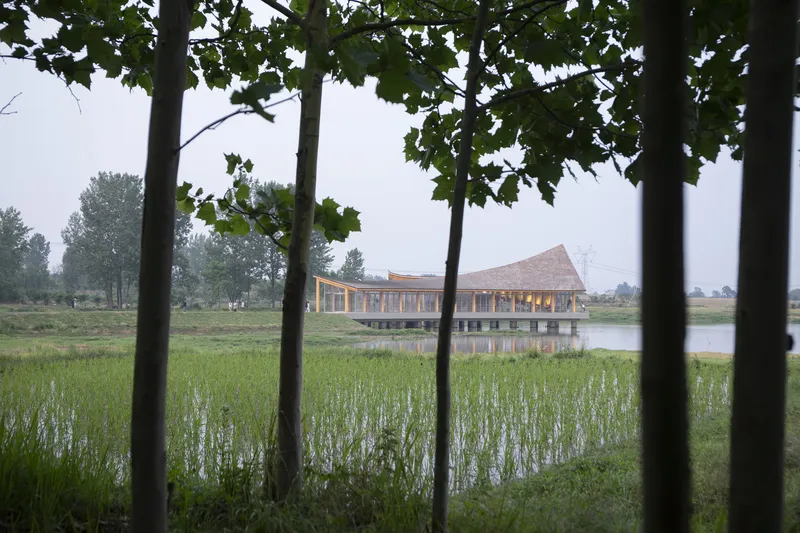
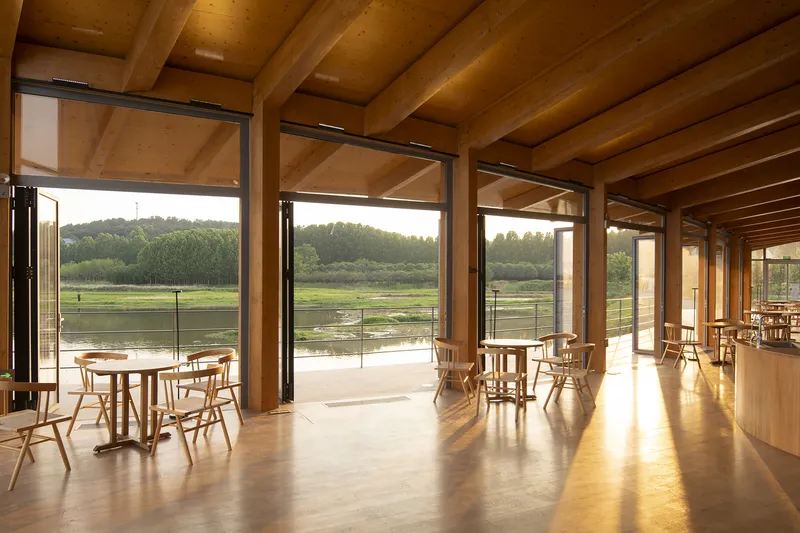
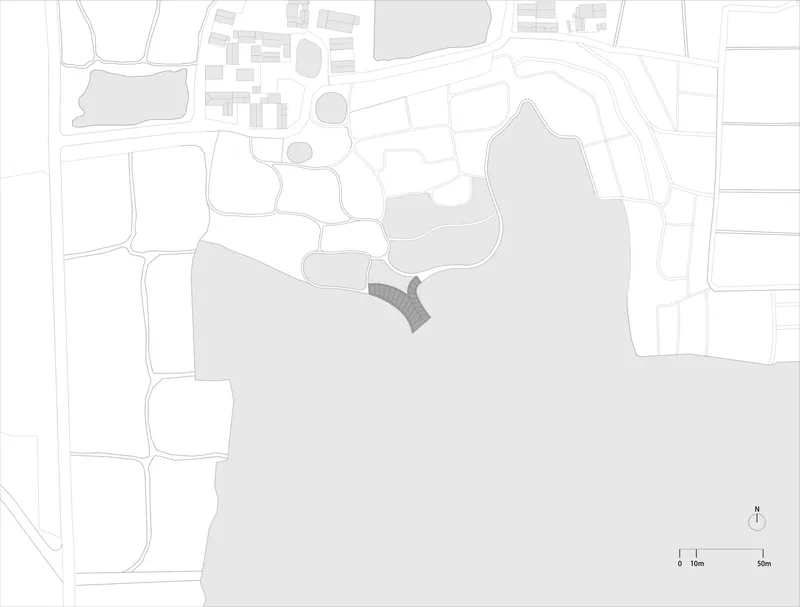
Situated on the bank of a reservoir used for agricultural irrigation, the site experiences fluctuating water levels throughout the year. The architects conceived the layout around the concept of “three-sided scenery,” positioning the center to embrace views of Phoenix Mountain, farmland, and the reservoir. By preserving existing field ridges and native vegetation, the building harmonizes with the agrarian landscape while remaining functional for seasonal community activities.
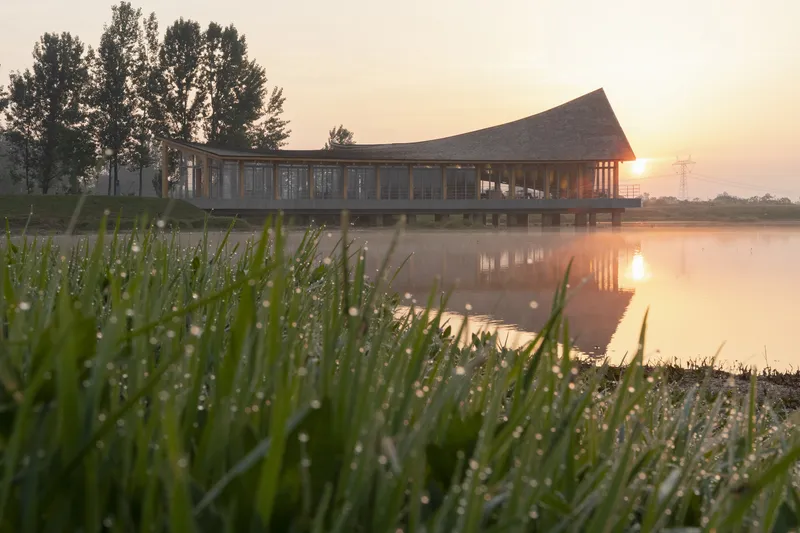
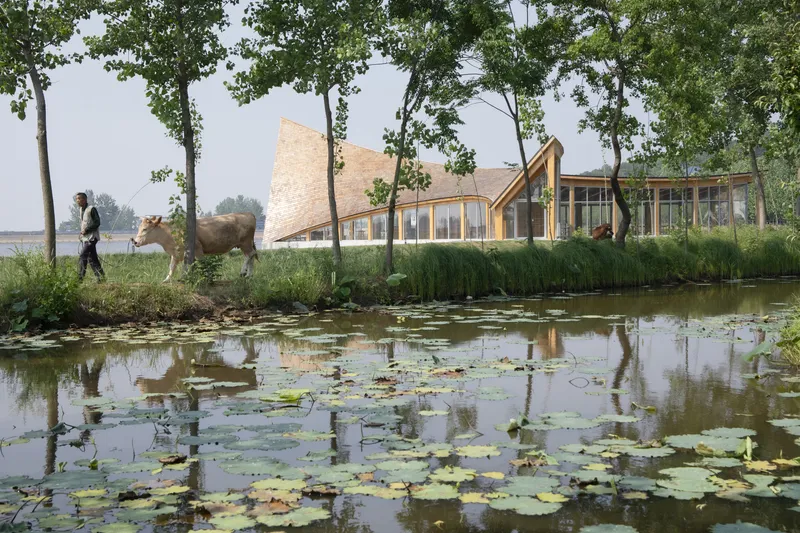
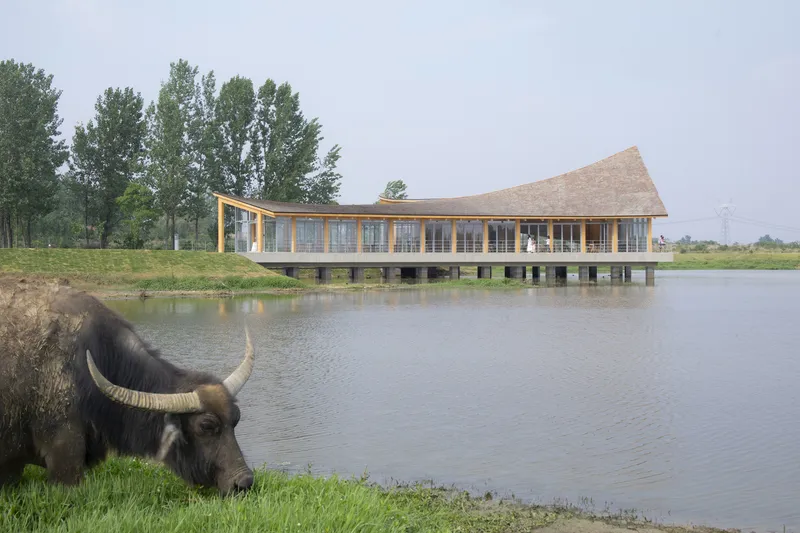
Architectural Form and Circulation
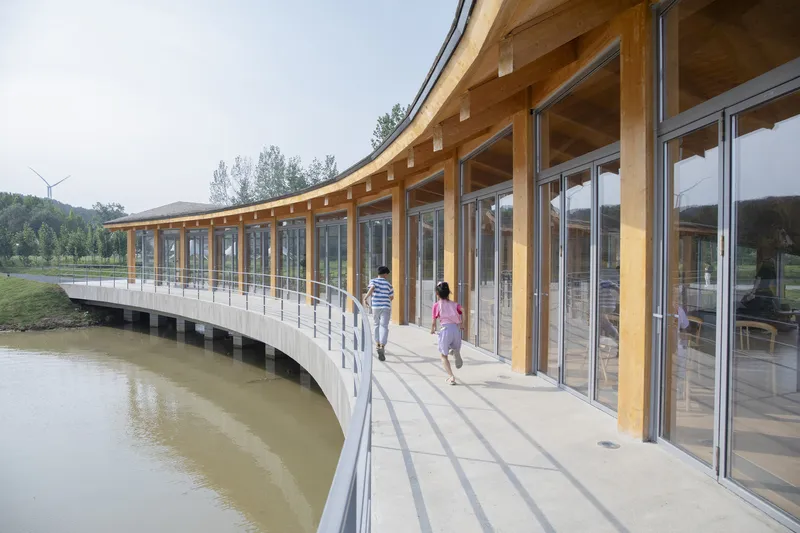
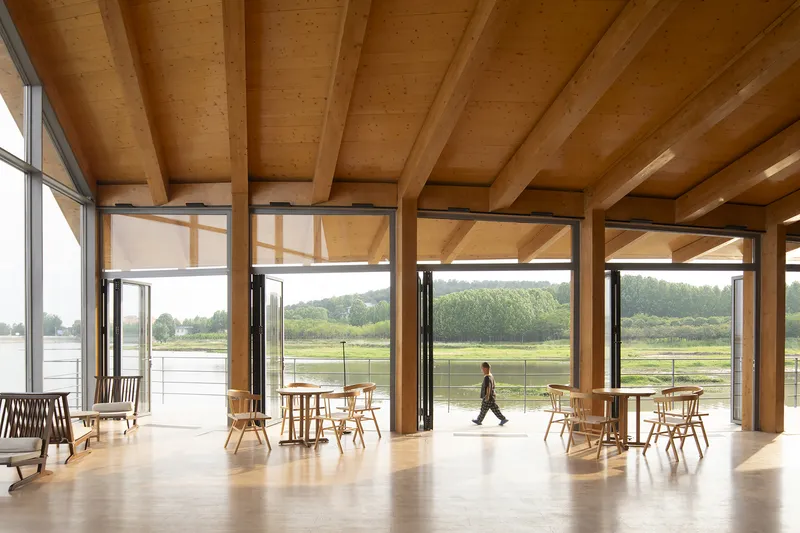
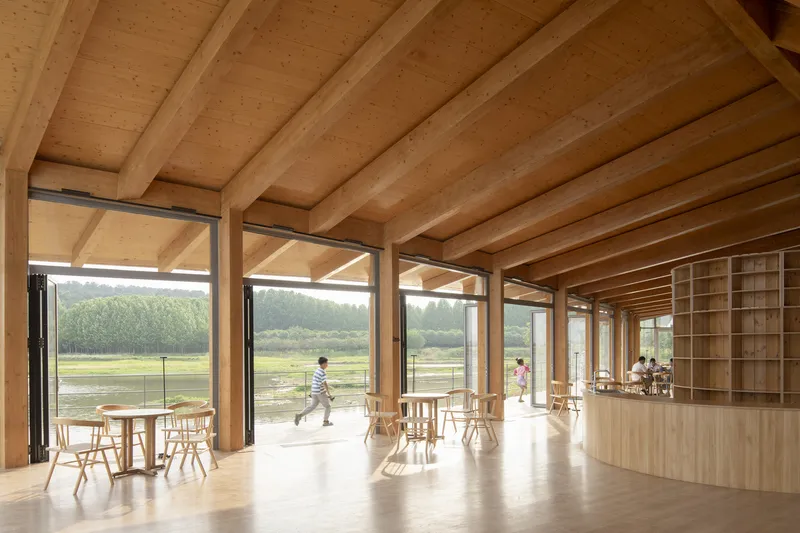
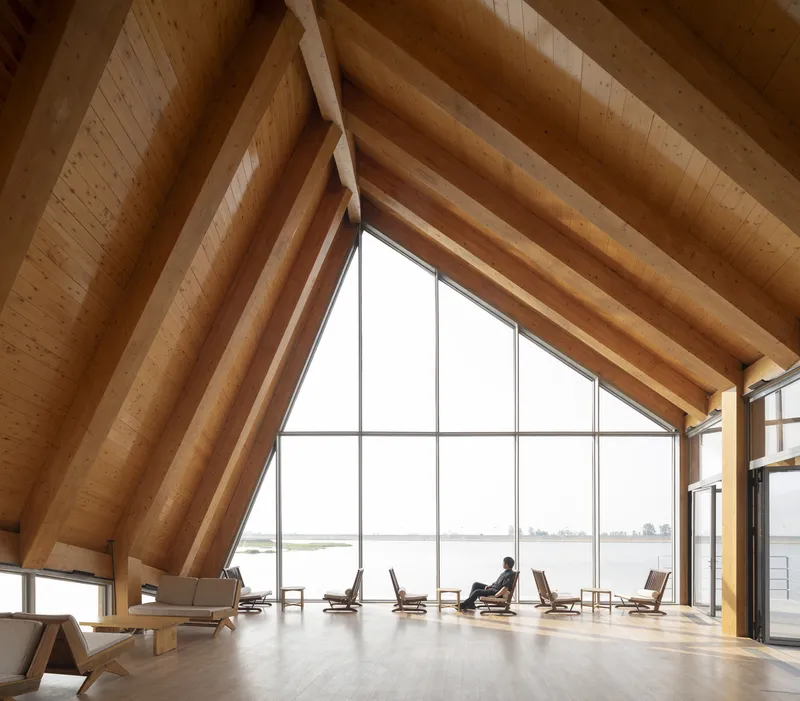
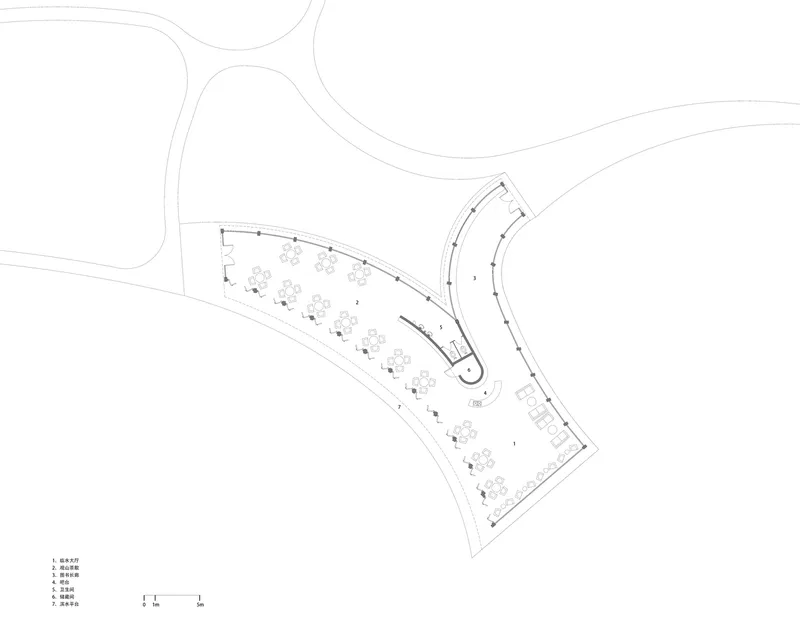
The center’s circulation follows the dike path along the reservoir, allowing the floor plan to organically extend from both ends. This layout creates a natural flow, connecting entrances and public spaces with the surrounding landscape. A lowered eave-covered transitional space guides visitors inside, while gradually rising corridors lead to a column-free, full-height hall, providing uninterrupted views of the exterior environment.
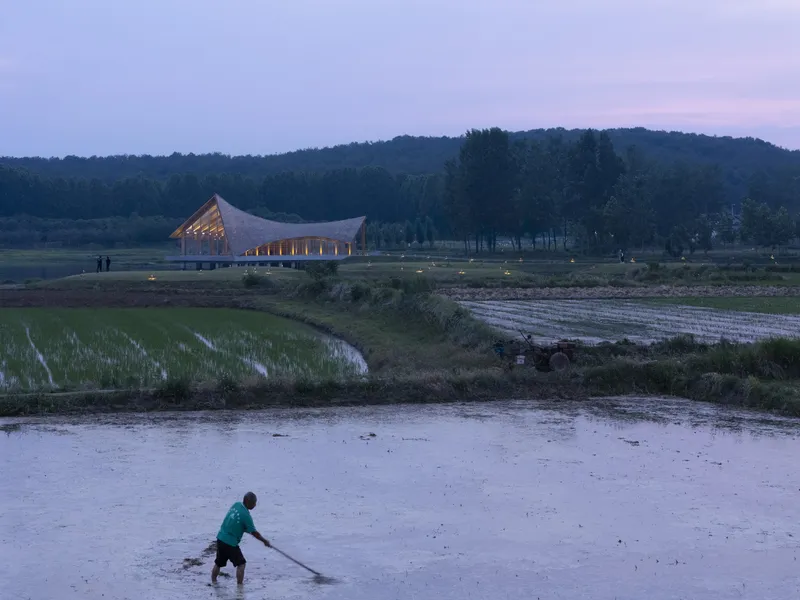
Structural Design and Materials
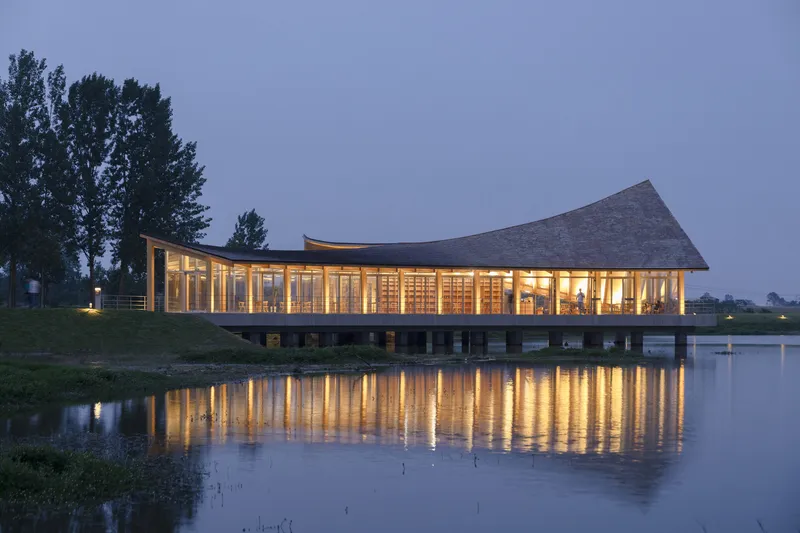
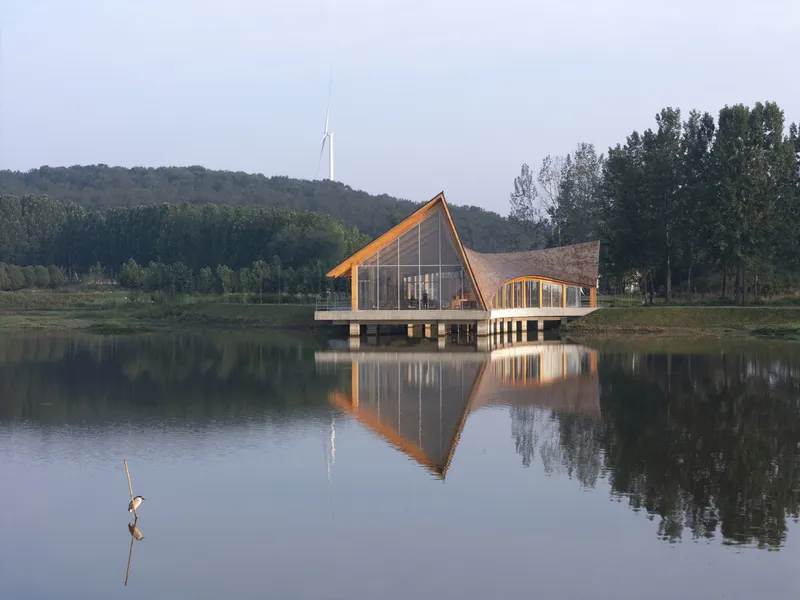
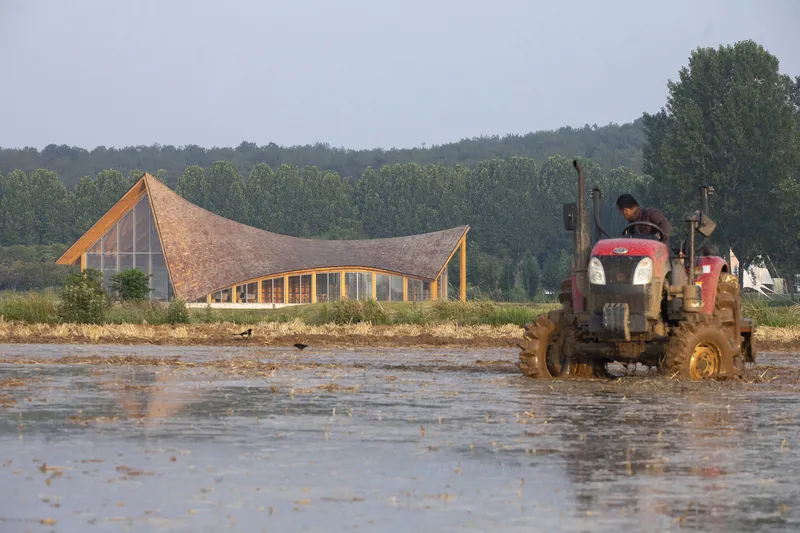
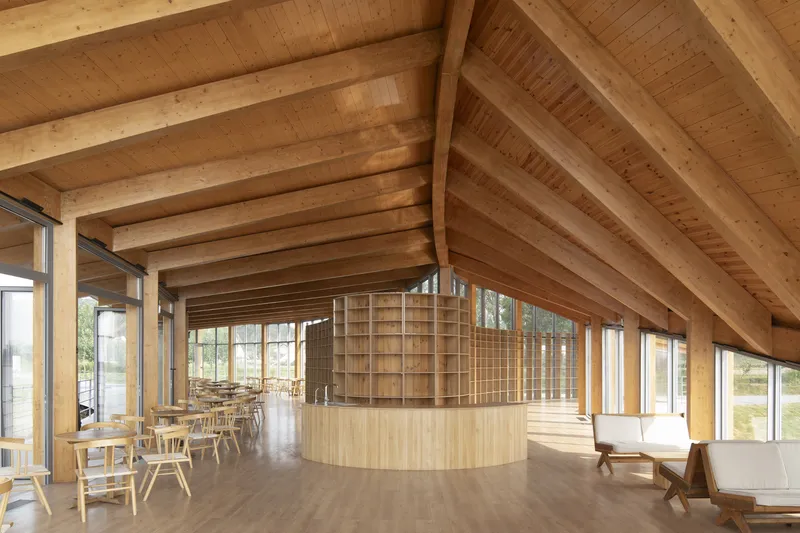
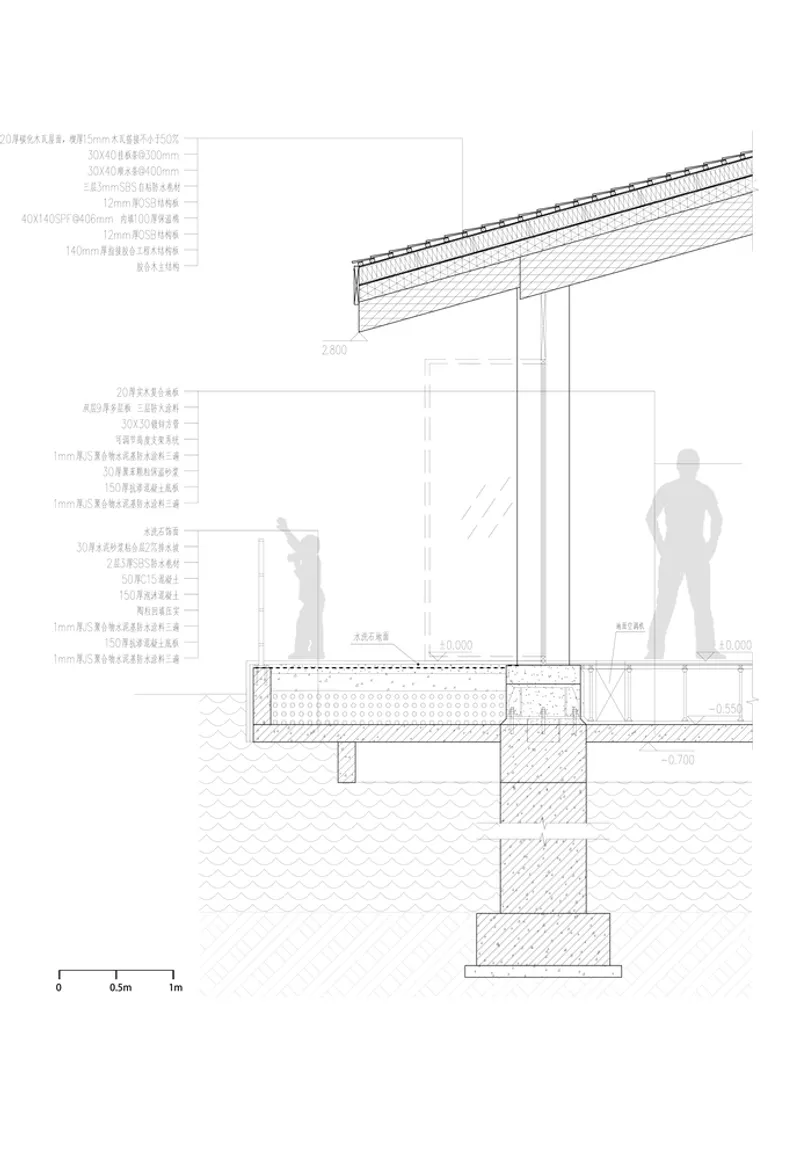
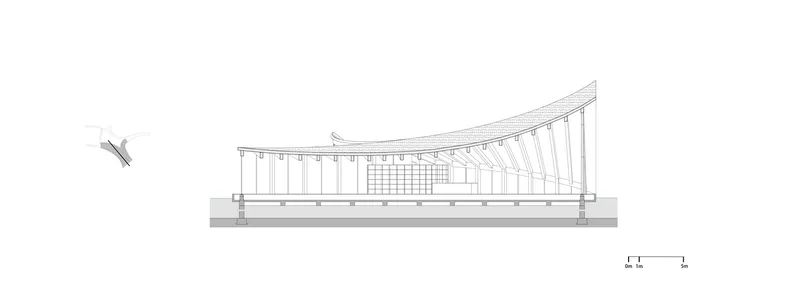
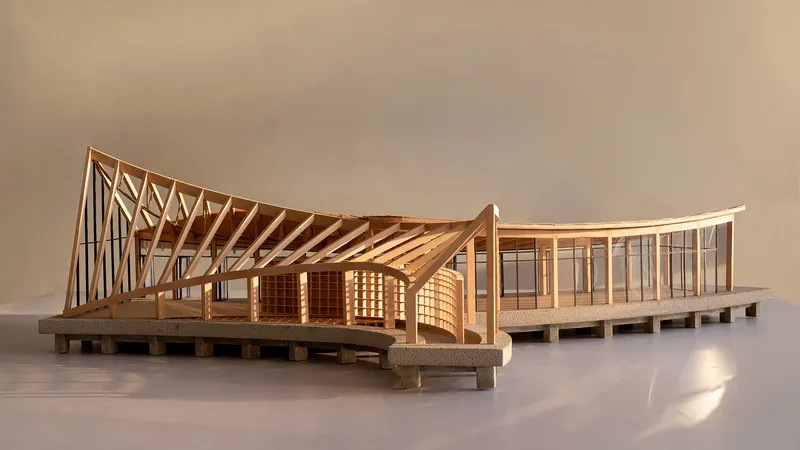
Constructed with a timber frame and steel bolt connections, the building employs gable frame systems with pitched roofs. Four hyperbolic main beams form the roof’s structural core, complemented by secondary beams that maintain stability. The interior is free of columns, minimizing spatial interruptions and creating an open, flexible environment suitable for gatherings, events, and communal activities.
Interior Experience and Spatial Design
Curved curtain walls on either end of the building draw the mountains and reservoir into the interior, offering continuously reframed vistas. Folding doors on the west side fully connect the interior with the outdoor terrace, blurring boundaries between inside and outside. Natural light and ventilation flow freely, enhancing comfort and promoting interaction between villagers and the surrounding environment.
Community and Cultural Significance
The Driftwood Village Center serves as a tea room, reading lounge, and assembly hall, accommodating villagers during the farming off-season. The architectural design emphasizes communal engagement, providing a space where agrarian life, social interaction, and natural scenery converge. The project exemplifies how thoughtful architecture can enhance rural communities while respecting local traditions and ecological conditions.
The Driftwood Village Center is a leading example of community center architecture in China, blending structural innovation, open interiors, and contextual sensitivity. By integrating seamlessly with the landscape and local farming practices, the center fosters social connection while celebrating the beauty of its natural surroundings.
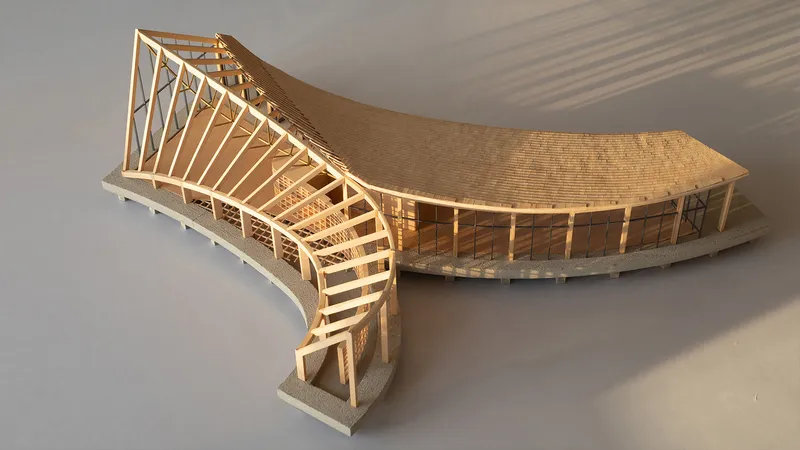
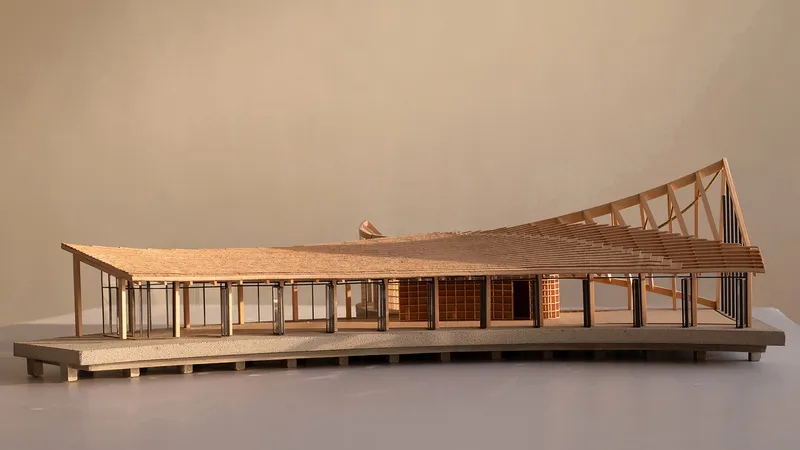
All Photographs are works of Arch-Exist




Popular Articles
Popular articles from the community


Co-Life: Senior Housing Design That Reconnects Older Adults With the City
Co-Life reimagines senior housing design through healing gardens, shared streets, workshops, and a sustainable community across generations.

Hill & Cross Opera: Sculptural Opera House Architecture Shaped by Tallinn’s Landscape and Identity
Hill & Cross Opera reimagines opera house architecture in Tallinn through its sculptural hill, civic plaza, glass wave and a luminous cross.

The Ocean Hive: Sustainable Architecture for a Self-Sufficient Civilization at Sea
The Ocean Hive imagines sustainable architecture at sea, where modular habitats, algae, wave power and ocean waste sustain a growing colony.

Riyadh For All: Intergenerational Urban Design for Active Aging in Rabat
Riyadh For All reimagines urban design in Rabat with intergenerational co-living, adaptive courtyards, and Moroccan cultural exchange today.


Similar Reads
You might also enjoy these articles

FAMM Arquitectura Organizes Ten Villas Around Courtyards and Jungle in Nosara, Costa Rica
El Molino pairs two elongated volumes with deep overhangs and timber louvers to build a compact coastal community five minutes from the beach.
Oscar Niemeyer's Ibirapuera Park Pavilions Define São Paulo's Cultural Identity in Concrete and Curve
A constellation of modernist volumes set within São Paulo's most important urban park, conceived for the city's 400th anniversary in 1954.
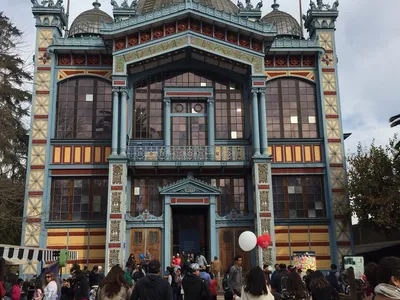
How Henri Picq's 1889 Paris Pavilion Traveled 11,000 Kilometers to Become Santiago's Artequín Museum
A prefabricated iron and glass pavilion built for the Paris Universal Exposition found a second life as a children's art museum in Chile.
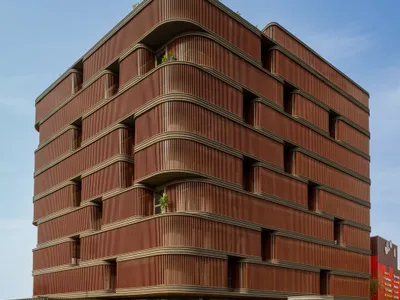
Sanjay Puri Architects Wraps a Jaipur Office Tower in Capsule-Shaped Green Buffers
A nine-level climate-responsive workplace near Jaipur Airport uses stacked planter terraces and aluminium screens to fight 40°C heat.

Explore Community Center Competitions
Discover active competitions in this discipline



Challenge to reimagine the Iron Throne


Photograph architecture without architects


Illustrate the lost glory of Angkor Wat - Render Challenge


Design challenge to reuse E-waste
Comments (0)
Please login or sign up to add comments
No comments yet. Be the first to comment!