

The Final Frontier
An essay on the role, effects, and future of Space Architecture.

Space: The Final Frontier. This thought, immortalized by Gene Roddenberry, has been connected to every ideal relating to space since its inception. Architecture, and to an extent, space architecture, is all about exploration. We delve into the possibilities of design like how an explorer looks for new places to discover. Every new design and every new project likens us to this explorer, excited and fueled by the thrill of discovery. If space is the final frontier for us as a species, then space architecture is the final frontier of our profession. It is the last thing that we must conquer, and it is equally the hardest one to do so.
In space and on exo-planets, the survival chances are slim to none. That immediately increases the difficulty of the design process and decreases the likelihood of creating the right solutions. In addition, we have little to no contextual knowledge of the ‘sites’ that we will be designing in, unlike here on Earth. We also have no experience being in these ‘sites’ and will probably have no chance of experiencing them, thus leaving us with a handicap. But with all these negatives, why do we continue to pursue space architecture? Why do we need to answer these hypothetical living scenarios with conceptual designs? Will any of our work in space architecture be realized in the future?
The answers to those three questions are more interconnected than they would seem, but to answer the first question, I would like to quote Bjarke Ingels: “Architecture is about trying to make the world a little bit more like our dreams.” Since the beginning of the Space Race, mankind has often dreamed of a utopian life amongst the stars. While the reality is different from that vision, the idea of living in space or on another planet has been a goal of humankind. That dream may be rooted in the conquest-oriented psychology of us humans but that dream exists nonetheless. As architects, it is our responsibility to contribute to the realization of that dream via our designs. We must help realize the vision of this future. Since time immemorial, our profession has served as the creators of the now and the next. Being creators of the now allows us to build our surroundings the way we see fit, within the context of the times. However, it takes a special kind of mind, or profession, to design the next. It’s becoming increasingly likely that the ‘next’ that we have to design are these habitats in space or on other planets. This former sci-fi thought experiment has evolved into something of a nearing reality. It’s no longer a question of if, it has now become a question of when. We pursue space architecture because we want to create the best, most idyllic version of our shared future - be it here on Earth or another planet.
Because of this goal, we constantly create concepts that will serve this purpose. But concepts inherently branch out, meaning, ideas can become something else entirely. Something designed to fulfill purpose A can unwittingly serve purpose B and purpose C and so forth. Take the geodesic dome, for example. The geodesic dome was created by Walther Bauersfeld to become a planetarium. We, architects, know the geodesic dome as one of the most prized works of Buckminster Fuller as an experimental solution for housing after WWII. Fuller believed that the dome was an elegant and an easy-to-find-materials-for solution to the problem at the time. Fast forward to today, the geodesic dome is the go-to starting point for habitat designs. This conceptual evolution of the humble geodesic dome leads me to the answer to the second question: creating concepts for space architecture advances technologies in many different ways. This particular area of architecture acts as a conceptual and technological incubator (whether intentional or not), that not only enriches space architecture but also pushes the goals of sustainability and technology forward. While we may, on occasion, be too aggressive with space habitat design, it does have its upsides. This positive catch is that while we’re discovering and advancing technologies for space habitats, we unconsciously realize and advance technologies needed here on Earth. Much like the evolution of the geodesic dome, the technologies that we have conceptualized in the name of creating better space habitats will find their use here on Earth. There are advancements in 3d printing, water filtration/purification, remote operations (medical or otherwise), and an improved indoor air quality that we enjoy all thanks to advancements made specifically to make the ISS more habitable, and it doesn’t stop there. Years ago, power banks for mobile gadgets didn’t even exist. Nowadays, there are iterations of this technology that include mini solar panels, all of which, wouldn’t have been possible in part, due to the advancements in space habitats. We can now say (to some degree) that we can control the power of the sun, in the palm of our hands. Otto Octavius references aside, the reality is inevitable: the advancements in space will help out life here on Earth. It may even hold the key to the utopian ideals of sustainability here on Earth. If we can advance sustainable technologies (i.e. hydroponics, aquaponics, water filtration/purification, etc.) just by studying more efficient methods on exo-planet habitats, I can say with absolute confidence that we can achieve better, more sustainable technologies that will be of use on Earth via this enterprise.
We need that sustainable technology now, more than ever. At the same time, we can achieve those high ideals, now more than ever before.
While at this point, most of the concepts for space habitats are merely concepts, we cannot refute the fact that society will inevitably progress forward. As I’ve stated earlier, this sci-fi-esque thought experiment will come to life eventually. It’s truly not a matter of if, it’s a matter of when. That when may also be sooner than we think, but of course, that’s just speculation. But therein lies the answer to the third question I posited: our architecture will become real in the future, it’s not a matter of if, it’s inevitably a matter of when. There was a time in human history when the celestial bodies we could see were a big ball of light (the sun), a slightly less intense ball of light at night (the moon), some ‘twinkling’ little lights in the night sky (the stars), and the occasional quick streaking light (comets), but nowadays, we know what the other planets in the solar system look like, we know what nebulas are, and we even know what other galaxies look like! We even have a definite picture of what a black hole looks like! Who knows what we’ll know in a year, or five years, or ten years for that matter? This excitement to discover more of what’s out there strengthens our love for discovery. This love for discovery and creation will, of course, find its way to the architects of the future. They will want to create new designs and concepts for the strange new worlds we have yet to discover, much like how we want to create new things for the things we have yet to discover. There was also a time in our profession’s history when towering churches didn’t yet exist, or buildings, or skyscrapers, but now, these technologies and knowledge are readily available to us with a few clicks of the keyboard and the mouse. Society will inevitably progress forward, all these concepts and designs of ours will see the light of day. Maybe not today, maybe not tomorrow, but it’ll be soon.
As John F. Kennedy said in his 1961 congressional address, “Time for this nation to take a clearly leading role in space achievement, which in many ways may hold the key to our future on Earth.” While the notion that only one country can have a great contribution to this enterprise is outdated, I do agree with the latter portion of his statement. We, as a society, will benefit greatly from this enterprise, in more ways than one. We can create new things, advance sustainability forward, and eventually, progress society forward. If I can amend one thing in this statement to better fit the current times it's this: It’s time for this great civilization to come together to further the achievements in space exploration. We, as a society, must pool our collective knowledge to create better concepts and designs for this endeavor. Additionally, we, as a profession, must aim to expand our horizons to better aid in mankind’s quest in the final frontier. In this endeavor, we are explorers once more. Like our architectural ancestors, we are out to find the solutions and ideas within our profession that will help mankind. Once more, we will help lead the way in this journey. This journey is a quest we will all take together. For this last expedition into the unknown, we will create strange but beautiful new things, conceptualize the built environment of an expansion of our civilization, and we will boldly go where no one has gone before.
References (7)
20 Breakthroughs from 20 Years of Science aboard the International Space Station
ISBN: None

Popular Articles
Popular articles from the community


Singing Woman: Contemporary Architecture Inspired by Estonia’s Voice and the Sea
Singing Woman turns Estonia’s song culture into flowing opera house architecture, blending public life, landscape, sea, and national memory.

Manzana Morphosis: Stretching Barcelona's Grid into a Living Landscape for 2050
A radical reworking of the Eixample manzana turns density into a tool for generous public space, vertical ecology, and environmental performance.
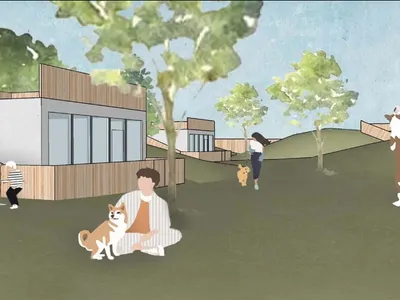
Temporary Home for Dogs: A Reversed Zoo Rethinks Animal Shelter Architecture
In Bucharest, a sinuous corridor and freed landscape flip the logic of containment, designing a shelter that works to make itself unnecessary.

Opera by the Sea Estonia: Three Shells Dissolving Architecture into Tallinn's Coastline
A winning opera house proposal replaces monumental form with interconnected shells that blur the boundary between building, park and Baltic Sea.

Similar Reads
You might also enjoy these articles

Day and Night Park: A Time-Based Urban Newsstand in Beijing
A temporary urban newsstand in Beijing blending travel, light, and reading through poetic colors, compact form, and community-focused design.

Modernist Patio Renovation in El Masnou, Barcelona by Oliver Segura Arquitectura + Cebrià Arquitectura
Modernist patio renovation blending tradition and innovation with a movable pool, leveled floors, and Catalan materials in El Masnou.
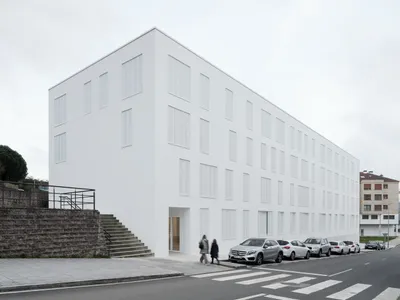
Alto Residencial Coop: Cooperative Housing Development in Santiago de Compostela by Carbajo Barrios Arquitectos
A linear cooperative housing complex blending white volumes and perforated metal façades, enhancing community living, natural light, privacy, and urban integration.
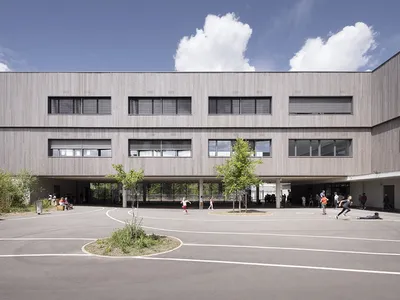
Vil Genis School by BPA ARCHITECTURE – Massy, France
Vil Genis School in Massy, France, features sustainable design, south-facing classrooms, community integration, accessible spaces, and modern educational architecture.

Comments (0)
Please login or sign up to add comments
No comments yet. Be the first to comment!