

The Floating Greenhouse – Resilient Architecture for Flood-Prone Communities in Ecuador
Floating greenhouse in Samborondón, Ecuador ensures year-round food production for flood-prone communities using sustainable, modular, and climate-resilient design solutions.


Architects: Juan Carlos Bamba + Natura Futura
In the rural, flood-prone landscapes of Samborondón, Ecuador, an innovative architectural solution has emerged—The Floating Greenhouse. Designed by Natura Futura in collaboration with Juan Carlos Bamba, this micro-scale floating and pile-supported greenhouse addresses the urgent need for sustainable food production in communities vulnerable to seasonal flooding and the effects of climate change.
A Response to Floodable Territories
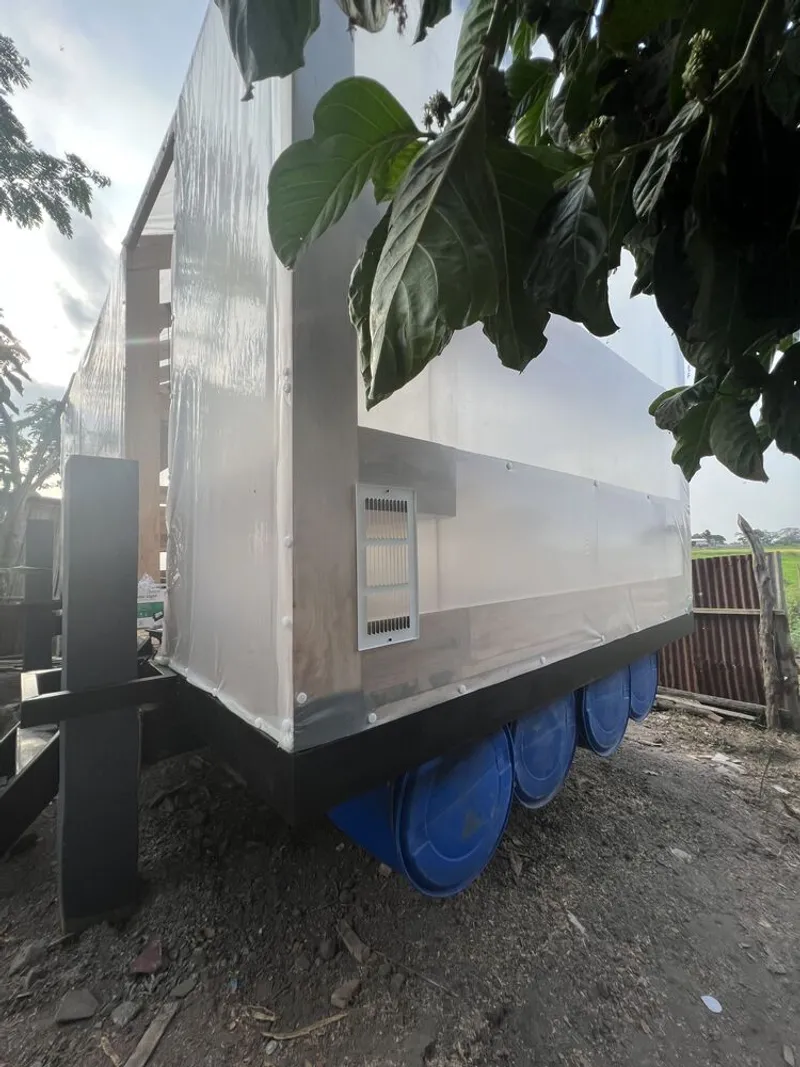
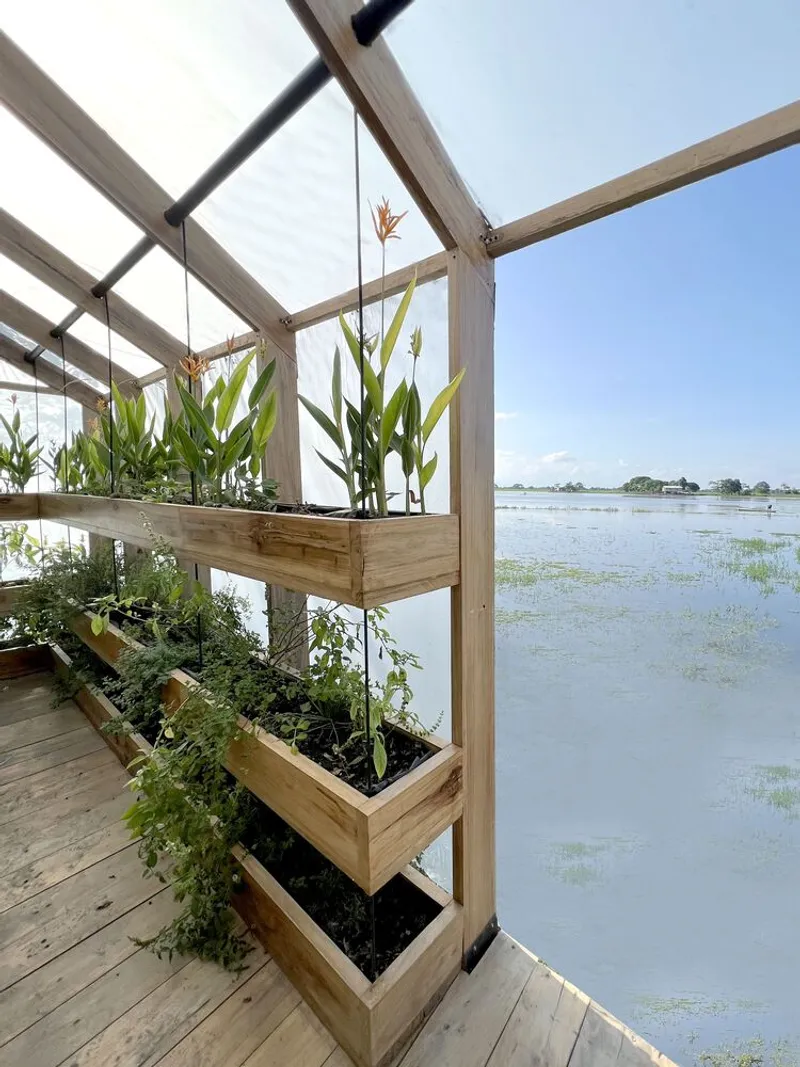
Samborondón’s agricultural identity is shaped by its unique geography—70% of its land is dedicated to rice cultivation. Every year, from January to May, heavy rainfall floods the region, isolating communities on man-made islets for up to three months. During this time, local families face severe challenges in food accessibility, as conventional cultivation becomes impossible.
The Floating Greenhouse directly responds to this reality, offering a resilient, adaptable, and replicable prototype that ensures year-round crop production, even when the land is submerged.

Collaborative Innovation for Climate Resilience
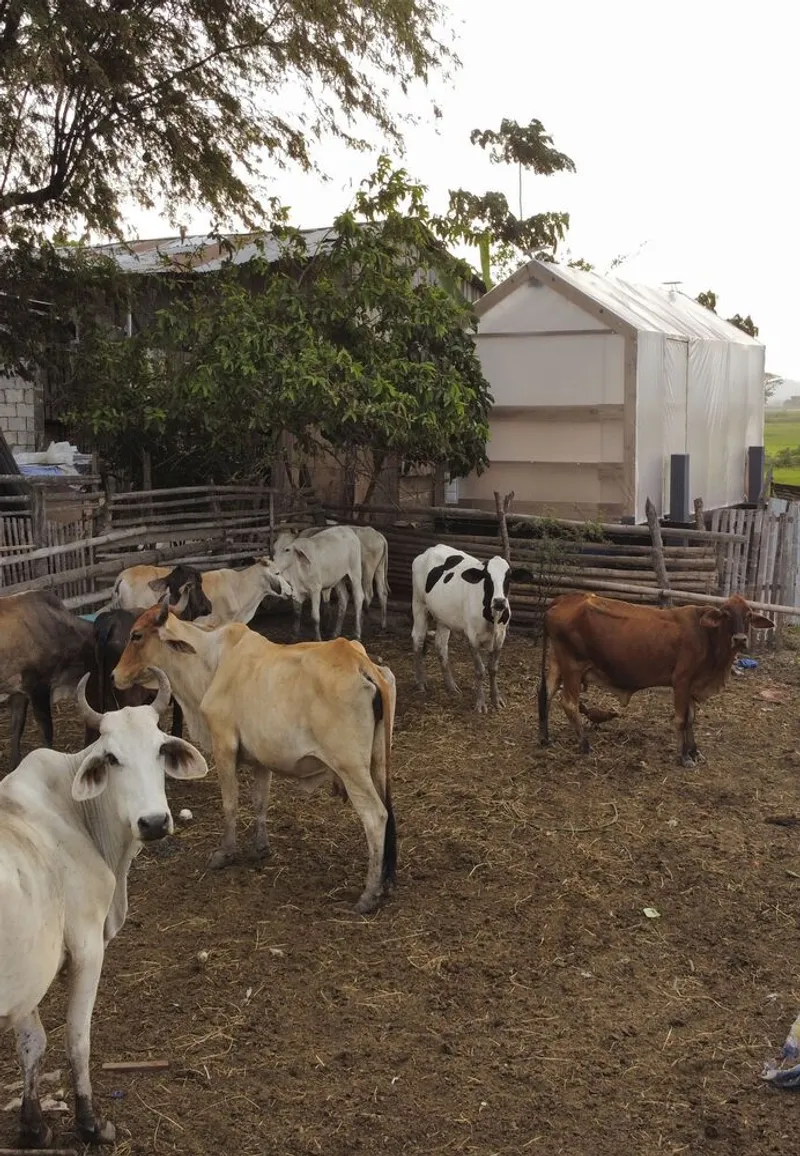
This project was born out of a public call by the World Food Program (WFP) to develop Nature-Based Solutions (NbS) for climate-risk zones across Ecuador, including Manta, Samborondón, Daule, and Quito. The YES Innovation initiative coordinated strategies to improve resilience, and in Samborondón, they partnered with the local municipality’s risk management department to create a self-sustaining island system for three families.
The goal: to build low-cost, rapidly deployable prototypes that can be replicated across other floodable rural communities, improving autonomy, food security, and climate adaptation.
Design and Construction: Between Piled and Floating Architecture
The Floating Greenhouse combines vernacular techniques with modular, lightweight engineering. Its structure consists of local timber portals connected by tubular metal elements, forming a 6×3 m platform supported by reused PET tanks for buoyancy. This floating base is anchored to four mobile piles, allowing it to rest at ground level during the dry season and rise with floodwaters in winter.
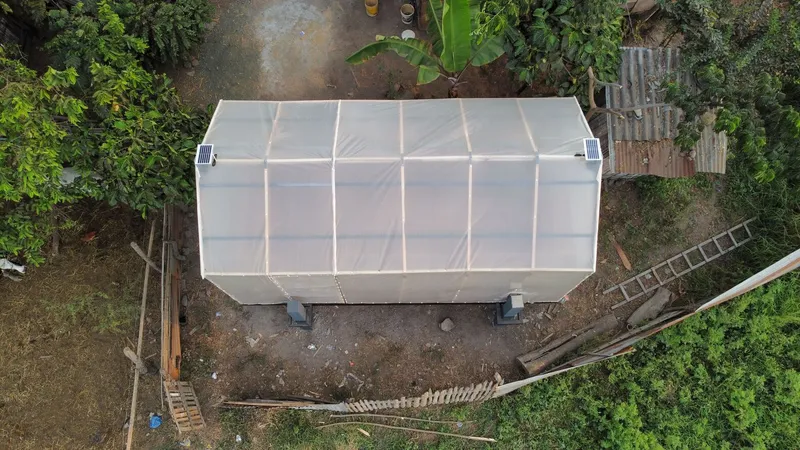
Inside, hanging planters and shelf-based cultivation systems maximize planting density while ensuring proper ventilation, humidity control, and optimal crop growth. A lightweight greenhouse membrane regulates temperature, and solar panels on the roof provide energy for nighttime lighting.

Sustainability and Community Empowerment
The project not only produces food but also strengthens local craftsmanship, fosters community engagement, and promotes environmental awareness. By blending traditional building knowledge with modern floating infrastructure, it offers a scalable climate adaptation model for rural Ecuador and similar geographies worldwide.



Popular Articles
Popular articles from the community


Play: Fragments of Their World
Familiar architecture becomes modular playground design, creating safe spaces where displaced children can learn, connect, imagine and play.

Riyadh For All: Intergenerational Urban Design for Active Aging in Rabat
Riyadh For All reimagines urban design in Rabat with intergenerational co-living, adaptive courtyards, and Moroccan cultural exchange today.

The Musturak Paradise: Senior Living Architecture for a Connected Future in Temara, Morocco
The Musturak Paradise reimagines senior living architecture in Temara via private homes, social spaces, culture, community, and shared care.

The Earth Pod: 3D Printed Homes for Resilient Refugee Communities
The Earth Pod reimagines refugee housing through 3D printed homes made from clay, combining resilience, self-sufficiency, and rapid shelter.

Similar Reads
You might also enjoy these articles


Hodi-Mandai Geram
Project Function: Preservation and revitalization of the Intangible heritage and socio-spatial identity of the Hodi by Housing, Cultural Memory Center, Sacred Grove, landscape, local tourism economy


Olio Towers: A Mid-Rise for Performers That Fuses Housing, Rehearsal, and Stage
Located blocks from Houston's Theater District, this modular tower stacks living units around a central performance atrium.

Oasis: Modular Green Housing Carved into Dhaka's Urban Fabric
A shortlisted Plugin Housing entry reclaims unauthorized settlements in Dhaka with stepped concrete volumes, green roofs, and ventilation-driven design.

Black Hole: A Floating Megastructure for the Post-Physical Era
Emiliano Mazzarotto envisions a spherical, self-scaling arena where e-sports, digital hotels, and holographic stadiums replace traditional public space.

Explore Sustainable Design Competitions
Discover active competitions in this discipline



Challenge to reimagine the Iron Throne


Photograph architecture without architects


Illustrate the lost glory of Angkor Wat - Render Challenge


Design challenge to reuse E-waste
Comments (0)
Please login or sign up to add comments
No comments yet. Be the first to comment!