
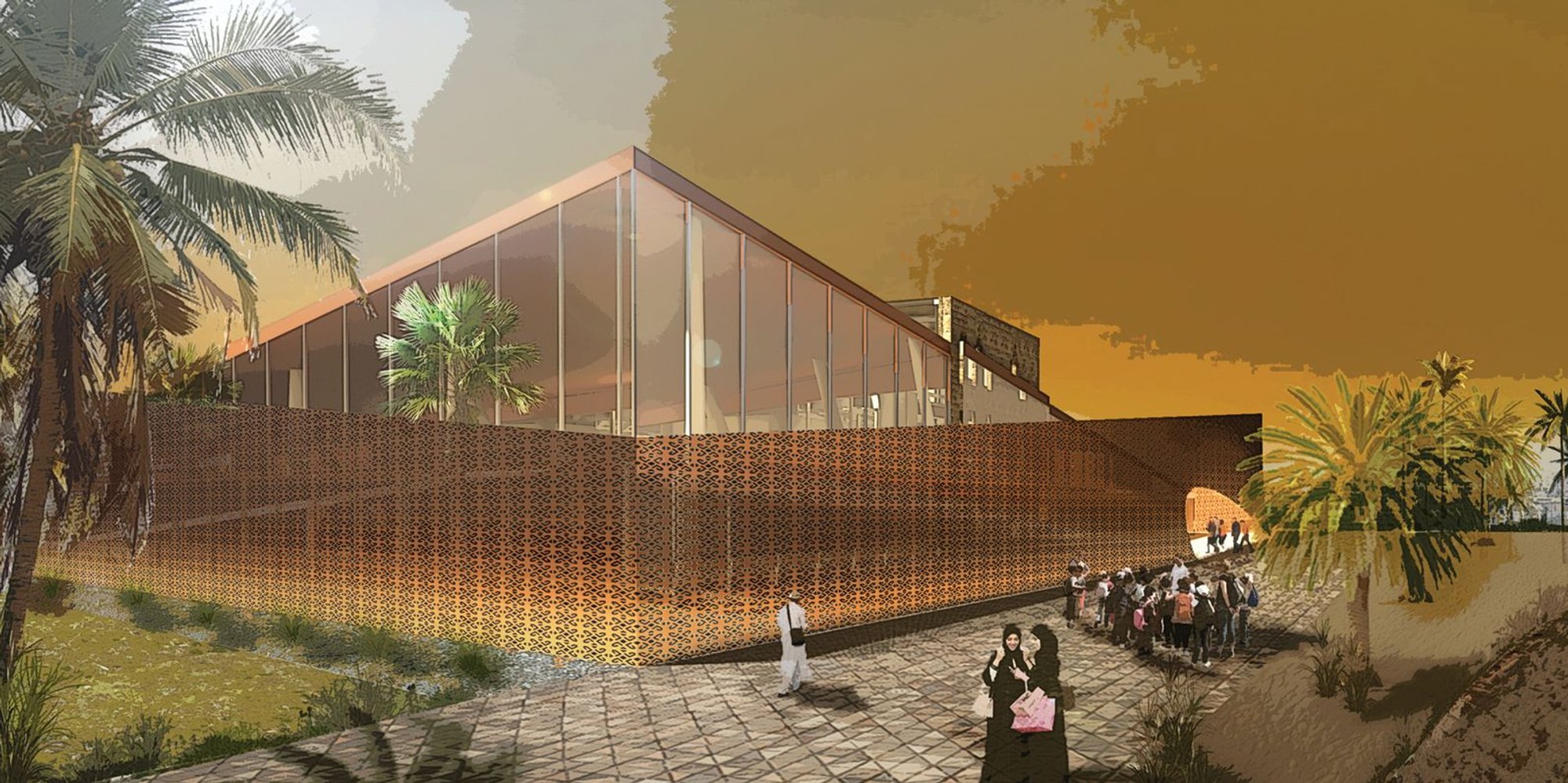
The Fortress & The Sanctuary
A vision that transforms Aleppo’s war-torn ruins into a cultural sanctuary—honoring Syria’s past while shaping a resilient, united future.

“The Fortress & The Sanctuary,” designed by Jordan Coslett, is a profound exploration of adaptive reuse architecture within the fragile urban context of post-war Aleppo, Syria. The project transforms the partially destroyed remains of a historic Serail building into a civic landmark—a place where cultural memory, reconciliation, and future-focused development coexist.
Rather than erasing the trauma embedded in the ruins, the design reinterprets them as essential layers of Syria’s identity. The project acknowledges the nation’s rich cultural legacy while confronting the overwhelming conflict that has reshaped its built environment. In doing so, it provides a framework for rebuilding that does not forget, but instead heals, educates, and reconnects.
This is both a fortress—a symbol of resilience—and a sanctuary—a space for gathering, learning, and reflection.
Re-Gathering Syria: A New Civic Anchor
With a history as deep as Syria’s, creating a pristine architectural symbol for the future without acknowledging its scars would be irresponsible. The project positions itself not as an escape from the city’s difficult past but as an architectural medium through which Aleppo can re-gather its people, stories, and cultural expressions.
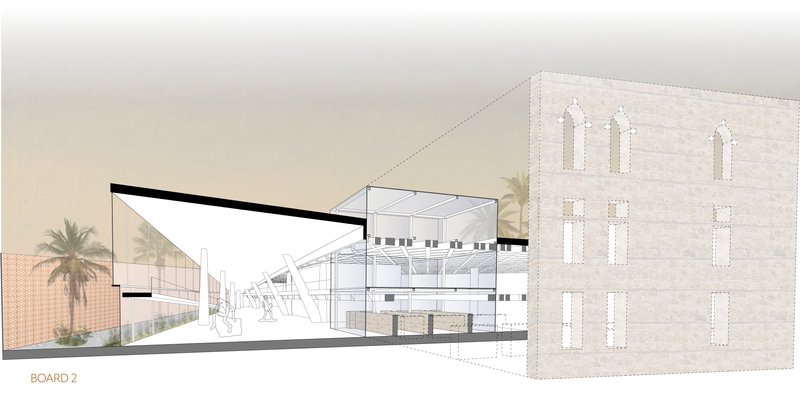
To demolish the remains of the former Serail building would be to erase an important fragment of Syria’s identity. Instead, the design preserves and celebrates these ruins, integrating them into a new structure that supports public functions and cultural engagement.
Through its hybrid program of museum spaces, community facilities, learning centers, and meeting areas, the building aims to:
- provide resources for residents,
- attract and support tourism,
- uplift the local creative economy, and
- create a vital cultural counterpart to Aleppo’s monumental Citadel.
Conceptual Framework: Fortress and Sanctuary
The Fortress
The citadel of Aleppo stands as a mighty historic fortress—an emblem of power, defense, and endurance. Jordan Coslett’s project draws upon this symbolic resilience, grounding the new design in the memory of Syria’s long-standing architectural heritage. The preserved wall fragments act as a grounding force, connecting the new building to the city’s collective memory.
The Sanctuary
To the south of the Citadel, the new building becomes its conceptual opposite: a sanctuary. Here, lightness, transparency, and gathering spaces invite people into an environment of calm reflection. The sanctuary aims to counterbalance the violence and fear associated with the past by offering a place where communities can reconnect and heal.
Together, they form a dual narrative—strength and solace—mirroring Syria’s cultural complexity.
Architectural Strategy: Reviving the Ruins
Preserved Ruins as the Core Element
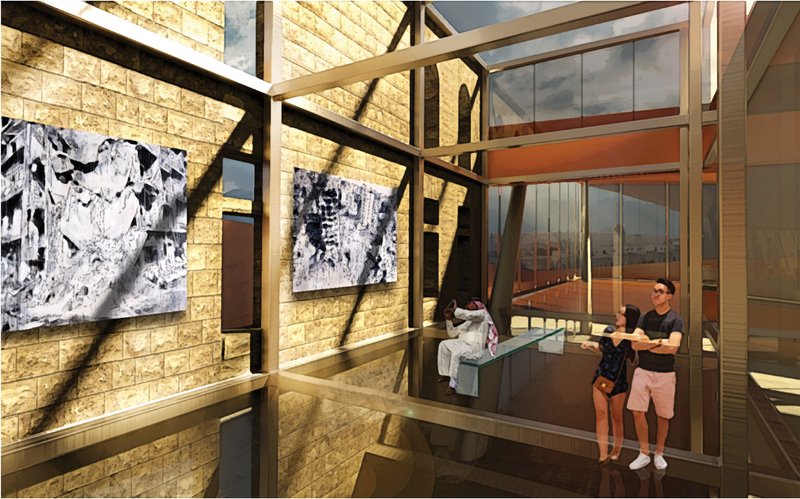
The foundation of the project is a partially destroyed Serail building. Instead of rebuilding over its memory, the architect embeds it into the design as a visible, experiential nucleus. Visitors are encouraged to look down into the ruins through glass flooring, symbolizing transparency, acknowledgment, and the process of collective healing.
This preserved fragment also becomes an exhibition space for Syrian artists, acting as a symbolic return of cultural authority from government back to the people.
Massing, Form, and Materiality
Perforated Copper Skin
A refined copper skin wraps the new elevated structure, filtering light and creating a warm, protective envelope. Symbolically, it becomes a contemporary veil—porous enough to let light in but solid enough to defend the memory it encloses.
Sunken Courtyard Oasis
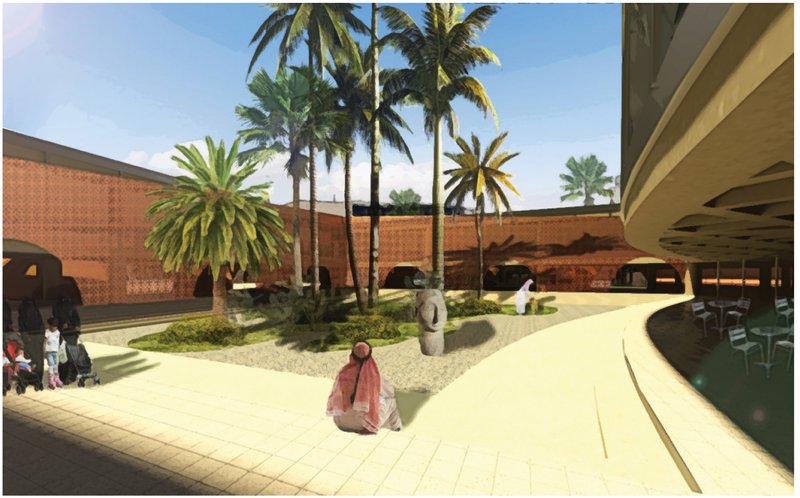
At the base of the building lies a sunken courtyard, forming a quiet sanctuary protected from the urban noise. This oasis, planted with palms and native vegetation, represents resilience and rebirth.
Nested Community and Gallery Spaces
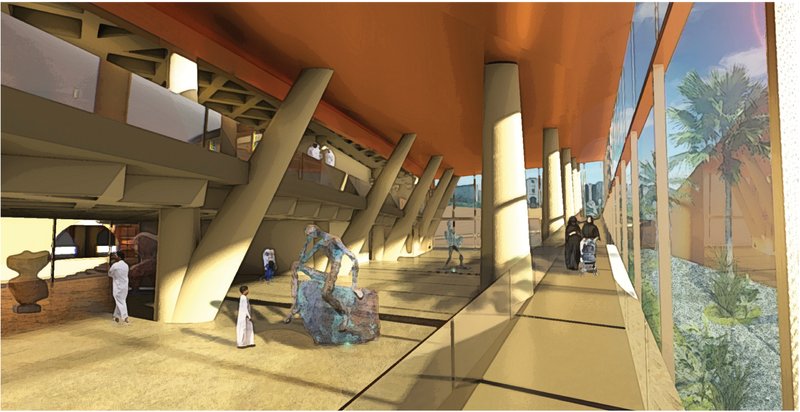
Inside the copper veil, flexible community rooms, exhibition galleries, a library, a technology lab, and multi-purpose halls are arranged around the preserved ruins. These programmatic layers help re-activate Aleppo’s cultural and economic life.
Program Breakdown and User Experience
The building is designed to operate simultaneously as a civic anchor and as a cultural generator.
1. Museum and Exhibition Spaces
Double-height grand halls and glass-enclosed galleries allow residents and visitors to experience Syria’s artistic heritage and contemporary creative voices.
2. Library and Technology Hub
Knowledge becomes a key tool for empowerment and future development. The library and tech lab provide resources for digital literacy, learning, and youth engagement.
3. Community Meeting Spaces
Multipurpose rooms support gatherings, workshops, public discussions, and social initiatives—strengthening Aleppo’s social fabric.
4. Theatre and Event Space
A small theatre provides a platform for cultural performances, storytelling, and public events.
5. Outdoor Courtyard Oasis
A serene courtyard at the heart of the complex softens the building’s monumental presence, creating a comfortable microclimate and a space of reflection.
Spatial Narrative and Atmosphere
The contrast between the restored ruins and the new copper-clad structure produces a compelling spatial dialogue.
Light and Shadow
Filtered light through the perforated façade creates intricate shadows that animate the interiors, echoing traditional Mashrabiya screens.
Movement and Perspective
Visitors circulate between elevated walkways, transparent floors, and partially sunken spaces, experiencing glimpses of both the present and the past.
Materiality and Memory
Stone, copper, glass, and the preserved ruin walls interact to produce a tactile, emotional experience that is both contemporary and deeply rooted in context.
Social and Cultural Impact
The project aims to:
- strengthen the connection between citizens and their heritage,
- provide safe cultural and educational spaces,
- revitalize Aleppo’s urban fabric through tourism and community activation,
- honor memory without freezing the city in tragedy.
By merging resilience with renewal, “The Fortress & The Sanctuary” becomes a prototype for Syrian reconstruction—a model of how architecture can facilitate remembrance, healing, and forward momentum.
Jordan Coslett’s project stands as a sensitive and forward-looking vision for adaptive reuse architecture in conflict-impacted cities. By grounding new development in the acknowledgment of past trauma and cultural richness, the design extends hope to future generations.
It is a gesture of respect to Syria’s history, an offering of space for its people, and a proposal for how architecture can rebuild not only structures—but identity, connection, and dignity.
Project by Jordan Coslett




Popular Articles
Popular articles from the community

20 Most Popular Commercial Architecture Projects of 2025
From sustainable market concepts to heritage factories, the commercial buildings and proposals that drew the most attention on uni.xyz this year.

A Park Building That Wants to Be a Landscape
Omrania's Operations & Maintenance Building at King Salman Park dissolves industrial program into Riyadh's largest green infrastructure.
MAKER architecten Rewire a 1972 Brutalist Dormitory on the VUB Campus as a Living Lab
A modular renovation strategy in Belgium breathes new life into Willy Van Der Meeren's modernist student housing without erasing its concrete bones.
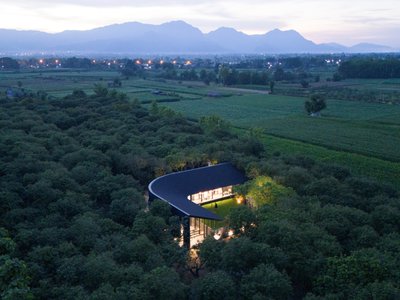
Cafe MADA: A Chiang Rai Pavilion in a Mango Orchard
BodinChapa Architects threaded a 254 m² black-roofed cafe through an existing mango orchard in Chiang Rai, Thailand, built around mature trees.

Similar Reads
You might also enjoy these articles
Twilight Crossing: A Pedestrian Bridge That Performs with Light and Water
Angel Gamboa's tensile cable bridge transforms a lakeside crossing into a choreographed sequence of color, reflection, and framed views at dusk.
Digital Façade Design for our cities’ urban fronts
Prima Facie - Result Story
Protecting avian biodiversity: Bird observatories to help spread awareness & save rare bird species.
Results for ‘Fly’ - Landscape design competition out now

Explore Interior Design Competitions
Discover active competitions in this discipline




The Global Benchmark for Architecture Dissertation Awards


Challenge to design luxury tourism on rails


VR headsets Storefront design competition

Designing a staircase for a client
Comments (0)
Please login or sign up to add comments
No comments yet. Be the first to comment!