
The Fourth Space: Educational Architecture Reimagining the Future of Learning
An educational architecture concept redefining school design through mindfulness, adaptable learning, and immersive social spaces.

The Evolution of Educational Architecture
Educational architecture is entering a period of transformation where the role of schools extends far beyond traditional classroom instruction. Across the world, architects and educators are rethinking how educational environments influence emotional development, collaboration, creativity, and well-being. Schools are no longer viewed as rigid institutions focused solely on academic performance. Instead, they are increasingly understood as dynamic ecosystems that shape the social, psychological, and personal growth of students.
“The Fourth Space,” an Editor’s Choice entry of School Of Thought 2020 by David Law and Selina Chau, explores this evolution through a deeply reflective architectural proposal that integrates mindfulness, social-emotional learning, and adaptive educational environments into a unified spatial experience.
The project presents a vision for future educational architecture where learning is not confined to classrooms or predefined academic spaces. Instead, education unfolds continuously through movement, interaction, reflection, collaboration, and connection with nature. Through its fluid spatial organization and human-centered approach, the project proposes a school environment that supports holistic learning while nurturing mental well-being.
Rethinking the Traditional School Model
Conventional educational environments are often characterized by rigid classrooms, enclosed corridors, repetitive circulation systems, and highly controlled spatial organization. While efficient in structure, these systems frequently separate learning from lived experience. Students move through predefined schedules and isolated spaces with limited opportunities for informal collaboration, reflection, or emotional engagement.
“The Fourth Space” challenges this institutional rigidity by introducing a new educational architecture model centered on adaptability and experiential learning. Rather than treating architecture as a container for education, the project positions space itself as an active participant in the learning process.
The proposal reimagines the school as an interconnected landscape of educational experiences. Spaces are no longer defined exclusively by function, but by the types of interaction, discovery, and engagement they encourage. Through open circulation, porous boundaries, and fluid transitions between programs, the design encourages students to participate in learning organically.
This approach reflects a growing global shift toward student-centered educational environments where curiosity, collaboration, and emotional intelligence are valued equally alongside academic knowledge.
The Concept of the Fourth Space
At the heart of the project lies the concept of the “Fourth Space,” a spatial condition that bridges traditional boundaries within education. This space exists between formal and informal learning, between interior and exterior environments, and between solitude and social interaction.
The Fourth Space functions as more than circulation. It is an experiential architectural layer that supports mindfulness, reflection, and emotional awareness. Students encounter moments of pause, openness, and interaction as they move throughout the campus. Learning becomes embedded within the act of movement itself.
The concept draws inspiration from social-emotional learning models and holistic educational theories that emphasize the importance of psychological well-being within academic environments. By integrating these ideas into architecture, the project proposes that spatial experience can directly contribute to healthier educational outcomes.
The fluid geometry of the Fourth Space contrasts intentionally against the rigid rectangular forms traditionally associated with institutional schools. Organic circulation paths weave through the architecture, softening boundaries and creating dynamic transitions between learning environments.
This spatial strategy transforms the educational journey into an evolving sequence of experiences where students receive information, participate in collaboration, experiment through practice, and reflect through mindful interaction.
Architecture as a Learning Ecosystem
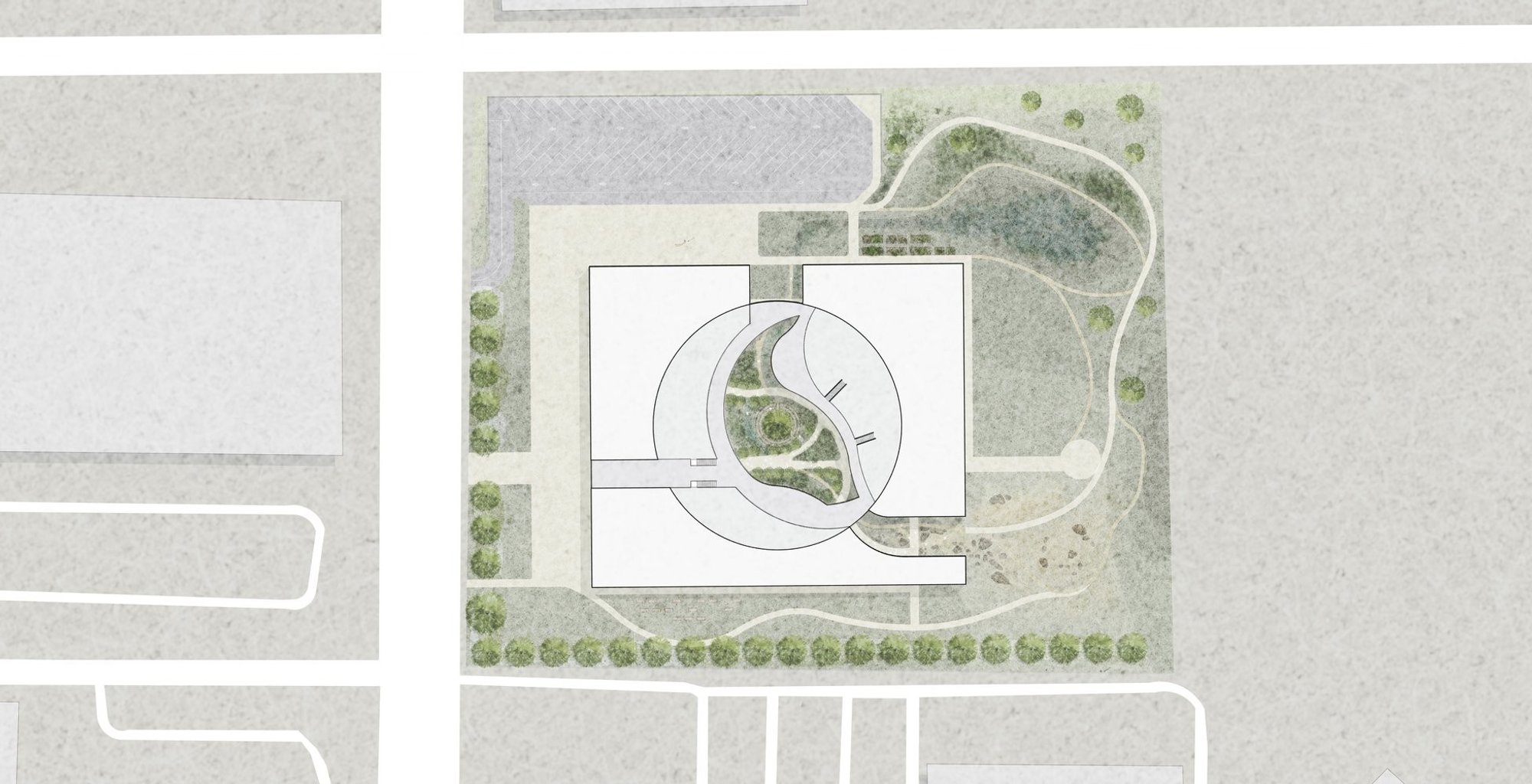
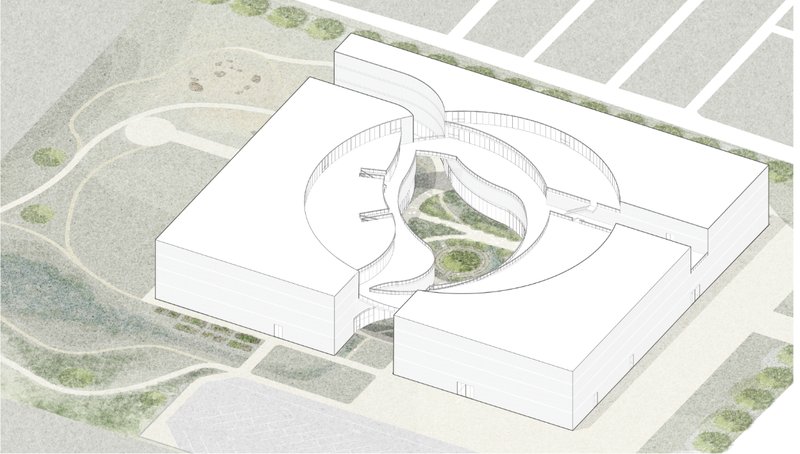
The architectural composition of “The Fourth Space” reflects a careful balance between structure and openness. Large monolithic educational volumes frame a central landscaped void that becomes the emotional and social heart of the campus.
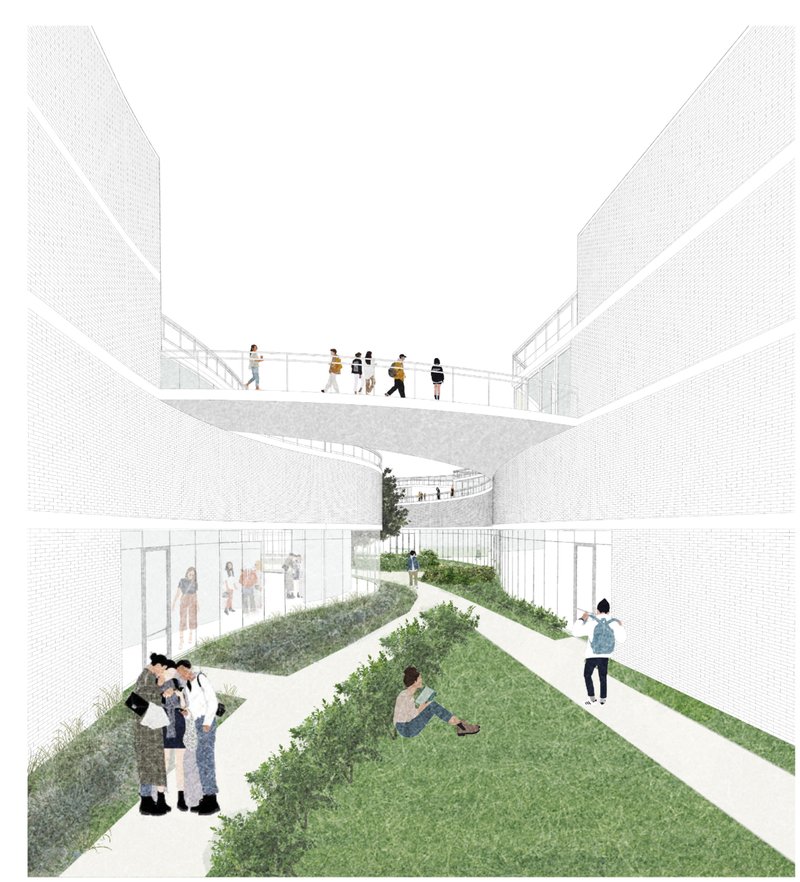
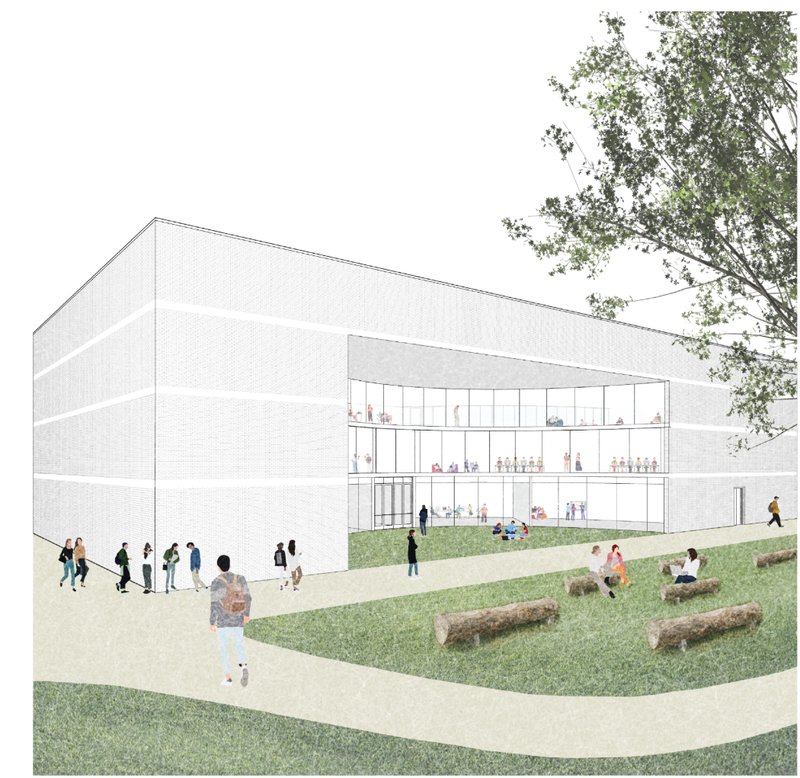
This central void introduces nature directly into the learning environment. Landscaped pathways, planted courtyards, reflective gardens, and outdoor gathering areas create opportunities for interaction beyond conventional classrooms. Rather than isolating architecture from landscape, the project treats nature as an essential component of the educational experience.
The building massing establishes a clear sense of order while simultaneously allowing fluid circulation systems to intersect and overlap. Elevated walkways, layered terraces, open atriums, and interconnected floor plates encourage visual transparency and continuous interaction between users.
The project’s spatial organization creates an environment where learning feels less institutional and more exploratory. Students are encouraged to navigate spaces freely, discover informal learning zones, and engage with peers organically.
This architectural approach aligns with contemporary educational theories that prioritize flexibility, interdisciplinary exchange, and experiential engagement.
The Three Learning Hubs
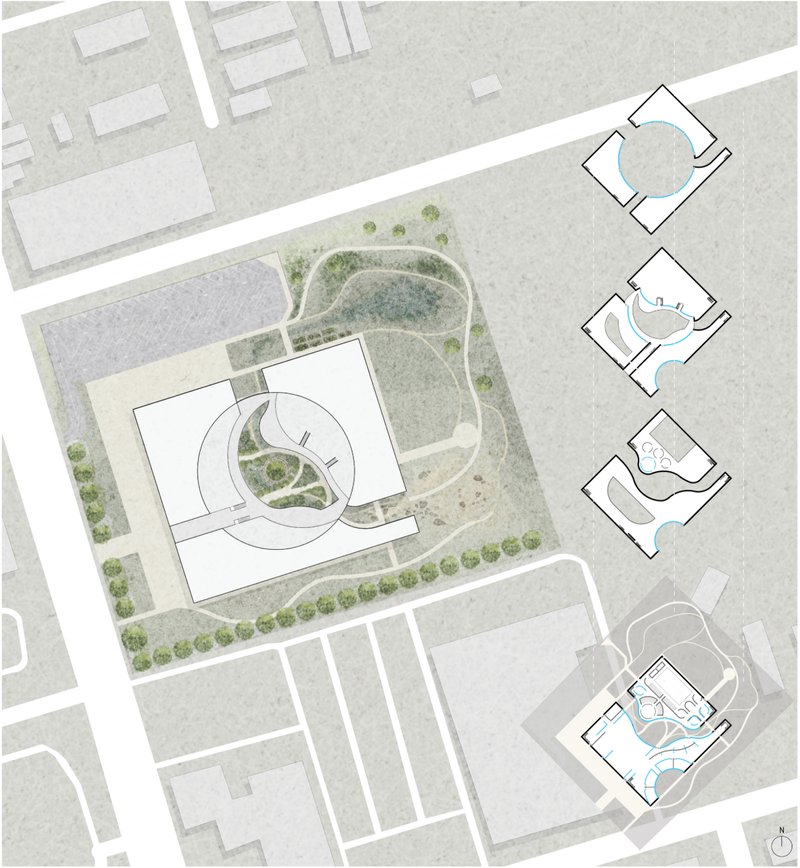
A defining aspect of the project is the organization of educational functions into three interconnected learning hubs: The Collection, The Atrium, and The Hall. Each hub represents a different mode of learning and human interaction.
The Collection: Information and Independent Learning
The Collection functions as a contemporary media and research center inspired by libraries and digital learning environments. It represents the informational aspect of education and focuses on access to knowledge through both physical and virtual resources.
Unlike traditional libraries defined by silence and isolation, The Collection encourages adaptable learning experiences. Flexible seating arrangements, open study areas, and digital integration allow students to learn independently while remaining connected to the broader educational community.
The architectural atmosphere of this space prioritizes calmness, concentration, and accessibility. Natural light, visual openness, and adaptable interiors support evolving educational technologies and future curriculum changes.
By emphasizing digital learning and self-directed education, The Collection reflects the changing relationship between students and information in contemporary society.
The Atrium: Social Learning and Collaboration
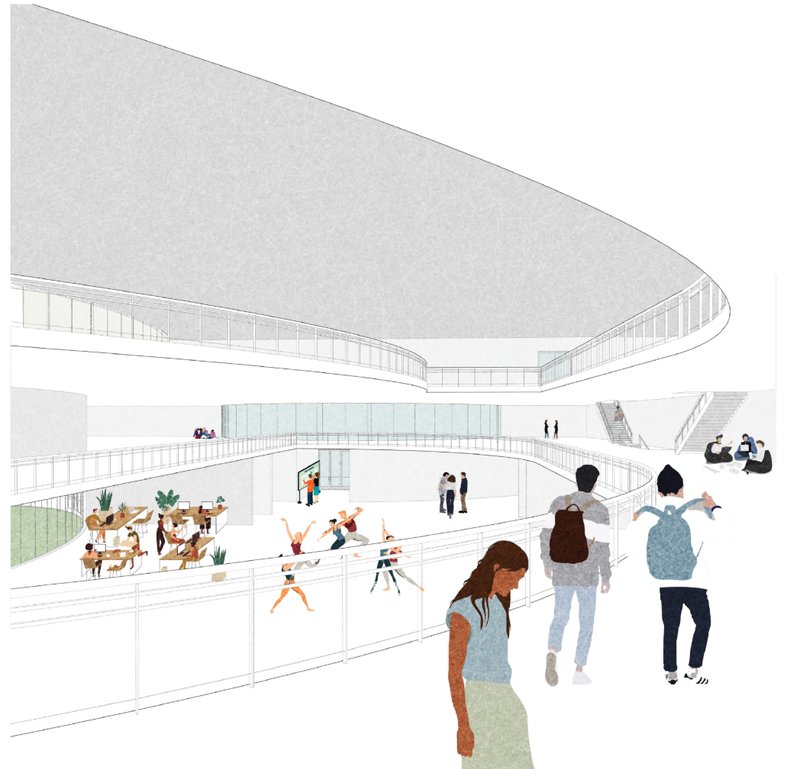
The Atrium functions as the social core of the campus. This open communal environment replaces the traditional concept of isolated cafeterias or circulation halls with a space dedicated to collaboration, conversation, and peer learning.
Open visual connections across multiple levels encourage interaction between students, educators, and visitors. Informal seating zones, bridges, terraces, and gathering areas create opportunities for spontaneous communication and interdisciplinary exchange.
The architectural openness of the atrium symbolizes transparency within education. Learning becomes visible, participatory, and shared rather than hidden behind classroom walls.
The design recognizes that social interaction is fundamental to intellectual growth. By supporting discussion and collaboration within everyday circulation spaces, the project transforms movement throughout the building into a meaningful educational experience.
The Hall: Experiential and Physical Learning
The Hall represents the experiential dimension of education. Designed as a flexible multipurpose environment, this space supports exhibitions, performances, physical activity, presentations, and hands-on experimentation.
Unlike traditional academic environments focused primarily on theory, The Hall encourages students to apply knowledge through active participation. The architecture supports movement, creativity, and physical engagement.
This space reflects the growing importance of experiential learning within contemporary educational models. Students are encouraged to test ideas, collaborate through making, and develop practical skills through direct interaction.
The openness and flexibility of the hall allow the space to evolve continuously according to different educational needs, reinforcing the project’s broader emphasis on adaptability.
Educational Journey Through Space
One of the most compelling aspects of “The Fourth Space” is how it translates educational theory into architectural experience. The project maps the process of learning spatially through four interconnected stages: receive, participate, experiment, and reflect.
Students move through these stages physically as they navigate the building. Spaces transition gradually from informational to social to experiential environments, creating a layered educational journey embedded directly into the architecture.
This approach challenges the separation between learning and environment commonly found in institutional school design. Instead of classrooms functioning independently from circulation, every spatial condition contributes to education.
Corridors become moments of reflection. Courtyards become collaborative spaces. Transitional zones become opportunities for mindfulness and observation.
The architecture itself becomes pedagogical.
Mindfulness and Well-Being in School Design
A significant contribution of this project to contemporary educational architecture is its emphasis on mindfulness and emotional well-being.
The project recognizes that educational environments shape not only intellectual development but also psychological health. Through the integration of natural light, greenery, visual openness, and contemplative spatial sequences, the design creates an atmosphere that encourages calmness and emotional awareness.
The Fourth Space itself functions as a mindful transition zone that allows students to pause, observe, and reconnect with their surroundings. The fluid movement between interior and exterior environments creates moments of solitude and reflection rarely found within traditional school buildings.
The incorporation of landscape architecture further reinforces this philosophy. Outdoor learning areas, gardens, planted pathways, and ecological systems create opportunities for students to engage with nature throughout their educational journey.
This relationship between architecture, psychology, and environment reflects growing conversations surrounding wellness-centered educational design.
Materiality and Architectural Expression
The project’s architectural language is intentionally restrained and minimal. White textured facades establish a calm visual identity while emphasizing geometry, light, and shadow.
This simplicity allows spatial experience and human interaction to become the primary focus of the architecture. Rather than relying on excessive formal complexity, the project creates richness through openness, layering, and spatial continuity.
Large glazed surfaces blur the boundary between interior and exterior environments. Transparency reinforces the project’s emphasis on visibility, collaboration, and openness within education.
The curved forms of the central circulation spaces introduce softness into the otherwise rectilinear massing. This juxtaposition between rigid institutional volumes and organic experiential spaces reflects the project’s broader conceptual tension between traditional education and evolving pedagogical models.
The architecture communicates calmness without becoming static. It remains flexible, adaptive, and human-centered.
Landscape as Educational Infrastructure
Landscape architecture plays a critical role within the project. Rather than functioning as decorative green space, the landscape becomes an active educational infrastructure integrated directly into the learning experience.
Outdoor learning environments extend educational activities beyond the building envelope. Students interact with gardens, pathways, and ecological systems throughout the campus.
The project also integrates sustainable design principles through accessible green infrastructure and stormwater-sensitive planning strategies. These systems encourage environmental awareness while improving the quality of outdoor spaces.
The relationship between architecture and landscape reinforces the project’s broader ambition to dissolve boundaries between education, nature, and lived experience.
This integration creates a campus environment that feels open, breathable, and emotionally supportive.
Flexibility and the Future of Learning
One of the most important qualities of “The Fourth Space” is its adaptability. The project acknowledges that educational systems continue to evolve rapidly due to technological, cultural, and social change.
Rather than designing fixed environments tied to specific teaching methods, the architecture provides flexible frameworks capable of accommodating future educational transformations.
Open floor plates, multipurpose spaces, modular learning environments, and adaptable circulation systems allow the school to evolve alongside changing pedagogies.
This flexibility reflects the realities of contemporary education where collaboration, digital integration, interdisciplinary learning, and experiential engagement are becoming increasingly important.
The project demonstrates how educational architecture can support long-term resilience by prioritizing openness and adaptability over rigid programming.
A Human-Centered Vision for Educational Architecture
“The Fourth Space” ultimately proposes a new vision for educational architecture centered on human experience. The project recognizes that schools shape how students think, interact, and understand the world around them.
By integrating mindfulness, emotional awareness, collaboration, and adaptability into the spatial experience, David Law and Selina Chau create an educational environment that extends beyond academic instruction.
The project transforms architecture into a catalyst for personal development, social interaction, and collective well-being.
In a time when educational institutions worldwide are reevaluating their purpose and structure, “The Fourth Space” offers a compelling architectural response. It demonstrates how schools can become environments that nurture curiosity, creativity, reflection, and human connection.
Rather than reinforcing rigid institutional systems, the project embraces openness, fluidity, and experiential learning as the foundation of future educational environments.
Through its thoughtful integration of landscape, circulation, mindfulness, and adaptable learning spaces, “The Fourth Space” stands as a powerful example of how educational architecture can shape healthier, more meaningful futures for students and communities alike.




Popular Articles
Popular articles from the community

Inside a Timeless Mumbai Residence by Aether Studio
Aether Studio's 2,250 sq ft apartment in Malad, Mumbai uses marble, brass, boucle, and disciplined restraint to build a quiet retreat from the city.
GGR Architectes Anchors a New Neighborhood in Frouzins with a Brick and Timber School Complex
A cruciform plan of terracotta brick and exposed wood frames four courtyards for 140 students outside Toulouse, France.
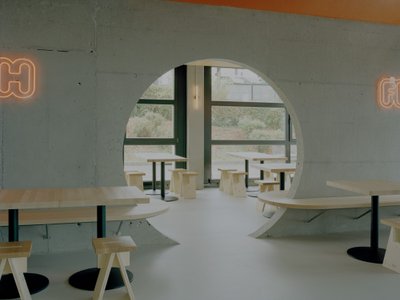
Noue Studio Organizes a Swiss Restaurant Around a Single Concrete Wall
In Granges-Paccot, Switzerland, a 216-square-meter renovation turns raw materials and a central spine into a legible dining experience.
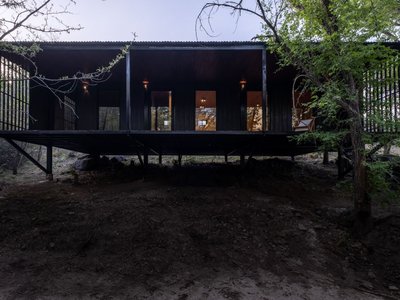
Pablo Senmartin Suspends a Steel-and-Timber Refuge Above a River Forest in Córdoba
An 80-square-meter dwelling on pilotis camouflages itself among the trees of Mayu Sumaj, designed to be dismantled without waste.


Similar Reads
You might also enjoy these articles


Urban Forest: A Vertical Ecosystem for 5,000 Workers in Singapore's Changi Business Park
Radially stacked pods and layered green decks turn a 7-acre plot into 47 acres of ecological workspace projected for 2040.
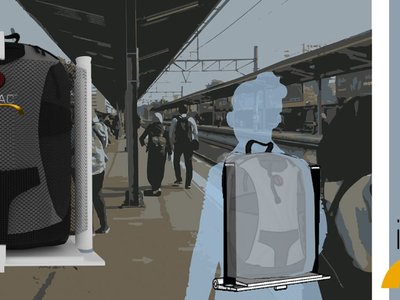
interACT: A Wearable Transit Object That Turns Commuting Into Social Infrastructure
A backpack-mounted foldable device transforms walking, waiting, and riding into moments of shared comfort across Jakarta's transit network.
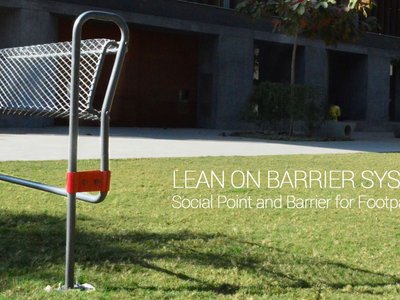
Lean On Barrier System: Where Traffic Safety Meets Chai Culture in Ahmedabad
A modular steel barrier doubles as informal seating and lean-on furniture at one of Ahmedabad's busiest intersections, keeping vendors in place.

The Black Bagh: A Living Monument Built from Water, Light, and Memory
On the banks of the Yamuna, two designers replace the myth of a marble mausoleum with a regenerative landscape of reflection and ritual.





Comments (0)
Please login or sign up to add comments
No comments yet. Be the first to comment!