
The Grand Canopy by MLA+: A Sustainable Visitor Center Embracing Xialang Village’s River Culture
A flexible riverside canopy blending architecture and landscape, enhancing Xialang Village’s stream culture through sustainable design, local materials, and seasonal adaptability.


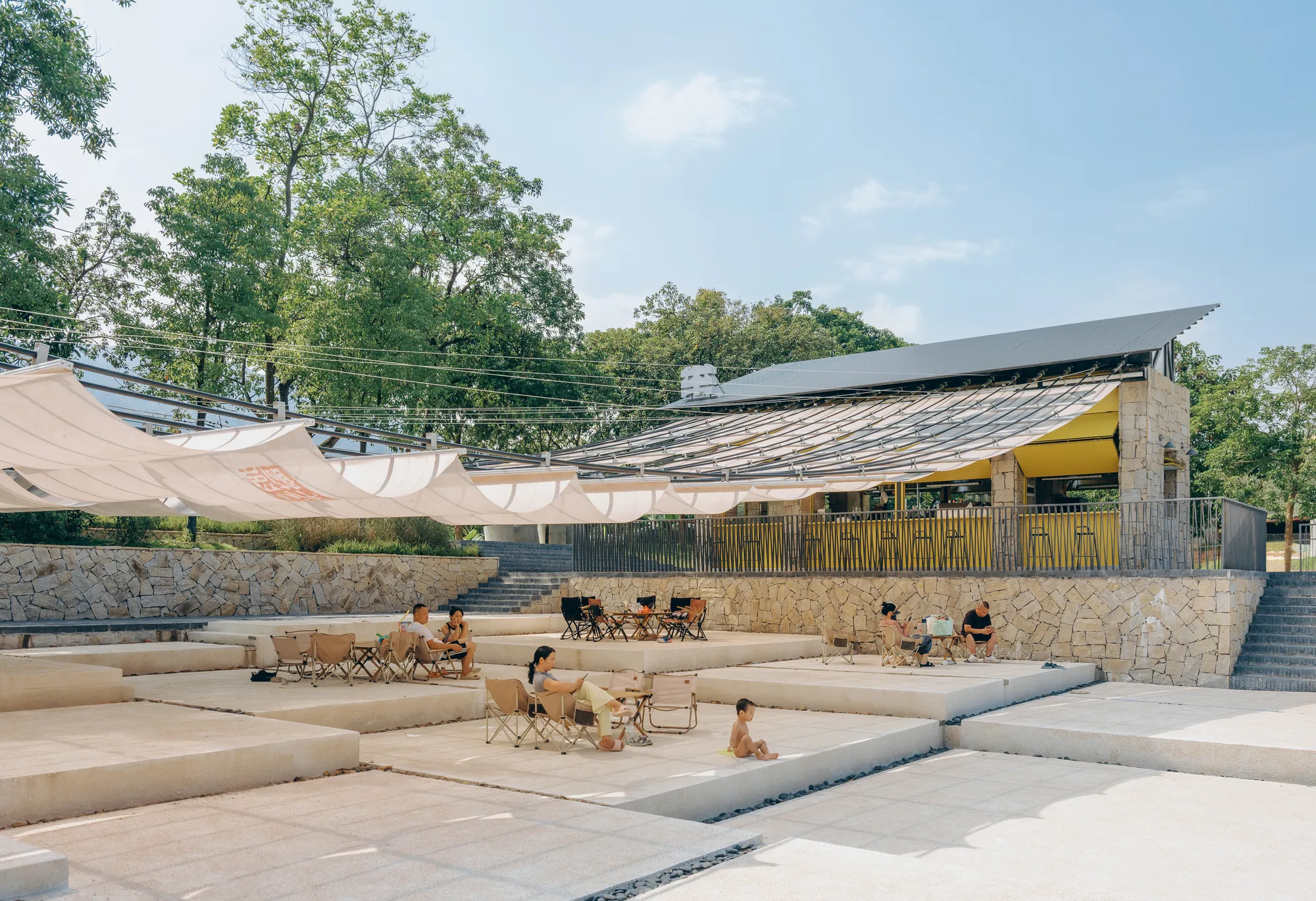
The Grand Canopy, designed by MLA+, is a unique visitor center located in the picturesque Xialang Village, Huizhou, China. Completed in 2025, this small yet transformative 36 m² architectural intervention celebrates the region’s deep cultural connection to the Lanshi River, seasonal tourism, and the traditional low-impact building practices of Lingnan villages.
Blending landscape architecture, local craftsmanship, and sustainable riverfront design, The Grand Canopy redefines how small structures can create big impacts in rural tourism while remaining fully ecological and reversible.
A Living Landscape Rooted in Water Culture
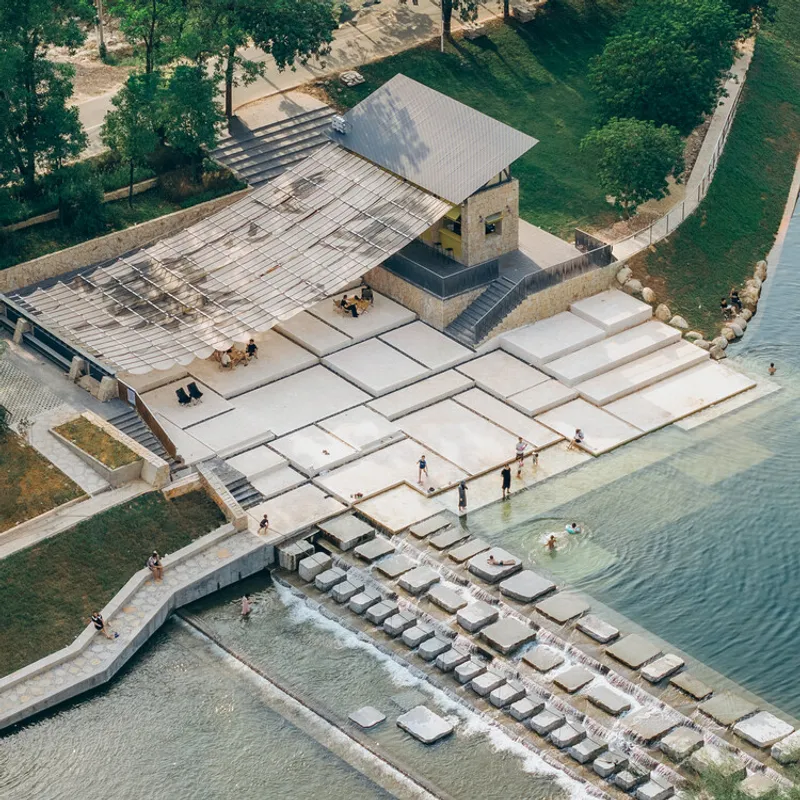
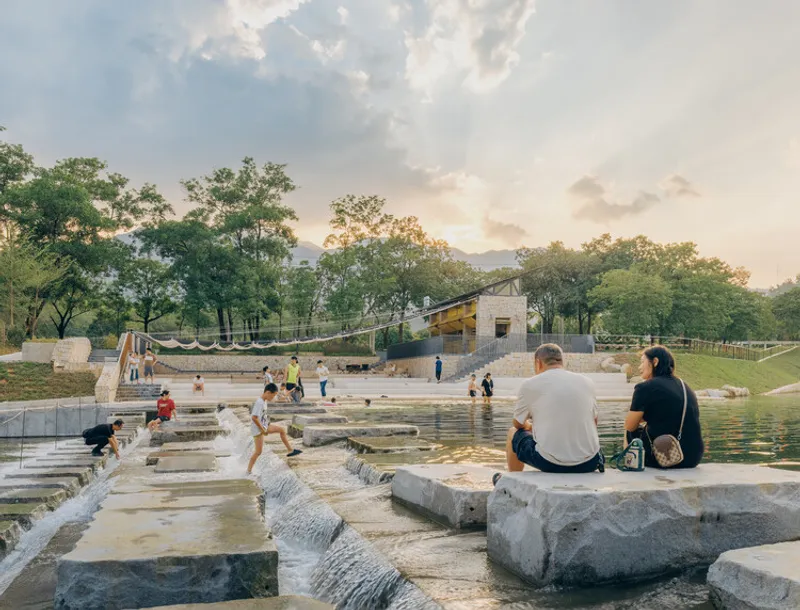
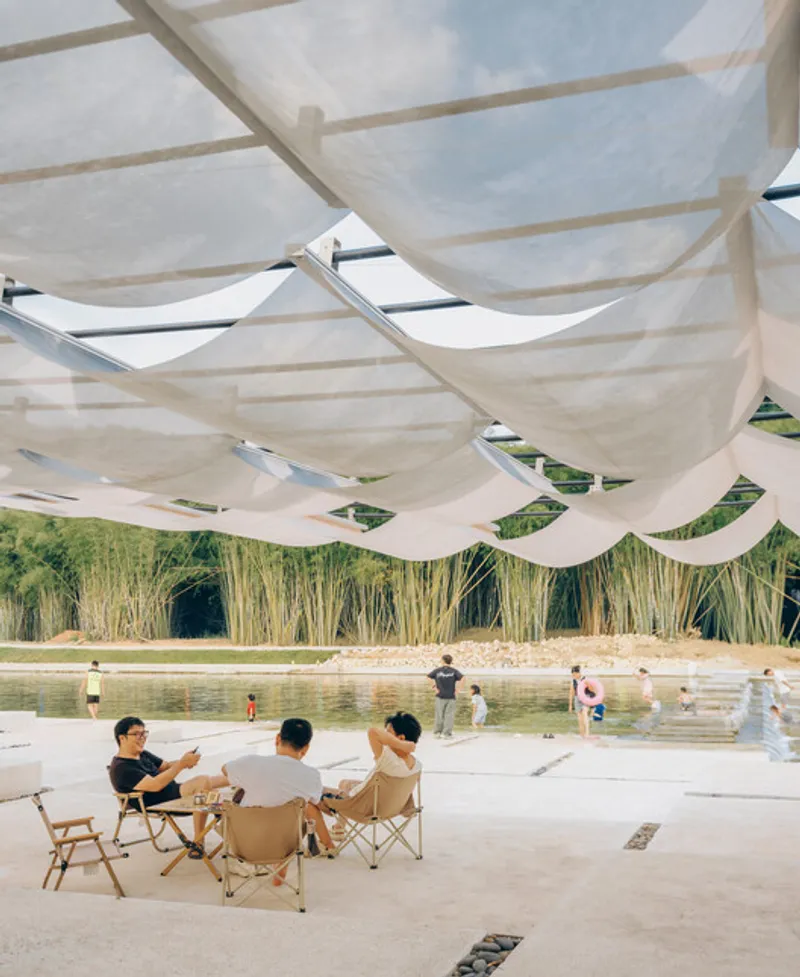
Xialang Village thrives on its river. In summer, thousands of tourists flock to the Lanshi River to escape the heat—turning its shallow streams into lively social spaces. Locals set up canopies, chairs, tables, and floating platforms, using the river as both playground and community hub.
Despite the seasonal rush, the villagers avoid permanent construction. Instead, they use pebbles, stones, and natural materials to divide the riverbed into zones—creating safe shallow areas for recreation and deeper areas for water discharge. After floods, these stone boundaries can be easily rebuilt, showcasing a remarkable model of low-impact, reversible, “traceless stream economy.”
Design Concept: Architecture That Follows the Landscape
MLA+ chose not to impose heavy planning or monumental architecture. The site already offered everything—river, people, culture, and movement.
The task:
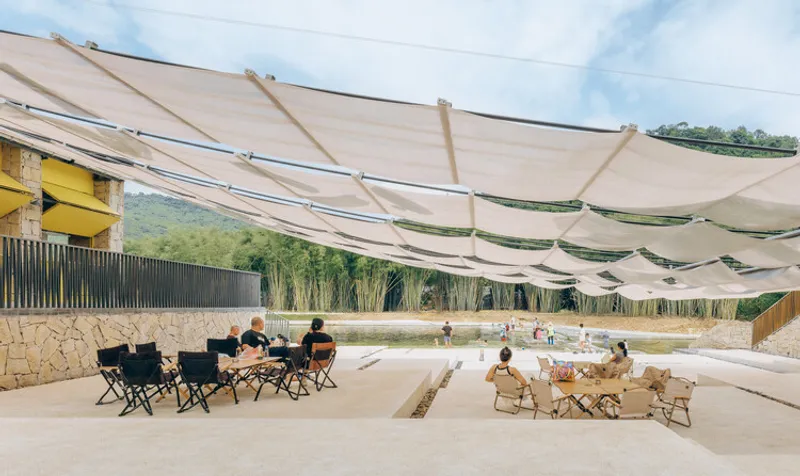
- Provide shade through a flexible canopy
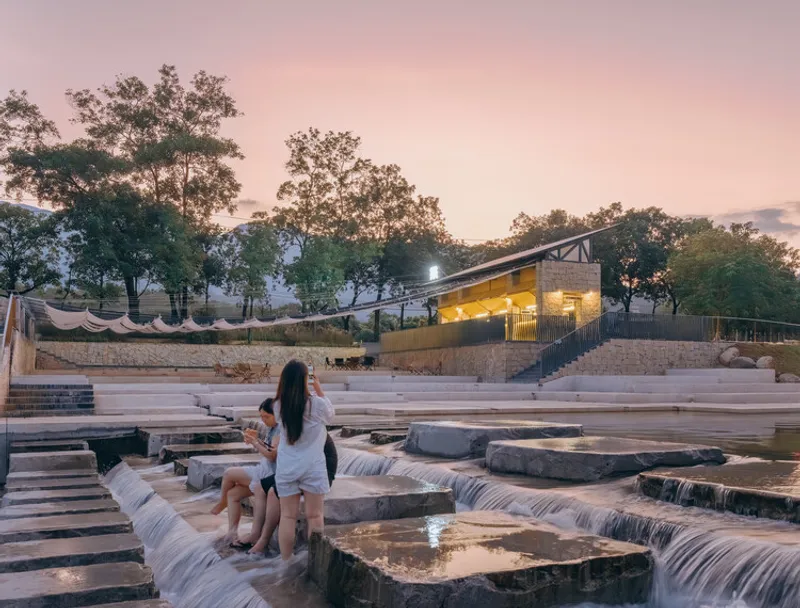
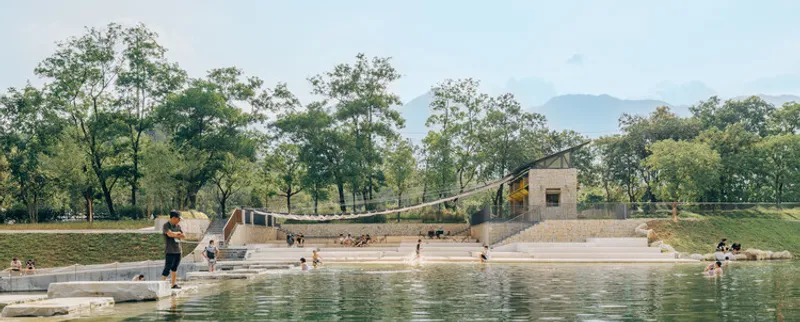
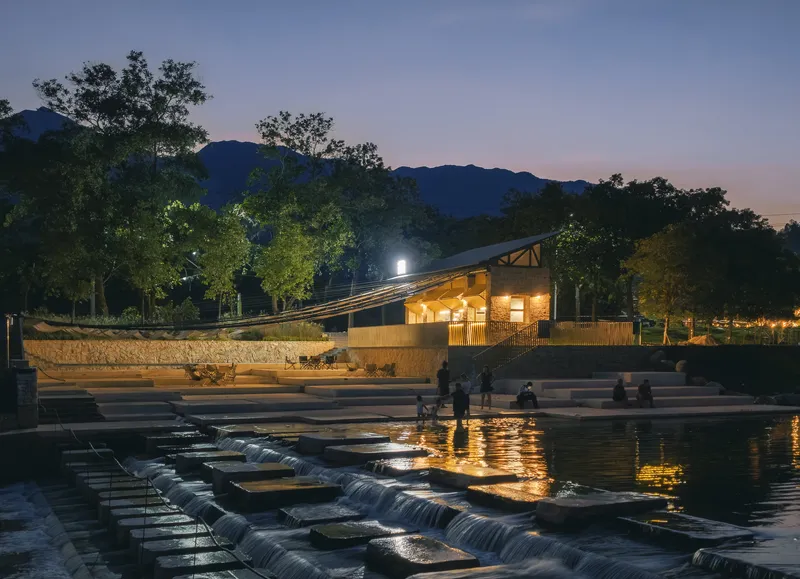
- Offer stream access via steps
- Add stepping stones to cross the river
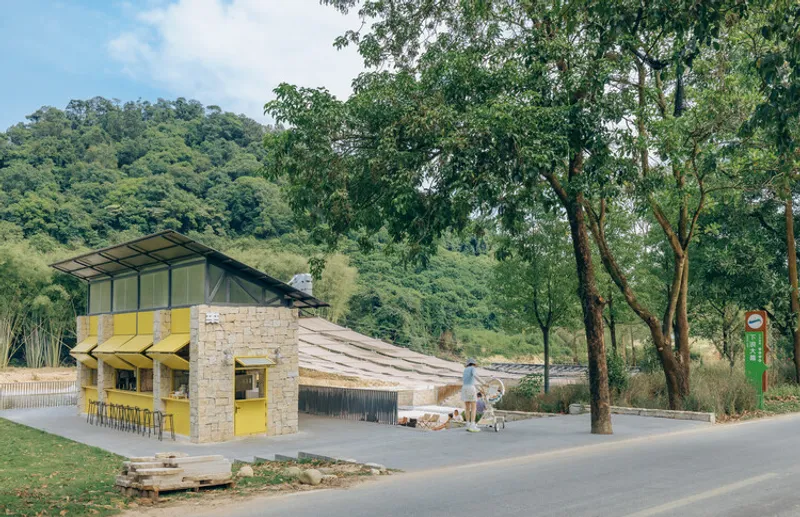
- Integrate a small café within the footprint of an existing toilet block
This approach ensured minimal land disturbance while maximizing the natural beauty of the site.
The Canopy: A Flexible and Sustainable Structure
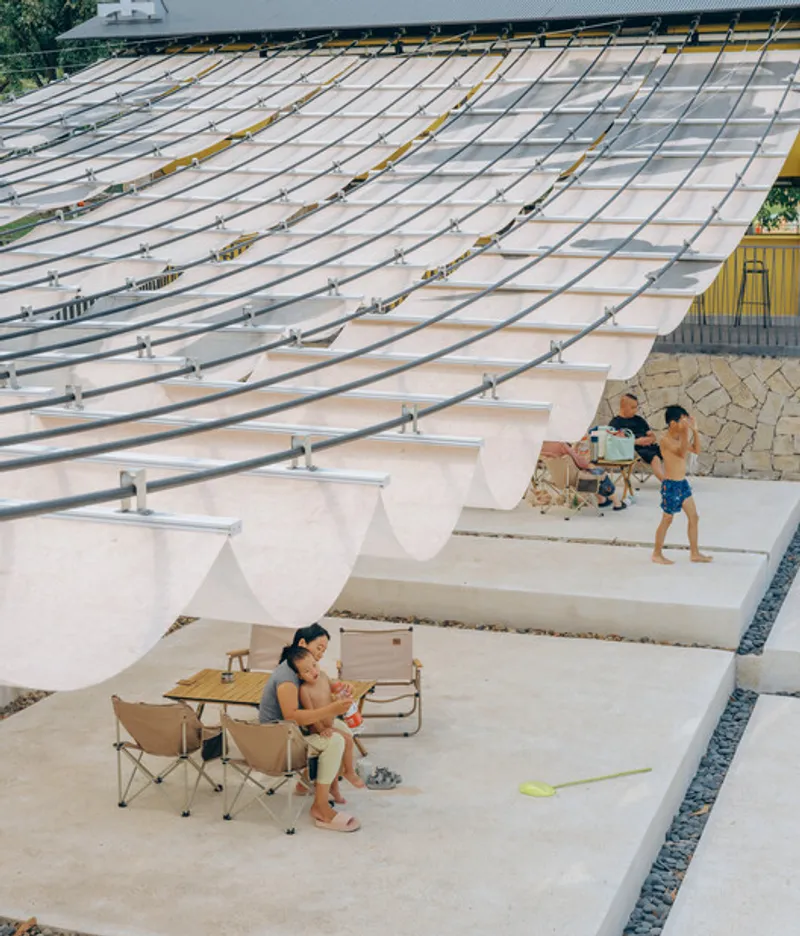
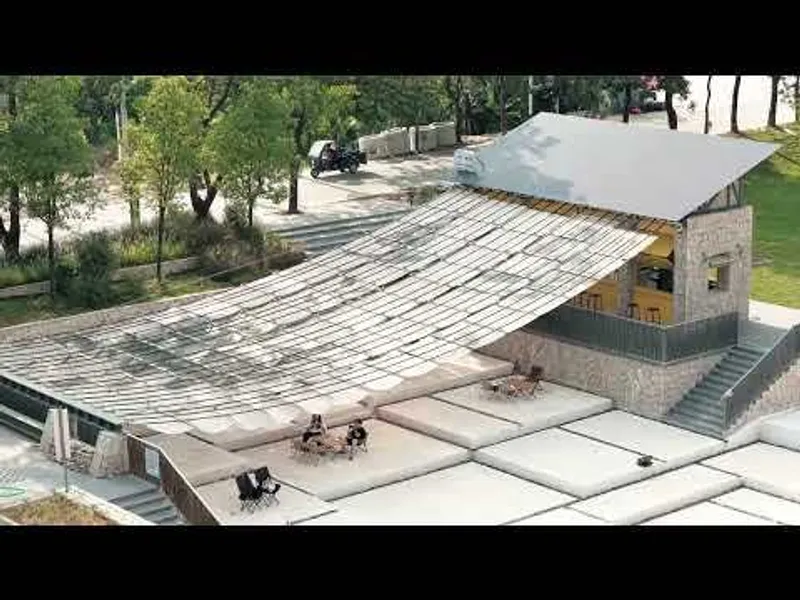
Inspired by villagers’ summer practices, MLA+ designed a canopy supported by eight structural columns built into the existing public toilet. On the river-facing side, they constructed low stone piers.
Between these high and low foundations, tension cables were stretched to form the supporting skeleton of the canopy.
Seasonal Adaptability
- Summer: canopy opens to provide shade for visitors
- Rain/typhoon season: canopy retracts for safety
- Winter/off-season: canopy is removed for maintenance
This adaptable system requires no additional construction quota and remains respectful of the natural river ecosystem.
A Riverbank Platform as a Community Hub
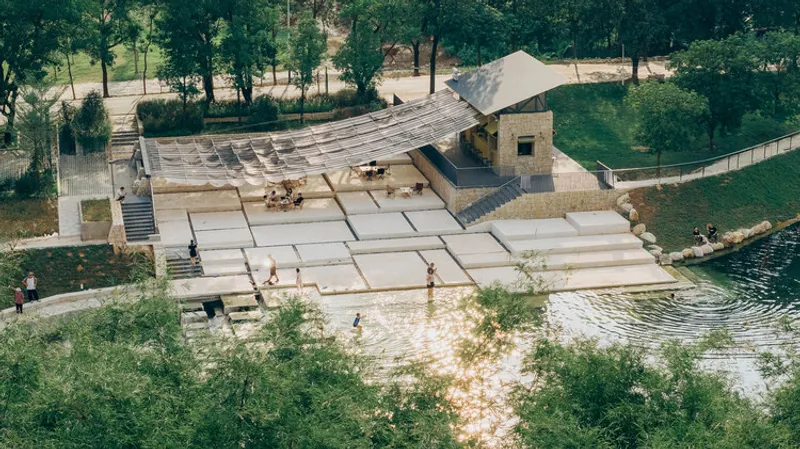
After meeting flood elevation and river setback regulations, the design introduced an expanded riverbank platform under the canopy. This multifunctional space serves as:
- A gathering point for tourists
- A staging area for water activities
- The entry point for river stepping stones
The result is a vibrant, fluid connection between landscape and human activity—an architecture shaped entirely by the rhythms of the river.
A Model for Low-Impact Rural Tourism Architecture
The Grand Canopy stands as a benchmark for sustainable rural development. Its design respects ecology, celebrates local culture, and supports economic growth without harming the landscape.
Through minimal intervention and maximum sensitivity, MLA+ demonstrates how architecture can enhance a natural site without overpowering it.
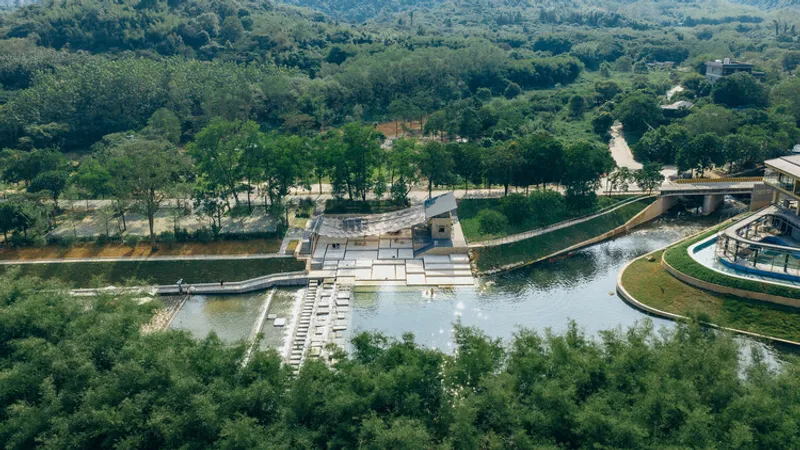
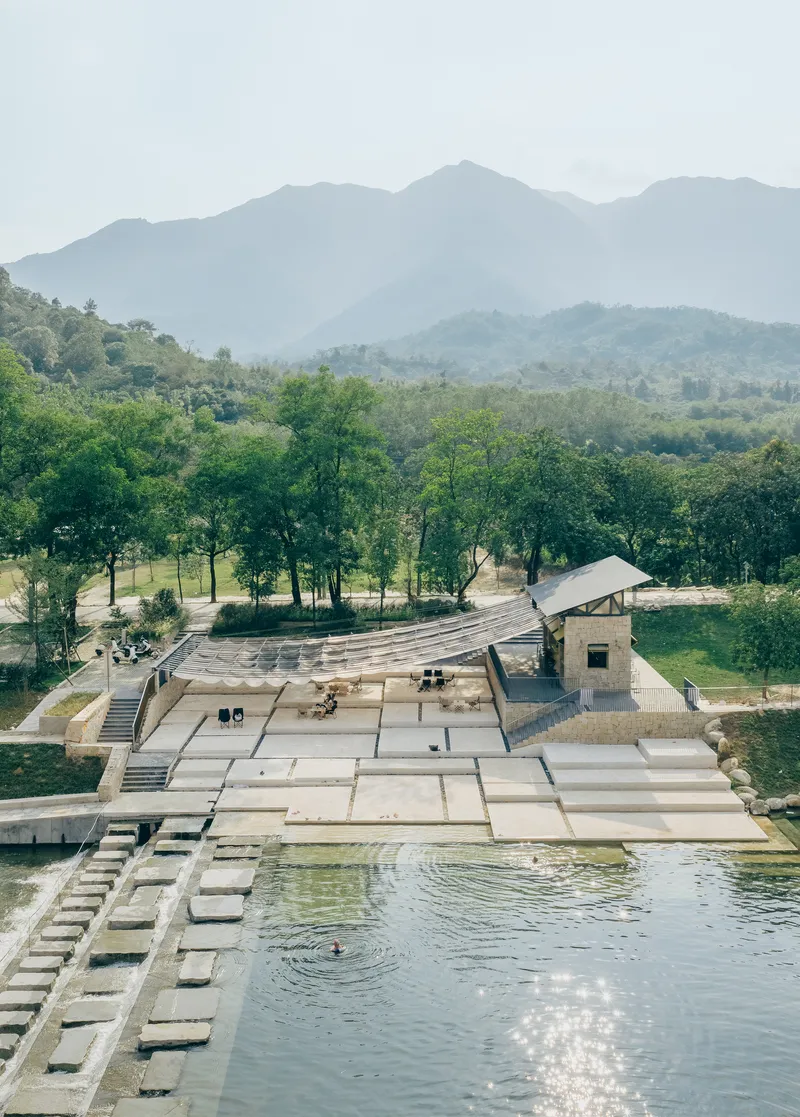
All the photographs are works of Yumeng Zhu



Popular Articles
Popular articles from the community


Conexión: Biophilic Design Reimagines High-Rise Living in Hong Kong
Conexión reimagines high-rise living in Hong Kong through biophilic design, green facades, shared spaces, daylight, water and nature within.

Hill & Cross Opera: Sculptural Opera House Architecture Shaped by Tallinn’s Landscape and Identity
Hill & Cross Opera reimagines opera house architecture in Tallinn through its sculptural hill, civic plaza, glass wave and a luminous cross.

Lunar Spiral: Space Architecture Shaped by the Mathematics of the Universe
Lunar Spiral reimagines space architecture through Fibonacci geometry, lunar regolith, levitating habitats, and self-sustaining Moon living.

Co-Life: Senior Housing Design That Reconnects Older Adults With the City
Co-Life reimagines senior housing design through healing gardens, shared streets, workshops, and a sustainable community across generations.


Similar Reads
You might also enjoy these articles


Hodi-Mandai Geram
Project Function: Preservation and revitalization of the Intangible heritage and socio-spatial identity of the Hodi by Housing, Cultural Memory Center, Sacred Grove, landscape, local tourism economy


Olio Towers: A Mid-Rise for Performers That Fuses Housing, Rehearsal, and Stage
Located blocks from Houston's Theater District, this modular tower stacks living units around a central performance atrium.

Oasis: Modular Green Housing Carved into Dhaka's Urban Fabric
A shortlisted Plugin Housing entry reclaims unauthorized settlements in Dhaka with stepped concrete volumes, green roofs, and ventilation-driven design.

Black Hole: A Floating Megastructure for the Post-Physical Era
Emiliano Mazzarotto envisions a spherical, self-scaling arena where e-sports, digital hotels, and holographic stadiums replace traditional public space.
Explore Architecture Competitions
Discover active competitions in this discipline



Challenge to reimagine the Iron Throne


Photograph architecture without architects


Illustrate the lost glory of Angkor Wat - Render Challenge


Design challenge to reuse E-waste
Comments (0)
Please login or sign up to add comments
No comments yet. Be the first to comment!