
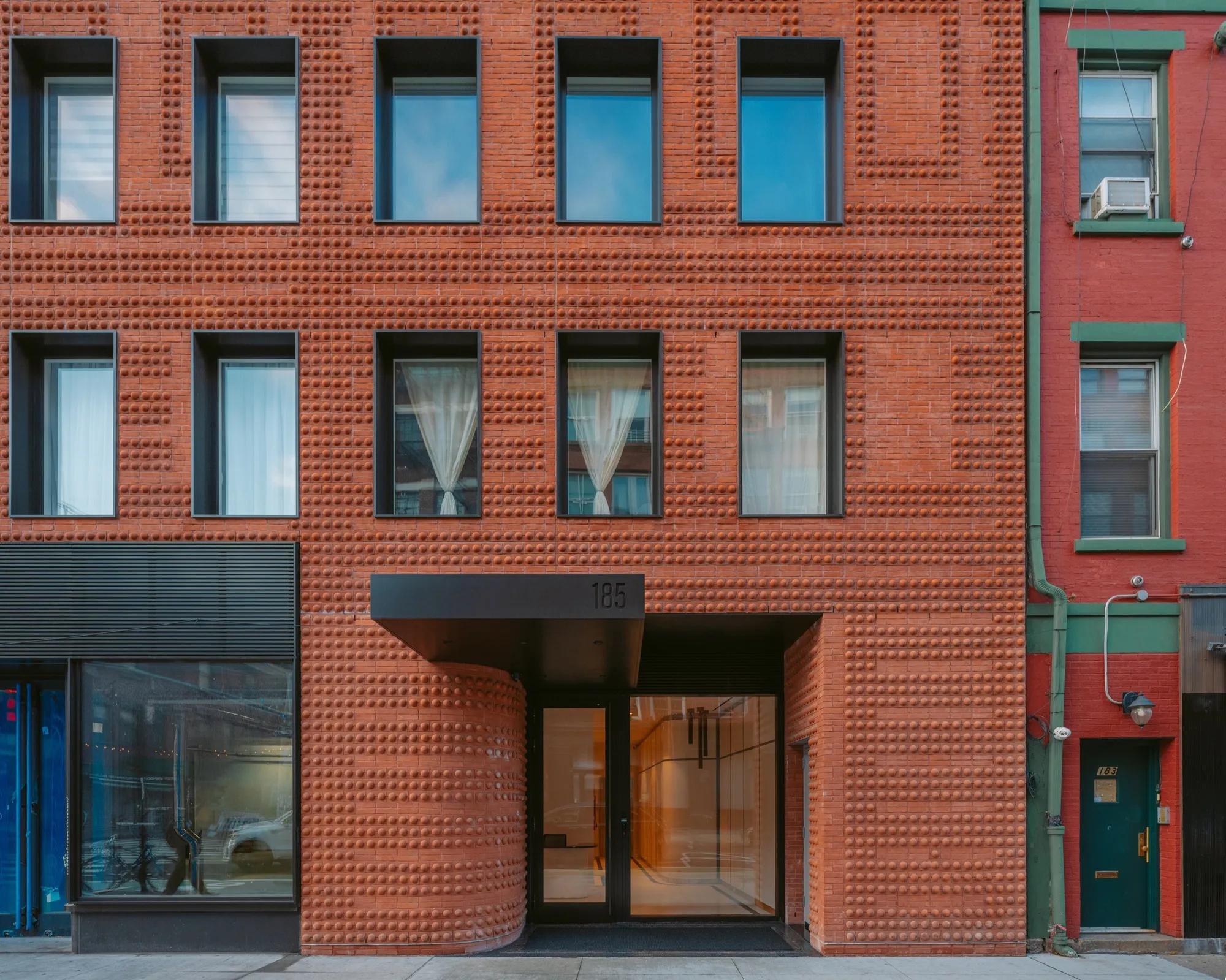
The Grand Mulberry Apartments by Morris Adjmi Architects – A Contemporary Tribute to Little Italy’s Architectural Heritage
The Grand Mulberry Apartments blend Italianate heritage with modern design, featuring custom brick façades, ghost windows, and contextual urban living.


Located at the historic intersection of Grand Street and Mulberry Street in the heart of Little Italy, New York City, The Grand Mulberry Apartments is a striking residential project by Morris Adjmi Architects (MA). Completed in 2022, the 36,000 ft² condominium development thoughtfully bridges New York’s Italianate architectural heritage with contemporary urban living, creating a building that resonates with history while embracing modernity.


Inspired by Italianate Tenements
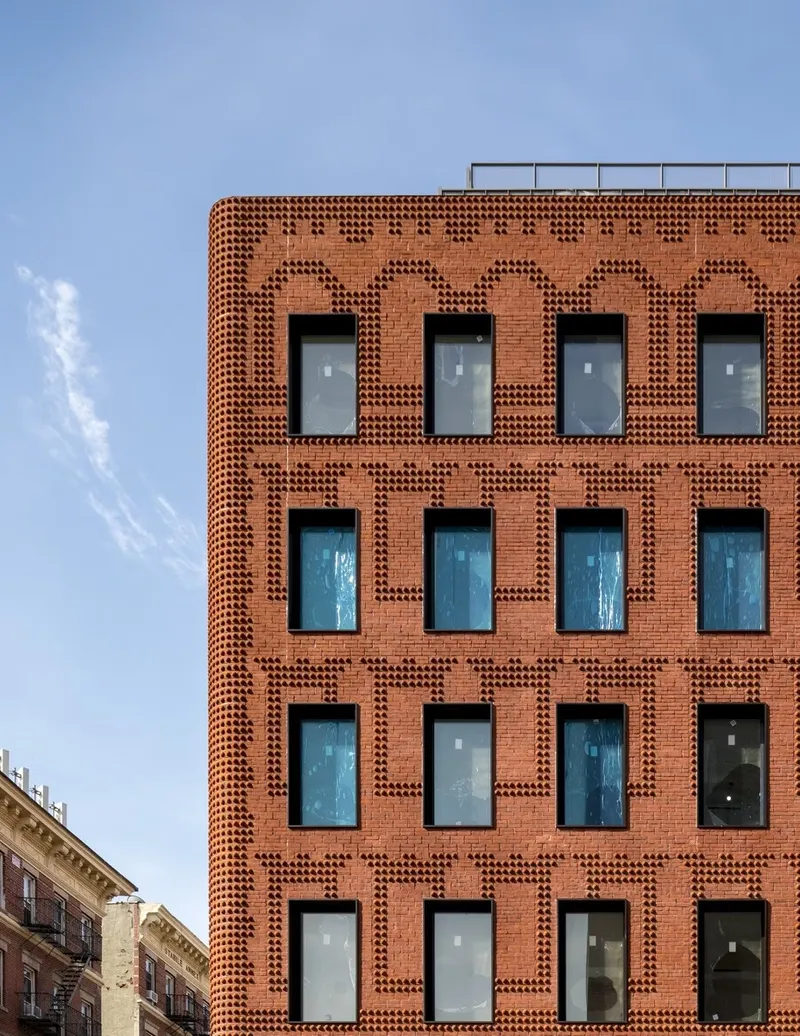
The architectural language of the building draws direct inspiration from the Italianate tenement buildings that define the neighborhood’s cultural fabric. The façade, clad in custom-profiled Glen-Gery bricks, creates a dynamic reinterpretation of these historic forms. Unlike many of MA’s projects that borrow abstractly from their surroundings, The Grand Mulberry pays literal homage to its context while maintaining a contemporary spirit.
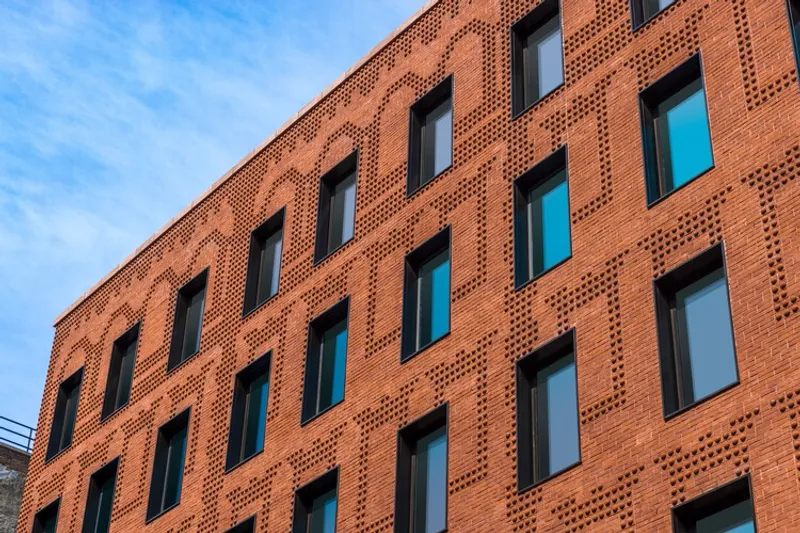
One of the most distinctive design features is the use of “ghost windows.” These irregularly arranged classical elements contrast with the regular cadence of real windows, creating a playful dialogue between past and present architectural traditions.


A Modern Reinterpretation of Traditional Façade Patterns
Italianate tenements were typically designed with a tripartite façade: a detailed base, a middle section, and an ornate top. The Grand Mulberry reinterprets this tradition:
- Floors 1–2: Defined by strong horizontal banding.
- Floors 3–5: Marked by pediment-style windows.
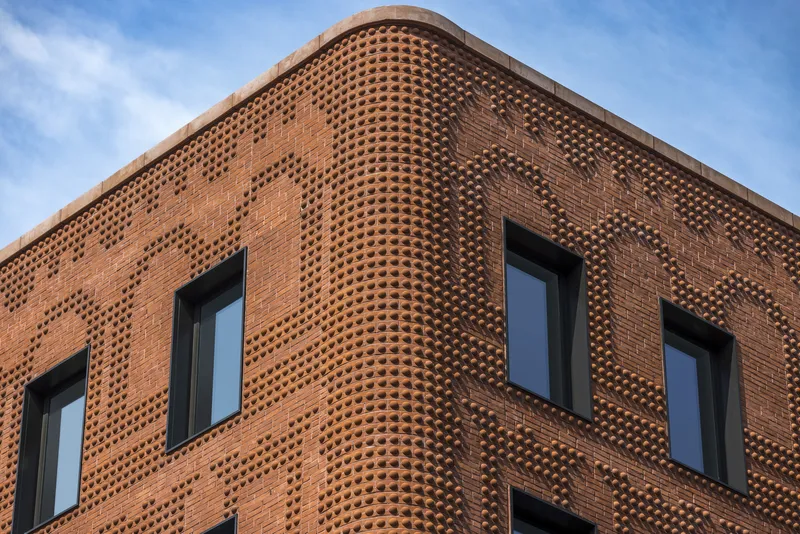
- Floor 6: Features arched windows and a pronounced cornice that crowns the structure.
This layering effect provides a strong visual rhythm, while quoining details further articulate the bays. The result is a building that feels rooted in its context but unapologetically modern.
Innovative Use of Custom Bricks
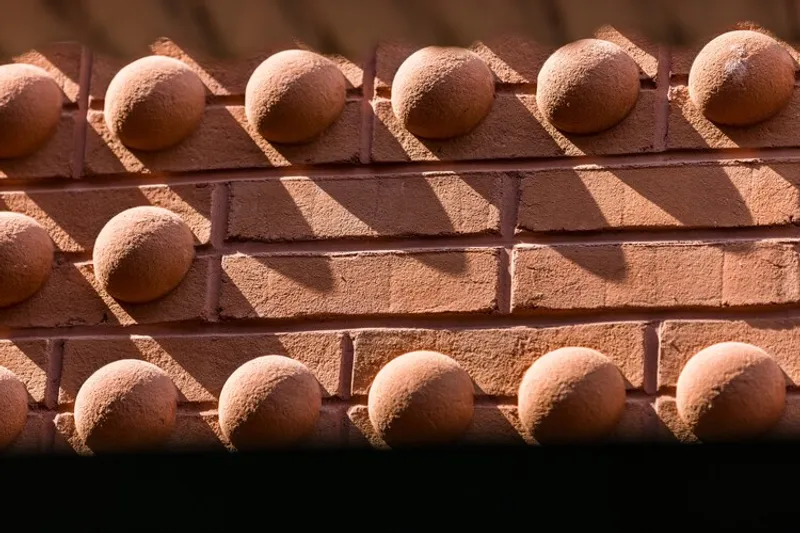
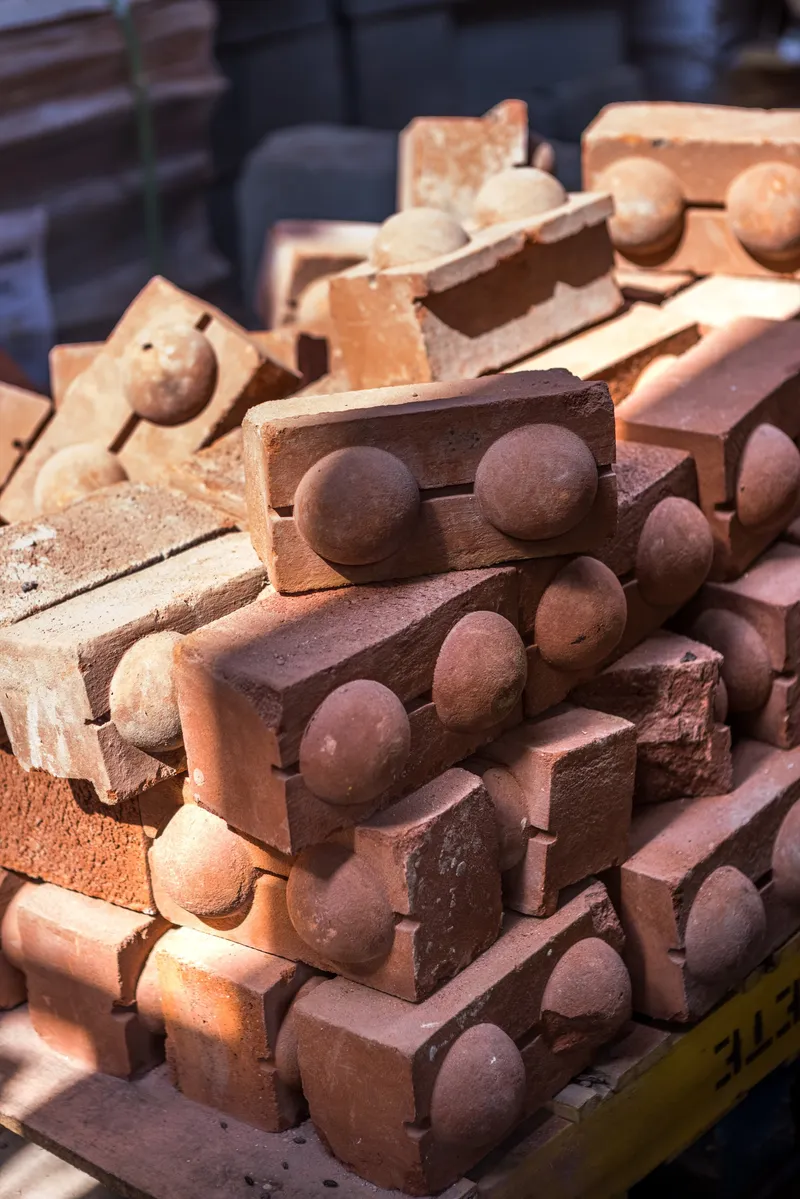
The façade’s character relies heavily on the custom hand-molded bricks used in its construction. Around thirty different shapes were developed for the project, including:
- Double bricks with double domes
- Bricks with single domes
- Curved and lipped bricks
- Smooth bricks without domes
The consistent red-orange clay tone references the traditional masonry buildings of Little Italy, while the modern application of double-stacked running bond coursing creates a refined and innovative surface texture.
Penthouse and Terraces
At the rear, the 7th floor steps back to form a spacious terrace for the penthouse unit. This setback not only reduces the building’s bulk at the street level but also creates desirable outdoor living space with sweeping city views.
The penthouse and bulkhead are wrapped in medium-gray standing seam metal panels, offering a subtle material contrast to the warm brickwork below. This juxtaposition emphasizes the hierarchy of the façade while ensuring the penthouse remains distinct yet harmonious.

Contextual Yet Contemporary
From its historic design references to its modern construction techniques, The Grand Mulberry embodies Morris Adjmi Architects’ philosophy of designing buildings that are contextual yet forward-looking. It celebrates the cultural richness of Little Italy while responding to the evolving needs of contemporary urban living in Manhattan.
All the photographs are works of Selvon Ramsawak, Glen-Gery




Popular Articles
Popular articles from the community


The Earth Pod: 3D Printed Homes for Resilient Refugee Communities
The Earth Pod reimagines refugee housing through 3D printed homes made from clay, combining resilience, self-sufficiency, and rapid shelter.

The Ocean Hive: Sustainable Architecture for a Self-Sufficient Civilization at Sea
The Ocean Hive imagines sustainable architecture at sea, where modular habitats, algae, wave power and ocean waste sustain a growing colony.

Co-life: Sustainable Architecture for Age-Friendly Community Living
Co-life reimagines sustainable architecture for seniors through courtyards, rammed earth, shared gardens, and spaces designed for belonging.

Co-Life: Senior Housing Design That Reconnects Older Adults With the City
Co-Life reimagines senior housing design through healing gardens, shared streets, workshops, and a sustainable community across generations.


Similar Reads
You might also enjoy these articles


Hodi-Mandai Geram
Project Function: Preservation and revitalization of the Intangible heritage and socio-spatial identity of the Hodi by Housing, Cultural Memory Center, Sacred Grove, landscape, local tourism economy


Olio Towers: A Mid-Rise for Performers That Fuses Housing, Rehearsal, and Stage
Located blocks from Houston's Theater District, this modular tower stacks living units around a central performance atrium.

Oasis: Modular Green Housing Carved into Dhaka's Urban Fabric
A shortlisted Plugin Housing entry reclaims unauthorized settlements in Dhaka with stepped concrete volumes, green roofs, and ventilation-driven design.

Black Hole: A Floating Megastructure for the Post-Physical Era
Emiliano Mazzarotto envisions a spherical, self-scaling arena where e-sports, digital hotels, and holographic stadiums replace traditional public space.

Explore Residential Building Competitions
Discover active competitions in this discipline


Challenge to design mud housing for contemporary communities


Challenge to reimagine the Iron Throne


Photograph architecture without architects


Illustrate the lost glory of Angkor Wat - Render Challenge
Comments (0)
Please login or sign up to add comments
No comments yet. Be the first to comment!