

The Hinterhaus Restoration by Simon Moosbrugger Architekt: A Sensitive Dialogue Between Heritage and Contemporary Craft
A sensitive renovation blending historic Alpine architecture with a contemporary timber extension, using local materials and sustainable, glue-free construction techniques.


Location: Hirschau, Austria Architect: Simon Moosbrugger Architekt Project Type: Residential Renovation and Extension Area: 89 m² Year Completed: 2022 Photography: Simon Oberhofer
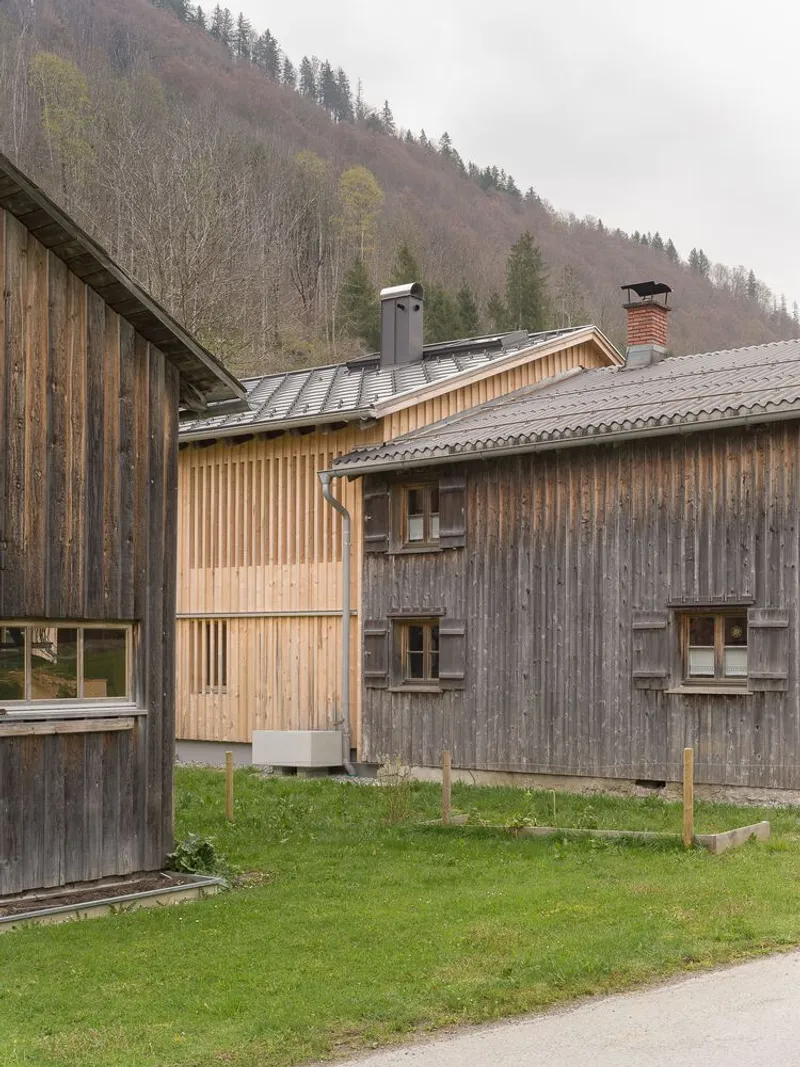
Nestled in the picturesque landscape of Hirschau, Austria, The Hinterhaus Restoration by Simon Moosbrugger Architekt is a masterclass in architectural sensitivity, heritage preservation, and thoughtful extension. The project revives a traditional Bregenzerwald house, embracing its historical essence while seamlessly integrating a contemporary rear addition that enhances both spatial functionality and material clarity.
A Contemporary Dialogue with the Past
At the heart of this project lies a restorative architectural philosophy: respect for the past paired with contemporary needs. The original structure—characterized by its low ceilings (around 180cm), finely detailed wooden cassette paneling, and a traditional rural typology—remains largely untouched. The new extension, referred to as the Hinterhaus, gently unfolds at the rear of the residence, revealing itself as an understated architectural gesture from the exterior. The new façade is modest and reserved, echoing the simplicity of the front volume and allowing the historical character of the existing structure to remain dominant.
Upon entering through the original small front door, visitors are immersed in an immersive spatial journey—moving from the compact, introverted interiors of the old house into the expansive and expressive volumes of the new extension. Here, the architecture deliberately plays with contrast: darkness and light, introversion and openness, coarseness and refinement. This experiential transition is at the core of the design narrative.

Spatial Drama in the Rear Extension
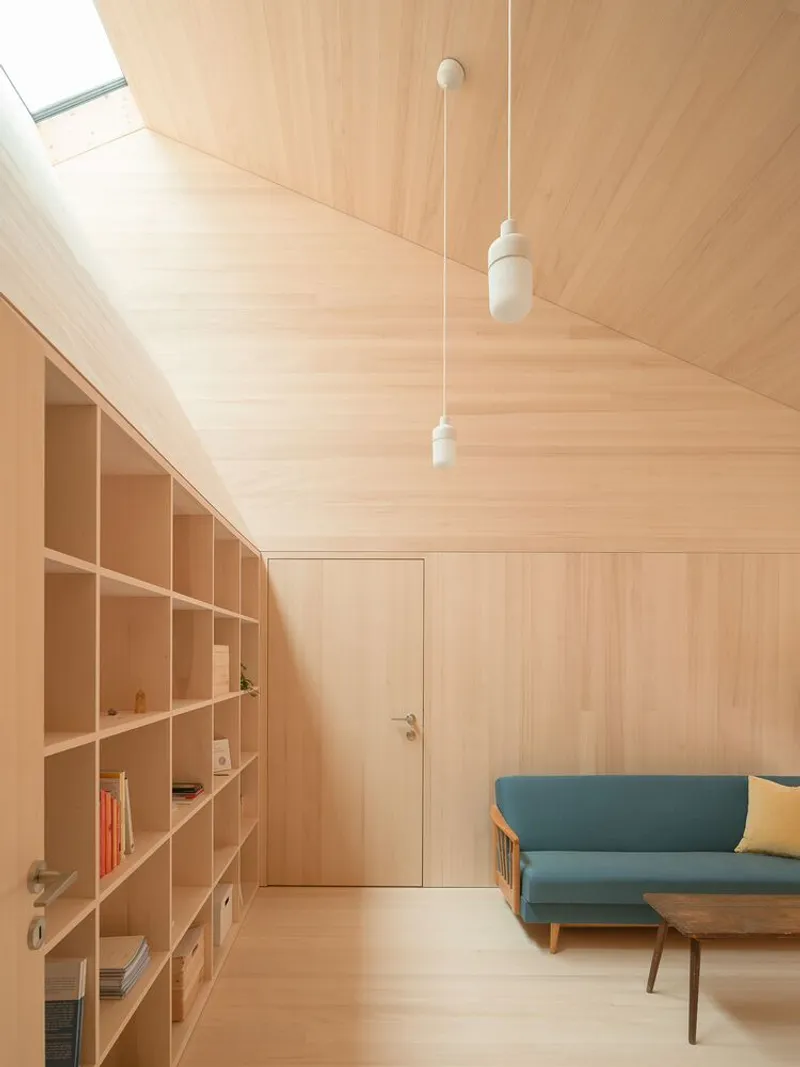
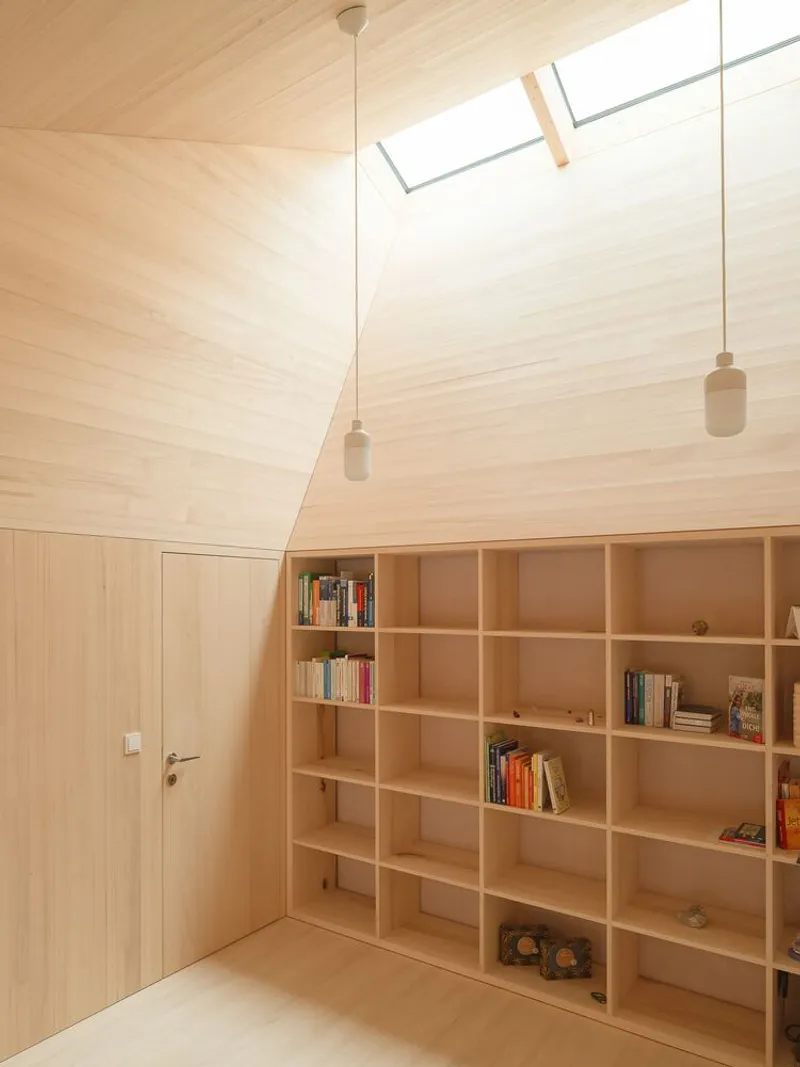
While the front building retains its intimate spatial quality, the new rear extension surprises with dramatic room geometries and ceiling heights reaching up to 4.6 meters. Each room has been tailored to its specific function, with careful attention to spatial dynamics and material tactility.
The use of local silver fir, lime plaster, and terrazzo tiles ties the new spaces back to regional craftsmanship traditions. The bathroom, for instance, features a vaulted ceiling and terrazzo finishes that imbue it with a sense of calm grandeur. The toilet—tucked beneath a pink lime barrel vault—is equally poetic, transforming a utilitarian space into a serene architectural moment. A west-facing window fitted with a privacy screen of fixed wooden slats floods the shower area with soft natural light, enhancing the sensory quality of the interior.

Material Consciousness and Sustainable Craft
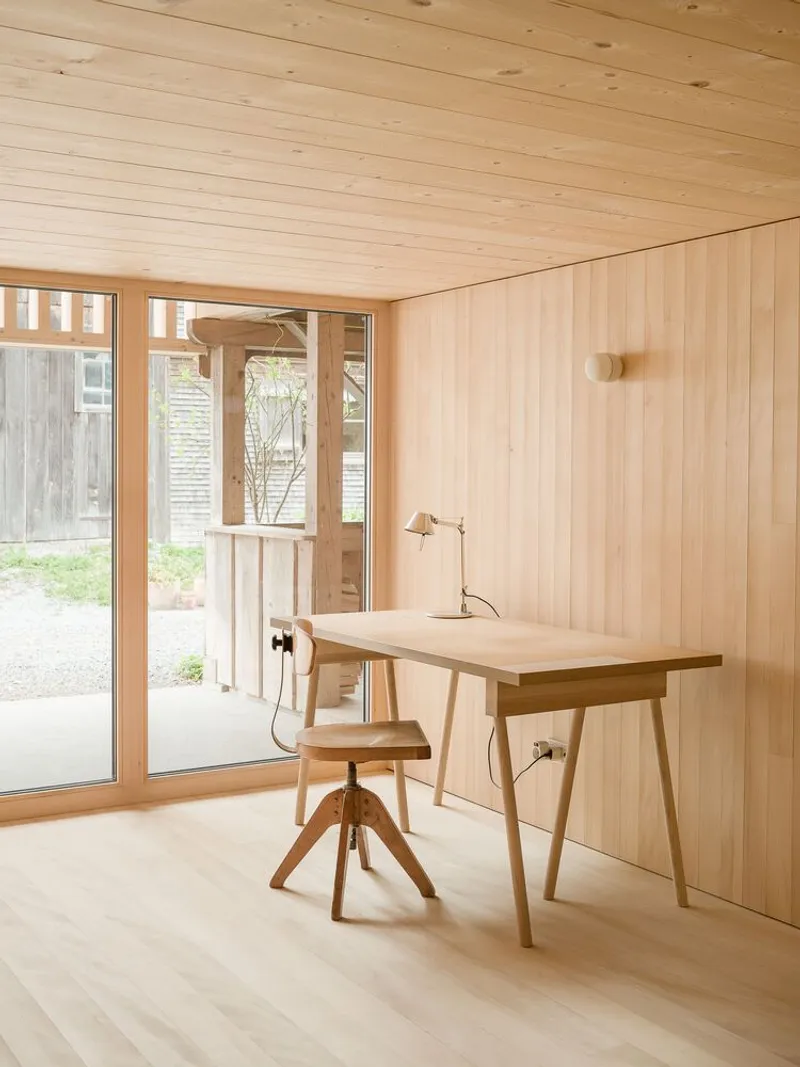
Simon Moosbrugger’s intervention reflects an ethos of sustainable architecture and material honesty. The entire rear extension is constructed using glue-free timber formwork, ensuring materials can be disassembled, reused, or recycled with ease. This circular approach to construction not only reduces environmental impact but also celebrates the economy and resourcefulness of historical alpine building methods.
The architect deliberately chose to work with a limited material palette—high-quality, locally sourced, and responsibly applied. This minimalist but rich approach underscores a belief in the long-term durability of good design and material authenticity.

Recognized for Excellence in Timber Architecture
The project has been honored with a recognition award at the Vorarlberg Timber Construction Prize, affirming its architectural and environmental significance. The jury commended the project for its respectful and sensitive treatment of the historic Bregenzerwald house, and for the careful distinction—and harmony—between the old and new structures.



Popular Articles
Popular articles from the community


Cube Design Draws an Ecological Corridor Between Two Shenzhen Hills with the Nankai Building
Beside Shenzhen's container docks, the Nankai Building pairs stacked balconies with a climbing green screen to connect two hillsides across its height.

graciastudio Turns a Viewless Tijuana Lot Inward Around a Courtyard of Concrete, Timber and Trees
In Tijuana, Jorge Gracia's GA2 House stacks a timber-clad private floor over exposed concrete and replaces a missing view with a planted interior patio.

ETEH Reworks the Shared Spaces of São Domingos School in Brazil Around Timber, Color and Hanging Plants
At São Domingos School in Brazil, 436 m² of hall, refectory and library are recast with timber joinery, a yellow and blue code and trailing greenery.

FCC Arquitectura Expands a Portuguese Granite House with a Board-Marked Concrete Wing
In Portugal, JV House pairs a cleaned-up whitewashed and granite dwelling with a timber-shuttered concrete extension, courtyards and a garden pool.

Similar Reads
You might also enjoy these articles


Hodi-Mandai Geram
Project Function: Preservation and revitalization of the Intangible heritage and socio-spatial identity of the Hodi by Housing, Cultural Memory Center, Sacred Grove, landscape, local tourism economy


Olio Towers: A Mid-Rise for Performers That Fuses Housing, Rehearsal, and Stage
Located blocks from Houston's Theater District, this modular tower stacks living units around a central performance atrium.

Oasis: Modular Green Housing Carved into Dhaka's Urban Fabric
A shortlisted Plugin Housing entry reclaims unauthorized settlements in Dhaka with stepped concrete volumes, green roofs, and ventilation-driven design.

Black Hole: A Floating Megastructure for the Post-Physical Era
Emiliano Mazzarotto envisions a spherical, self-scaling arena where e-sports, digital hotels, and holographic stadiums replace traditional public space.

Explore Architecture Competitions
Discover active competitions in this discipline

Challenge to reimagine the Iron Throne

Photograph architecture without architects

Illustrate the lost glory of Angkor Wat - Render Challenge

Design challenge to reuse E-waste
Comments (0)
Please login or sign up to add comments
No comments yet. Be the first to comment!