
The House in the Suburbs by ORA: Blending Tradition with Modern Family Living
Modern suburban home by ORA blends open-plan living, preserved facade, and seamless indoor-outdoor connection, fostering warmth and family interaction.


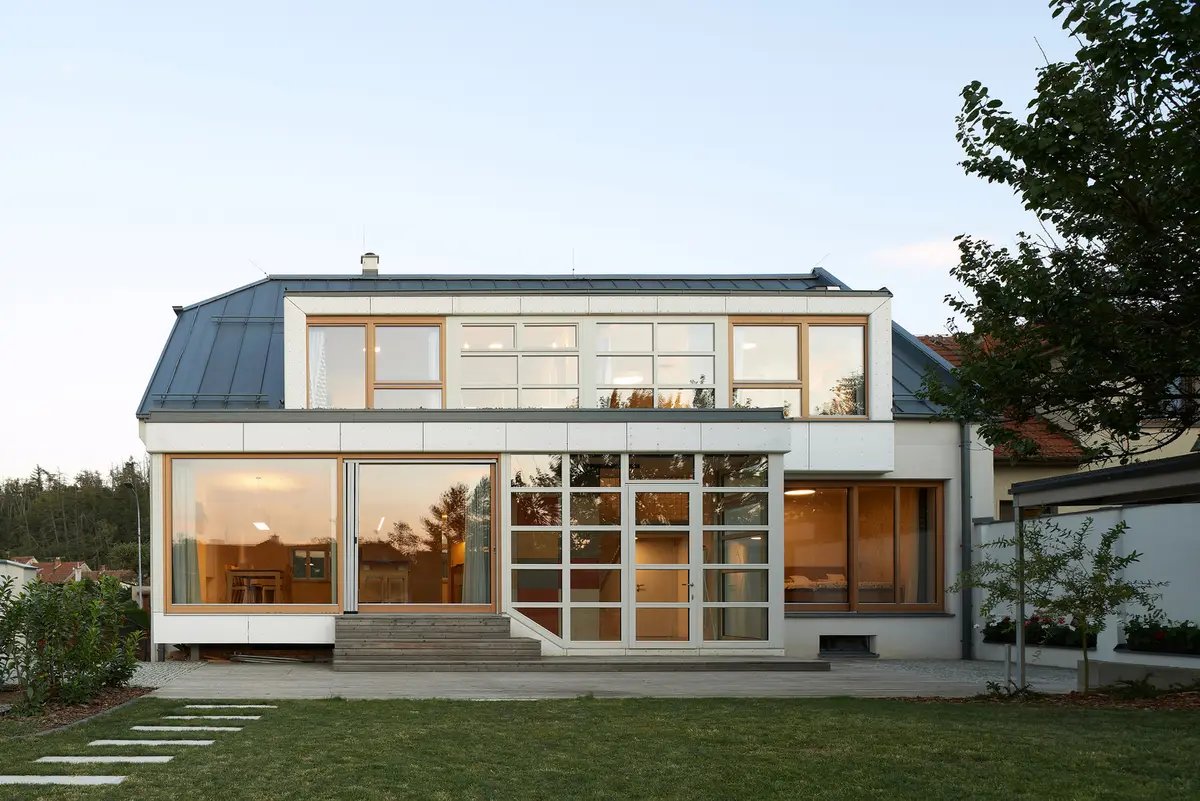
The House in the Suburbs, designed by ORA Architects, is a remarkable transformation of a 1950s semi-detached home located in Ostopovice, Czechia. Covering an area of 390 m², the project redefines family living by adapting the original structure to suit the dynamic needs of a modern, multi-generational family. The architects, led by Barbora Hora, Jan Hora, and Jan Veisser, have masterfully combined traditional elements with contemporary design, creating a harmonious space that fosters connection and warmth.
Reimagining Space for Modern Living
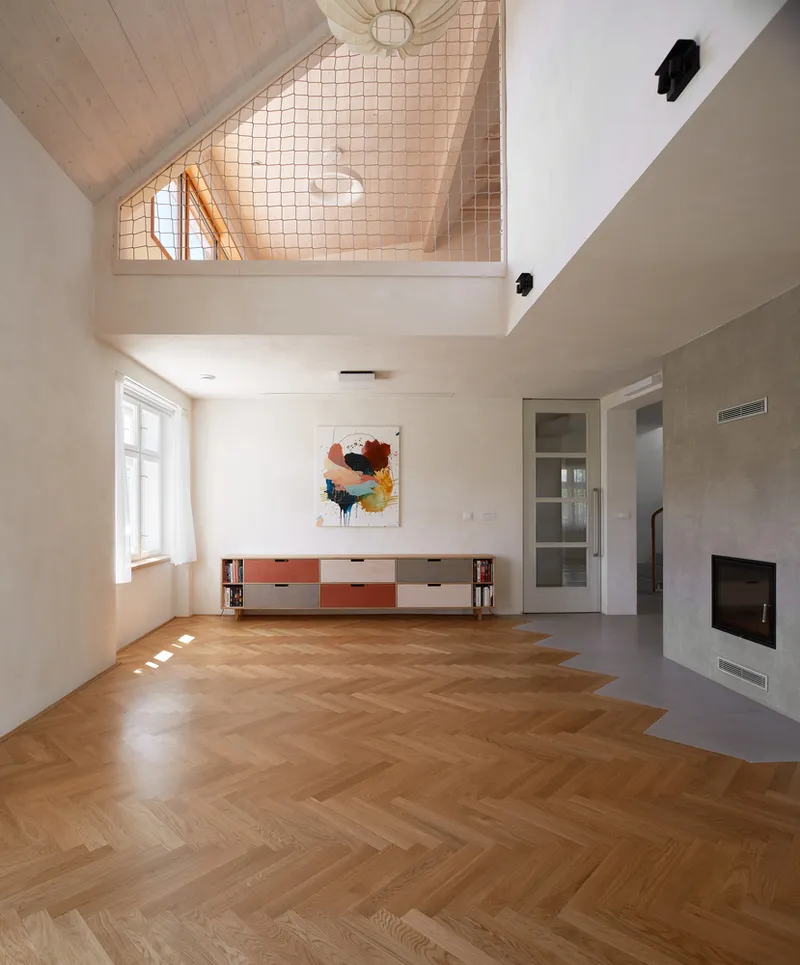
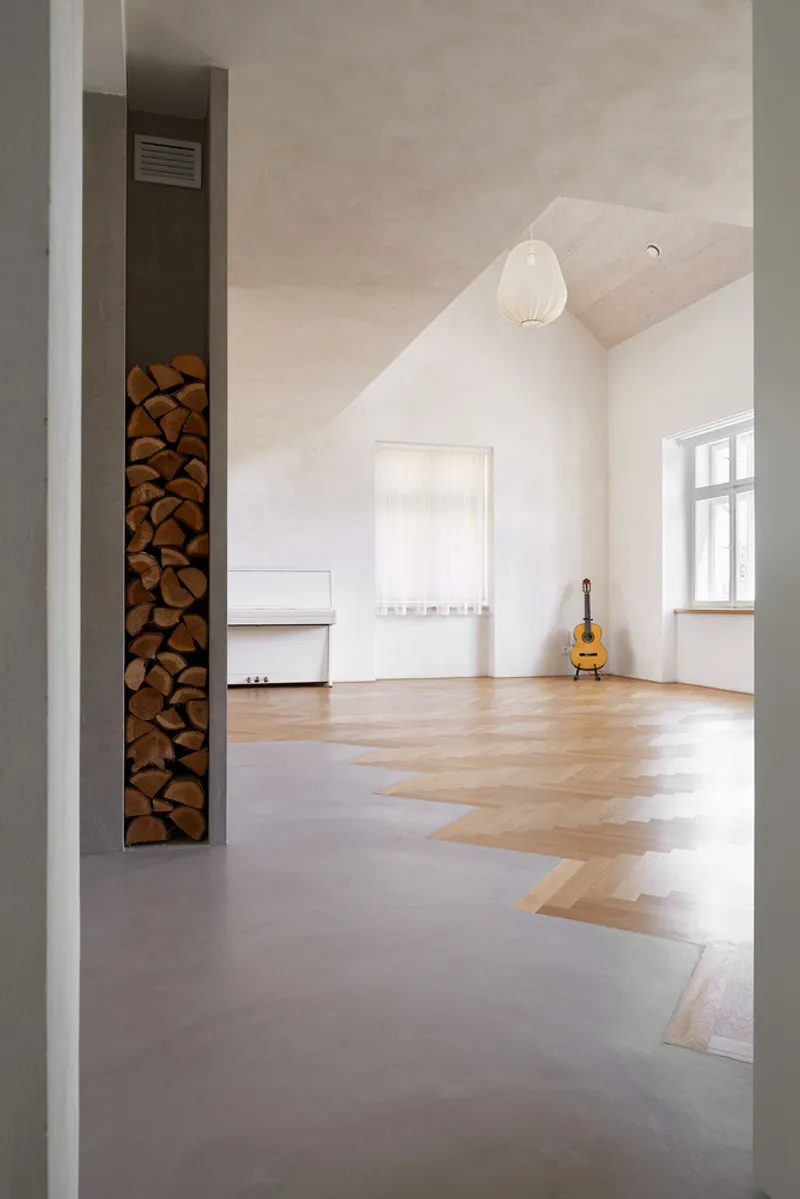
The original layout of the house featured a maze of identical, compartmentalized rooms, which was incompatible with the family’s vision of a large, open living space. To achieve this, the ground floor was radically restructured, removing internal partitions to create a vast central area. A striking fireplace was placed at the heart of this space, serving as a focal point that brings the family together.
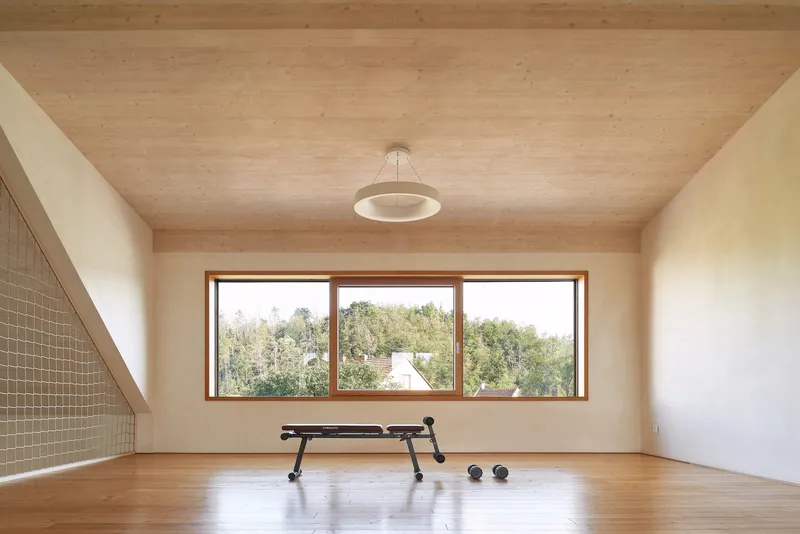
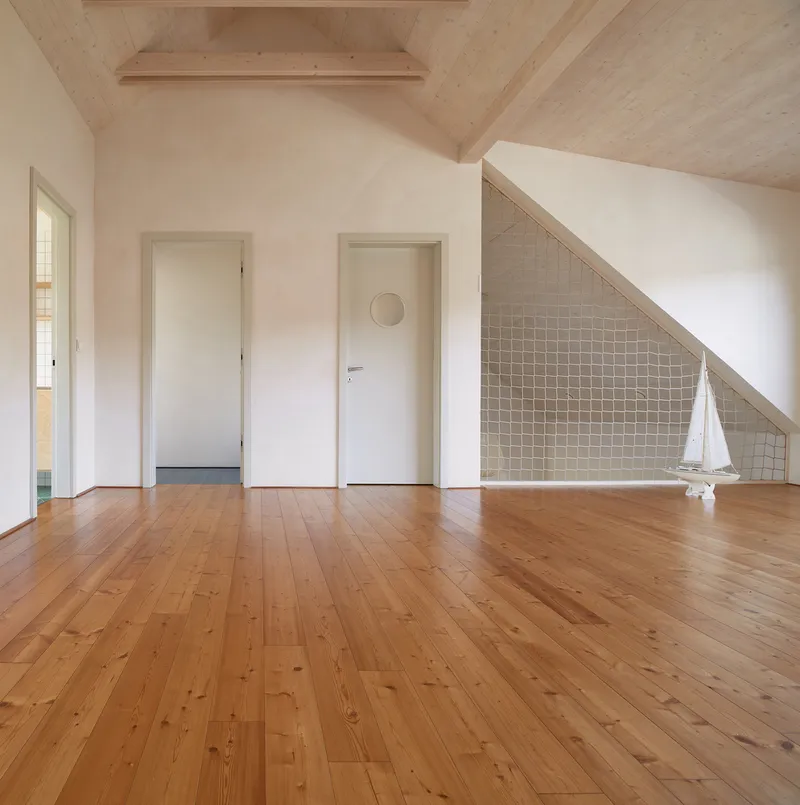
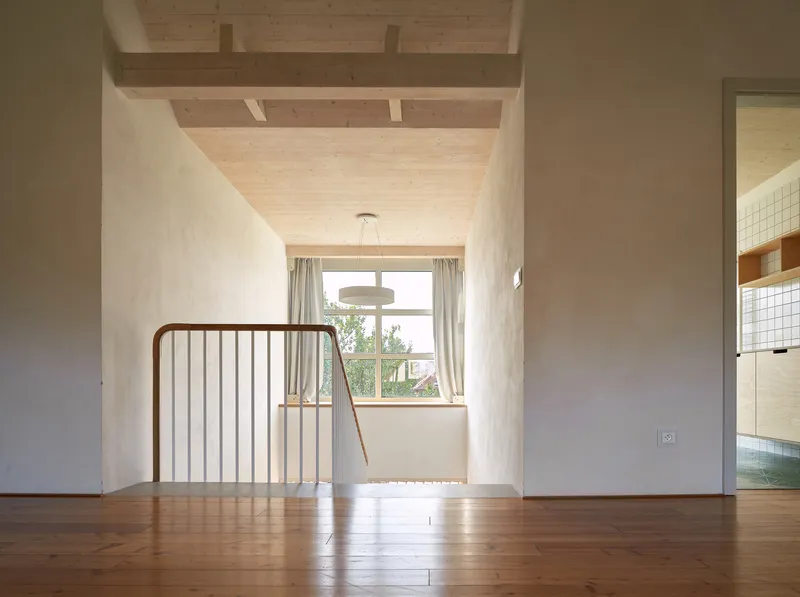
The transformation extended beyond just creating larger spaces. To enhance the sense of openness, a section of the ceiling was removed, connecting the lounge area on the ground floor with the playroom upstairs. This vertical connection not only introduces a sense of spaciousness but also promotes interaction between family members across different levels. The children’s rooms are strategically placed around the playroom on the first floor, fostering a balance between privacy and togetherness.
Material Palette: A Warm and Inviting Interior
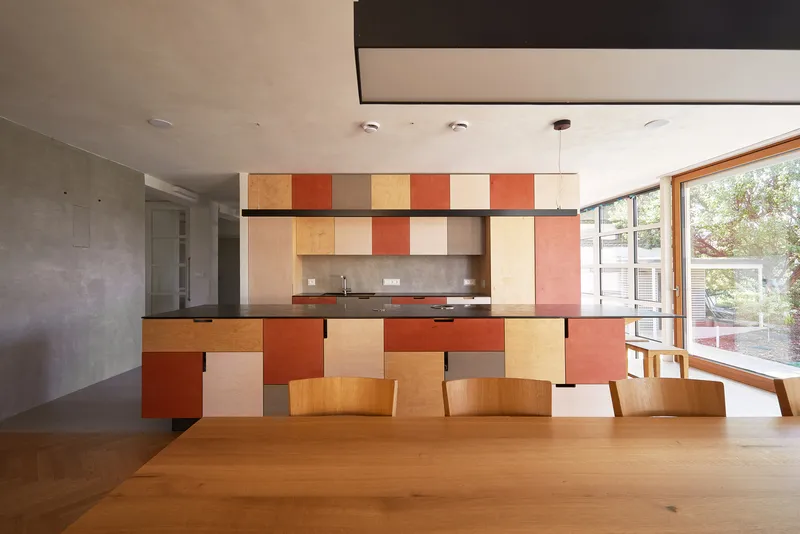
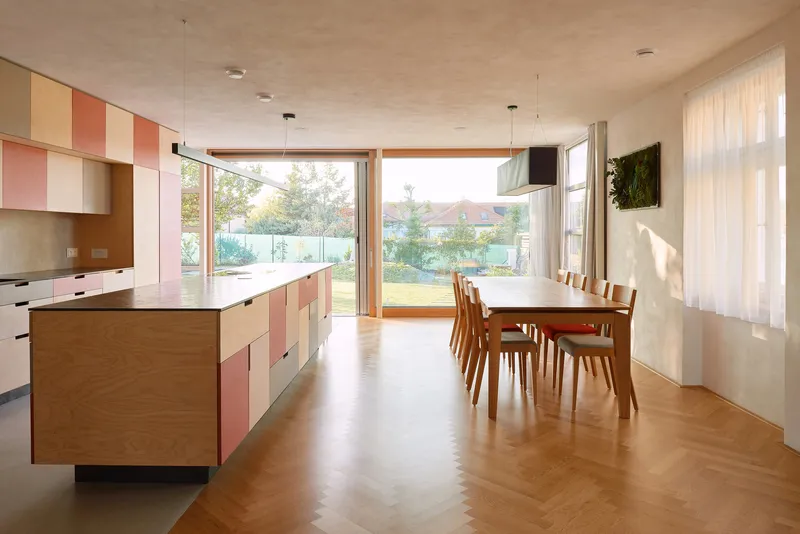
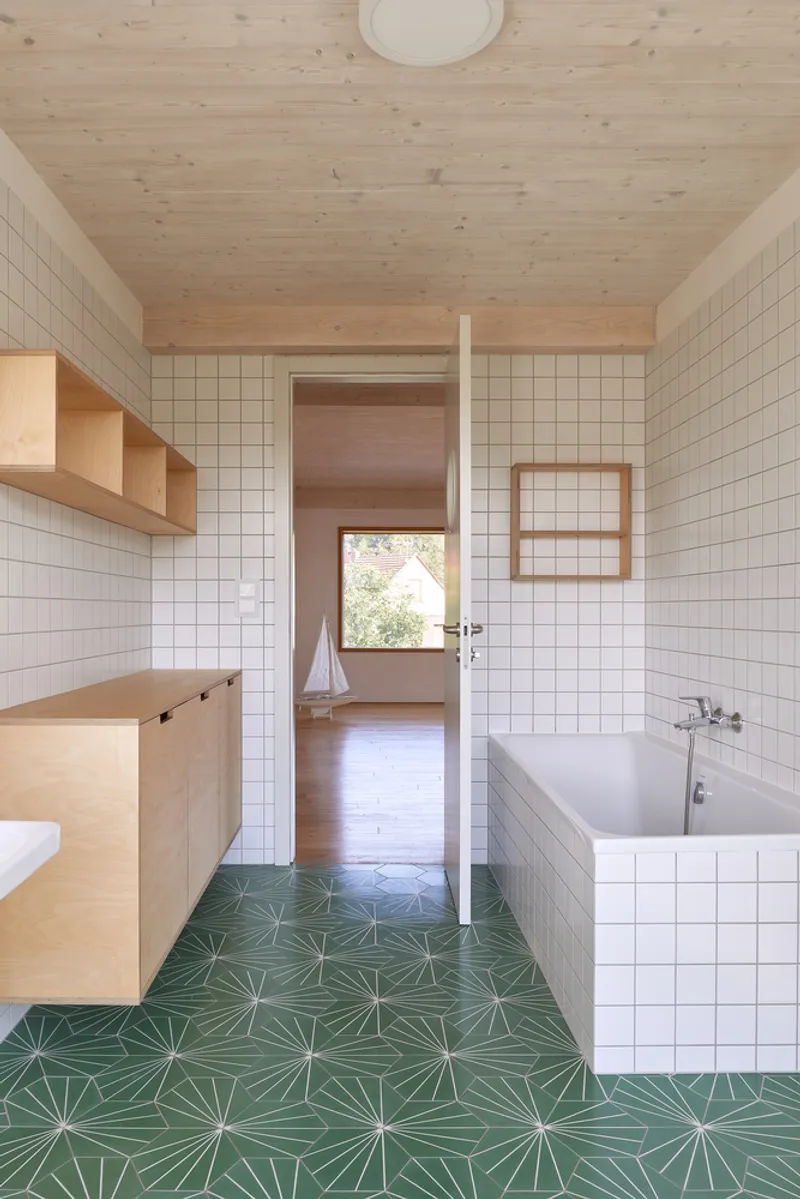
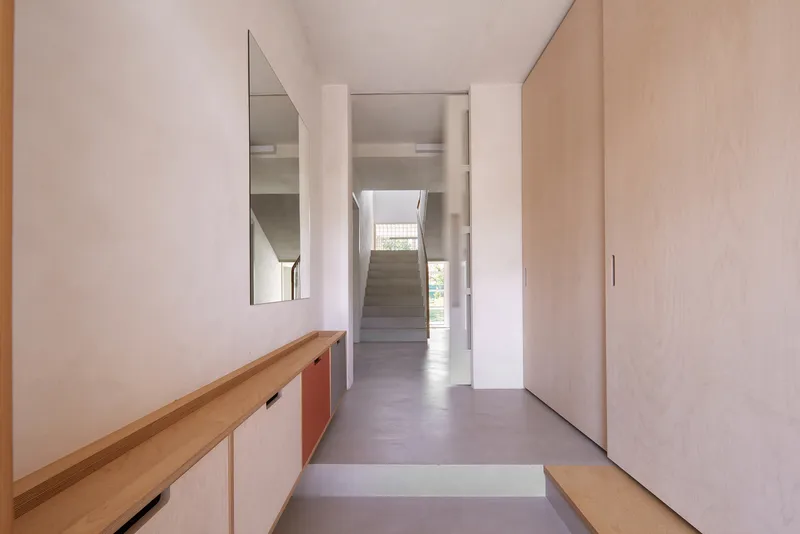
The interior design embraces a rich textural palette that evokes warmth and comfort. Wood in various finishes, textured plaster, and carefully painted surfaces highlight the craftsmanship of the human hand. This intentional layering of materials adds depth and character to the space while maintaining a welcoming atmosphere. Despite the predominant use of natural tones, vibrant colors are thoughtfully introduced, adding a playful and lively touch to the home.
Blurring Boundaries: Merging Indoor and Outdoor Spaces
A key aspect of the renovation was to redefine the relationship between the interior and the courtyard. Originally a utilitarian space, the courtyard has been transformed into an extension of the living area, especially during the warmer months. A new glass room connects the house to the courtyard, allowing natural light to flood the interior and establishing a seamless transition between indoor and outdoor living. This glass addition serves as both a visual and functional bridge, encouraging the family to engage with the outdoor environment.
Preserving Tradition: Honoring the Original Facade
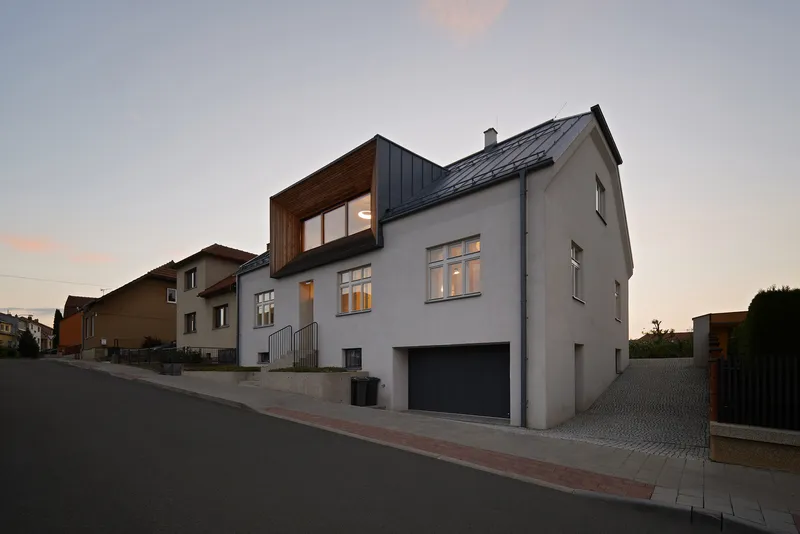
While the interior underwent significant transformation, the architects made a conscious decision to preserve the original massing and facade of the house. The street-facing exterior retains its authentic charm, with replicas of the original windows maintaining the historic character. However, a new dormer window was added to the facade, subtly marking the transformation and creating a modern landmark for the home.
From the street, the house maintains its modest presence, but from the courtyard, it opens up generously, reflecting a strategy that respects the past while embracing the future. The glass room motif introduced on the ground floor is echoed on the first floor, reinforcing the visual dialogue between the old and the new.
Sustainable Design and Energy Efficiency
In addition to the spatial and aesthetic transformation, the project also prioritizes energy efficiency. By retaining the original structure wherever possible and introducing high-performance materials, the architects ensured that the house meets contemporary sustainability standards. The glass room acts as a passive solar collector, reducing energy consumption during colder months, while the open-plan layout optimizes natural ventilation and light.
All photographs are works of Jiří Alexander Bednář


Popular Articles
Popular articles from the community


U.GA Architects Wraps an Oval Rooftop Pool in Curved Board-Formed Concrete on Busan's Jeollidan-gil
In Busan's Jeonpo-dong, a 454 m² mixed-use block stacks a neighborhood facility, guest rooms and an oval rooftop pool inside spiraling concrete walls.

Cube Design Draws an Ecological Corridor Between Two Shenzhen Hills with the Nankai Building
Beside Shenzhen's container docks, the Nankai Building pairs stacked balconies with a climbing green screen to connect two hillsides across its height.

longwave studio Reorganizes a 112 m² Tainan Apartment Around the Daily Routines of a Family and Two Cats
In Tainan, Taiwan, birch plywood, rust-red furniture and a freestanding plaster wall link arrival, storage, work and family life in one apartment.

David Macias Steps a Doorless Stone and Plaster House Down a Tropical Colombian Hillside
In the humid hills of Colombia, Threshold House replaces the front door with an open void and terraces its 850 m² down the slope instead of fighting it.

Similar Reads
You might also enjoy these articles


Hodi-Mandai Geram
Project Function: Preservation and revitalization of the Intangible heritage and socio-spatial identity of the Hodi by Housing, Cultural Memory Center, Sacred Grove, landscape, local tourism economy


Olio Towers: A Mid-Rise for Performers That Fuses Housing, Rehearsal, and Stage
Located blocks from Houston's Theater District, this modular tower stacks living units around a central performance atrium.

Oasis: Modular Green Housing Carved into Dhaka's Urban Fabric
A shortlisted Plugin Housing entry reclaims unauthorized settlements in Dhaka with stepped concrete volumes, green roofs, and ventilation-driven design.

Black Hole: A Floating Megastructure for the Post-Physical Era
Emiliano Mazzarotto envisions a spherical, self-scaling arena where e-sports, digital hotels, and holographic stadiums replace traditional public space.

Explore Housing Competitions
Discover active competitions in this discipline

Challenge to reimagine the Iron Throne

Photograph architecture without architects

Illustrate the lost glory of Angkor Wat - Render Challenge

Design challenge to reuse E-waste
Comments (0)
Please login or sign up to add comments
No comments yet. Be the first to comment!