
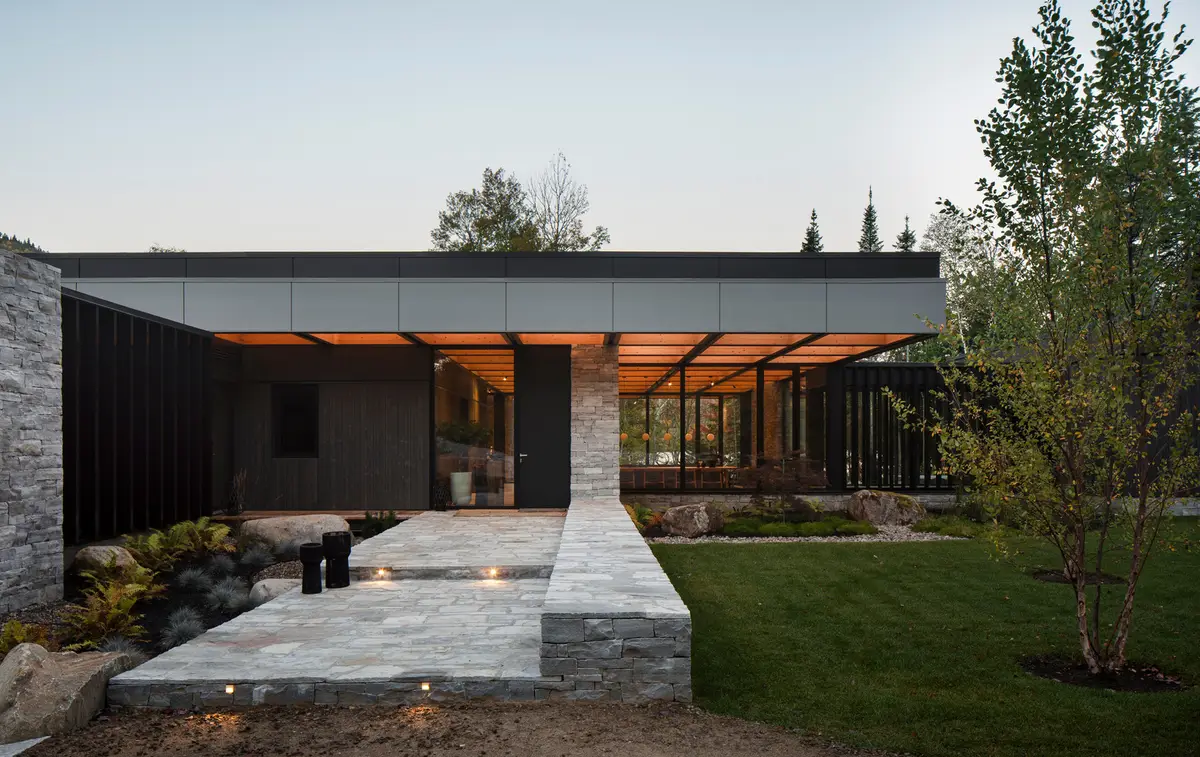
The House of la Baie de l’Ours by ACDF Architecture: A Sanctuary in Harmony with Nature
The House of la Baie de l’Ours blends timber, stone, and light, creating immersive, nature-integrated living spaces with fluid, family-focused design.


A Dialogue Between Architecture and Landscape
Nestled along the pristine shoreline of Quebec’s wilderness, The House of la Baie de l’Ours by ACDF Architecture is a poetic exploration of architecture’s ability to both shelter and reveal. Designed by architect Maxime Frappier, the residence emerges from the natural topography as if it has always belonged there — a sanctuary that embodies the seamless integration of architecture, landscape, and light.
“We didn’t want to impose a shape on the landscape; we wanted to reveal what was already there,” says Frappier.
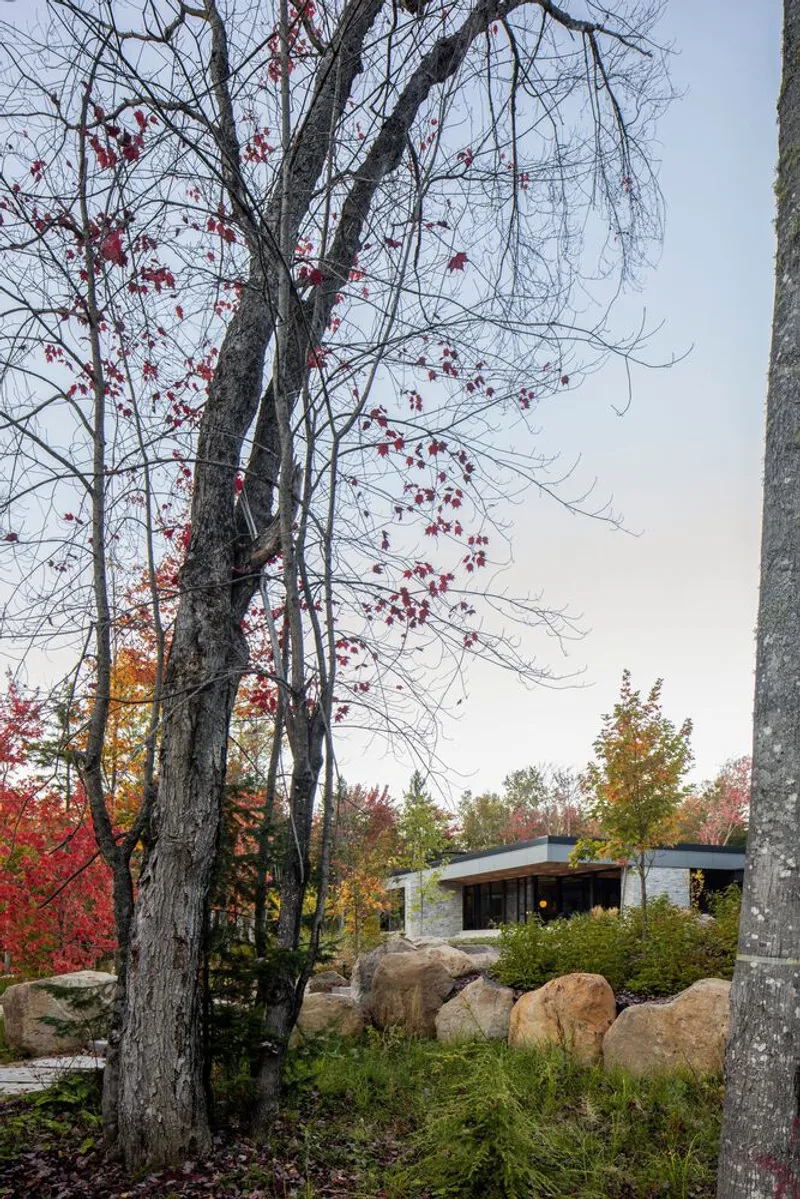
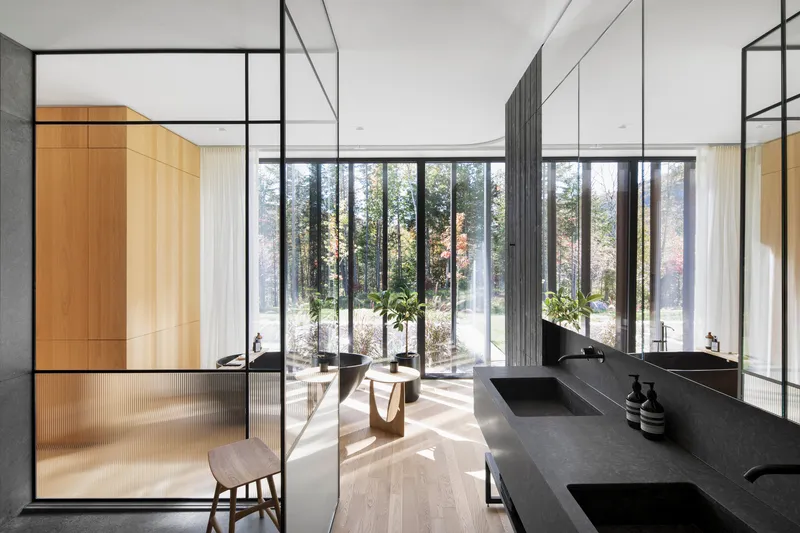
Revealing the Landscape Rather Than Imposing
“The goal was never to impose a shape on the landscape; we wanted to reveal what was already there,” explains architect Maxime Frappier. The House of la Baie de l’Ours exemplifies this philosophy, harmoniously integrating architecture with the natural environment. Nestled along a serene lakeside, the residence embraces its topography, forested surroundings, and proximity to water to create a home that feels both monumental and intimately human.
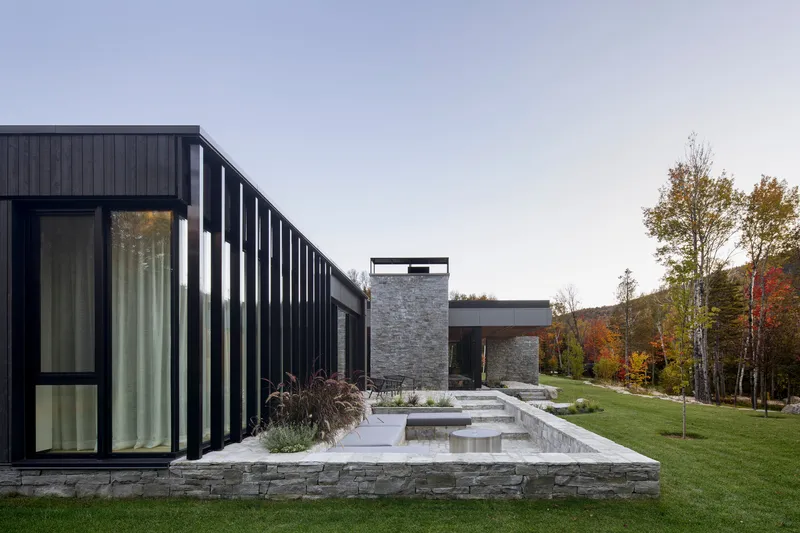
A Roof as Gesture and Refuge
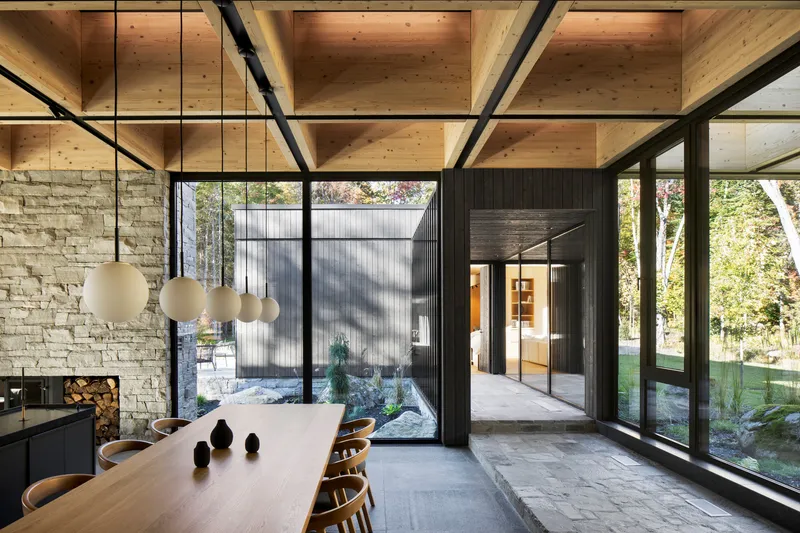
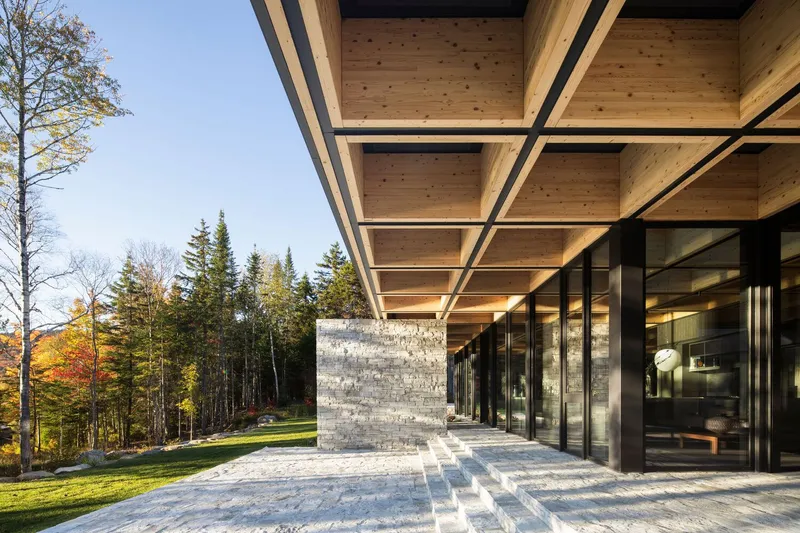
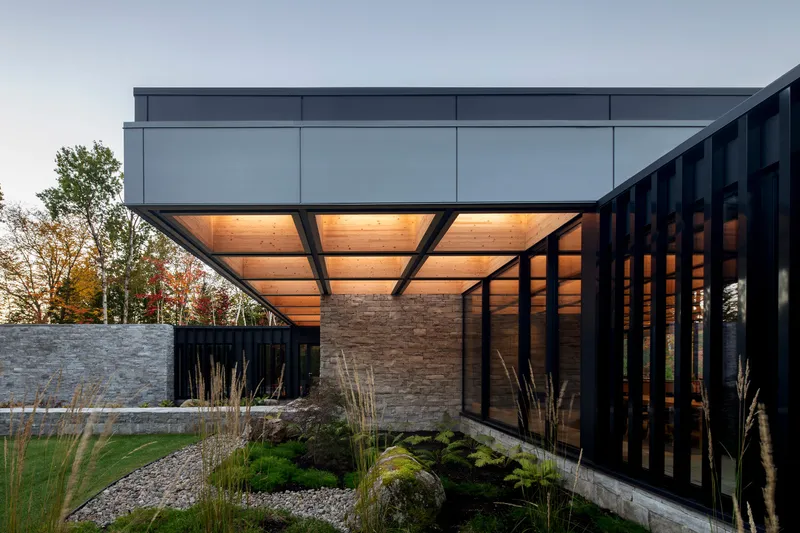
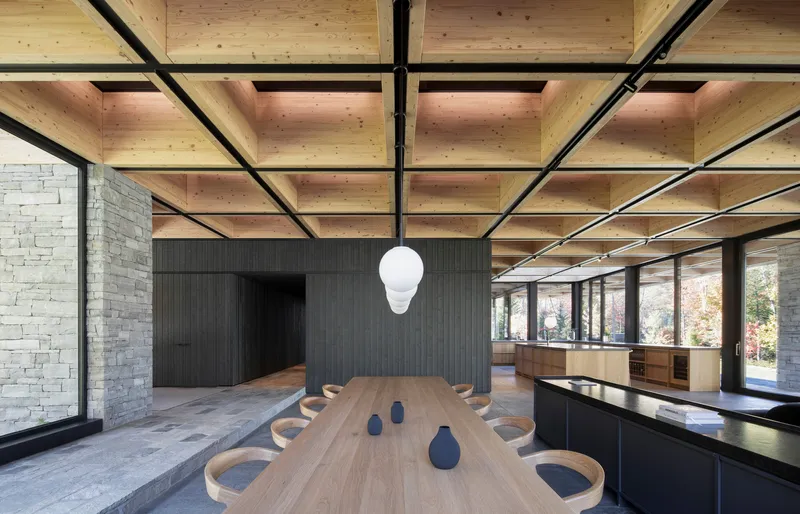
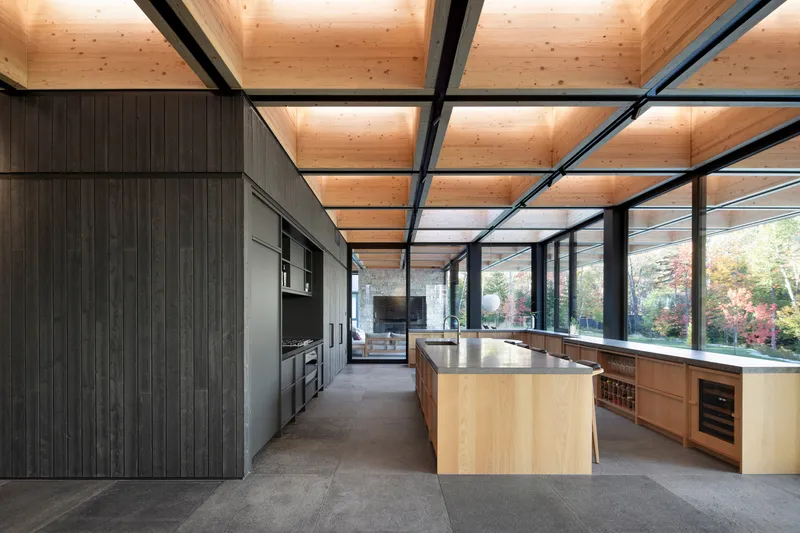
The central living area is crowned by a 5'x5' coffered timber roof, supported by strategically positioned stone monoliths that allow expansive cantilevers. These cantilevers extend the interior into the landscape, blurring the boundary between indoor and outdoor spaces. This approach not only creates sheltered outdoor areas but also fosters a sense of protection and warmth.
Acoustic panels within each timber coffer ensure tranquility, while discreet lighting highlights the wood’s texture. Strategically placed skylights bring natural light that shifts across surfaces throughout the day and seasons, enhancing the dynamic interplay between light, texture, and form.
“We wanted the structure to elevate the place without distancing the people who inhabit it,” says Frappier.
Seamless Integration with Nature
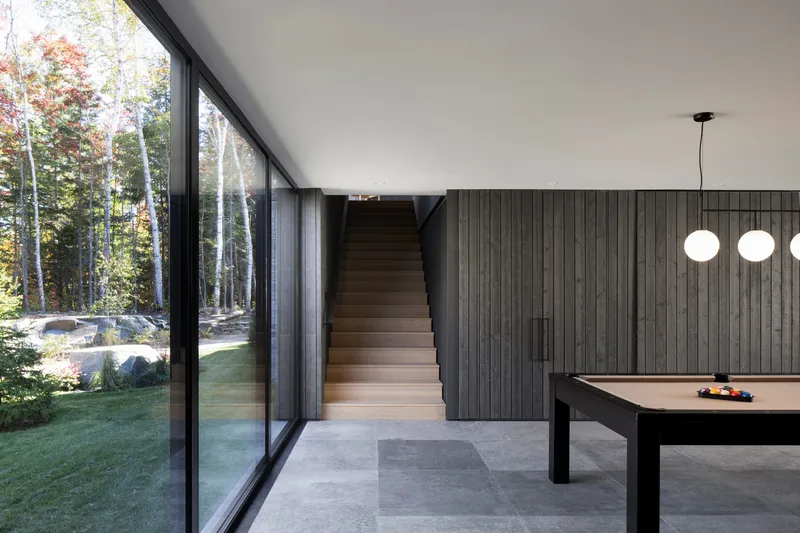
Structural columns are hidden within large monolithic stone walls, defining subspaces while rooting the house into the terrain. Some walls gradually transition into low stone partitions, mimicking natural outgrowths of the landscape. This design strategy reinforces the perceived lightness of the roof while integrating the home organically with its surroundings, reflecting modernist principles of fluidity between shelter and landscape.
Fluid, Immersive Living Spaces
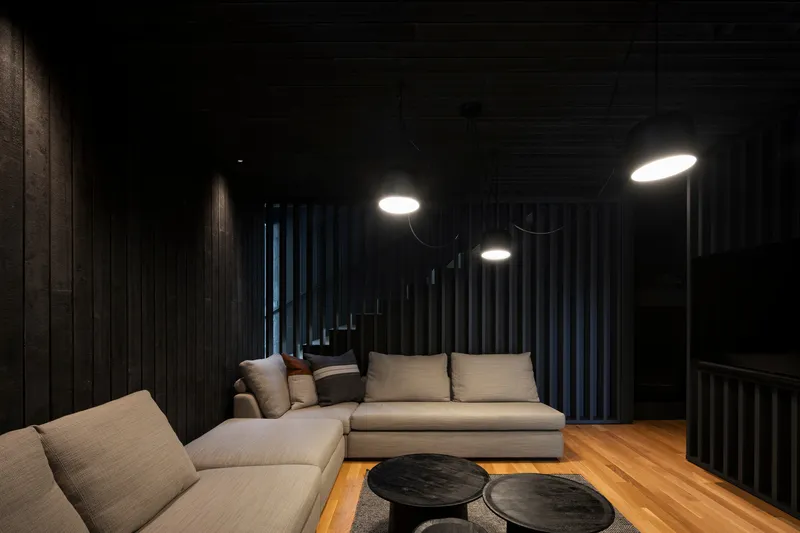
The interior is designed as a continuous sequence of living spaces that support both conviviality and privacy. The sunken living room and kitchen with dinette open toward the lake, while the dining area enjoys dual visual connections to the forest and water, deepening the immersive experience. A centrally located fireplace unifies the kitchen, dining room, and living room, becoming the heart of domestic life.
A secondary kitchen, tucked behind dark wood volumes, allows private meal preparation without disrupting main social areas. Adjacent to the kitchen, a screened terrace under the roof overhang functions as a protected outdoor living room, complete with retractable mosquito screens and an outdoor fireplace that aligns perfectly with the indoor hearth.
Private Wings in Harmony with Landscape
Flanking the central volume are two wings: one for parents, the other for children. A partial upper level above the children’s wing accommodates a guest suite and workspaces, maintaining privacy while ensuring spatial continuity.
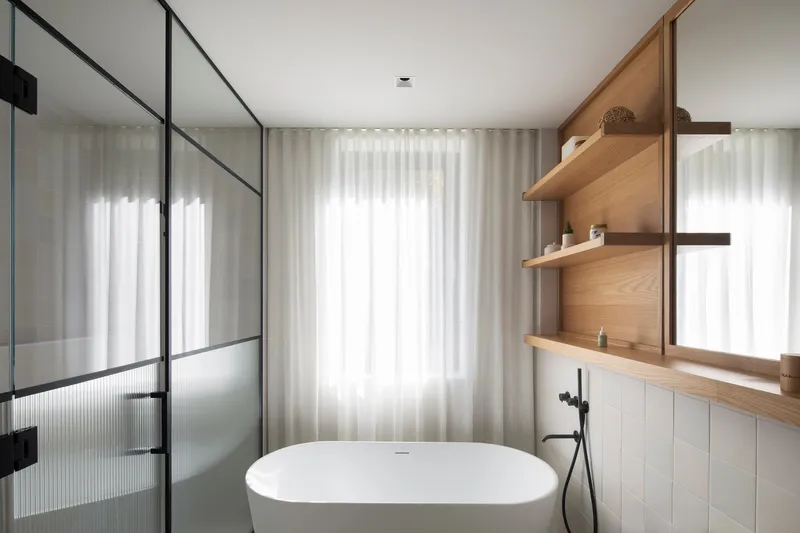
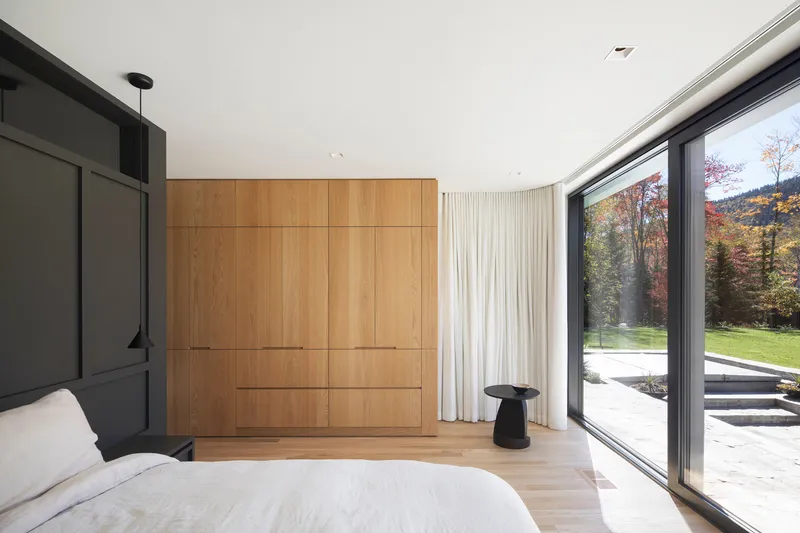
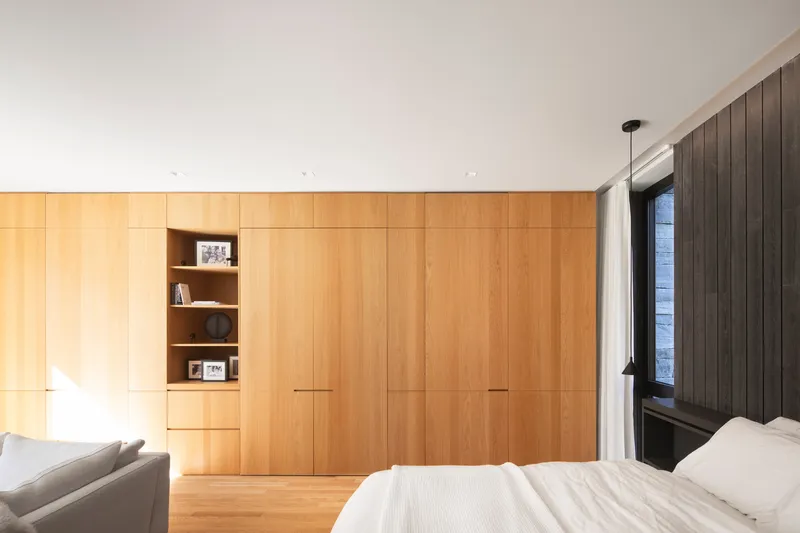
The master suite features a lake-facing bedroom, lounge, walk-in closet, and forest-facing bathroom. A glazed corridor separates shared spaces from private areas, creating a serene transition. Outdoors, a sunken terrace with built-in benches and a fireplace extends the sensory continuity with the surrounding nature.
Children’s bedrooms open directly onto the landscape, connecting to a private terrace via a small wooden bridge that links different layers of the property. A large playroom, home cinema, and flexible lounge alcove further enhance the home’s family-focused, immersive experience.
Architecture of Connection and Revelation
La Maison de la Baie de l’Ours is an exploration of architecture as a medium of connection. Rather than imposing itself on the site, it emphasizes the innate beauty of the terrain, the interplay of light, and the intimate relationship between indoor and outdoor spaces. Every material choice, spatial composition, and structural decision contributes to a home that harmonizes human presence with the natural environment, creating a sanctuary of calm, introspection, and immersive living.
All photographs are works of Adrien Williams


Popular Articles
Popular articles from the community


Conexión: Biophilic Design Reimagines High-Rise Living in Hong Kong
Conexión reimagines high-rise living in Hong Kong through biophilic design, green facades, shared spaces, daylight, water and nature within.

Co-life: Sustainable Architecture for Age-Friendly Community Living
Co-life reimagines sustainable architecture for seniors through courtyards, rammed earth, shared gardens, and spaces designed for belonging.

Hill & Cross Opera: Sculptural Opera House Architecture Shaped by Tallinn’s Landscape and Identity
Hill & Cross Opera reimagines opera house architecture in Tallinn through its sculptural hill, civic plaza, glass wave and a luminous cross.

The Ocean Hive: Sustainable Architecture for a Self-Sufficient Civilization at Sea
The Ocean Hive imagines sustainable architecture at sea, where modular habitats, algae, wave power and ocean waste sustain a growing colony.

Similar Reads
You might also enjoy these articles


Hodi-Mandai Geram
Project Function: Preservation and revitalization of the Intangible heritage and socio-spatial identity of the Hodi by Housing, Cultural Memory Center, Sacred Grove, landscape, local tourism economy


Olio Towers: A Mid-Rise for Performers That Fuses Housing, Rehearsal, and Stage
Located blocks from Houston's Theater District, this modular tower stacks living units around a central performance atrium.

Oasis: Modular Green Housing Carved into Dhaka's Urban Fabric
A shortlisted Plugin Housing entry reclaims unauthorized settlements in Dhaka with stepped concrete volumes, green roofs, and ventilation-driven design.

Black Hole: A Floating Megastructure for the Post-Physical Era
Emiliano Mazzarotto envisions a spherical, self-scaling arena where e-sports, digital hotels, and holographic stadiums replace traditional public space.

Explore Architecture Competitions
Discover active competitions in this discipline

Challenge to reimagine the Iron Throne

Photograph architecture without architects

Illustrate the lost glory of Angkor Wat - Render Challenge

Design challenge to reuse E-waste
Comments (0)
Please login or sign up to add comments
No comments yet. Be the first to comment!