

The House on the Lake by duearchitetti: A Year-Round Transformation Between Water and Greenery
A renovated 1970s lake house becomes a year-round home, blending open-plan interiors with glass volumes, terraces, water and greenery seamlessly.


The House on the Lake, designed by duearchitetti, is a sensitive renovation of a 1970s lakeside cottage in Italy, reimagined as a permanent residence rooted in landscape, memory, and contemporary living. Originally conceived as a seasonal retreat, the villa has been transformed into a dynamic, year-round home that reflects the evolving lifestyle, passions, and personality of its new owner.
Rather than erasing the past, the project builds upon it, carefully reinterpreting the existing structure to create a renewed domestic narrative: one where architecture becomes a medium for observation, listening, and inhabitation. The renovation embraces openness, fluidity, and a strong relationship with the surrounding natural environment, allowing everyday life to unfold between lake water and lush greenery.
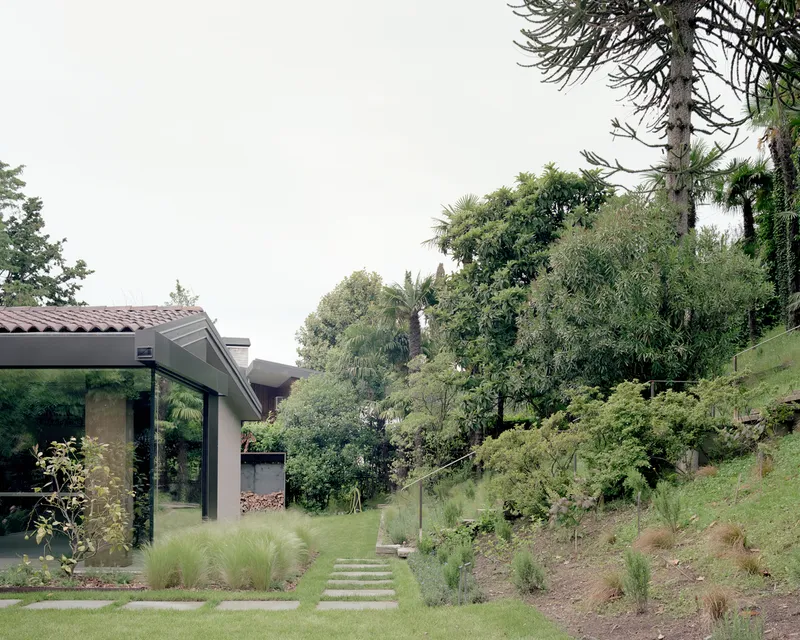
A Dual Landscape: Lake and Slope as Architectural Drivers
The villa’s unique position defines the architectural concept. On the northwest side, the house faces the lake, where blue-green waters shift in tone with changing light and weather, appearing so close they feel almost touchable. On the southeast side, a steep, green slope rises toward the road above, creating a natural buffer that quickly separates the home from urban life.
This dual condition, water and vegetation, forms the conceptual backbone of the project. From the earliest site visit, this environmental binomial guided every design decision. Inside the house, lake and greenery alternately frame views, overlap visually, and merge spatially, generating a continuous dialogue between interior and exterior.
An Open Plan for Contemporary Living
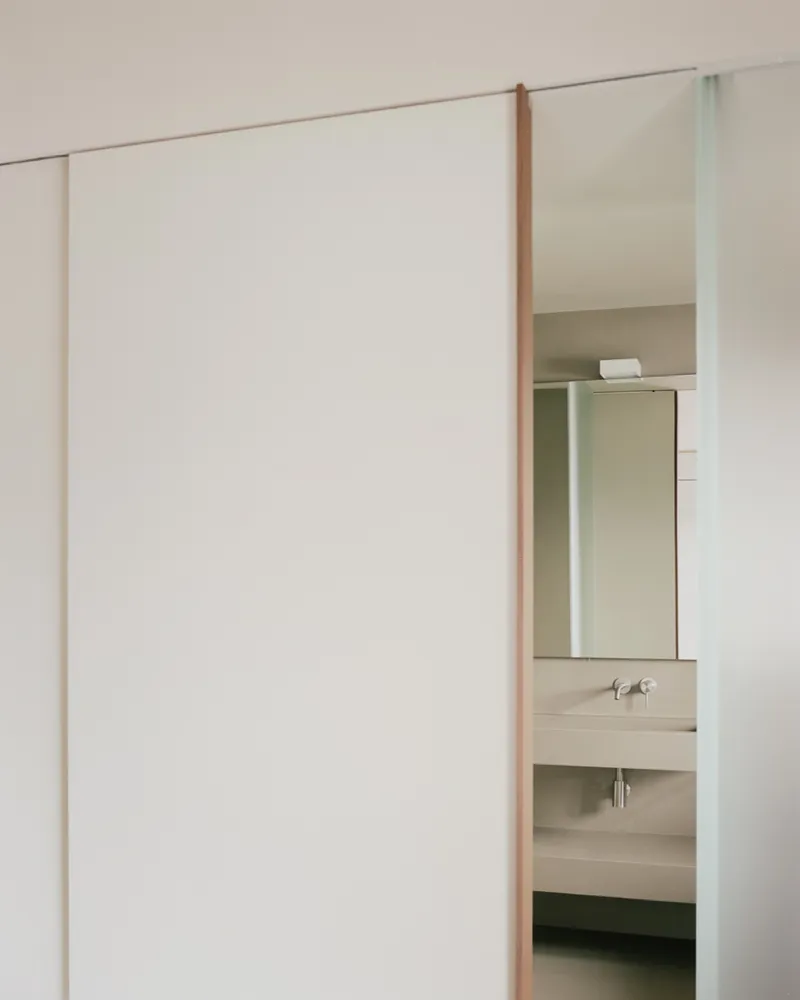
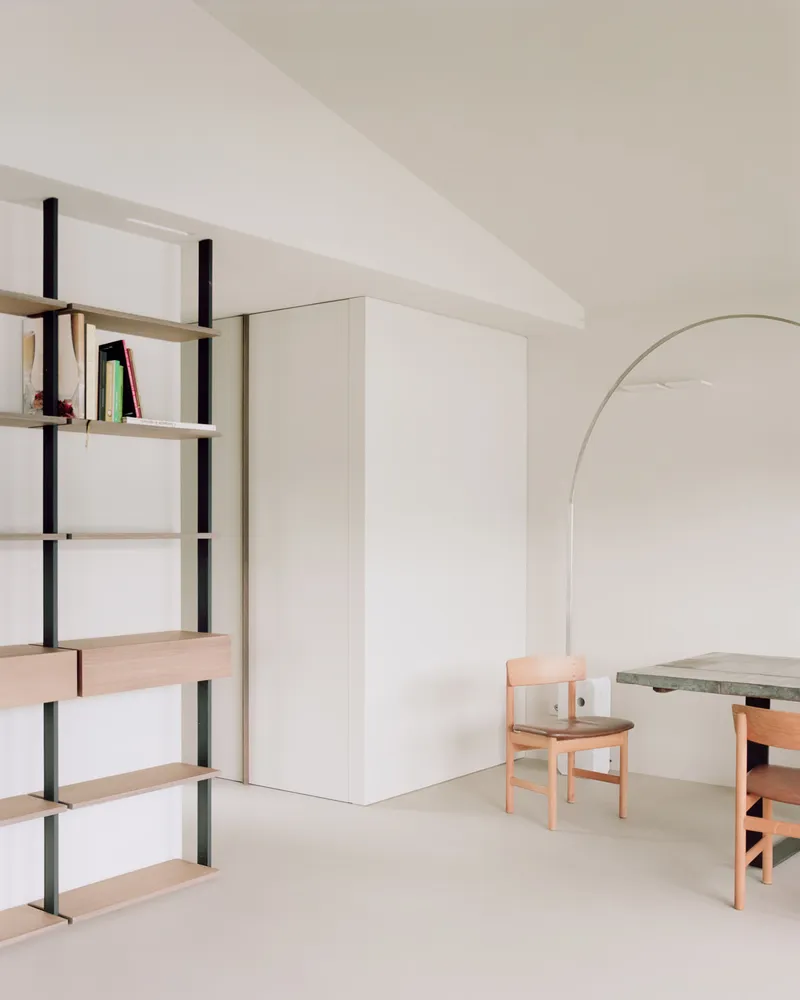
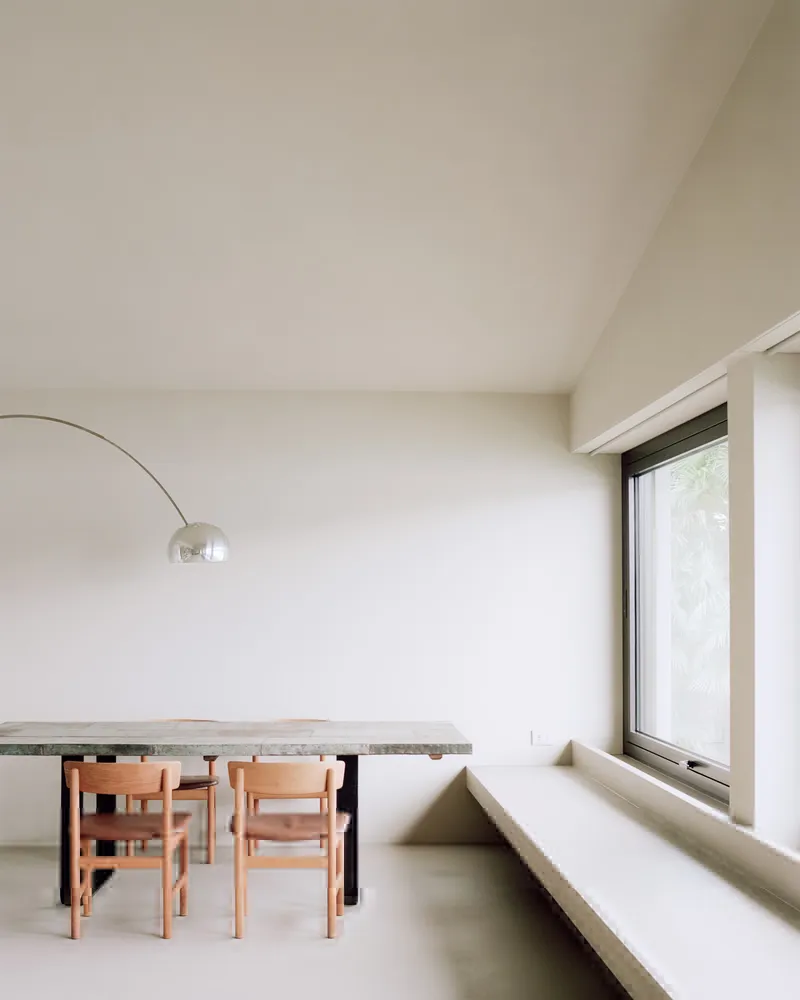
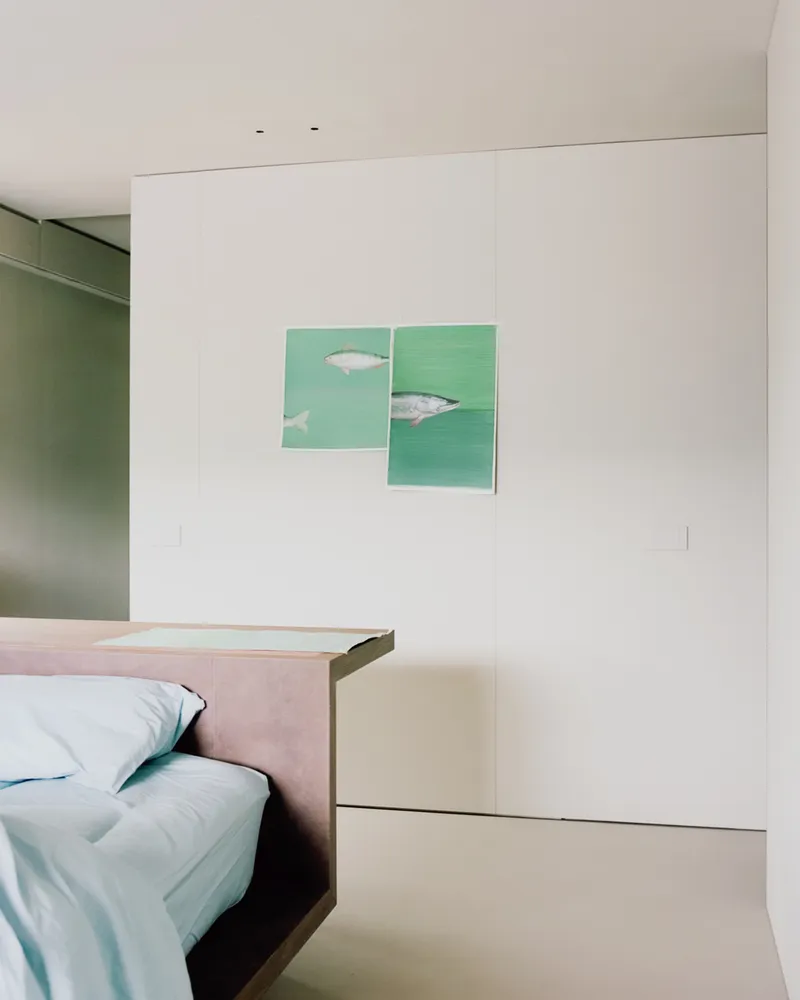
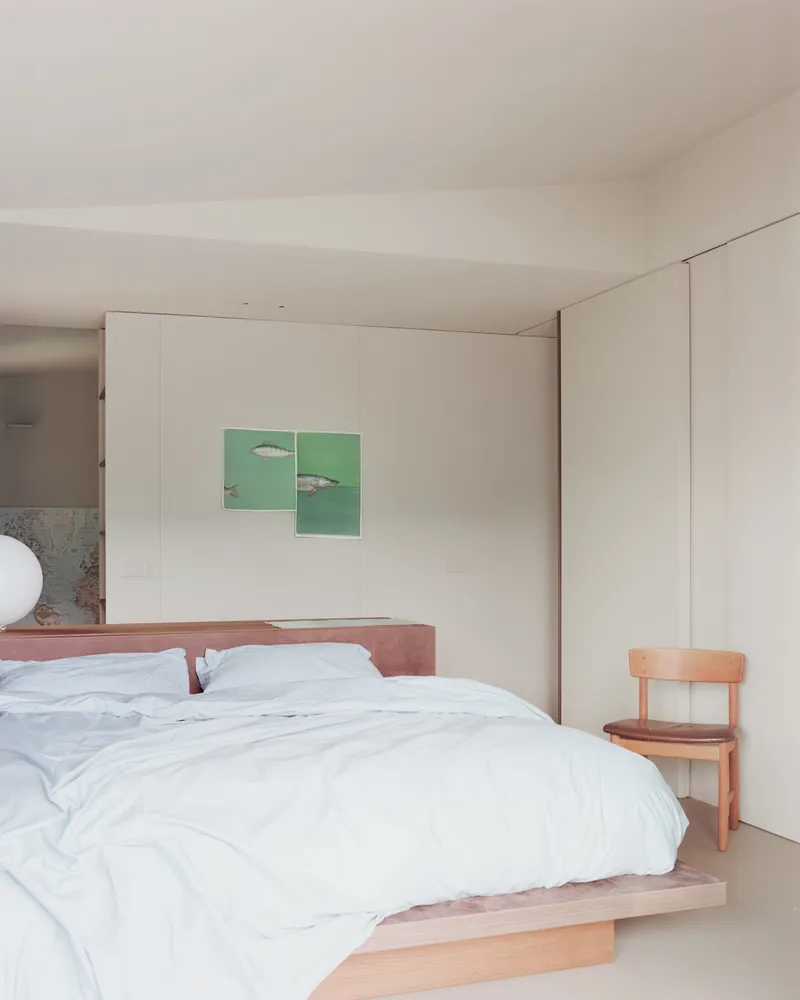
At the planimetric level, the renovation involved a radical yet precise intervention. All non-structural partitions were removed to dissolve rigid room divisions and replace them with a spatial system based on connections, visual continuity, and movement. The resulting interior is a free-flowing, flexible layout where living spaces transition naturally into one another and extend outward toward terraces, porches, and the landscape.
This decisive architectural gesture fundamentally alters the rhythm of domestic life. Spaces are no longer static or hierarchical; instead, they adapt to different moments of the day, social gatherings, and solitary routines, supporting both privacy and conviviality.
The Kitchen as a Transparent Heart of the Home
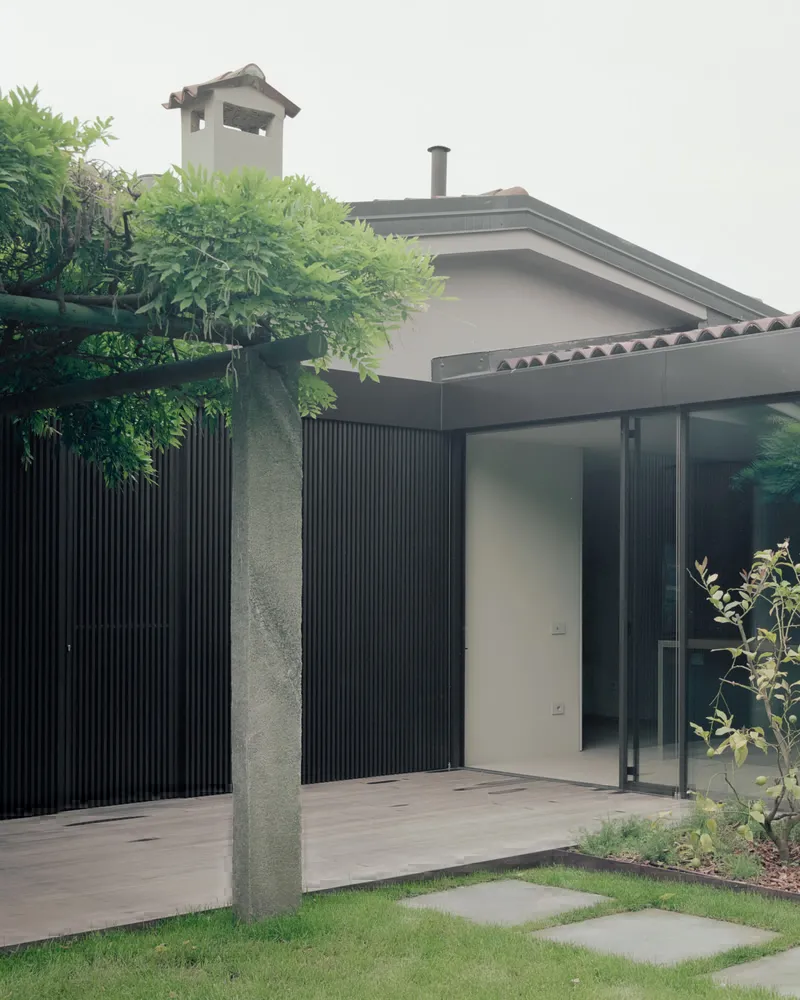
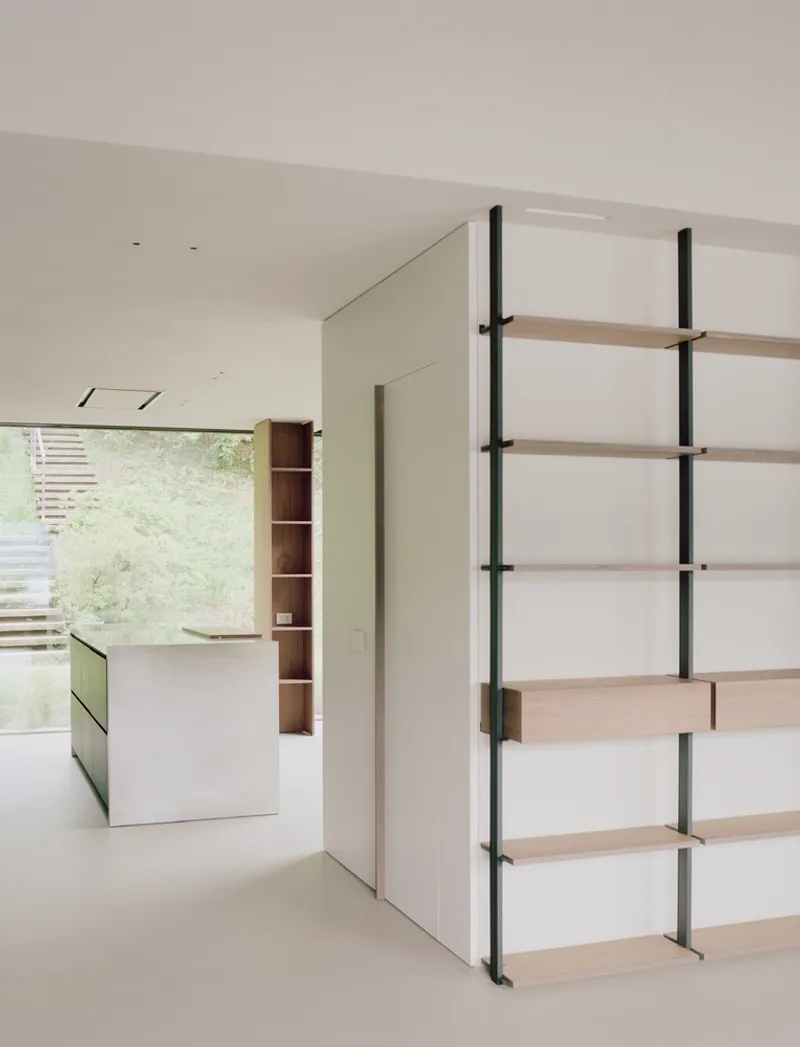
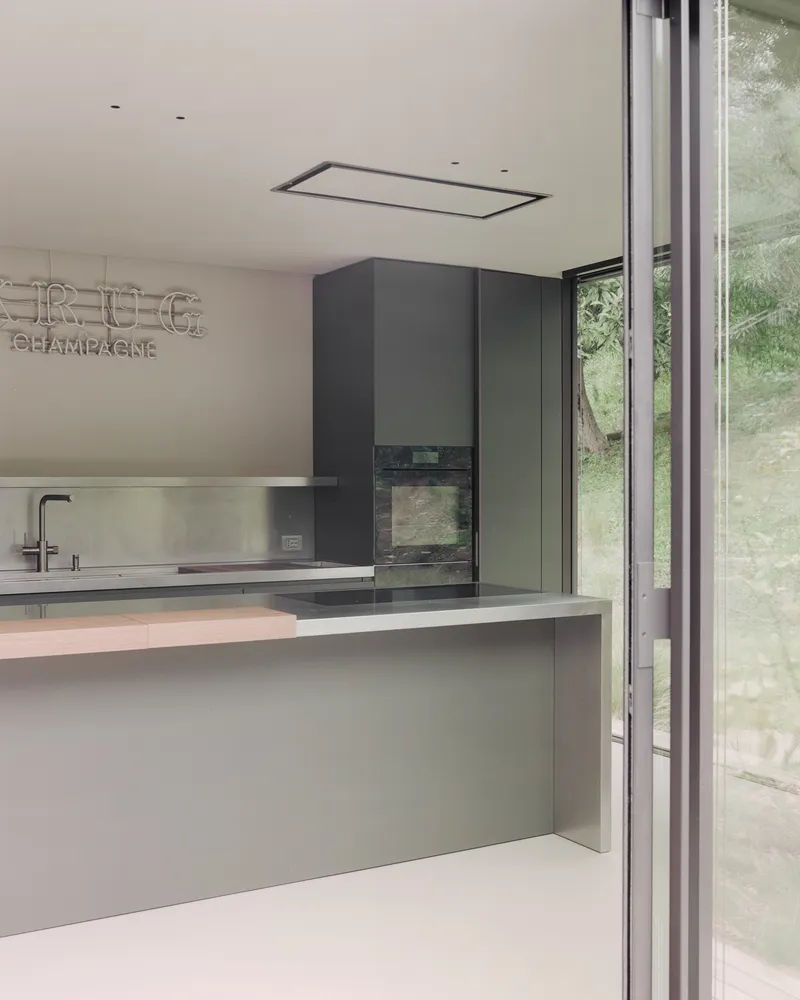
One of the most significant transformations occurs at the former entrance porch. By enclosing it with two full-height glass walls, duearchitetti created a transparent volume facing the southeast greenery. This new space now houses the kitchen, conceived as the active and social heart of the home.
Fully equipped yet visually light, the kitchen functions as a connective node between interior and exterior. It opens directly onto the historic pergola, a defining element of the original house that was intentionally preserved. This choice reinforces continuity between past and present while anchoring daily rituals within a familiar architectural memory.
Outdoor Rooms as Extensions of Interior Space
The project places equal importance on exterior spaces, treating them as outdoor rooms rather than residual areas. The pergola, enveloped by dense wisteria during summer, becomes a shaded living space cooled by northern breezes: an ideal setting for long lunches, conversations, and quiet observation of the landscape.
Additional outdoor zones enrich the spatial experience. A small porch between the master bedroom and living room offers a more intimate retreat overlooking the lake, perfect for slow mornings or evening aperitifs beside the fireplaces. Below, at dock level, a lakeside terrace serves as a sunbathing platform, reinforcing the sensation of being perpetually on holiday while remaining deeply connected to everyday life.

A Contemporary Lake House Rooted in Atmosphere
Through careful spatial reorganization, restrained architectural gestures, and a deep respect for site conditions, The House on the Lake achieves a balance between permanence and leisure. It is no longer just a holiday home but a refined, livable residence where architecture frames nature, supports social life, and adapts to seasonal change.
The project exemplifies a thoughtful approach to lakeside house renovation, demonstrating how existing structures can be transformed into contemporary homes without losing their emotional and environmental resonance.

All photographs are works of Simone Bossi


Popular Articles
Popular articles from the community


Juan García Correa, John González and Claudia Rueda Sink a Circular Amphitheater into a Manizales Engineering Building
On the La Nubia campus in Manizales, Colombia, the S1 Building folds labs and offices into a hillside of ramped lawns that double as a campus route.

LT2A and OPEN Architectes Thread a Brick and Glass High School Through a Wooded Belgian Campus
In Braine-l'Alleud, a 3,000 m² wing for Collège Cardinal Mercier pairs pale brick with a glazed colonnade, deferring to a small chapel and a dense wood.

Architekt Andreas Gruber Scatters 23 Dark Timber Chalets Across a South Tyrolean Forest Edge
In Molini di Tures, Amonti Chalets breaks a resort into a hamlet of gabled timber houses, with parking, storage and services pushed into the slope.

David Ortega Stacks a Two-Story Mexico City Penthouse Around a Steel Stair and a Pergola-Shaded Roof Terrace
In Colonia Roma, a 300 m² penthouse uses oak joinery, a planted steel stair and a slatted roof pergola to make a new-build apartment feel like a house.

Similar Reads
You might also enjoy these articles


Hodi-Mandai Geram
Project Function: Preservation and revitalization of the Intangible heritage and socio-spatial identity of the Hodi by Housing, Cultural Memory Center, Sacred Grove, landscape, local tourism economy


Olio Towers: A Mid-Rise for Performers That Fuses Housing, Rehearsal, and Stage
Located blocks from Houston's Theater District, this modular tower stacks living units around a central performance atrium.

Oasis: Modular Green Housing Carved into Dhaka's Urban Fabric
A shortlisted Plugin Housing entry reclaims unauthorized settlements in Dhaka with stepped concrete volumes, green roofs, and ventilation-driven design.

Black Hole: A Floating Megastructure for the Post-Physical Era
Emiliano Mazzarotto envisions a spherical, self-scaling arena where e-sports, digital hotels, and holographic stadiums replace traditional public space.

Explore Architecture Competitions
Discover active competitions in this discipline

Challenge to reimagine the Iron Throne

Photograph architecture without architects

Illustrate the lost glory of Angkor Wat - Render Challenge

Design challenge to reuse E-waste
Comments (0)
Please login or sign up to add comments
No comments yet. Be the first to comment!