
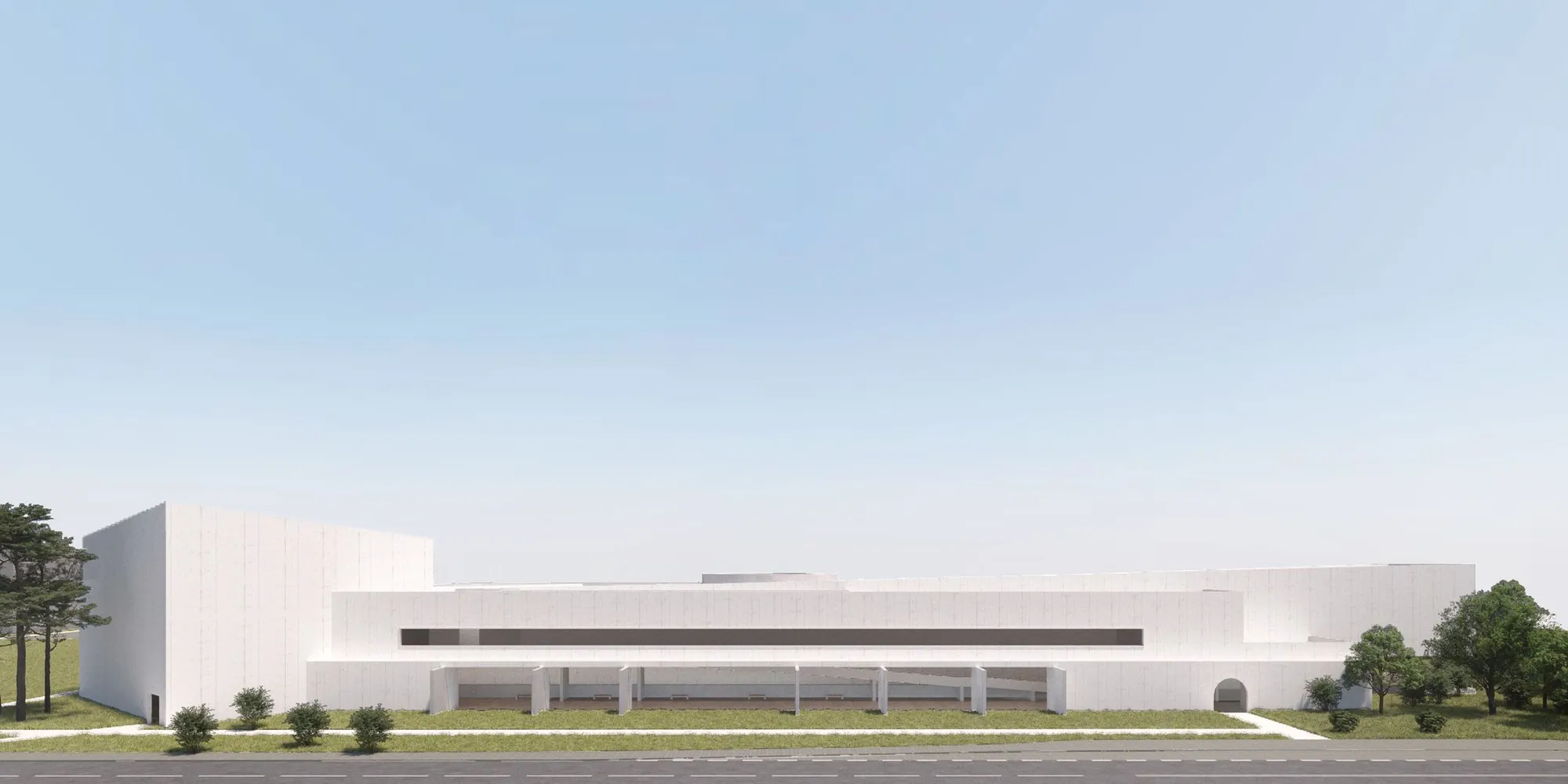
The Key to the Future: Exploring the Innovative Library Design of Minseok Kim's "The Key"
This article delves into Minseok Kim's "The Key," redefining library architecture and enhancing community engagement and knowledge access.


In a world where digital mediums increasingly overshadow physical repositories of knowledge, Minseok Kim’s “The Key” stands as a testament to the evolving role of libraries in contemporary society. Awarded the People's Choice Award in the Libgen Project competition, this architectural marvel redefines the conventional library as not just a space for storing books but as a dynamic environment for intellectual exploration and public interaction.
The Concept of "The Key"
At the heart of Kim’s design philosophy is the idea that libraries should be more than organized repositories. They should serve as keys to unlocking truth and understanding hidden beyond mere facts. Traditional media may convey information, but "The Key" encourages users to engage with knowledge on a deeper level, fostering a culture of inquiry and discovery.
Architectural Design and Spatial Strategy
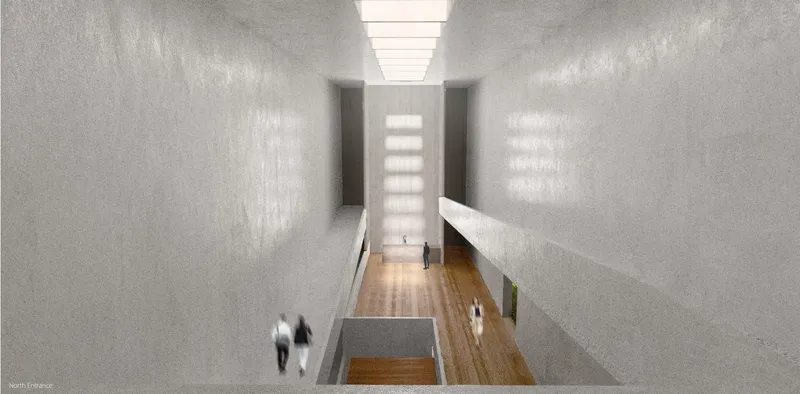
North Entrance and Spatial Dynamics
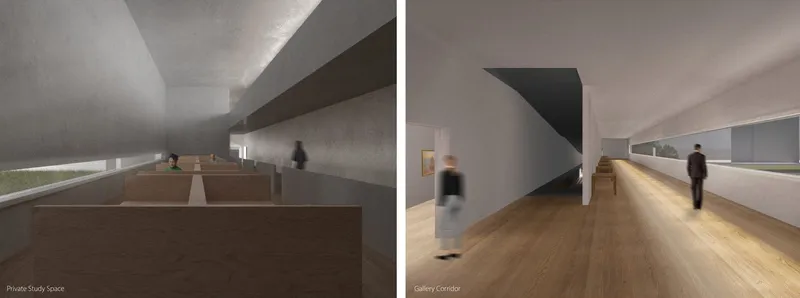
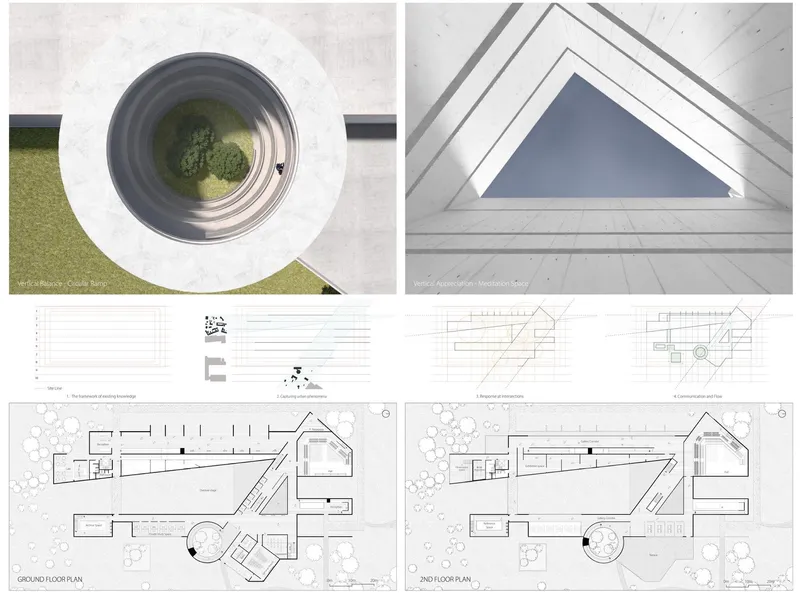
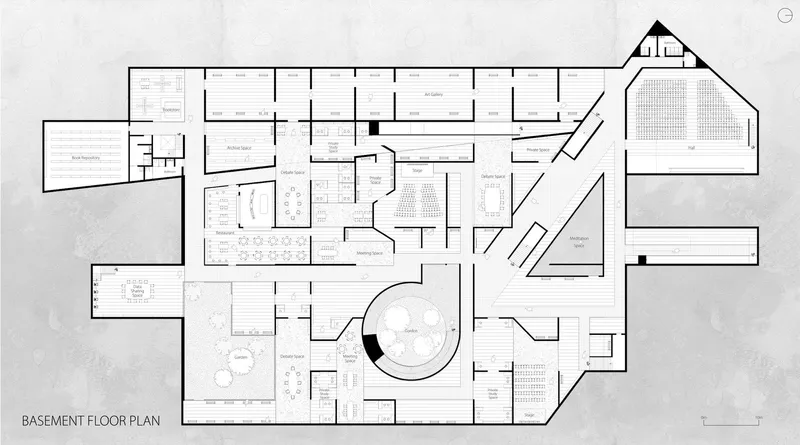
Upon entering "The Key," visitors are greeted by a space that champions vertical and horizontal appreciation of knowledge. The design intricately balances private study areas with open public spaces, facilitating both individual contemplation and communal interaction. This strategic use of space is not just functional but symbolic, representing the library’s role as a mediator between knowledge and enlightenment.
Vertical and Horizontal Appreciation
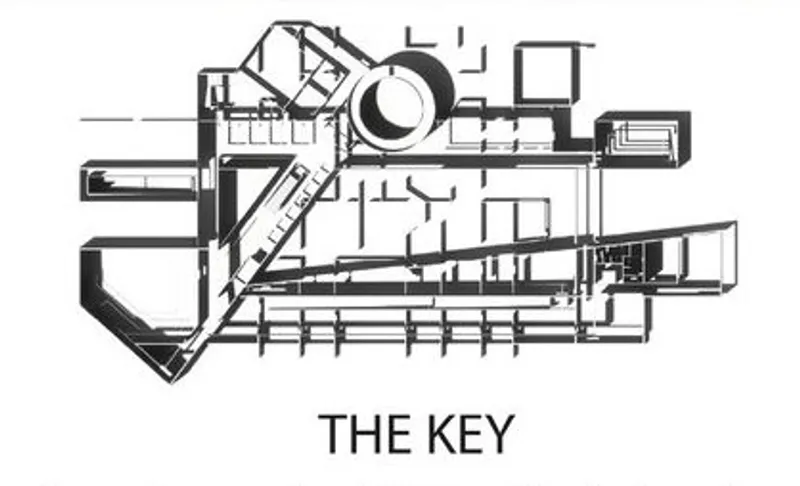
Vertical Appreciation: The library's vertical elements encourage a dialogue with oneself, fostering deep contemplation and enlightenment.
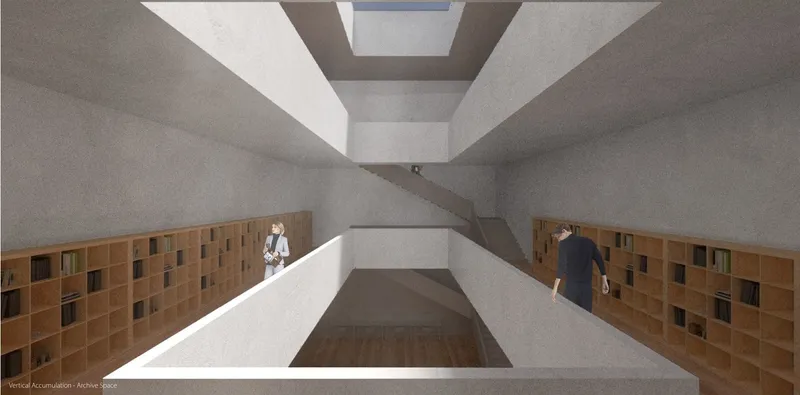
Vertical Accumulation: These elements also facilitate the exchange and accumulation of diverse information, enhancing the user's educational journey.
Vertical Balance: By integrating different programs vertically, the design ensures a cyclical balance within the library’s architecture, mirroring the continuous cycle of knowledge acquisition.
Horizontal elements, conversely, are crafted to enhance the social interactions and communal learning experiences, crucial for comprehensive intellectual development.
Integration with the Cityscape
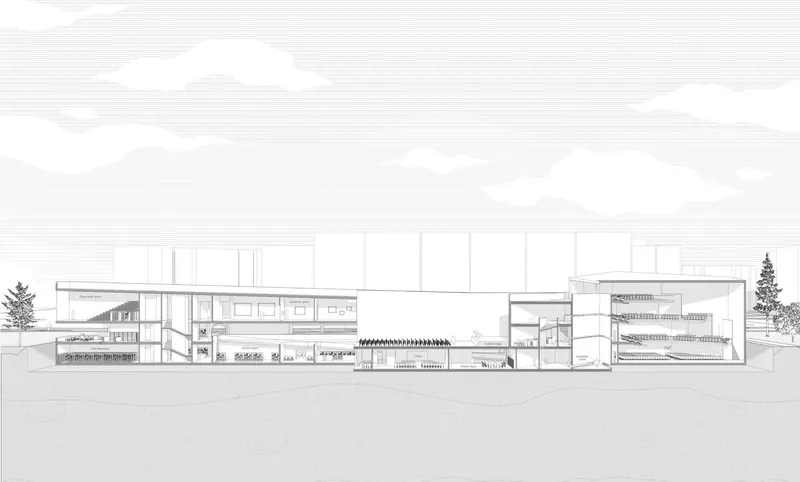
"The Key" is not an isolated monument but a vibrant part of the Lublin community. It connects with the city through its open, accessible design and its role in facilitating public discourse and cultural exchange. The library’s architecture promotes a seamless flow between the internal space and the city outside, blurring the lines between private study and public engagement.
The Library’s Role in Community Enlightenment
Kim’s design reimagines the library as a living, breathing entity that not only houses books but also acts as a catalyst for community development. Through its innovative design, it perpetuates a cycle of learning, discovery, and enlightenment, contributing to the cultural and intellectual fabric of Lublin.
Minseok Kim’s "The Key" is more than an architectural achievement; it is a forward-thinking approach to library design that addresses the needs of contemporary society. It challenges the notion of libraries as mere storage spaces for books and repositions them as active, engaging hubs of knowledge and community interaction. In doing so, "The Key" not only serves its users but also enriches the broader architectural landscape, making a compelling case for the future of innovative library design.




Popular Articles
Popular articles from the community


The Ocean Hive: Sustainable Architecture for a Self-Sufficient Civilization at Sea
The Ocean Hive imagines sustainable architecture at sea, where modular habitats, algae, wave power and ocean waste sustain a growing colony.

Co-life: Sustainable Architecture for Age-Friendly Community Living
Co-life reimagines sustainable architecture for seniors through courtyards, rammed earth, shared gardens, and spaces designed for belonging.

Riyadh For All: Intergenerational Urban Design for Active Aging in Rabat
Riyadh For All reimagines urban design in Rabat with intergenerational co-living, adaptive courtyards, and Moroccan cultural exchange today.

Lunar Spiral: Space Architecture Shaped by the Mathematics of the Universe
Lunar Spiral reimagines space architecture through Fibonacci geometry, lunar regolith, levitating habitats, and self-sustaining Moon living.


Similar Reads
You might also enjoy these articles

Day and Night Park: A Time-Based Urban Newsstand in Beijing
A temporary urban newsstand in Beijing blending travel, light, and reading through poetic colors, compact form, and community-focused design.

Modernist Patio Renovation in El Masnou, Barcelona by Oliver Segura Arquitectura + Cebrià Arquitectura
Modernist patio renovation blending tradition and innovation with a movable pool, leveled floors, and Catalan materials in El Masnou.

Alto Residencial Coop: Cooperative Housing Development in Santiago de Compostela by Carbajo Barrios Arquitectos
A linear cooperative housing complex blending white volumes and perforated metal façades, enhancing community living, natural light, privacy, and urban integration.
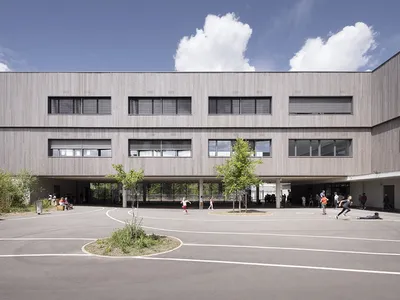
Vil Genis School by BPA ARCHITECTURE – Massy, France
Vil Genis School in Massy, France, features sustainable design, south-facing classrooms, community integration, accessible spaces, and modern educational architecture.

Explore Library Architecture Competitions
Discover active competitions in this discipline



Challenge to design public laboratory


Challenge to reimagine the Iron Throne


Photograph architecture without architects


Illustrate the lost glory of Angkor Wat - Render Challenge
Comments (0)
Please login or sign up to add comments
No comments yet. Be the first to comment!