
The Kiosque House by arba: A Wooden Pavilion Blending Architecture and Nature in Caen, France
A wooden pavilion in Caen blending sustainability and symmetry, featuring hemp brick walls, zinc roof, and garden-integrated cross-shaped living spaces.


A Modern Gazebo Rooted in Tradition
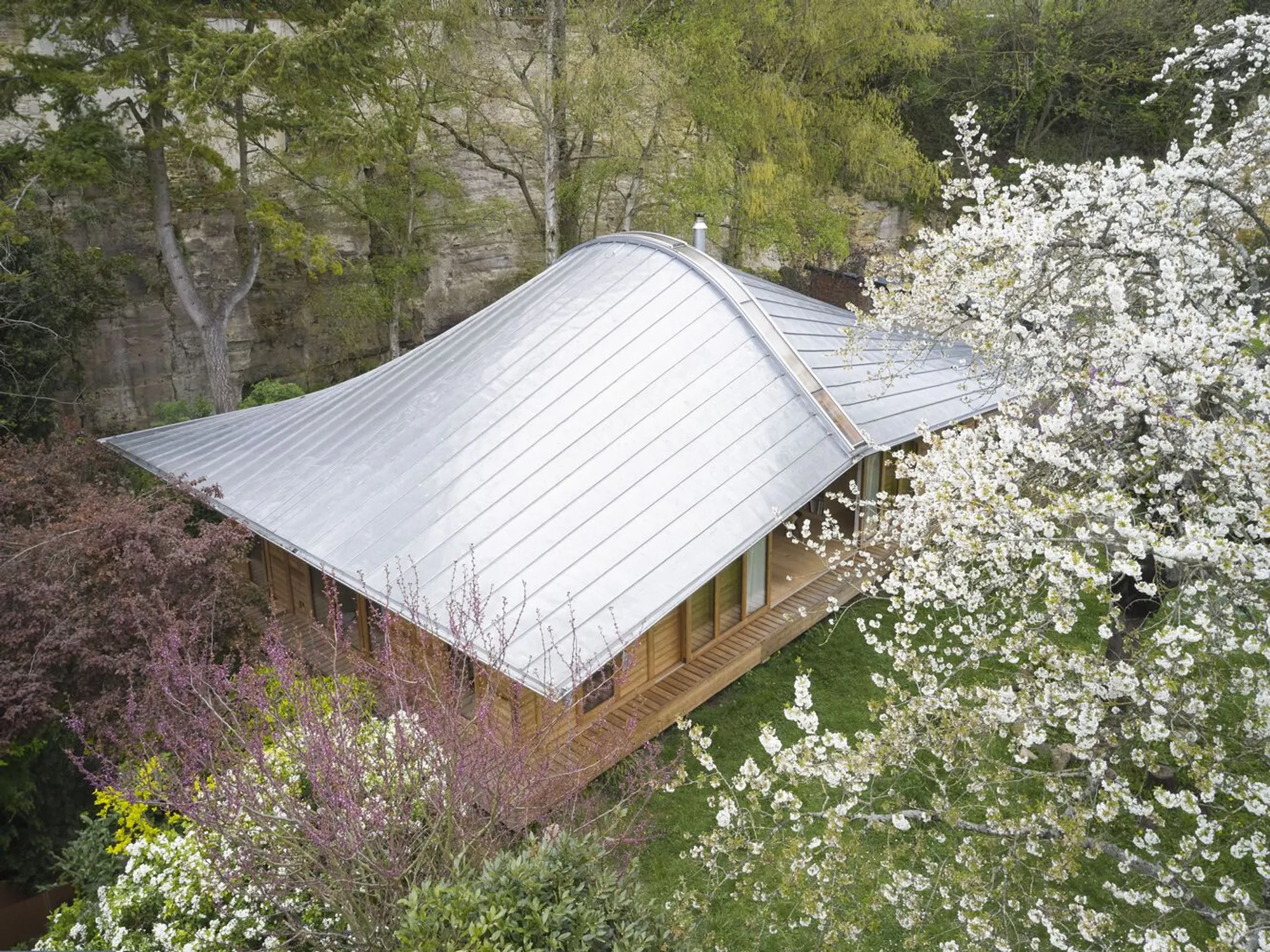
The Kiosque House by arba reimagines domestic architecture as an elegant wooden pavilion set within the greenery of a private garden in Caen, France. Designed to resemble a gazebo, the residence sits lightly on the landscape—an architectural expression of openness and intimacy, simultaneously blending into and sheltering from its surroundings.
Positioned at the bottom of the garden, the house respects the local urban planning regulations of Caen, yet introduces gentle curves and refined overhangs that lend it a sculptural, contemporary form. The project explores how minimal interventions and natural materials can foster a dialogue between architecture and landscape, redefining the concept of a “garden home.”
Elevated Structure and Natural Materials
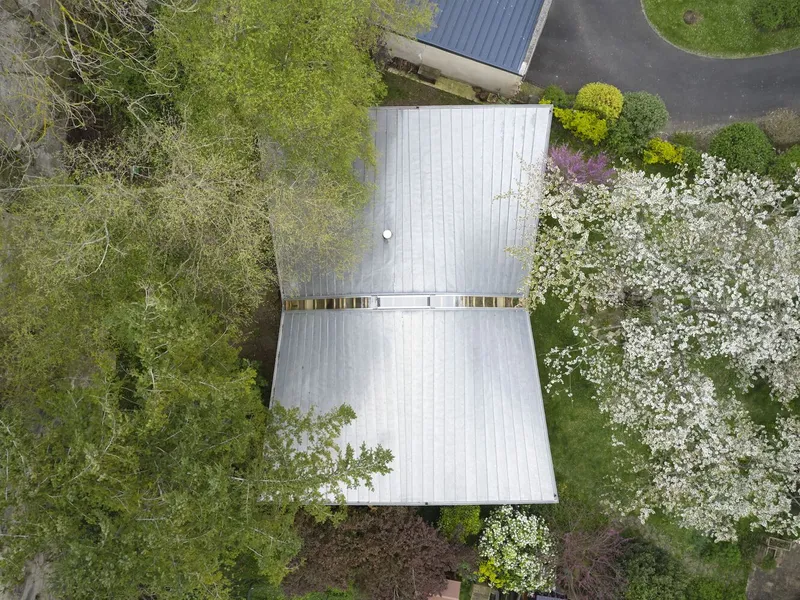
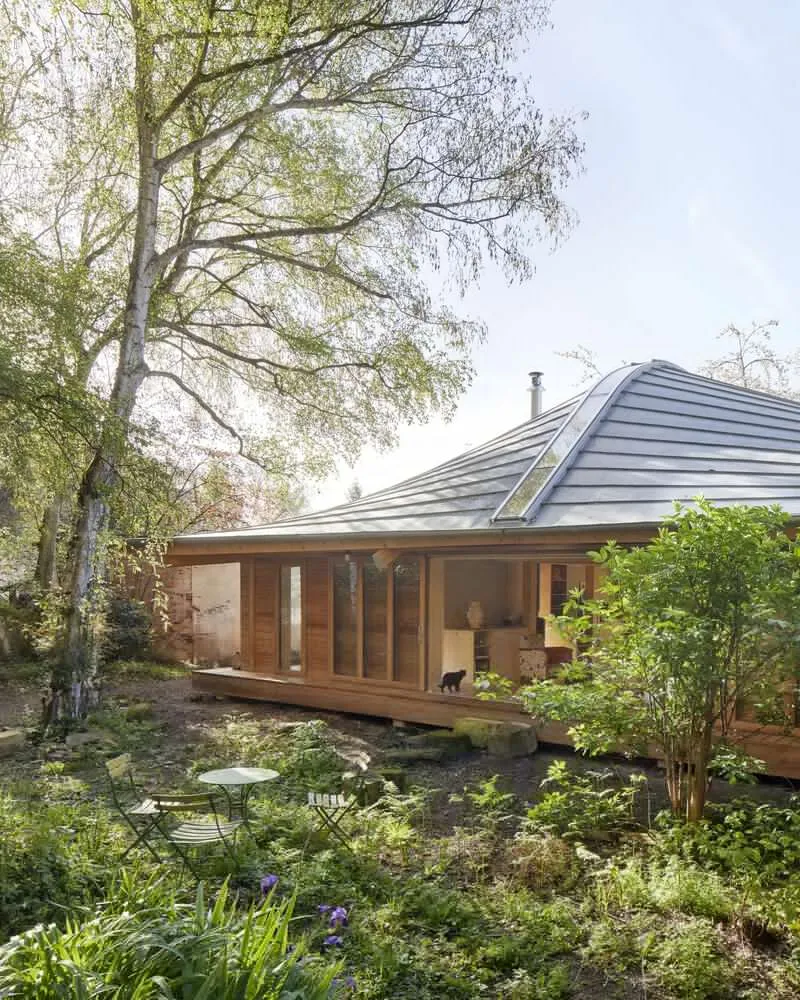
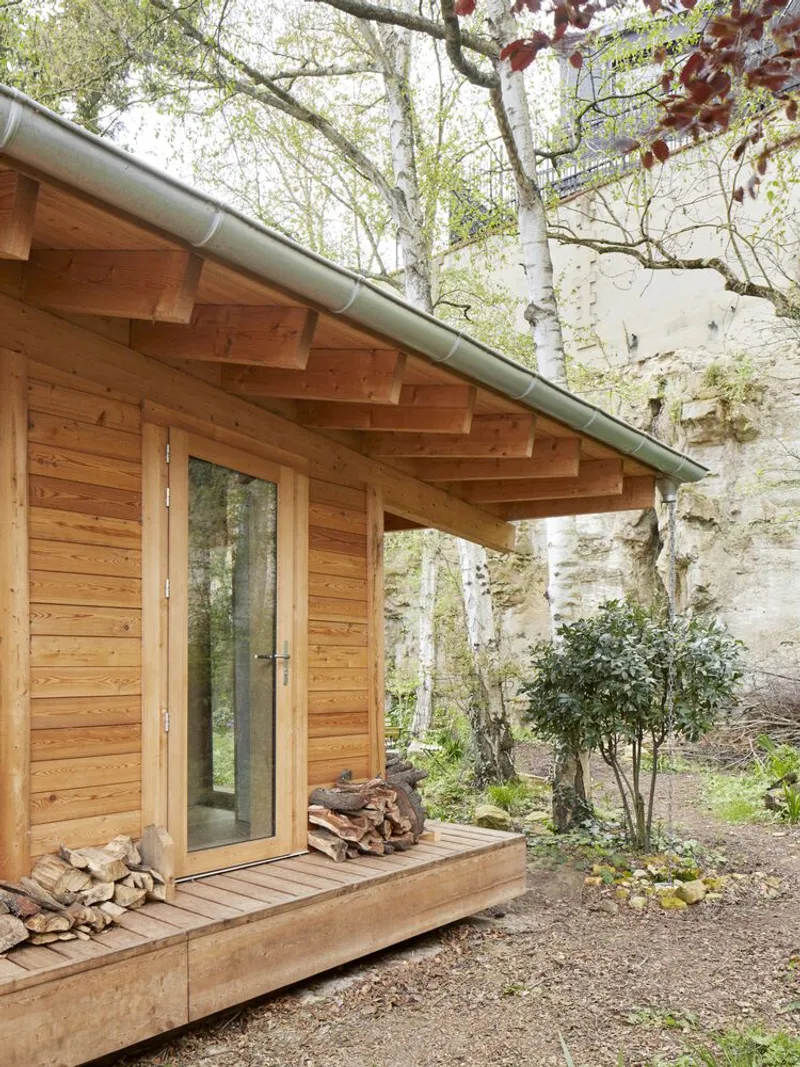
The structure of The Kiosque House is both simple and precise. A wooden base rests on four concrete joists supported by pile foundations, ensuring insulation from ground moisture and long-term durability. Above it, a natural zinc roof with generous standing seams and wide overhangs provides protection while enhancing the building’s lightweight appearance.
This elevated foundation and expressive roofline echo the architectural logic of pavilions—floating structures designed to harmonize with the rhythms of nature. The combination of wood, zinc, and concrete creates a tactile palette that balances warmth and resilience, aligning with arba’s commitment to sustainable and low-impact design.
A Cross-Shaped Plan Encouraging Fluid Living
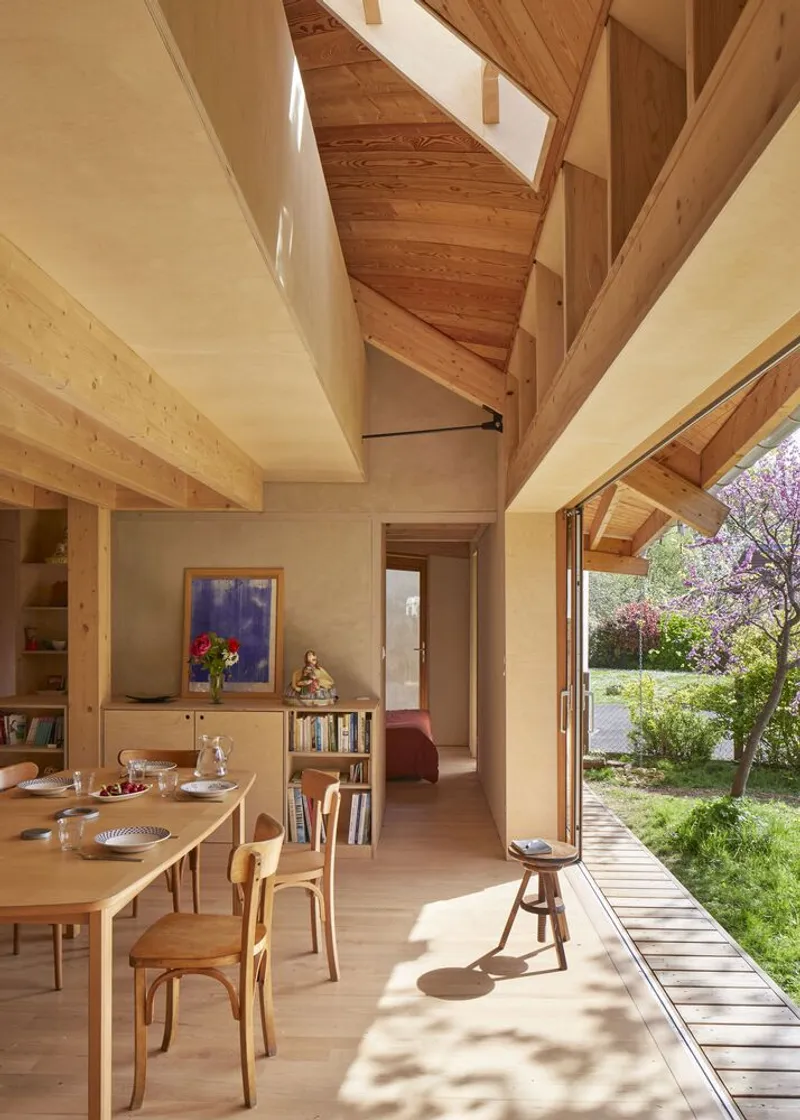
Inside, arba introduces a spatially rich yet efficient floor plan. Four private rooms—three bedrooms and a bathroom—occupy the corners of the cross-shaped plan, enclosing the central living space. These enclosed areas provide privacy while serving as structural anchors for the house’s timber frame.
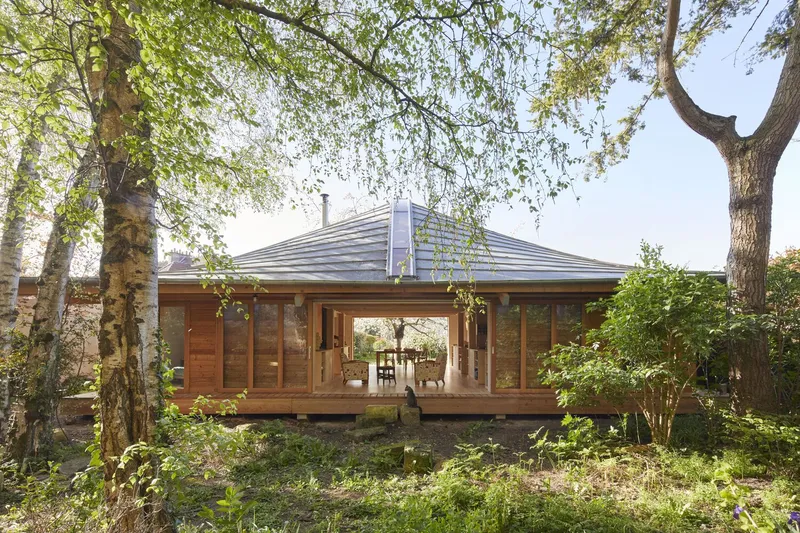
At the heart of the structure, a central open area acts as a continuation of the garden—an interior “clearing” where light, air, and movement flow freely. The architects describe it as a “sheltered garden,” blurring boundaries between interior and exterior, private retreat and social gathering.
Craftsmanship and Simplicity in Construction
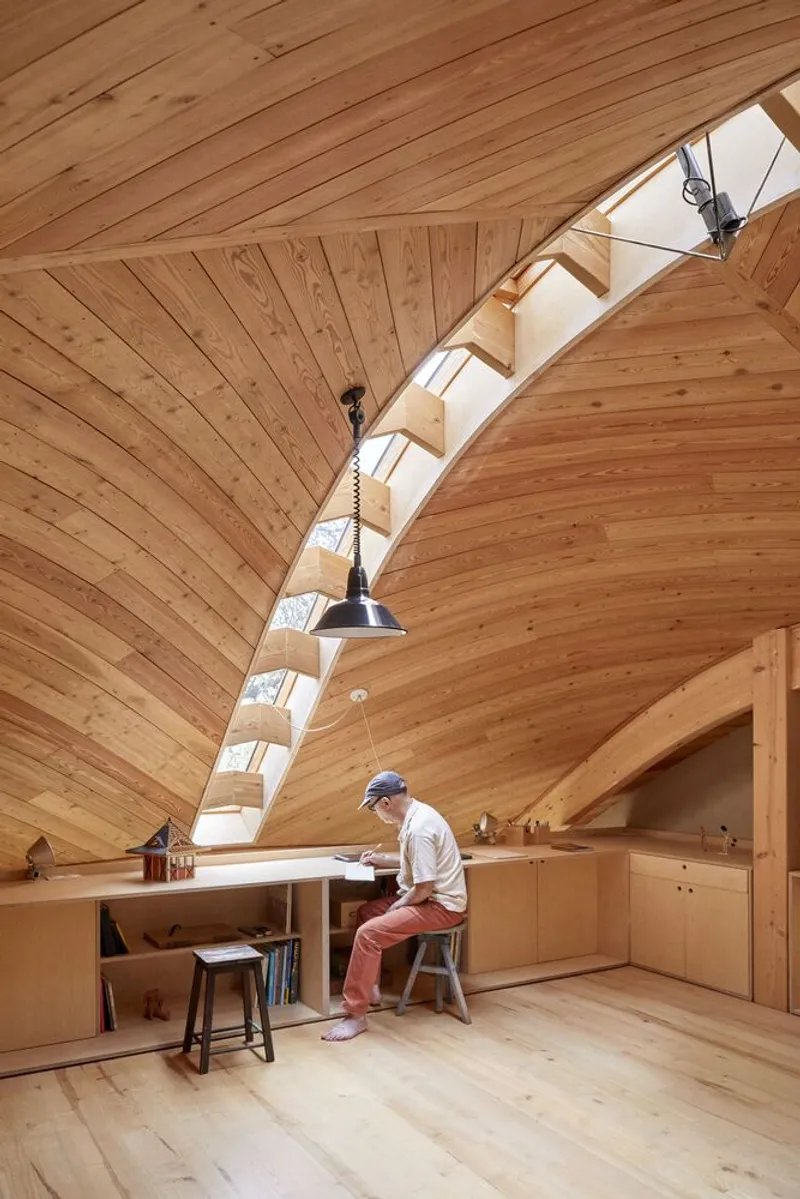
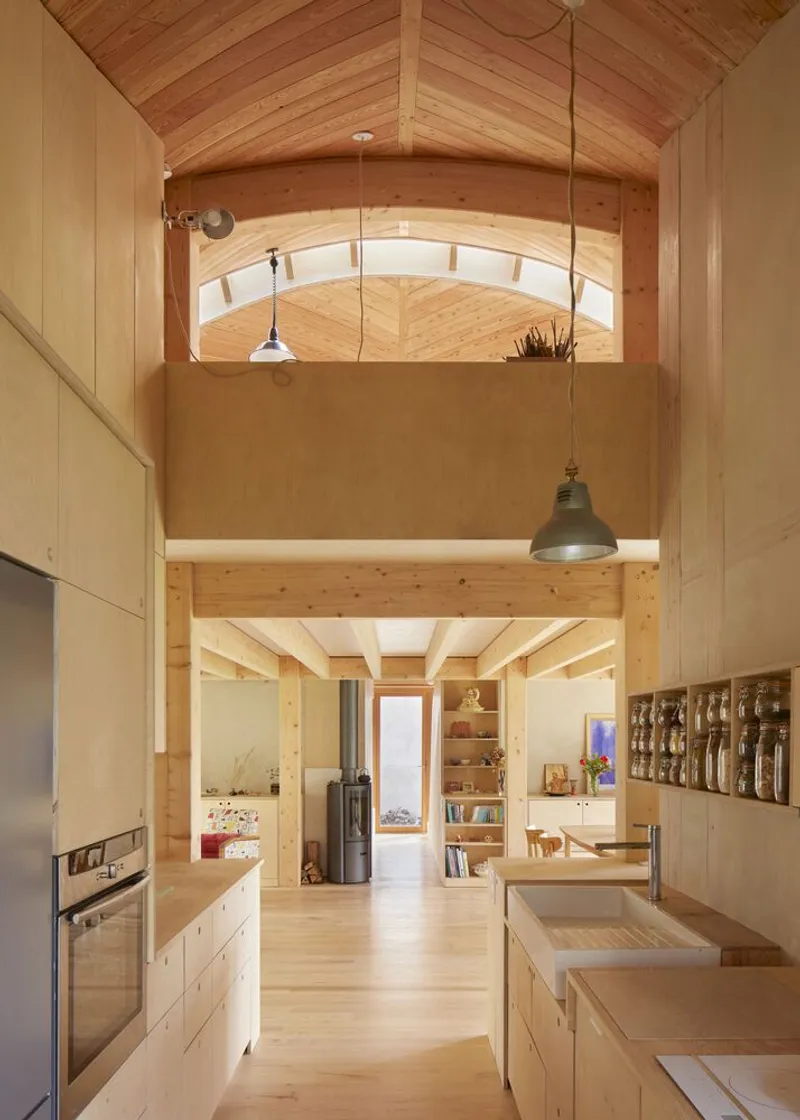
To simplify the installation of the zinc cladding, the architects designed the roof as a developable surface—a geometric form derived from the simple deformation of a plane. Each strip of zinc is twisted to follow the roof’s rise, culminating in an upper-level workshop tucked beneath its curved volume.
The interior walls are constructed from hemp bricks coated with earth, a sustainable and breathable material choice that enhances thermal comfort while maintaining a raw, tactile quality. The result is a house that feels handcrafted yet modern, minimalist yet grounded in natural tradition.
Symmetry, Light, and Architectural Disappearance
The plan of The Kiosque House is symmetrical along two perpendicular axes, producing a sense of order and calm. This clarity of form allows the architecture to “disappear” into its context—an intentional quietness that invites the surrounding garden to take center stage.
All photographs are works of Jérémie Léon



Popular Articles
Popular articles from the community


Co-Life: Senior Housing Design That Reconnects Older Adults With the City
Co-Life reimagines senior housing design through healing gardens, shared streets, workshops, and a sustainable community across generations.

The Earth Pod: 3D Printed Homes for Resilient Refugee Communities
The Earth Pod reimagines refugee housing through 3D printed homes made from clay, combining resilience, self-sufficiency, and rapid shelter.

Conexión: Biophilic Design Reimagines High-Rise Living in Hong Kong
Conexión reimagines high-rise living in Hong Kong through biophilic design, green facades, shared spaces, daylight, water and nature within.

Play: Fragments of Their World
Familiar architecture becomes modular playground design, creating safe spaces where displaced children can learn, connect, imagine and play.


Similar Reads
You might also enjoy these articles


Hodi-Mandai Geram
Project Function: Preservation and revitalization of the Intangible heritage and socio-spatial identity of the Hodi by Housing, Cultural Memory Center, Sacred Grove, landscape, local tourism economy


Olio Towers: A Mid-Rise for Performers That Fuses Housing, Rehearsal, and Stage
Located blocks from Houston's Theater District, this modular tower stacks living units around a central performance atrium.

Oasis: Modular Green Housing Carved into Dhaka's Urban Fabric
A shortlisted Plugin Housing entry reclaims unauthorized settlements in Dhaka with stepped concrete volumes, green roofs, and ventilation-driven design.

Black Hole: A Floating Megastructure for the Post-Physical Era
Emiliano Mazzarotto envisions a spherical, self-scaling arena where e-sports, digital hotels, and holographic stadiums replace traditional public space.


Explore Architecture Competitions
Discover active competitions in this discipline



Challenge to reimagine the Iron Throne


Photograph architecture without architects


Illustrate the lost glory of Angkor Wat - Render Challenge


Design challenge to reuse E-waste
Comments (0)
Please login or sign up to add comments
No comments yet. Be the first to comment!