
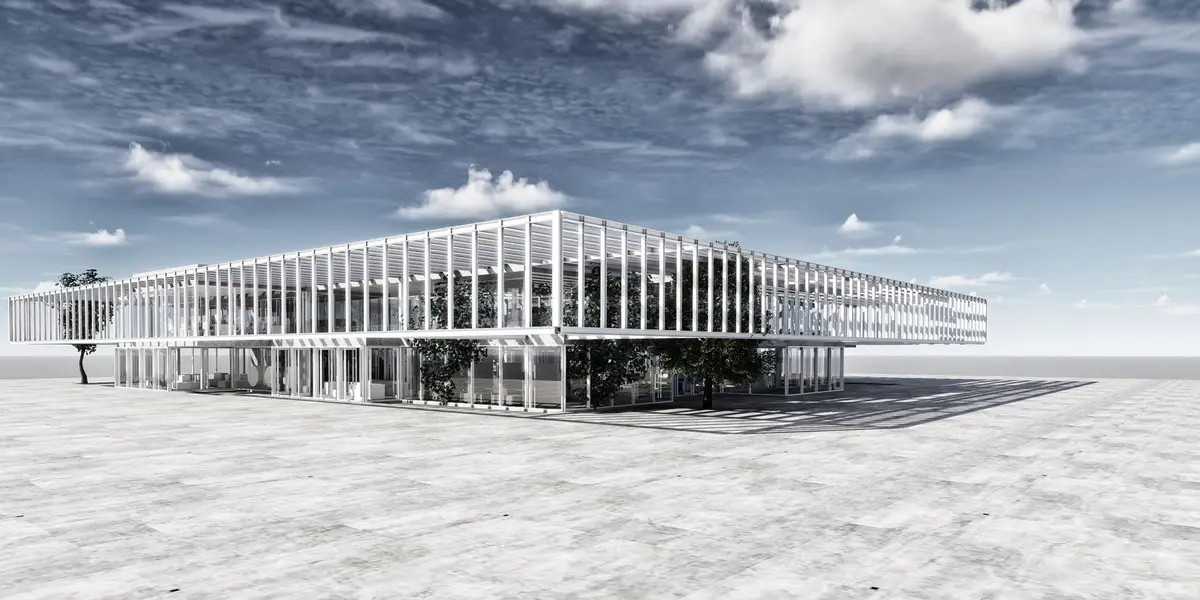
The Learning Cubes: A Modular Educational Haven for Holistic Growth
How modular design, sustainability, and child-centered spaces create the ultimate learning environment.


The "Learning Cubes" project People's Choice Award entry of EduShift, is a cutting-edge architectural design that reimagines the educational environment. This modular, child-centered building integrates sustainability with flexible learning spaces, aligning with the principles of the Reggio Emilia educational approach. By focusing on interaction, creativity, and a deep connection to nature, the Learning Cubes set a new standard for the future of educational architecture.
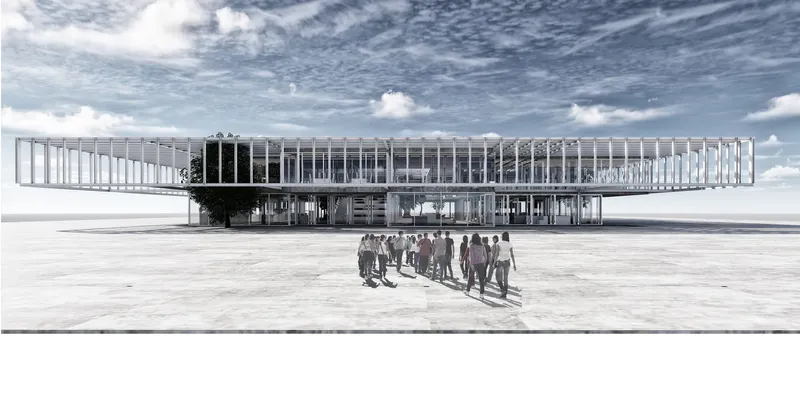
Modularity and Flexibility
The Learning Cubes embrace a modular design that enables the entire structure to adapt over time. The building is composed of reconfigurable steel frame modules and prefabricated cross-laminated timber floor decks, making it easy to modify or expand according to changing needs.
Inside, the spaces are designed to be as flexible as possible. Movable furniture and open floor plans allow educators to reconfigure classrooms and workshops as needed, ensuring that the spaces can accommodate various teaching methods and group sizes. This versatility is key to creating a learning environment that fosters both creativity and adaptability.
Learning Spaces and Social Interaction
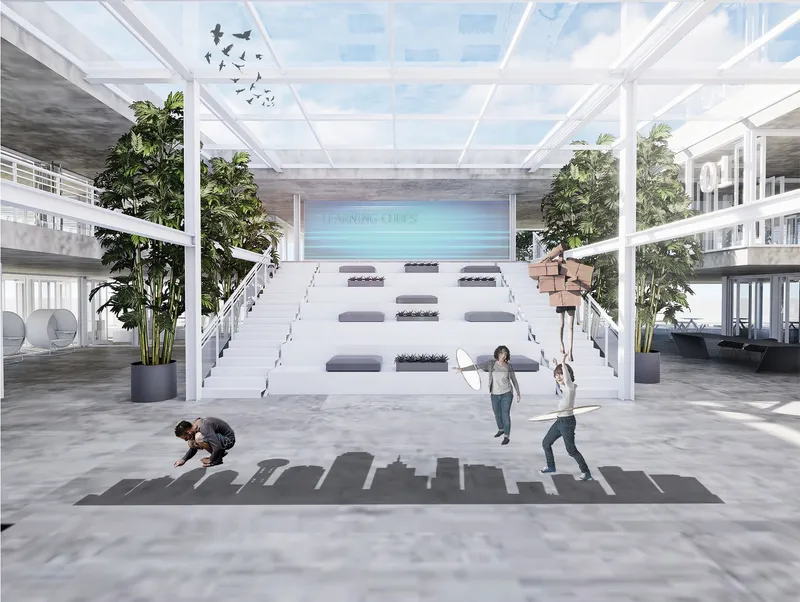
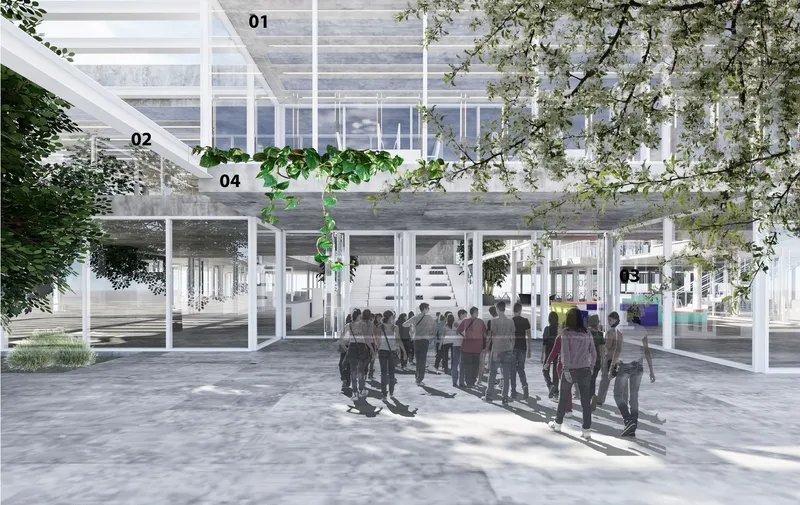
At the heart of the Learning Cubes is the central piazza, a wide open space that serves as the primary gathering spot for children of all ages. This area promotes social interaction and collective learning, allowing students to engage with peers in unstructured, spontaneous ways. It’s a space for meeting, playing, and sharing ideas across age groups, creating a dynamic, inclusive community.
In addition to the piazza, the workshops are designed to maximize each child’s learning potential. These spaces are specifically arranged to provoke curiosity and support hands-on, experiential learning. Here, children work on projects that help develop skills while encouraging self-directed discovery. The goal is to cultivate abilities in various disciplines, from art to science, using creative and interactive methods.
Integration with Nature
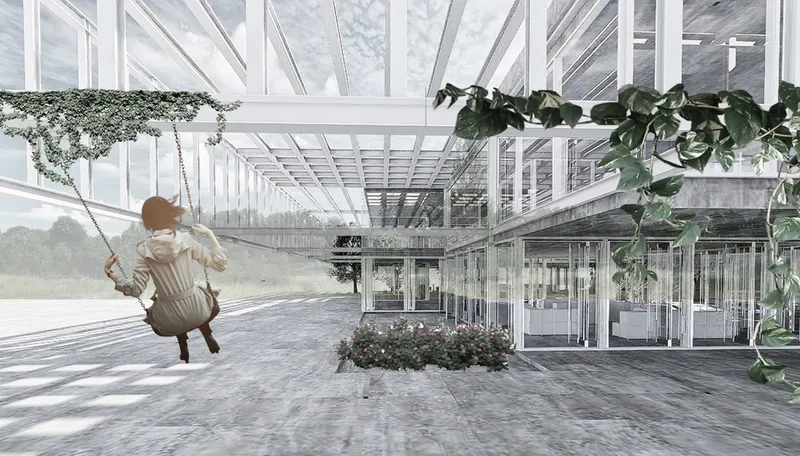
One of the most striking features of the Learning Cubes is its emphasis on the integration of nature into the educational environment. The building's vertical vegetation panels not only improve air quality but also create a calming, green aesthetic that fosters a peaceful atmosphere.
Beyond the building itself, the school garden plays an important role in encouraging outdoor learning. Equipped with picnic tables, climbing units, and open spaces for various activities, the garden allows children to observe nature and engage with it directly. This connection with the environment is essential for fostering a respect for nature and promoting sustainability from a young age.
Natural Lighting and Transparency
The use of natural light throughout the Learning Cubes is designed to enhance both the aesthetic and emotional experience within the space. Large glass panels on the façade and interior walls let daylight flood the building, creating a vibrant atmosphere that shifts with the weather and time of day.
As clouds move across the sky or tree branches sway in the wind, the interior lighting changes, creating a dynamic play of light and shadow that can inspire the children’s imagination. This close connection to the outside world, made possible by the extensive use of transparent materials, keeps the indoor environment lively and engaging.

Sustainability and Energy Efficiency
Incorporating sustainability into its core, the Learning Cubes feature solar panels on the roof that generate renewable energy for the building. This not only reduces the school’s environmental impact but also serves as a learning opportunity for students to engage with concepts of renewable energy and environmental responsibility.
The use of cross-laminated timber (CLT) in the floor decks adds another layer of sustainability. CLT is a low-carbon building material, making it an eco-friendly alternative to traditional concrete or steel, while also contributing to the building’s aesthetic appeal.
Educational Philosophy and Spatial Design
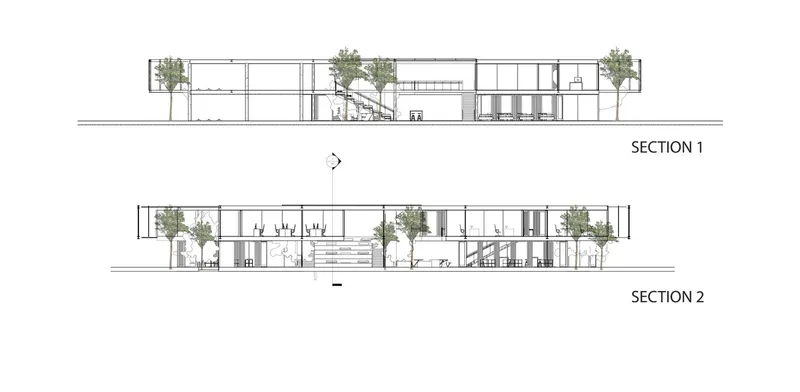
The design of the Learning Cubes takes inspiration from the Reggio Emilia philosophy, a child-centered approach that views the environment as the "third teacher." In line with this philosophy, the building is horizontally oriented to maintain a connection with the outdoor spaces.
The layout promotes interaction between different learning areas, with workshops, playrooms, and communal areas linked in such a way that encourages movement and collaboration. Spaces like the communal kitchen further enhance this sense of community, while providing children with a comforting, home-like environment.
Community Engagement and Personalization
A key feature of the Learning Cubes is the role of community involvement. Parents and families are encouraged to take an active part in the educational process, whether through communal activities in the kitchen or by observing and participating in their children's projects, which are displayed throughout the building.
Additionally, the design supports individual learning through dedicated spaces where children can work on personal projects at their own pace. These individualized study areas allow for both autonomy and self-expression, fostering a sense of ownership over their learning process.


Popular Articles
Popular articles from the community


ETEH Reworks the Shared Spaces of São Domingos School in Brazil Around Timber, Color and Hanging Plants
At São Domingos School in Brazil, 436 m² of hall, refectory and library are recast with timber joinery, a yellow and blue code and trailing greenery.


The Amber Palace Opera: A Geological Fiction Surfaces on Tallinn's Baltic Waterfront
Pierre Brillard reimagines a Baltic legend as a public landscape, opera house, and waterfront promenade rooted in Tallinn's coastal identity.

Aquadapt: An Underwater Habitat That Rewrites Its Rooms by the Hour
Curved modules ring the seabed while one shell shifts from breakfast room to cinema, farm and football pitch as residents' needs change.

Cube Design Draws an Ecological Corridor Between Two Shenzhen Hills with the Nankai Building
Beside Shenzhen's container docks, the Nankai Building pairs stacked balconies with a climbing green screen to connect two hillsides across its height.

Similar Reads
You might also enjoy these articles

Vereda Arquitetos Renovates a 40-Square-Meter Apartment Inside Niemeyer's Copan Building
A compact unit in São Paulo's most iconic residential tower gets a material overhaul that pairs exposed concrete with bold blue Formica.

Shakur's House: Exposed Brick as an Interior Organiser in a 168 m² Mashhad Residence
Brick moves indoors in this Mashhad residence, where masonry walls, glass partitions and teal planes sequence a compact home without closing it off.

Day and Night Park: A Time-Based Urban Newsstand in Beijing
A temporary urban newsstand in Beijing blending travel, light, and reading through poetic colors, compact form, and community-focused design.

Modernist Patio Renovation in El Masnou, Barcelona by Oliver Segura Arquitectura + Cebrià Arquitectura
Modernist patio renovation blending tradition and innovation with a movable pool, leveled floors, and Catalan materials in El Masnou.

Explore Learning Spaces Competitions
Discover active competitions in this discipline

Challenge to reimagine the Iron Throne

Photograph architecture without architects

Illustrate the lost glory of Angkor Wat - Render Challenge

Design challenge to reuse E-waste
Comments (0)
Please login or sign up to add comments
No comments yet. Be the first to comment!