
The Memory of Garden Residential Building — Ashari Architects’ Tribute to Shiraz’s Green Heritage
Contemporary Shiraz residence by Ashari Architects integrates brick façade, preserved trees, and green walls, reviving Qasr al-Dasht’s historic garden heritage.


Architects: Ashari Architects
In the heart of Qasr al-Dasht Street—one of Shiraz’s most celebrated green corridors—stands The Memory of Garden Residential Building by Ashari Architects, a contemporary architectural response to the neighborhood’s fading natural heritage. This tree-lined district, historically known for its lush gardens and tranquil environment, has recently faced intense construction pressure, threatening its ecological and cultural identity.
Ashari Architects’ design emerges as both a modern residential solution and a spatial narrative that safeguards the area’s remaining greenery. The project’s name, “The Memory of Garden,” encapsulates its mission: to preserve the spirit of Shiraz’s gardens within a dense urban context.
Context and Challenges
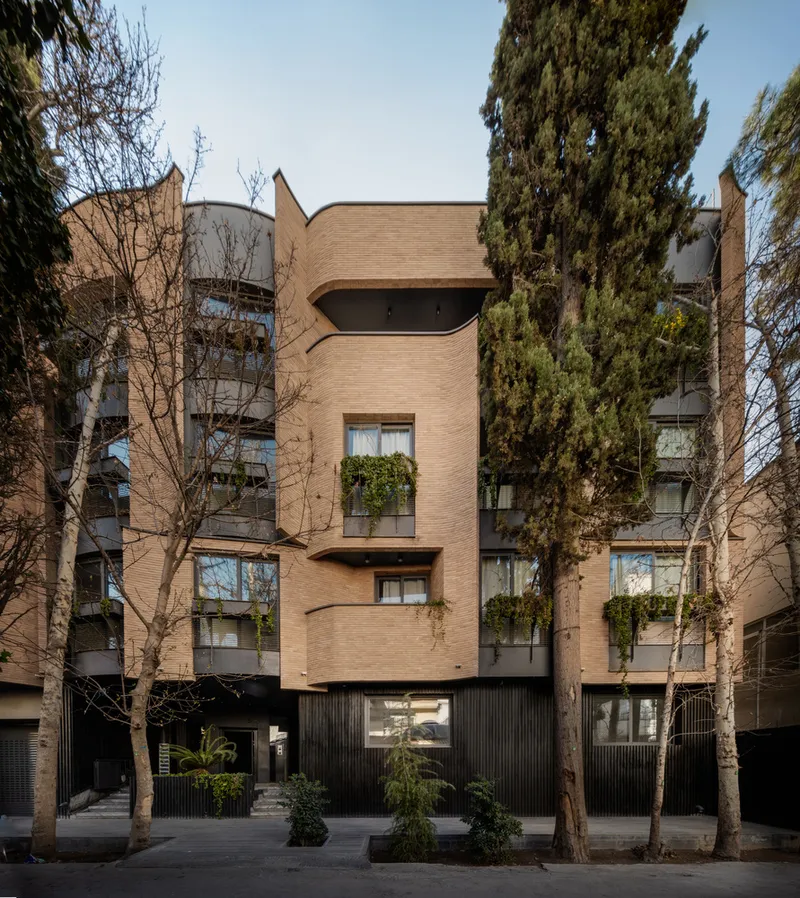
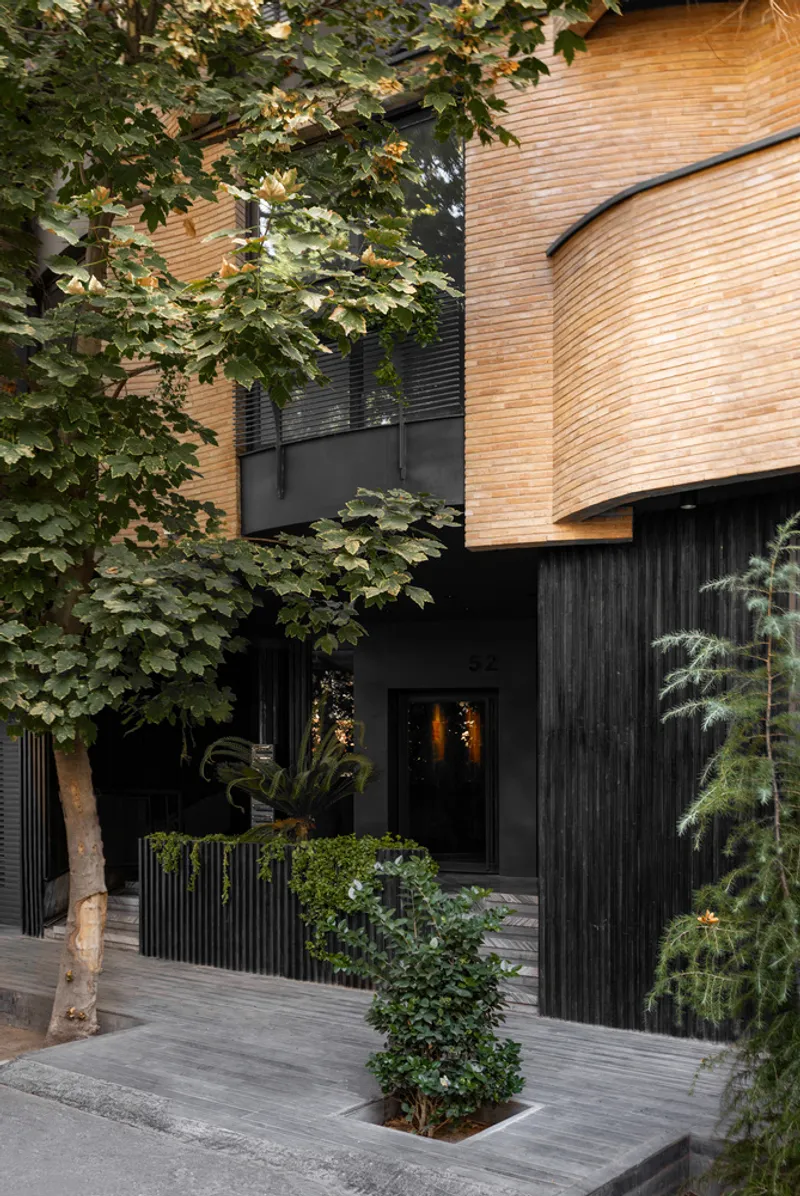
The site is accessible only through a 6-meter-wide alley on the northwest side, limiting visibility from the main street. Compounding this constraint, several mature trees occupied the boundary between the alley and the site. Instead of removing these trees—an all-too-common consequence of urban development—the architects treated them as integral design elements.
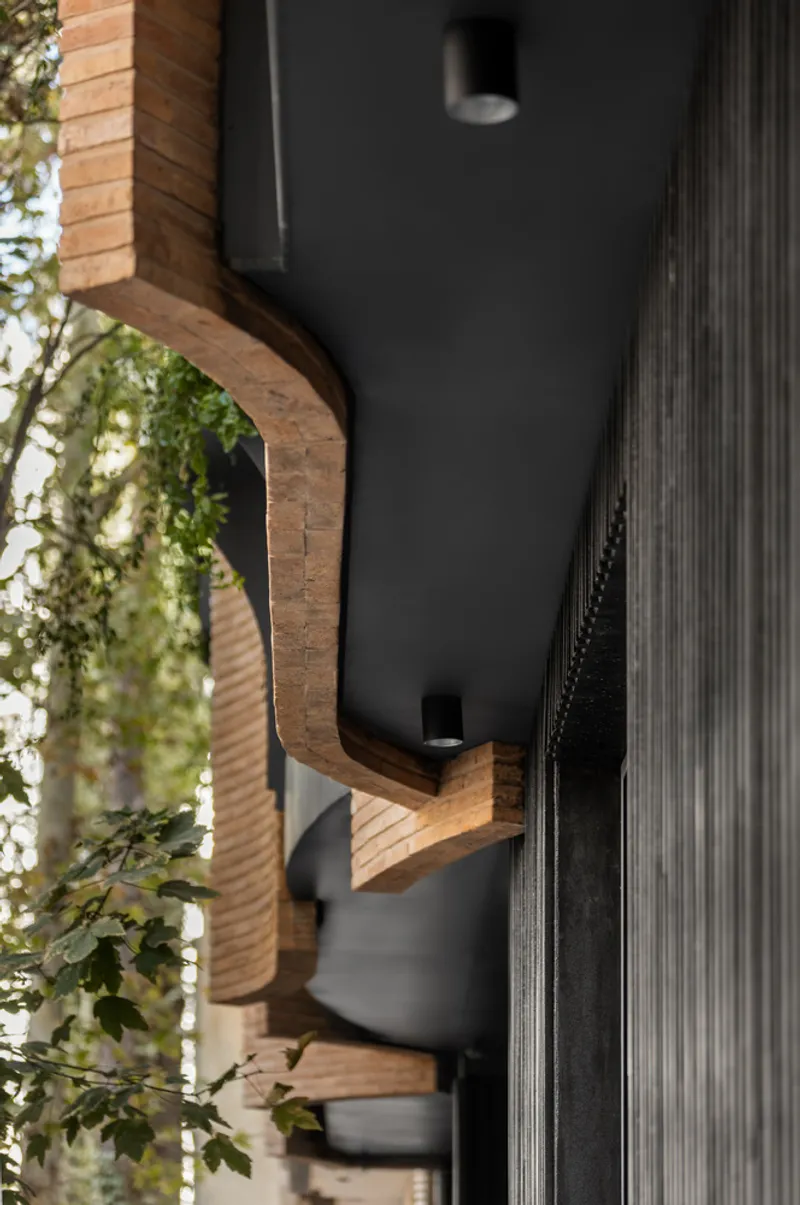
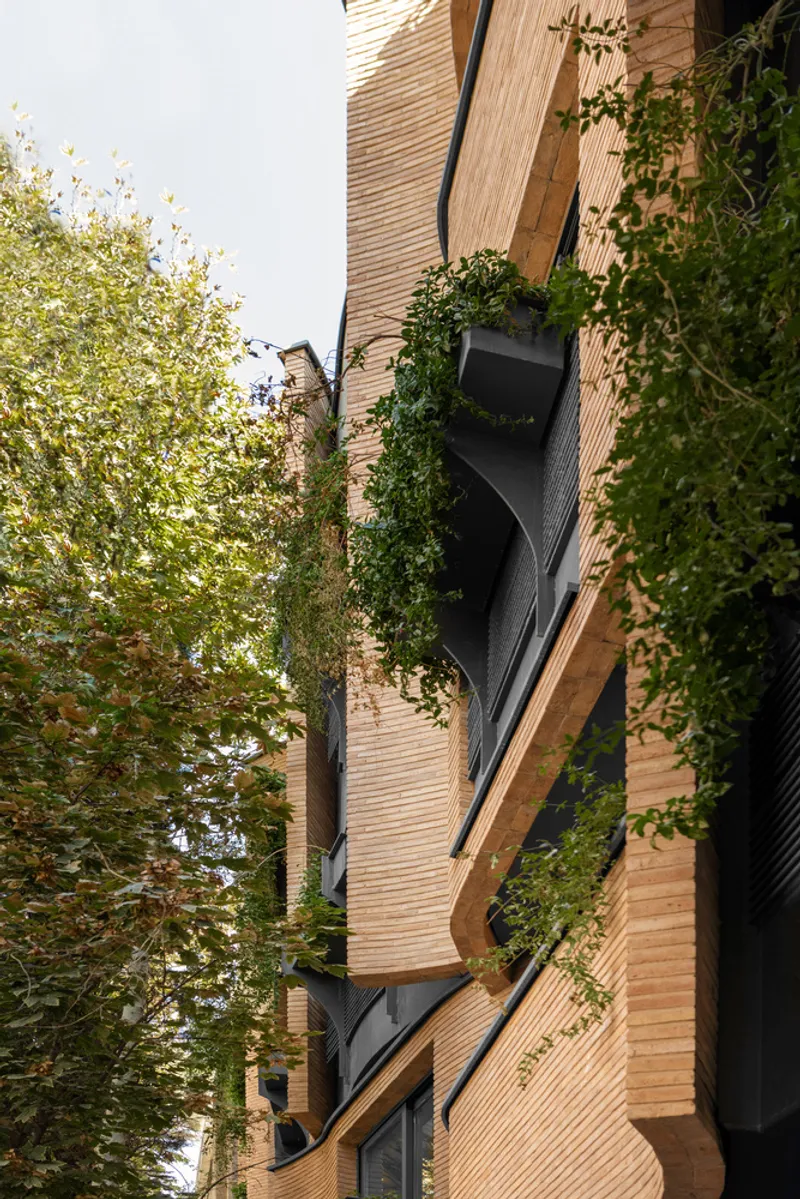
This decision shaped the entire building form and façade composition. The northwest-facing elevation bends, cuts, and shifts to accommodate the trees, creating a dynamic brick façade that appears to wrap around nature rather than impose upon it.
Facade as a Living Interface
The brick façade panels are not static; they advance and retreat, producing depth, shadow, and a sense of movement. These deliberate shifts also create visual corridors, allowing passersby to glimpse the interior gardens from afar, strengthening the connection between the building and its neighborhood.
The design rejects a uniform two-dimensional surface in favor of organic sculpting, where each façade cut responds to tree placement. This results in a built environment that feels alive, adapting to and coexisting with its natural surroundings.
Nature Weaving Through Architecture
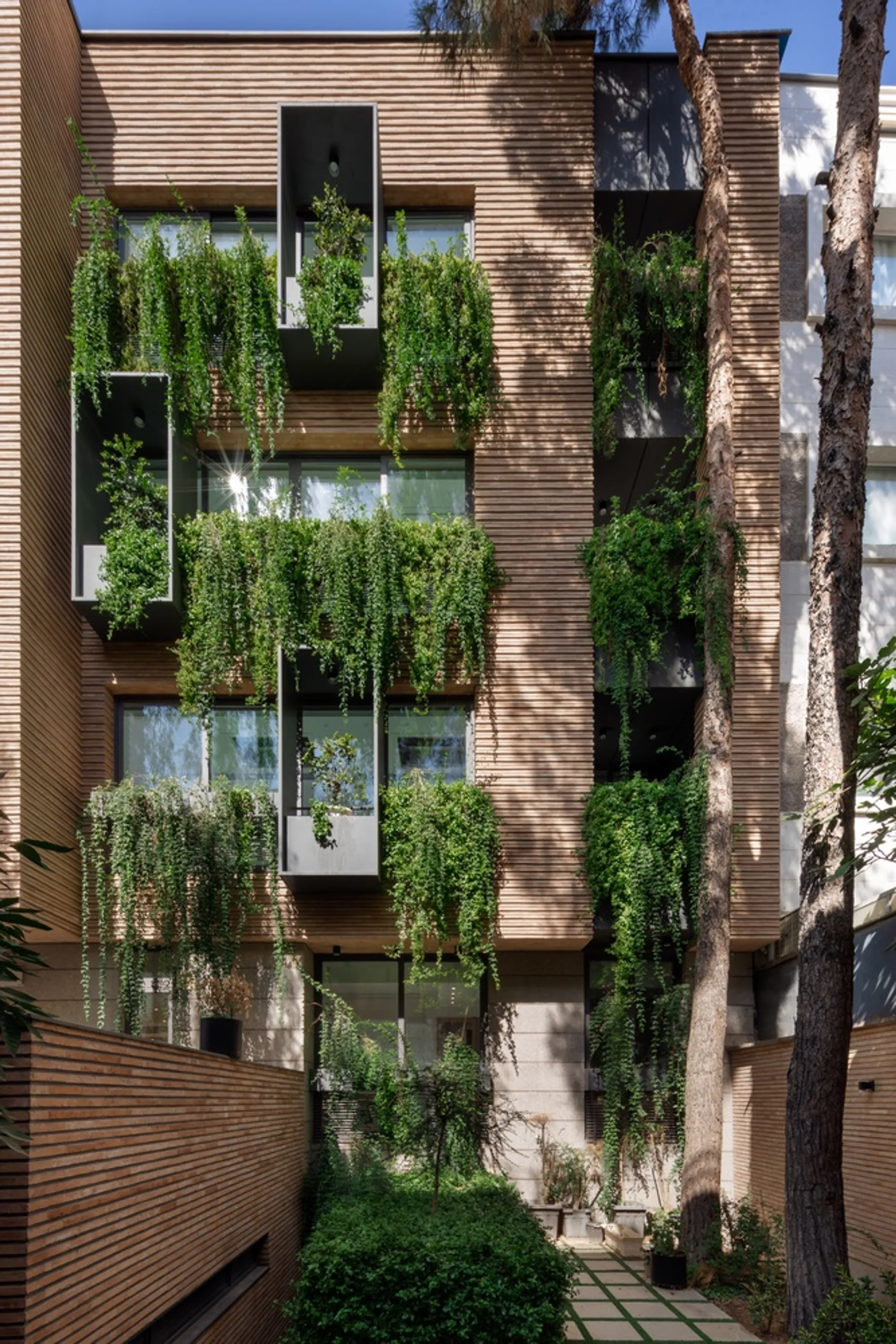
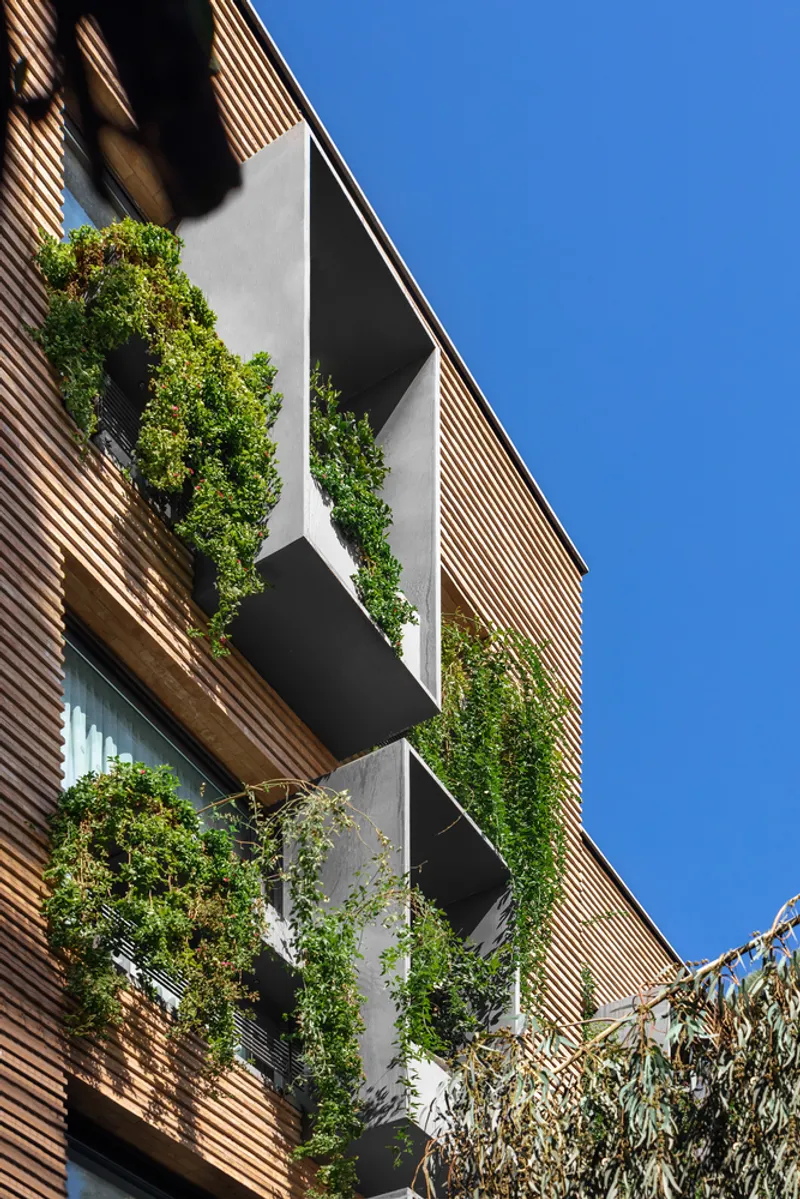
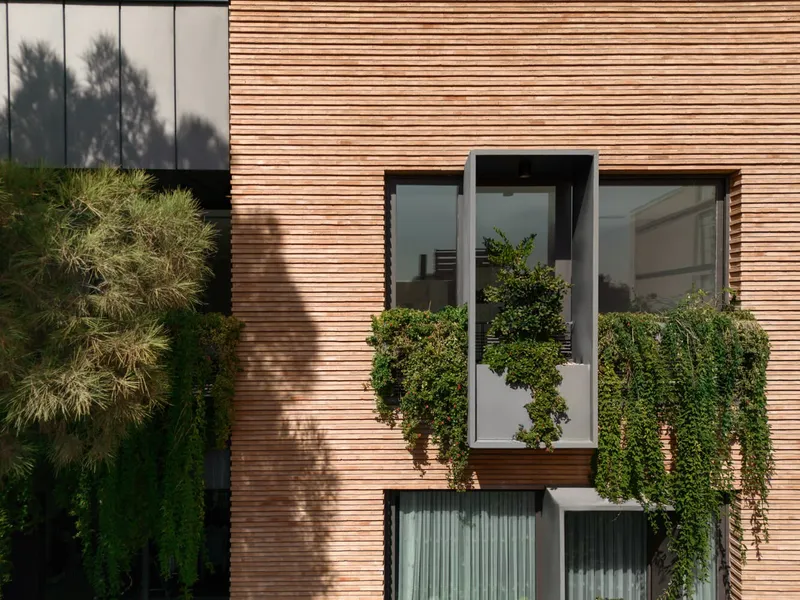
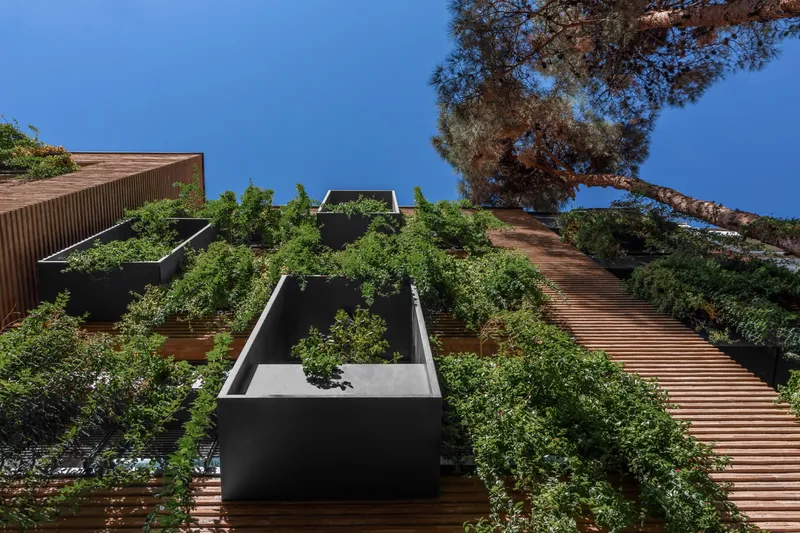
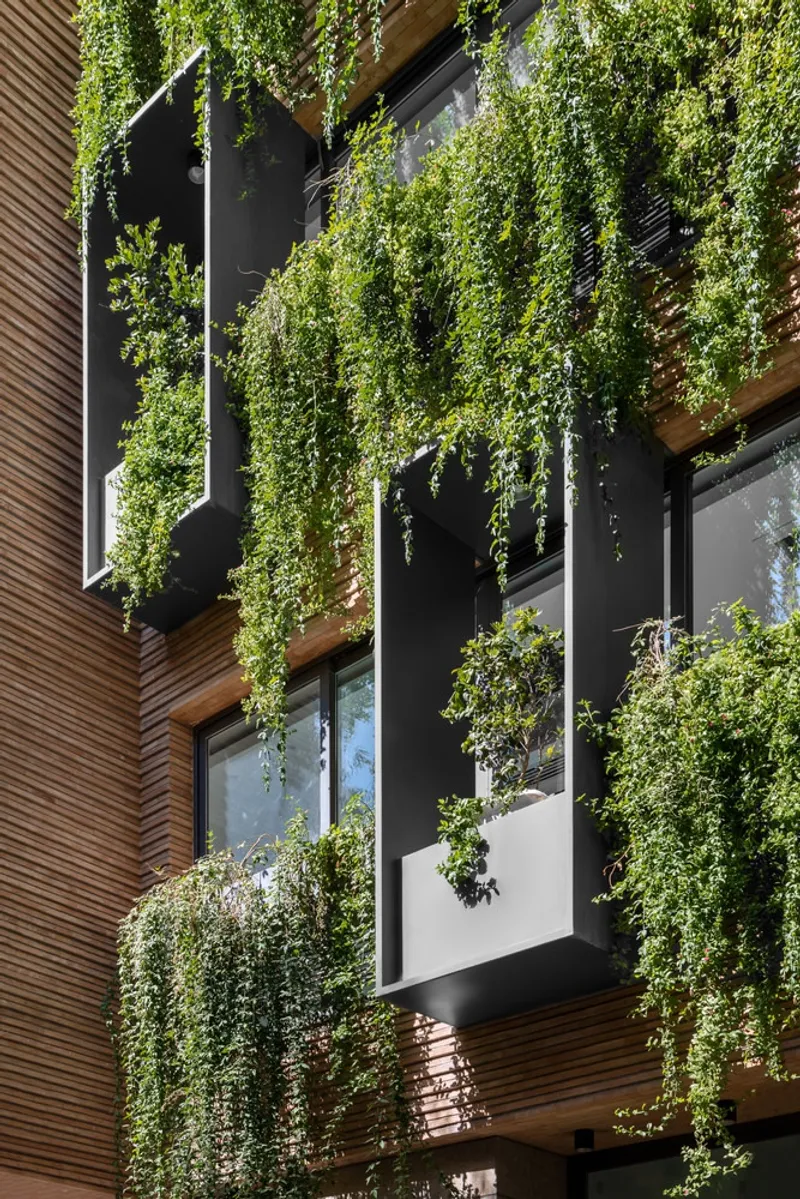
The architects extended their green design approach beyond the northwest façade. On the southeast courtyard-facing elevation, flower boxes introduce cascading greenery that frames the residents’ views. This living façade interacts with a concrete wall transformed into a vertical green wall, using mesh structures and planting systems to create a three-dimensional garden experience.
Vegetation flows from the façade down into the courtyard floor and continues upward along the opposite wall, creating a continuous green envelope. This movement of plants is a subtle but powerful reminder of the lost gardens of Qasr al-Dasht.
Interior Continuity and Organic Flow
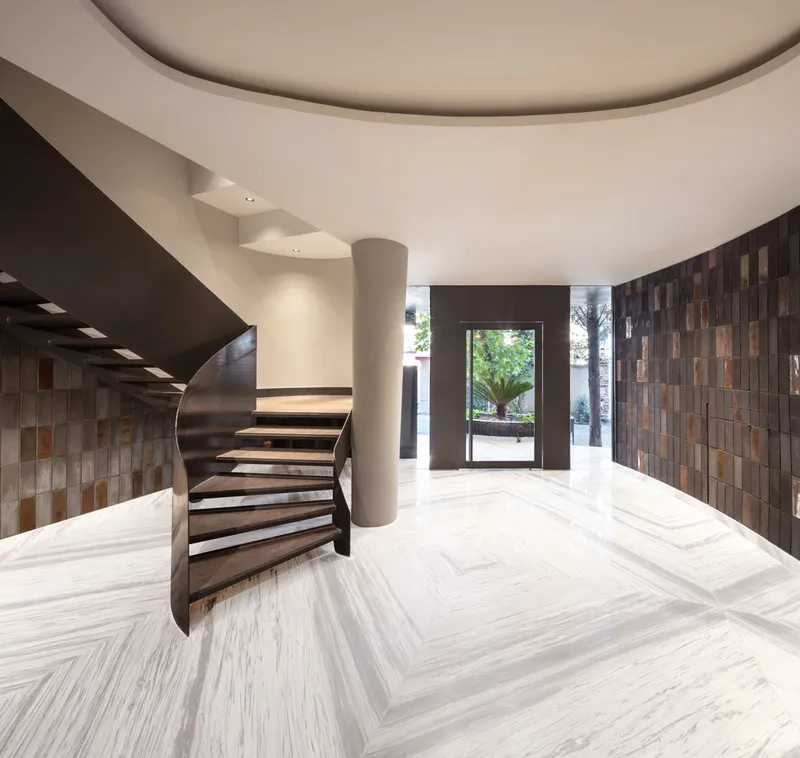
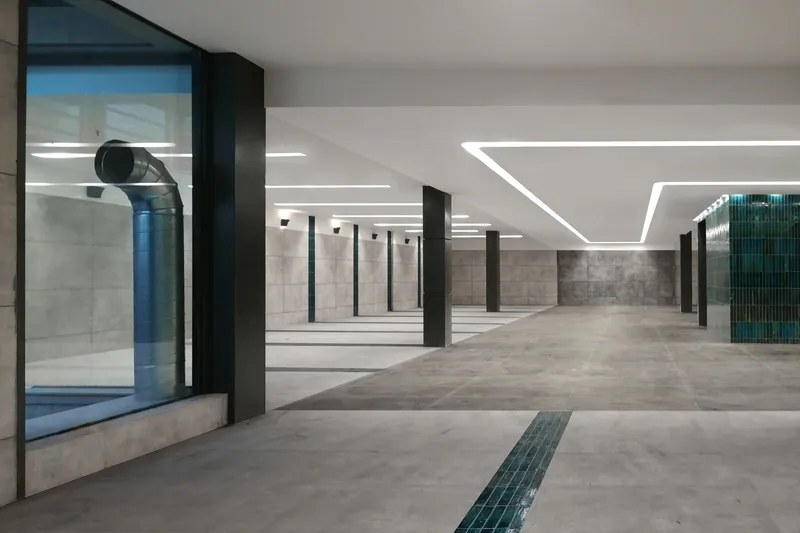
Inside, the architectural language mirrors the exterior. The organic façade lines guide visitors into the entrance lobby and public spaces, blurring boundaries between outside and inside. Openings are strategically placed to maximize natural light and capture framed views of the greenery beyond, enhancing residents’ connection to the environment.
The combination of brick, concrete, and vegetation fosters a balance between material permanence and natural transience, embodying a dialogue between past and present.
A Statement on Urban Development
Beyond aesthetics, the project is a call for socially and environmentally conscious urban design. Ashari Architects demonstrate that high-density residential architecture in Iran can embrace heritage and sustainability without sacrificing modern comfort. By respecting existing ecosystems and integrating them into architectural form, they hope to inspire other developments to prioritize ecological and cultural continuity.
All photographs are works of Navid Atrvash



Popular Articles
Popular articles from the community


Co-life: Sustainable Architecture for Age-Friendly Community Living
Co-life reimagines sustainable architecture for seniors through courtyards, rammed earth, shared gardens, and spaces designed for belonging.

The Earth Pod: 3D Printed Homes for Resilient Refugee Communities
The Earth Pod reimagines refugee housing through 3D printed homes made from clay, combining resilience, self-sufficiency, and rapid shelter.

Co-Life: Senior Housing Design That Reconnects Older Adults With the City
Co-Life reimagines senior housing design through healing gardens, shared streets, workshops, and a sustainable community across generations.

Lunar Spiral: Space Architecture Shaped by the Mathematics of the Universe
Lunar Spiral reimagines space architecture through Fibonacci geometry, lunar regolith, levitating habitats, and self-sustaining Moon living.

Similar Reads
You might also enjoy these articles


Hodi-Mandai Geram
Project Function: Preservation and revitalization of the Intangible heritage and socio-spatial identity of the Hodi by Housing, Cultural Memory Center, Sacred Grove, landscape, local tourism economy


Olio Towers: A Mid-Rise for Performers That Fuses Housing, Rehearsal, and Stage
Located blocks from Houston's Theater District, this modular tower stacks living units around a central performance atrium.

Oasis: Modular Green Housing Carved into Dhaka's Urban Fabric
A shortlisted Plugin Housing entry reclaims unauthorized settlements in Dhaka with stepped concrete volumes, green roofs, and ventilation-driven design.

Black Hole: A Floating Megastructure for the Post-Physical Era
Emiliano Mazzarotto envisions a spherical, self-scaling arena where e-sports, digital hotels, and holographic stadiums replace traditional public space.


Explore Persian Architecture Competitions
Discover active competitions in this discipline


Challenge to design mud housing for contemporary communities


Challenge to reimagine the Iron Throne


Photograph architecture without architects


Illustrate the lost glory of Angkor Wat - Render Challenge
Comments (0)
Please login or sign up to add comments
No comments yet. Be the first to comment!