
The Mountain Chamber: A Threshold Between Rock, Time, and Architecture by Erdegard Arkitekter
A sculptural underground building in Gothenburg, merging rock, concrete, and metal to create a timeless architectural threshold within the mountain.


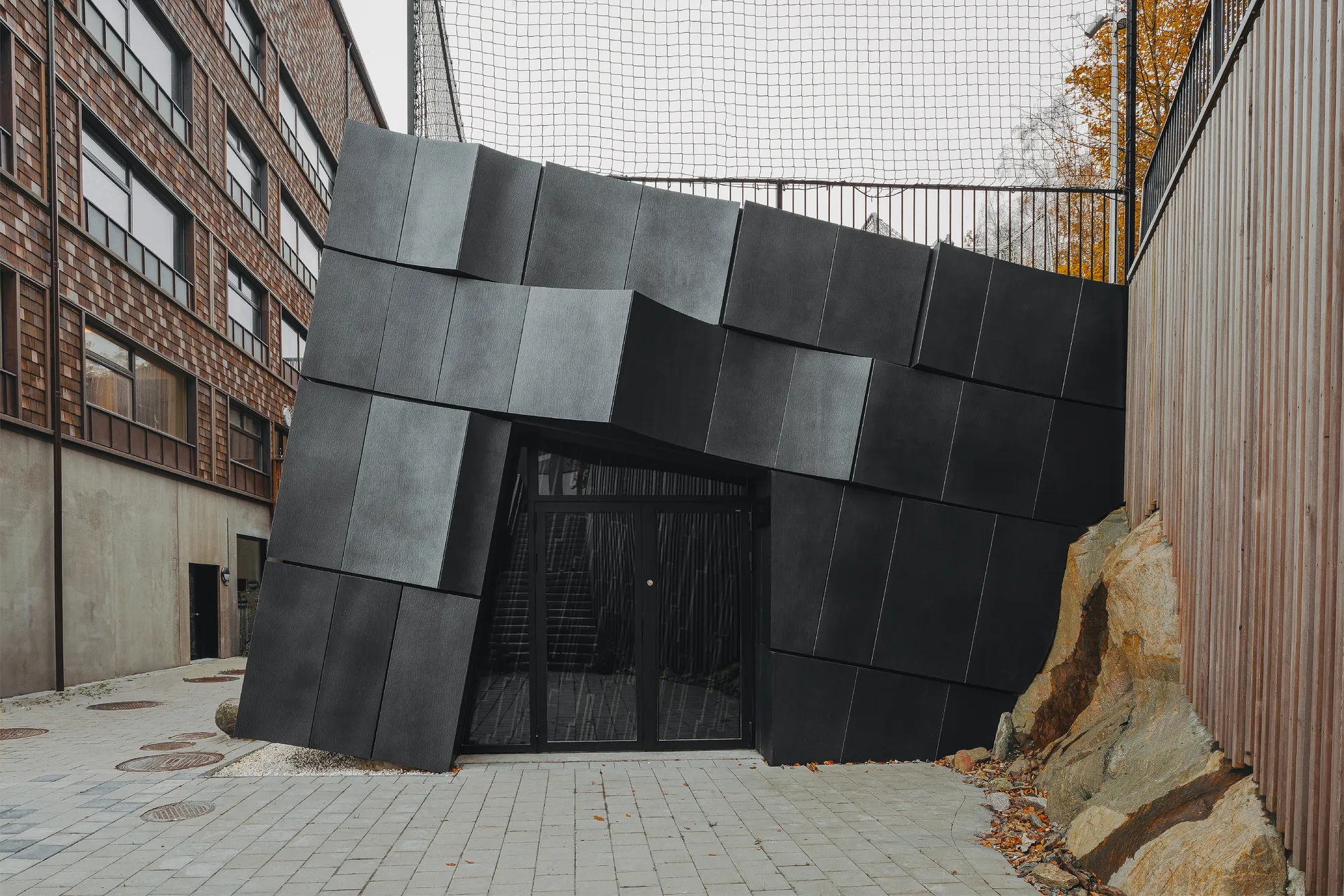
Hidden within the rocky terrain of Kallebäcks Terrasser in Gothenburg, The Mountain Chamber is not immediately understood as a building. Designed by Erdegard Arkitekter and completed in 2024, this 1,500-square-meter commercial project occupies a liminal space between architecture, landscape, and artefact. It is both an entrance and a destination—an object that signals a descent into the mountain while resisting clear categorization in terms of origin, era, or function.
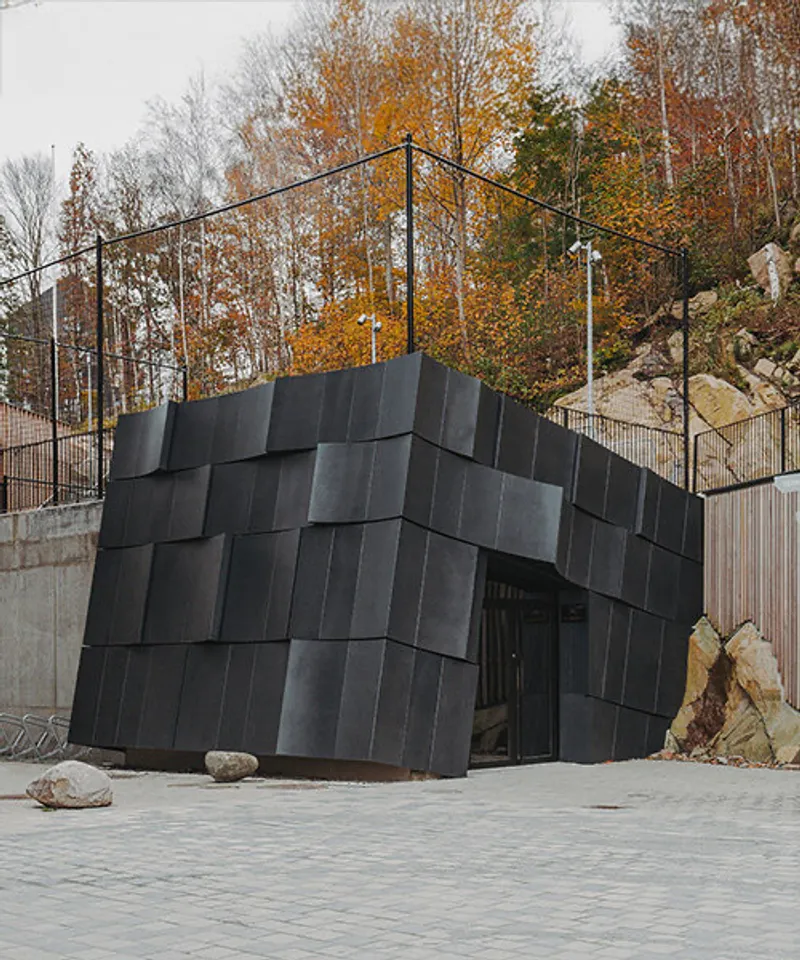
Rather than asserting itself as a conventional structure, The Mountain Chamber behaves like a discovery: something uncovered rather than constructed. Its architecture unfolds gradually, shaping a sensory and spatial experience rooted in ambiguity, material depth, and atmospheric tension.
A Monolithic Marker in the Landscape
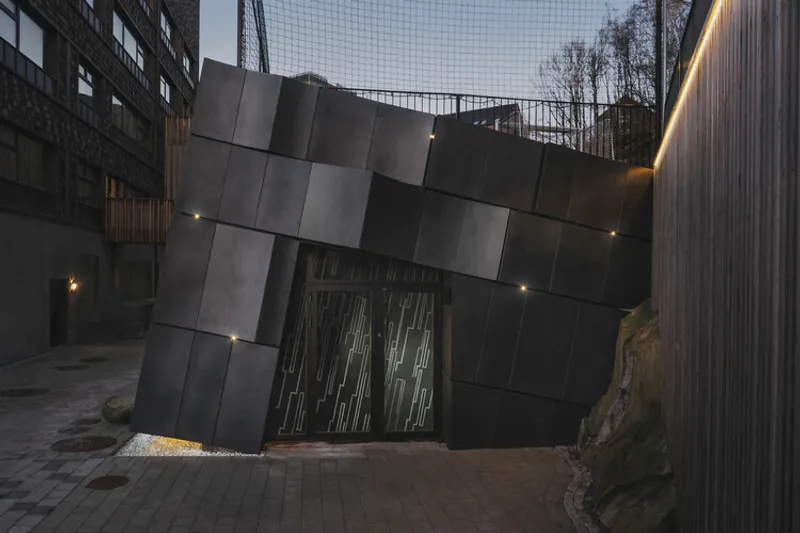
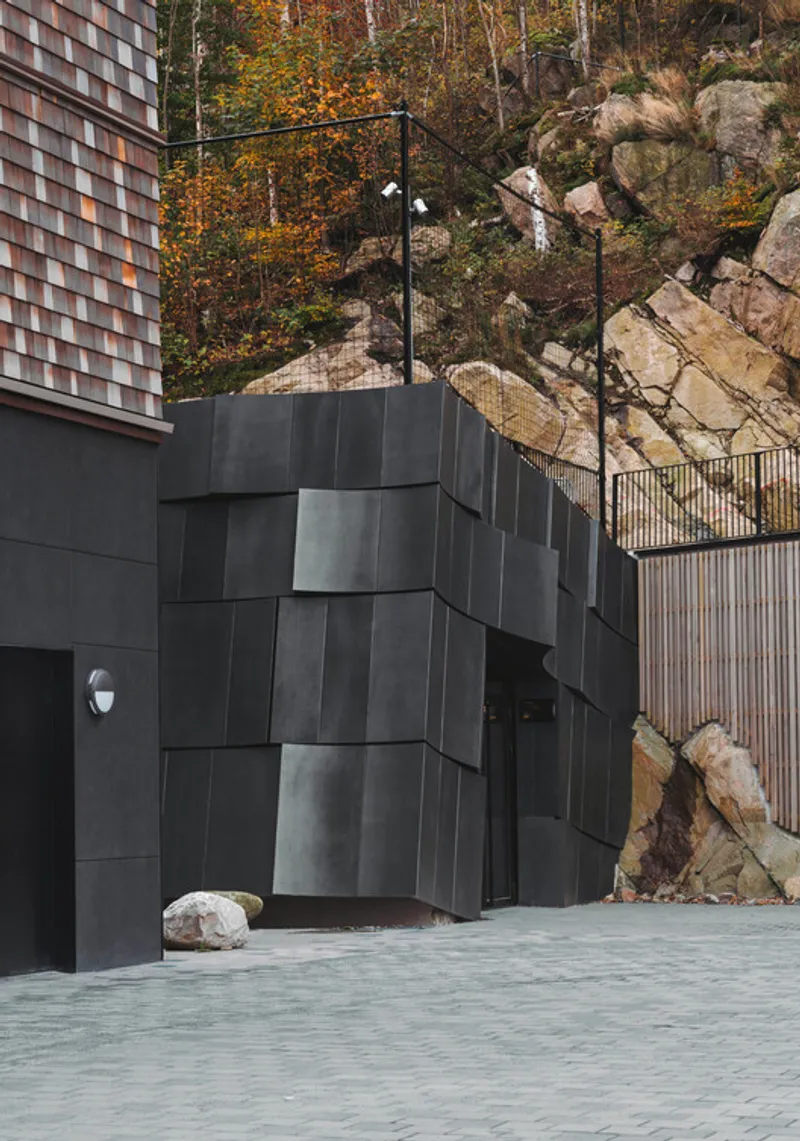
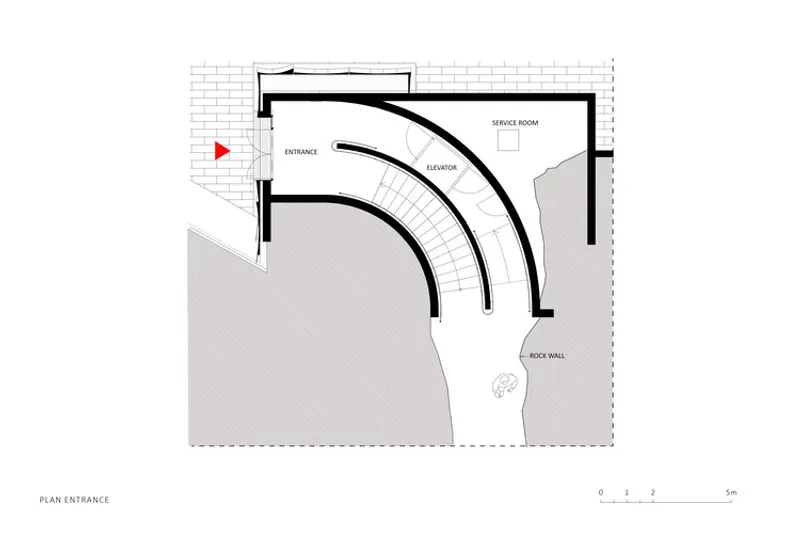
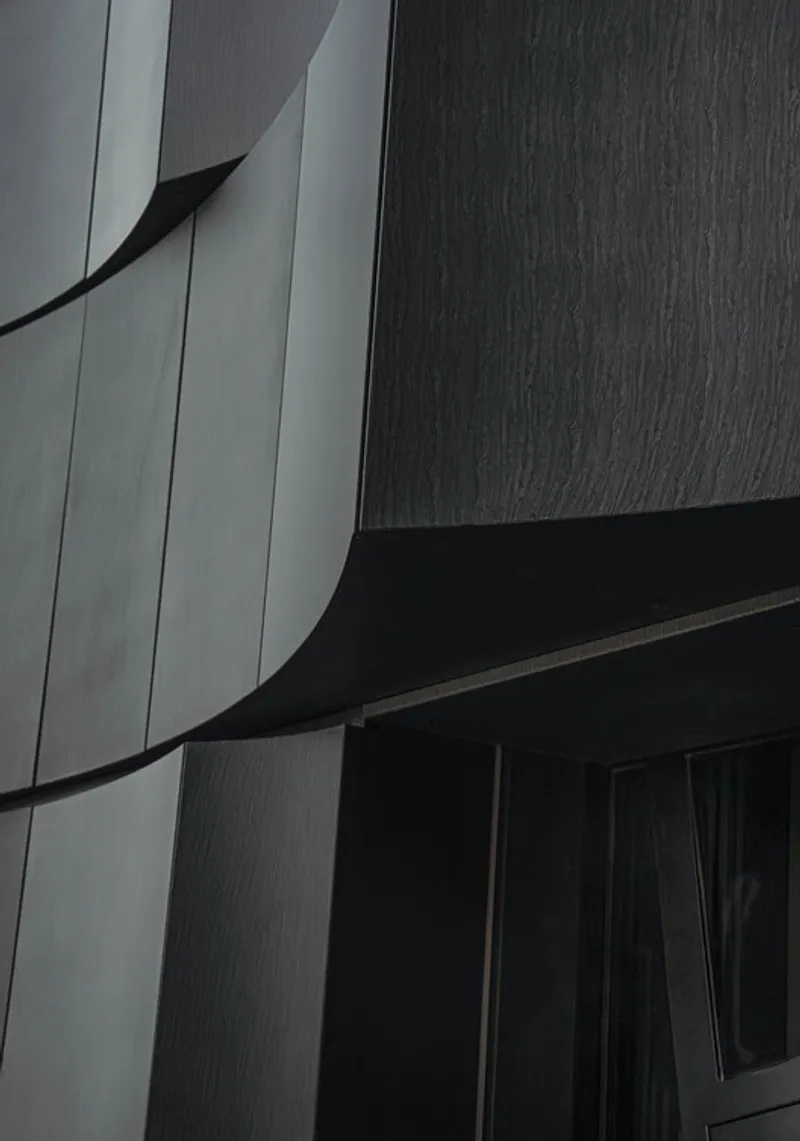
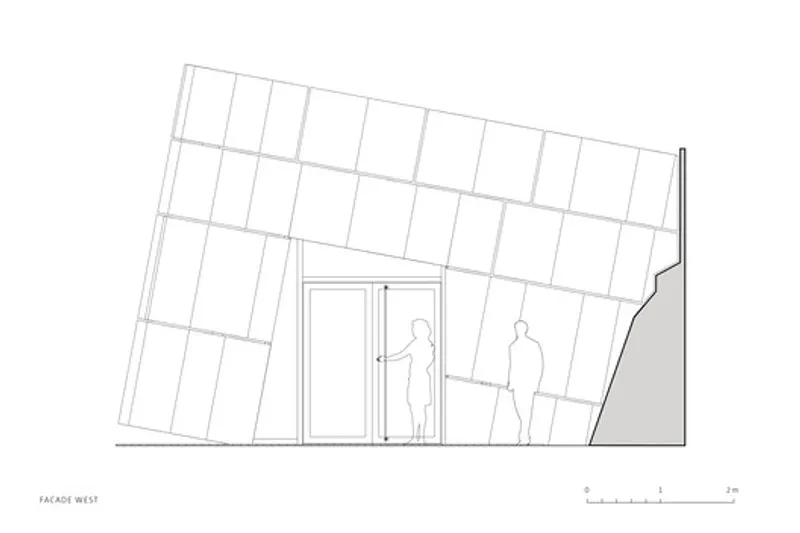
The project reveals itself through a sculptural entrance building that emerges from the ground as a singular, monolithic form. Its geometry tilts subtly toward the earth, hinting at the subterranean journey ahead, while simultaneously lifting upward, marking a precise threshold between the external landscape and the hidden interior world carved into the rock.
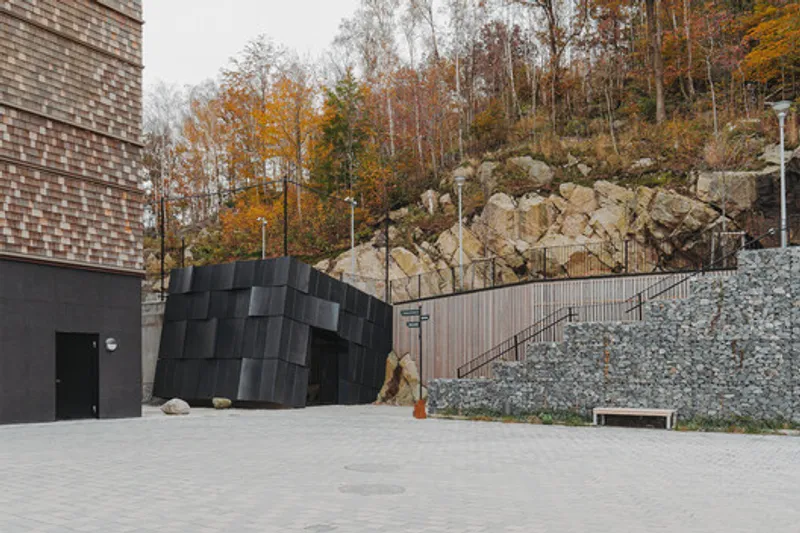

This dual movement—both descending and rising—defines the project’s architectural identity. The entrance reads as a signal, a marker of passage, where landscape transitions into constructed space and surface gives way to depth. Its presence is striking yet restrained, resisting overt symbolism while evoking associations with science fiction, archaeology, and geological formations.
An Architecture Without a Fixed Time
One of the most compelling qualities of The Mountain Chamber is its temporal ambiguity. The building feels unanchored to a specific historical moment. Its form and materiality suggest something ancient and futuristic at once—an artefact whose origin is deliberately unclear.
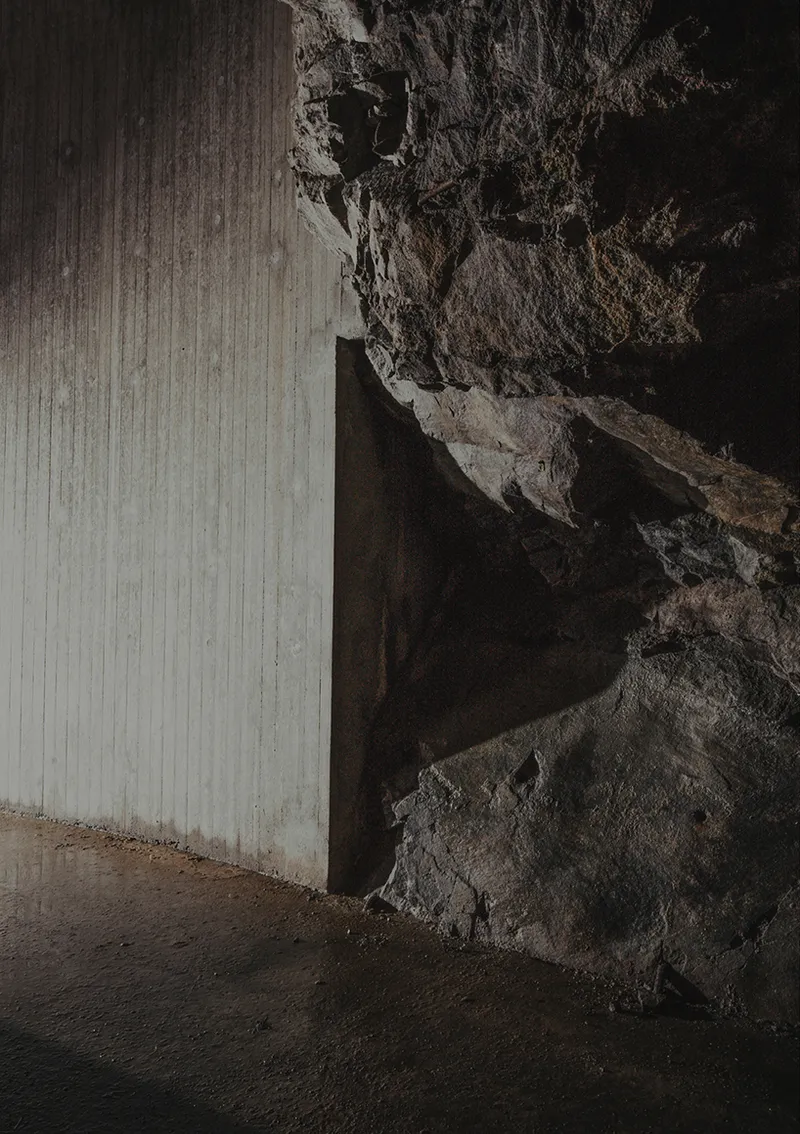
This ambiguity is reinforced by the project’s careful avoidance of familiar architectural references. There are no traditional cues of scale or ornamentation. Instead, the structure relies on mass, texture, and light to establish its identity. The result is an architecture that feels timeless, operating outside conventional stylistic frameworks.
Custom Metal Skin and Digital Craft
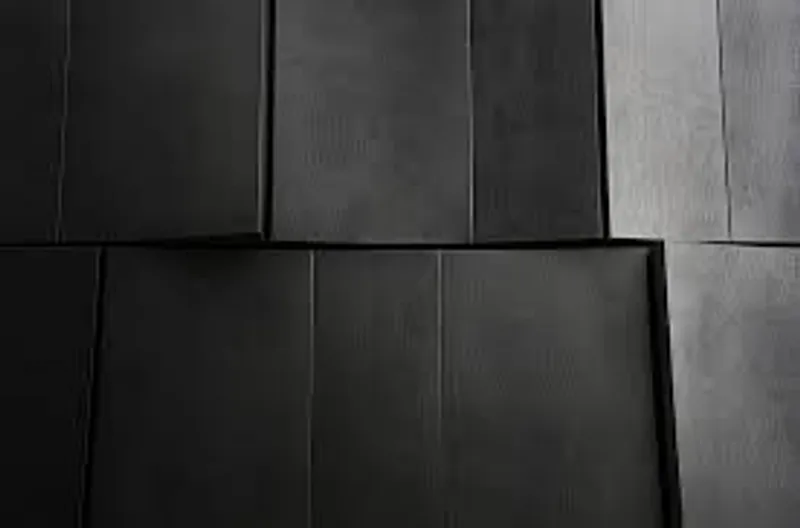
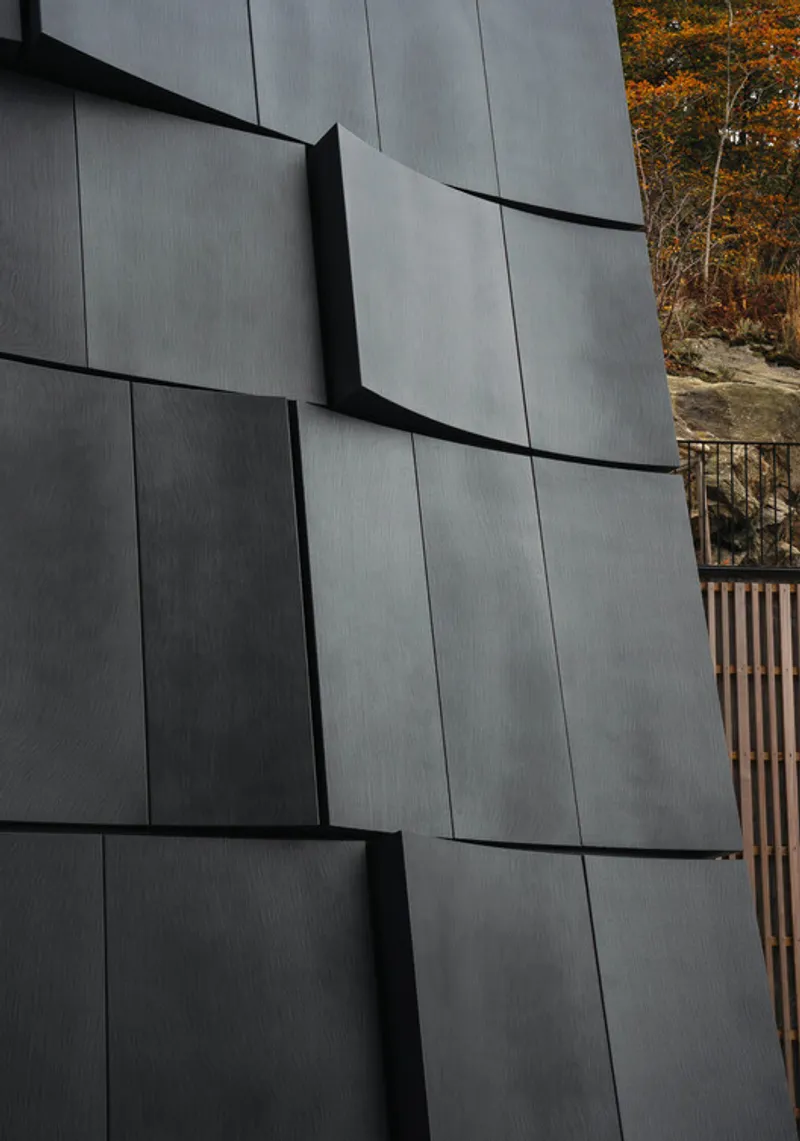
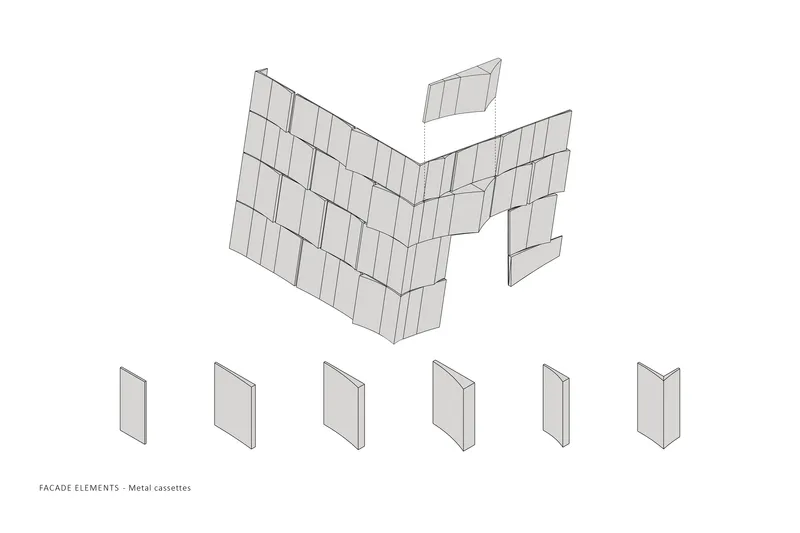
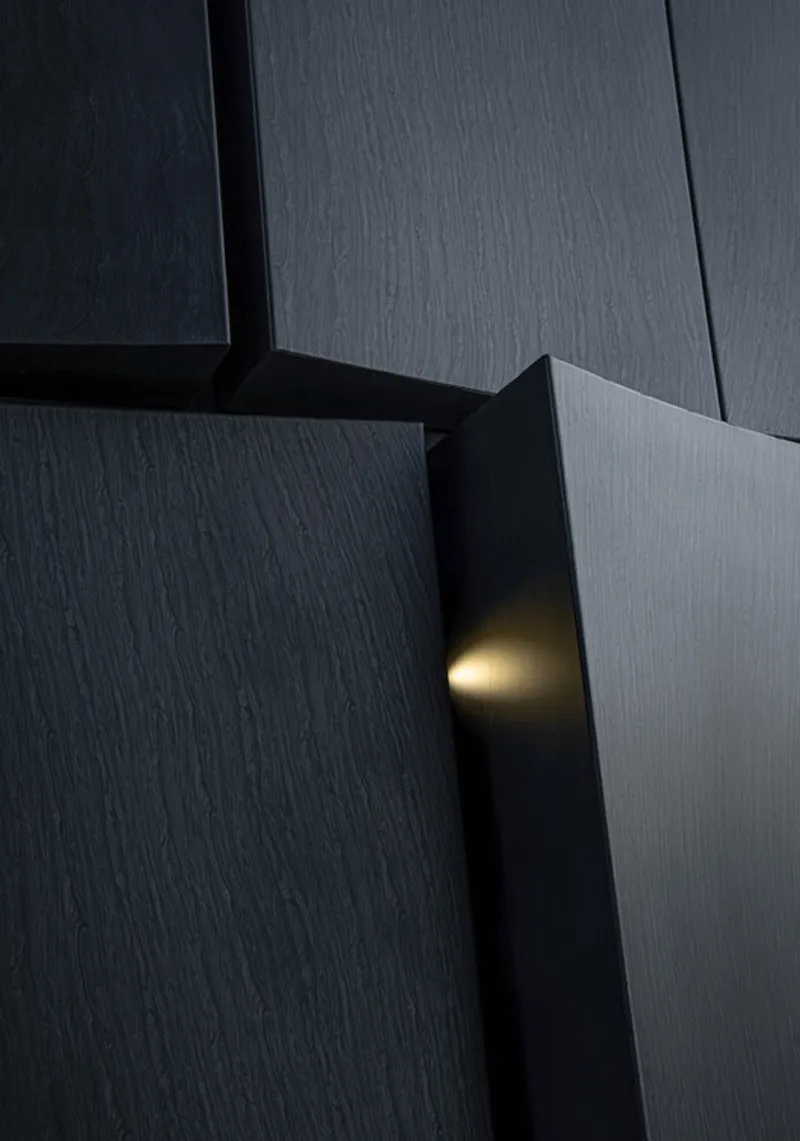
The exterior is clad in custom-designed metal cassettes, fabricated with millimeter precision through a combination of digital processes and skilled craftsmanship. Each cassette is individually treated using hydro-dip technology, in which the metal is submerged into a 37-degree water bath containing a patterned film. As the film adheres to the surface, it creates subtle variations in texture and reflectivity.

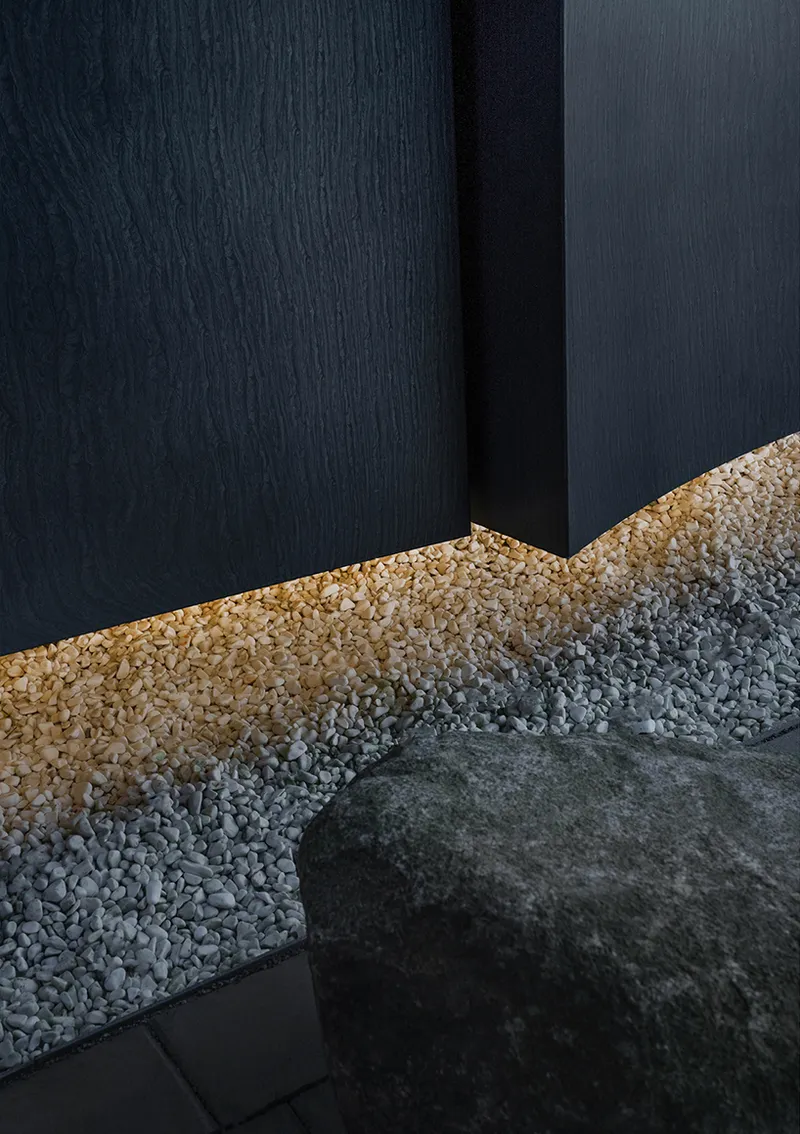
This process ensures that no two panels are exactly alike. Light shifts across the façade throughout the day, producing a shimmering effect that changes with weather and viewing angle. The surface appears almost iridescent—simultaneously industrial and otherworldly—further blurring the boundary between the natural and the artificial.
The metal skin does not simply cover the building; it becomes an active participant in the architectural experience, responding to light and movement while reinforcing the project’s enigmatic character.
Descent Into the Rock
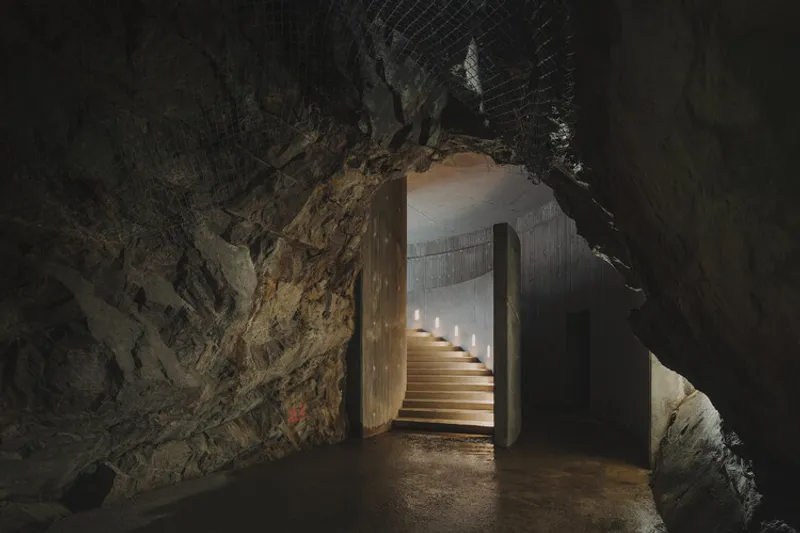
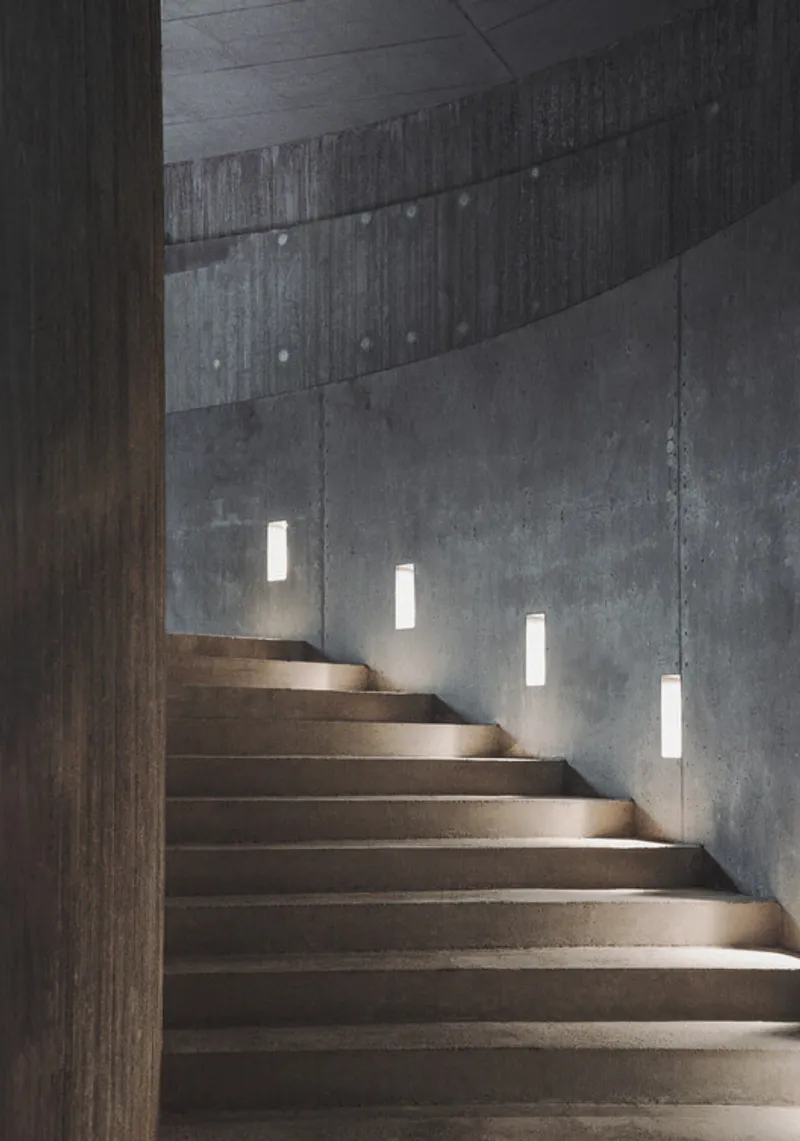
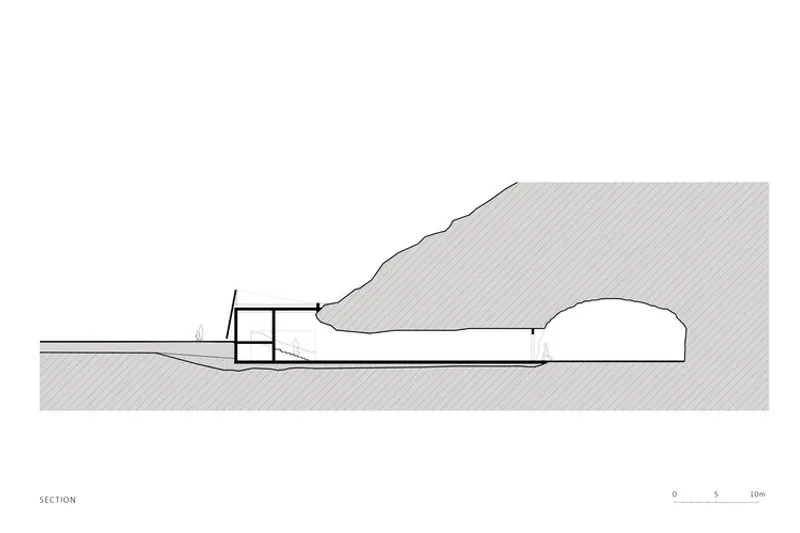
Passing through the entrance, visitors are guided downward into the mountain itself. The transition is deliberate and controlled, emphasizing the act of leaving the familiar world behind. As the architecture gives way to the raw presence of stone, the experience becomes increasingly introspective and immersive.
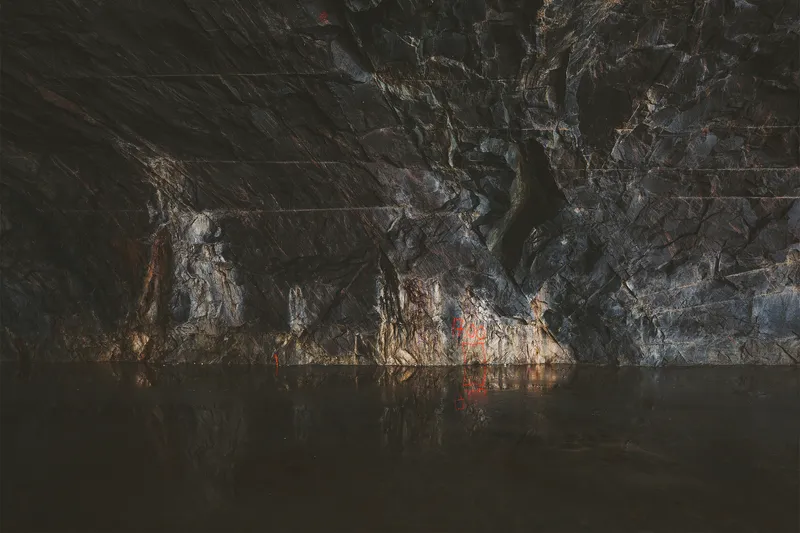
The mountain cavern—once a naturally stable environment with a constant temperature of eight degrees Celsius—has been transformed into a space with an open and undefined future. Rather than prescribing a fixed program, the architecture frames the cavern as a flexible volume, capable of hosting a wide range of potential uses depending on future occupants.
Concrete as a Tactile Medium
Inside, the architecture is defined by raw, tactile concrete, cast using environmentally friendly mixes and varied formwork techniques. Pigments are subtly introduced, resulting in nuanced differences in tone and surface texture. These variations prevent the concrete from feeling uniform or inert; instead, it reads as a material with depth, warmth, and presence.
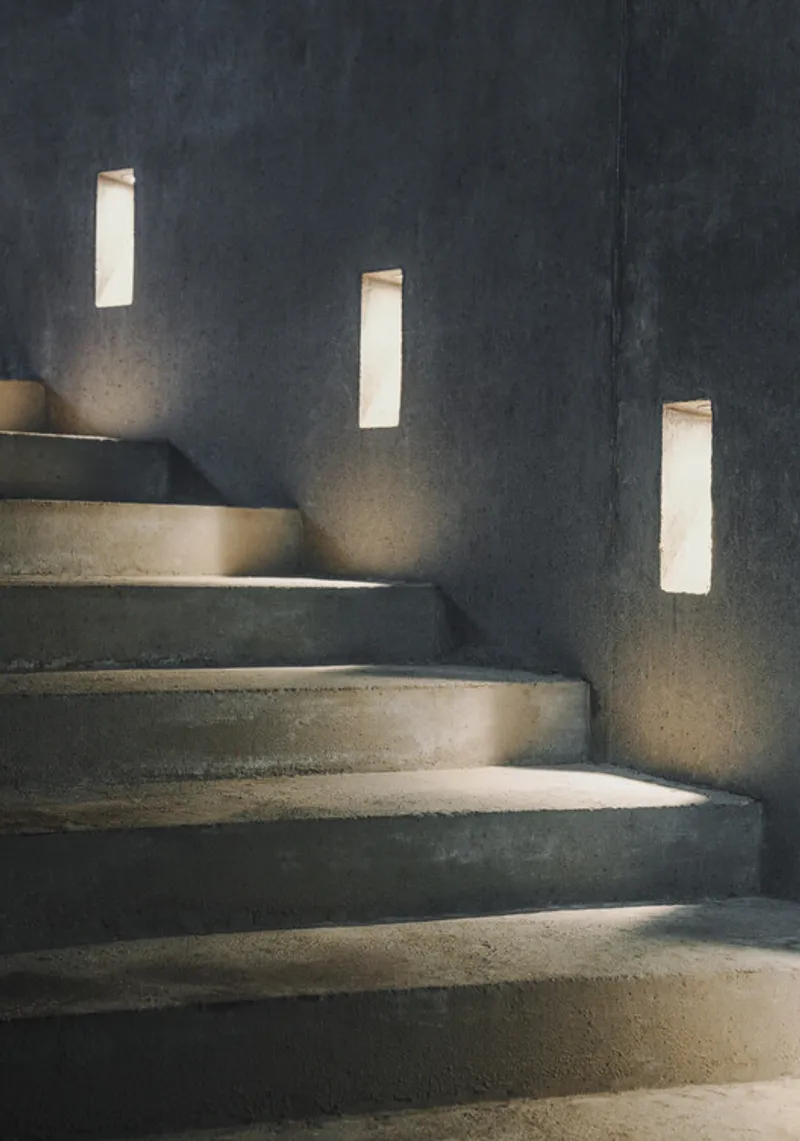
The concrete surfaces interact closely with the exposed rock, creating a dialogue between the constructed and the geological. Rather than concealing the mountain, the design emphasizes its material reality. The rock face remains visible and largely untouched, reinforcing the sense that the architecture has been inserted into an existing condition rather than imposed upon it.
Precision and Restraint in Technical Design
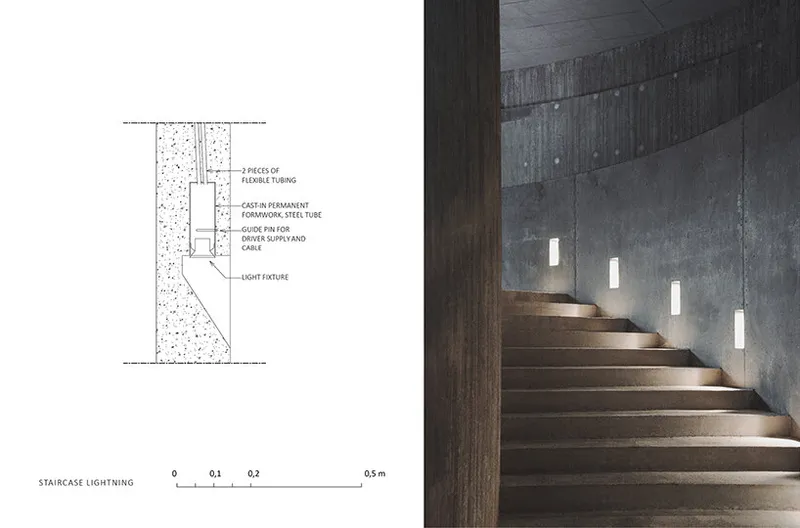
A defining aspect of The Mountain Chamber is its technical restraint. All installations—mechanical, electrical, and lighting systems—are carefully concealed beneath the floor or integrated into a continuous technical bench that runs along the rock wall. This strategy minimizes visual clutter and preserves the spatial clarity of the cavern.
By removing distractions, the architecture allows visitors to focus on materiality, scale, and atmosphere. The absence of exposed services enhances the sense of calm and mystery, making the space feel both deliberate and elemental.
Light as Atmosphere
Light plays a critical role in shaping the experience of The Mountain Chamber. At the threshold between exterior and interior, a slightly opaque glass door filters views into the cavern beyond. Only vague silhouettes and contours are visible, while soft blue and purple hues seep outward, hinting at the space within.
This controlled reveal heightens anticipation and reinforces the project’s narrative quality. Light is not merely functional; it becomes atmospheric, emotional, and symbolic—marking the transition from known to unknown.
A Gateway With an Open Future
The entrance building functions as a gateway, both literally and metaphorically. It marks access to the mountain while framing a space whose purpose has yet to be fully defined. The architects intentionally leave the final interpretation open, allowing future tenants to shape the identity and use of the cavern.
This openness is central to the project’s philosophy. Rather than delivering a completed narrative, The Mountain Chamber establishes a framework—spatial, material, and atmospheric—within which new stories can emerge.
Architecture as Discovery
Ultimately, The Mountain Chamber is an exploration of architecture as discovery rather than declaration. It resists immediacy, encouraging slow engagement and sensory awareness. Its power lies not in spectacle, but in subtlety: the weight of concrete, the shimmer of metal, the quiet presence of rock, and the gradual unfolding of space.
By embedding architecture within the mountain and embracing ambiguity, Erdegard Arkitekter have created a project that challenges conventional notions of commercial space. It is an architecture that feels found, not made—an object that could belong equally to the past, the future, or an imagined world beyond time.
All the Photographs are works of Anna Kristinsdóttir



Popular Articles
Popular articles from the community

AL-JANNAH: Sustainable Architecture and Permaculture for Afghan Widows
AL-JANNAH uses sustainable architecture and permaculture to create resilient oasis of housing, learning, work and renewal for Afghan widows.

Riyadh For All: Intergenerational Urban Design for Active Aging in Rabat
Riyadh For All reimagines urban design in Rabat with intergenerational co-living, adaptive courtyards, and Moroccan cultural exchange today.

Conexión: Biophilic Design Reimagines High-Rise Living in Hong Kong
Conexión reimagines high-rise living in Hong Kong through biophilic design, green facades, shared spaces, daylight, water and nature within.

The Earth Pod: 3D Printed Homes for Resilient Refugee Communities
The Earth Pod reimagines refugee housing through 3D printed homes made from clay, combining resilience, self-sufficiency, and rapid shelter.

Similar Reads
You might also enjoy these articles


Hodi-Mandai Geram
Project Function: Preservation and revitalization of the Intangible heritage and socio-spatial identity of the Hodi by Housing, Cultural Memory Center, Sacred Grove, landscape, local tourism economy


Olio Towers: A Mid-Rise for Performers That Fuses Housing, Rehearsal, and Stage
Located blocks from Houston's Theater District, this modular tower stacks living units around a central performance atrium.

Oasis: Modular Green Housing Carved into Dhaka's Urban Fabric
A shortlisted Plugin Housing entry reclaims unauthorized settlements in Dhaka with stepped concrete volumes, green roofs, and ventilation-driven design.

Black Hole: A Floating Megastructure for the Post-Physical Era
Emiliano Mazzarotto envisions a spherical, self-scaling arena where e-sports, digital hotels, and holographic stadiums replace traditional public space.

Explore Architecture Competitions
Discover active competitions in this discipline



Challenge to reimagine the Iron Throne


Photograph architecture without architects


Illustrate the lost glory of Angkor Wat - Render Challenge


Design challenge to reuse E-waste
Comments (0)
Please login or sign up to add comments
No comments yet. Be the first to comment!