
The Nature Education Center of Tangjiahe by CLAB Architects
Landscape-integrated education center by CLAB Architects features saddle-shaped concrete roof, immersive spaces, and structural continuity fostering experiential nature learning families.


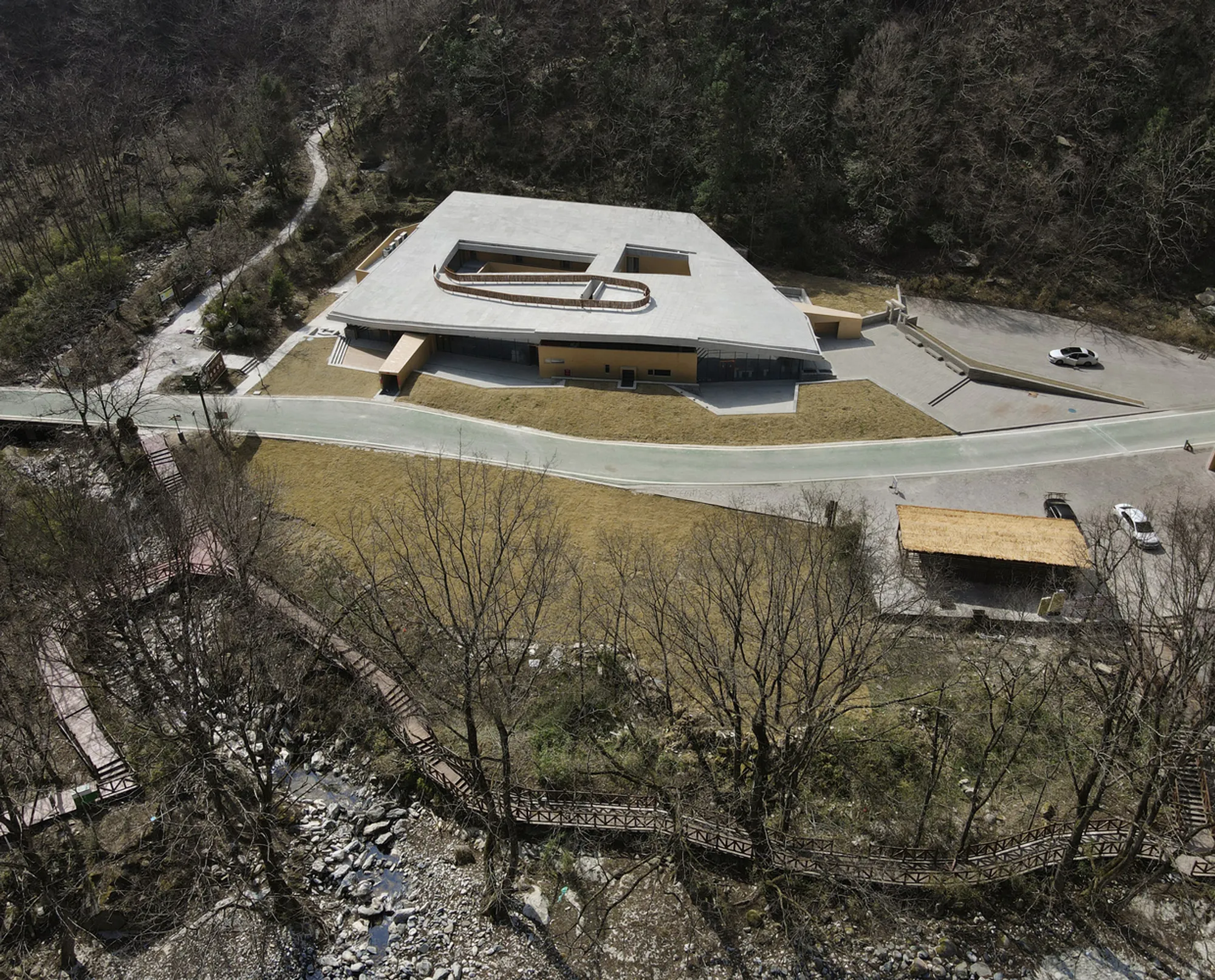
The Nature Education Center of Tangjiahe, designed byCLAB Architects, is a contemporary visitor and research facility located within the ecologically rich Tangjiahe region of China. Completed in 2023 with a total floor area of 1,350 square meters, the project redefines how architecture can become both a medium and a catalyst for nature-based education, particularly for young families participating in natural study tours.
Rather than replicating conventional school-based learning environments, the project embraces lifestyle experience, sensory perception, and direct engagement with nature as its core educational tools. The building operates as a hybrid tourism, visitor, and research center, offering spaces that encourage learning through observation, movement, and immersion within the landscape.
Architecture Shaped by Mountains, Valleys, and Water
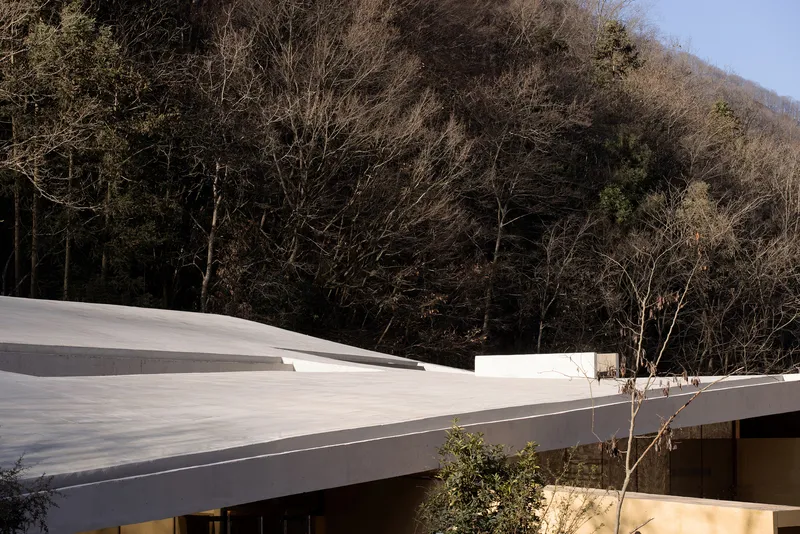
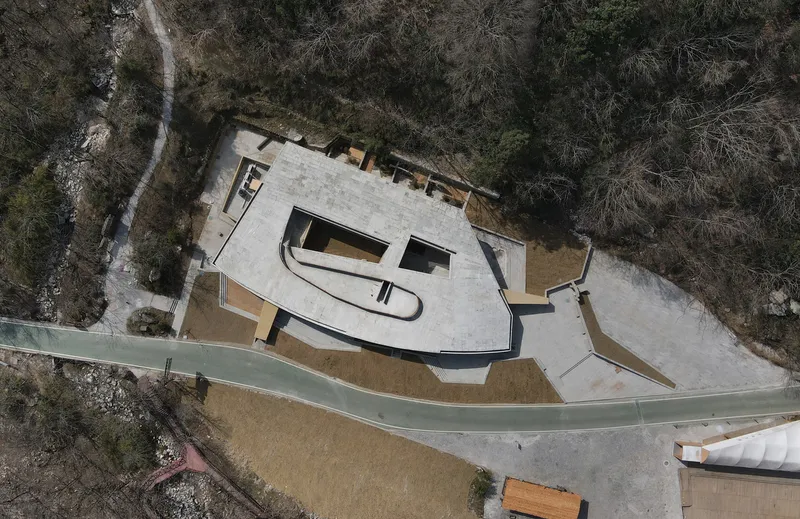
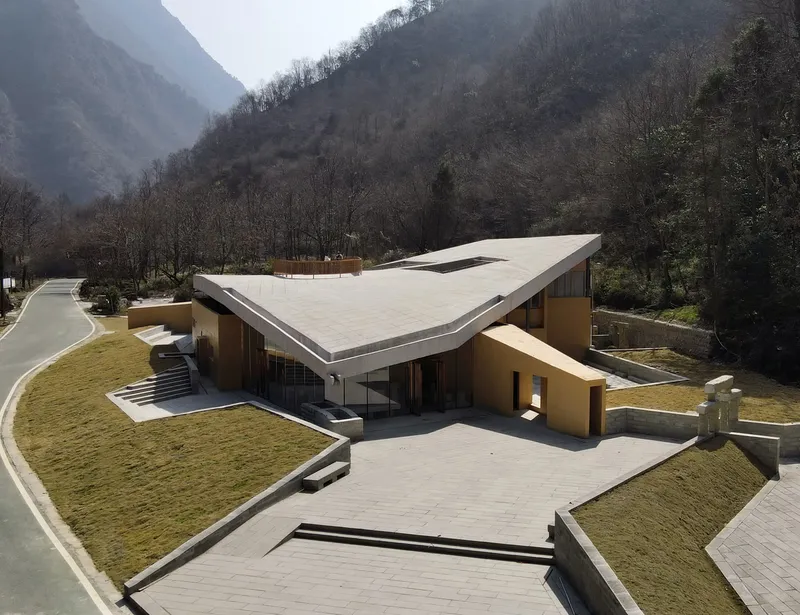
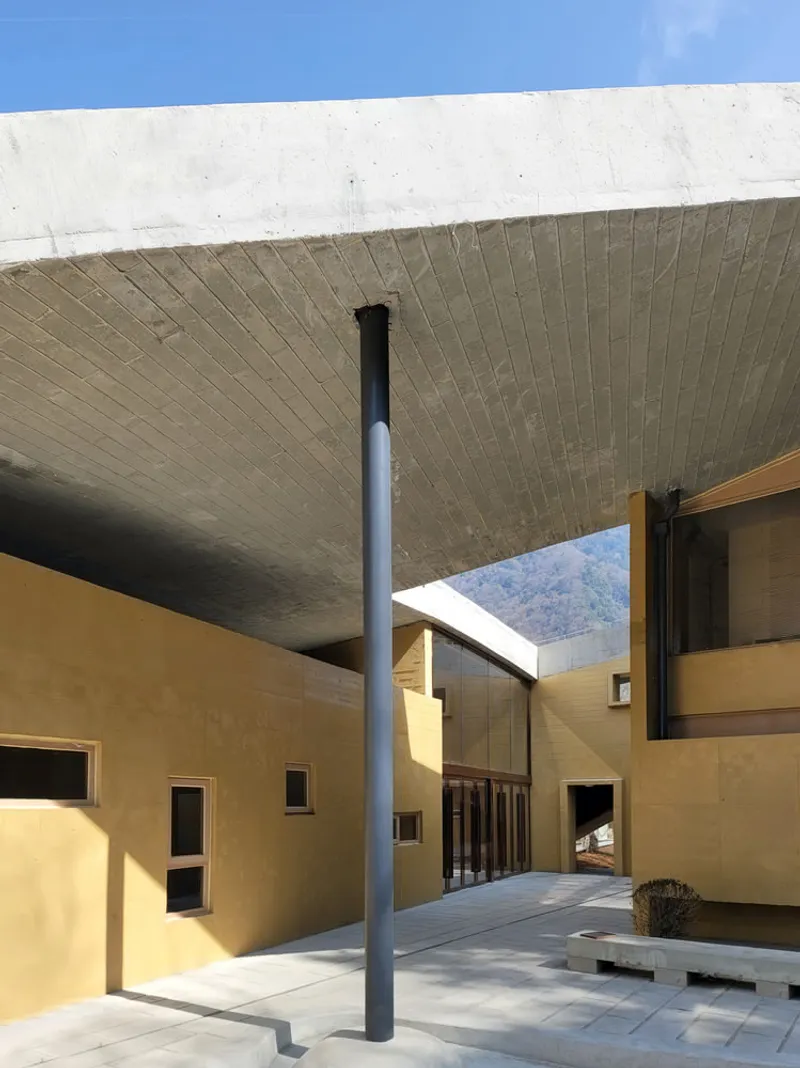
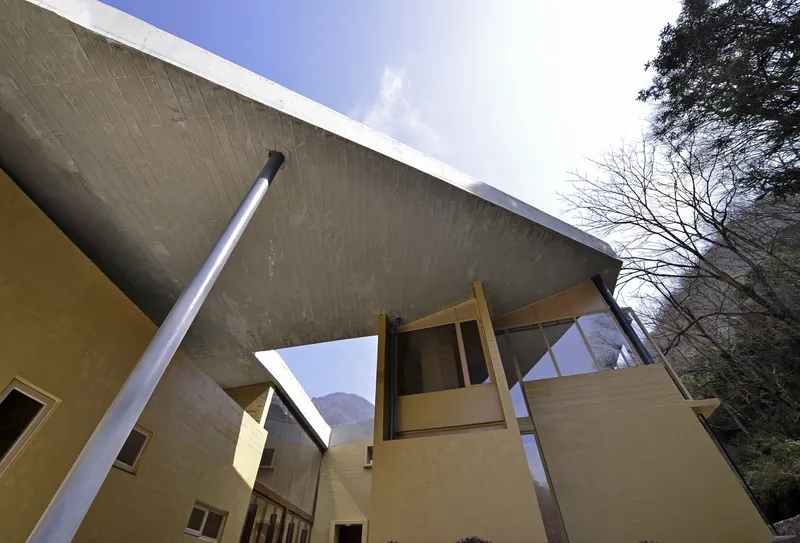
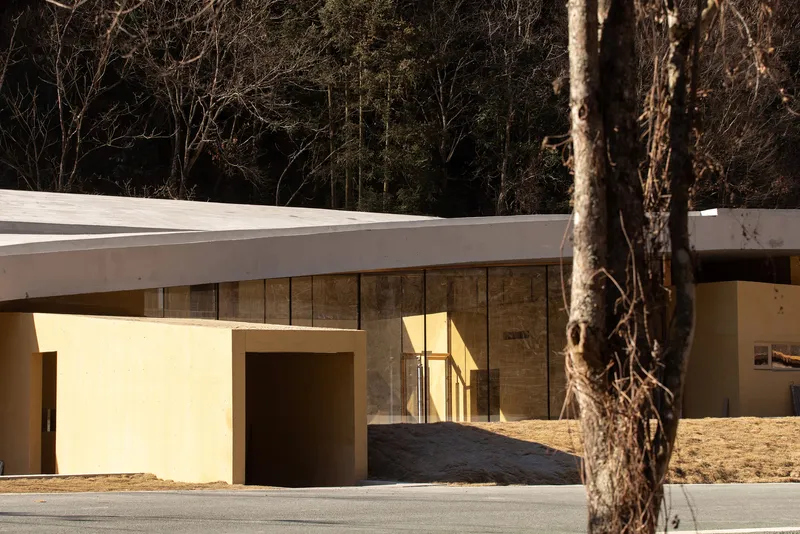
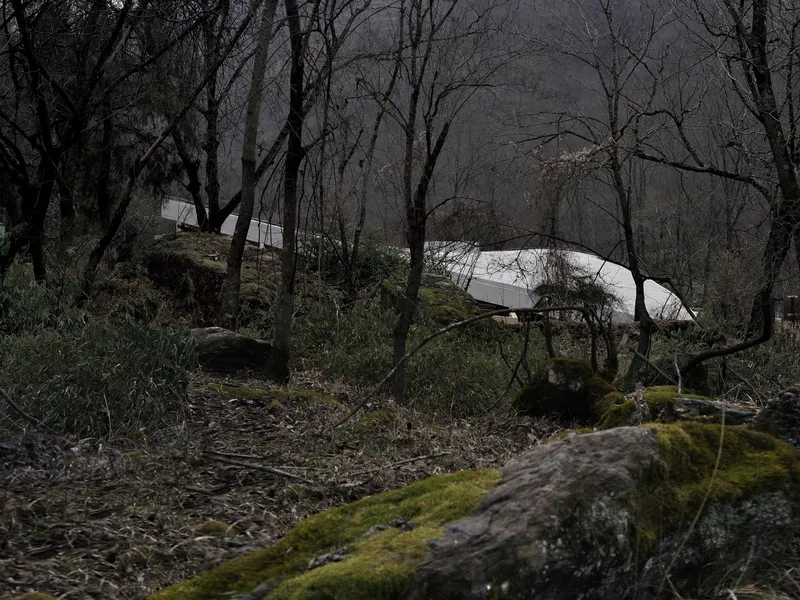
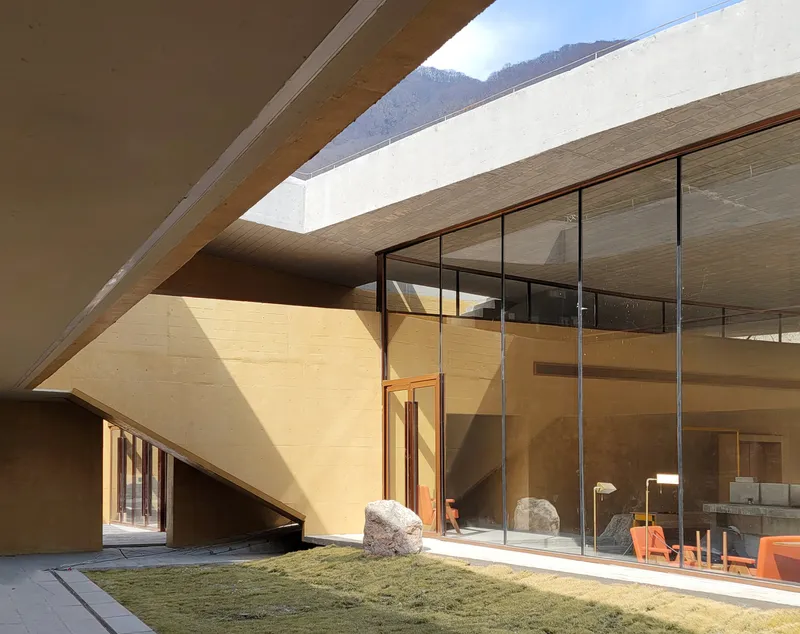
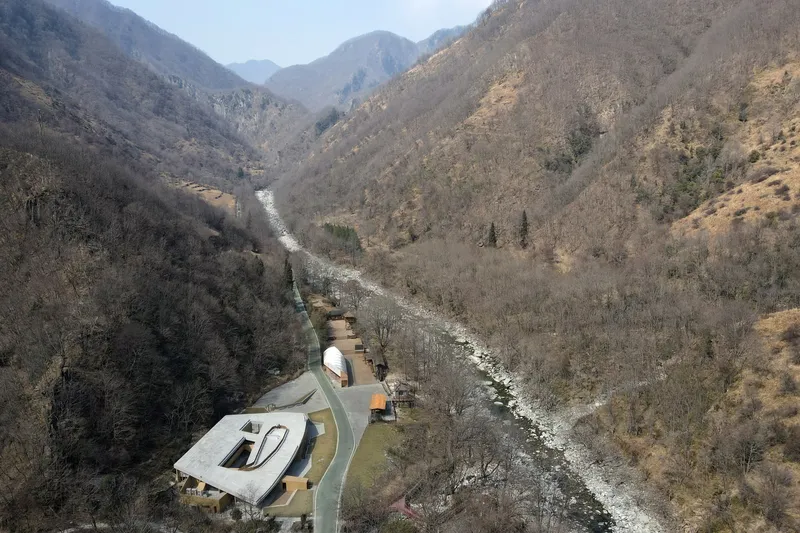
At the heart of the design lies a powerful conceptual idea: life in nature is the most profound form of natural education. This philosophy translates into an architectural form that appears less constructed and more carved by geological time. The building’s most defining element is its dramatic saddle-shaped concrete roof, conceived as a gigantic river stone, or flagstone, resting within the valley.
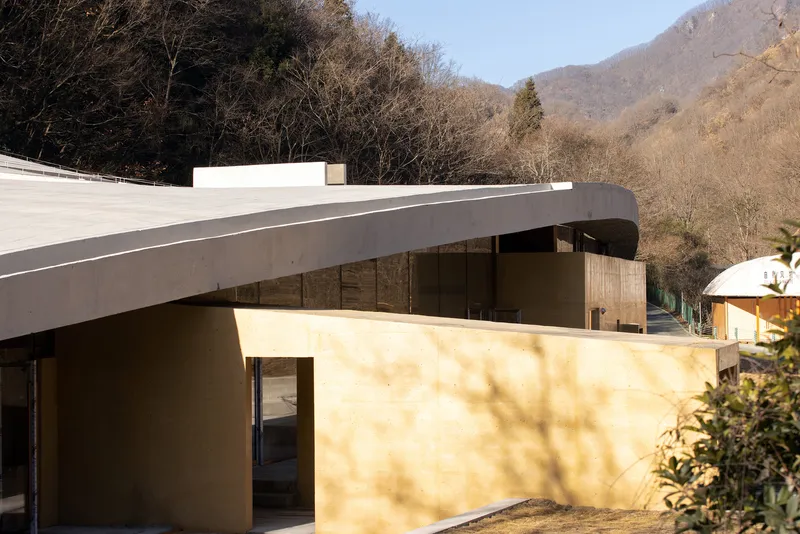
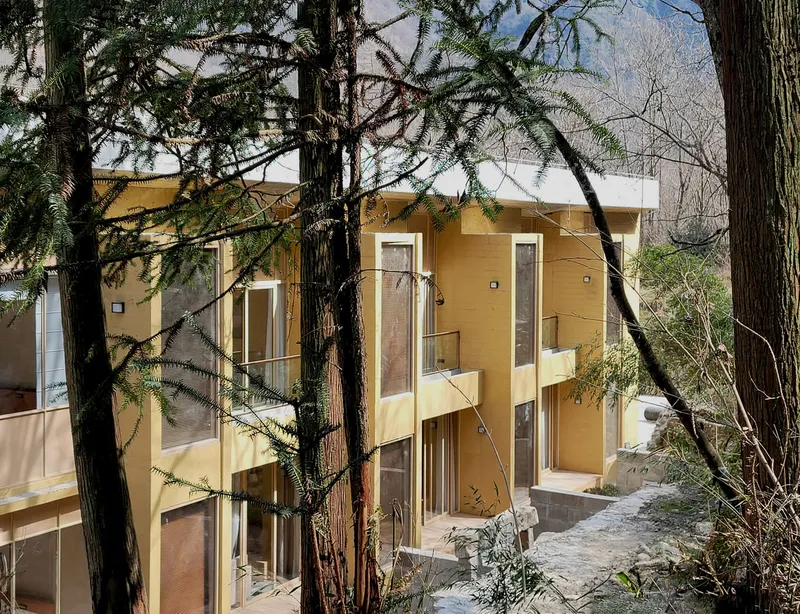
Responding directly to the surrounding mountains, riverbeds, and water erosion patterns, the architecture sinks into the terrain and stretches horizontally, as if shaped by centuries of natural forces. This deliberate ambiguity between landscape and structure allows the building to read as a relic formed by nature, rather than an object imposed upon it.
Programmatic Spaces for Learning, Living, and Exploration
The Nature Education Center integrates a diverse range of public and semi-private functions, all unified by a continuous spatial logic:
- Museum exhibition hall
- Multimedia classroom for interactive learning
- Nature-themed dining space focused on food education
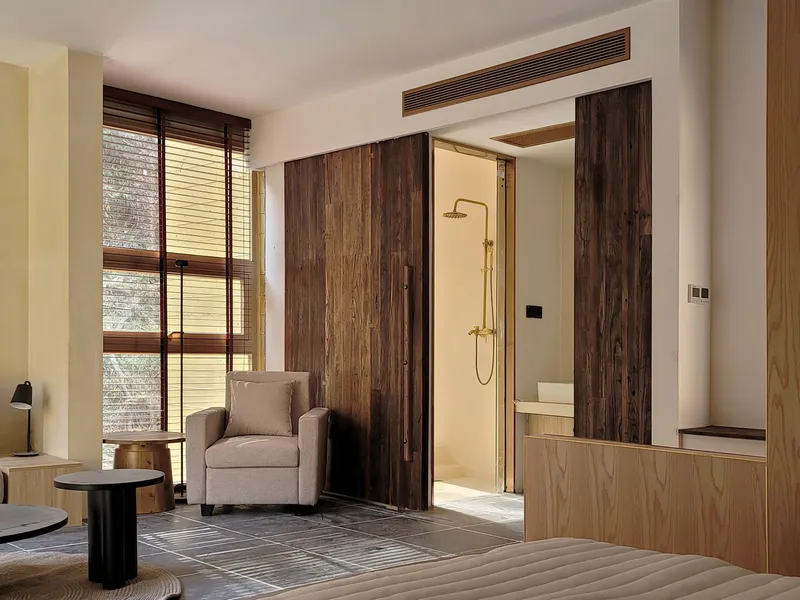
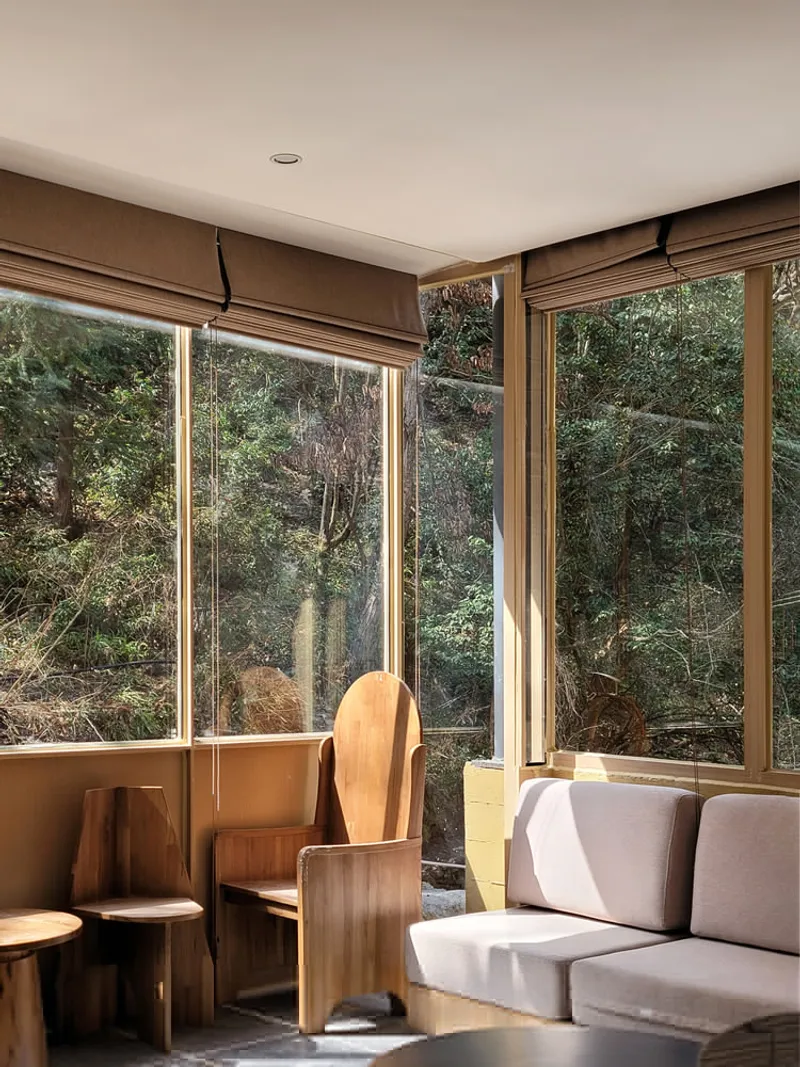
- Nine guest rooms designed for short-term study tours
These spaces are organized to encourage fluid movement and visual continuity, reinforcing the idea that learning occurs everywhere, not just within designated classrooms.
Continuous Structural Planes and Spatial Landscape
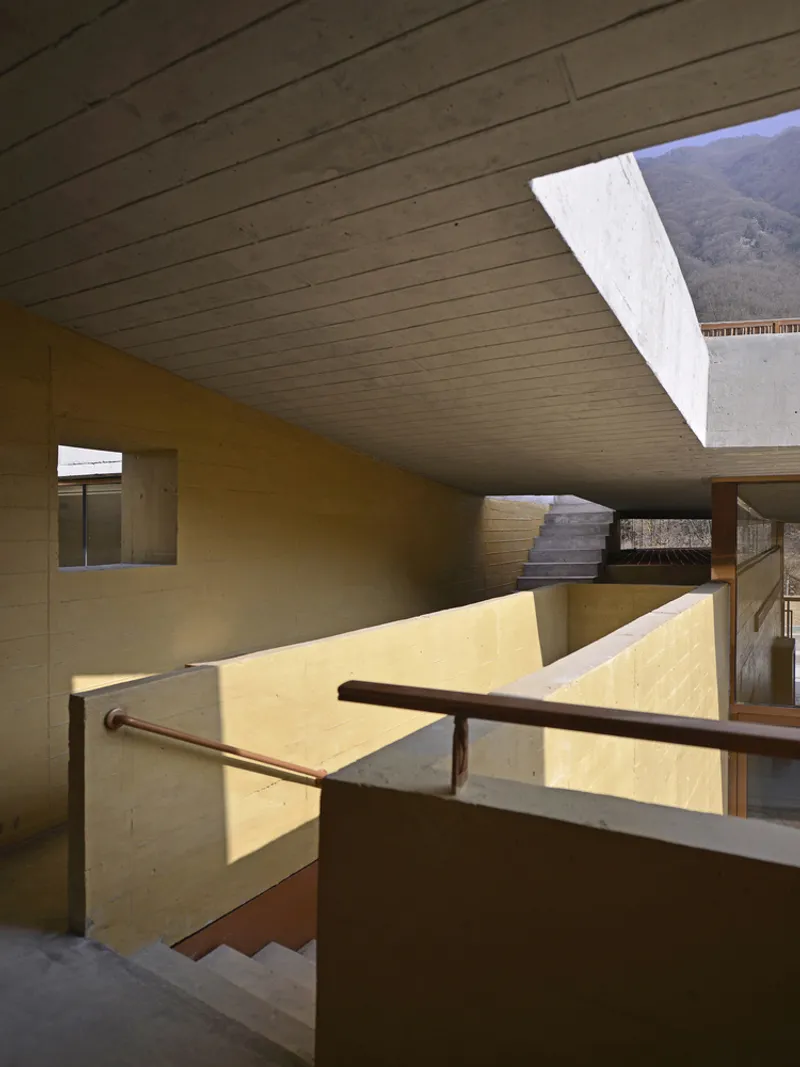
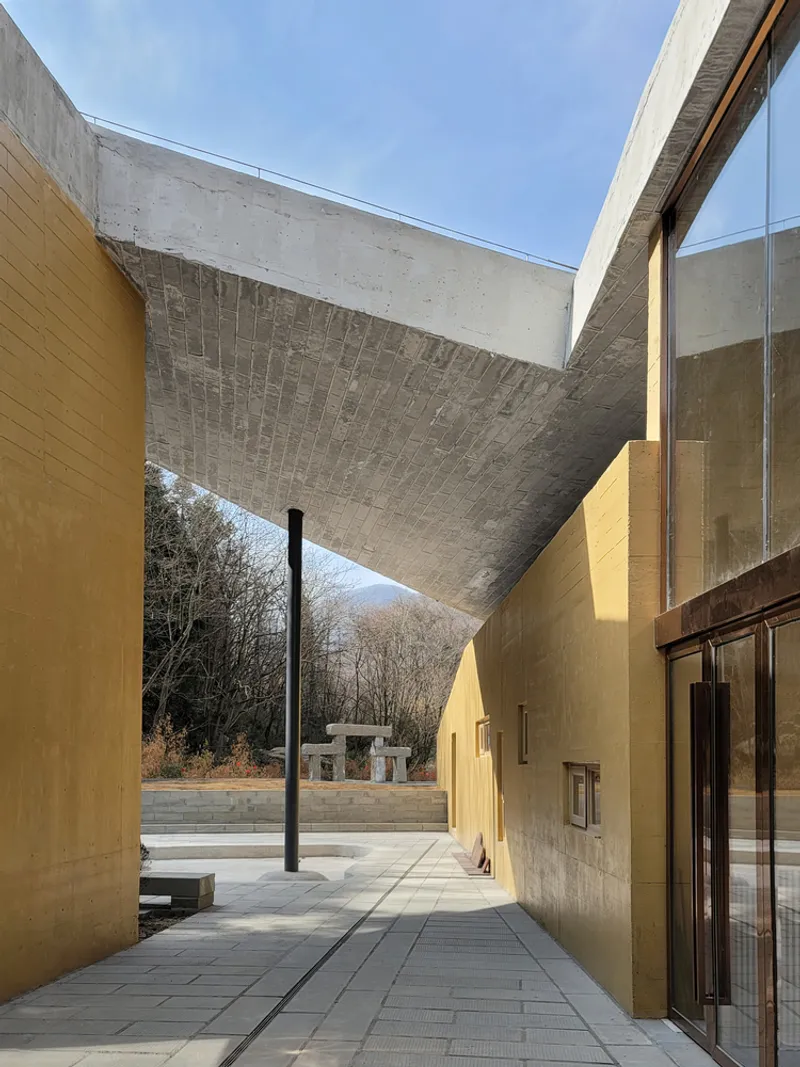
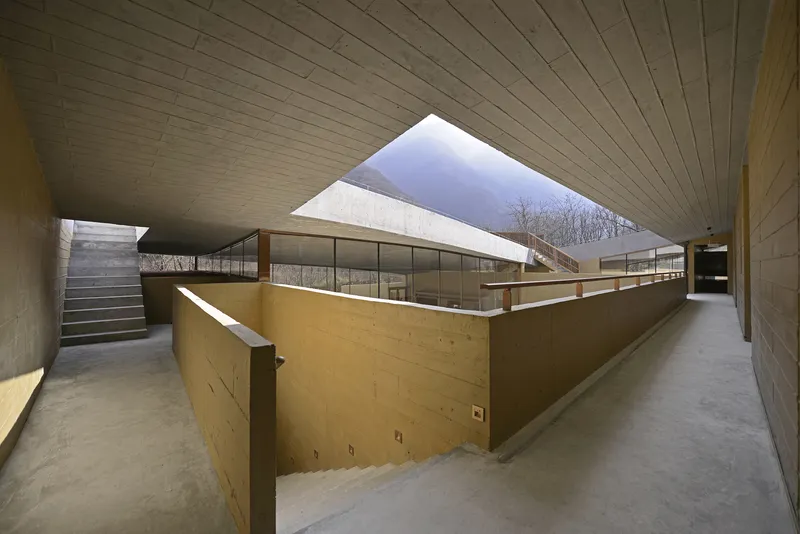
Structurally, the building is defined by a continuous bending plane system, where structure and function follow the same architectural logic. Stairs are embedded within these folded structural planes, creating a layered spatial landscape of overlapping views and movement paths.
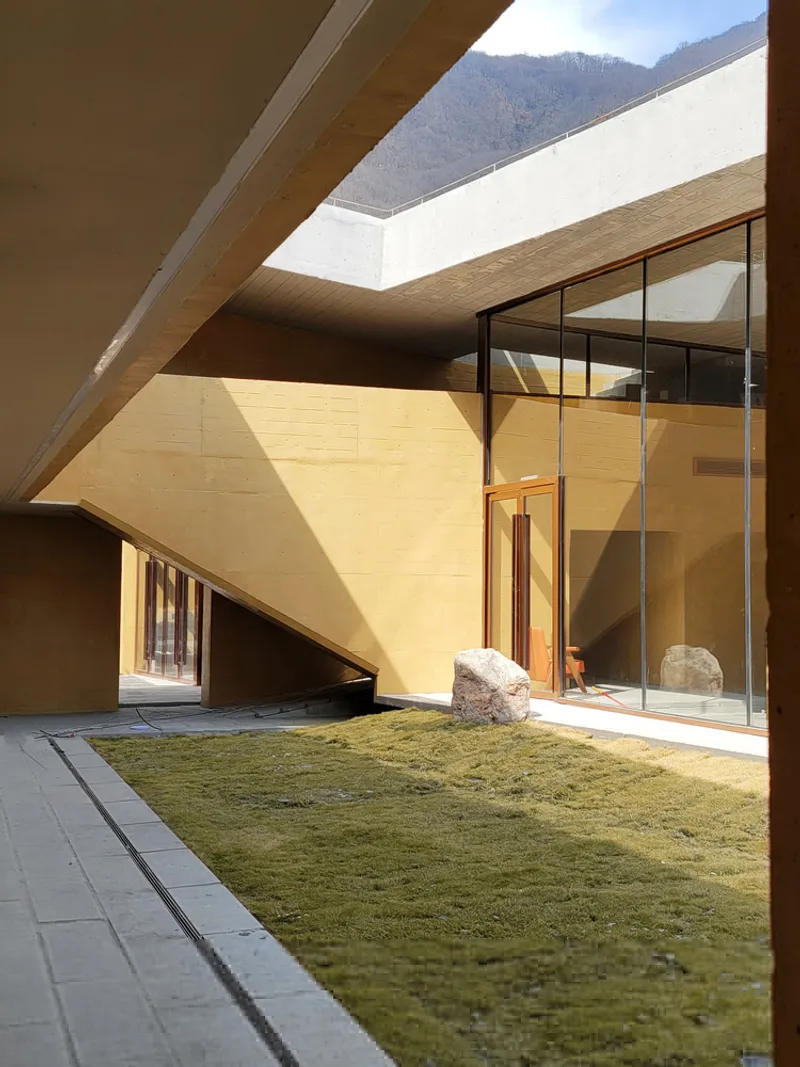
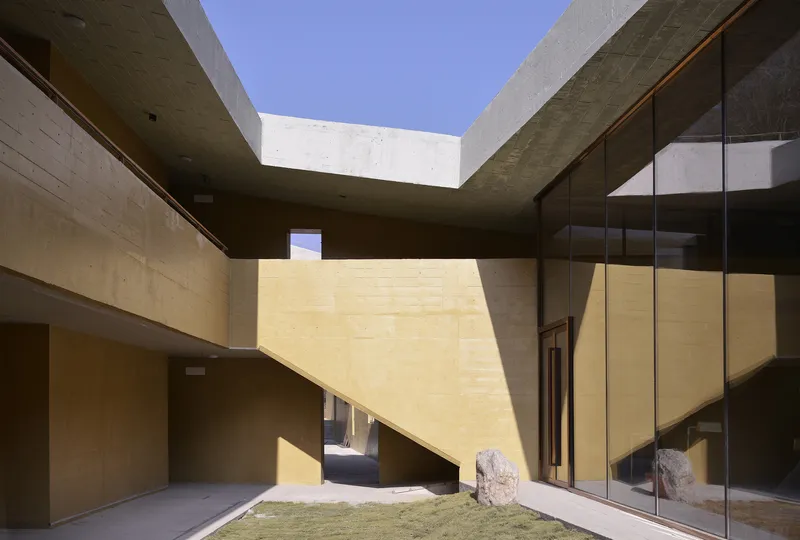
The distinction between served spaces and service spaces becomes experiential: the areas users perceive most strongly are precisely those where structural planes dissolve, opening up fluid, unobstructed spatial moments. In this way, the building itself becomes an educational device: teaching users how structure, space, and landscape interrelate.
Roof as Architecture: Beyond Typology
The roof is not merely a covering element; it is the primary architectural expression. Designed as a multi-ribbed continuous concrete beam system, it spans up to 16 meters with 9-meter cantilevers, achieving structural efficiency through reduced beam spacing and controlled deflection.
A subtle micro-arch formation emerges in the main public space, where horizontal volumes extending on both ends provide lateral resistance. Slender steel columns beneath the thick concrete plates further refine structural performance while adding a poetic contrast between heaviness and lightness.
This structural logic evokes the slow shaping of river stones by water, static yet dynamic, precise yet organic, resulting in a formal language that transcends traditional architectural typologies.
Architecture as a Bridge Between Humans and Nature
The Nature Education Center of Tangjiahe exemplifies how contemporary Chinese architecture can merge landscape integration, structural innovation, and educational purpose. By allowing natural forces, terrain, and perception to guide form-making, CLAB Architects have created a building that does not simply house nature education, but embodies it.
Here, architecture becomes a quiet mediator between humans and the environment, inviting users to slow down, observe, and reconnect with the rhythms of the natural world.
All photographs are works of
Lang Xu, Arch-Exist Photography



Popular Articles
Popular articles from the community


The Earth Pod: 3D Printed Homes for Resilient Refugee Communities
The Earth Pod reimagines refugee housing through 3D printed homes made from clay, combining resilience, self-sufficiency, and rapid shelter.

Conexión: Biophilic Design Reimagines High-Rise Living in Hong Kong
Conexión reimagines high-rise living in Hong Kong through biophilic design, green facades, shared spaces, daylight, water and nature within.

Co-life: Sustainable Architecture for Age-Friendly Community Living
Co-life reimagines sustainable architecture for seniors through courtyards, rammed earth, shared gardens, and spaces designed for belonging.

Lunar Spiral: Space Architecture Shaped by the Mathematics of the Universe
Lunar Spiral reimagines space architecture through Fibonacci geometry, lunar regolith, levitating habitats, and self-sustaining Moon living.
Similar Reads
You might also enjoy these articles

FAMM Arquitectura Organizes Ten Villas Around Courtyards and Jungle in Nosara, Costa Rica
El Molino pairs two elongated volumes with deep overhangs and timber louvers to build a compact coastal community five minutes from the beach.
Oscar Niemeyer's Ibirapuera Park Pavilions Define São Paulo's Cultural Identity in Concrete and Curve
A constellation of modernist volumes set within São Paulo's most important urban park, conceived for the city's 400th anniversary in 1954.
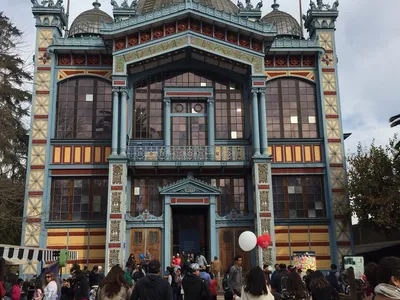
How Henri Picq's 1889 Paris Pavilion Traveled 11,000 Kilometers to Become Santiago's Artequín Museum
A prefabricated iron and glass pavilion built for the Paris Universal Exposition found a second life as a children's art museum in Chile.
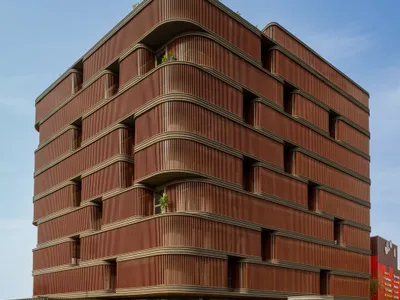
Sanjay Puri Architects Wraps a Jaipur Office Tower in Capsule-Shaped Green Buffers
A nine-level climate-responsive workplace near Jaipur Airport uses stacked planter terraces and aluminium screens to fight 40°C heat.

Explore Landscape Architecture Competitions
Discover active competitions in this discipline


Challenge to design public laboratory


Challenge to reimagine the Iron Throne


Photograph architecture without architects


Illustrate the lost glory of Angkor Wat - Render Challenge
Comments (0)
Please login or sign up to add comments
No comments yet. Be the first to comment!